Hi-Fi Audio
Cambridge Audio Evo 150 Delorean Edition Review: Compact Streaming Power With Measured Strengths
A practical look at the Cambridge Audio Evo 150 Delorean Edition, covering measured power, phono and preamp performance, connectivity, and what to weigh before buying.
Introduction
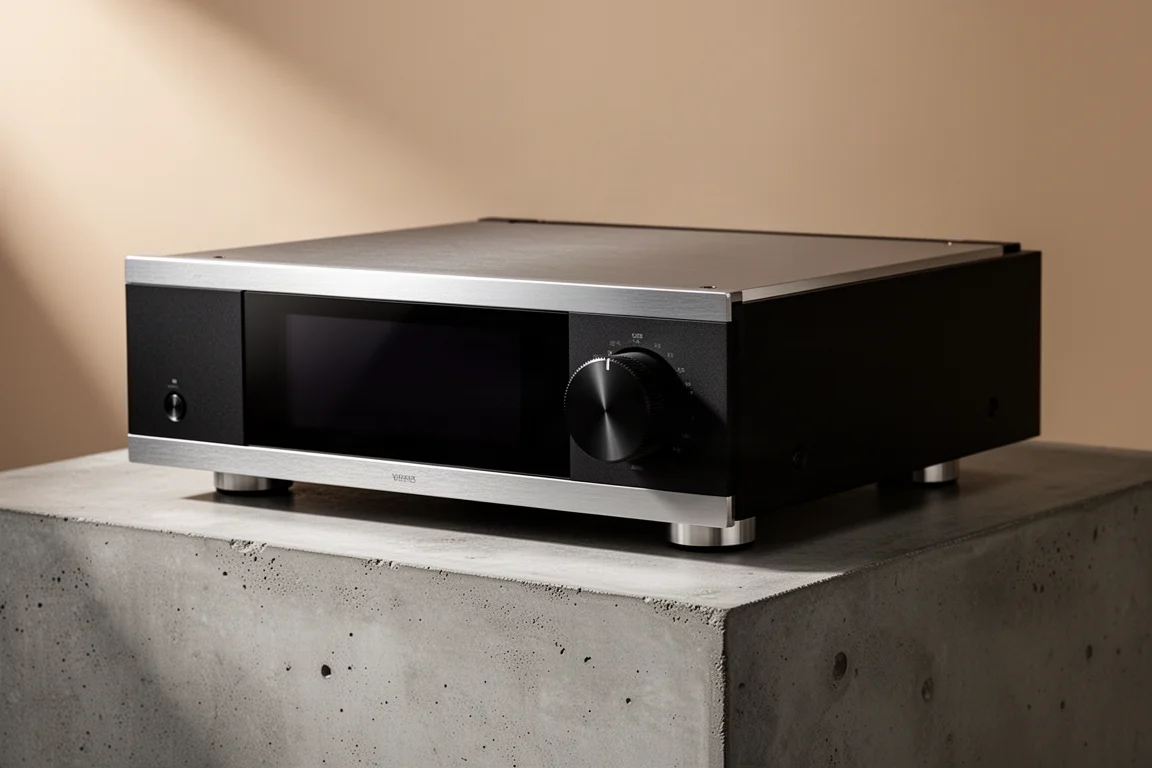
The Cambridge Audio Evo 150 Delorean Edition is a limited-run version of the Evo 150 streaming integrated amplifier, finished in brushed metal that deliberately echoes the stainless steel sports car that made the name famous. Pricing for this edition sits at roughly $3,200, about $100 above the standard premium finish, and the whole package arrives in a chassis that weighs around 11 pounds.
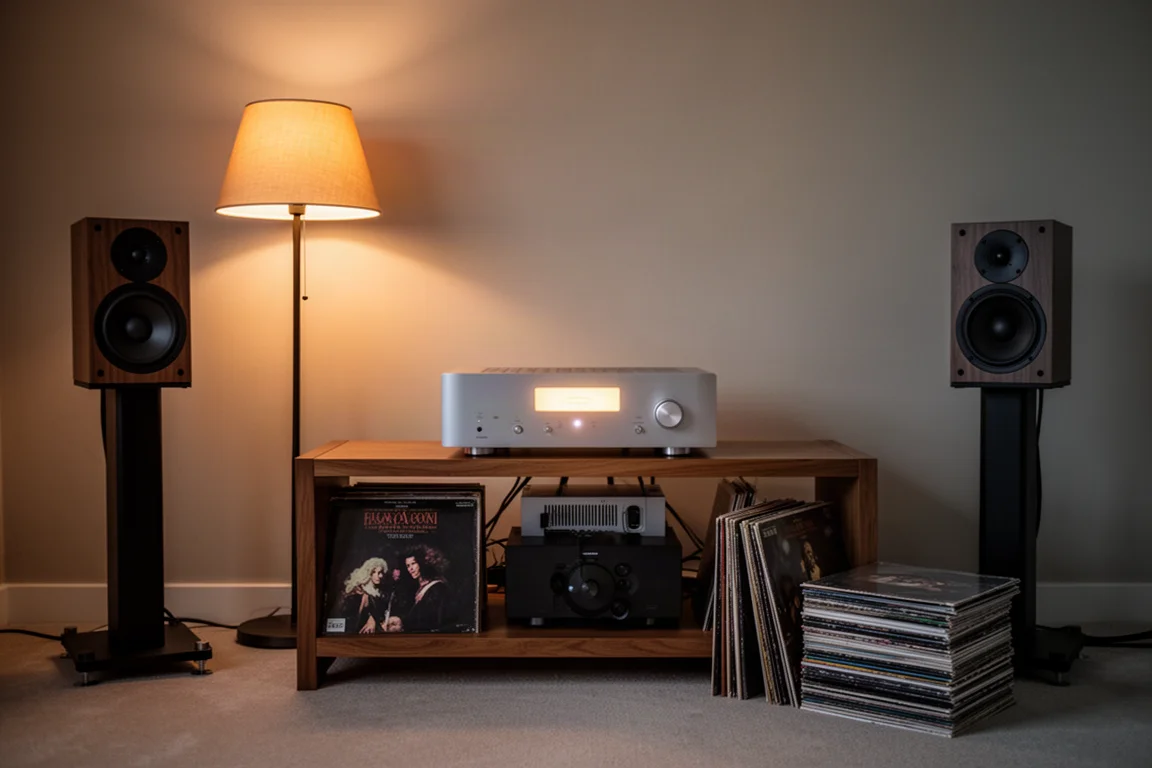
Inside that small case is a genuinely complete system: an ESS Saber 9018 DAC, the Stream Magic Gen 4 streaming module, a moving magnet phono stage, and a Hypex class D power module rated at 150 watts per channel into 8 ohms. Inputs cover HDMI ARC for a television, optical and coaxial digital, XLR, a USB DAC connection, and preamp outputs for adding external amplification later. A recent firmware addition brings animated VU meters to the front display.
This article walks through the measured performance and the practical details that matter when deciding whether this amplifier belongs in your system, including where its power ratings come from and what its connections can and cannot do.
Who the Evo 150 Delorean Edition Is For
This amplifier suits listeners who want one compact box to handle streaming, television audio, and vinyl without stacking separate components. The low noise floor and strong channel separation measured at the output stage are the kind of qualities that reward careful listening at ordinary volumes, where most music actually happens.
It also makes sense for anyone who already owns a turntable. The phono input is not an afterthought, and the digital section covers the formats most streaming services deliver. Buyers who plan to add a subwoofer should note that the subwoofer output is variable but not bass managed, so the crossover on the subwoofer itself does the work.
Finally, it fits rooms where space is tight but speaker quality is not. The amplifier is small and light enough to sit on a shelf or a desk, yet it is comfortable driving full-size speakers as long as the load stays within reason.
Main Strengths
The power stage is the Hypex NC252MP class D module, and its most impressive trait is load invariance. Frequency response stays essentially unchanged whether the amplifier sees no load, 8 ohms, or 4 ohms. That behaviour is typical of the best linear and class D designs, and it means the amplifier should sound consistent across a wide range of speakers rather than being tuned for one impedance.
Measured output is solid for the size. Into 8 ohms, both channels driven, the amplifier produced 130 watts per channel at 0.1% THD+N and 148 to 150 watts per channel at 1% THD+N. Into 4 ohms it delivered 240 watts per channel at 0.1% and 267 to 268 watts per channel at 1%, exceeding the 250 watt rating. Distortion below the knee stayed around 95 to 97 dB SINAD, roughly 0.0015% THD+N, at both impedances.
Noise performance at low output levels is a real strength. With a full-scale digital input and one watt at the speaker outputs, the amplifier measured about 89 dB signal to noise, A-weighted. Channel separation measured around 90 dB at 10 kHz and about 80 dB at 20 kHz, a good result for preserving stereo imaging.
Connectivity That Covers Modern and Legacy Sources
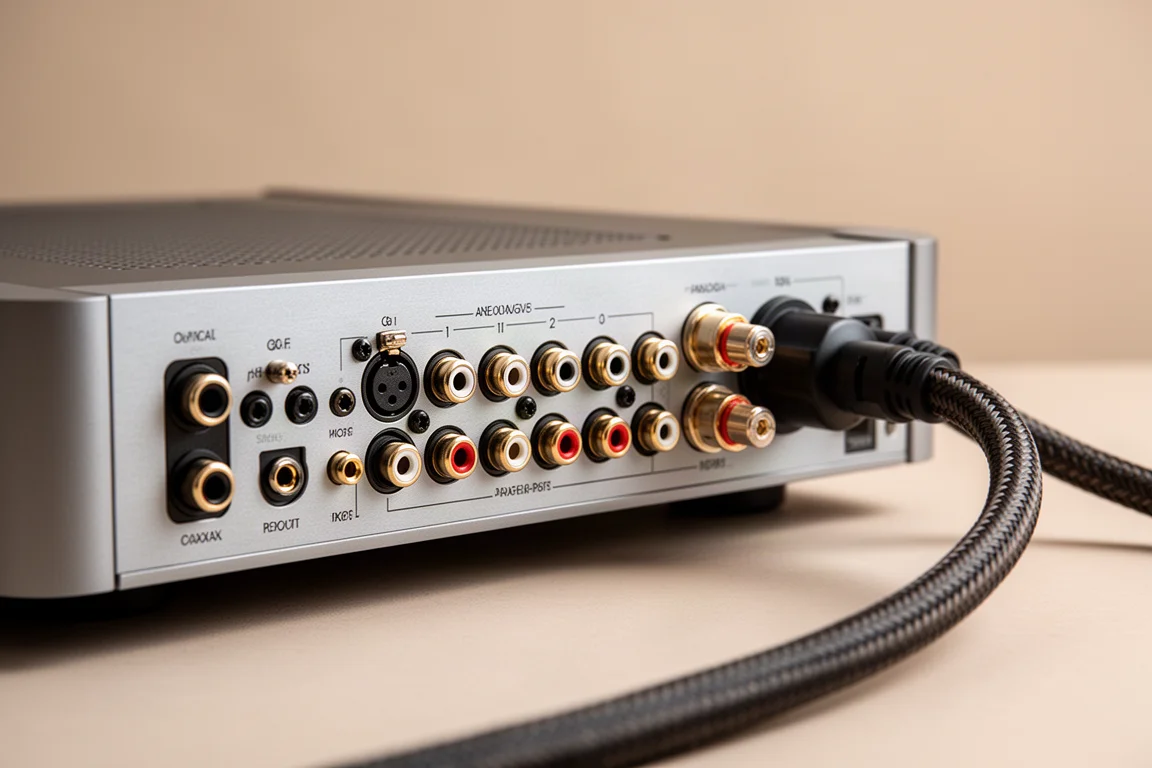
The rear panel covers more ground than most one-box amplifiers. HDMI ARC pulls audio straight from a television, so streaming apps on the TV reach the speakers without extra hardware. Optical and coaxial inputs handle disc players and set-top boxes, XLR inputs accept balanced analogue sources, and a USB DAC input covers computer playback.
Speaker connections are provided as A and B pairs. These run in parallel rather than as independent zones, so two pairs of 8 ohm speakers present a 4 ohm load, which the amplifier handles. Running two pairs of 4 ohm speakers together would present a 2 ohm load and is not recommended. Used as intended, the second pair is a convenient way to power speakers in another part of the room.
Phono Stage and Preamp Output Quality
The moving magnet phono stage is one of the most capable parts of this design. Frequency response is flat from 20 Hz out to roughly 50 to 60 kHz, with a gentle subsonic filter below 20 Hz that should help tame turntable rumble. Distortion stays near 0.02% across most of the band, rising only slightly to about 0.03% at bass frequencies.
Headroom in the phono stage is unusually generous. The input accepted up to 50 mV RMS without clipping or distorting, where many phono stages become unhappy above 10 mV. Signal to noise through the phono stage to the speaker outputs measured 78 dB A-weighted, which is strong for a signal that passes through an entire amplifier chain.
The preamp outputs are equally well behaved. They deliver a clean 4 volts RMS with roughly 107 dB SINAD and about 0.003% THD+N at 2 volts RMS. Signal to noise reached 111 dB A-weighted with a full-scale digital input, and the digital filter attenuated the stop band about 120 dB down above 20 kHz. A small rise between 60 and 75 kHz corresponds to the amplifier switching frequency and is expected rather than a fault. If you ever need more power than the built-in stage provides, these outputs let you use the Evo 150 as a preamplifier into a larger power amplifier.
Things to Consider Before Buying
The headline 150 watt rating deserves context. Like many class D modules, it is specified at 1% THD+N, which corresponds to about 40 dB SINAD. A more conservative rating based on the knee of the distortion curve lands closer to 120 watts per channel. The amplifier does reach 150 watts, but not at a distortion level most listeners would call clean.
Full bandwidth testing adds useful nuance. Sweeping the full 20 Hz to 20 kHz range, the amplifier produced about 135 watts per channel above 1% distortion, while 110 watts per channel stayed under 1%. That makes a realistic full bandwidth rating closer to 110 to 120 watts per channel into 8 ohms. When the same full bandwidth sweep was attempted into 4 ohms, the protection circuit shut the amplifier down repeatedly, so no meaningful full bandwidth figure exists for that load.
That behaviour does not mean the amplifier cannot drive 4 ohm speakers. Practical listening with 4 ohm tower speakers at high volume has run without shutdowns, and continuous 4 ohm power measured well above the rated figure. The protection appears tied to sustained full bandwidth sweeps rather than real music.
Dynamic headroom is another point to weigh. Measurements showed no meaningful burst power above the continuous rating, because the power supply is sized for continuous output rather than peaks. If you treat this as a 150 watt amplifier there is no headroom, while treating it as a 120 watt amplifier leaves roughly 1.5 dB. It is worth planning speaker matching with that in mind.
Two smaller details are easy to miss. The subwoofer output is variable with master volume but not bass managed, with a response that stays flat well up into the midrange, so the subwoofer’s own crossover must be used. And this Delorean Edition finish is a limited production run, so availability may be shorter-lived than the standard version.
Buying Advice
If you want a compact, well-connected streaming amplifier with excellent low-level noise performance, a genuinely strong phono stage, and preamp outputs that can feed a bigger amplifier later, this one makes a convincing case. Its measured behaviour at one watt and its channel separation are the qualities that matter most during everyday listening, and its input list covers television, computer, disc, and vinyl sources without adapters.
Pair it with speakers that suit its power envelope. A single pair of 4 ohm tower speakers or a pair of 8 ohm speakers is the natural match. If you plan to run two pairs of speakers at once, keep both pairs at 8 ohms and avoid sustained high-volume playback. If you own demanding speakers or want headroom in reserve, the preamp outputs give you a clean path to external power amplification.
The Delorean Edition finish costs about $100 more than the standard premium finish, and that premium is purely aesthetic. Buyers who like the brushed metal look and want a limited-run unit will find it worth the difference, while buyers who only care about performance can choose the standard finish without losing any capability.
Conclusion
The Cambridge Audio Evo 150 Delorean Edition packs streaming, digital and analogue inputs, a capable phono stage, and a load-invariant class D power stage into an 11 pound chassis with a distinctive metal finish. Its measured noise, channel separation, 4 ohm power, and phono headroom are all strong, while the 150 watt rating at 1% distortion, limited dynamic headroom, parallel speaker outputs, and unbass-managed subwoofer output are the details worth planning around. For a small system that has to do a lot of jobs well, it is a coherent and well-executed choice.
Product link
View more details for Cambridge Audio Evo 150 Delorean Edition
This product is mentioned in the review. Check the specifications, options, and compatibility before buying.
View more details for Cambridge Audio Evo 150 Delorean EditionFurther reading
Related Reviews
Hi-Fi Audio
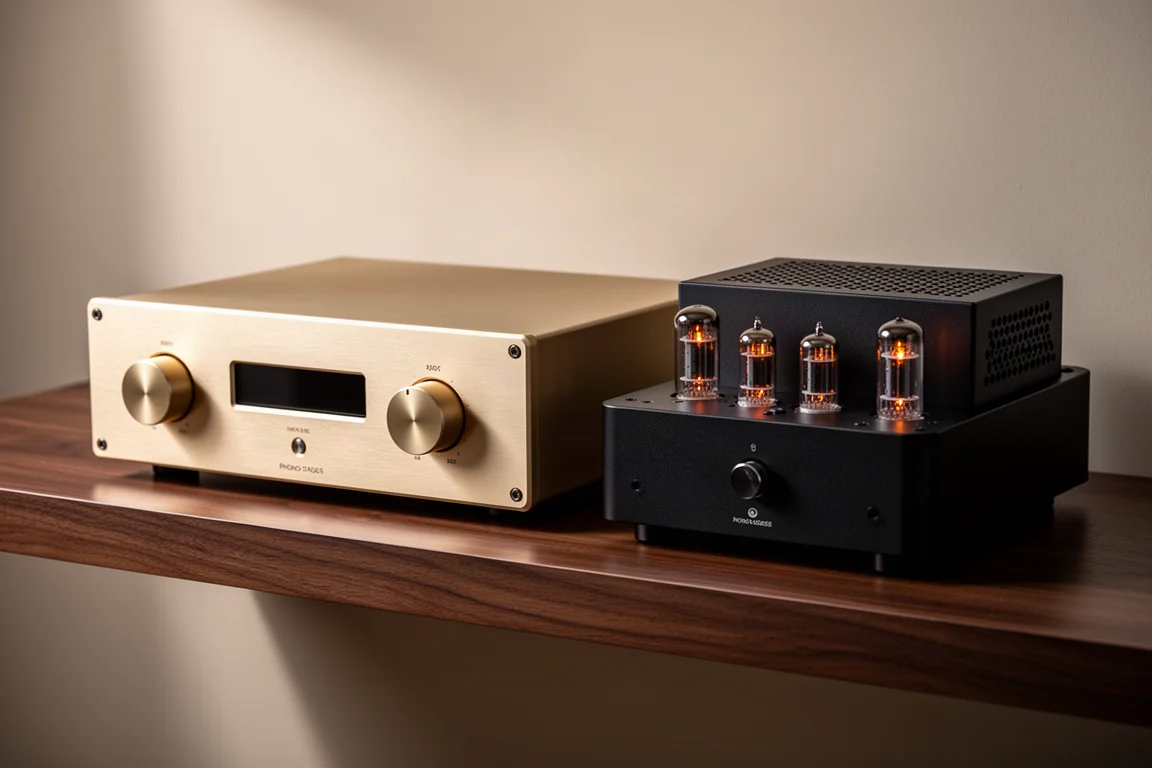
Accuphase C-57 vs Allnic H-7000V: Two High-End Phono Stages Compared
A fully balanced solid-state phono stage with a pitch-black noise floor meets a tube design built for well-loved records. Here is how to choose between them.
Hi-Fi Audio
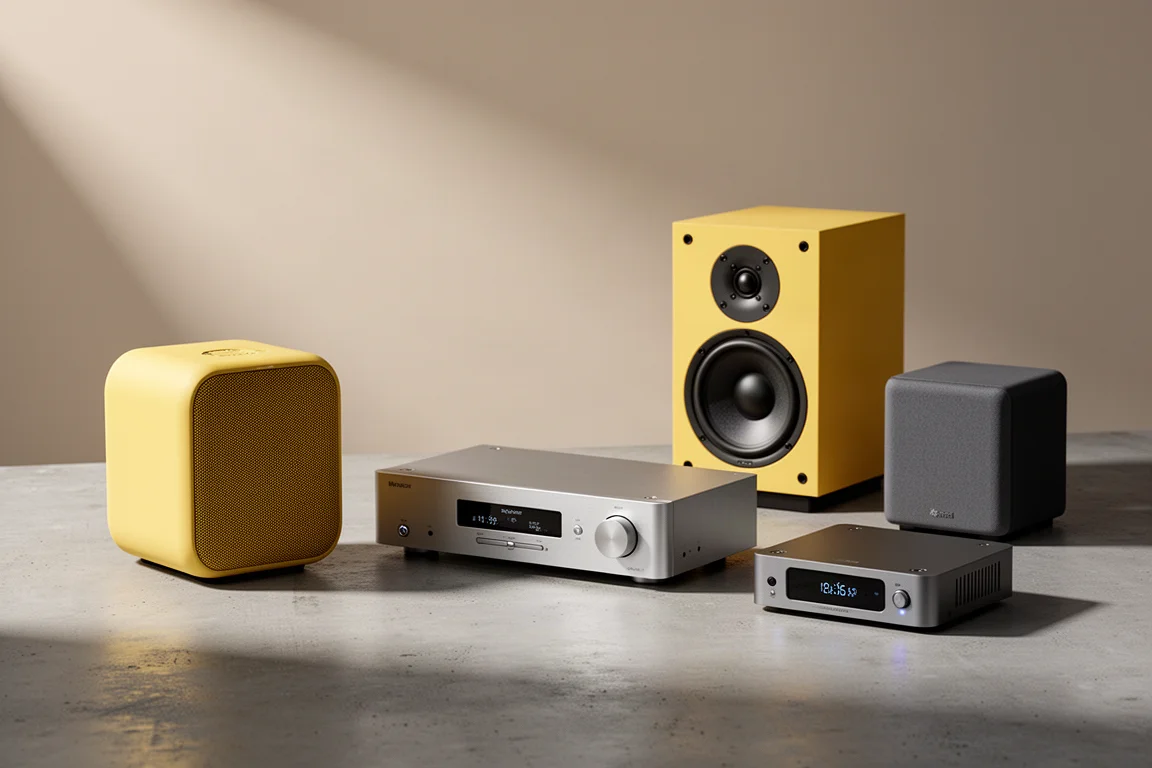
Active vs Passive Hi-Fi: Five Components for a Modern System
Five components that define modern active and passive hi-fi systems, with the strengths, trade-offs and setup details worth weighing before you buy.
Hi-Fi Audio
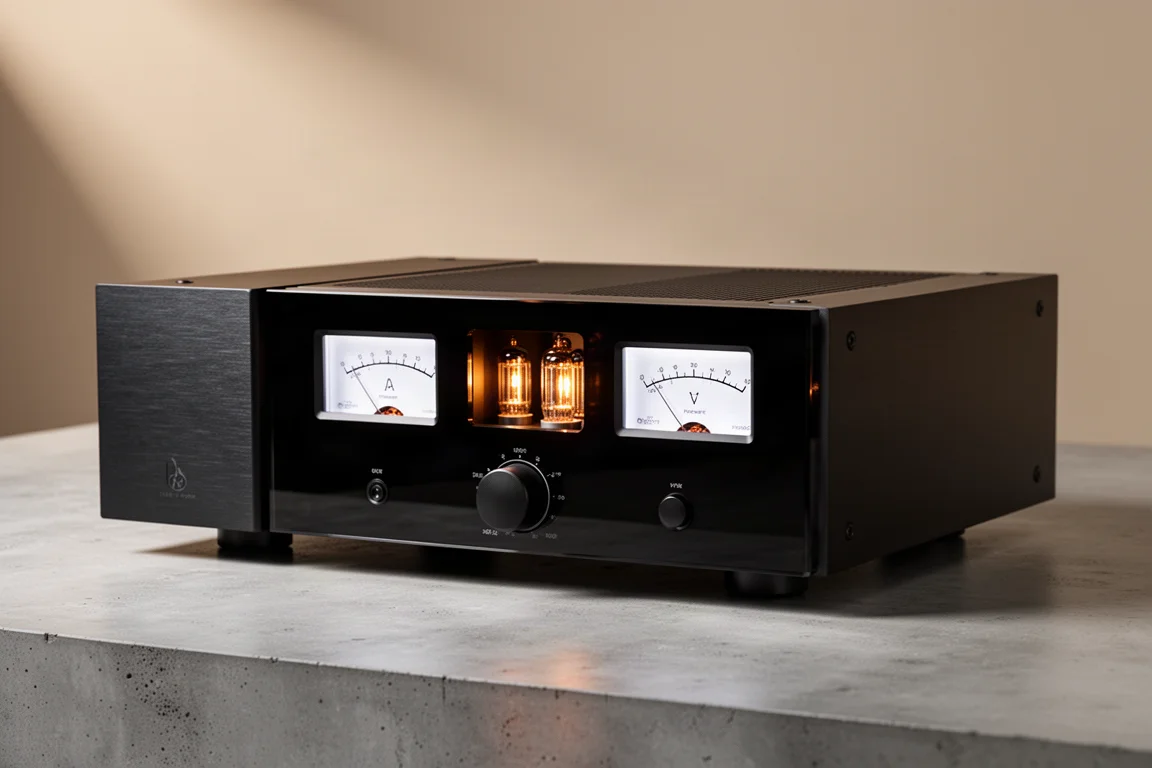
Advance Paris A10 Apex Review: A Hybrid Integrated Amplifier That Covers a Lot of Ground
A French hybrid integrated amplifier with a class A tube preamp stage, analogue power meters, and an internal DAC and phono stage good enough to make extra boxes unnecessary.