Hi-Fi Amplifiers
Cambridge Audio CXA61 Review: A Sub-£1,000 Integrated Amplifier Done Properly
The Cambridge Audio CXA61 pairs a 60W dual-mono power stage with an ESS Sabre DAC and a neutral, detailed character. Here is how it performs and who should buy it.
Introduction
The Cambridge Audio CXA61 is the entry point to the company’s CX range, sitting one tier above the AX series. At £699 it asks roughly twice as much as the AXA35, so the obvious question is whether the extra outlay buys a genuinely better amplifier or simply a longer feature list.
It buys a better amplifier. The CXA61 keeps the qualities that made the AX design so easy to live with, namely bass weight, a full midrange and a wide soundstage, and then improves the areas that were weakest: warmth colouration, midrange transient snap and upper-register detail. The result is one of the most complete integrated amplifiers available below £1,000.
Who This Amplifier Is For
This is an amplifier for listeners assembling a first serious separates system who want one box to handle both analogue and digital sources. There is a built-in DAC, a headphone output and enough inputs that most owners will not need to add anything else straight away.
It also makes sense for anyone stepping up from an existing budget amplifier. The CXA61 is not a sideways move from a £300 to £400 design. The gains in refinement and instrument separation are the kind you notice on the first track and continue to appreciate months later.
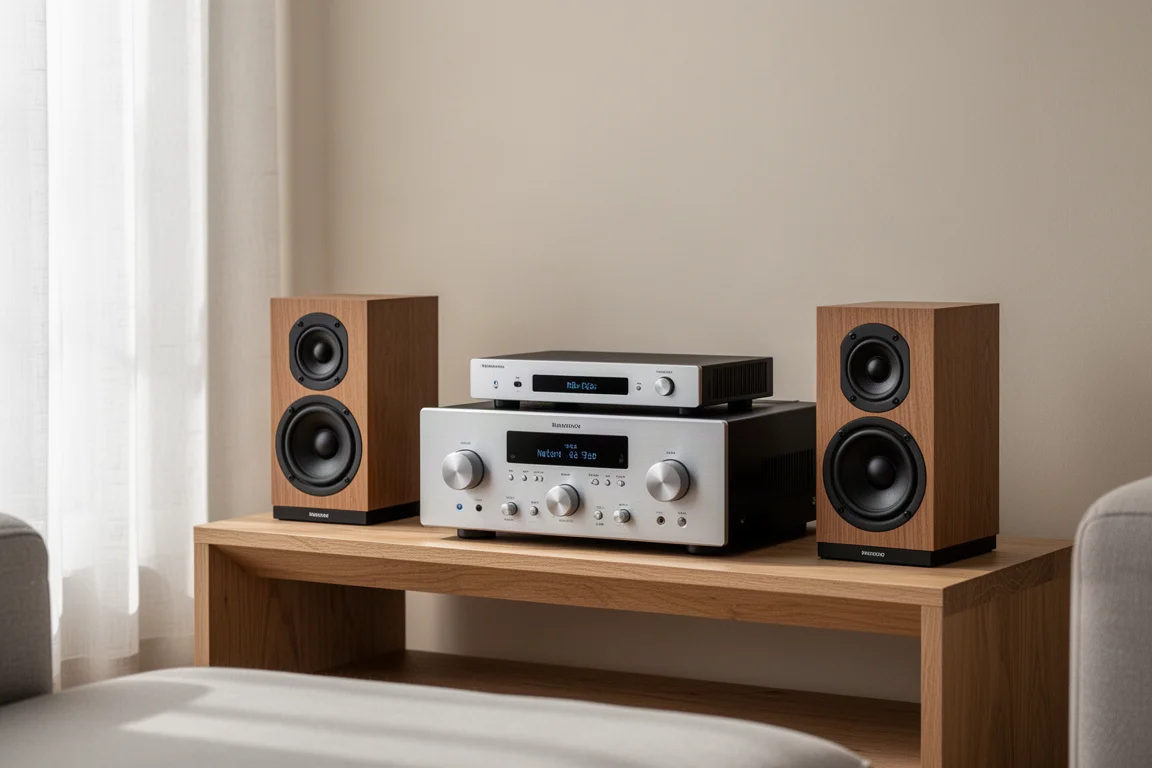
Where it is less suited is in systems built around hard-to-drive or overtly warm speakers, which are covered in more detail below. Paired with mainstream stand-mount and floorstanding speakers at a similar price, it is a very safe choice.
Design, Connections, and Everyday Use
The CXA61 is a full rack-width unit. It shares roughly the same width and depth as the AXA35 but stands taller at 115 mm (4.5 inches) and weighs 8.3 kg (about 18.3 pounds), which is 2.5 kg more than its smaller sibling.
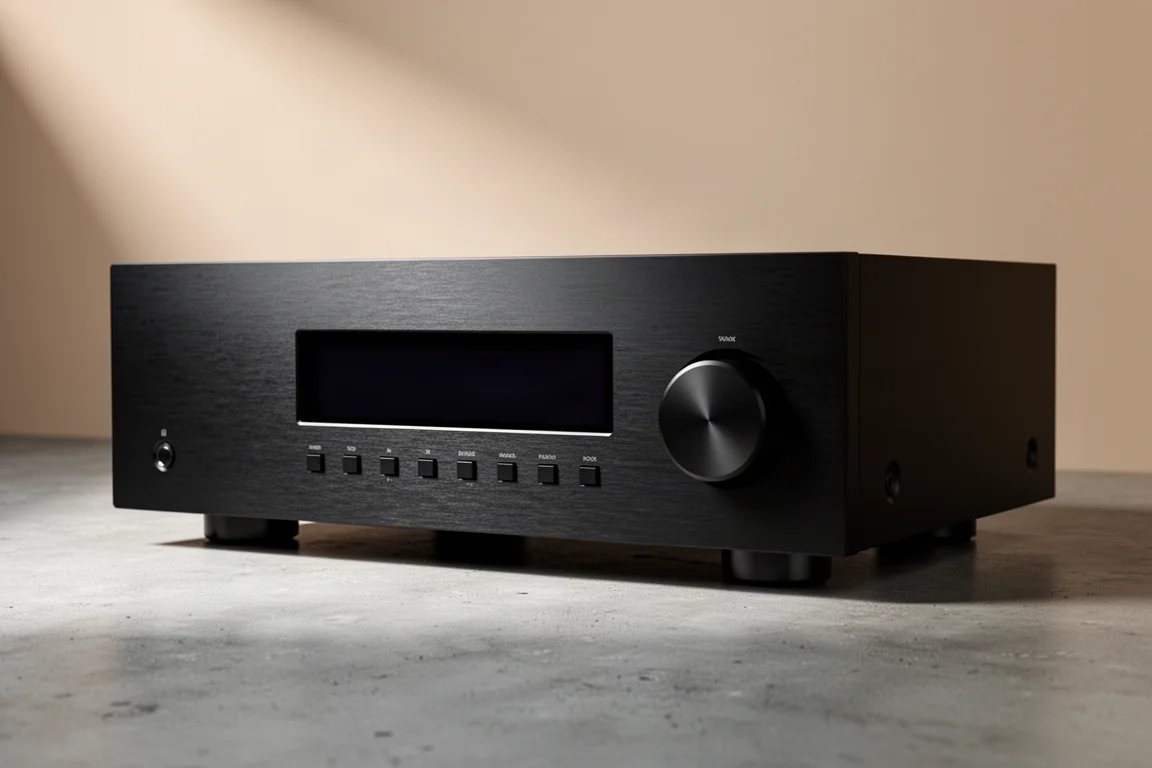
The front panel and buttons are plastic, though the volume control has a pleasingly weighty resistance. Input selection is handled by a row of buttons set into the display area. Having every input directly accessible is genuinely useful, but the layout is awkward in practice: at a glance, and especially in low light, it is not obvious where each button sits. Placing them below the display, as on the AXA35, would have been easier to live with.
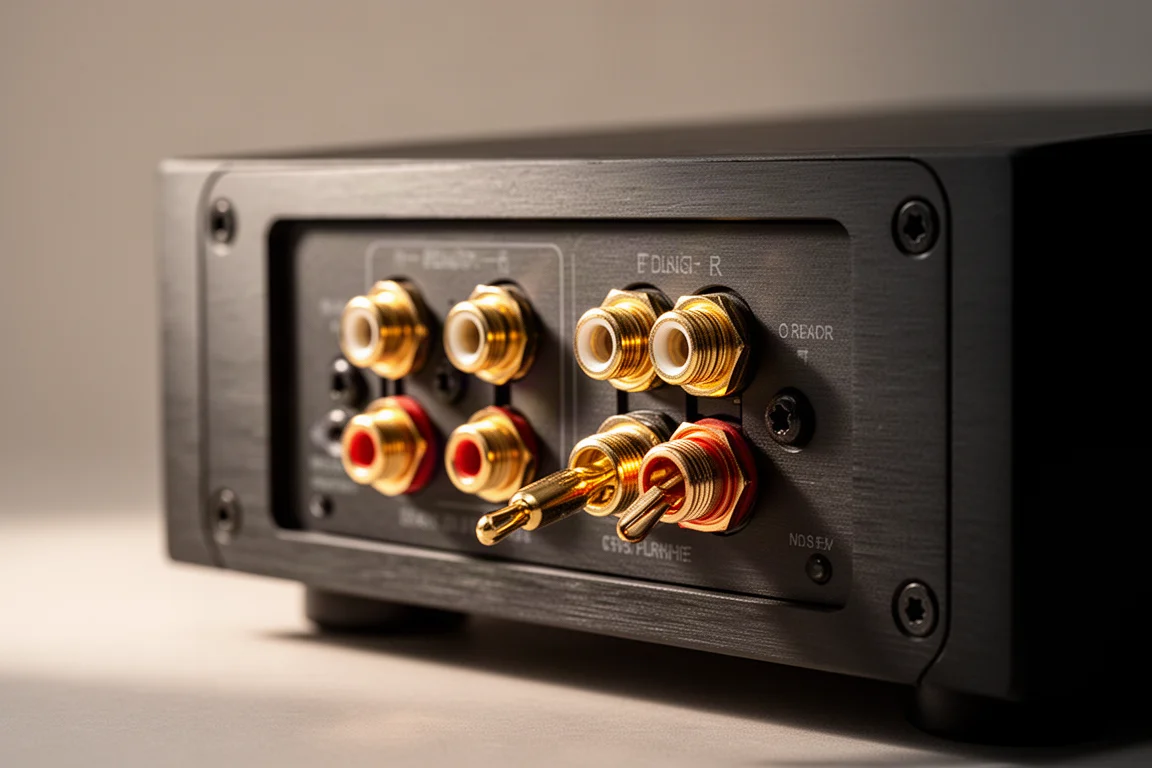
Around the back the provision is generous. There are two sets of speaker binding posts, RCA and 3.5 mm system control connections, an RS232C port, plus a 3.5 mm input and a 3.5 mm headphone jack on the front for a smartphone or portable player. Digital connections run along the top and include a Bluetooth antenna, a coaxial input, two optical inputs, and a USB input with the option to lift the earth connection to reduce ground loop hum from noisy sources. Analogue RCA inputs, a set of pre-outs for an external power amplifier and a subwoofer output complete the picture. The supplied remote can also control other Cambridge Audio components such as the CXN network player and the CXC CD transport.
Internally, the volume control is an Alps part, the transformer is larger than average for this class, and four cylindrical capacitors handle power supply filtering. The power amplifier sections on the left and right are mirrored, making the design effectively dual mono, an architecture usually reserved for more expensive amplifiers and one that should help channel separation.
One small practical note: a couple of the screws holding the top plate were tight enough that the heads began to deform during removal. That has no effect on performance, but it is worth knowing if you ever plan to open the unit.
Main Strengths
The CXA61 is defined less by what it adds than by what it fixes. Almost every strength of the AXA35 survives intact, and the compromises that came with that design have been reduced.
What has not changed is the underlying character: a generous low end, a full midrange and a spacious presentation. What has changed is how cleanly that character holds together across different types of music.
Sound Quality
Bass weight is generous, the midrange is full, and the soundstage is both wide and reasonably deep. Compared with the AXA35, the warm colouration is noticeably reduced, which means the CXA61 copes comfortably with a wider range of music rather than flattering some genres and softening others.
Midrange transients have considerably more snap, and that translates directly into better instrument separation. The upper registers are open and extended while staying refined, and this is an area where the CXA61 is among the best in its class.
Power and Speaker Matching
Official ratings are 60 watts into 8 ohms and 90 watts into 4 ohms. Those figures are modest, but the substantial transformer and filter capacitors point to enough current reserve to handle transient bursts, which matters more in practice than the headline number.
Neutrality is the amplifier’s greatest asset when choosing speakers. Overtly warm designs should be avoided if you want a balanced result, and speakers that are genuinely difficult to drive will expose the limits of the power stage. Low-sensitivity designs with awkward impedance swings can end up sounding soft and muddled, so it is worth looking beyond sensitivity figures and checking how a speaker behaves electrically. With speakers priced in the same region as the amplifier, problems are unlikely. A £1,200 stand-mount pair produced the most convincing result of the listening sessions, and it was comfortably the best sound achieved from a passive system at that price. A large £4,499 floorstander was also driven to a reasonable standard, although it is a relatively easy load.
The Built-In DAC
The digital board is built around an ESS Sabre 9010 K2M chip capable of 32-bit/384 kHz PCM and DSD256. It is an entry-level part in the ESS range, chosen to keep costs down, but the implementation matters far more than the chip badge.
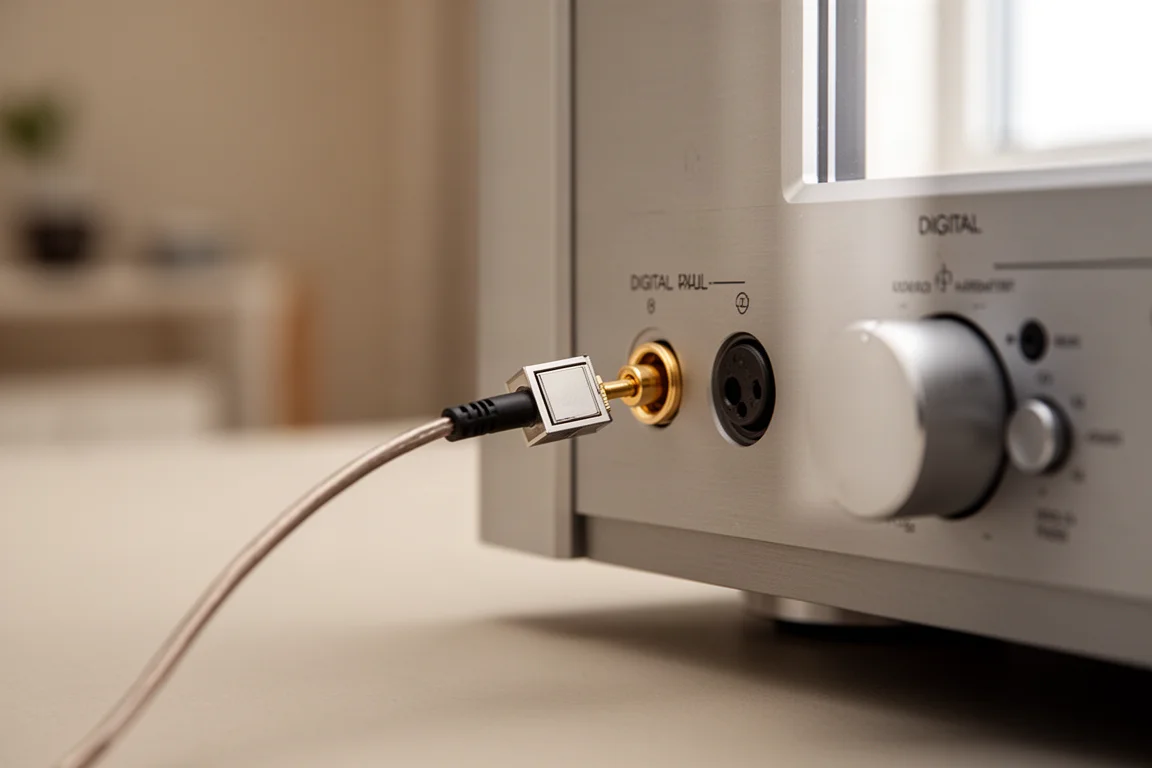
That shows in use. An external DAC costing roughly four times the price of the amplifier added only a little extra openness and dimensionality, which means the internal DAC is not placing a ceiling on performance. Owners can reasonably run the CXA61 as a complete digital and analogue hub without feeling short-changed.
Things to Consider Before Buying
Speaker matching is the main consideration. Avoid overtly warm speakers, and avoid unusually demanding loads. Everything else is straightforward.
The front panel ergonomics are the other trade-off. The buttons work, and direct access to every input is welcome, but the placement is not as clear as it could be, particularly in a dim room.
Price context matters too. The AXA35 at £349 remains excellent value, and the CXA61 costs around twice as much. The extra spend is justified by real improvements in refinement, separation and tonal neutrality, but anyone on a strict budget should not feel that the cheaper amplifier is inadequate.
Buying Advice
At £699 the CXA61 earns its keep through behaviour rather than specifications. It is more neutral and more resolving than the amplifier below it, and it avoids the warm tilt that can limit how versatile a budget design feels over time.
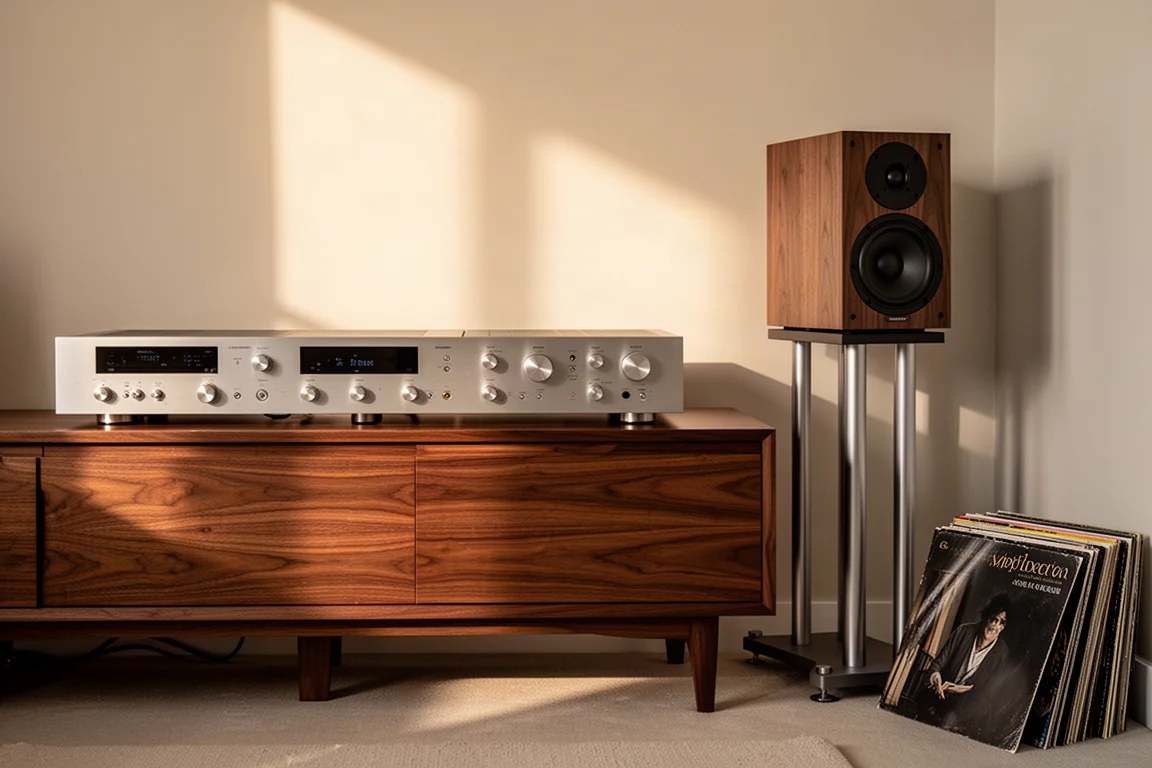
The sensible approach is to budget for speakers in roughly the same price band and to favour neutral or slightly lean designs. If your current speakers are notably warm, or known for punishing amplifier loads, plan for a change at the same time as the amplifier. If you already own a good external DAC, the internal one is strong enough that you will not feel you are losing much by using either.
Conclusion
The CXA61 retains everything that made the AX series appealing and improves precisely where it counts for the class above. It offers a generous spread of inputs, a well-implemented internal DAC, and a sound that is expansive, detailed and refined, with just enough colouration to take the edge off unforgiving recordings and partnering equipment.
Its limits are clear and predictable: difficult speaker loads and overly warm speakers are best avoided. With the vast majority of speakers it will realistically be paired with, it performs very well. As a complete package below £1,000, it is one of the strongest integrated amplifiers you can buy.
Product link
View more details for Cambridge Audio CXA61
This product is mentioned in the review. Check the specifications, options, and compatibility before buying.
View more details for Cambridge Audio CXA61Further reading
Related Reviews
Hi-Fi Amplifiers
Accuphase E-280 Review: Entry-Level Accuphase With Flagship Attention to Detail
A close look at the Accuphase E-280 integrated amplifier, covering its champagne build, AAVA volume control, sound quality, and the speakers and sources that suit it best.
Hi-Fi Amplifiers
Advance Paris A10 Classic vs Yamaha A-S301: Two Integrated Amplifiers Compared
A practical comparison of a $350 integrated amplifier and a $2,500 reference model, covering the differences that matter and the ones that do not.
Hi-Fi Amplifiers
Affordable Chinese Amplifiers Worth Buying: Five Budget Hi-Fi Amps Compared
A practical look at five affordable amplifiers, what each one does well, and the trade-offs to weigh before you buy.