Turntables
Cambridge Audio Alva ST Review: Belt-Drive Value With a Serious Phono Stage
The Cambridge Audio Alva ST pairs a well-damped belt-drive design with a built-in phono stage derived from the company's higher-end models, plus switchable aptX HD Bluetooth.
Introduction
Cambridge Audio has been designing hi-fi in London since 1968, and it built its reputation on simple circuits and careful component selection rather than long feature lists. The company was the first audio manufacturer to build an integrated amplifier around a toroidal transformer, and that same measured, engineering-led approach runs through its turntable line.
The Alva ST is the more affordable member of the Alva family, and it borrows heavily from the Alva TT V2 above it. That means a manual belt-drive design, a built-in moving magnet phono stage, and aptX HD Bluetooth output, all wrapped in a plinth that weighs over 16 pounds.
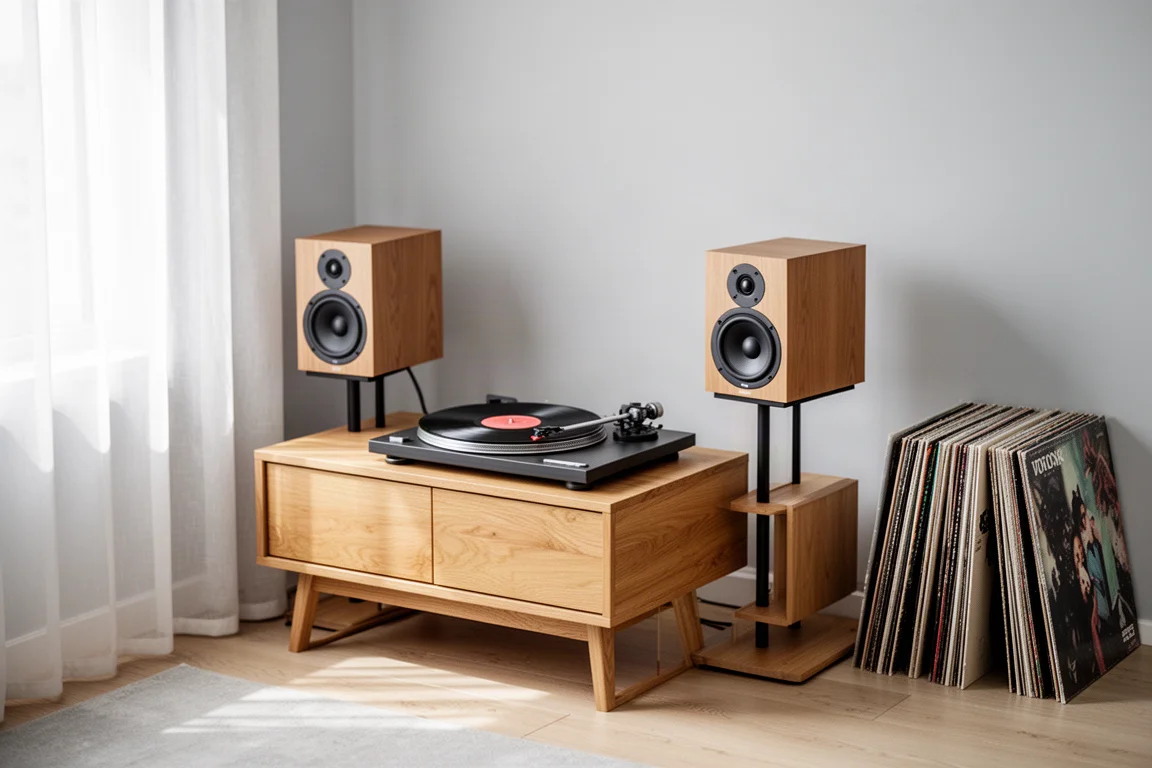
For anyone assembling a first serious vinyl system, that combination covers most of the practical boxes: a capable phono stage, a cartridge with a real upgrade path, and a physical connection that does not demand extra boxes or cables.
What to Look For in a Modern Turntable
Before comparing models, it helps to know which details shape long-term satisfaction rather than short-term spec appeal.
Drive type and speed regulation come first. Belt-drive designs isolate the motor from the platter, while direct-drive designs couple the two, and each approach carries its own trade-offs. Plinth and platter damping matter just as much, because a well-damped plinth keeps unwanted resonance away from the cartridge.
The tonearm deserves close attention too. A detachable headshell makes cartridge swapping easy, while adjustable tracking force and anti-skate let you fine-tune the setup for a given record. Height and azimuth adjustment widen the range of cartridges you can fit, but they are not present on every arm.
Finally, consider the phono stage and connectivity. A good built-in stage can remove the cost of a separate unit and a second pair of cables, and Bluetooth output adds flexibility for listeners who use wireless speakers or headphones.
Cambridge Audio Alva ST: Belt-Drive Value
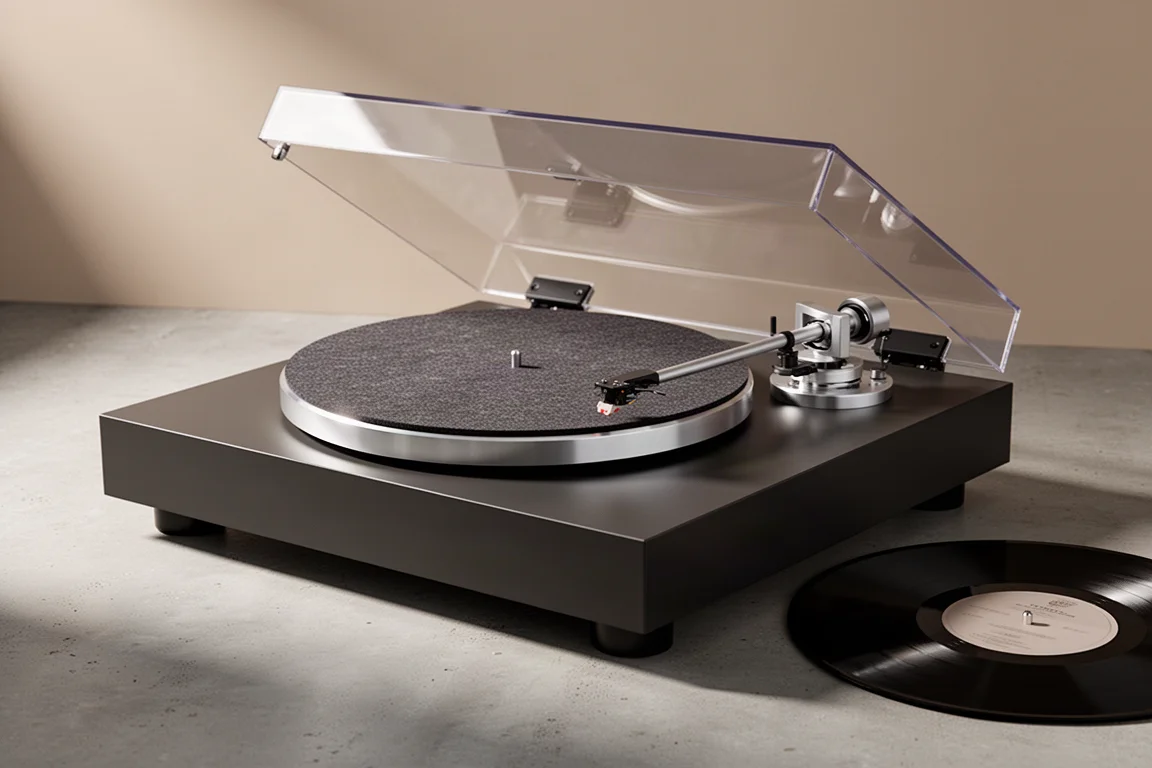
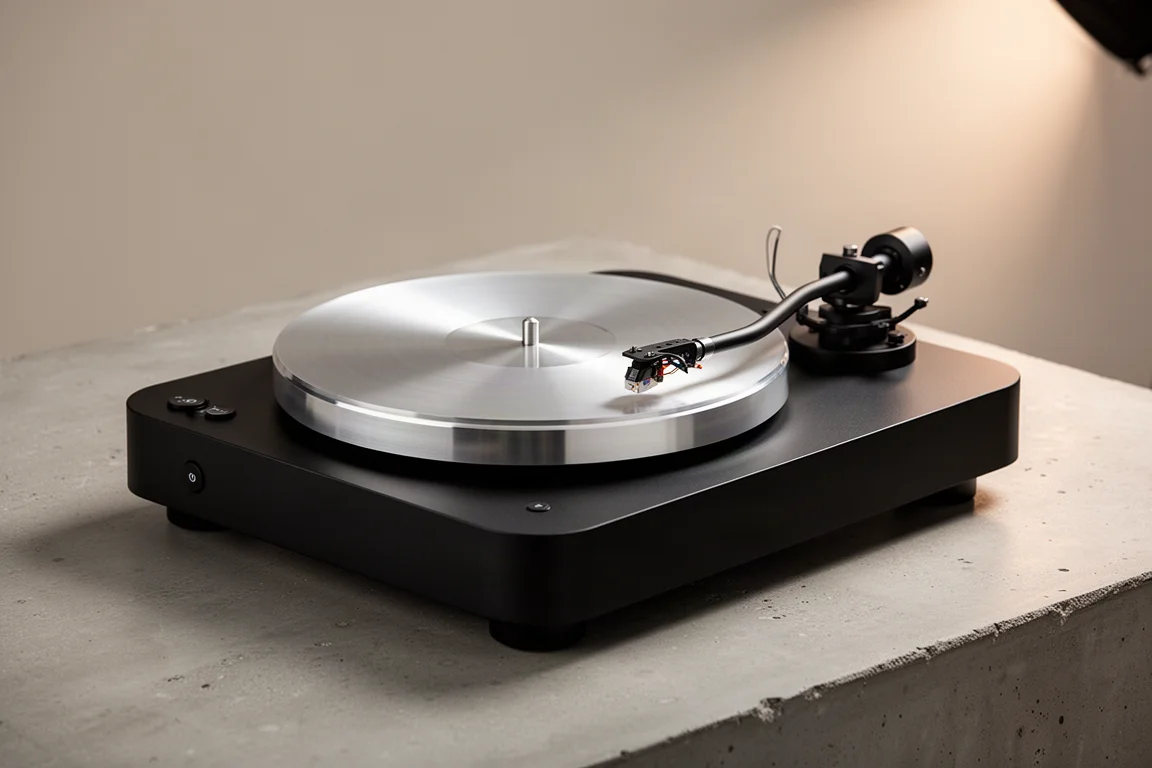
The Alva ST is a belt-drive turntable, and the motor is isolated at three points so it never touches the aluminium top plate. The platter bearing sits in its own isolation well attached to the top of the plinth. The platter itself is a one-piece die-cast aluminium unit, and the supplied mat is heavy enough that the two together feel completely inert: tapping the outer edge produces no audible ring or vibration.
The plinth is built from MDF with a layer of EVA, a damping pad with stronger anti-vibration properties than most materials used at this level, and a one millimetre solid aluminium top plate sits on top of it. Four feet with damping technology further reduce resonance reaching the plinth. The lower section of the plinth is finished in matte dark grey, echoing the floating look of the company’s CX components, with power and speed controls on the left and an embedded logo on the right.
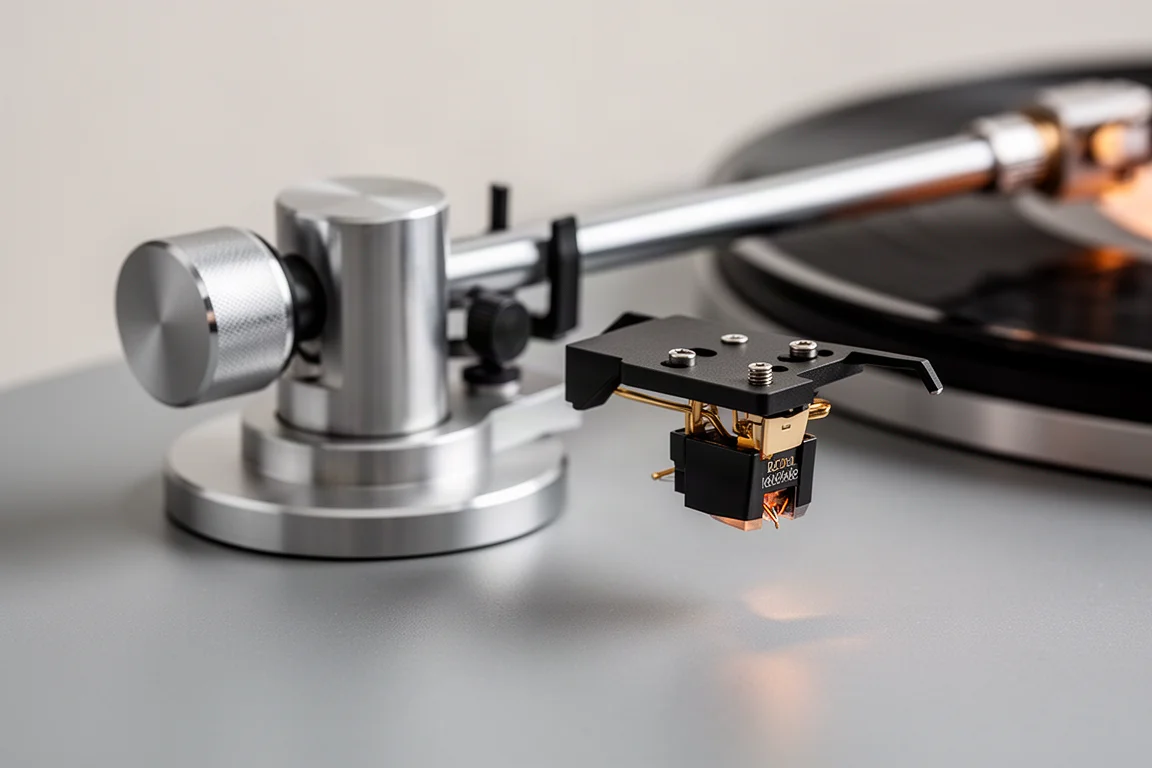
Operation is fully manual, so you lower the tonearm with the cueing lever to start a record and raise it when the side ends. The tonearm is the same unit used on the Alva TT V2 and includes a detachable headshell, adjustable tracking force and anti-skate, though there is no azimuth or tonearm height adjustment.
The supplied cartridge is an Audio-Technica AT-VM95 moving magnet model, and the rear connections are printed both the right way up and upside down so they stay readable when you lean over the top. The included cables are better than the bare minimum and should not need replacing straight away.
Cambridge Audio Alva TT V2: Direct-Drive Step Up
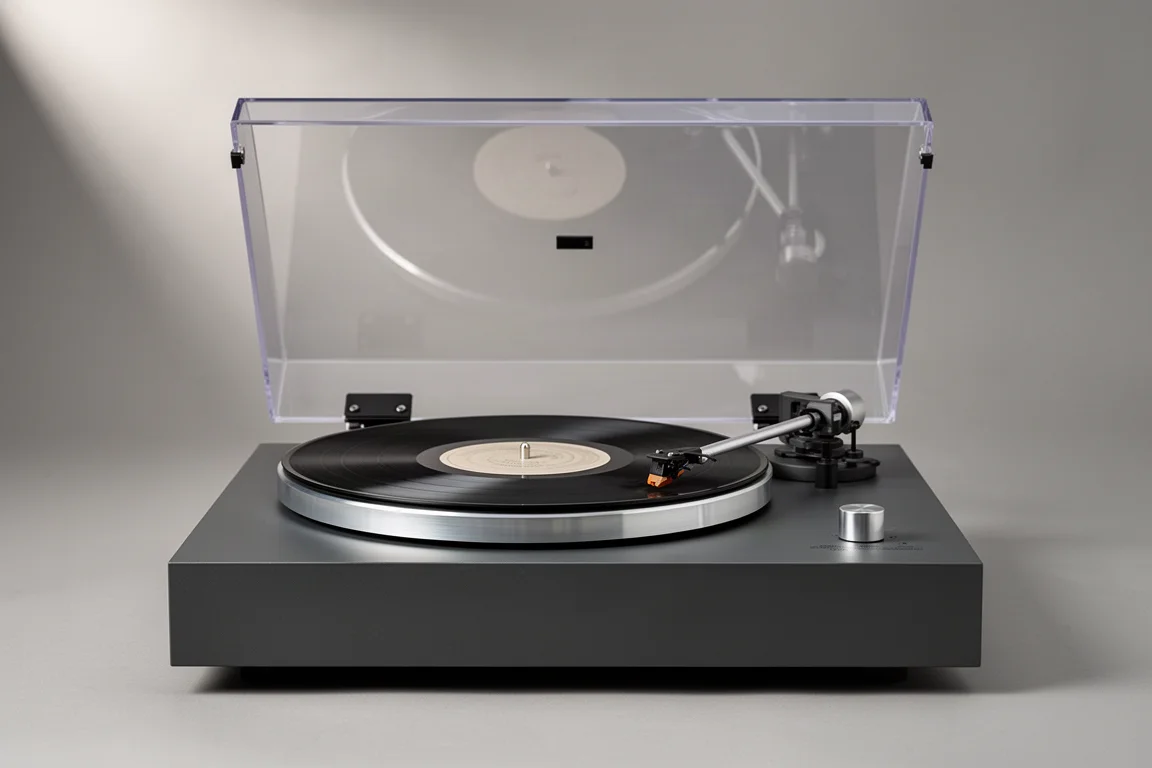
The Alva TT V2 sits above the Alva ST and looks almost identical from across the room. The differences are structural. It uses a direct-drive motor instead of a belt, and its aluminium top plate is six millimetres thick rather than one, which adds mass and damping to the plinth.
It also comes with a moving coil cartridge rather than the moving magnet design fitted to the Alva ST, while carrying the same tonearm, the same built-in moving magnet phono stage and the same aptX HD Bluetooth transmitter. That step up costs roughly twice as much as the Alva ST.
Phono Stage and Bluetooth: What You Get
The built-in phono stage is one of the strongest arguments for the Alva ST. Cambridge Audio has earned recognition for its separate Solo and Duo phono preamps, and the stage inside the Alva ST is based on the more expensive Duo design. That means a high-level signal can go straight into your amplifier without a separate phono stage or an extra pair of cables.

Bluetooth output is the other headline feature, and it is implemented with aptX HD, which streams at 24-bit/48 kHz. That is a far less lossy method than the more compressed Bluetooth schemes, though a wired connection still has the edge in dynamics. If you prefer a purely analogue signal path, a switch disables the Bluetooth circuitry entirely, and the phono stage can be bypassed as well if you later want to run a moving coil cartridge through an external stage.
One practical note on pairing: there is no on-screen interface for choosing which device to connect to, so the turntable links with the first available Bluetooth device it finds. Switching off other Bluetooth hardware nearby makes pairing predictable.
Cartridge Upgrades and Long-Term Ownership
The AT-VM95 family is one of the most useful things about this turntable. Replacement styli from the better models in that range fit the same cartridge body, so you can move to a finer stylus profile when the original wears out instead of buying a complete new cartridge. A microline tip is available for around $150.
The detachable headshell also makes it easy to keep a second cartridge mounted, whether that is a spare for records in rough condition or a mono cartridge for mono pressings. Because the tonearm height is fixed, any alternative cartridge should be close in height to the Audio-Technica model.
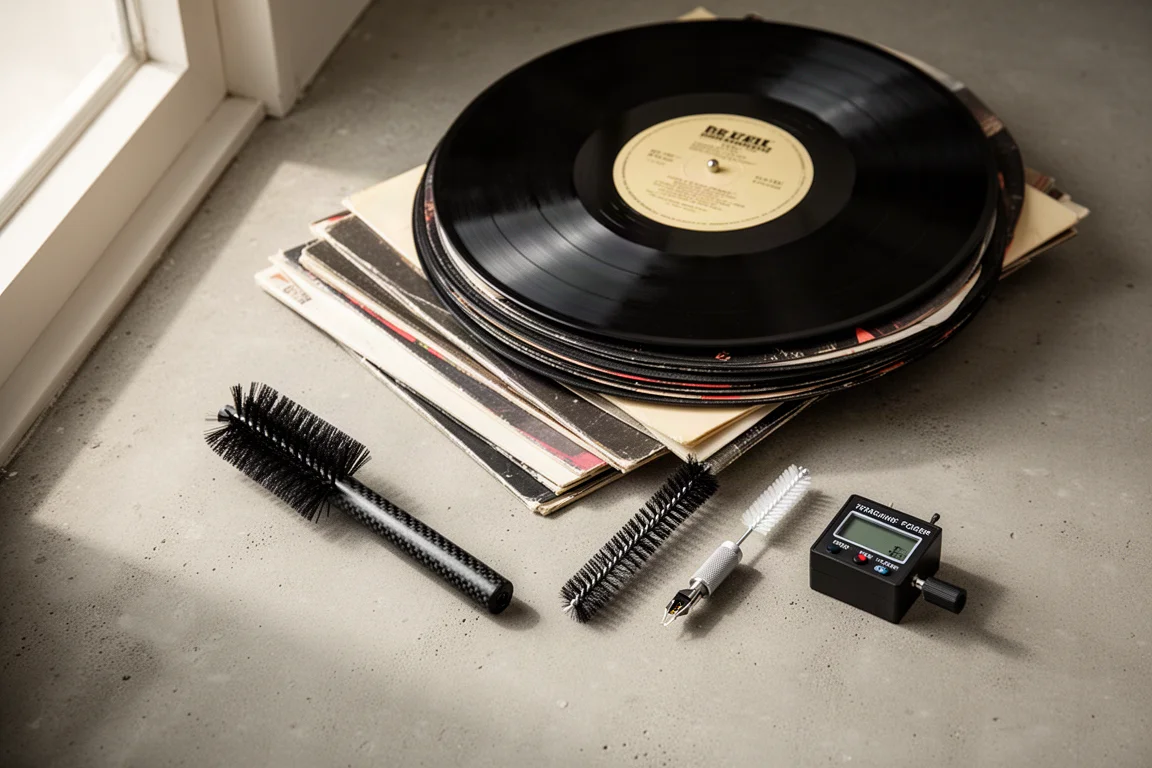
Setup is straightforward but worth doing carefully. The turntable is heavy, so connecting the audio cables and power supply before rotating it into position saves effort later. The supplied stylus pressure gauge helps confirm tracking force, and the large markings on the counterweight indicate half-gram steps, so four markings after zeroing the arm lands at roughly two grams.
Buying Advice
The Alva ST makes the most sense for listeners who want a complete, well-built turntable without adding a separate phono stage. Its belt-drive design, damped plinth and upgradeable cartridge give it a clear path for years of use, and the Bluetooth output is there whenever you want it.
The Alva TT V2 is the choice if you want direct drive, a thicker aluminium top plate and a moving coil cartridge out of the box, and if roughly double the price is comfortable. Both models share the same tonearm and the same connectivity, so the decision comes down to drive system and cartridge rather than a long list of features.
Either way, keep the setup simple. The included cables are good enough to start with, and the built-in phono stage removes one of the most common upgrades from the list.
Conclusion
The Alva ST takes the core of a more expensive turntable, the tonearm, the phono stage and the aptX HD Bluetooth, and wraps it in a belt-drive package that is easy to set up and built to last. The compromises are limited to a fixed tonearm height and a Bluetooth pairing process that rewards a little patience.
For listeners who would rather enjoy records than manage a chain of extra boxes, it is an easy recommendation.
Further reading
Related Reviews
Turntables
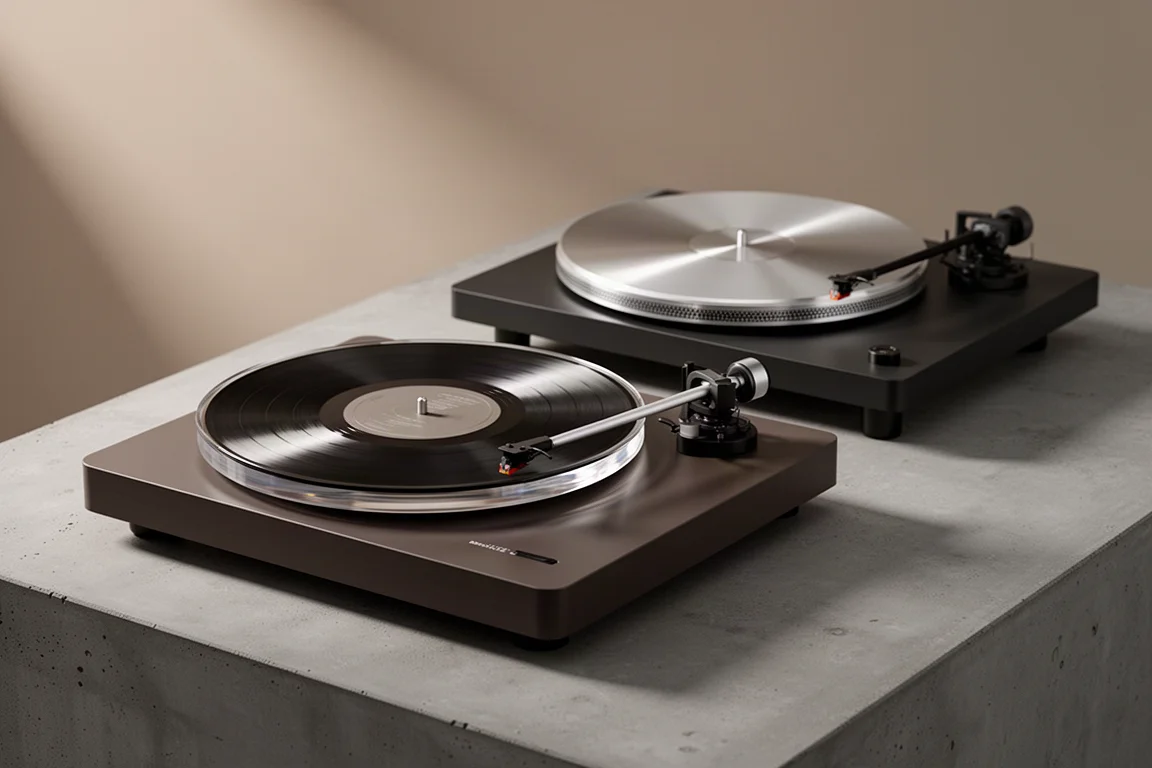
Best Turntables 2026: Seven Standout Picks From Entry Level to Premium
A practical roundup of seven turntables worth considering, from a US-made budget deck to small-batch premium models with a clear upgrade path.
Turntables
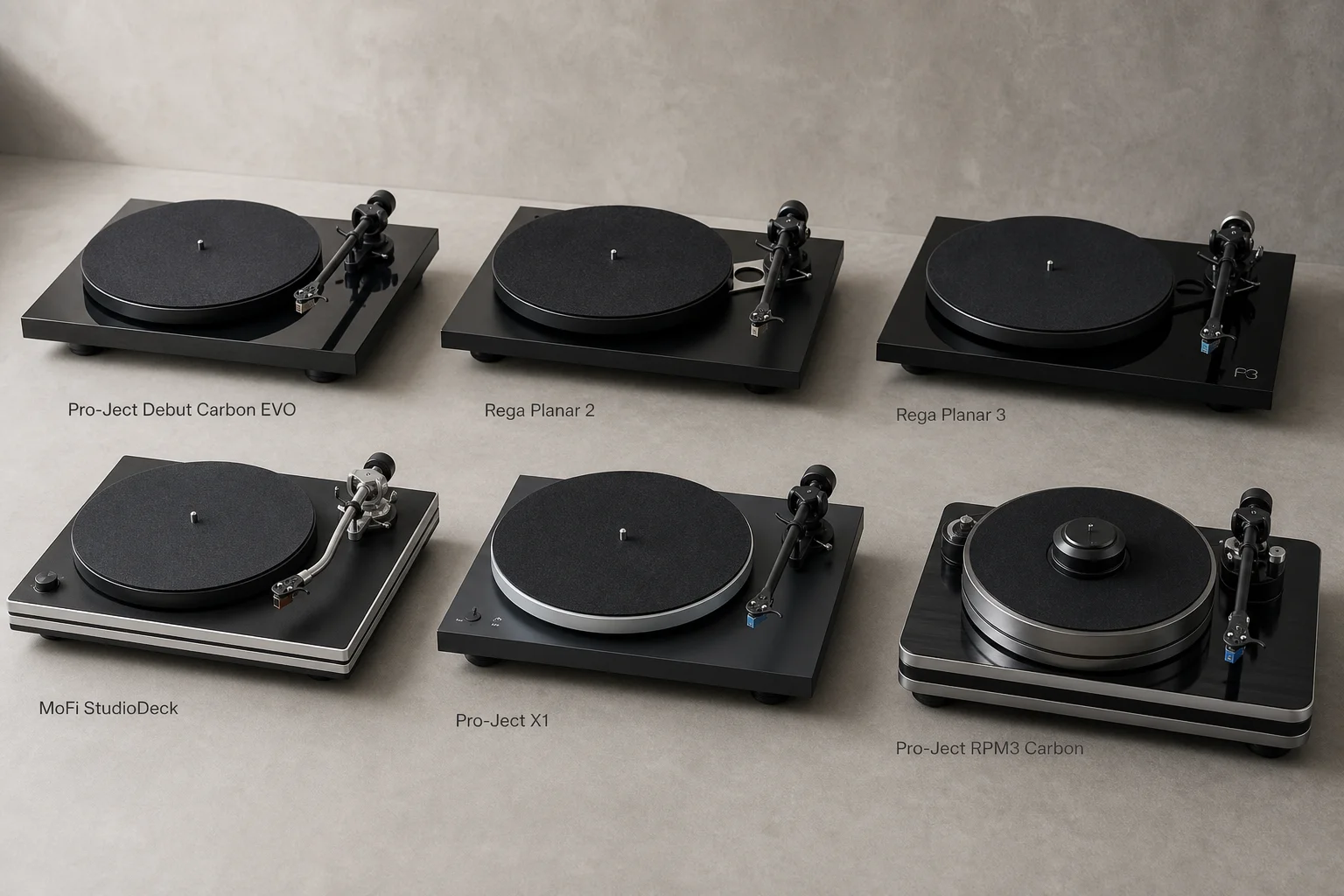
Best Turntables Under $1,000: Five Fully Manual Picks Worth Considering
Five fully manual turntables under $1,000, compared on build quality, cartridges, upgrade potential, and the character of sound each one brings to a system.
Turntables
Best Turntables Under $2,000: Six Vinyl Decks Worth Building a System Around
Six turntables under $2,000, from a value-focused belt-drive deck to a fully balanced design, with the strengths and trade-offs that matter before you buy.