Triathlon Bikes
Cadex Tri Review: An Unconventional Triathlon Frameset Built Around the Rider
A close look at the Cadex Tri frameset, its integrated hydration and nutrition, its adjustable front end, and what to weigh before committing to such an unusual race bike.
Introduction
The Cadex Tri has been one of the most discussed triathlon framesets of the past year, and not only because of its results. It is the platform that carried an athlete through a sub-seven hour iron-distance project and on to a 2021 IRONMAN World Championship win. It is also one of the least conventional race bikes you can buy.
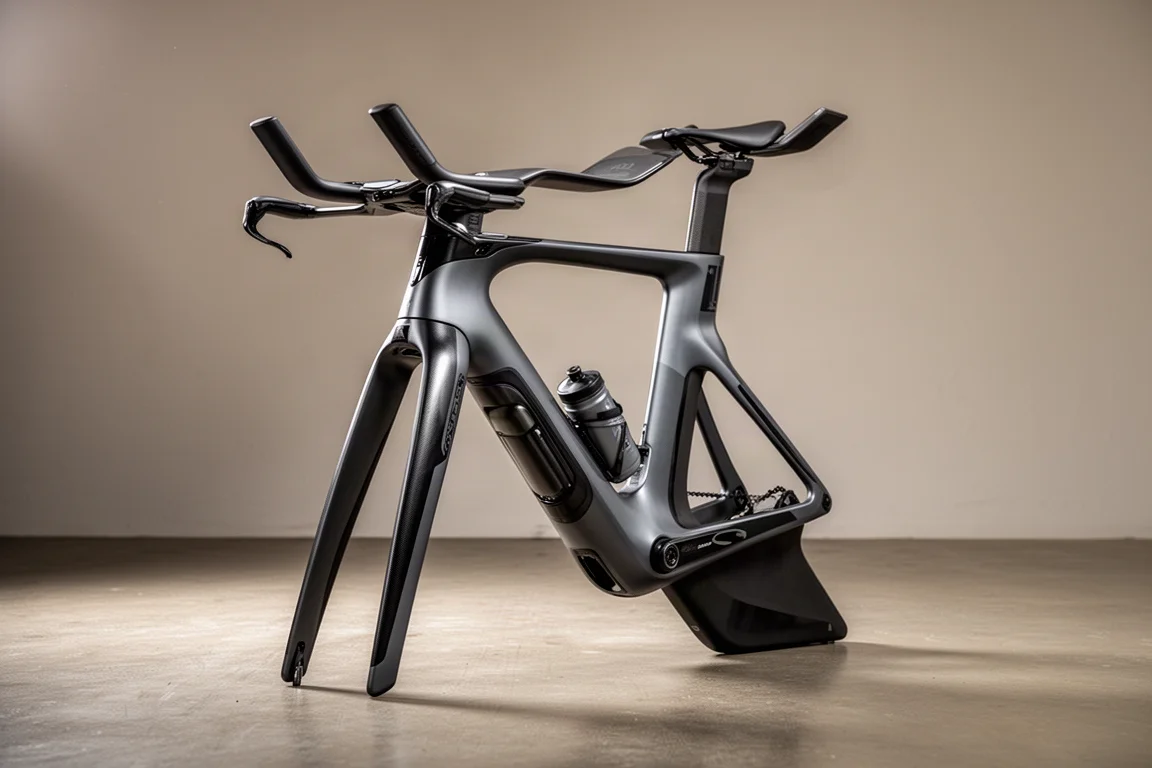
There is no top tube. The fork legs run all the way up into the aerobars. Almost every bottle, gel and spare has somewhere built into the frame where it can live. Cadex describes the design as something far more considered than the silhouette suggests, and the reasoning behind it is easier to appreciate once you understand what the bike is actually trying to solve.
What Cadex Is and Where the Tri Comes From
Cadex is a brand of Giant, and it has a longer history than most riders realise. The first Cadex cycling product launched in 1987, when Giant introduced carbon fiber frames that are described as the first commercially produced carbon fiber frames. The name then disappeared for a number of years.
It returned in stages. From 2016 the brand began developing new products, starting with wheels that launched without a name attached and carried only an “overachieve” hashtag, before the Cadex name was revived in 2019 at the Tour de France. From the outside, Cadex reads as a specialist products lab where budget is not the limiting factor.
The Tri frameset follows that same pattern. Development ran for roughly five or six years, and the racing athlete who campaigned it first saw the finished bike in a wind tunnel in Eindhoven. By his own account he contributed the colourway rather than the engineering, leaving the frame design and the aerodynamic work to the people who had been modelling it.
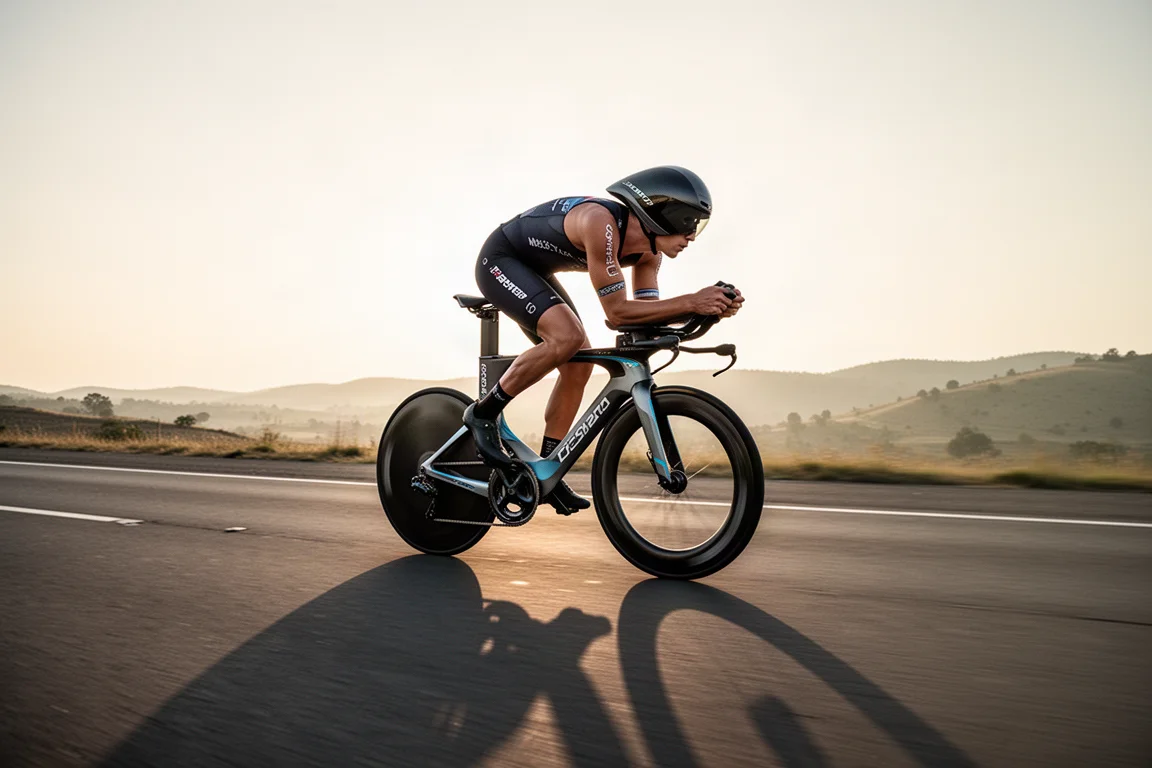
That long development window matters when you are judging a bike this unusual. The shape is not a styling exercise that arrived late in the process. It was built from the start around a specific goal: keeping a triathlete in the aero position for as much of the bike leg as possible.
Who the Cadex Tri Is For
This is a race bike for long course triathletes. Every decision on the frame points toward non-drafting racing, where the athlete spends almost the entire bike leg in a tuck and where the run that follows is as important as the bike split itself.
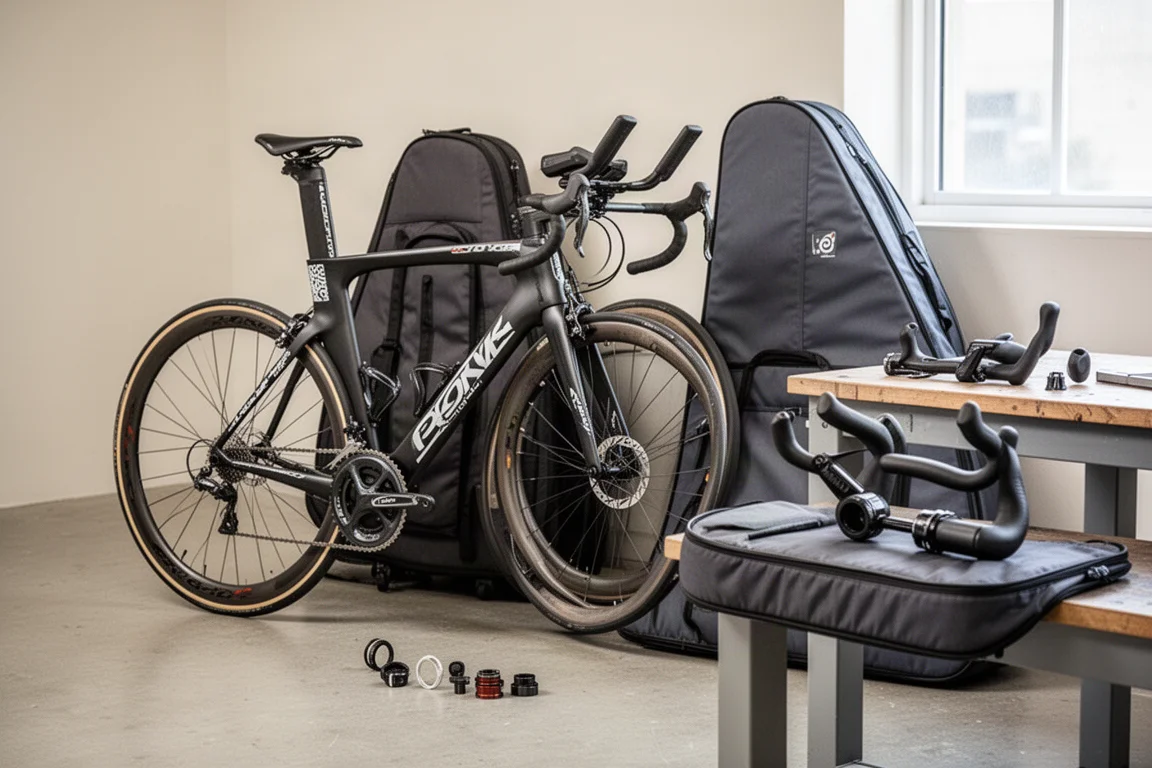
It also suits riders who travel to races. The front end is designed to come apart quickly, and the aerobar assembly splits so it can fold down for packing. Athletes who build and adjust their own bikes, rather than handing them to a mechanic at every event, get a lot of value out of that.
Finally, it appeals to riders who want a race-ready machine rather than a base bike that has to be accessorised. The hydration, the nutrition storage and the tool storage are all part of the package, which means less to buy, less to bolt on, and fewer things to forget on race morning.
Main Strengths: Integrated Hydration and Nutrition
The central argument for the Cadex Tri is that around 85 percent of the total drag comes from the rider, not the bike. If most of the resistance is the person, then keeping that person locked into position for longer is worth more than a marginal gain somewhere on the frame.
The integration exists to serve that idea. Hydration is stored inside the frame rather than in bottles behind the saddle, with capacity between roughly 600 millilitres and one litre depending on frame size. The straw comes straight out of the reservoir, so drinking does not require sitting up or reaching down. The athlete simply leans in and takes a drink, then refills from aid stations without leaving the aero position.
Nutrition gets the same treatment. The bento compartment is large enough that one rider estimated it could hold around 16 gels, which changes how a race is fuelled. Instead of carrying a handful of gels and rationing them, the whole race plan can start on the bike. There is also dedicated storage for a CO2 cartridge or an inner tube, so the flat kit stops being a saddle bag problem.
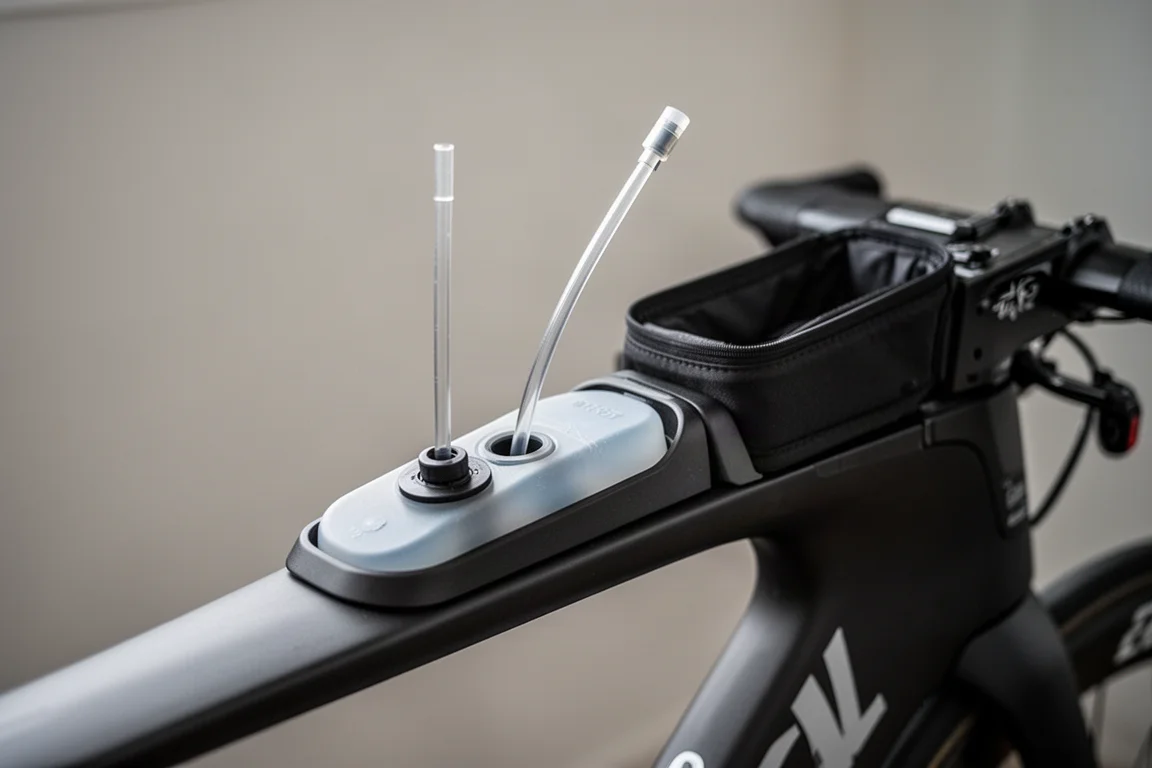
The effect is a bike that arrives at transition ready to race. Riders who have spent years strapping bottles, bags and mounts to a frame will notice how little there is left to add.
The Frame Design and Aerodynamic Approach
The most distinctive element is the wide stance fork, whose legs rise upward and continue into the aerobar area. The reasoning is straightforward: the open ports between the fork blades let air pass through cleanly rather than being blocked by a conventional steerer and head tube arrangement. Air then flows over the long bladed profile of the fork legs.
That idea continues toward the back of the bike, where the seat stays follow a similarly wide, horizontal approach. Combine the fork, the missing top tube and the deep front end and you get a frame that looks unlike anything else in transition, but each element is there to manage airflow around a rider who is sitting in a fixed position.
The approach is not without precedent. Carbon frame design has taken radical turns before, and one well-known example is the Giant MCR, designed by Mike Burroughs and produced in 1997. The Cadex Tri revisits that spirit of experimentation, but this time the target is triathlon specifically rather than the track or the road.
Frame Stiffness, Climbing, and Handling
The frame is stiff and light, and that combination shows up in ways that matter on a real course. It accelerates well, helped by the disc brake setup, and riders who have spent time on it describe climbing as a genuine strength rather than a compromise. That is not the impression the silhouette gives, which is part of why it surprises people.
Crosswind behaviour is the other point that comes up repeatedly. Deep, wide front ends usually make riders nervous in gusty conditions, and this one is reported to hold its line well when the wind shifts.

There is also a ride quality argument that matters for anyone racing long distance. Riders report absorbing less shock through the body over a full bike leg, which leaves them feeling fresher when they dismount and start running. Some of that comes from the carbon layup. For a triathlete, arriving at T2 with legs that still work is worth as much as any aerodynamic number.
Fit Adjustment and Travel
Adjustability is where the Cadex Tri is most quietly impressive. Triathletes tend to ride further forward than road riders, and many frames built around road racing geometry force a compromise. Here the saddle can be positioned well forward, up to around five centimetres in front of the bottom bracket, which is a much more natural range for long course racing positions.
The front end uses a quick release spacer system. Two bolts undo, spacers slide in or out without needing longer or shorter bolts, and the whole adjustment takes well under a minute. Riser angle can be set across a range from zero to 10 to 15 degrees, and the aerobar poles adjust in and out using a single bolt. The base bar itself is available in different lengths for riders who prefer a narrower or wider stance.
Practicality follows from that. Because the bar assembly splits, it folds down for travel, which makes packing a bike case far less of a project than it is on a conventionally routed race bike.
Things to Consider Before Buying
This is a dedicated triathlon frameset, and it behaves like one. Riders who split their time between triathlon and road group rides should think carefully, because the frame is not designed as an all-round road bike.
The missing top tube is a real change in how the bike feels and how you handle it at low speed, at the rack, and when moving it around. It is a design you commit to rather than something you grow into casually.
Adjustability does not remove the need for a proper fit. Position on a long course bike is a moving target, and even the racing athlete who helped develop this bike described the search as a process of moving back and forth over many months. A frame that is easy to adjust still needs someone to do the adjusting thoughtfully.
Because the Cadex Tri is sold as a frameset, the final build is yours to decide. Bar width, saddle, gearing and wheelset all come from your choices, so budget for the complete build rather than the frame alone. Cadex positions itself as a specialist brand without the usual budget constraints, so premium pricing is the reasonable expectation.
Buying Advice
Buy the Cadex Tri if you race long course triathlon seriously and you already know roughly where your position needs to sit. The integration is the real product here: carrying your fluid, your fuel and your flat kit inside the frame means fewer decisions and fewer movements during the bike leg, and that is exactly where this bike earns its keep.
It also makes sense if you fly to races. The quick release spacers, the single bolt aerobar adjustment and the folding bar assembly turn packing and rebuilding from an ordeal into a short routine, which matters if you are not travelling with a mechanic.
Look elsewhere if triathlon is a side interest, if you want one bike that also handles road riding, or if you have not yet settled on a race position. The adjustability is generous, but it is a tool for refining a good position rather than a substitute for finding one.
Whichever way you go, treat this as a race-day system rather than a frame purchase. Decide on your bar width and saddle first, plan your fluid and gel strategy around the internal storage, and set the front end up before your first long ride rather than the week of your goal race.
Conclusion
The Cadex Tri is not conventional, and it is not trying to be. It is a triathlon frame built around a single clear idea: most of the drag is the rider, so make it easier for the rider to stay in position, stay fuelled and stay comfortable for the whole bike leg. Hydration inside the frame, a bento compartment big enough for a full race’s nutrition, tool storage and a front end that can be adjusted and packed in minutes all serve that goal.
For a committed long course athlete, that combination is genuinely useful rather than novel. For everyone else, it is a specialist tool with a narrow brief. Understand which of those describes you, and the decision becomes straightforward.
Product link
View more details for Cadex Tri
This product is mentioned in the review. Check the specifications, options, and compatibility before buying.
View more details for Cadex TriFurther reading
Related Reviews
Triathlon Bikes
Best Triathlon Bikes 2026: Seven Race Bikes Compared
Seven triathlon bikes assessed on front-end adjustability, onboard hydration and storage, and value, from the most common bike in transition to lower-cost race options.
Triathlon Bikes
BMC Speedmachine Review: A Formula One-Informed Triathlon and TT Bike
The BMC Speedmachine pairs Red Bull Advanced Technologies aerodynamics with a redesigned frame, integrated hydration, and a 500 gram weight saving over BMC's previous triathlon platform.
Triathlon Bikes
Buying Speed: Canyon Speedmax CFR vs Triban RC 120 Road Test
A head-to-head 22 km test of a premium triathlon race bike, an affordable disc-brake road bike, and a disc wheel upgrade, with the numbers and the trade-offs that matter.