Backpacking Tents
Bushnell One Person Backpacking Tent Review: What a 600 mm Rating Means in Real Rain
A solo backpacking tent sold under a licensed brand name, tested through a full night of steady rain. Here is what a 600 mm hydrostatic head rating actually delivers.
Introduction
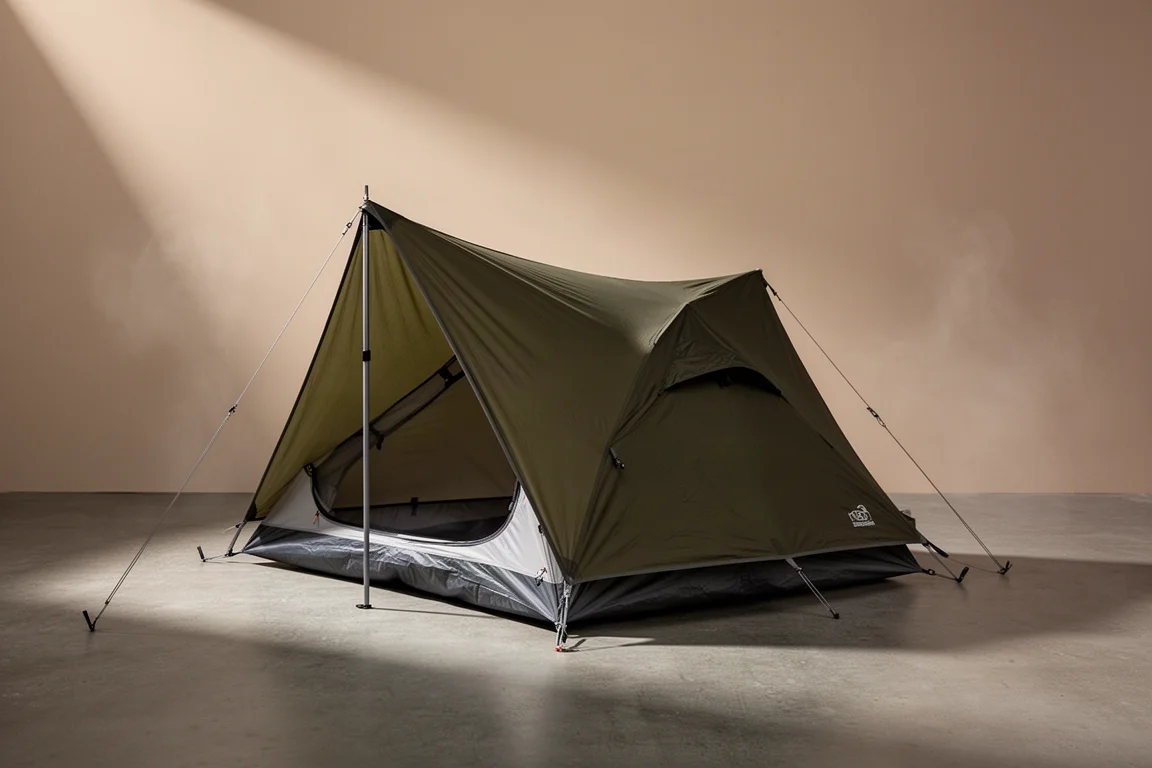
The Bushnell One Person Backpacking Tent is a compact solo shelter sold under a familiar outdoor name, and the branding is worth understanding before anything else. This tent is a licensed product. The Bushnell name was licensed by a separate company that approaches established brands and applies their names to gear it sources itself, so the design did not come out of Bushnell’s own tent programme. That detail matters because the number which decides whether a tent keeps you dry is the hydrostatic head rating, and this one carries a 600 mm figure.
The tent was put through a full overnight rain event on a mountain trail: steady light rain through the afternoon, a heavier band after dark, temperatures sliding from roughly 54 F down to about 48 F, and fog thick enough to swallow the treeline. That is a fair test for any solo shelter, and it produced a clear result.
Who This Tent Is For
A 600 mm hydrostatic head rating places this tent in a very specific category. At that level the fabric behaves much like a sun shelter: the kind of thing you take to the beach and pack away the moment rain starts, or a play tent you set up in the yard for children. It is not built for weather.
That does not make it useless. It makes it a fair-weather shelter, and anyone considering it should be honest about the conditions they actually camp in. If a trip can be cancelled or moved when rain appears in the forecast, a low rating is less of a problem. If rain is a realistic possibility, the rating is the whole problem.
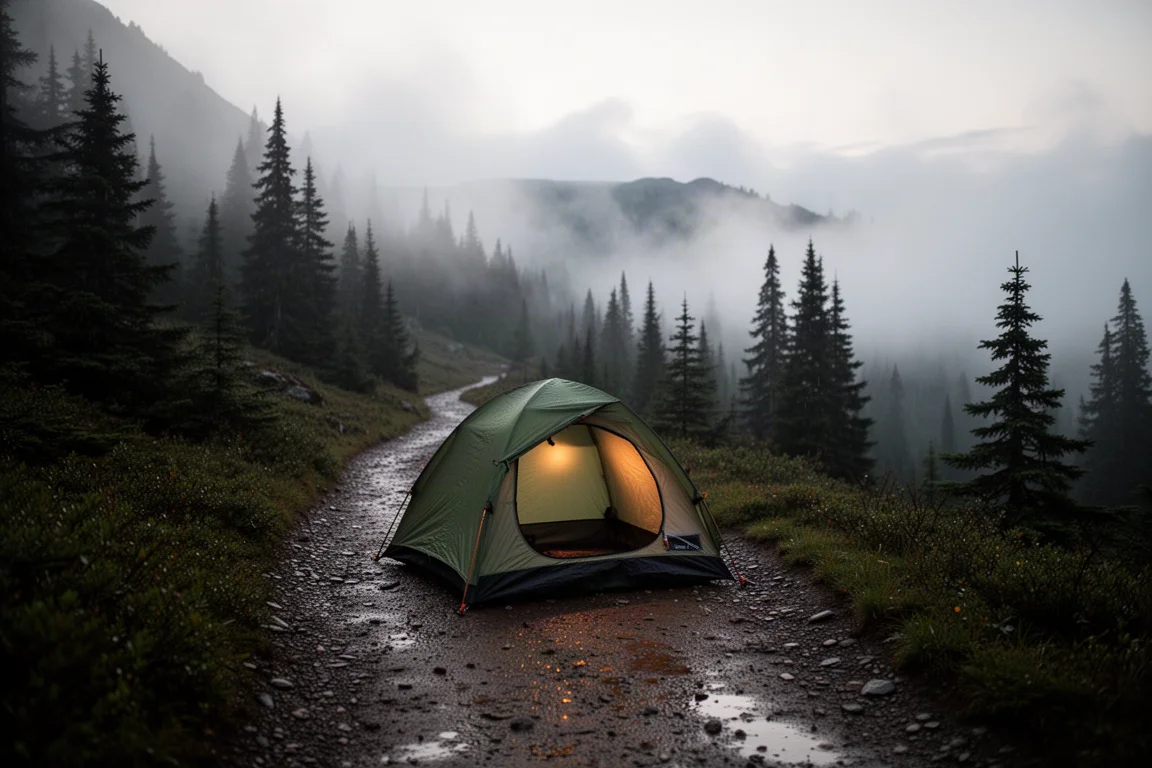
The single-person layout and the internal flashlight pocket point to a simple, light-touch overnight setup, which is the scenario this tent is built around.
Main Strengths
Where the tent performs well is in the basics of getting camp established. It goes up quickly and can be pitched and ready before a weather window closes, which is exactly what happened on a wet afternoon: the shelter was standing with a dry interior before the rain returned.
Inside, a dedicated flashlight pocket keeps a light in place instead of letting it roll across the floor, a small detail that makes an evening in a solo tent easier to manage. For a one-person shelter, that is the kind of practical touch that earns its place.
Real-World Rain Performance
The overnight test is where the picture changes. After a long stretch of steady but mostly light rain, with only brief periods that reached moderate intensity, the interior was wet. A noticeable puddle had formed inside the tent, and water had also entered at one corner. It was not the most extreme leak imaginable, but it was substantial, and it happened in conditions far milder than a summer thunderstorm.
The takeaway is uncomfortable but useful. If a light, steady rain event produces a puddle on the floor, a genuine storm would leave considerably more water inside. Anyone who has spent a night in a soaked sleeping bag knows how quickly that ends a trip.
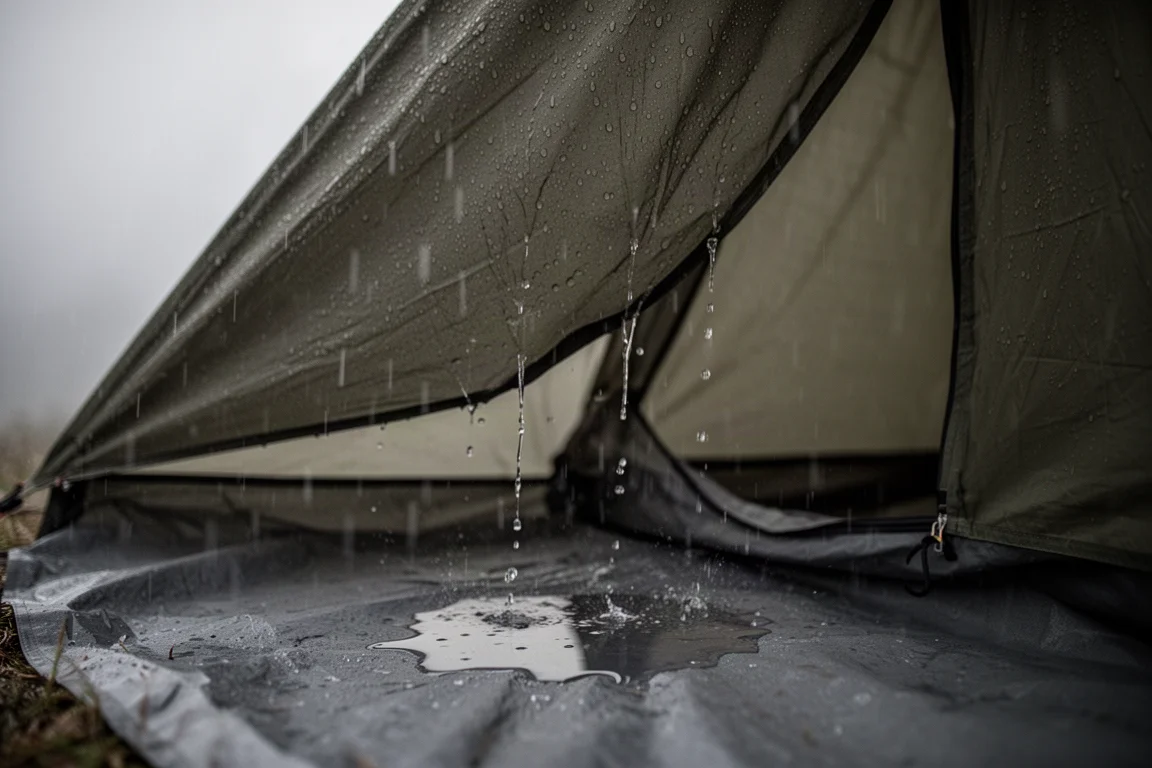
The pattern of the leak matters as much as the volume. Water collecting inside and at a corner points to the limits of the fabric and the seams rather than to a single freak failure.
Things to Consider Before Buying
Two design issues deserve attention alongside the waterproofing.
The first is entry and exit. Opening the door and pulling back the fly allows rain to reach the interior, so getting in or out during a shower soaks the inside of the tent. In practice that means the shelter is only really practical to use when it is dry, which is a hard limitation for a tent.
The second is the shape. The front of the tent comes to a point, with one side longer and the other narrower, giving it an unusual asymmetric profile that takes some getting used to when pitching and living in it.
There is also the branding question. Because this is a licensed product rather than a tent designed by the brand on the label, the name alone is not a guide to quality. Specifications have to be checked directly.
Understanding the 600 mm Waterproof Rating
Hydrostatic head ratings measure how much water pressure a fabric can resist before water passes through it. The higher the number, the more weather a tent can handle.
At 600 mm, this tent sits at the very bottom of the scale. For a three-season tent, the practical minimum to look for is around 1,200 mm. Below that, a shelter is not designed to stand up to sustained rain, and this overnight test showed what that means in practice: light rain, and a wet floor by morning.
Anyone shopping for a tent should treat this figure as a first filter rather than a footnote. It appears in the product specifications, and it tells you more about real-world performance than most marketing language does.
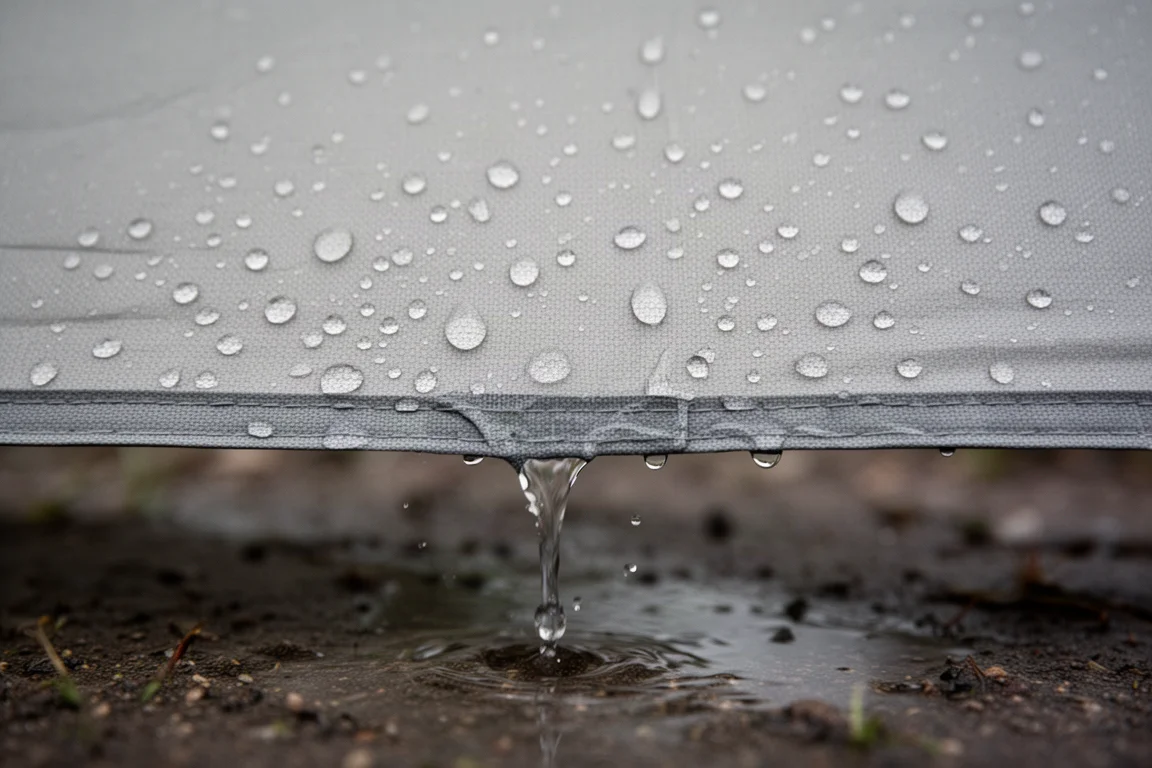
Checking that number before purchase takes a minute and prevents the situation this tent creates: discovering the limits of your shelter in the middle of the night, far from anywhere dry.
How to Test Any Tent Before a Trip
The lesson here applies well beyond this model. A tent should be waterproof tested at home before it is trusted on a trip. It sounds like unnecessary work, but it is the only reliable way to know whether the shelter can handle rain and whether it carries a manufacturing defect.
Taking an untested tent into the backcountry is a gamble, and the options when it fails are all poor. You can try to manage the water from inside, you can retreat under a tarp for the night, or you can attempt to leave. None of those are good outcomes, and all of them are avoidable with a test in the garden.
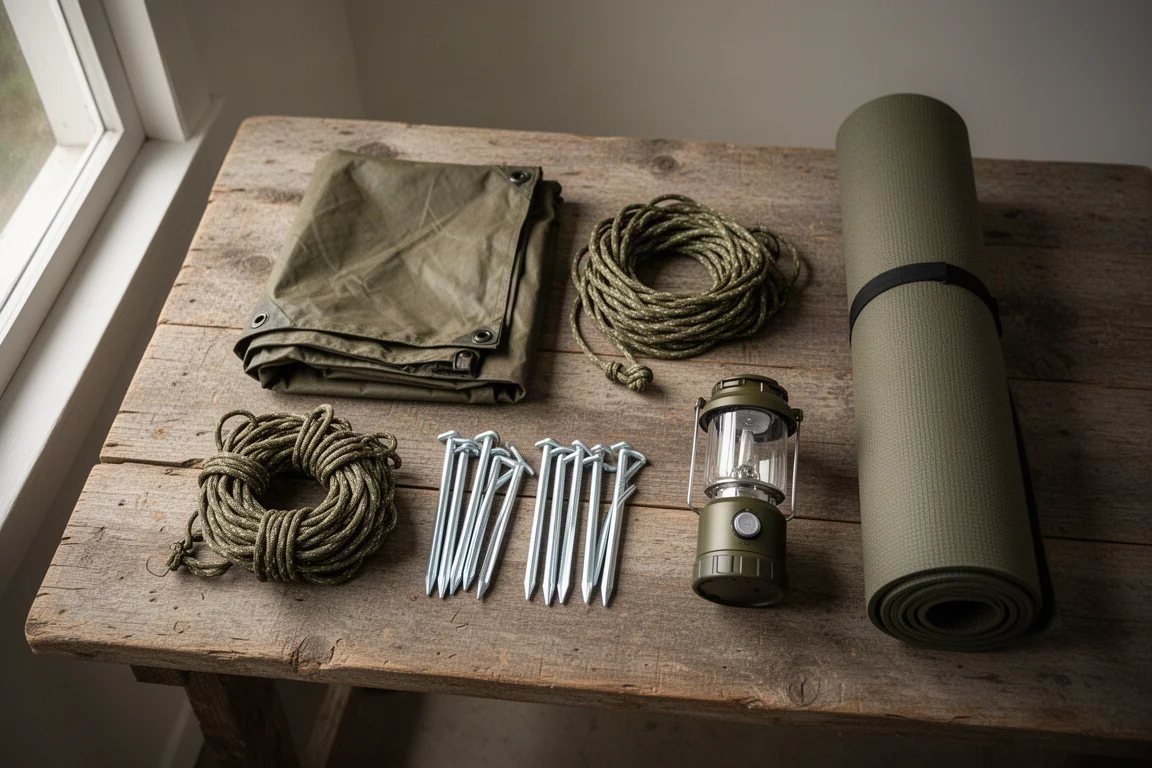
A tarp carried as a backup is genuinely useful, but it is not a plan. Spending a night under one because the tent failed is survivable, not comfortable.
Buying Advice
On the evidence of a single overnight rain event, this is a tent to approach with caution. Steady, mostly light rain was enough to put a puddle inside and let water in at a corner, and the door design wets the interior whenever it is opened during a shower.
The broader advice is to check hydrostatic head ratings before buying any tent, including others sold under the Bushnell name, and to look for roughly 1,200 mm or higher for a three-season shelter. A rating this low is a strong signal about intended use, and it is usually visible in the product specifications before you buy.
For fair-weather camping where rain is genuinely unlikely, a low-rated shelter can still serve a purpose. For anything else, the rating is the deciding factor.
Buying decisions get easier once the rating is treated as the starting point rather than an afterthought, and that applies whether the tent carries a famous name or not.
Conclusion
The Bushnell One Person Backpacking Tent is a licensed product with a 600 mm hydrostatic head rating, a figure that places it firmly in fair-weather territory. It pitches quickly and includes a useful flashlight pocket, but steady overnight rain produced a puddle inside and a leak at one corner, and the door design makes dry entry and exit difficult in wet conditions.
If you need a shelter for dry trips and understand exactly what you are buying, that is one thing. If there is any real chance of rain, the specification says to look elsewhere, and to make the hydrostatic head rating the first thing you check.
Product link
View more details for Bushnell One Person Backpacking Tent
This product is mentioned in the review. Check the specifications, options, and compatibility before buying.
View more details for Bushnell One Person Backpacking TentFurther reading
Related Reviews
Backpacking Tents
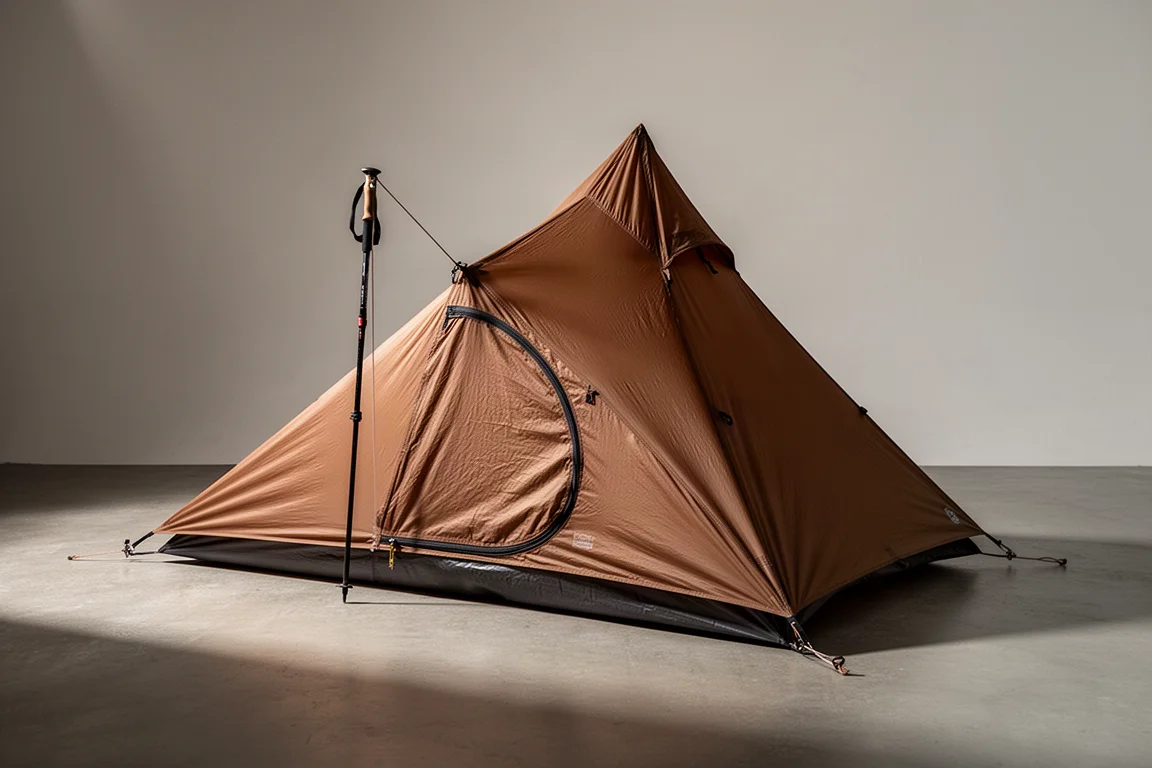
3F UL Lanchan Pro 1 Review: A 1 lb 8 oz Single-Wall Trekking Pole Tent
A practical look at the 3F UL Lanchan Pro 1, a single-wall trekking pole shelter with a 1 lb 8 oz weight, 20D silnylon fabrics, and a roomy 90 x 31 x 49 inch interior.
Backpacking Tents
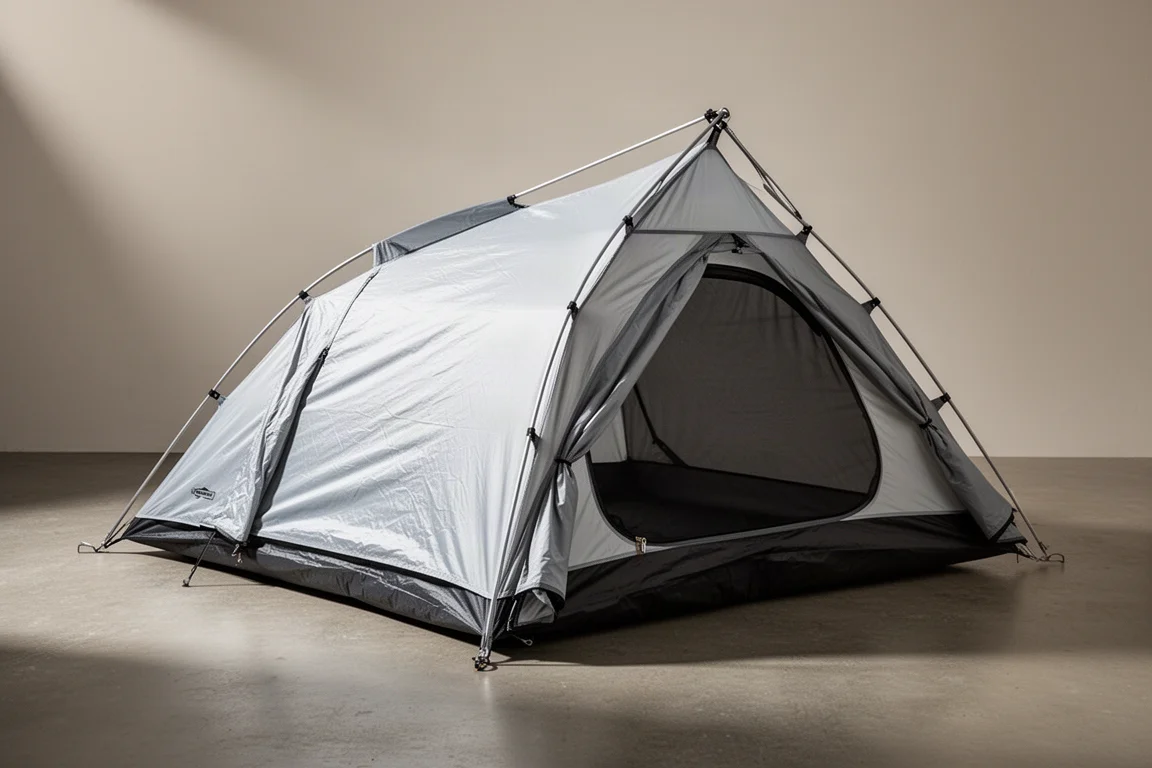
3F UL Taiji 2-Person Tent: A Convertible Backpacking Shelter Worth a Closer Look
A practical look at the 3F UL Taiji two-person tent, covering its materials, true two-person interior, fly-first pitching, and the seasonal inner swap that lets one shelter cover more of the year.
Backpacking Tents
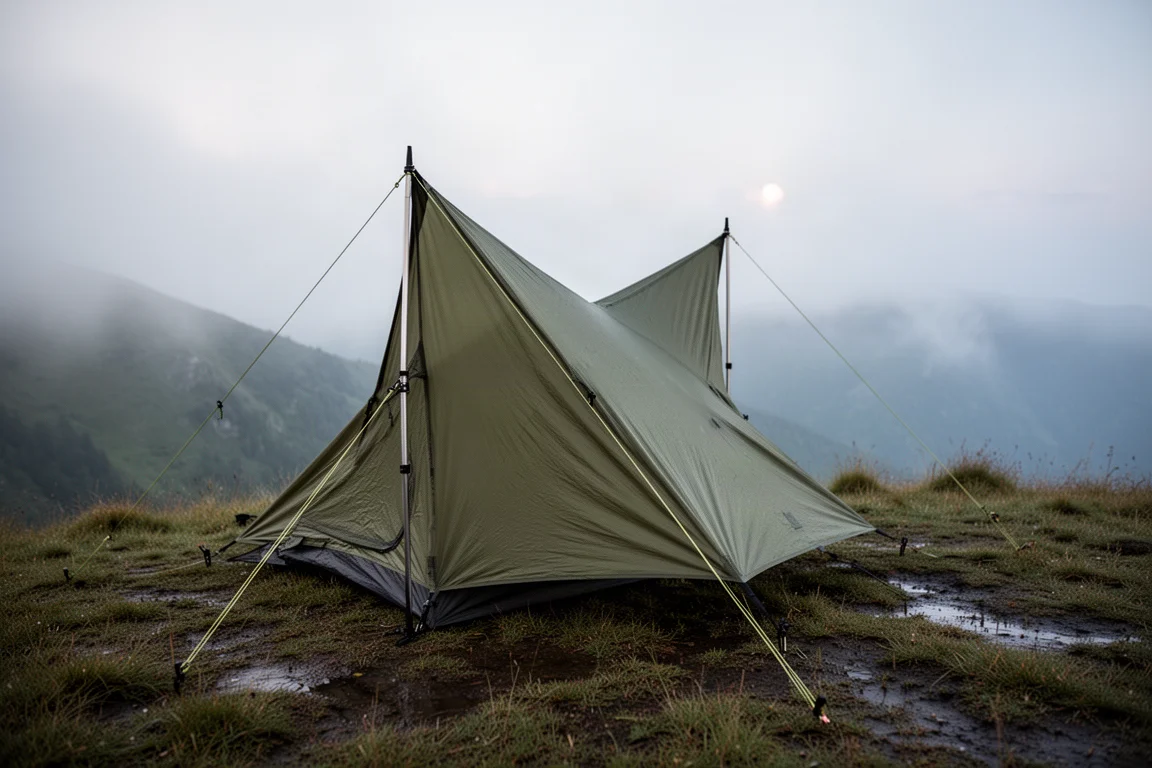
3FUL Lanshan Twoerson Pro Review: A Light Trekking Pole Shelter That Struggled in Rain
A two-person trekking pole shelter with a 2026 redesign, pitched with sticks and put through a night of steady rain. Here is what worked, what did not, and what to check before buying.