Hi-Fi Amplifiers
Burson Soloist 3X GT and Timekeeper 3X GT Review: A Compact Flagship Amplifier Stack
A close look at Burson's flagship headphone preamplifier and matching monoblocks, from shared MCPS and Noctua cooling tech to sound quality, system matching, and UK pricing.
Introduction
Burson Audio is an Australian company with a well-established reputation for headphone amplifiers and desktop DACs, and its product line leans heavily on in-house engineering: a Max Current Power Supply, active cooling, and proprietary op-amps built from fully discrete components rather than silicon chips. Those op-amps can be swapped by the user in much the same way a tube roller swaps valves, and the approach is intended to lower the noise floor in designs that use them.
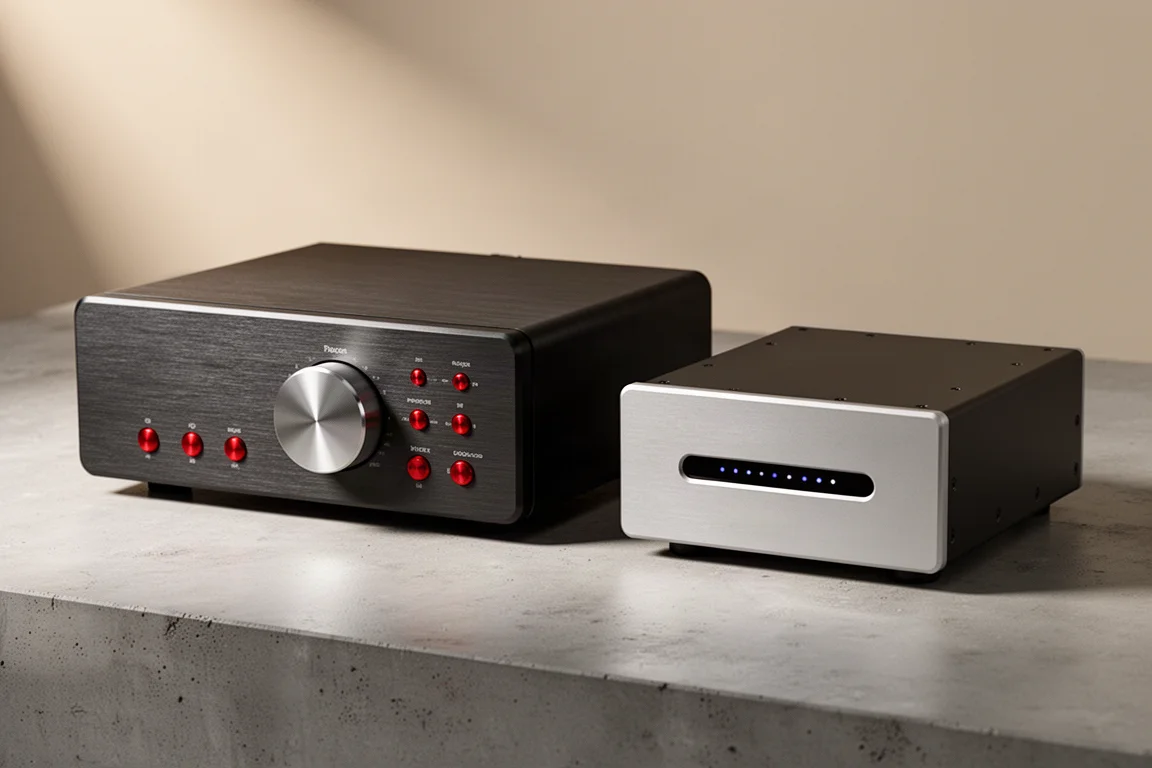
The Soloist 3X GT and the Timekeeper 3X GT monoblocks are the current flagship pairing. In the UK the Soloist 3X GT costs £2,499 and the monoblocks cost £3,999 for a pair, which puts the complete stack at around £6,500. That is a significant sum, and it buys a compact two-box system rather than the full-width separates that usually occupy this territory.
This review treats the two components as a matched system, because that is clearly how they are intended to be used. It covers what they share, what each unit does, how the stack sounds, where it fits in a system, and the practical points worth weighing before buying.
For context, Burson’s earlier Timekeeper 3i integrated amplifier arrived at around £2,500 with a nicely finished aluminium case and a good built-in DAC. It was well suited to desktop and near-field setups, though in an average-sized listening room it lacked a little drive. The question with the new monoblocks is whether that shortfall has been addressed.
Shared Technology: MCPS, Noctua Cooling, and Discrete Op-Amps
Both units draw on the same engineering playbook, and understanding it explains why the hardware is as small as it is.
The Max Current Power Supply, or MCPS, is a two-stage design. The first stage is a switch-mode power supply housed externally, kept outside the main chassis because switch-mode supplies are inherently noisy and because it keeps the footprint of the amplifier itself to a minimum. The second stage takes that noisy 24 volt feed and regenerates it at 170,000 Hz, far beyond the threshold of human hearing, so any noise generated in the process is not audible. Burson’s position is that the MCPS has lower noise and lower impedance than a traditional linear power supply, which should translate into a blacker sonic background and faster transient response.
Cooling is handled actively rather than through sheer heatsink mass. The fan comes from Austrian manufacturer Noctua and has a reputation for being among the quietest available. In use it was barely audible even at late-night listening levels with the unit a little over two metres away. The wrap-around aluminium casework also doubles as a heatsink, which is part of how these compact chassis stay cool.
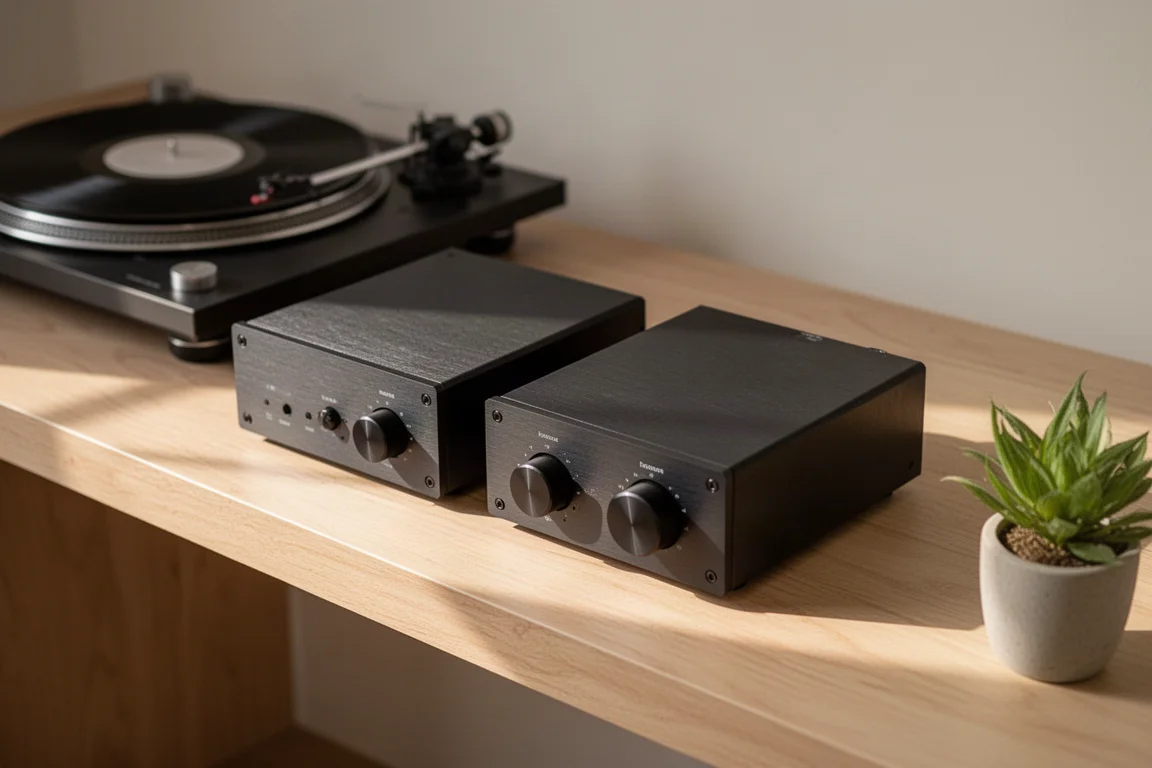
The other shared element is the op-amp strategy. Both units ship with Burson’s discrete Vivid op-amps, which have lower noise than typical integrated circuit designs. They can be swapped out for the less detailed but more romantic sounding Classic op-amps, or for op-amps from third-party manufacturers. The Soloist 3X GT also uses a symmetrical dual mono design, again in pursuit of lower noise, better channel separation, and ultimately higher sound quality.
Burson Soloist 3X GT: Headphone Amp and Preamplifier
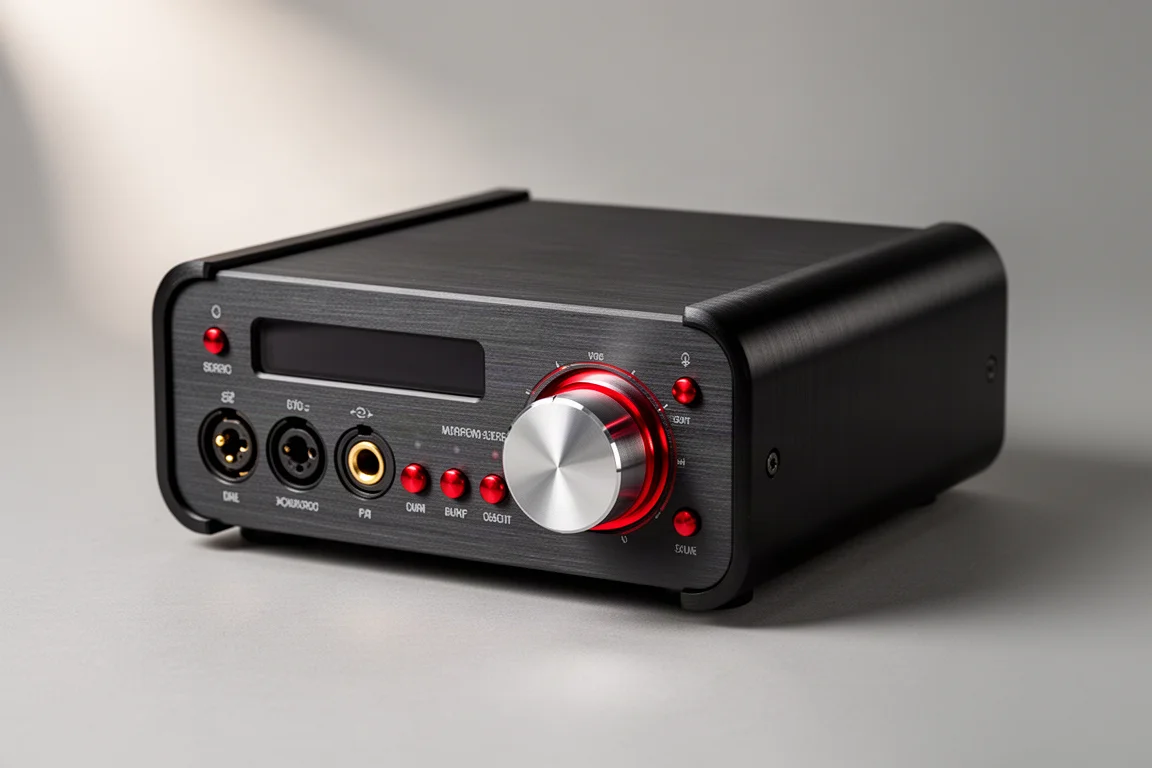
The Soloist 3X GT is Burson’s flagship headphone amplifier and preamplifier. It outputs 10 watts per channel into balanced XLR and 5 watts per channel into single-ended RCA, and it is visually distinguished by red buttons and a control knob, all of them metal with no plastic in sight. The wraparound aluminium casework doubles as a heatsink, and the unit measures 255 by 70 by 270 millimetres, or 10 by 2.75 by 10.6 inches. In the UK it costs £2,499.
The front panel is dense with useful controls. A button next to the 3.5 millimetre, 6.25 millimetre and balanced XLR headphone inputs takes the unit out of standby. Another selects between two RCA and two XLR inputs. A third switches between headphone output, pre-out, or both at once. The settings button covers three levels of gain, which is particularly useful when matching headphones with sensitivities between 60 and 108 dB, along with left and right balance, display brightness, and crossfeed levels of off, low, medium and high. A final button flips the display between landscape and portrait orientation for anyone who wants to stand the unit on its end using the supplied stand. A small remote control in a matching finish is included.
Around the back, the balanced XLR and single-ended RCA inputs are arranged unconventionally at the extreme left and right, with the XLR and RCA pre-outs and a subwoofer output sandwiched between them.
Burson Timekeeper 3X GT Monoblocks: Power Amplification
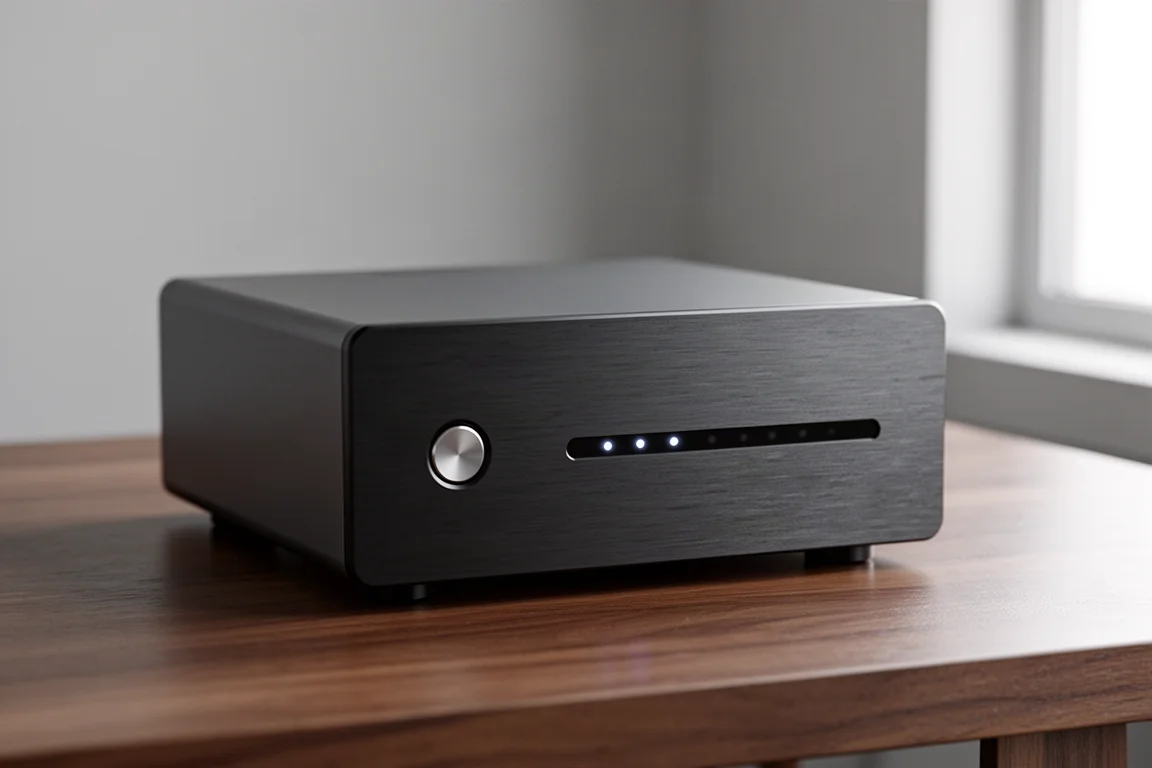
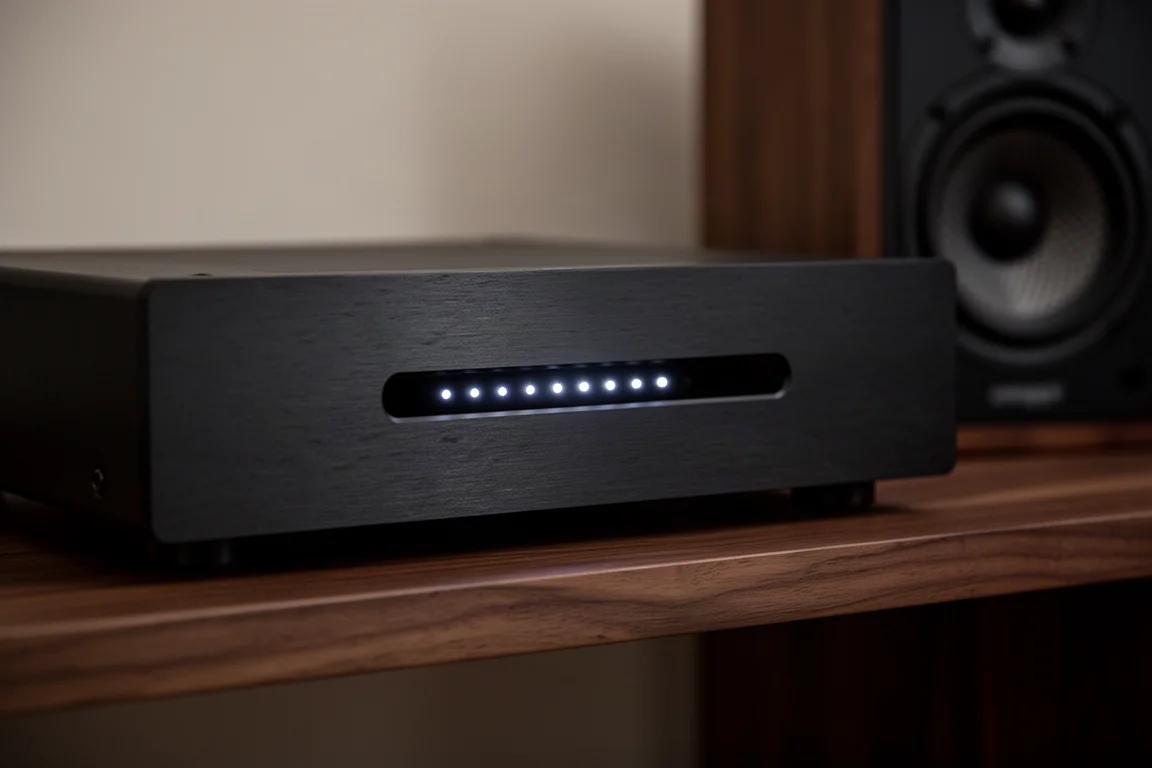
The matching Timekeeper 3X GT monoblocks cost £3,999 for a pair in the UK, and their front fascia could hardly be simpler. There is a standby button and a discrete strip of LEDs that changes colour depending on the configuration selected at the rear: green for low gain RCA input, cyan for low gain XLR, blue for high gain XLR, and red for high gain RCA.
Those gain modes matter more than the colour coding suggests. In low gain mode the monoblocks deliver 30 watts per channel into 8 ohms, and that figure jumps to 110 watts per channel in high gain mode. The first 30 watts run in pure class A. The reason a pair of class A monoblocks does not occupy the footprint of a refrigerator comes down to the MCPS and the active Noctua cooling described above.
Sound Quality: Clarity, Dynamics, and Tonality
As a system, the Soloist and Timekeeper 3X GT stack sounds super clean, dynamic and balanced, which is what an objectivist-minded listener would call neutral. The background is inky black, and that blackness is comfortably a match for reference-grade pre and monoblock separates, as well as for the Denafrips Hades and Thallo pairing. The Max Current Power Supply is the most likely explanation. Whatever the cause, details and micro-details simply pop out without any effort from the listener.
Dynamic headroom is generous, particularly in high gain mode, and much of that comes down to the power on tap at 110 watts into 8 ohms, dropping to 30 watts in low gain. Since perceived dynamic capability is driven mostly by bass performance, the bass behaviour here matters a great deal. It is supremely well judged: not exaggerated, not light or lean, but sitting right in the middle. The definition, grip and control the monoblocks exert over bass is genuinely impressive.
The midrange is where a buyer has to make a decision. The clarity, the black background and the transient response are all excellent, which is why leading edges of notes are so well defined without sounding artificial, and why decays are beautifully preserved. It is the middle of the note, the part engineers call the release and listeners tend to call the body, that divides opinion. It is certainly not cold, and not cool either, nor dry or analytical. The most accurate description is slightly dehydrated. Listeners who spend a lot of time with vocal and acoustic music may prefer a richer tonal balance, while others will be perfectly happy.
High frequencies give no cause for complaint. There is all the extension and refinement most listeners could want. If harshness or over-sibilant behaviour shows up in a system built around these amplifiers, the cause lies elsewhere in the chain or in the recording itself.
Soundstage and System Matching
Spatial cues are well preserved, which is why the system images so convincingly. The soundstage is where the greatest reservation lies. It extends a little beyond the speakers to the left and right, but amplifiers at half the price have been heard to extend further, and depth is distinctly limited.
Comparisons put that in perspective. The Hegel H190 is an amplifier at roughly half the price with a wider and deeper soundstage, but for clarity, grip and control it is not close. The Denafrips Hades and Thallo combination is also around half the price of the Burson stack and can match it for clarity, yet it is dynamically lighter, tonally thinner, and has an even more diminished sense of scale. Reference-grade Exposure pre and monoblock separates generate a much more immersive sound field that is wider, deeper and significantly richer, but notes do not stop and start as quickly, so the nod on clarity goes to Burson.
Preamp matching deserves careful attention. The monoblocks were tried with three different preamplifiers, including two Denafrips models and an Exposure preamp, and all three combinations sounded flat and lifeless. Buyers who already own a DAC with a volume control or a separate preamplifier should therefore be cautious. Sticking with Burson’s matching preamplifier, or another preamplifier from the Burson range, is the safer route. Trying preamplifiers until one clicks is possible, but the batting average is likely to be low.
Speaker matching is far more forgiving, because the monoblocks impart so little character of their own. They drove a pair of ProAc speakers without any trouble. They were also tried with the Q Acoustics Concept 30 at £899 and with the JBL 4309, a more refined and well-balanced horn design whose touch of liveliness survived intact. Pairing a warm speaker with these amplifiers produced a nicely balanced result.
Living With the Stack: Gain, Standby, and Everyday Use
Setup requires very little fiddling. On the Soloist 3X GT, the gain setting is primarily intended for headphone matching, but the medium or high position suits hi-fi use, where it affects the sensitivity of the volume dial.
The gain settings on the monoblocks are more interesting. High gain brings more power and therefore better dynamics. Low gain is more polite, and the already black background becomes a shade darker. The effect is subtle but present. Which setting suits you depends on the sensitivity of your speakers and how loudly you listen. Across daytime sessions in the 70s and 80s dB range, high gain was the preference. For late-night listening down in the 50s dB range, low gain was the better choice. Being able to switch between the two is genuinely useful.
Power is sufficient to drive all but the most difficult speakers in the largest rooms, and the stack also performs well at low volumes. There is one annoyance worth flagging. When listening below 60 dB, the monoblocks drop into standby after about 20 minutes, as though no signal were present. Increasing the sensitivity of the detection circuit would resolve it, and it is the sort of fix that should be straightforward.
Buying Advice
Value depends heavily on where you live. In the UK the stack is priced at roughly the same number in pounds as it is in US dollars or Australian dollars elsewhere, which makes it considerably better value abroad. At around £5,000, a figure closer to the equivalent overseas pricing, the recommendation would be unreserved. At £6,500 the case is weaker, purely on price rather than performance. Anyone who can negotiate a deal will find the balance shifts back in their favour.
There are three practical checks before committing. First, plan the preamplifier carefully and lean towards a Burson model rather than experimenting broadly. Second, consider how much soundstage depth matters in your room, because this is the stack’s one real sonic limitation. Third, think about your typical listening level, since quiet listening is where the standby behaviour will make itself known.
For buyers who prioritise clarity, grip and control above all else, and who want that performance from a compact two-box system rather than a rack of full-width separates, the Soloist and Timekeeper 3X GT stack delivers exactly what it promises.
Conclusion
The Burson Soloist 3X GT and Timekeeper 3X GT monoblocks form a superbly built, compact amplifier stack. Sonically they offer tremendous clarity, great dynamics, and a tonality that imparts very little character on the music or the system around them. The shared engineering is coherent and well executed, from the two-stage Max Current Power Supply to the near-silent Noctua cooling and the swappable discrete op-amps.
At this price there is no room for error. The slightly restricted soundstage width, and more so the limited soundstage depth, keep the stack from top marks, and the UK pricing is a real consideration given how much better the value looks elsewhere. Those caveats aside, this is a recommended system, and for the right listener in the right setup it will be exactly the right choice.
Further reading
Related Reviews
Hi-Fi Amplifiers
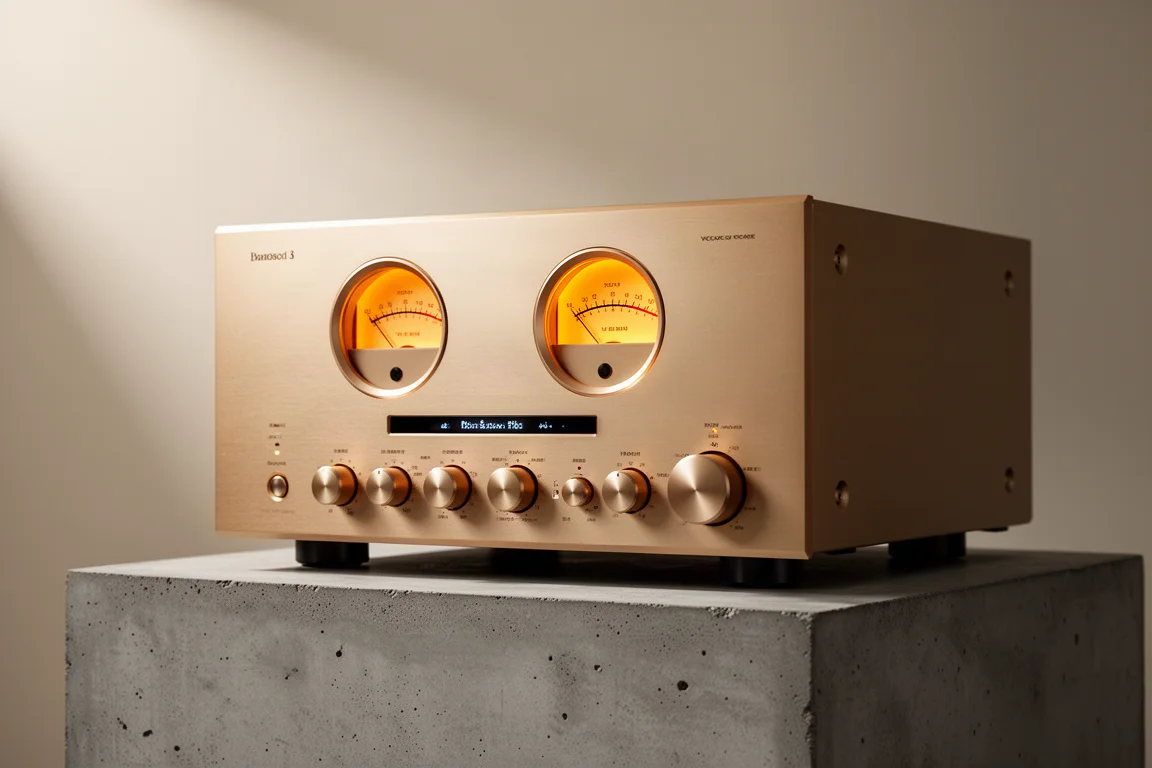
Accuphase E-280 Review: Entry-Level Accuphase With Flagship Attention to Detail
A close look at the Accuphase E-280 integrated amplifier, covering its champagne build, AAVA volume control, sound quality, and the speakers and sources that suit it best.
Hi-Fi Amplifiers
Advance Paris A10 Classic vs Yamaha A-S301: Two Integrated Amplifiers Compared
A practical comparison of a $350 integrated amplifier and a $2,500 reference model, covering the differences that matter and the ones that do not.
Hi-Fi Amplifiers
Affordable Chinese Amplifiers Worth Buying: Five Budget Hi-Fi Amps Compared
A practical look at five affordable amplifiers, what each one does well, and the trade-offs to weigh before you buy.