Japanese Knives
Three Japanese Bunka Knives Face Off: Hatsukokoro, Mutsumi Honora, and Motokuchi Compared
Three carbon steel bunka knives go head to head: the Hatsukokoro Kurouchi 180mm, Mutsumi Honora Bunka 165mm, and Motokuchi Bunka 180mm, tested across carrots, onions, scallions, and bell peppers.
Introduction
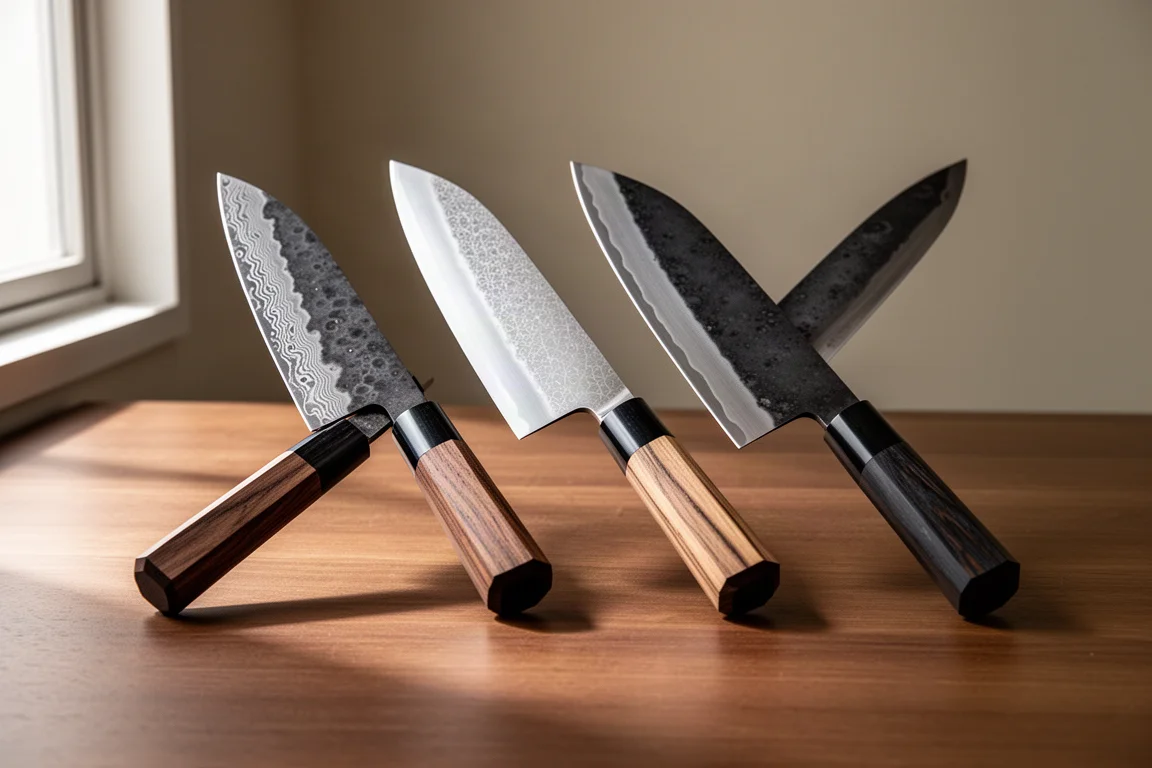
Bunka knives occupy a sweet spot in the Japanese knife lineup: a tall blade with an angled tip, comfortable for push cuts, pull cuts, and tip work alike. We lined up three carbon steel bunkas to see how they compare in real vegetable prep: the 180mm Hatsukokoro Kurouchi, the 165mm Mutsumi Honora Bunka, and the 180mm Motokuchi Bunka.
All three are made from carbon steel. The Hatsukokoro and Motokuchi are iron clad, while the Mutsumi Honora is stainless clad. They come in at very different price points, and the result turned into a genuinely close contest.
Why These Three Bunkas
Each knife brings a distinct character. The Mutsumi Honora is the work of the son of Tsukasa Honora, the maker behind the River Jump Damascus line, learning from one of the most respected bladesmiths in Japan. The Motokuchi is the most affordable of the three, and the Hatsukokoro is forged by Kajiwara-san in the Tosa region of Japan.
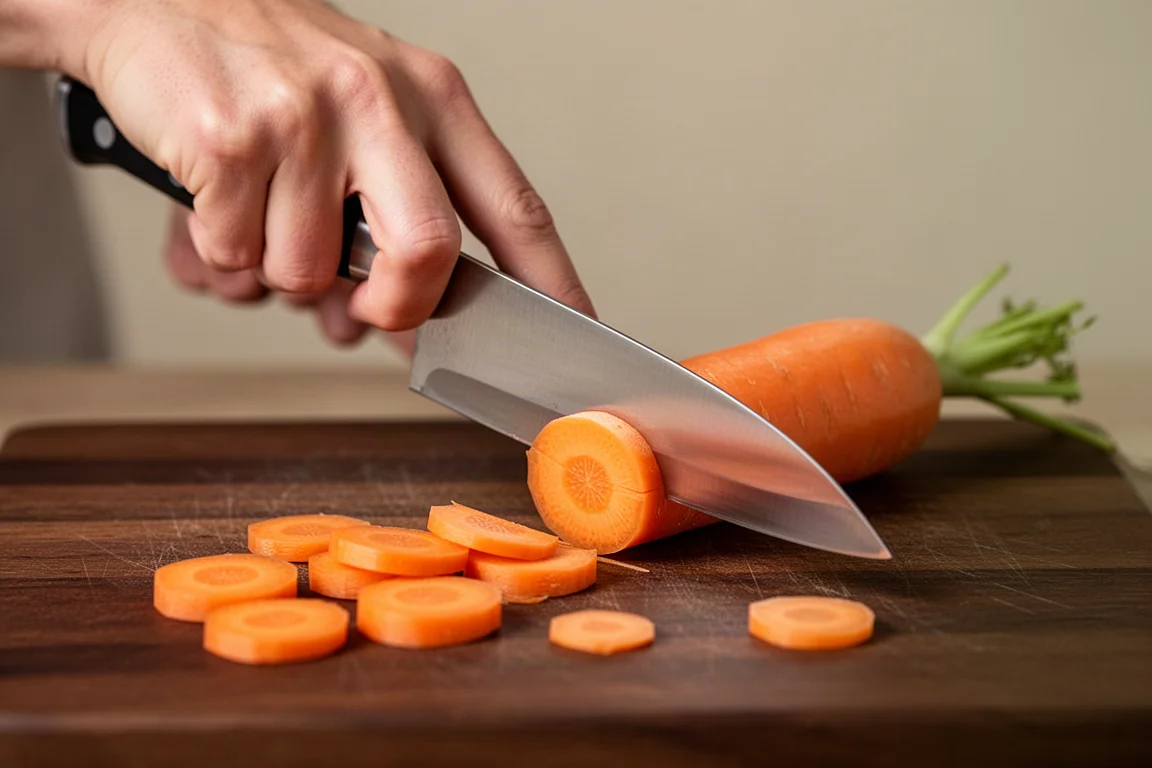
We evaluated all three on the same tasks: carrots, onions, scallions, and bell peppers, using push cuts, pull cuts, and a rocking motion. Fit and finish, balance, handle comfort, and steel reactivity also factored in.
Mutsumi Honora Bunka 165mm: Sharpness and Style
Out of the three, this was the most beautiful knife of the bunch. It uses Aogami number two at the core with stainless cladding, a really nice kurouchi finish, and a tall, curvy blade profile. The octagonal handle is made from burnt chestnut with a buffalo horn ferrule, and the fit and finish is genuinely nice. The balance point sits slightly forward, giving it a blade-forward feel in hand.
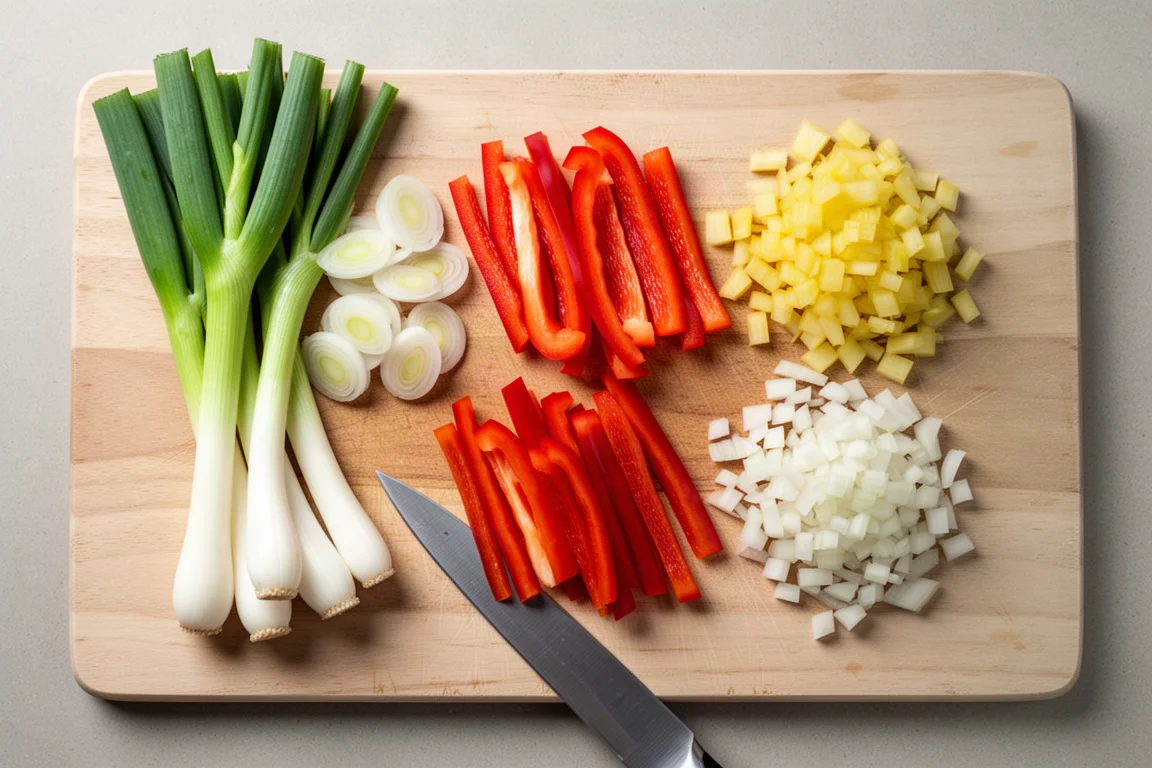
In cutting, the edge geometry is amazing and the knife is definitely sharper at the edge. Onions and scallions were marginally easier to work with here than on the others. Bell peppers with a push and pull motion were really nice too.
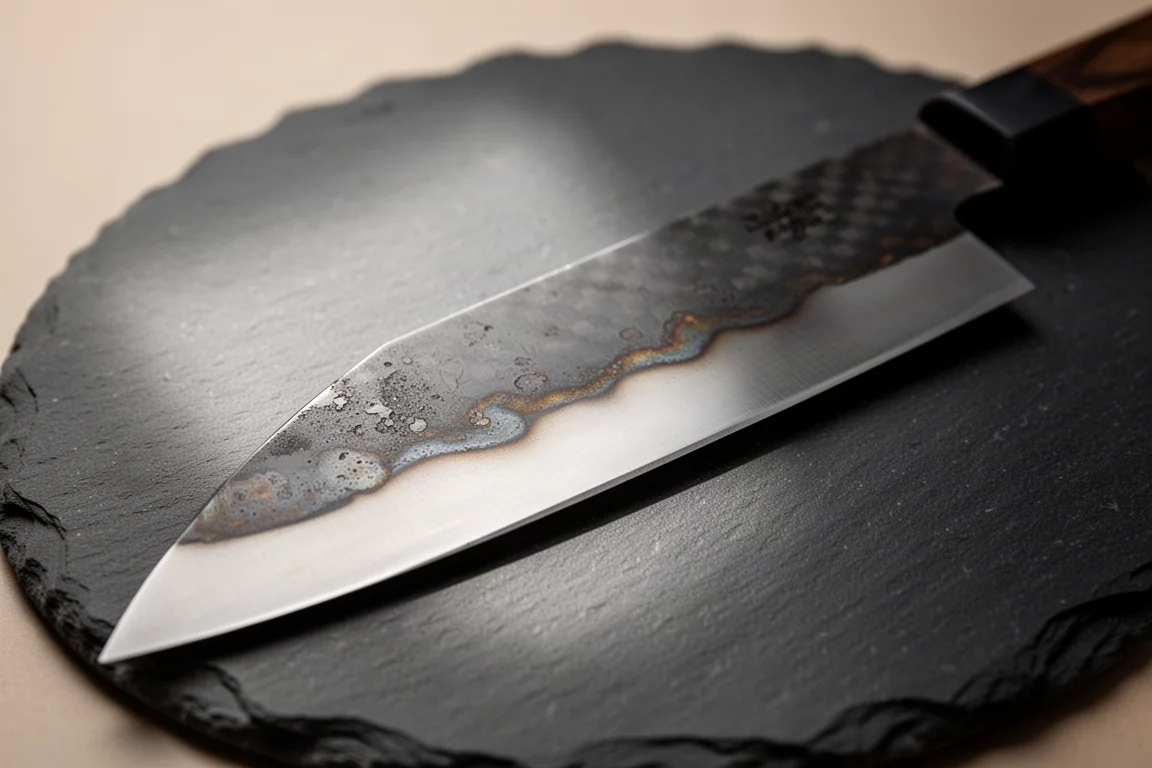
The trade-off shows up in the shoulders near the shinogi line: the blade stays relatively thick there, so the geometry is less gradual than the Motokuchi. That translated into a bit of wedging in carrots. The rocking motion also revealed an interesting problem: the knife is almost too sharp, and it got kind of stuck in the board. Where it should shine is intricate, delicate work like shallots, garlic, and chilies, where blade height off the board matters less.
Motokuchi Bunka 180mm: The Performance Pick
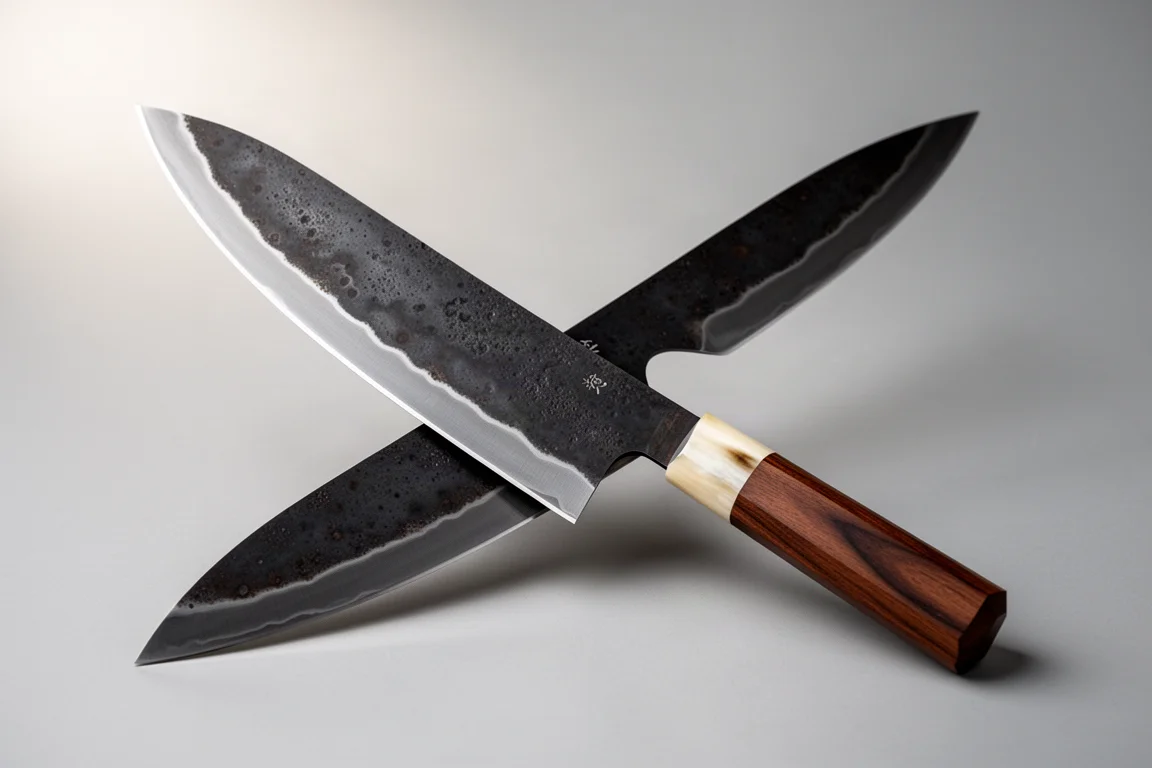
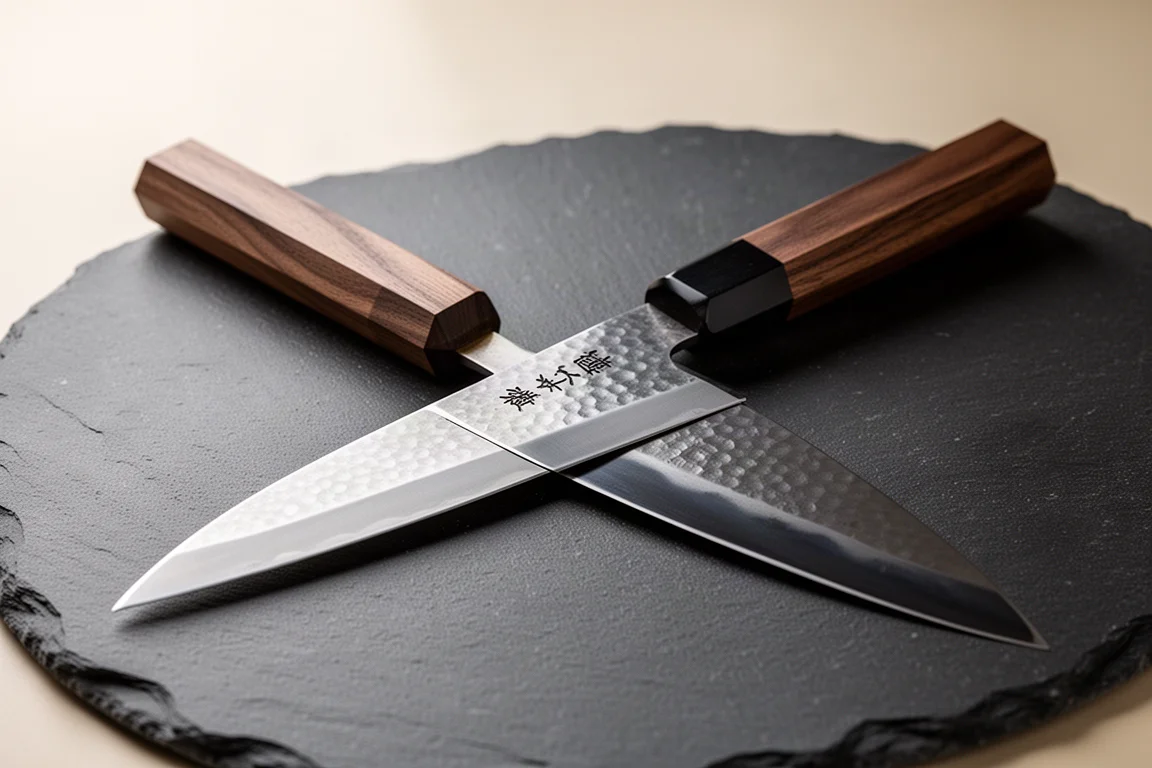
The Motokuchi is made from Aogami number two with iron cladding, with a walnut handle and a black pakka wood ferrule, octagonal in shape so it suits a variety of grips including lefties. The balance point sits a little further back toward the handle than the Mutsumi Honora, and while the sanding on the spine and choil is not the finest, it is comfortable with no real sharp edges. The polished nashiji finish and high clad line give it a genuinely cool look.
This was the surprise of the test. It had the least wedging of all three knives, and cutting through the meatiest part of a carrot felt really easy, with only minimal cracking. The tip is nice and thin, so round cuts came out cleanly, and scallions were super easy whether pushing or pulling, with the pull motion slightly easier. Surprisingly, rocking through bell peppers was really easy despite the very flat profile.
The only real complaint was squaring off a carrot: cutting the cheeks off performed the most poorly of the three knives in that specific task. Beyond that, it performed at a very high level and earned the overall win in this comparison. It also comes in at a lower price than the other two, though it is not cheap, sitting at around 170 dollars at the time of testing.
Hatsukokoro Kurouchi Bunka 180mm: Flat Profile and Tip Work
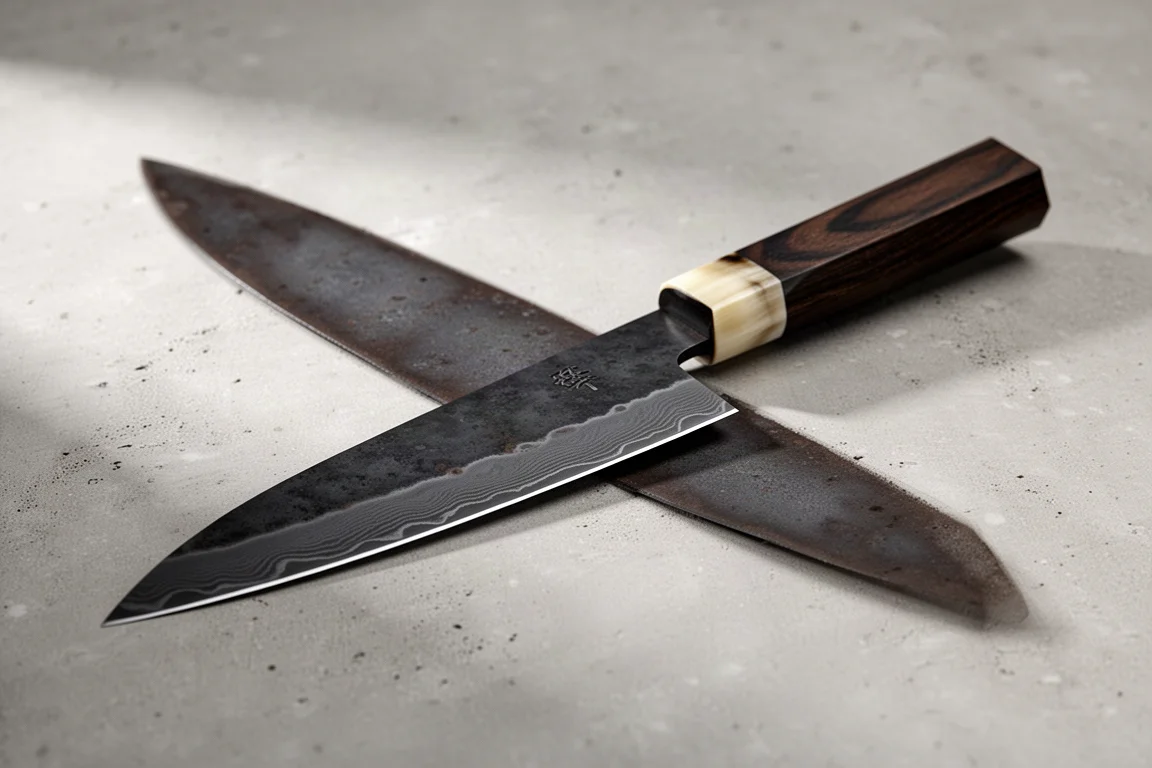
Forged by Kajiwara-san out of the Tosa region, this knife has a kurouchi finish with a cool Damascus pattern on the bevel and a forced patina, which is why the steel near the edge appears black rather than polished. The handle is wenge with a buffalo horn ferrule, octagonal in shape and suitable for a variety of grips and lefties. It has the least tall and flattest blade of the three, and the spine and choil sanding was the roughest of the group, though still with no real sharp spots. There is a good amount of space for your middle finger in a pinch grip.
In use, the flat profile made this the best knife for scallions, and the push and pull motion was really nice. It also performed surprisingly well at rocking despite the flat blade. Onions performed super well, and the tip work, drawing the tip through the cut, was super nice. The thick part of the carrot was a little disappointing, though any knife in the 165 to 180mm range will have some trouble with cross cuts there.
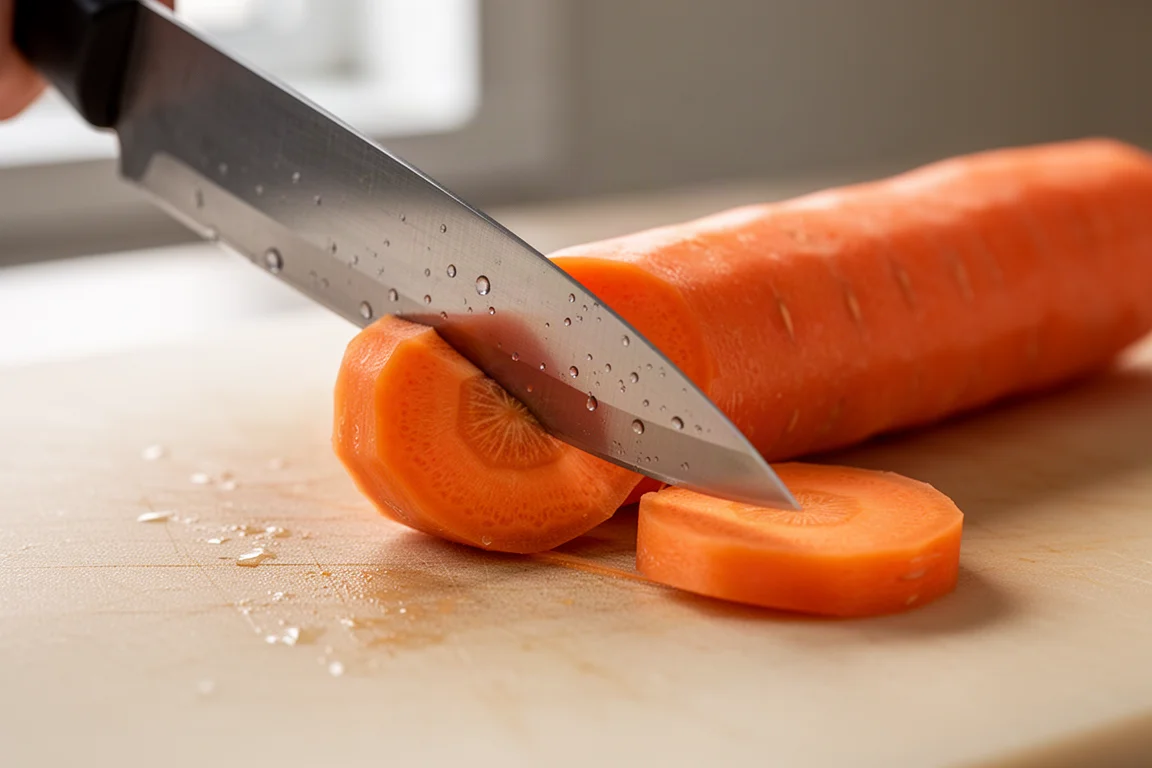
Where this knife genuinely excelled was cutting the cheeks off a carrot and turning it into planks; it was the best of the three at that task. It has more of a stack out of the spine, a thinner spine, and a shorter blade than the others, and that hand feel is exactly what some people gravitate toward. It was the least favorite of the three here, but if tested on its own it would still come across as exceptional.
Care Considerations: Carbon Steel and Patina
Both the Motokuchi and the Hatsukokoro are reactive carbon steel, so they need mindful care: wipe them down, keep them clean, and keep them dry. The stainless cladding on the Mutsumi Honora makes it a little more forgiving.
The forced patina on the Hatsukokoro actually helps a little with rust prevention. If you want to start a nice patina on any of these, a simple trick is to roast a pack of sausages in the oven and slice them with the knife; it creates a beautiful patina that helps protect the blade from rust.
Overall Buying Advice
Any of these three knives will perform at a really high level, and this contest came right down to the wire. If pure cutting performance is the priority, the Motokuchi takes it, and it happens to be the most affordable option as well. With a little work polishing the bevels and thinning it slightly, it would likely perform even better at the tasks where the others beat it.
If aesthetics and fine-edge sharpness for delicate work matter most, the Mutsumi Honora is a stunning option. If you prefer a flatter profile with excellent tip work and scallion performance, the Hatsukokoro Kurouchi deserves a close look.
Conclusion
All three bunkas are capable performers with genuinely good fit and finish, and the differences come down to small details in geometry, balance, and blade shape. The Motokuchi edged out the other two overall, but the Mutsumi Honora and the Hatsukokoro both offer distinct strengths and gorgeous looks. Matching the knife to your cutting style is the best way to be happy with any of them.
Further reading
Related Reviews
Backpacking Gear
Building a 10 lb Base Weight: An Ultralight Backpacking Gear List
A practical walkthrough of the ultralight pieces behind a 10 lb base weight, from a 765 g pack and a roomy one-person tent to a full camp chair and a dependable water filter.
Road Bikes
10 New Road Bikes Worth Watching: Aero, Titanium, Steel and Endurance Standouts
A practical roundup of 10 new road bikes, from aero flagships chasing single-watt gains to titanium, steel and endurance platforms built for real roads.
Bikepacking Gear
11 Bikepacking Essentials for Long-Distance Cycling
Eleven bikepacking essentials for long-distance cycling, from a steel gravel frame and a two-person tent to helmet lights, packable gloves, and a frame bag that puts weight in the right place.