Hi-Fi Audio
Building a Sub-$2,000 Hi-Fi System: Twelve Components Worth Buying
A practical guide to assembling a complete two-channel system for under $2,000, with speaker, amplifier, DAC, turntable, and streaming picks at every price point.
Introduction
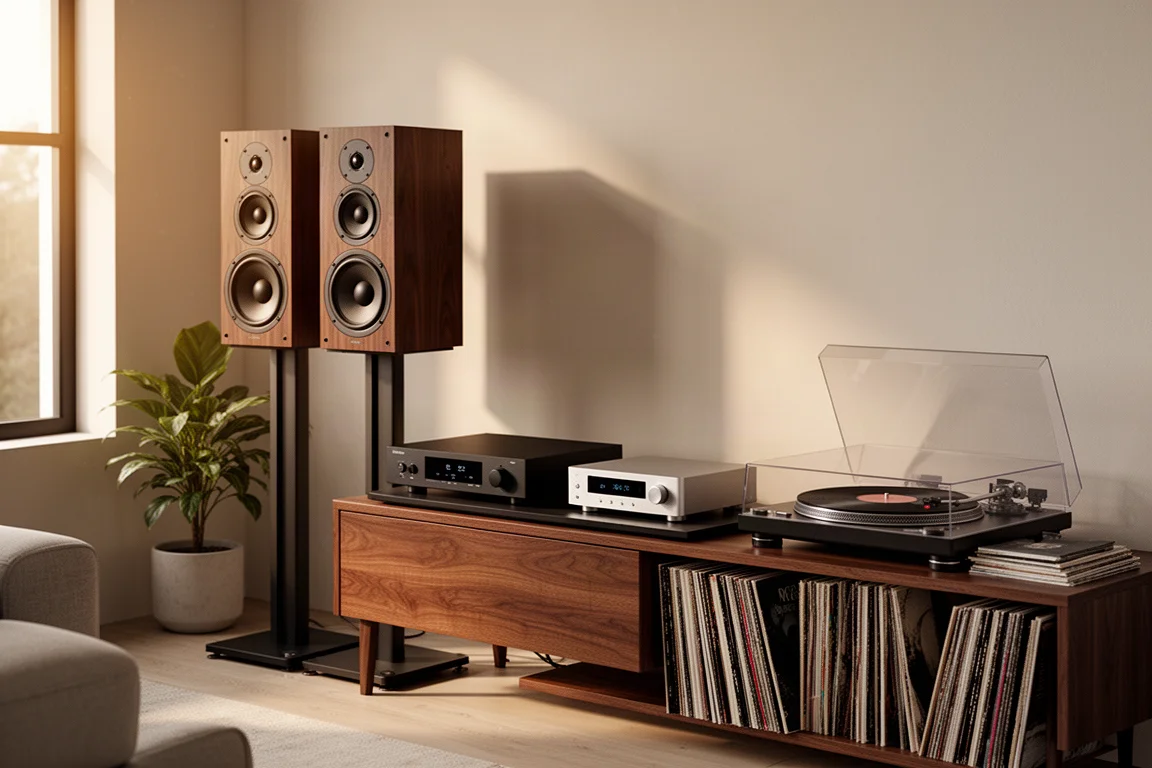
Building a genuinely satisfying stereo system does not require showroom money. With a budget of two thousand dollars it is possible to cover speakers, amplification, a digital source, and even a turntable, and still end up with a setup that most listeners would happily keep for years.
The strategy is straightforward. Spend the largest share on the speakers, keep the electronics clean and neutral, and leave an obvious upgrade path for later. That opens up three sensible directions: a speaker-focused build, an amplifier-focused build built around separates, and a digital-first build organised around a dedicated DAC.
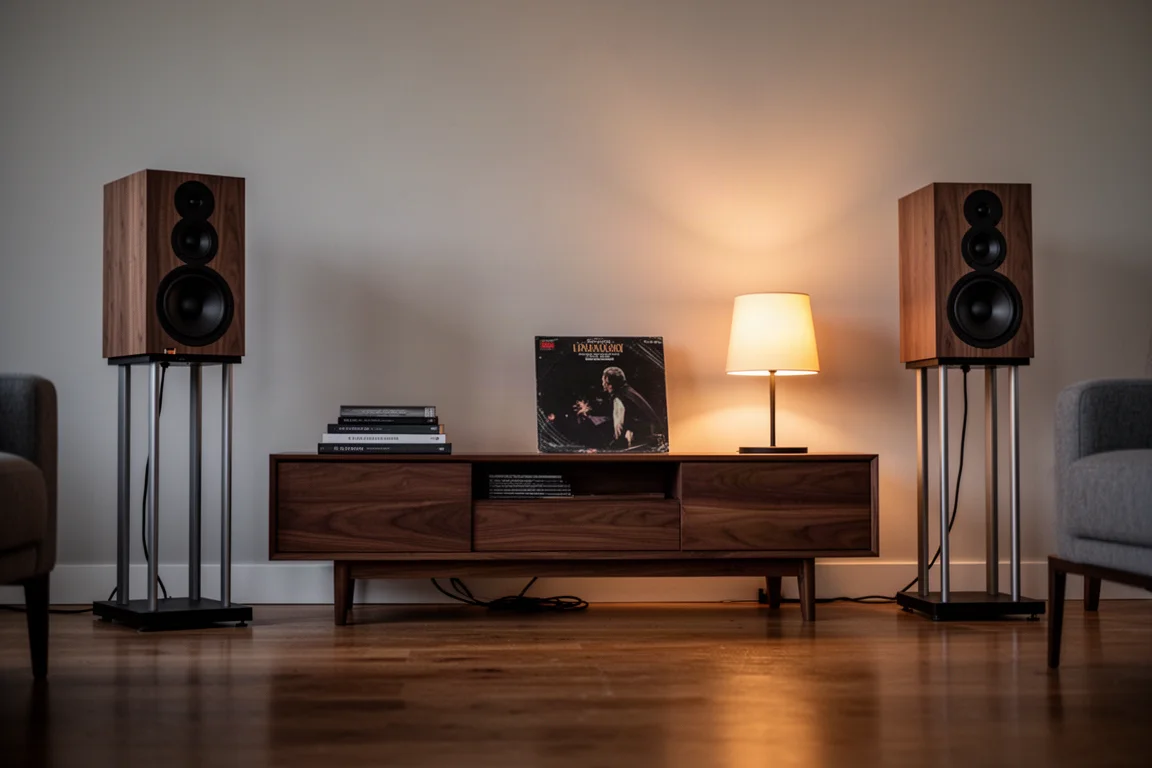
Every figure mentioned here is a retail price, and most of these components are discounted regularly, so a little patience can stretch the budget further. Nearly all of the speakers below are 6.5-inch bookshelf designs with enough low-end output that a subwoofer becomes optional rather than essential, which is what keeps a full system inside two thousand dollars.
How to Plan a Sub-$2,000 System
Start with the room and the speakers. Speakers shape the character of a system more than any other component, so they deserve the largest single allocation. A neutral pair that leans only slightly in one direction will stay satisfying through several electronics upgrades.
Next, decide how much convenience you want from the amplifier. An integrated amplifier with a built-in DAC and phono stage gets a system running with the fewest boxes. Separates cost more and ask more of the listener, but they typically deliver a cleaner and more revealing result.
Finally, think about sources. Network streaming is the cheapest way to add a large music library, vinyl costs a little more but can be upgraded gradually, and a standalone DAC makes sense if most of your listening happens in the digital domain. Keep the upgrade path in mind from the start: adding a dedicated power amplifier later is the single most common way to improve any of these builds.
WiiM Mini: A Low-Cost Entry Into Network Streaming
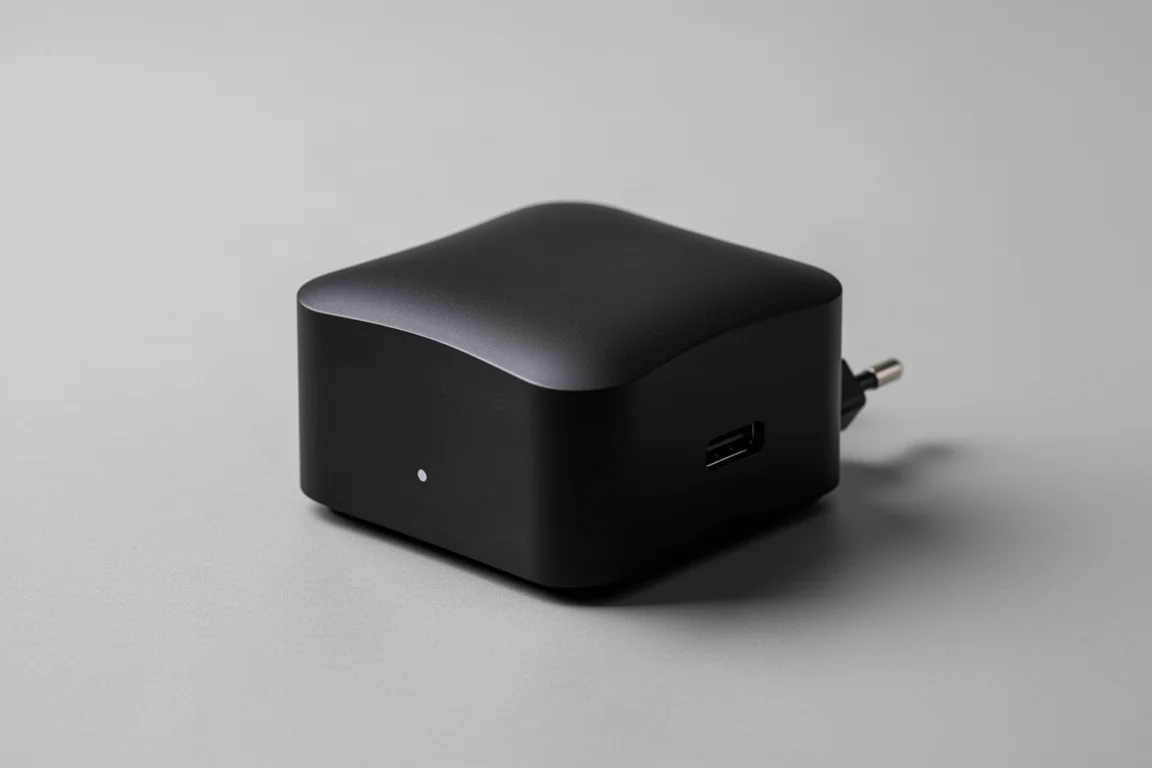
The WiiM Mini is the least expensive way to add network streaming to a stereo system. It plays Amazon Music gaplessly, supports Tidal Connect and Spotify Connect, and handles networked music libraries, all for around $90.
Setup takes roughly five minutes, and the control app is one of the better streaming interfaces available at this end of the market. For a system assembled to a strict budget, it delivers streaming without eating into the money set aside for speakers.
Polk R200: The Speaker That Anchors the First Build
The Polk R200 is the strongest value pick in this group. It is a 6.5-inch bookshelf speaker that does not lean hard in any one direction: there is a little extra weight at the bottom, sparkle at the top, and a mid-range that stays clean and natural. That balance means it appeals to a very wide range of listeners and works with almost any neutral electronics.
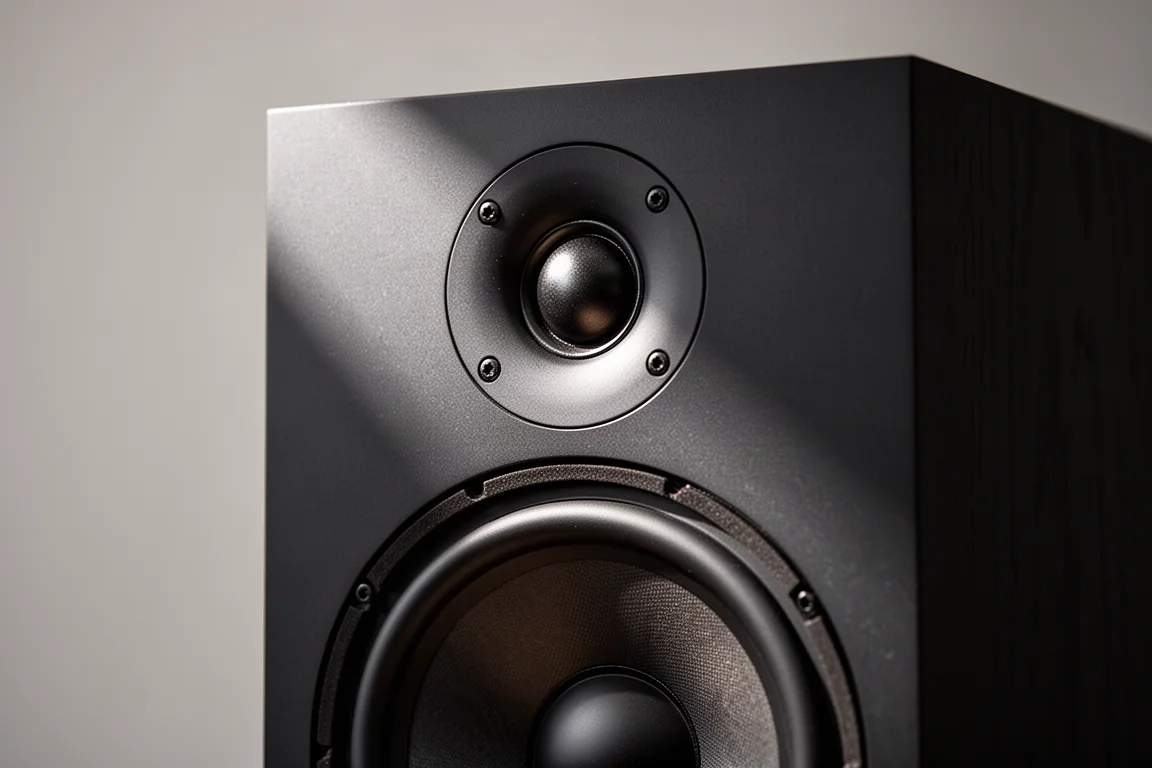
Pricing sits around $650 to $750, and the R200 goes on sale regularly. It also produces enough bass that a subwoofer is not required in most rooms, which keeps the total system cost down and simplifies placement.
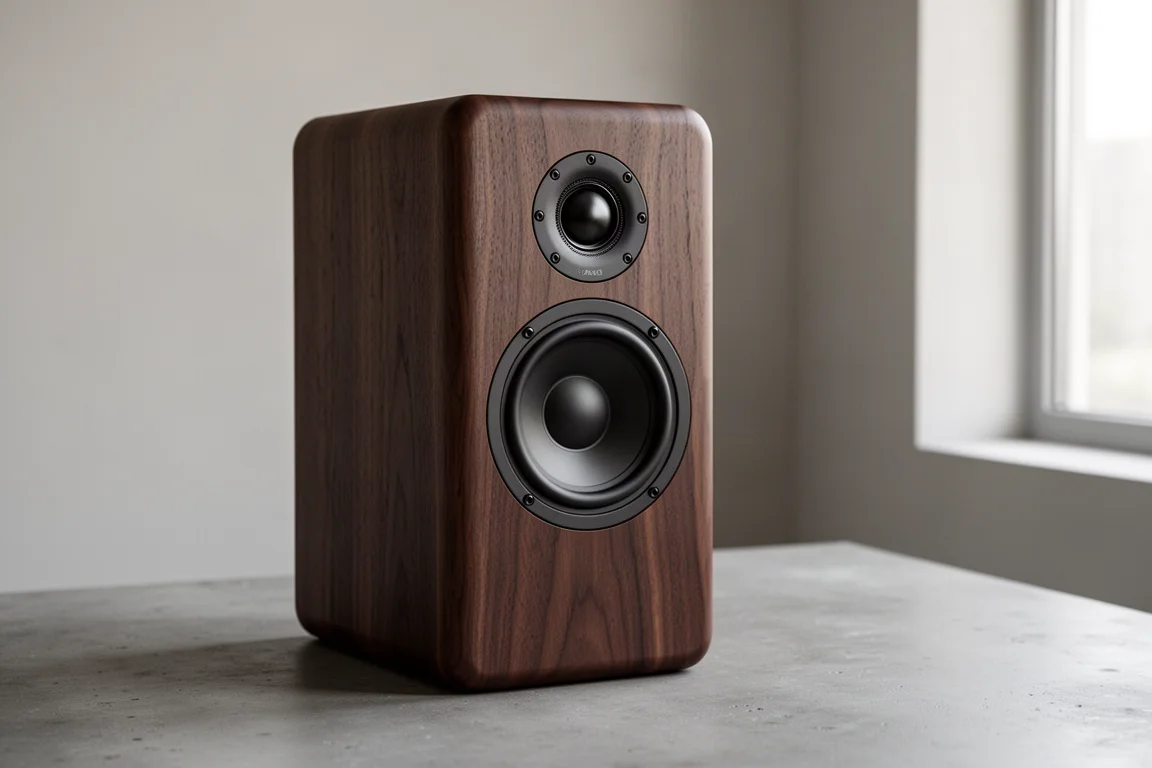
ELAC Debut Reference: Smooth and Warm
The ELAC Debut Reference takes a softer approach than the Polk. It is smoother and warmer, with a rounded character that many listeners find easy to live with over long sessions, while still using a 6.5-inch bookshelf format that does not demand a subwoofer.
It comes in at $700, having previously sold for $600, and it appears on sale from time to time. Open-box and warehouse listings are worth checking, since they can bring the price down without changing what you get.
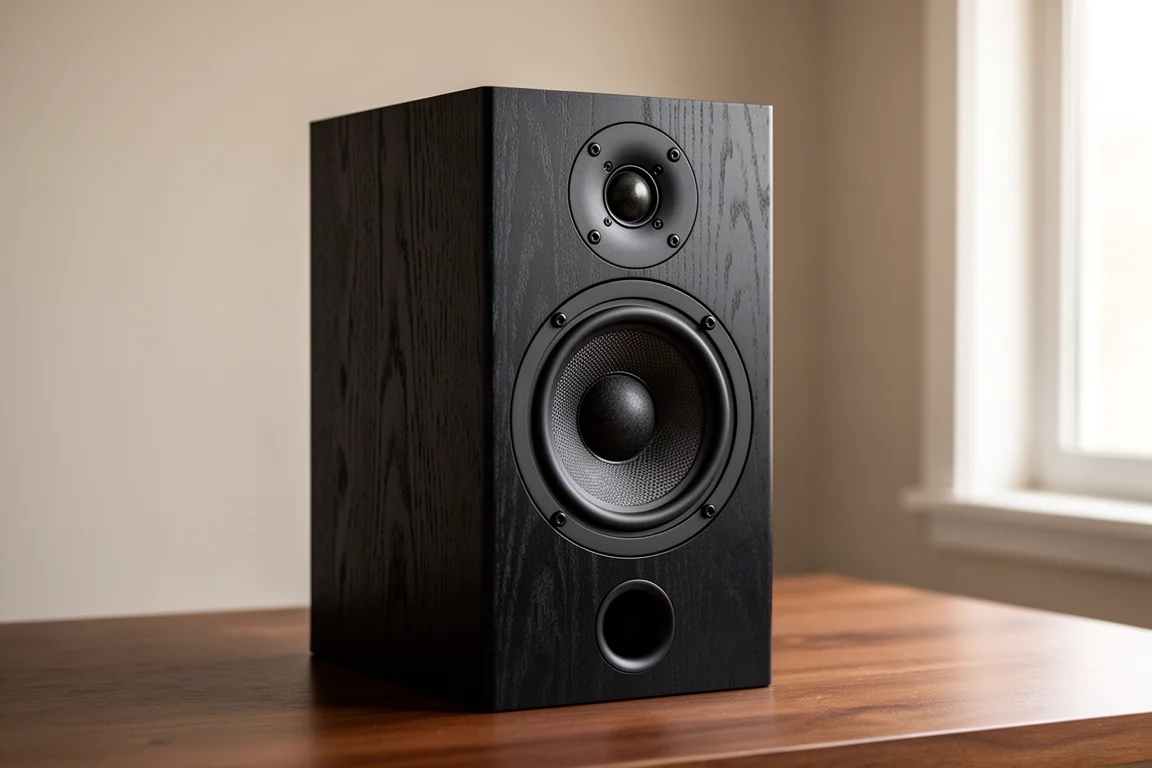
ELAC Uni-Fi 2.0: Neutral and Detailed
The ELAC Uni-Fi 2.0 is the more neutral of the two ELAC options. Where the Debut Reference adds warmth, the Uni-Fi 2.0 stays even-handed, which makes it a natural match for the cleaner, more revealing electronics further down this list.
It lists at $700 but is discounted often, sometimes down to around $500. If you are patient and can catch a sale, it becomes one of the better value speakers in this entire roundup.
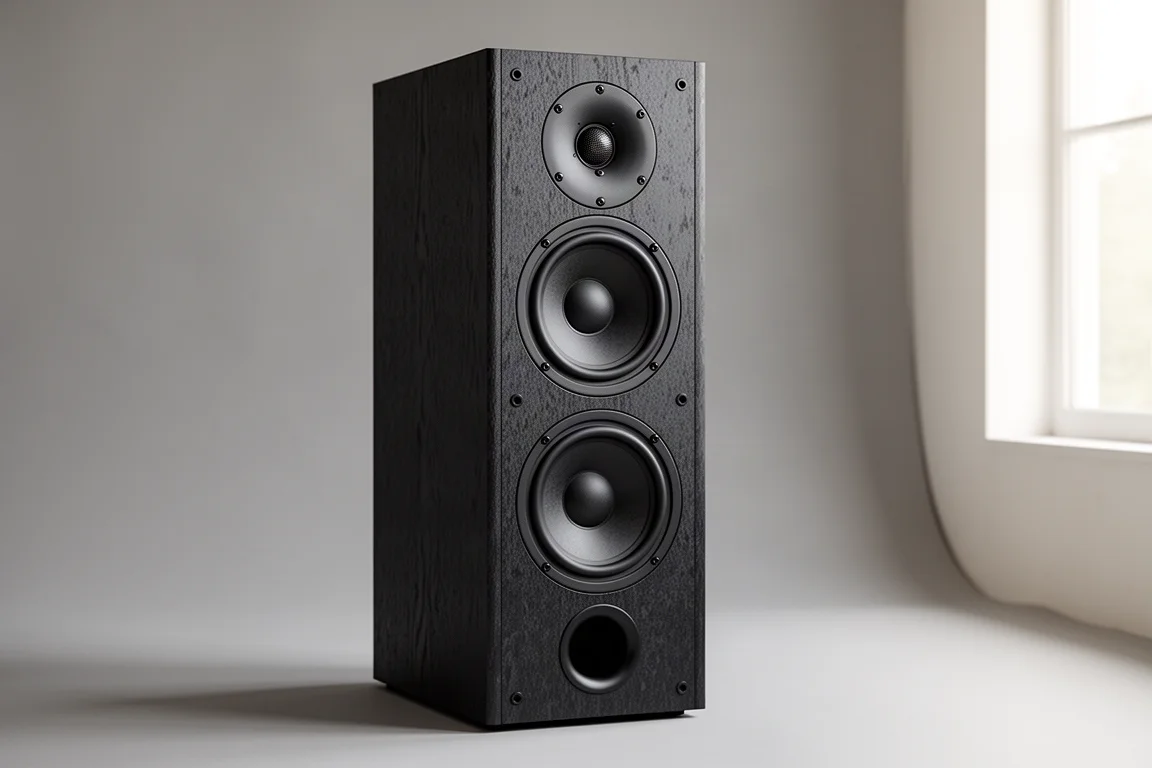
Wharfedale EVO 4.1: Refined Construction and Easy Placement
The Wharfedale EVO 4.1 is the most expensive speaker here at $800, and it earns that with very smooth sound and excellent cabinet construction. Because the port fires downward, it is far less fussy about where it sits than a rear-ported design, which matters in smaller rooms.
It is also the only speaker in this group that may want a subwoofer. If you are not chasing deep bass and you can position it close to a wall, it holds up well on its own.
Emotiva TA1: An Integrated Amplifier With a DAC and Phono Stage
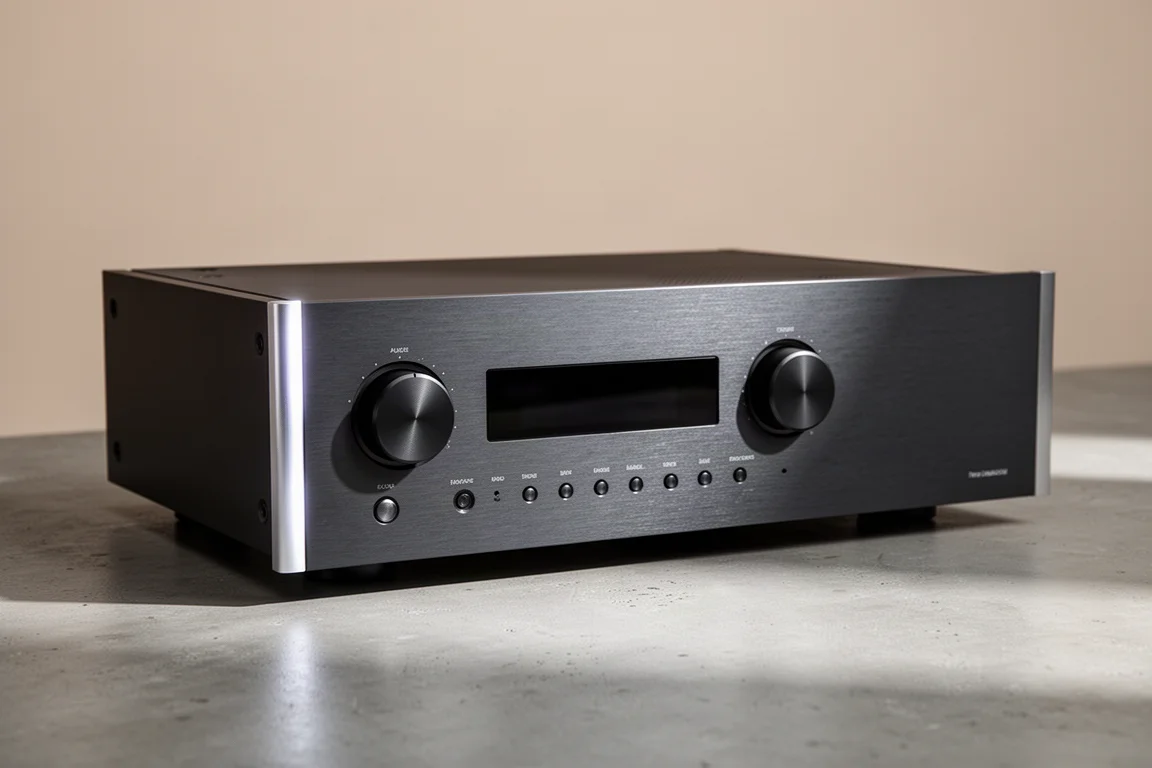
The Emotiva TA1 combines an integrated amplifier, a DAC, and a phono stage in a single chassis, and because it also includes a tuner it is effectively a receiver. It offers RCA outputs as well as RCA outputs with a high-pass filter, which is useful if you later add a subwoofer.
With the DAC and phono stage already built in, the TA1 is the simplest way to get a complete system running. It also leaves room to grow, since adding a dedicated power amplifier later is a straightforward step rather than a rebuild.
Geshelli Labs J2: A High-Value Standalone DAC
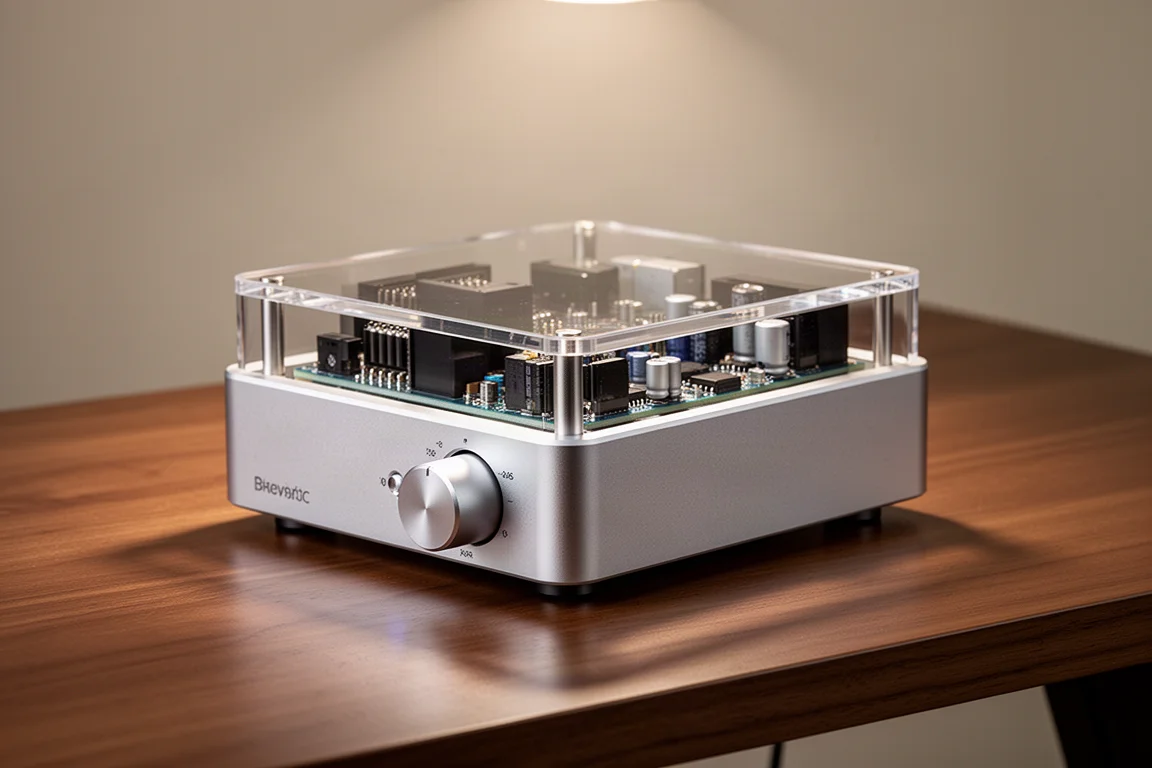
The Geshelli Labs J2 is a small standalone DAC with a large soundstage and a clean, detailed presentation. It costs $250 without a USB input and $300 with one, and an optional wooden case is available for a little extra if you want it to look the part on a shelf.
Even in a system that already includes a DAC, the J2 is worth considering as an upgrade, and it is one of the better-value digital components in this price range.
Fluance RT82: A Sensible Entry Into Vinyl
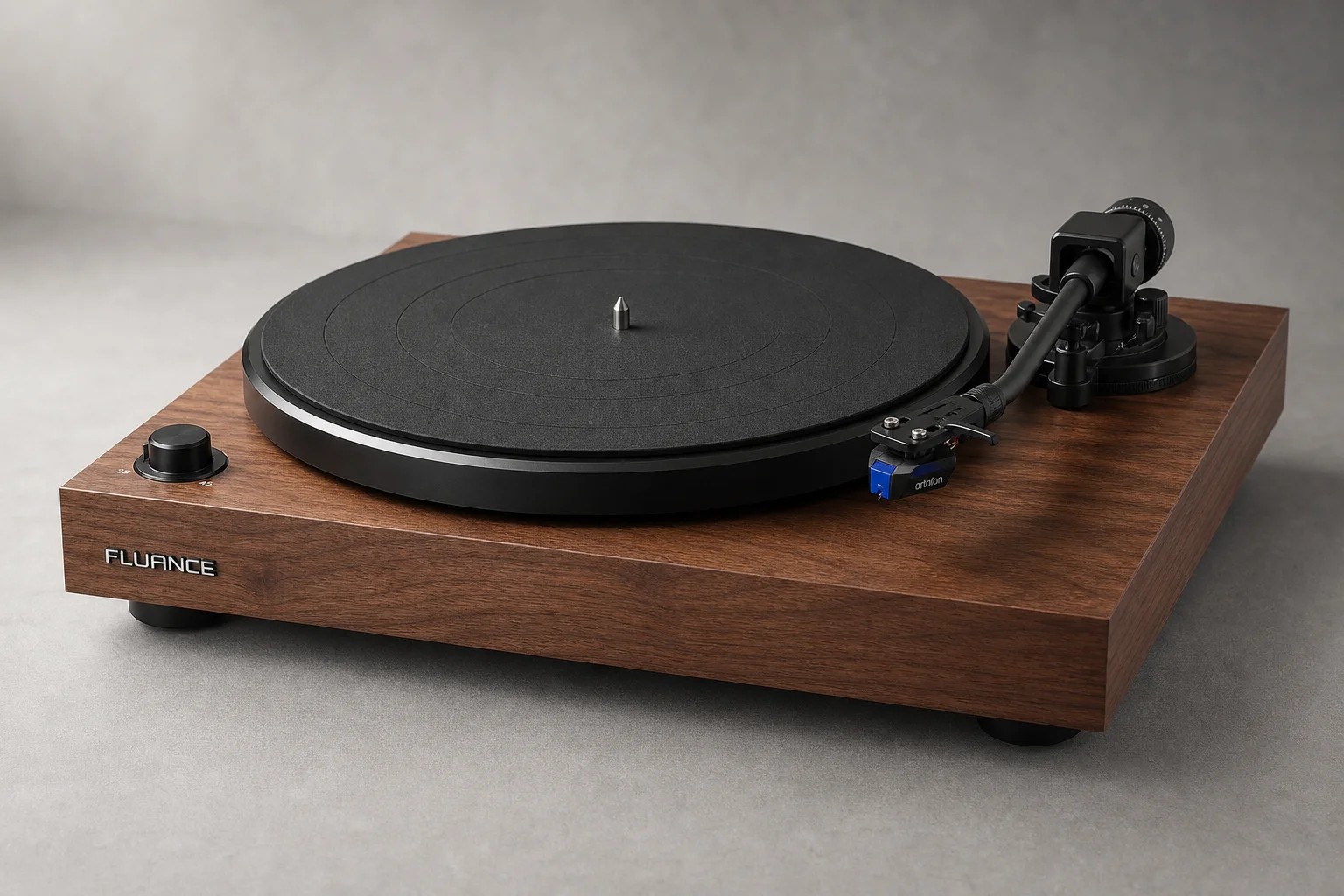
The Fluance RT82 is the value turntable pick at $300. Fundamentally it is the same table as the higher model in the same line, which means the platter and the cartridge can be upgraded over time instead of replacing the whole deck.
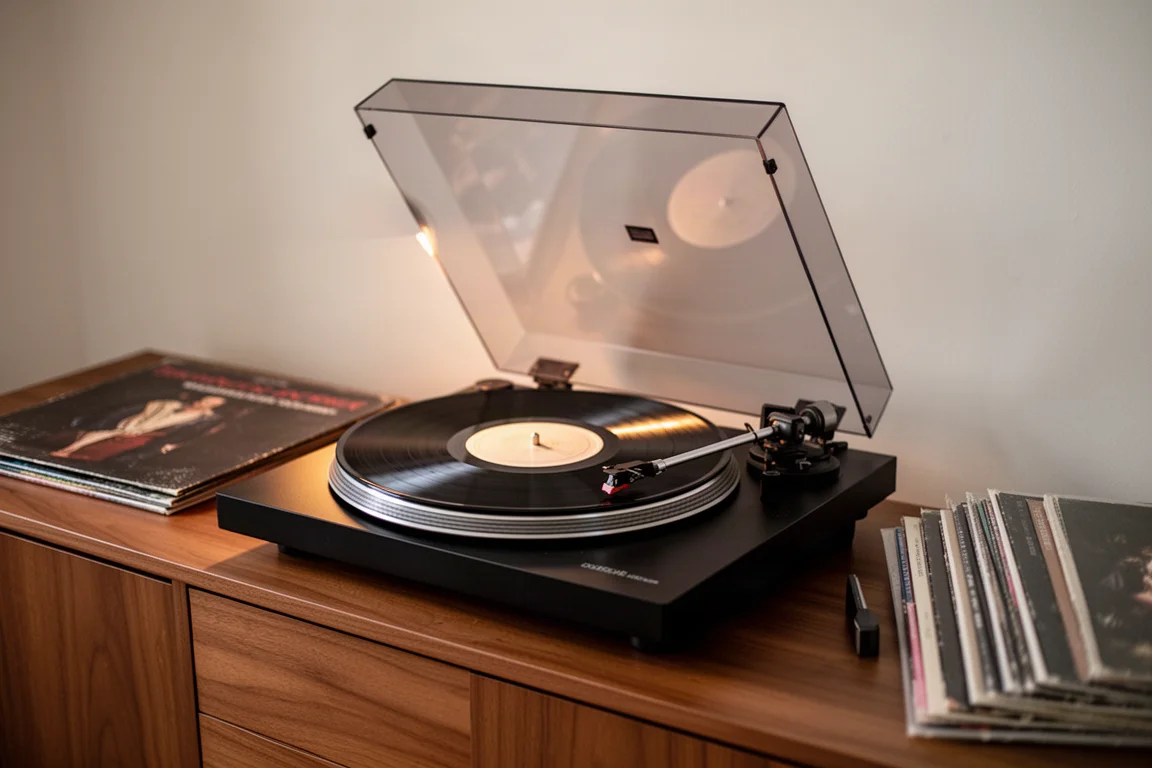
That upgrade path makes the RT82 a low-risk way to add vinyl to a system that was otherwise built around digital sources, and it keeps the first build comfortably inside the budget.
Denafrips Ares II: An R-2R DAC for Digital-First Listeners
If most of your listening happens in the digital domain, the Denafrips Ares II is the component to build around. It is an R-2R design without a long list of selectable filter roll-offs, and its strength is a real sense of air and space, with voices and instruments placed precisely in the room.
Pricing lands around $850 depending on the exchange rate and stays under $1,000. Note that the manufacturer’s site lists prices in Singapore dollars, so the currency selector needs to be switched to see US pricing. Paired with an integrated amplifier and a pair of Polk or ELAC speakers, a digital-first system comes in around $2,150 depending on whether the speakers are on sale.
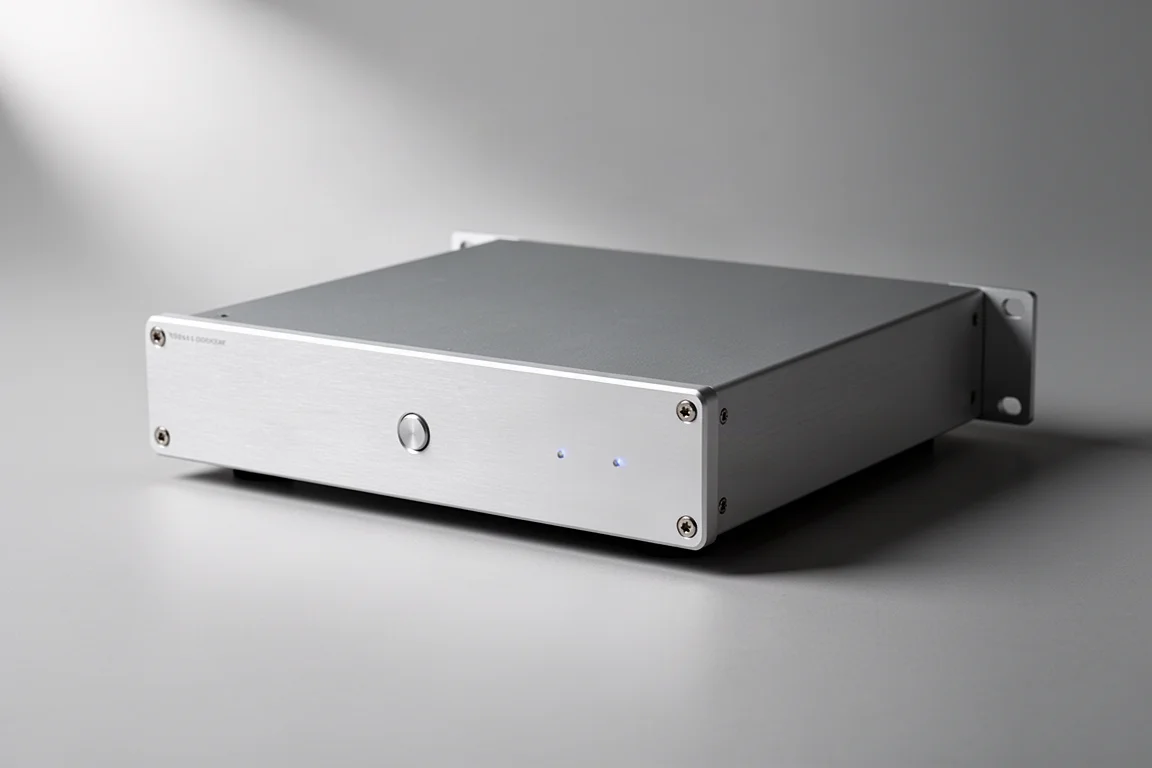
Schiit Saga: A Straightforward Preamplifier
The Schiit Saga is a $300 preamplifier that pairs with the Vidar power amplifier to form a clean separates combination at $1,000. It is a simple, unfussy design with no tone controls, which suits listeners who are already happy with the voicing of their speakers and sources.
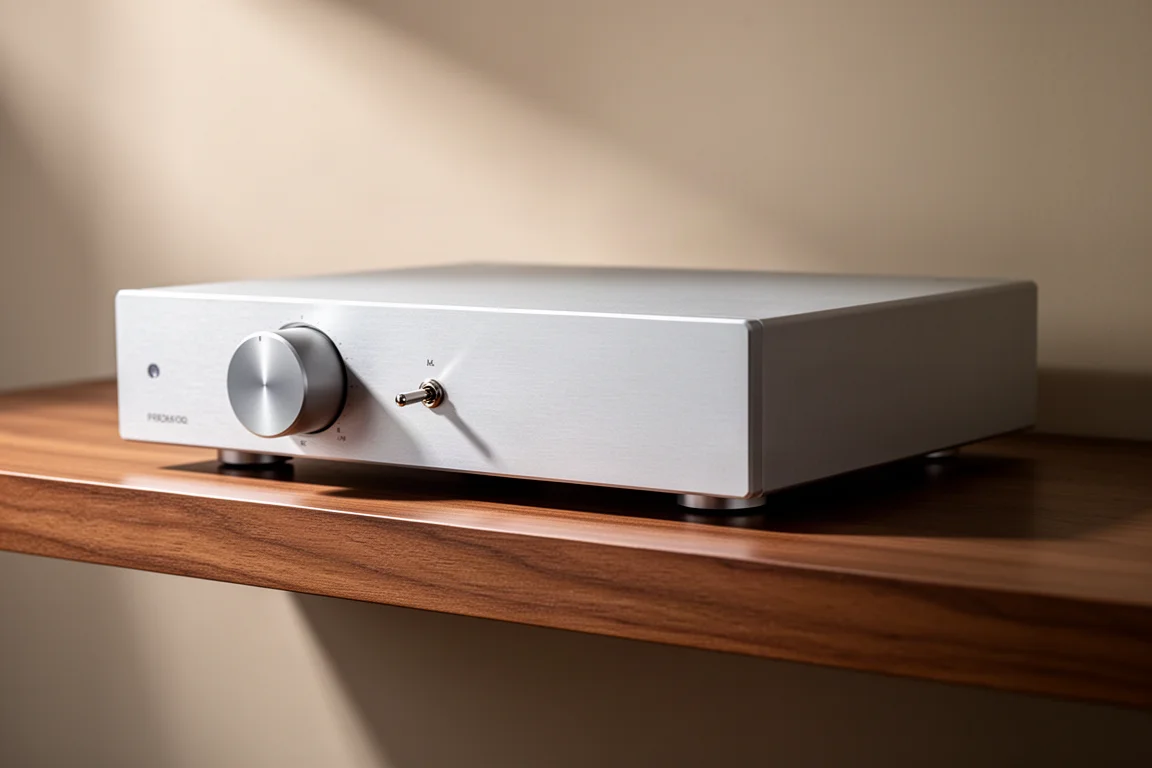
Schiit Vidar: Power for the Separates Path
The Schiit Vidar is a $700 power amplifier, and together with the Saga it makes a very clean, resolving, and revealing pairing. How much of that resolution you actually hear will depend on the source and the speakers it drives.
There are no tone controls anywhere in this path. Listeners who want to adjust bass, treble, or mid-range will need an outboard equalizer rather than expecting the electronics to shape the sound for them.
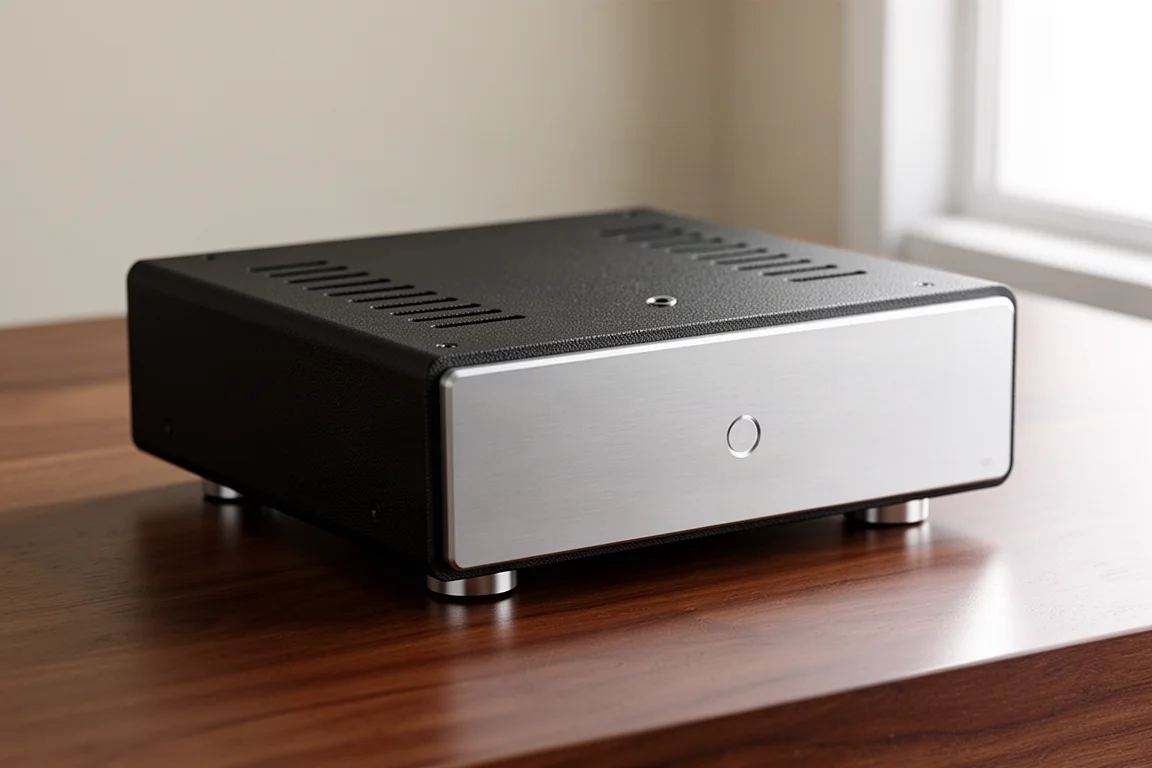
Akitika GT-102: A Kit-Based Amplifier With a Tube-Like Character
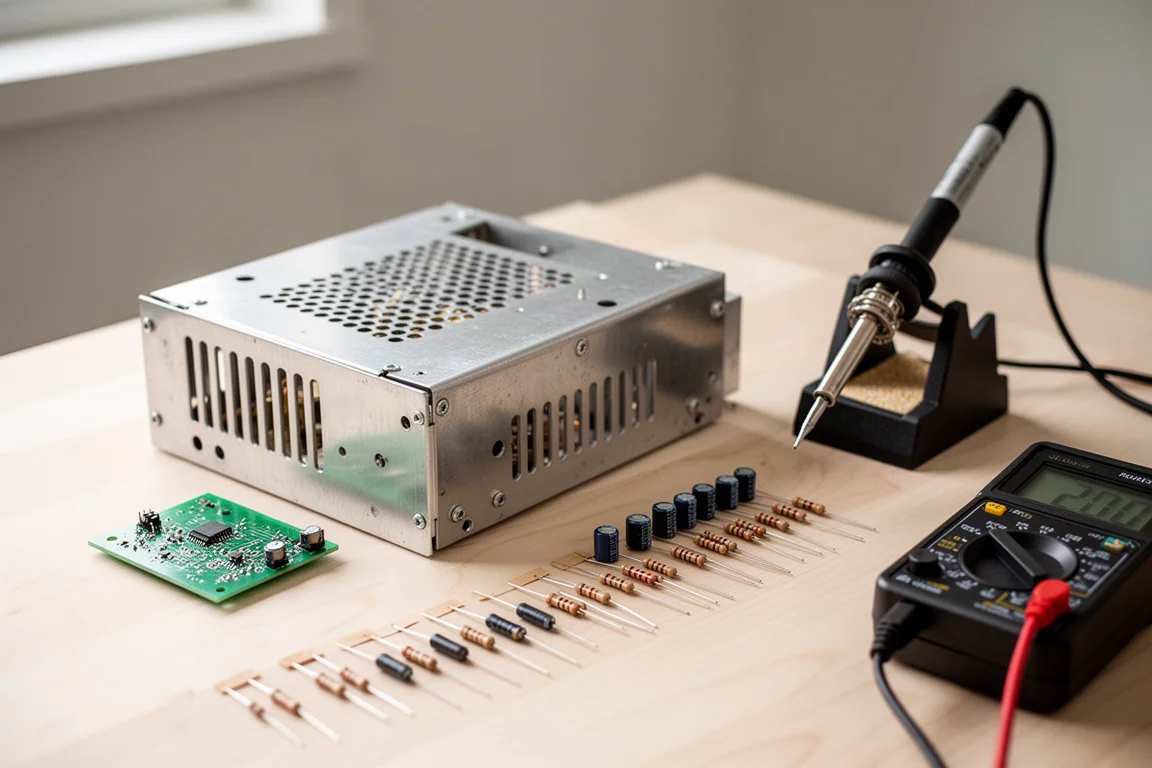
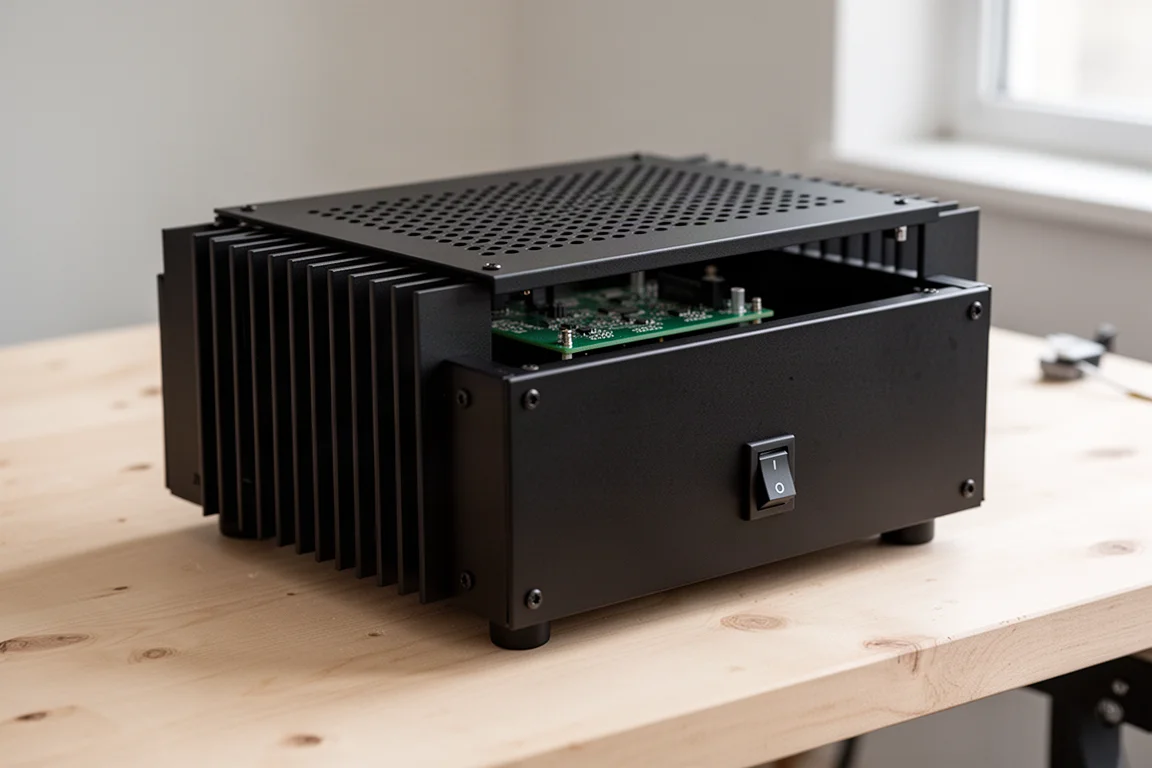
The Akitika GT-102 is a kit amplifier, and a matching preamplifier is available in the same kit format. Assembled as a pair they land around $1,100. The sound has a tube-like character backed by solid-state power, and both 4-ohm and 8-ohm versions are offered.
The catch is effort and timing. Building the kit takes some confidence with a soldering iron, and assembled units currently carry a waiting list of roughly two to three months because of component supply. For listeners willing to wait, it is a rewarding endpoint and a genuinely different flavour from the integrated amplifier route.
Paired with a pair of 6.5-inch bookshelf speakers and a standalone DAC, the Akitika electronics produce a system with a distinctly warmer character than the separates path above.
Overall Buying Advice
Three builds make sense depending on where you want to invest. The speaker-focused build pairs the Polk R200 with the Emotiva TA1, the Geshelli Labs J2, and the Fluance RT82, which comes in right at $1,900 before tax and cables. Leaving off the turntable is the easiest way to save money if vinyl is not a priority.
The amplifier-focused build centres on the Schiit Vidar and Saga at $1,000, adds the Geshelli Labs J2, and pairs with a set of ELAC or Polk speakers for a total around $2,000. Just go in knowing that this path has no tone controls.
The digital-first build starts with the Denafrips Ares II, adds the Emotiva TA1, and finishes with Polk or ELAC speakers, landing around $2,150 depending on sales. Whichever direction you choose, remember that these are retail prices, that sales and open-box listings are common, and that tax and cables should be part of the budget from the start.
Conclusion
Under two thousand dollars, a complete system with two sources is realistic, and the result is one that most listeners would be impressed by. Each of these builds can be improved later by adding a dedicated power amplifier, a second amplifier, or a better power amplifier, so nothing here paints you into a corner. Spend the money where it matters most, buy the electronics when the price is right, and the system can stay satisfying for a long time.
Further reading
Related Reviews
Hi-Fi Audio
Accuphase C-57 vs Allnic H-7000V: Two High-End Phono Stages Compared
A fully balanced solid-state phono stage with a pitch-black noise floor meets a tube design built for well-loved records. Here is how to choose between them.
Hi-Fi Audio
Active vs Passive Hi-Fi: Five Components for a Modern System
Five components that define modern active and passive hi-fi systems, with the strengths, trade-offs and setup details worth weighing before you buy.
Hi-Fi Audio
Advance Paris A10 Apex Review: A Hybrid Integrated Amplifier That Covers a Lot of Ground
A French hybrid integrated amplifier with a class A tube preamp stage, analogue power meters, and an internal DAC and phono stage good enough to make extra boxes unnecessary.