Mountain Bike Brakes
Budget vs Premium Mountain Bike Brakes: Shimano MT200, Hayes Dominion A2 and Trickstuff Piccola Compared
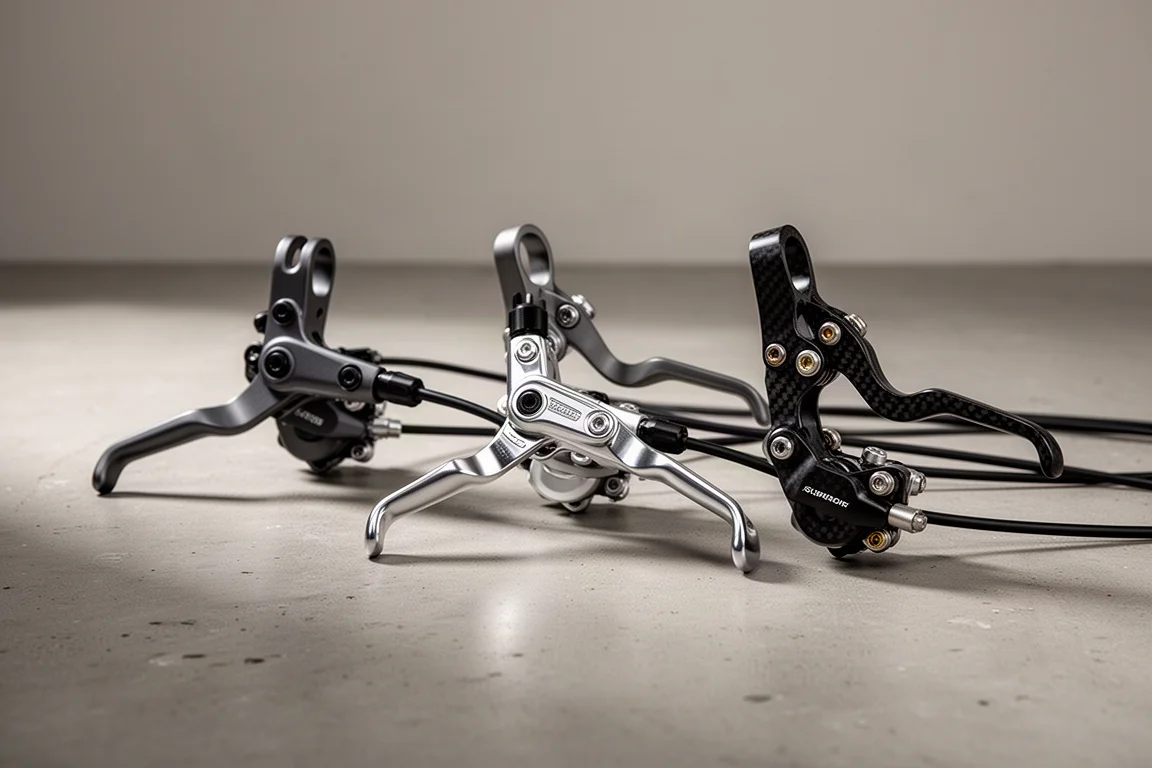
Three hydraulic mountain bike brake sets at very different prices, compared on materials, weight, adjustability and trail feel.
Introduction
Brakes are one of the few parts of a mountain bike that shape how safe and confident every ride feels, which makes it worth understanding what actually separates a basic hydraulic disc brake from an expensive one. Modern mountain bike brakes are almost all hydraulic disc setups: a lever at the bar, a caliper at the wheel and a hose carrying fluid between the two.
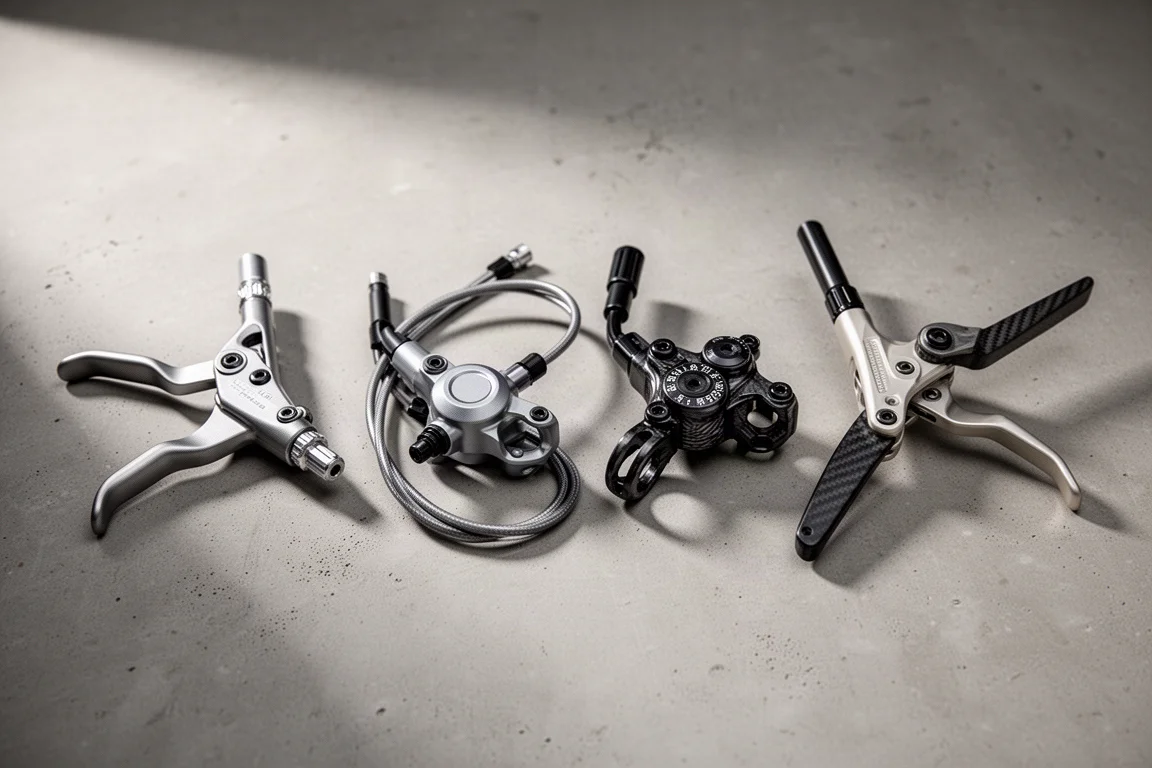
Prices in this category are extreme. A pair of budget hydraulic brakes with rotors can cost less than $30, while a boutique set can cost around $1,000. The useful question is not whether expensive brakes are nicer to own, but whether they genuinely stop better.
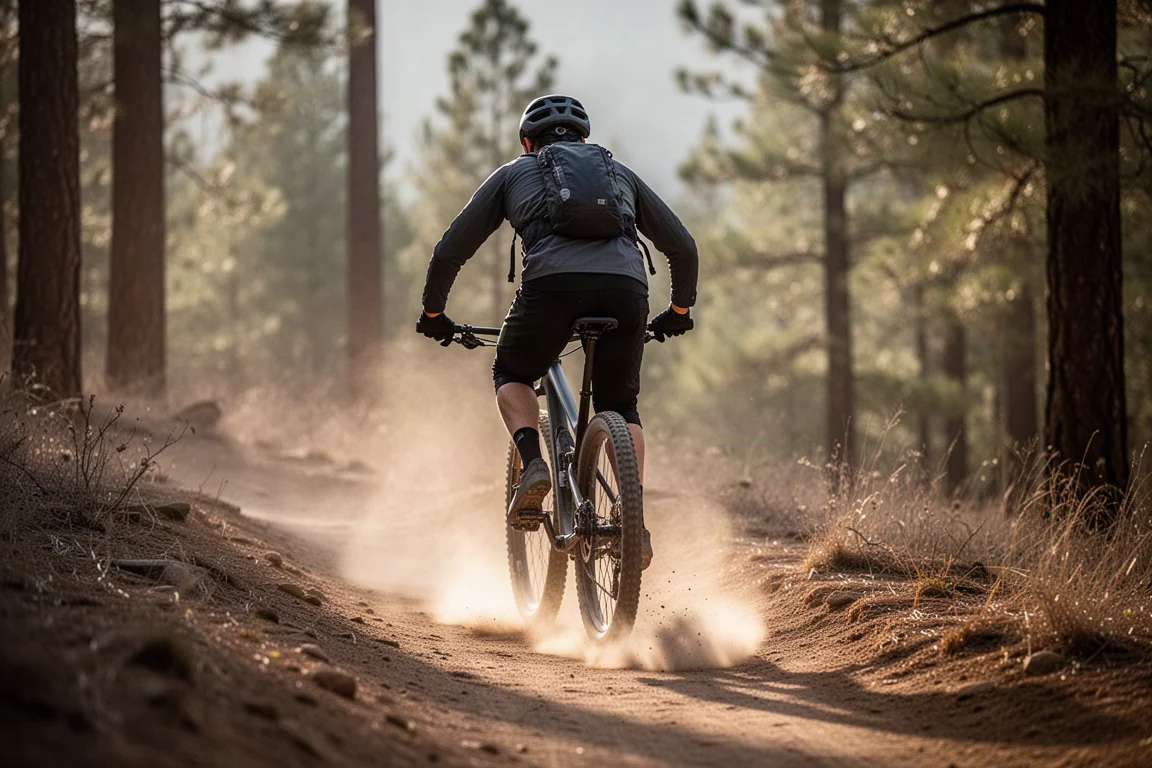
To answer that, three sets were ridden back to back on the same trails: Shimano MT200 at roughly $100, Hayes Dominion A2 at roughly $300 to $400, and Trickstuff Piccola at roughly $1,000. Each one represents a different point on the price ladder, and each one approaches braking performance in a different way.
What Separates a Budget Brake From a Premium One
Price buys a mix of materials, adjustment range and finish rather than one headline feature. Entry-level brakes use cast aluminium and steel, plain finishes and a two-piston caliper running resin pads. Reach adjustment is usually there, but it needs a tool rather than a dial. There is no bite point adjustment, and the lever clamp is often a one-piece design, so grips have to come off to fit the brake and there is no direct mounting point for a shifter or dropper post lever.
Mid-range brakes add tool-free reach adjustment, often a bite point adjuster, lever bodies that pivot on bearings instead of bushings, ambidextrous levers that can be swapped side to side, direct mounting for other handlebar controls, thicker rotors that accept any pad compound, and metal pads as standard or as an upgrade.
At the top end, the changes are about construction rather than feature count. Machined aluminium replaces cast aluminium, titanium bolts replace steel, carbon fibre appears in the lever blades, and the overall weight drops sharply. Features are often stripped back again to save grams.
Budget Pick: Shimano MT200
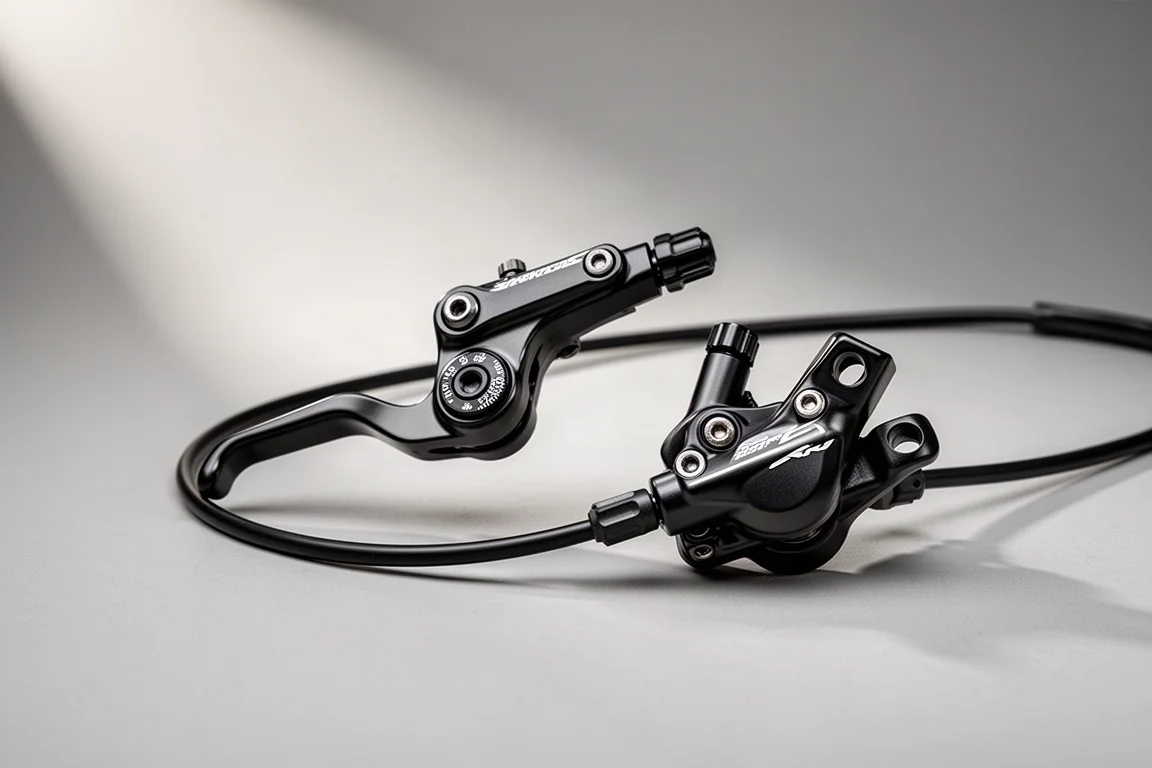
The Shimano MT200 is the brake found on most budget hardtails and entry-level mountain bikes, and it sits at around $100 for the pair. Construction is deliberately plain: cast aluminium and steel, no decorative finish, and a weight of around 584 g for both brakes. That is heavier than the alternatives here, but the build is robust and the design is straightforward. Reach adjustment is available, though it requires a tool.
On the trail the MT200 offers a reasonable amount of power with decent modulation and a lever action that is noticeably lighter than the cheapest hydraulic brakes. It is not dramatically powerful, but it keeps speed in check and produces far less hand fatigue on a long descent than a bargain set. The main limitation is the rotor. This entry-level Shimano rotor is intended for resin or organic pads only, which caps how much braking performance can be unlocked. Moving to a rotor that accepts metal pads, and pairing it with metal pads, makes a significant difference.
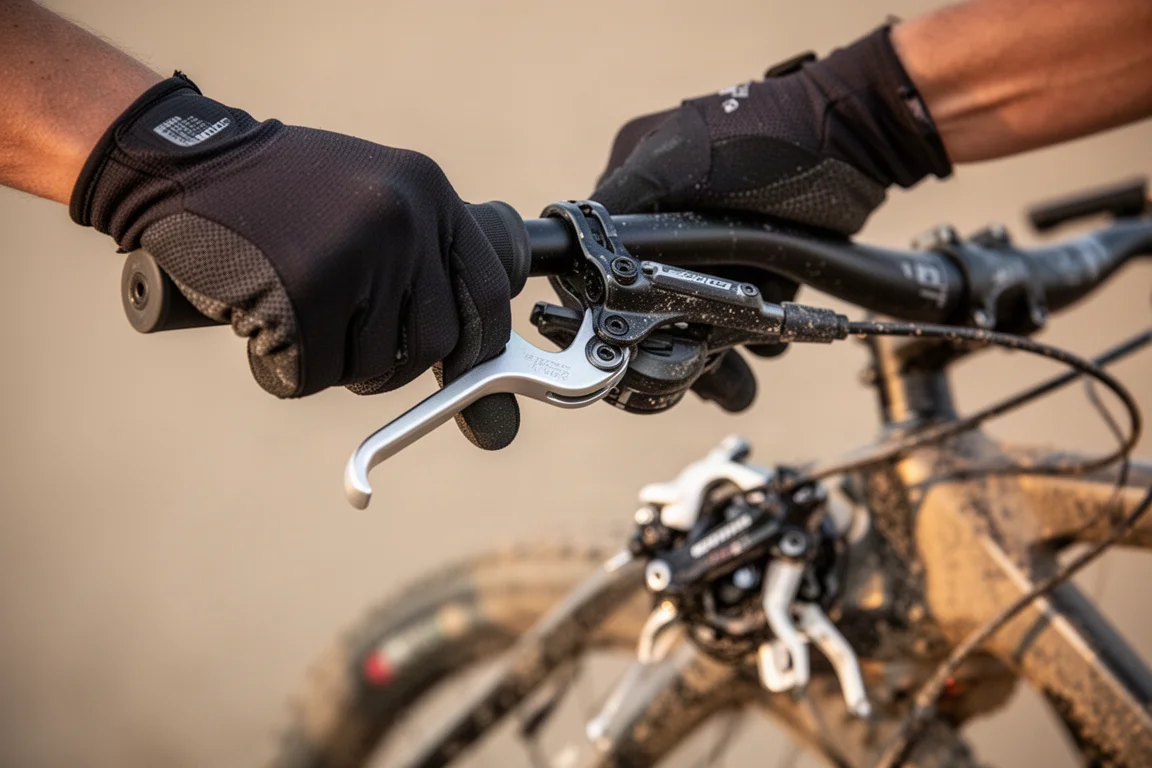
For riders on a tight budget who want dependable, fuss-free braking, the MT200 is a sensible and reassuring choice.
Mid-Range Pick: Hayes Dominion A2
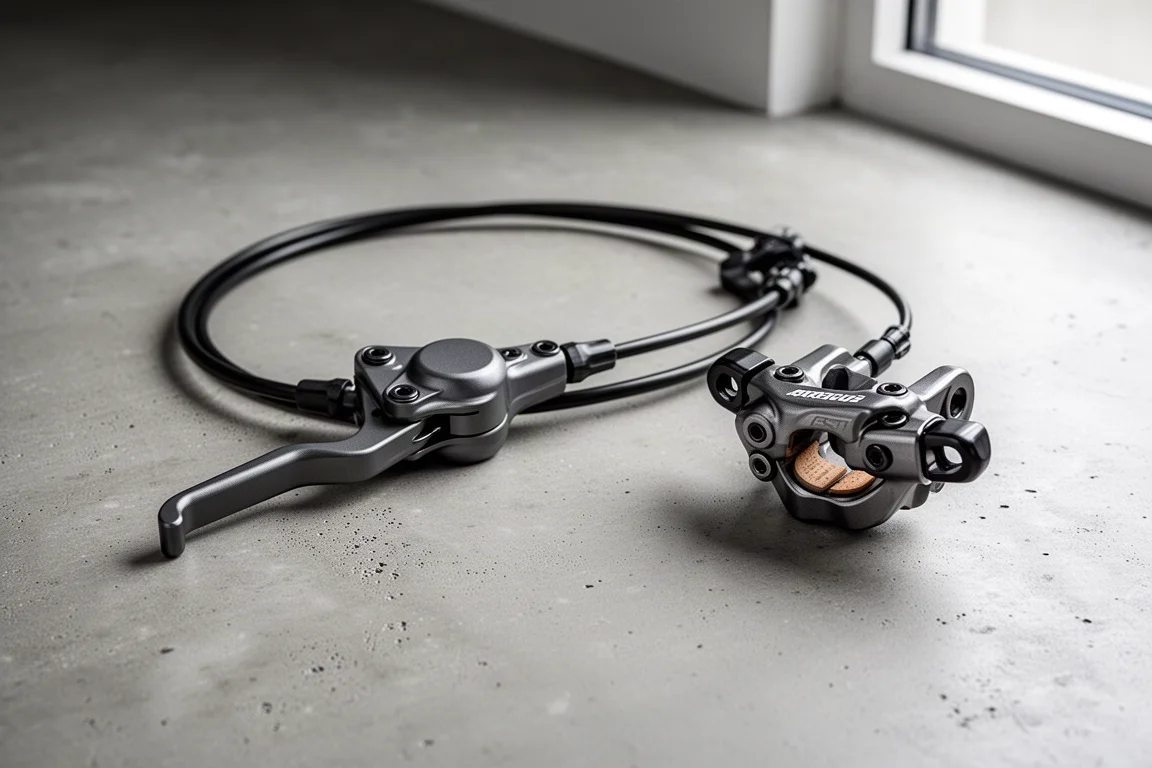
Brakes in the $300 to $400 bracket are a different proposition. The Hayes Dominion A2 adds tool-free reach adjustment and a bite point adjuster, so the lever can be dialled in on the trail without searching for an allen key. The lever bodies are ambidextrous and can be swapped side to side, and shifters or dropper levers can be mounted directly to the clamp.
Weight does not automatically fall at this price. The Dominion A2 comes in at around 609 g for calipers, levers and hoses, roughly 25 g more than the Shimano MT200 set, because of the extra hardware and adjustment on board. On the trail, though, the difference is clear. Power and modulation both step up, the lever action is very light, and the brakes feel composed on loose, dusty surfaces where fine control matters most.
Rotors at this level are usually better quality and sometimes thicker, and they work with any pad compound, with metal pads often supplied as standard or available as an upgrade.
Premium Pick: Trickstuff Piccola
At around $1,000, the Trickstuff Piccola occupies a category of its own. It is machined in Germany in limited numbers, so supply is restricted and waiting lists are common. The payoff is weight: 341 g for levers, hoses and calipers, close to half the weight of the Hayes set.
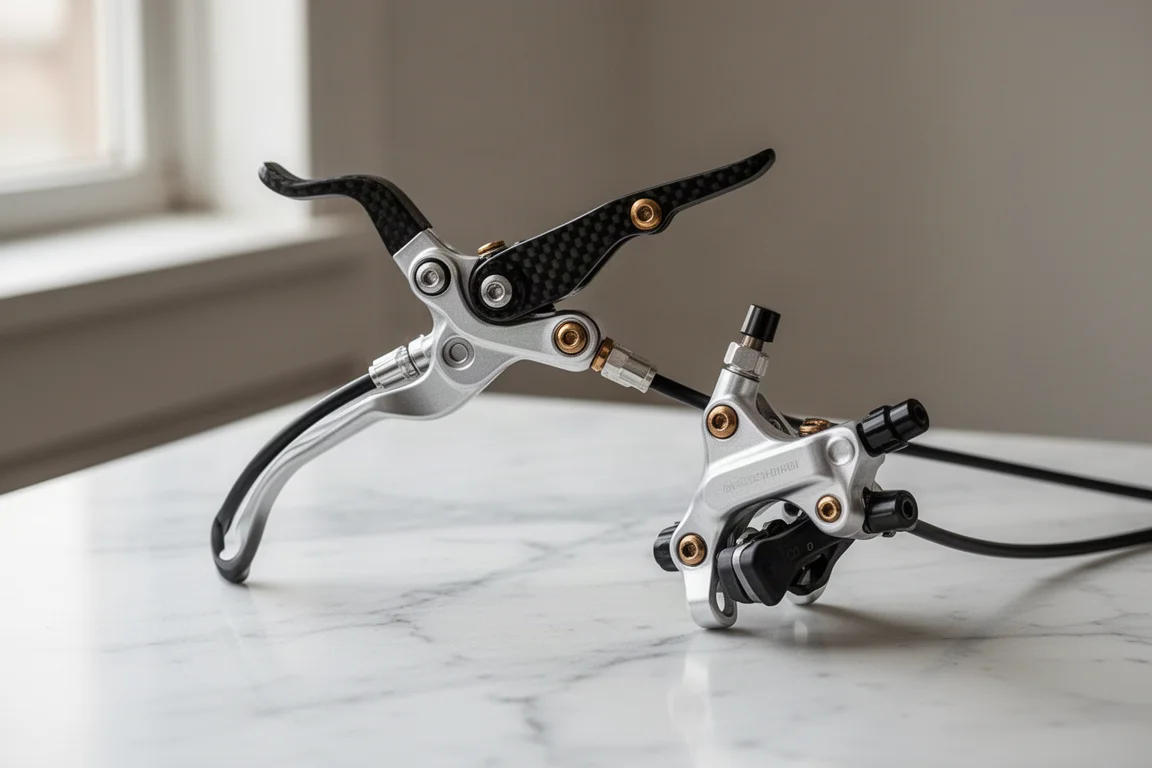
Everything that can be machined away has been. The lever bodies and calipers are machined aluminium rather than cast, the bolts are titanium, and the lever blades are carbon fibre. That saves grams and gives the brake a distinctive, hand-built appearance. It also means fewer features: there is no bite point adjustment, reach adjustment requires a tool, and the caliper is single-sided. Direct mounting for shifters and dropper levers is supported.
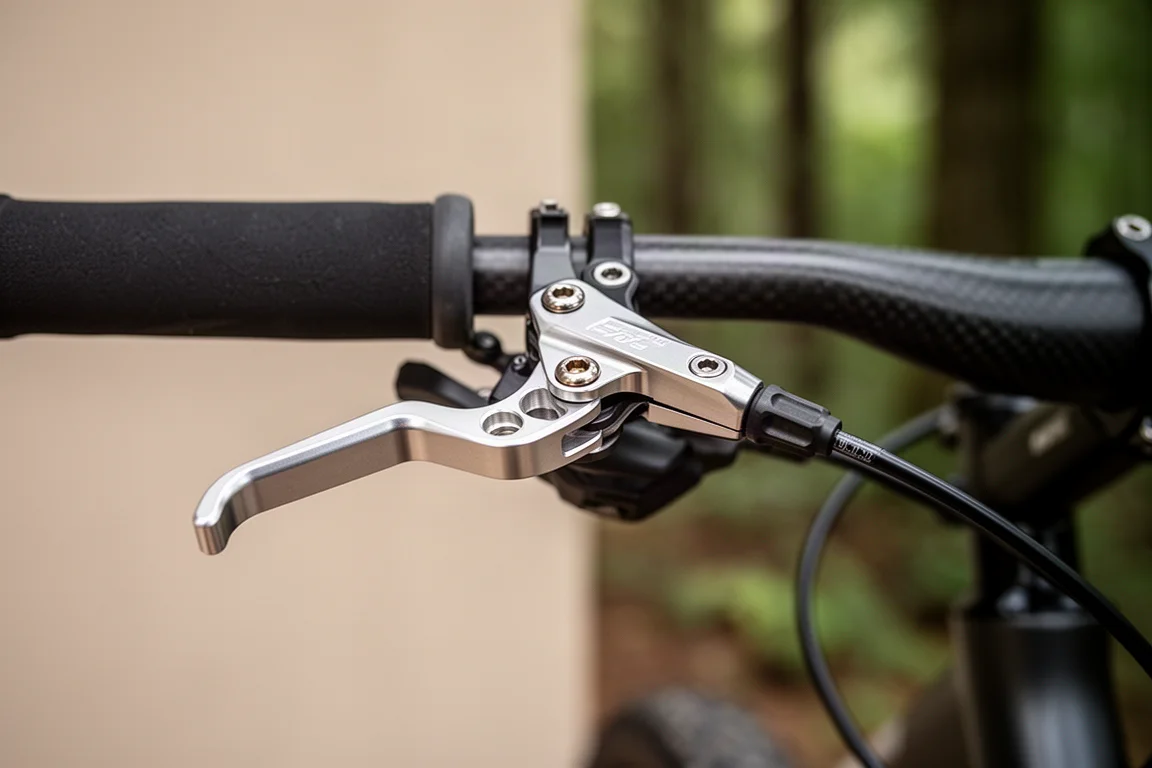
On the trail the Piccola is genuinely impressive. It feels more powerful than the mid-range Hayes set, with an equally light lever action and plenty of modulation, and the carbon blades stay warmer in cold weather than aluminium ones. The version tested here is the two-piston model, while a four-piston Piccola HD is also offered for riders who want a larger caliper.
Rotors, Pads, and the Details That Shape Performance
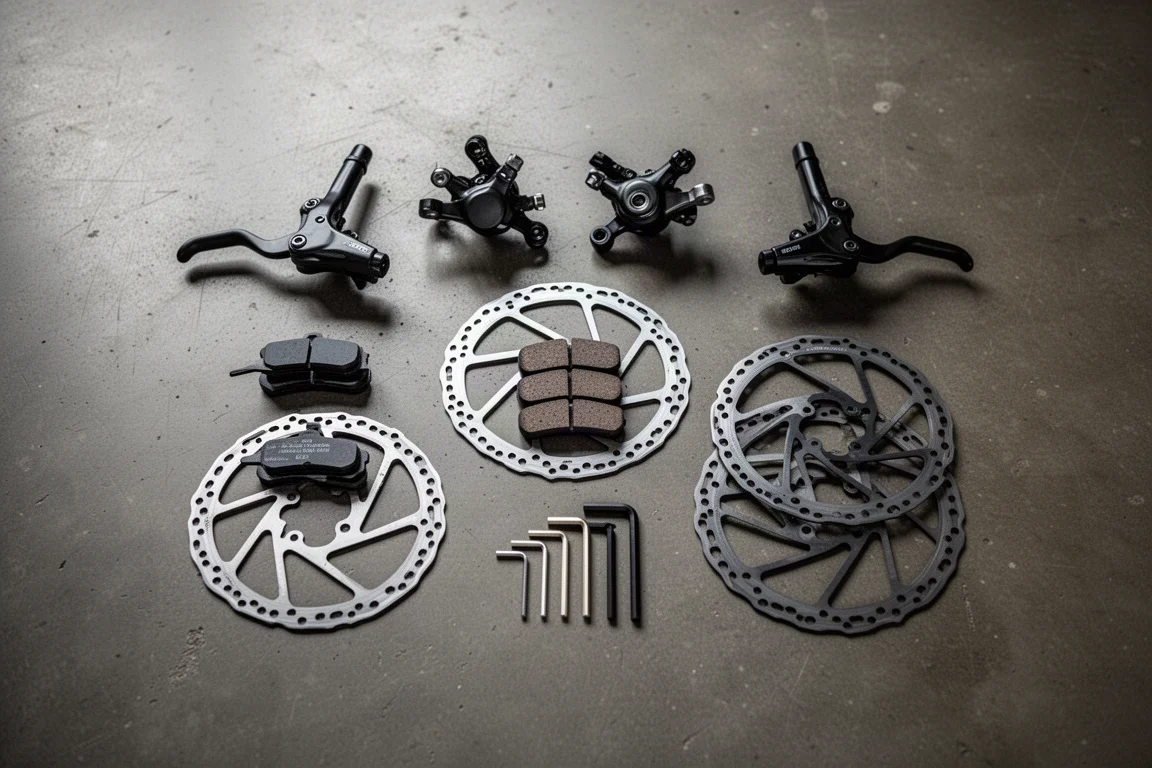
Pads and rotors often matter more than the brake body itself. Resin pads are quieter and easier on rotors but fade sooner, while metal pads bite harder and last longer but need a rotor rated for them. Pairing cheap rotors with cheap pads is the most common reason a budget brake feels weak, and upgrading both can transform it.
The same hierarchy holds across four-piston brakes. Shimano offers two-piston and four-piston versions of its brakes from entry level through to XTR, including the cheaper non-series MT400 and MT500 models. Hayes offers the Dominion A4, and Trickstuff offers the Piccola HD. A four-piston caliper puts two pistons on each side of the rotor and adds power, which is why these designs appear on trail, enduro and downhill bikes.
Where the Sweet Spot Sits
The clearest lesson from comparing these brakes is that spending more does not guarantee better braking. Budget brakes from some brands can outperform mid-range brakes from others, and mid-range models can outperform more expensive ones. Price buys weight savings, adjustability and finish, and only sometimes a meaningful gain in stopping power.
For most riders, the $200 to $400 range is the sweet spot. Brakes at this level deliver strong power, good modulation and enough adjustment to set the lever up exactly as you like it, and there is very little to complain about. That holds whether the bike is a cross-country race bike, a trail bike, an enduro bike or a downhill bike.
Premium brakes are excellent: light, beautifully made and powerful. If the budget allows, they are a genuine pleasure to own and ride. But they are not necessary for the vast majority of riders, and most people will be better served by putting the difference towards the rest of the bike.
Conclusion
Braking performance scales with price, but not evenly. The Shimano MT200 covers the basics reliably at around $100, the Hayes Dominion A2 adds real power, lighter lever feel and useful adjustment for a few hundred dollars, and the Trickstuff Piccola delivers exceptional weight and build quality at a price that only makes sense for a small group of riders.
If the goal is the best balance of performance and cost, the middle of the range is where the money goes furthest. If low weight and boutique engineering are the priority, the premium end delivers exactly what it promises. Either way, matching pads and rotors to the brake matters as much as the brake itself.
Further reading
Related Reviews
Mountain Bike Brakes
Best Mountain Bike Brakes 2026: Budget vs Premium Hydraulic Disc Brakes Compared
Four hydraulic mountain bike disc brakes at very different prices, from a $30 budget pair to a $1,000 boutique set, and where the real sweet spot sits.

Backpacking Gear
Building a 10 lb Base Weight: An Ultralight Backpacking Gear List
A practical walkthrough of the ultralight pieces behind a 10 lb base weight, from a 765 g pack and a roomy one-person tent to a full camp chair and a dependable water filter.

Road Bikes
10 New Road Bikes Worth Watching: Aero, Titanium, Steel and Endurance Standouts
A practical roundup of 10 new road bikes, from aero flagships chasing single-watt gains to titanium, steel and endurance platforms built for real roads.