Camping and Backpacking Cookware
Budget vs Premium Backpacking Cook Kit: MSR PocketRocket Deluxe, Evernew Titanium Pot, and Toaks Spoon
A close look at what separates a $20 backpacking cook kit from a roughly $150 setup built around the MSR PocketRocket Deluxe, the Evernew Ultralight Titanium Pasta Pot, and the Toaks titanium long-handled spoon.
Introduction
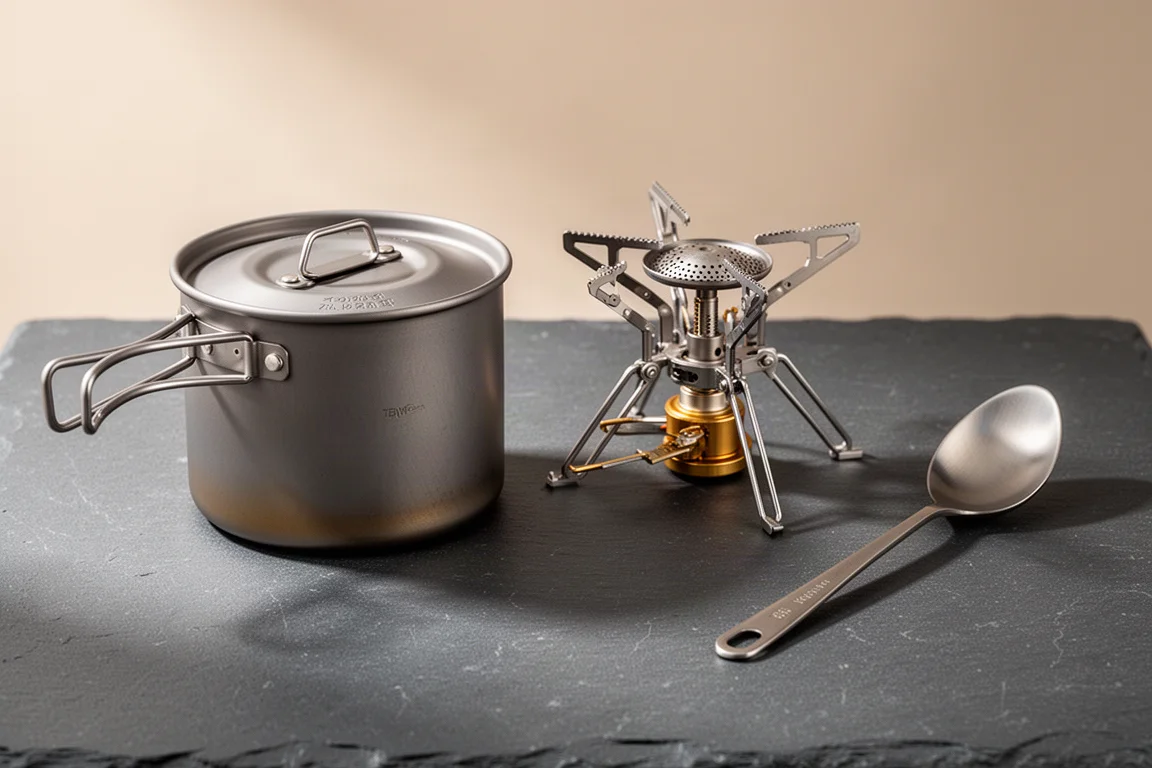
A camp cook kit is one of the few outdoor purchases where the price range is genuinely enormous. A complete budget setup with a pot, a stove, and a spoon can be picked up for around $20. A premium kit built around the MSR PocketRocket Deluxe, the Evernew Ultralight Titanium Pasta Pot in size medium, and the Toaks titanium long-handled spoon costs closer to $150.
That is roughly seven times the price, so the fair question is what the extra money actually buys. The answer comes down to three things: materials, weight, and how predictably the stove behaves when conditions stop being ideal. This guide walks through specs, features, performance, ease of use, and build quality for both approaches so you can judge which one fits how you actually cook outdoors.
What Separates a Budget Cook Kit From a Premium One
Materials show up first in the specs. In the budget kit, the spoon is stainless steel, the pot is aluminum, and the stove is mostly stainless steel. In the premium kit, the pot and the spoon are titanium, while the stove is stainless steel built to a noticeably higher grade.
Weight follows directly from those material choices. The budget spoon weighs 25 g, the budget stove 90 g, and the budget pot 230 g. The premium spoon weighs 16 g, the premium stove 83 g, and the titanium pot just 116 g. Added together, the premium kit comes in around 38 percent lighter, and most of that saving comes from the pot rather than the stove or the spoon.
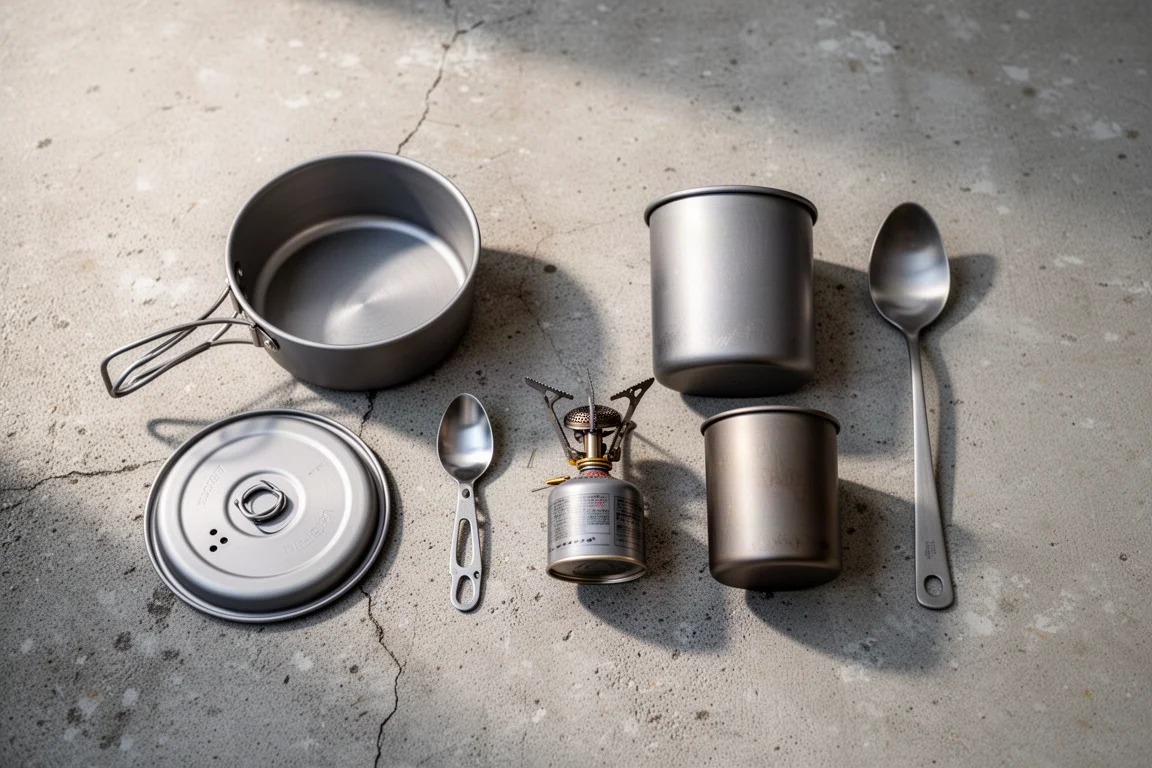
There is a general rule worth remembering when shopping for backpacking cookware: titanium parts tend to be lighter and more expensive, while aluminum and stainless steel are heavier and cheaper. The pot is where that trade-off matters most, because it is the single heaviest item in the kit and the one you carry on every trip.
MSR PocketRocket Deluxe: Features and Build Quality
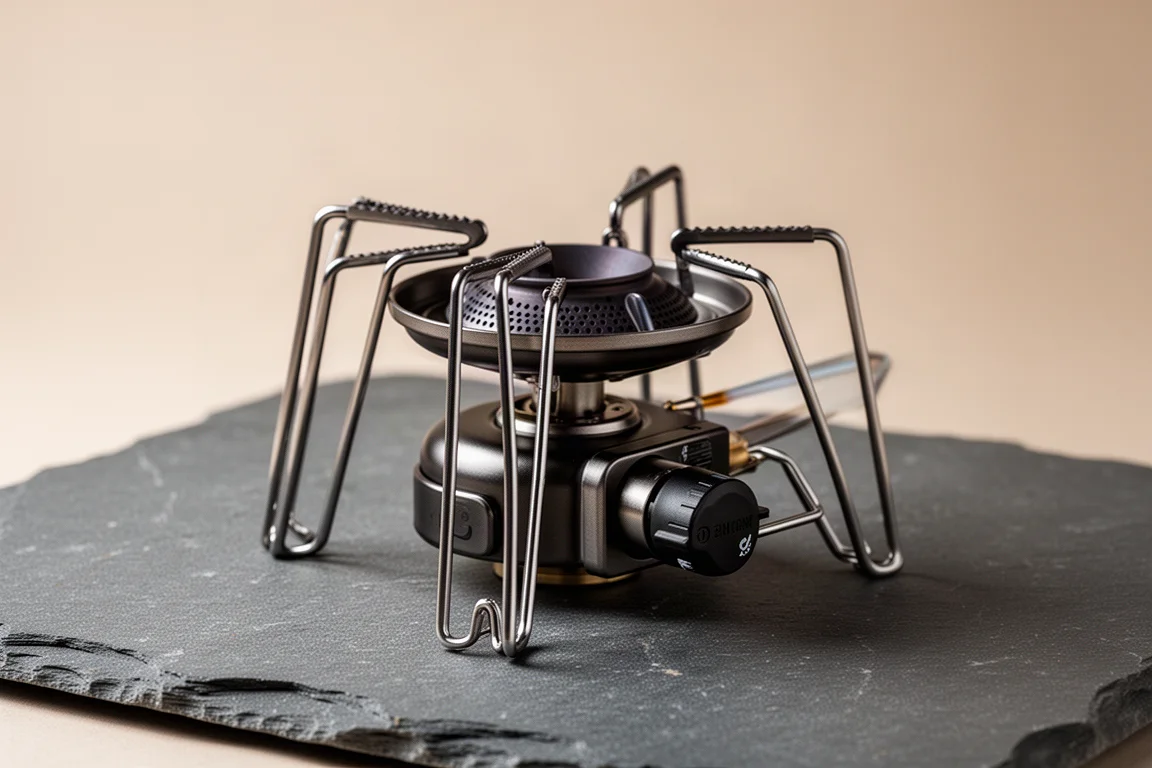
At a glance the two stoves look similar, but the differences appear as soon as you unfold the pot supports. The MSR PocketRocket Deluxe uses three long arms that create a large, stable platform for a pot to rest on. The budget stove uses four arms, which sounds like an advantage until you notice how short and thin they are. The result is less contact area and a flimsier feel, and that becomes obvious with a large pot full of water on top.
Both stoves include piezo igniters, so you can open the fuel valve, press a button, and light the burner without carrying a lighter. On the MSR the igniter sparks dependably. On the budget stove the piezo ignition is unreliable enough that most people will want a backup lighter regardless.
The burners differ as well. The MSR has a much wider burner, which spreads the flame across a broader area and makes it easier to cook in the pot without scorching food. It also has a lip around the burner that rises above the flame to block wind. The budget stove has a narrow burner and a lip that does not extend past the burner, so it offers little real wind protection.
Finally, the MSR includes a regulator that controls gas flow from the canister through the stove and out to the burner, keeping the stove operating at a consistent low pressure. The budget stove has no regulator, and that difference shows up in cold weather and at altitude, where canister pressure shifts.
Evernew Ultralight Titanium Pasta Pot (Medium): Titanium Weight Savings
The Evernew Ultralight Titanium Pasta Pot is where the premium kit earns most of its weight advantage. At 116 g in size medium, it weighs roughly half as much as the 230 g aluminum pot in the budget kit, and the difference is immediately noticeable in hand.
Beyond raw weight, the lid is the detail that separates the two. The Evernew lid has a built-in strainer, which makes draining pasta straightforward, and it snaps on, so you can pack the pot upside down in a bag without the lid coming loose. The budget pot uses a loose lid that simply rests on top. Both pots have rubberized handles that keep heat off your hands, and both have internal volume markings for measuring water, which is genuinely useful when you are rehydrating a freeze-dried meal and want the texture to come out right.
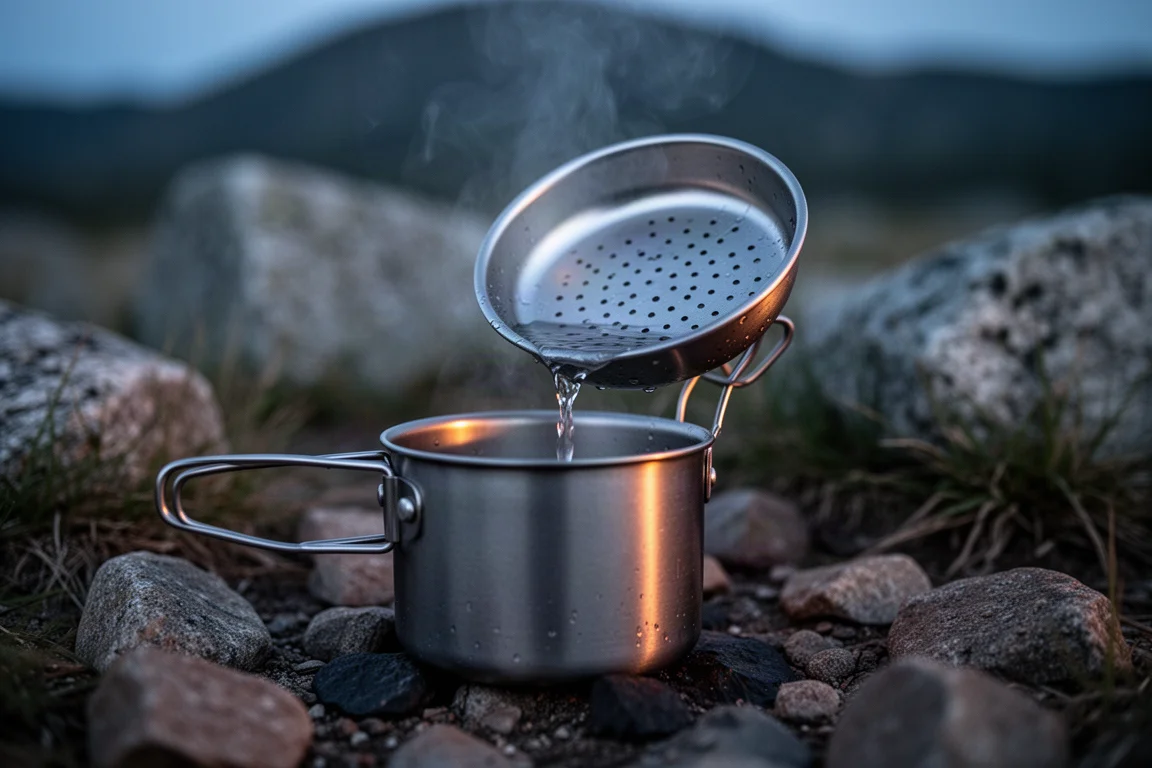
Titanium has one clear downside. It transfers heat so effectively that food burns easily, which makes it a poor choice for cooking or simmering inside the pot. Aluminum holds heat better and is far more forgiving if you plan to actually cook meals rather than just boil water. Titanium is at its best when the job is boiling water quickly and carrying as little as possible.
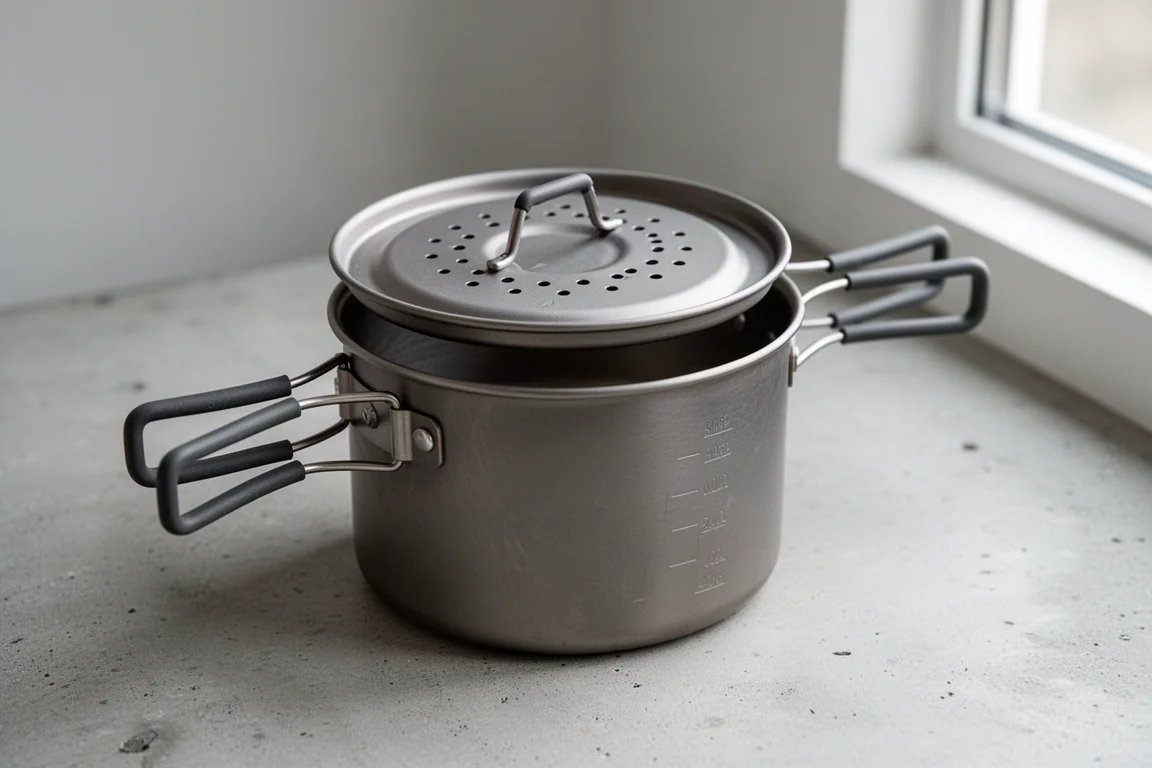
Toaks Titanium Long-Handled Spoon: A Small Upgrade Worth Packing
The Toaks titanium long-handled spoon is the smallest item in this comparison and the least transformative. It weighs 16 g against 25 g for the stainless steel spoon in the budget kit, a real saving but not a dramatic one.
The reason to choose it is handle length. A long spoon reaches deep into a bag of food without getting your knuckles messy. The budget spoon folds, which is convenient for fitting inside the pot, but it is short and awkward once you are eating from a rehydration bag. If most of your meals come straight out of a bag, the longer handle is the more practical design.

Stove Performance: Boil Speed, Wind, and Cold Weather
In a boil test with 500 ml of water, the MSR PocketRocket Deluxe was clearly faster than the budget stove, and it used less fuel to get there. Efficiency matters on longer trips, where every gram of canister fuel is weight you carry up the trail.
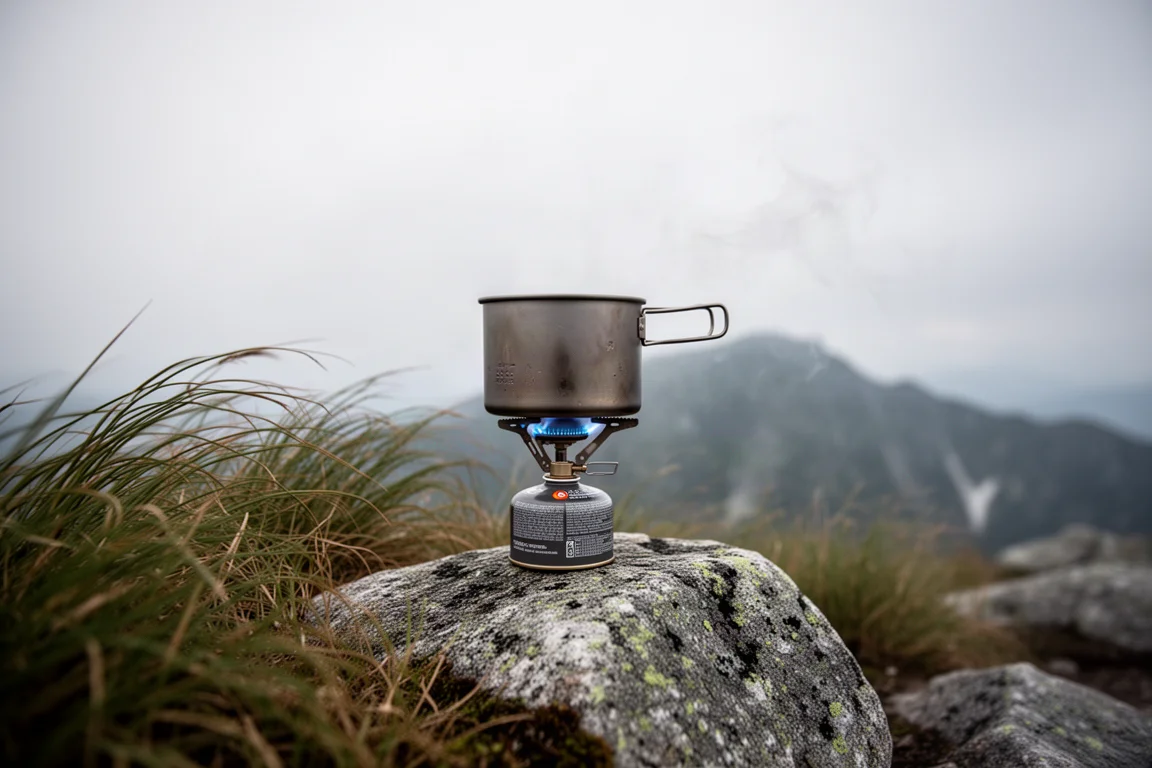
Wind widens the gap. In testing at roughly 15 km/h, the MSR held close to its calm-weather boil time thanks to the raised lip around the burner, while the budget stove slowed down considerably. A stove that keeps working in wind also wastes less fuel, which compounds the advantage over a multi-day trip.
Cold weather is where the regulator matters most. Canister fuel is mostly isobutane, which boils at around minus 12 degrees Celsius. Below that point the fuel stops vaporizing properly and the stove struggles to produce a flame, and altitude plus a partly empty canister make the problem worse. In practice, a canister stove stays comfortable down to roughly minus 6 degrees Celsius, or 20 degrees Fahrenheit, and closer to freezing at higher altitude with a low canister. A regulated stove like the MSR holds consistent output right down to that limit. An unregulated stove starts losing performance well before it, sometimes as early as freezing, which is exactly the range where many shoulder-season trips happen.
Packing and Ease of Use
Both stoves assemble easily. The budget stove’s arms extend and lock up before it screws onto the canister, and the MSR’s arms fold out from the body before threading on just as simply. Neither needs a tool or a learning curve, and both seat snugly on a standard canister.
Packing is where the smaller details show. The Evernew lid snaps shut for storage, and the budget kit’s folding spoon and loose lid fit inside the pot as a tidy bundle. The long titanium spoon does not fold, so it takes up a little more room in a pack and will usually live loose alongside your other gear. If you like one self-contained package, the budget kit is actually easier to keep organized. If you want the lightest possible load, a spoon that rides loose in the pack is a trade-off most backpackers accept without thinking about it.
Overall Buying Advice
If you mostly boil water, count grams, and want the lightest kit you can build, the premium combination makes sense. The Evernew pot delivers the biggest weight saving, the MSR PocketRocket Deluxe is the more capable and better built stove, and the Toaks spoon is a modest but pleasant upgrade. You pay roughly $150 for that package, and the gains are real, especially in wind and cold.
If you cook in the pot rather than just boiling water, an aluminum pot is the better tool regardless of budget. Titanium’s heat transfer makes it easy to burn food, while aluminum holds heat and simmers more predictably. That is an argument for choosing materials item by item rather than buying a kit wholesale.
The stove is the one place where spending more has the clearest long-term payoff. The MSR feels sturdier and more precisely assembled, while the budget stove, despite working fine across plenty of use, has rattly moving parts and feels like it will wear out sooner. If you are hard on your gear, the premium stove is the more sensible place to put your money.
Conclusion
A $20 cook kit and a $150 cook kit will both boil water, and the budget option is genuinely usable. What the premium setup buys is a 38 percent lighter load, a straining lid that snaps shut, a long-handled titanium spoon, and a stove that is faster, more fuel-efficient, and steadier in wind and cold. If you boil water a few times a season, save the money. If your kit comes out on every trip and you want it to last, the upgrade earns its place.
Further reading
Related Reviews

Backpacking Gear
Building a 10 lb Base Weight: An Ultralight Backpacking Gear List
A practical walkthrough of the ultralight pieces behind a 10 lb base weight, from a 765 g pack and a roomy one-person tent to a full camp chair and a dependable water filter.
Road Bikes
10 New Road Bikes Worth Watching: Aero, Titanium, Steel and Endurance Standouts
A practical roundup of 10 new road bikes, from aero flagships chasing single-watt gains to titanium, steel and endurance platforms built for real roads.
Bikepacking Gear
11 Bikepacking Essentials for Long-Distance Cycling
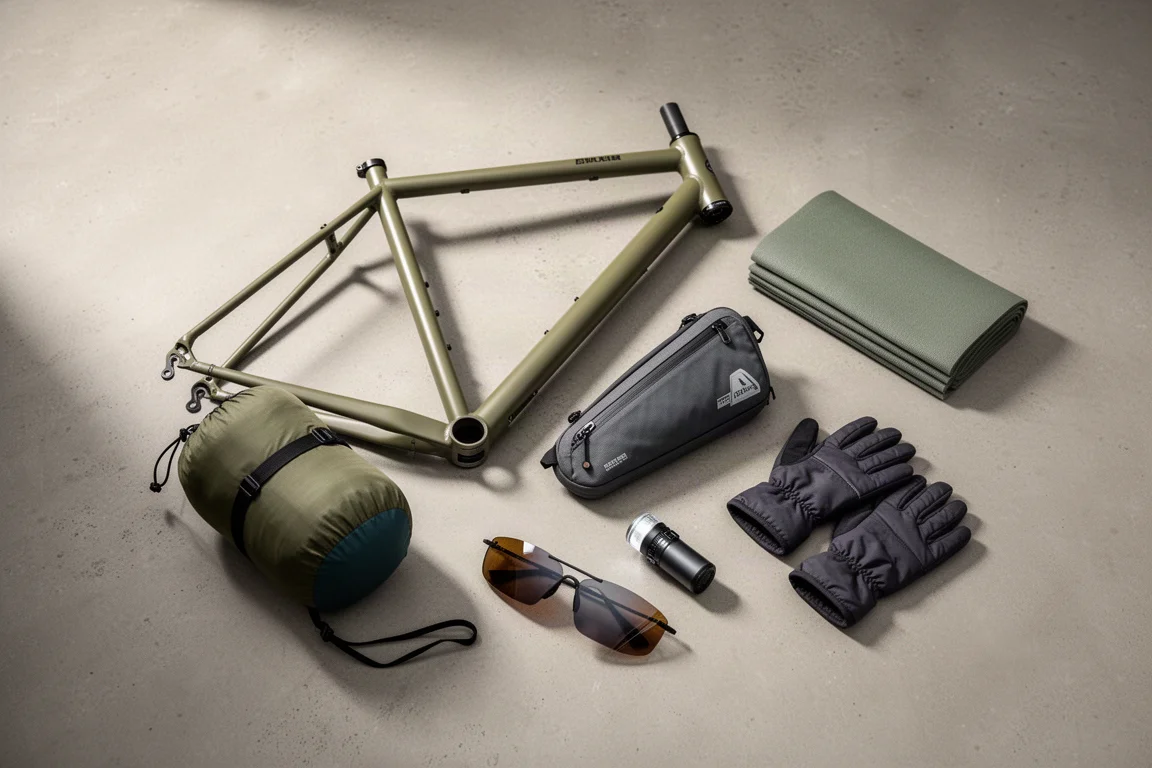
Eleven bikepacking essentials for long-distance cycling, from a steel gravel frame and a two-person tent to helmet lights, packable gloves, and a frame bag that puts weight in the right place.