Hi-Fi Audio
Four Hi-Fi Systems Around $350: Compact Amps, Receivers, and Bookshelf Speakers
Four complete budget hi-fi systems built around compact Class D amplifiers, a separate DAC and power amp pair, and a traditional stereo receiver.
Introduction
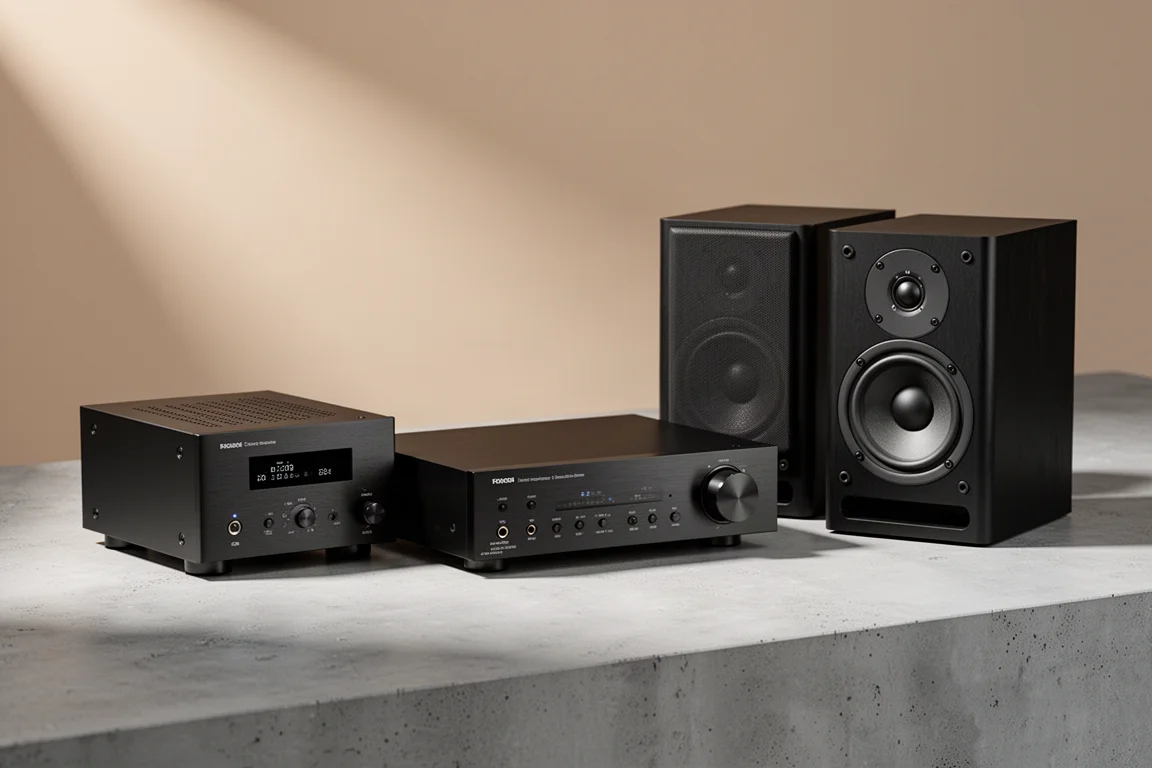
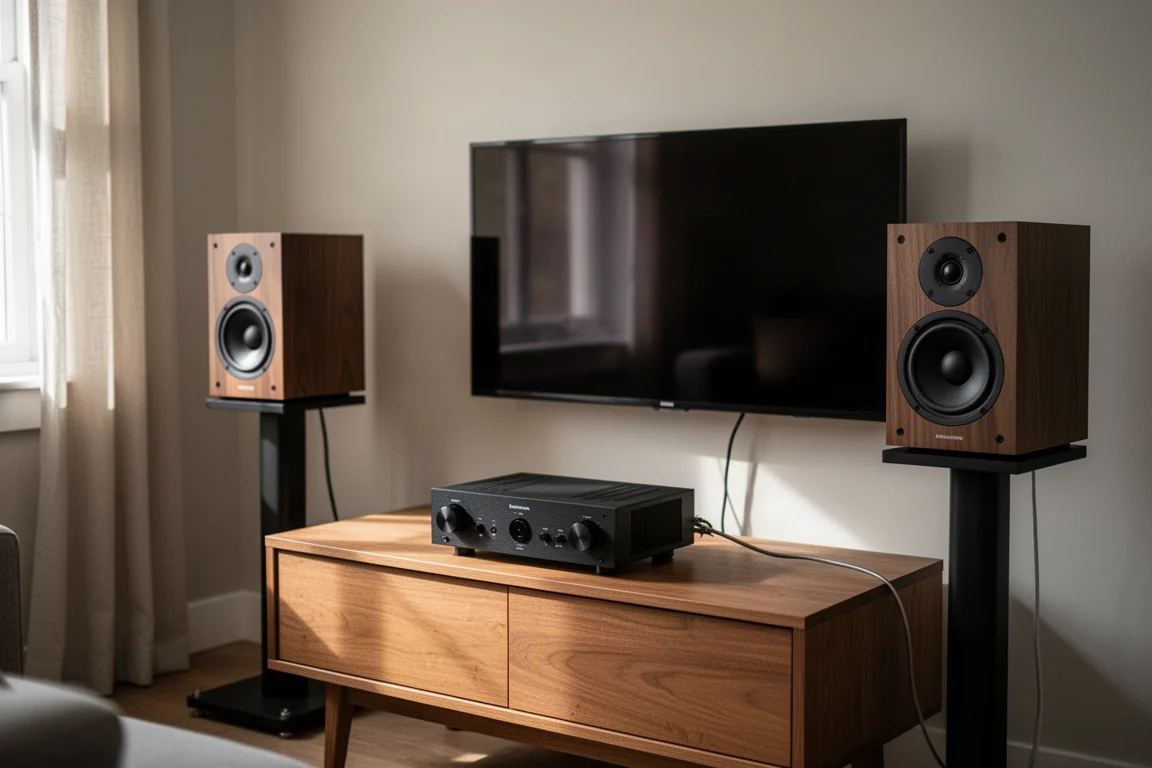
A full hi-fi system does not have to cost a fortune. With the right combination of a compact amplifier and a well-matched pair of speakers, it is possible to build a setup that handles digital sources, Bluetooth, and in some cases a turntable for around $350, and occasionally for less.
The four systems below take different routes to that same goal. Two are built around compact Class D integrated amplifiers, one splits the job between a separate DAC and preamplifier and a dedicated power amplifier, and one uses a traditional two-channel stereo receiver. Each has a clear set of trade-offs, and each leaves room to grow.
Prices move, and several of these components have been discounted heavily in the past. The figures used here reflect what the components cost at the time of writing, so treat them as a starting point rather than a fixed budget.
How to Judge a Budget Hi-Fi System
Inputs matter as much as power. Most of the amplifiers here include full-size USB, optical, and coaxial digital inputs, plus Bluetooth, which means a computer, a television, a game console, or a disc player can all feed the same system. An optical input alone makes it easy to replace a soundbar.
A subwoofer output is the other feature worth checking. It lets a small system grow into a fuller one later, without replacing the amplifier.
Speaker matching is where most budget systems succeed or fail. Sensitive speakers play louder from a modest amplifier, while lower-sensitivity designs need more power to reach the same volume. Amplifier character matters too: a clean, slightly forward amplifier tends to pair well with a warmer speaker, and the reverse also holds true.
Finally, consider how much you want to tinker. Some of these components accept a higher-voltage power supply than the one supplied, and some allow op-amps or tubes to be swapped, which gives you a way to change the sound later without buying new gear.
System 1: Aiyima D03 with ELAC BS41 or Sony SS-CS5
The Aiyima D03 is a compact Class D integrated amplifier with a remote control and a front display. Paired with either the ELAC BS41 or the Sony SS-CS5, the system comes in at roughly $320 at current prices, which leaves a little room for cables or a used disc player.
The D03 is neutral rather than strongly voiced, with a slightly full and punchy character. That makes it flexible: a warmer speaker softens it, and a more analytical speaker sharpens it. An inexpensive used Blu-ray player connected over optical turns the system into a CD transport as well, and the subwoofer output means a subwoofer can be added later.
Aiyima D03 Integrated Amplifier
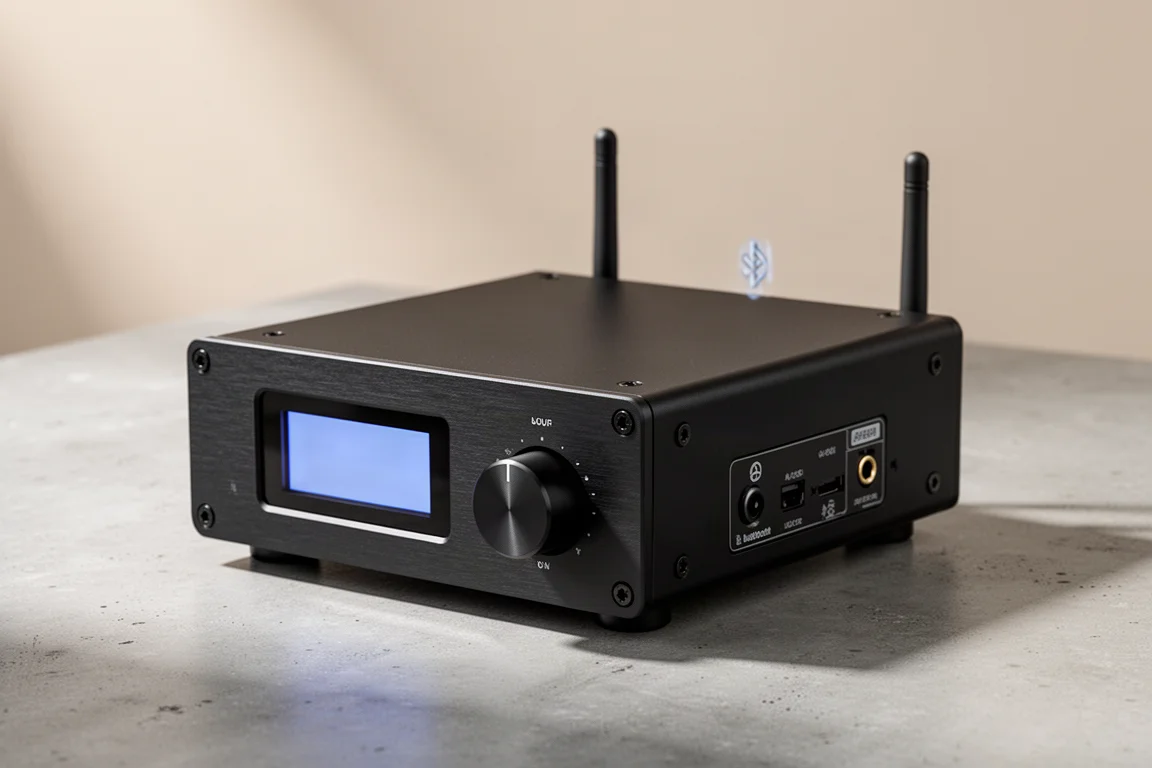
On the back, the D03 offers full-size USB, optical, and coaxial digital inputs, Bluetooth, and an analog input, along with a subwoofer output. Its power rating is on the lower side for this group, which is why the more sensitive speakers suit it best. At around $169 to $170, it is one of the most complete compact amplifiers at this price.
ELAC BS41 Bookshelf Speakers
The BS41 has a warmer, more laid-back presentation, which balances the D03’s slightly punchy character nicely. At $150 they fit the budget as it stands, and they have been discounted as low as $68 in the past, which makes them worth watching.
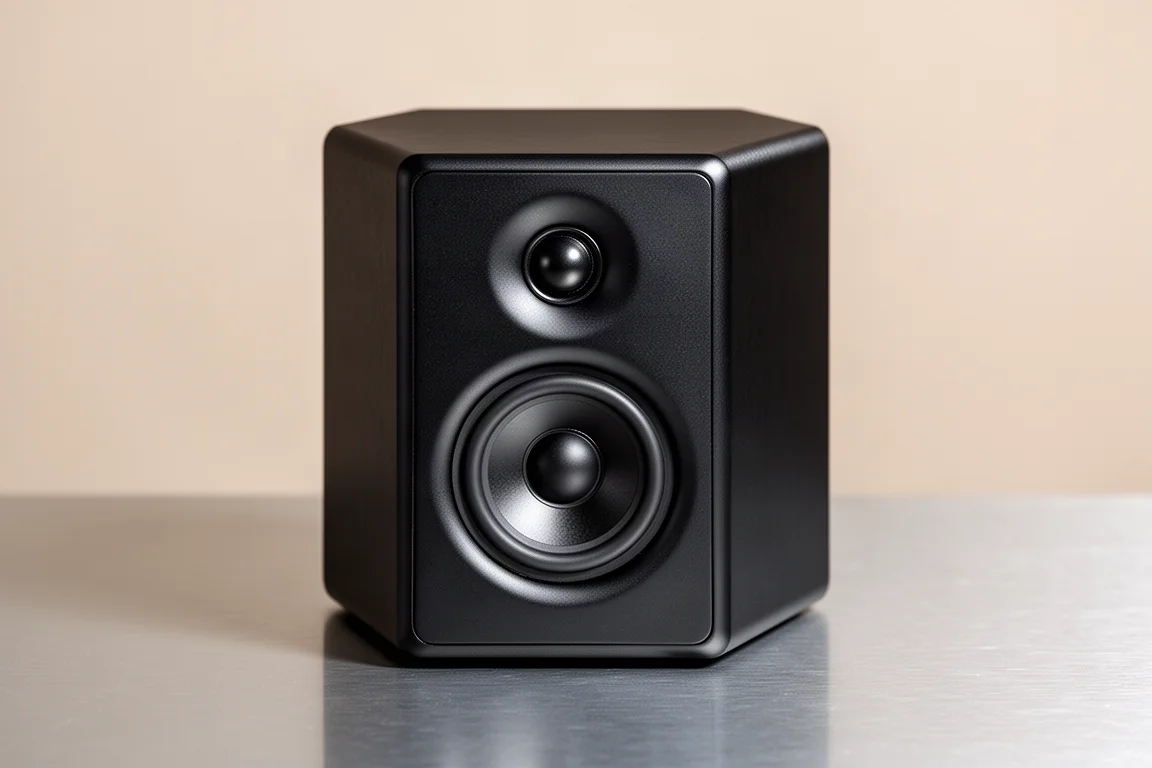
Sony SS-CS5 Bookshelf Speakers
The SS-CS5 leans more analytical, but not harsh, and it is an easy recommendation with the D03. At $150 they match the ELAC option on price, and they have dropped to around $80 during past sales.
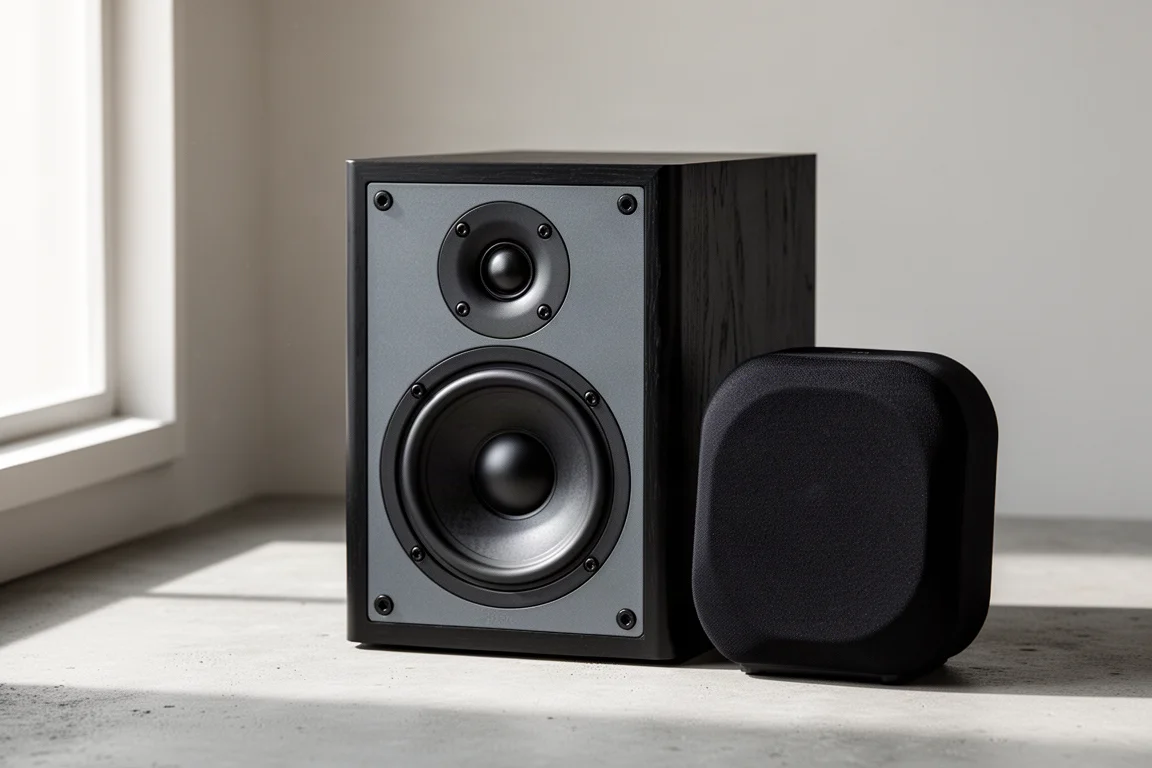
System 2: Loxjie A30 with ELAC BS41
The Loxjie A30 covers much of the same ground as the D03 and adds a headphone amplifier. Paired with the ELAC BS41, the complete system lands at roughly $330.
Loxjie A30 Integrated Amplifier
The A30 uses a widely adopted Infineon Class D chipset and sounds very clean, with a slight hardness at the top that a warmer speaker tames well. It offers Bluetooth, digital and analog inputs, a subwoofer output, and a headphone output, so it can drive headphones as well as speakers. The trade-off against the D03 is the loss of a coaxial digital input.
Power output is rated conservatively, and with speakers of around 84.5 dB sensitivity such as the BS41 it will play, but it may not reach the volume some listeners want. Availability has also been uneven, with the A30 selling out for long stretches and lead times of roughly two weeks. It costs about $180.
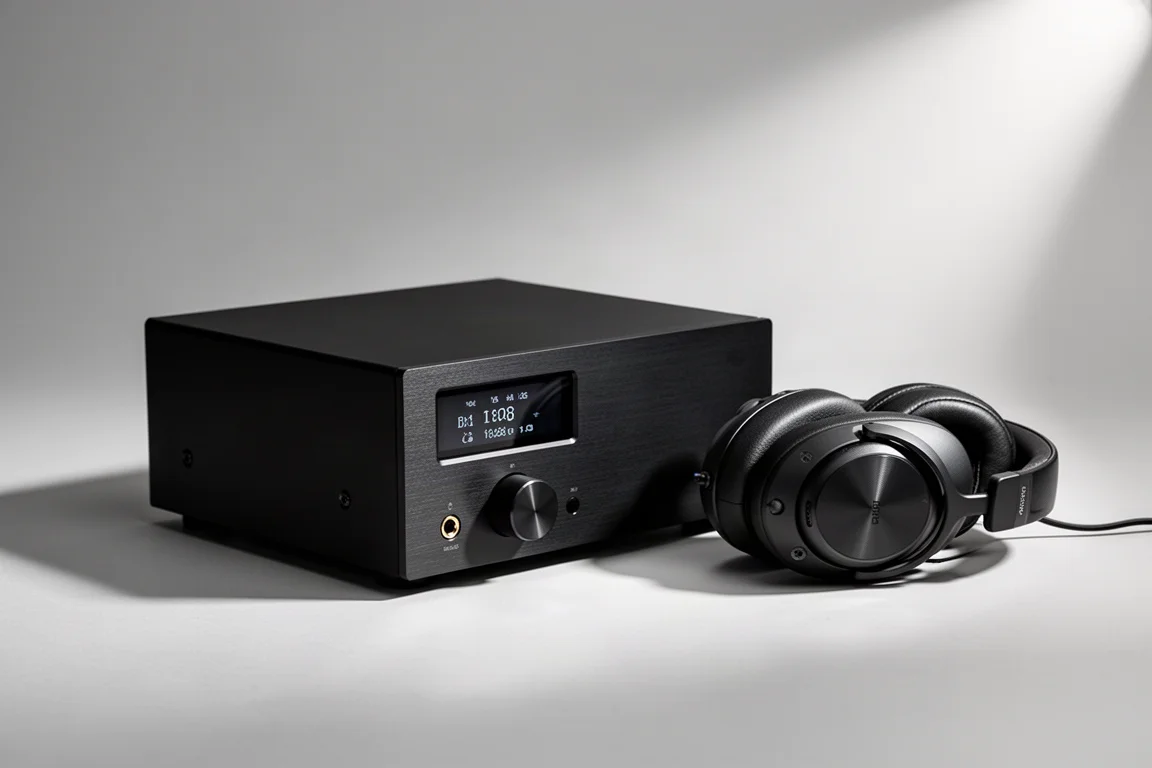
System 3: Aiyima T8 and Aiyima A07 with Micca RB42
This system splits the job in two: the Aiyima T8 handles sources, volume, and tone, while the Aiyima A07 supplies the power. At around $370 it sits just above the $350 target, but it is the most flexible and the most upgradeable of the four.
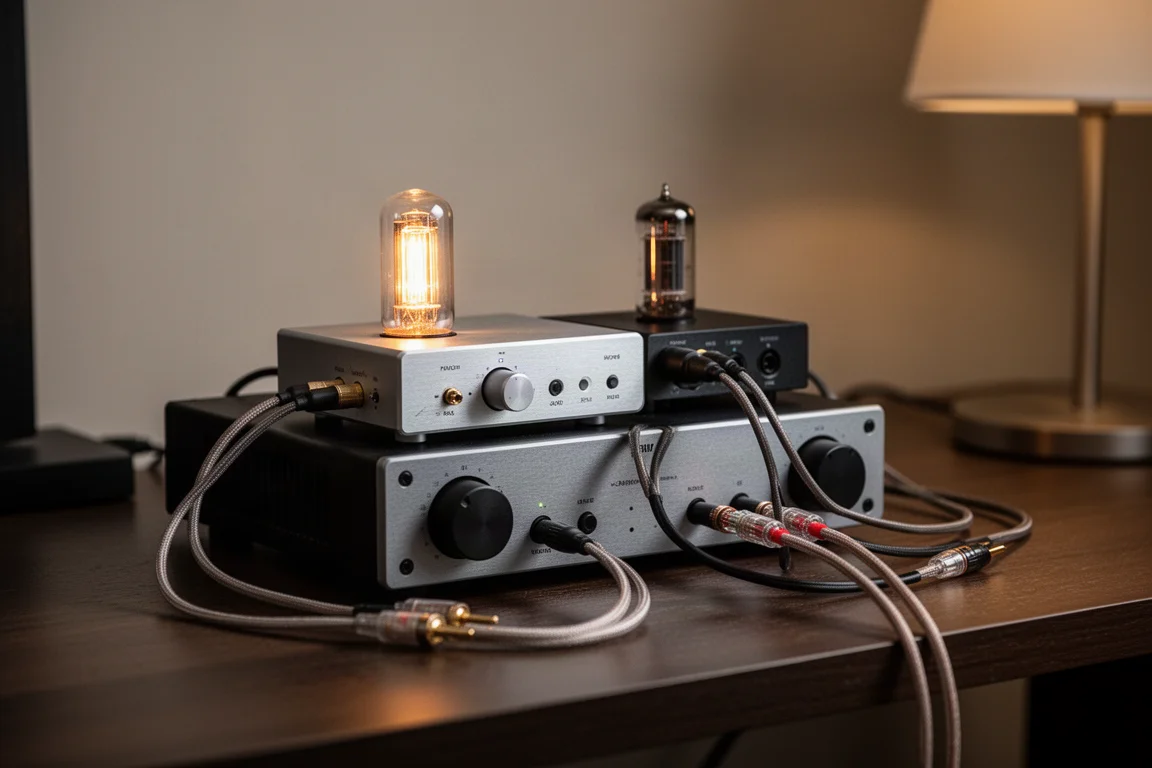
Because the two boxes are separate, each can be improved on its own. The A07 accepts a higher-voltage power supply than the one in the box, and both the op-amps in the A07 and the tube in the T8 can be swapped, so the sound can be tuned over time without replacing the whole system.
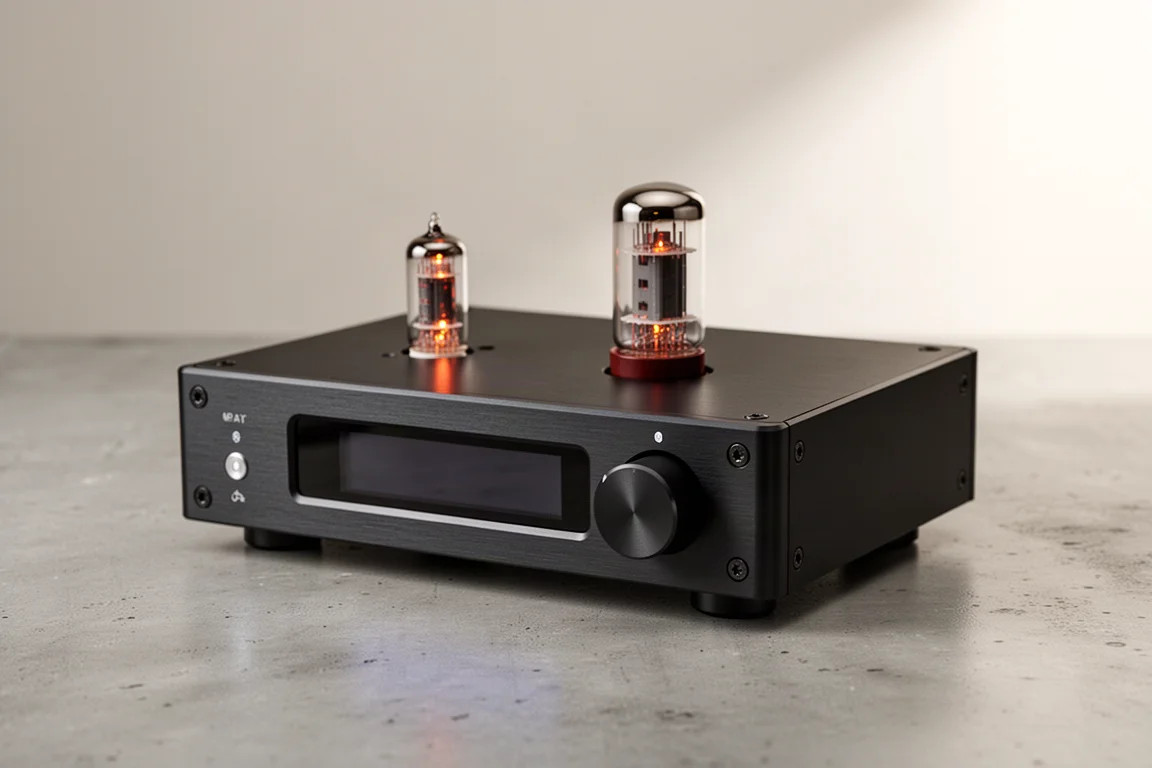
Aiyima T8 DAC and Preamplifier
The T8 combines a DAC, a preamplifier, a headphone output, and a tube stage in one small chassis, with tone controls and a remote. It has full-size coaxial, optical, and USB inputs plus an RCA input, and a single RCA output. It runs from a 12V supply. At around $130 to $140 it is an affordable way to add digital inputs and a volume control to a power amplifier.
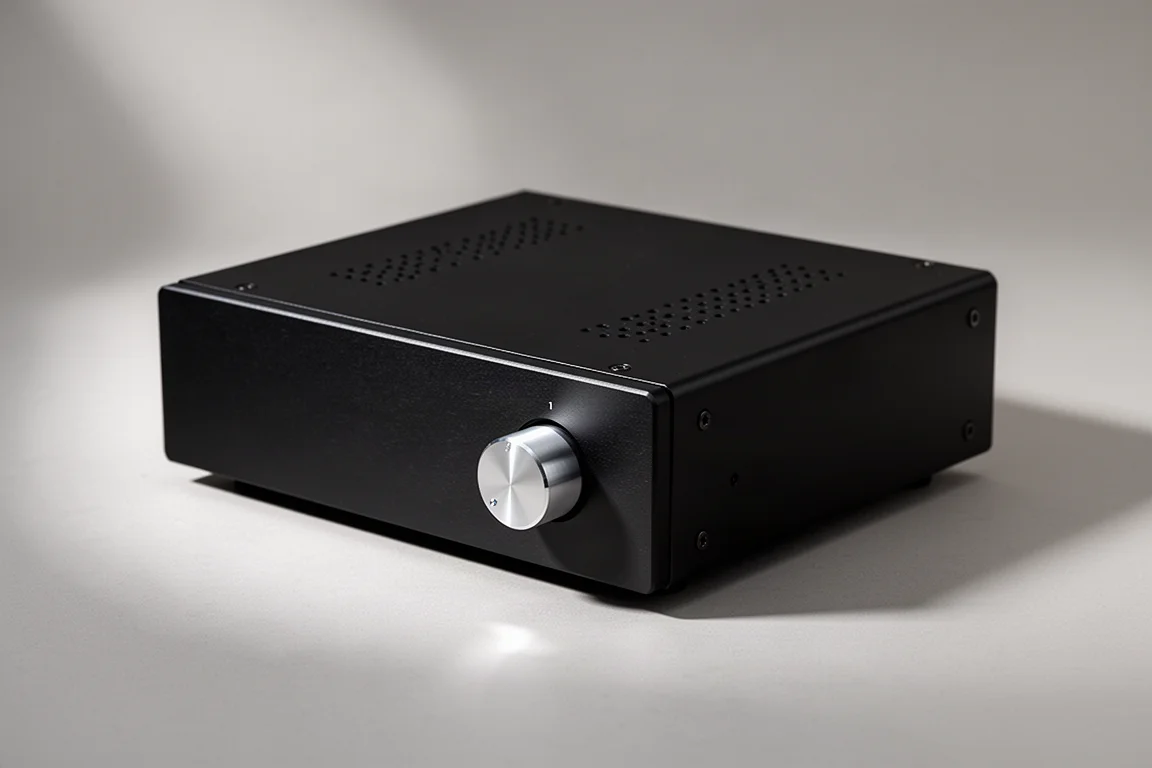
Aiyima A07 Power Amplifier
The A07 uses a Texas Instruments 3255 chipset and sounds full, rich, and engaging, closer to a good Class AB amplifier than its size suggests. It has a single pair of RCA inputs, and its 3.5mm auxiliary output can feed a subwoofer with a 3.5mm-to-RCA split cable. It ships with a 32V power supply, and a 48V supply can be added later for about $75 when more headroom is needed. The op-amps sit in sockets soldered to the board, so they can be lifted out and replaced.
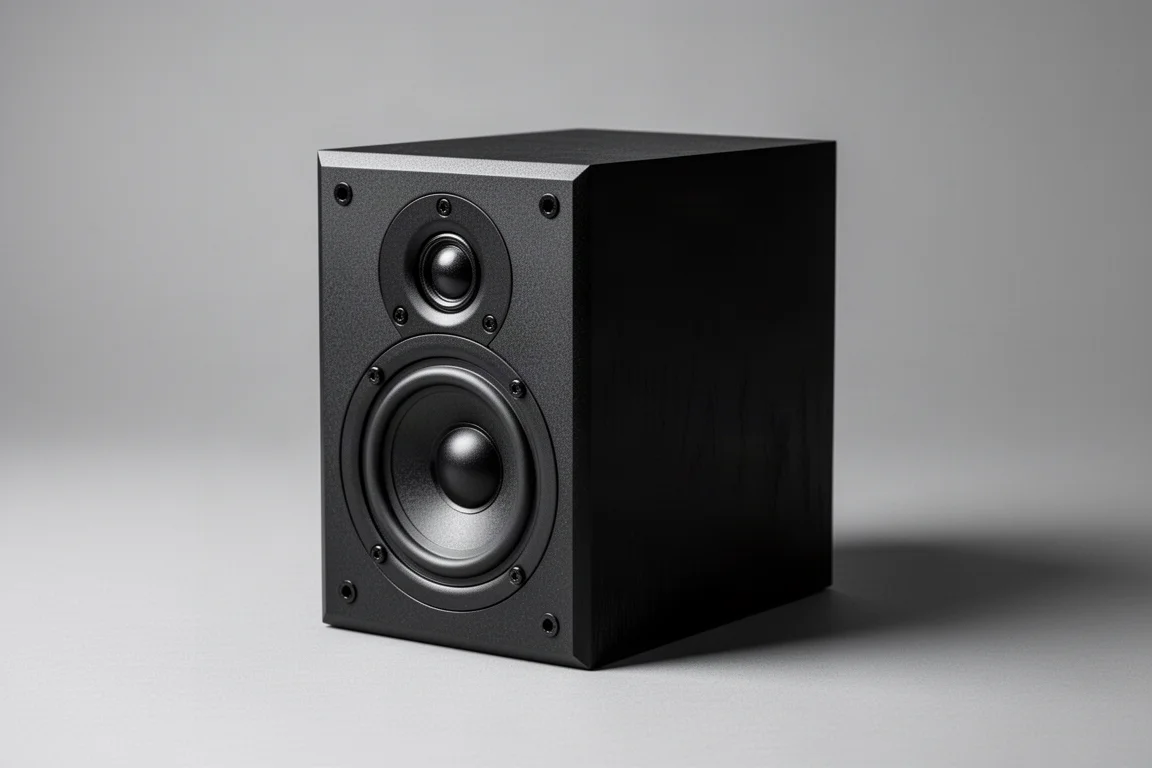
Micca RB42 Bookshelf Speakers
The RB42 has the lowest sensitivity of the speakers discussed here, so it needs more power to reach high volume. That makes it a natural match for the A07, particularly once the higher-voltage power supply is in place. Micca pricing tends to stay fixed rather than dropping during sales.
System 4: Sony STR-DH190 Stereo Receiver
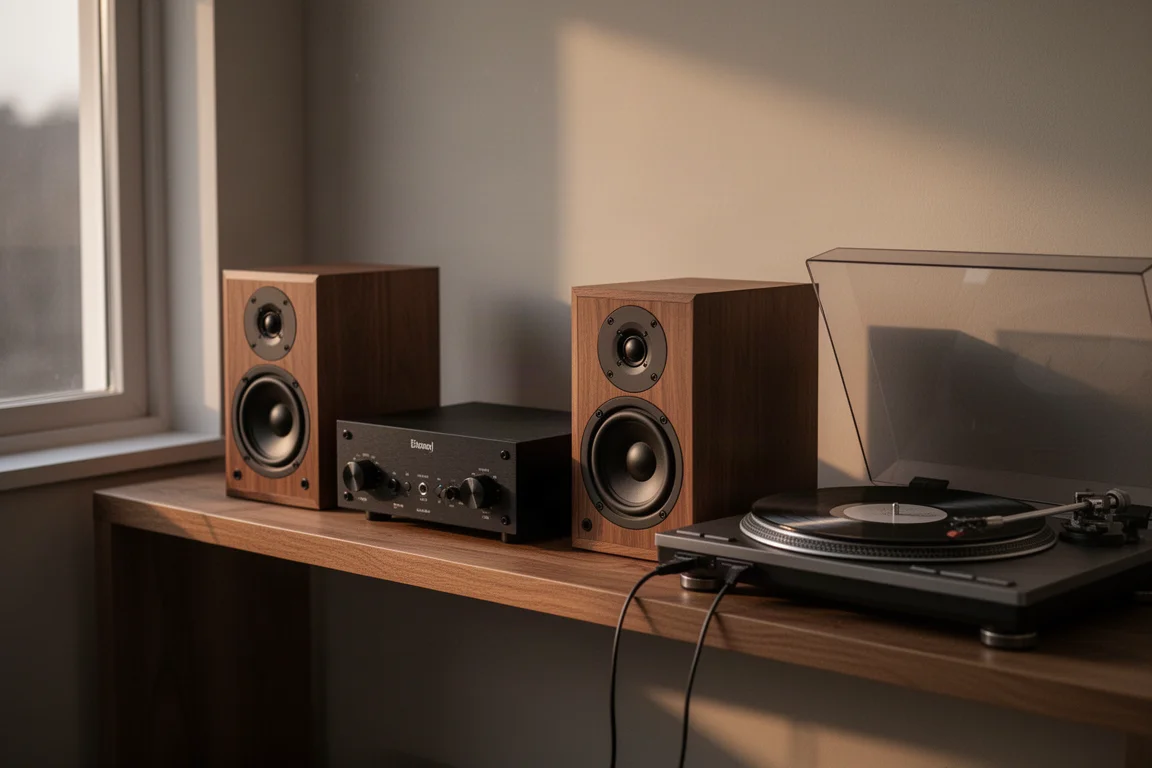
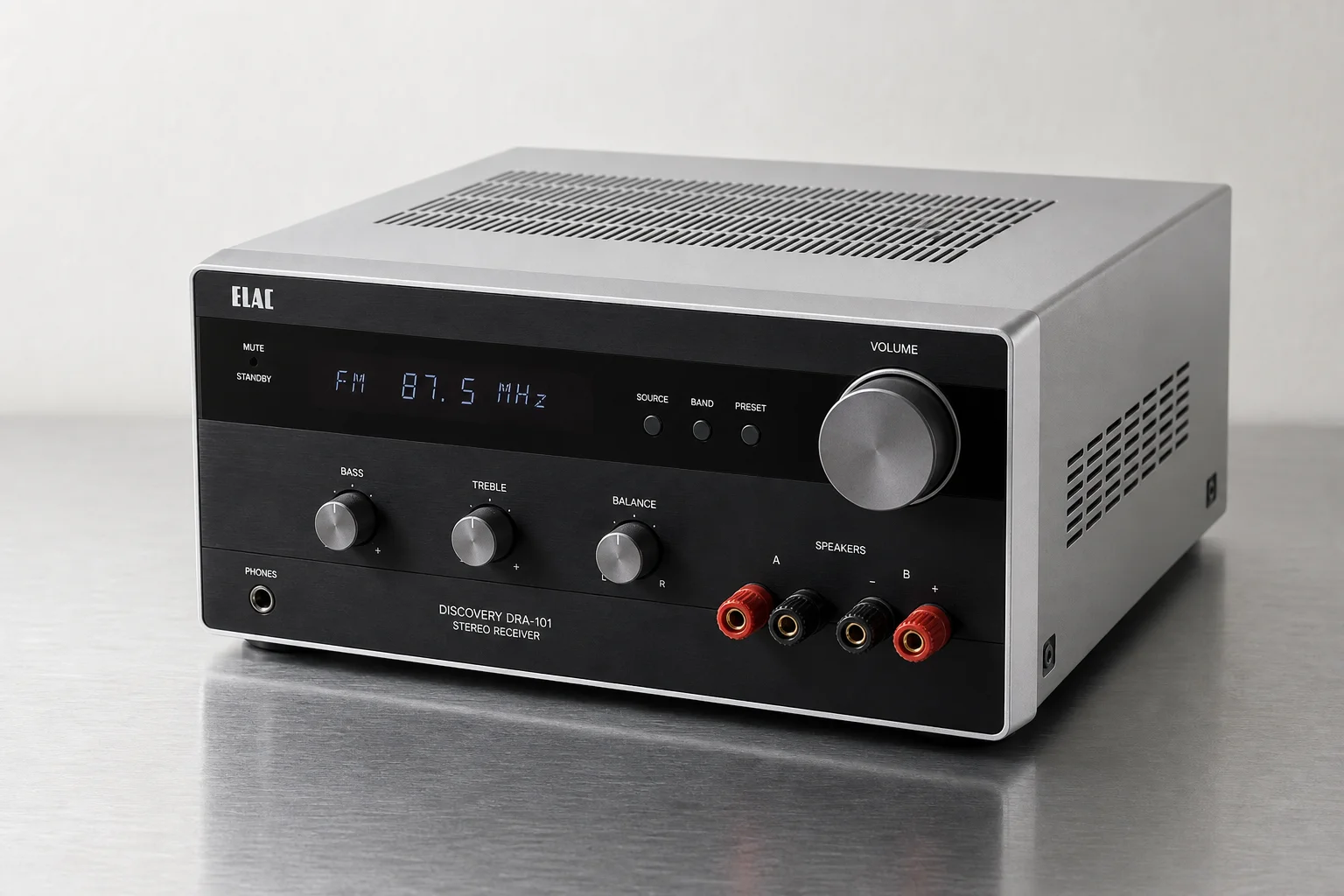
The STR-DH190 is the traditional option: a two-channel stereo receiver with a radio and a built-in phono preamp. With the Sony SS-CS5, the system comes to $350 at retail, using Bluetooth and the radio as its inputs.
Sony STR-DH190 Stereo Receiver
The DH190 includes an integrated phono preamp, so a turntable can be connected directly, and its Bluetooth implementation supports AAC. It is rated for 8-ohm nominal speakers. It will run 6-ohm and 4-ohm loads, but its current capability is limited and the results are not good, so it is best kept to 8-ohm designs. Its warmer character pairs especially well with the SS-CS5.
There is no DAC on board, so digital sources need an affordable outboard DAC at some point. At $200 it is a strong value, and it has often been discounted to around $100, with the SS-CS5 dropping to around $80 at the same time, which can bring the system to roughly $180, or about $280 with a DAC added.
Buying Advice
Choose the Aiyima D03 system if you want the most complete feature set for the least money and you do not need a headphone output. Choose the Loxjie A30 if you want to drive headphones as well as speakers from one box and you can live without a coaxial input.
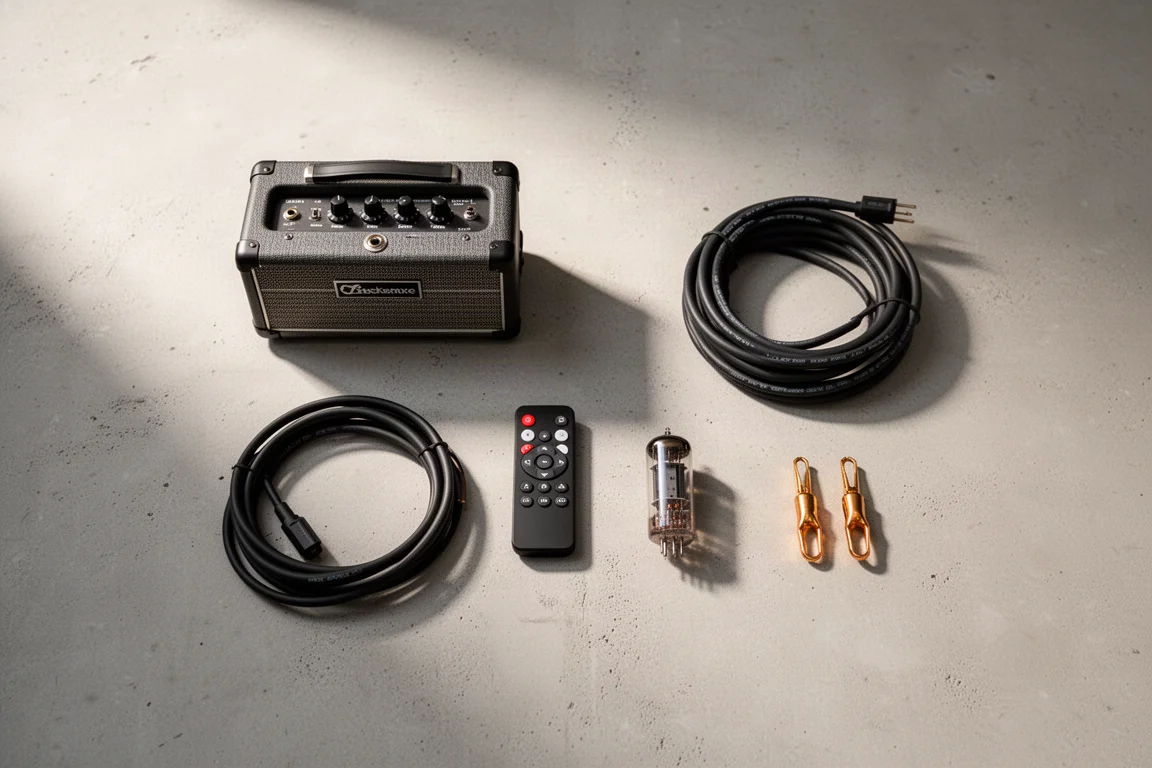
Choose the Aiyima T8 and A07 combination if you enjoy upgrading and tuning, and you want the flexibility to change power supplies, op-amps, and tubes. Choose the Sony STR-DH190 if you have a turntable, want a radio, or simply prefer the look and feel of a traditional receiver, and you are using 8-ohm speakers.
On pricing, it is worth knowing that Aiyima, Loxjie, and Micca components tend to hold their prices, while the Sony receiver and the Sony speakers are discounted regularly. If you are not in a hurry, waiting for a Sony sale can stretch the budget considerably.
Conclusion
Four systems, four different approaches, and all of them deliver a real step up from a soundbar or a portable speaker. The D03 and the A30 keep the footprint small, the T8 and A07 pair gives you room to tinker, and the STR-DH190 brings a turntable and a radio into the same setup. Any of the three speaker options will work with the right amplifier, so the deciding factors are inputs, headphone use, and how much you want to upgrade later.
Further reading
Related Reviews
Hi-Fi Audio
Accuphase C-57 vs Allnic H-7000V: Two High-End Phono Stages Compared
A fully balanced solid-state phono stage with a pitch-black noise floor meets a tube design built for well-loved records. Here is how to choose between them.
Hi-Fi Audio
Active vs Passive Hi-Fi: Five Components for a Modern System
Five components that define modern active and passive hi-fi systems, with the strengths, trade-offs and setup details worth weighing before you buy.
Hi-Fi Audio
Advance Paris A10 Apex Review: A Hybrid Integrated Amplifier That Covers a Lot of Ground
A French hybrid integrated amplifier with a class A tube preamp stage, analogue power meters, and an internal DAC and phono stage good enough to make extra boxes unnecessary.