Coffee Equipment
Budget Espresso Machines Under 100 Pounds: Can You Make Good Coffee on a Tight Budget?
Testing five budget espresso machines under 100 pounds to find out whether a tight budget can still deliver drinkable espresso with a quality grinder.
Introduction
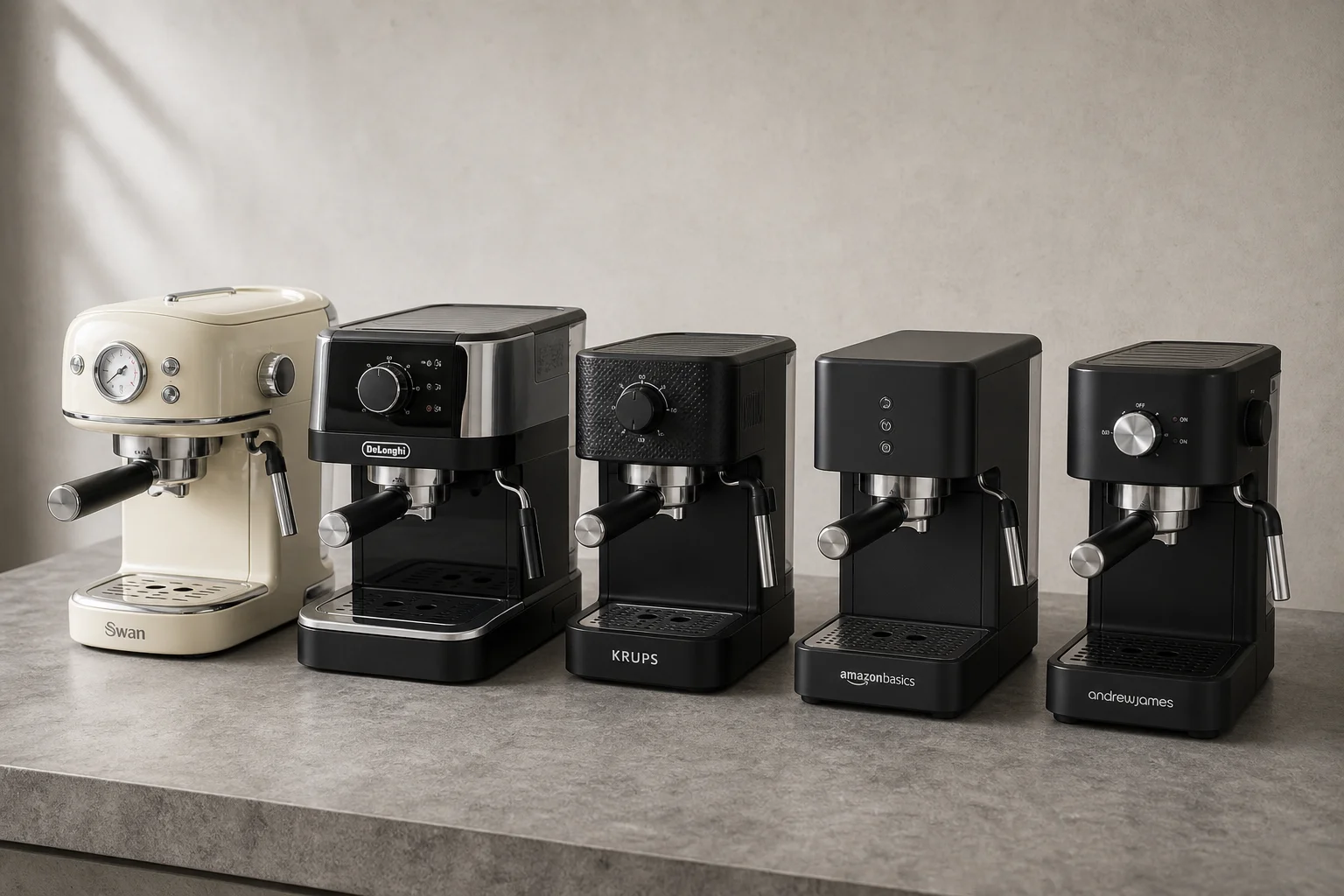
A common refrain among coffee enthusiasts is that a quality grinder matters far more than the espresso machine itself. The theory goes that with a good grinder and a cheap machine, you can produce better espresso than with an expensive machine and poor grinding. But how cheap can you actually go? This review tests five espresso machines, each priced under 100 pounds, paired with a quality grinder to see whether budget constraints make good espresso impossible or merely difficult.
The machines tested are the Swan Retro at 90 pounds, the DeLonghi at 99.99 pounds, the Krups at 90 pounds, the AmazonBasics at 65 pounds, and the Andrew James at 60 pounds. All are entry-level machines designed for home use, and most share a common limitation: pressurized portafilters that assume users will be working with pre-ground coffee rather than grinding fresh beans.
Swan Retro: Budget Styling with Pressurized Limitations
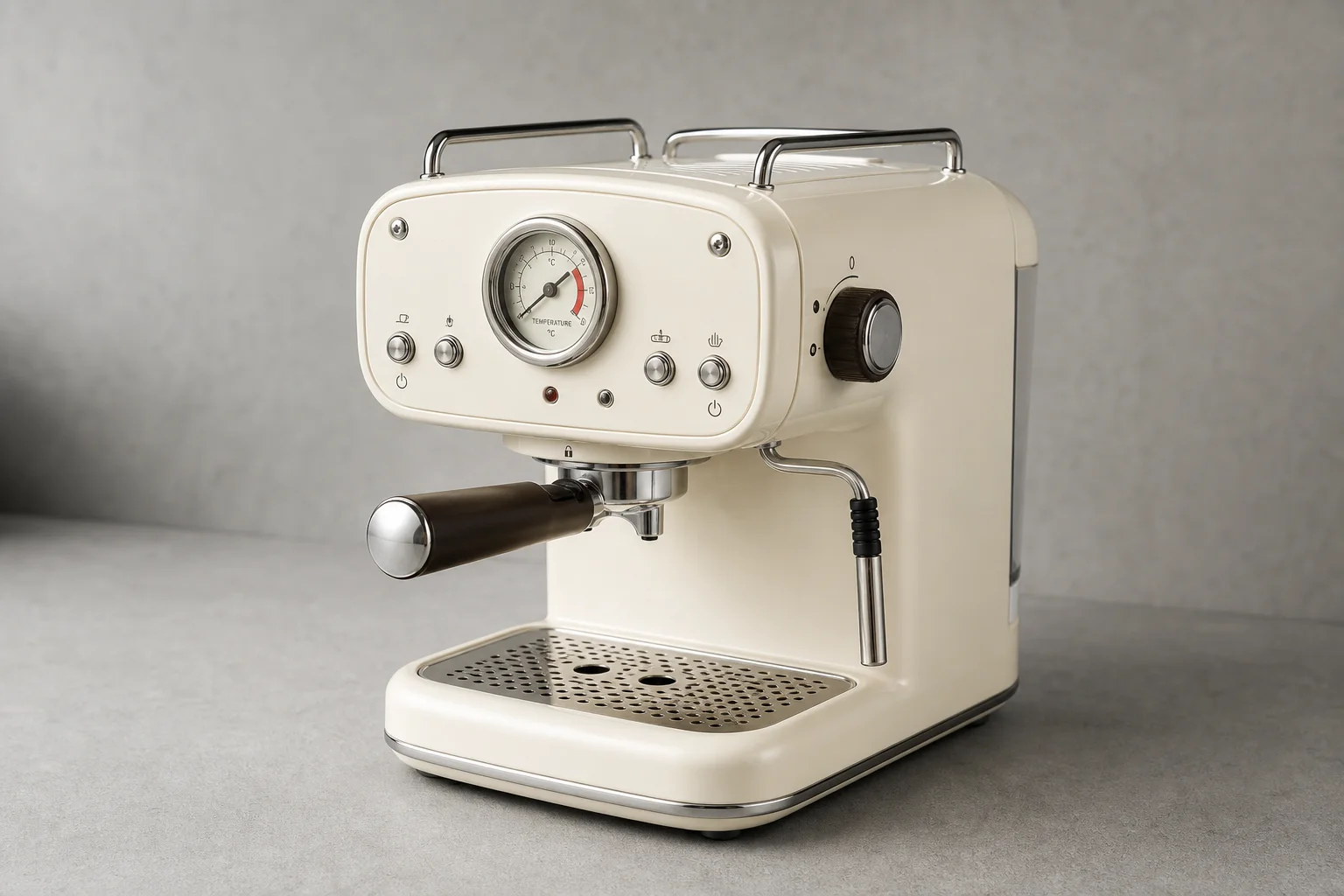
The Swan Retro arrives with retro styling that suggests more refinement than the machine actually delivers. The build quality is dominated by cheap plastic throughout, and two of the buttons remain depressed when pushed, creating confusion about whether they are actually engaged. The power button, oddly, does not stay depressed at all. The temperature gauge appears promising but only increments in 40-degree Celsius steps and proves unstable in actual use.
The machine features a pressurized portafilter with an additional piece screwed to the bottom containing an extra filter. The design includes a rubber gasket inside the brew basket, which feels out of place in a brewing environment. Loading coffee is awkward with the included spoon, and the integrated tamper is deeply unpleasant to use. The portafilter accepts roughly 12 grams of coffee and produces shots around 40 grams of liquid, though they pull very quickly.
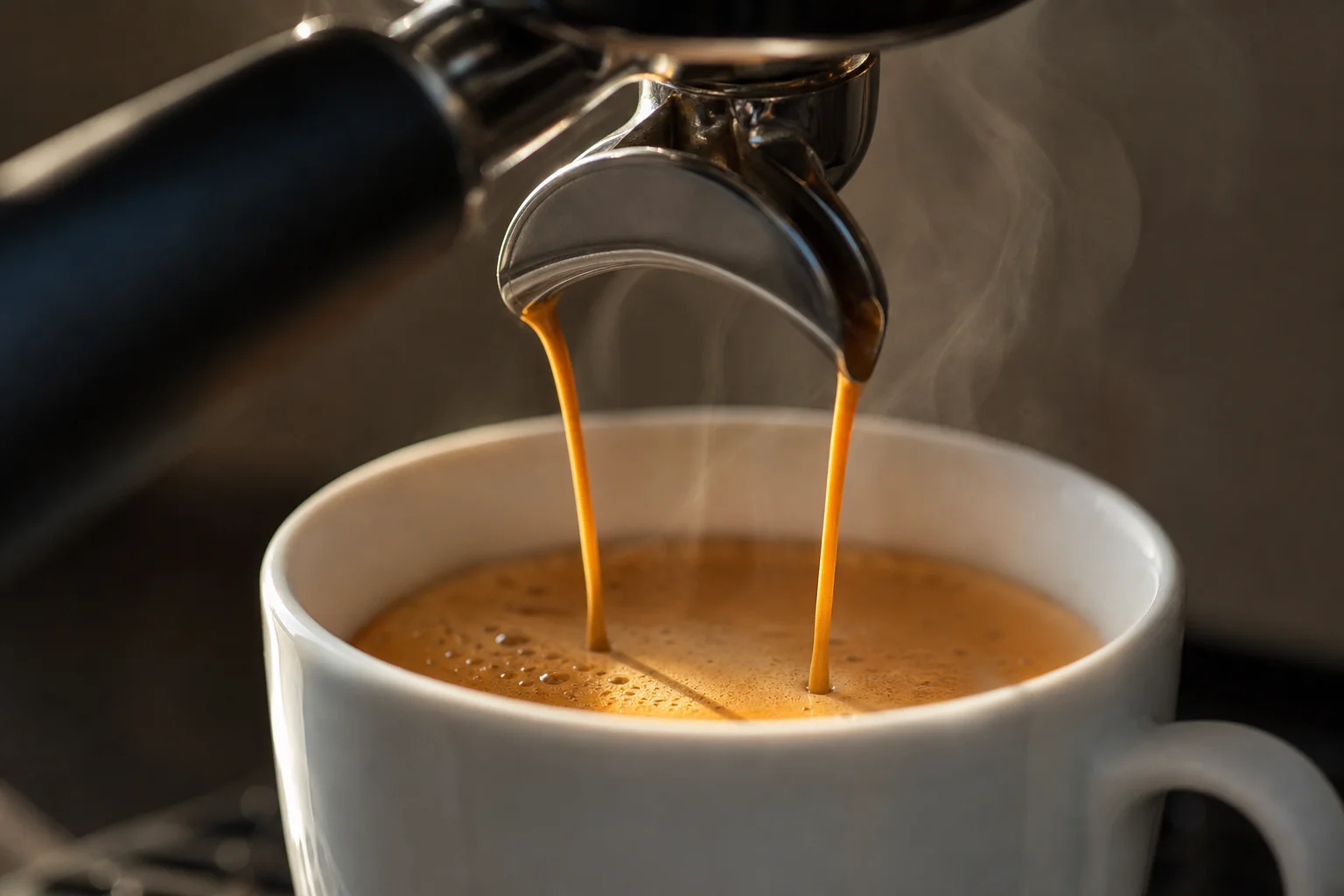
The espresso itself tastes fine but dull. When attempting a traditional shot (12 grams in, 30 grams out in 28 seconds), the result is weak, hollow, and empty. The pressurized portafilter appears to struggle with finely ground coffee and slower extraction. While the machine might produce acceptable milk drinks with its fluffy crema, it cannot produce good straight espresso.
DeLonghi Espresso Machine: The Best of a Difficult Bunch
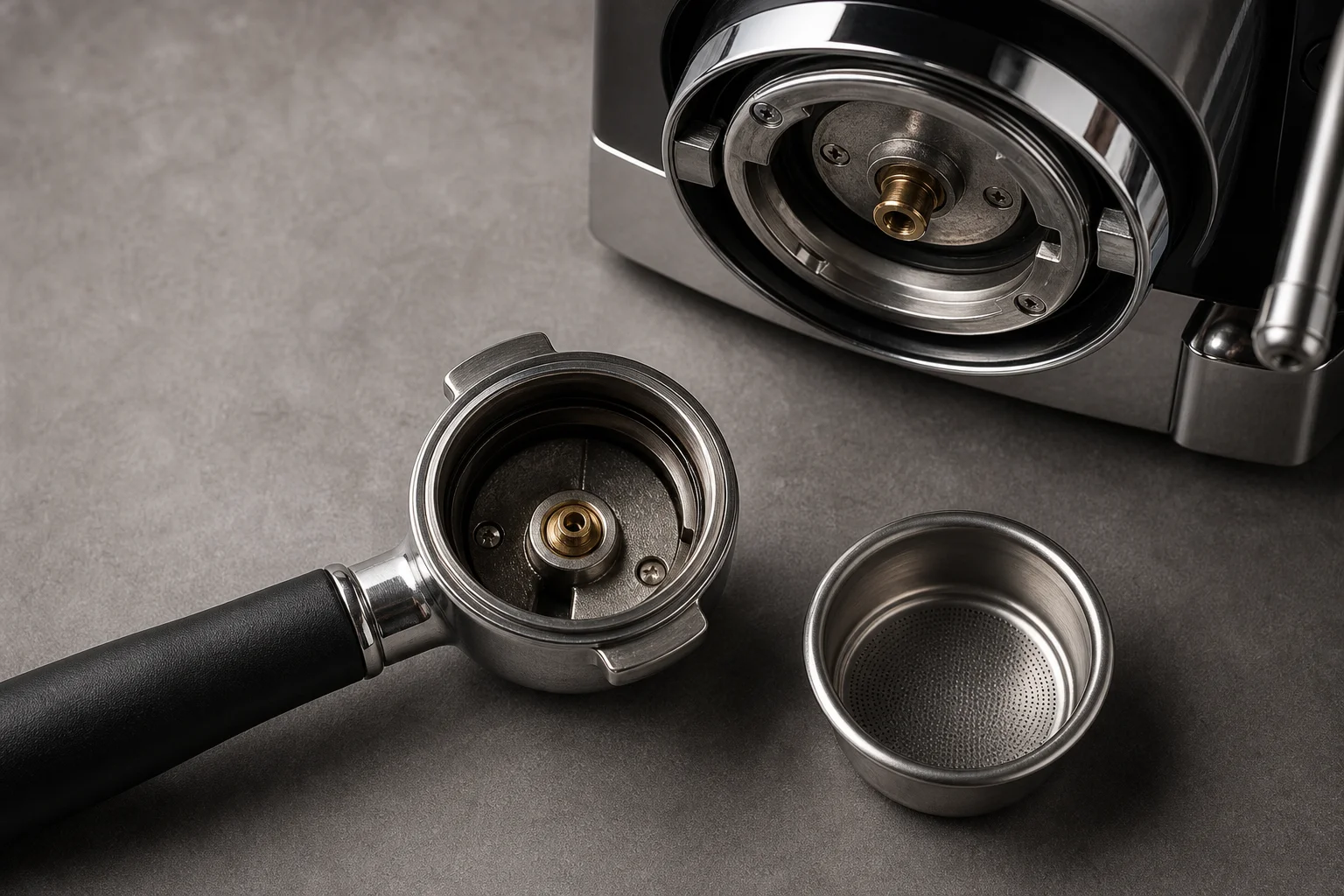
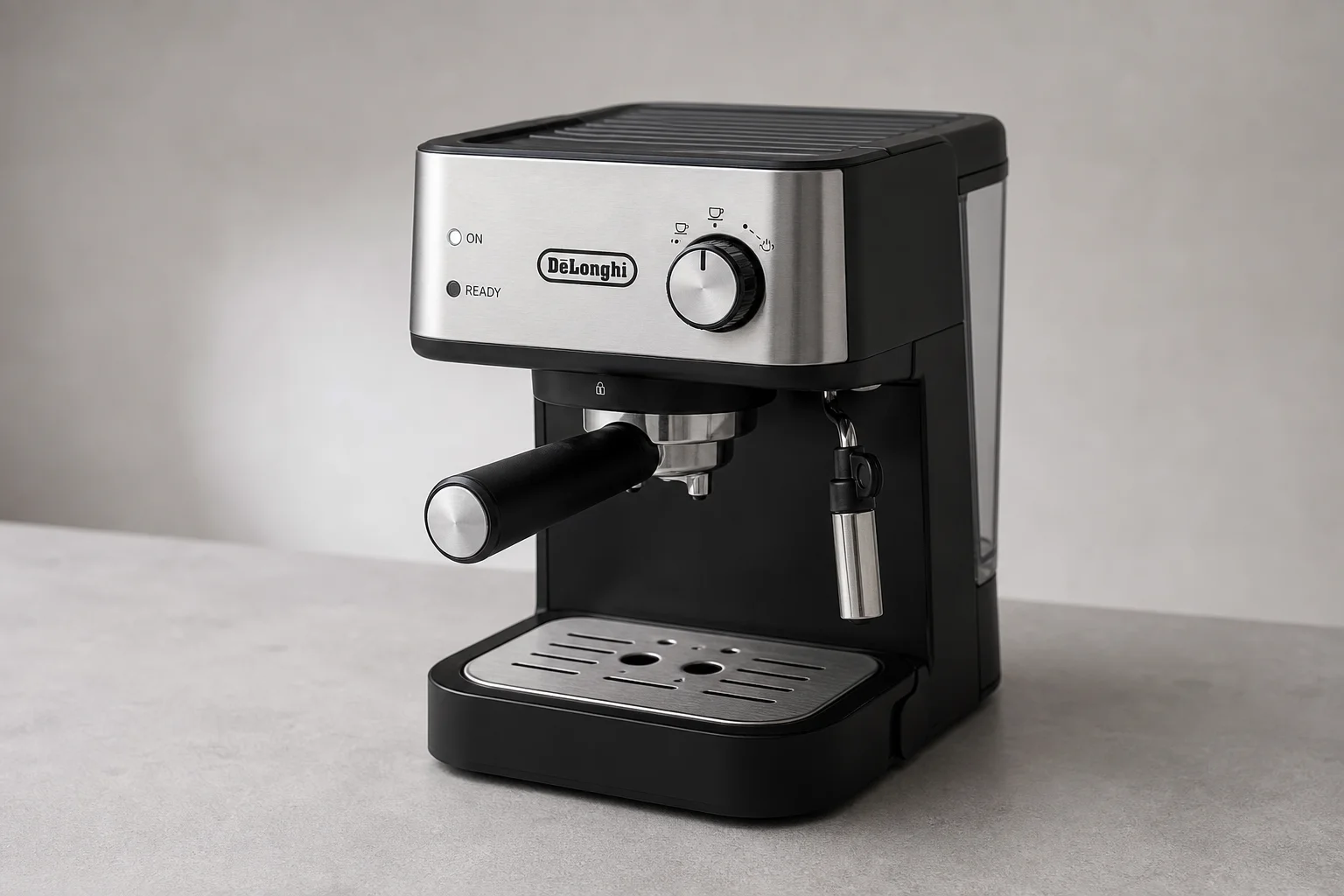
The DeLonghi is the most expensive of the five machines at 99.99 pounds, and it stands apart because it includes a proper, non-pressurized basket. This means finely ground coffee can be used, and in theory, proper espresso extraction becomes possible. However, the basket sits awkwardly in the portafilter, held only by small tabs that cause it to fall out frequently. The flip mechanism to hold it in place during removal is unpleasant to use.
The machine itself presents challenges. There is only a ready light with no temperature gauge or information display, forcing users to guess whether the machine has reached proper temperature. The entire unit is noisy and shakes during operation, and the build quality feels questionable. The interior design allows liquid to be retained inside the portafilter, which dries and crusts over time, creating a design flaw. The tamper is mounted to the machine, making it ergonomically awkward to use.
Despite these frustrations, the DeLonghi produces the best results of the five machines. A traditional shot (14 grams in, 28 to 30 grams out in 25 to 30 seconds) yields okay results. The shots look good and taste acceptable. Good espresso is possible here with effort, though not great espresso. For 99.99 pounds, this represents the best compromise among budget machines.
Krups and AmazonBasics: Identical Problems at Different Prices
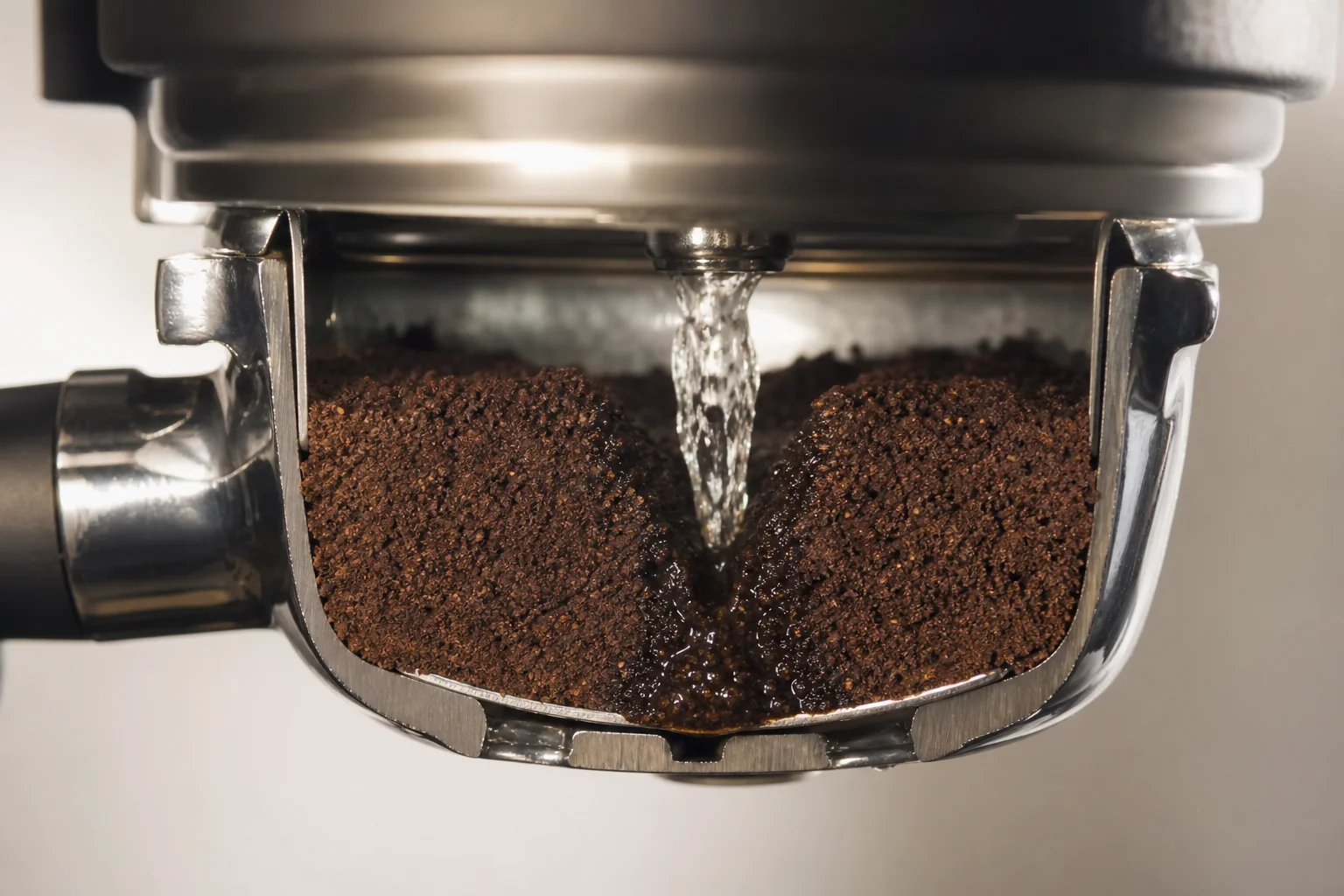
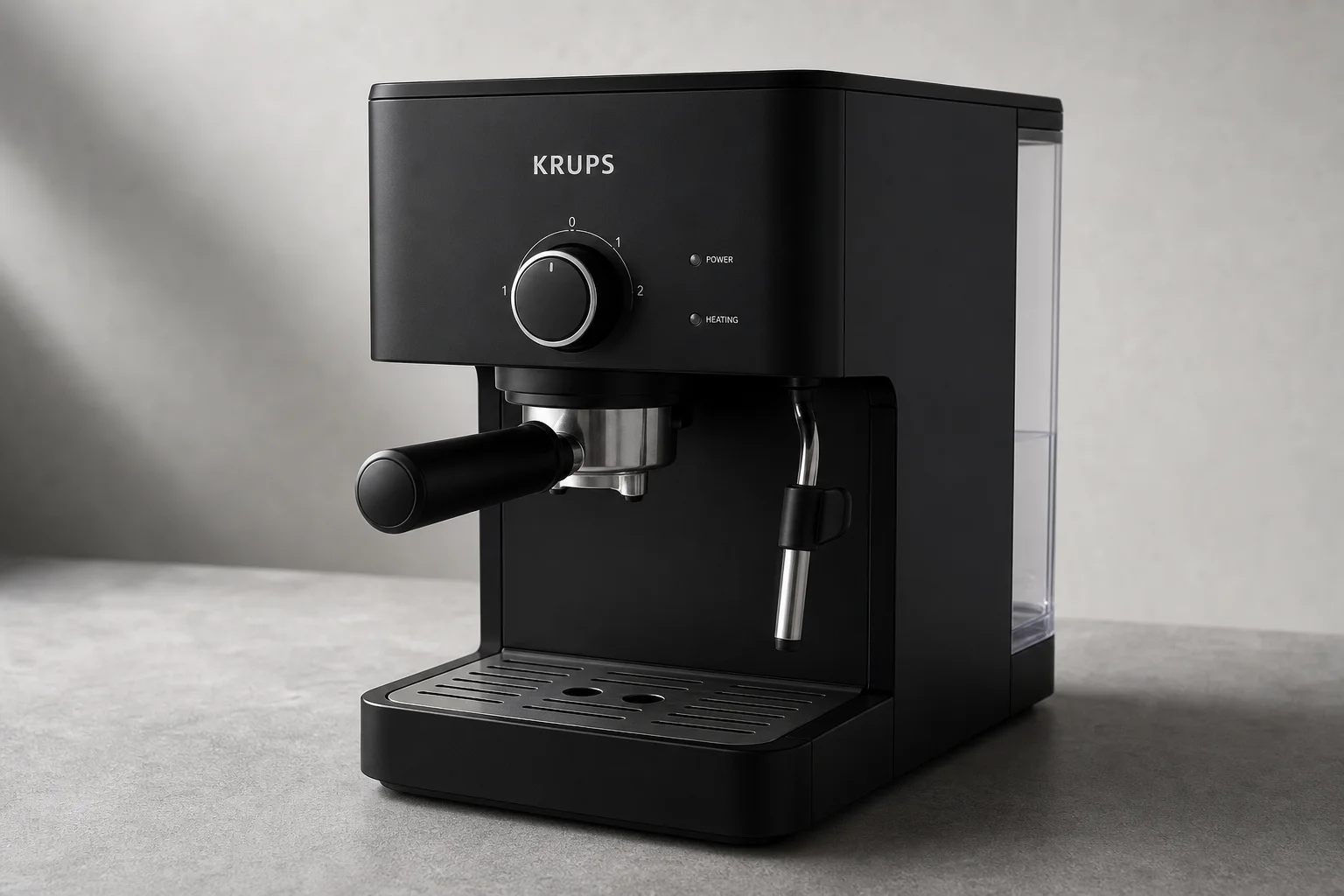
The Krups costs 90 pounds and uses an identical portafilter to the Swan, suggesting a repeat of earlier frustrations. However, the real problem emerges in how the machine disperses water from the group head. The water distribution is severely compromised, with most water flowing through a giant hole in the middle of the puck rather than distributing evenly across the coffee bed.
This design flaw creates a jet of water that digs a hole through the coffee, causing massive channeling. Even with a proper grind setting, extraction is uneven and the resulting espresso is hollow, empty, sour, and bitter. The coffee tastes disgusting.
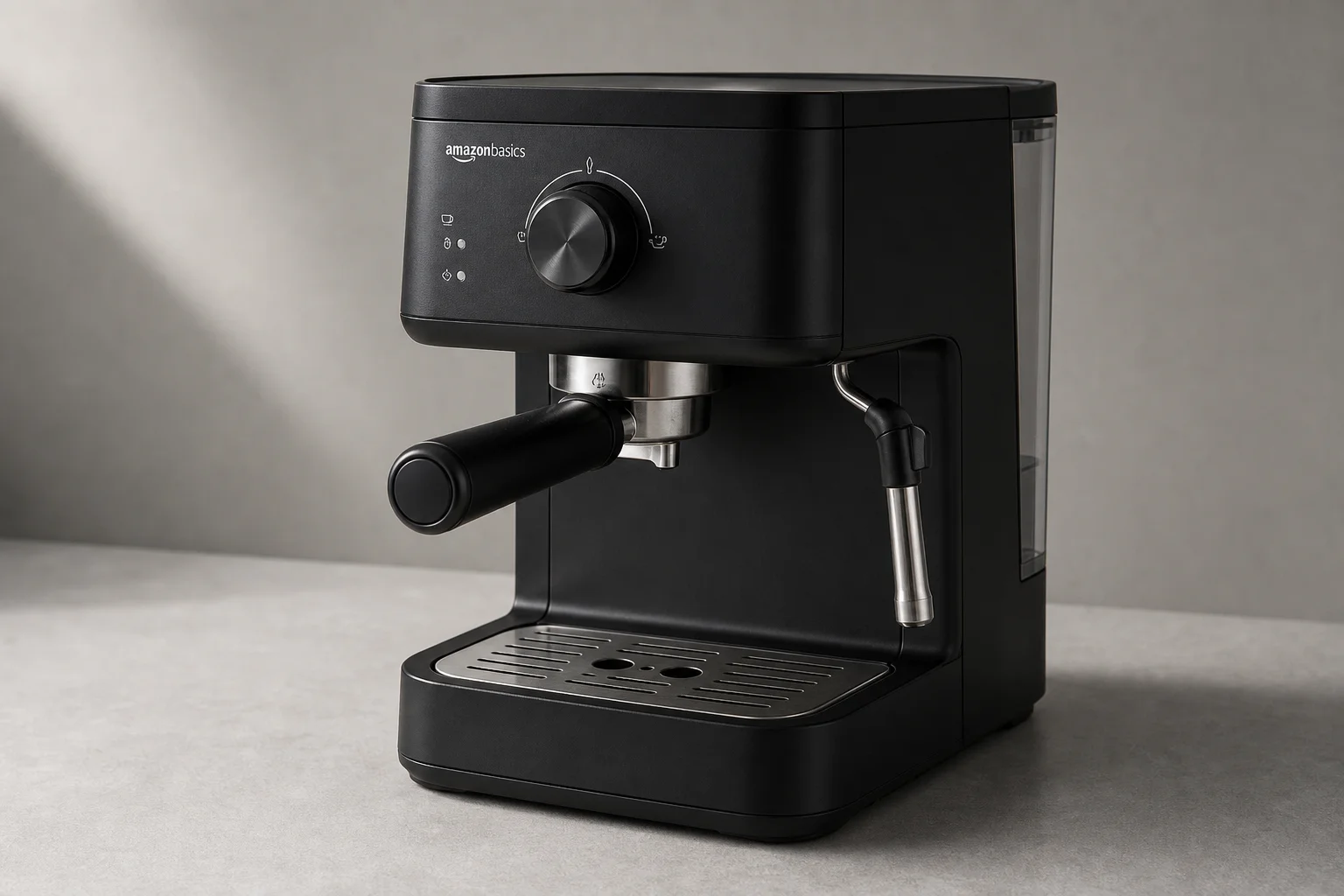
The AmazonBasics machine appears almost identical to the Krups but costs only 65 pounds. The cost reduction is evident in cheap, awful controls and a machine body that bends under pressure. It suffers from the same water distribution problem as the Krups, with an aggressive jet of steam that punches into the coffee and creates channeling. While it might be theoretically possible to pull cold water through the machine to cool it down and reduce channeling, the effort required makes the exercise pointless.
Both machines waste time and money. The AmazonBasics, despite its lower price, offers no advantage over the Krups and the same fundamental design flaw that makes good espresso impossible.
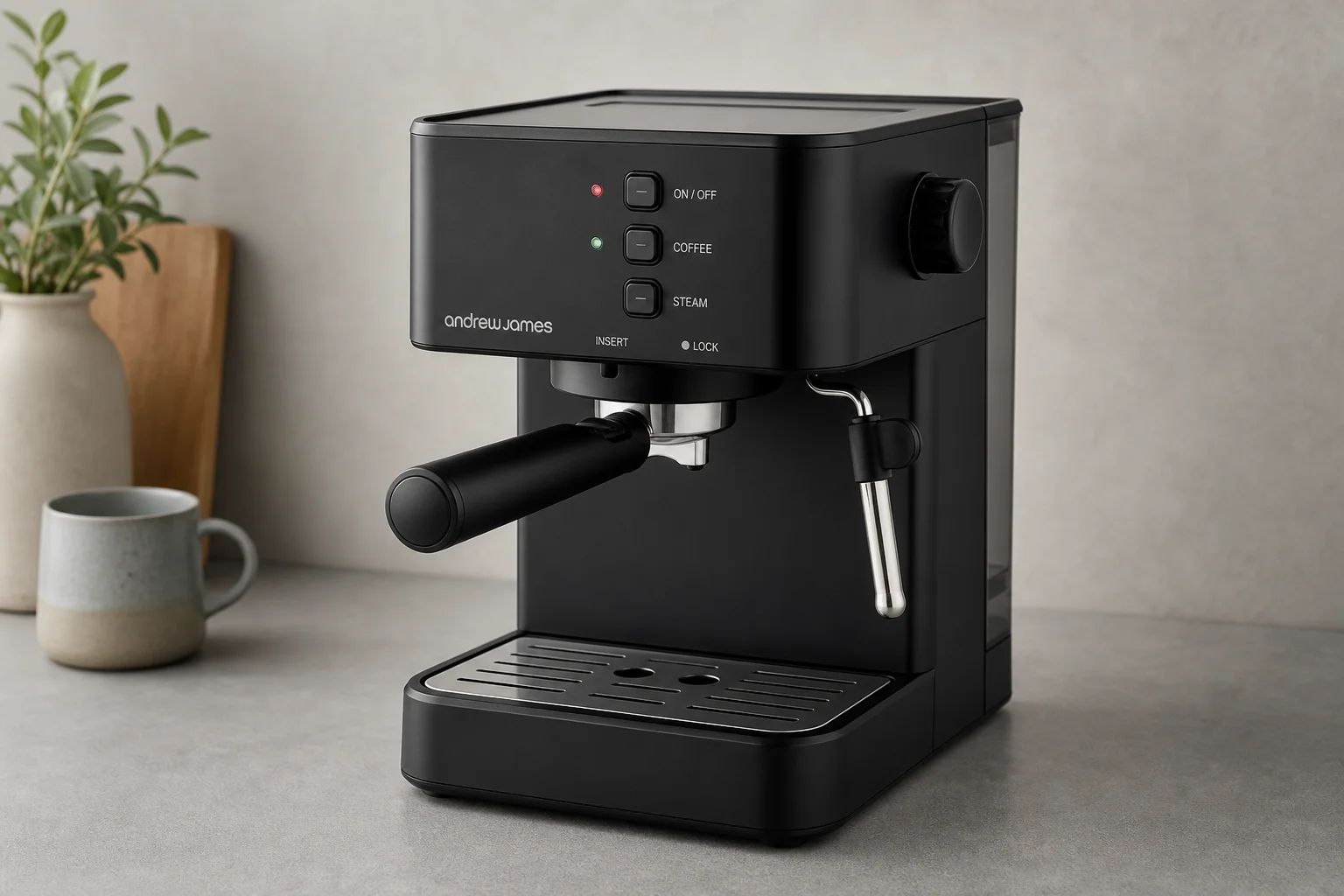
Andrew James: The Cheapest Option with Minimal Features
The Andrew James costs 60 pounds and offers minimal features. The power light never comes on, the heating light never turns off, and there is a drip tray beneath the group head. The machine does distribute water properly and gently, which is an improvement over the Krups and AmazonBasics. However, it uses a pressurized portafilter with only a small pinprick hole beneath the basket.
Like other pressurized machines, the Andrew James wants users to pull coarse-ground, faster, longer shots. Attempting to brew with a finer grind and slower extraction disappoints. The resulting coffee is not very good, and the experience of making it is frustrating. The machine offers nothing that distinguishes it from other pressurized budget options, and at 60 pounds, it is not worth the purchase.
The Verdict: Budget Constraints Make Good Espresso Difficult
When forced to choose among these five machines, the DeLonghi stands head and shoulders above the rest. Its non-pressurized basket and proper water distribution make it the only machine capable of producing acceptable espresso, despite its frustrating design and cheap construction. However, this leads to a more important question: is 100 pounds enough to buy a good espresso machine?
The answer is no. While the DeLonghi can produce okay coffee, the experience is frustrating and finicky. Users will not particularly enjoy making coffee every morning with a machine at this price point. The recommendation is to save more money and invest in a better machine that makes the daily ritual of espresso-making enjoyable, not just the final drink.
Budget espresso machines often become impulse purchases that end up unused in a cupboard. The goal should be to find the bare minimum price point at which a machine delivers not just good-tasting espresso, but also an enjoyable experience of making it. At under 100 pounds, that threshold has not been reached.
Conclusion
Budget espresso machines under 100 pounds can produce drinkable espresso only with significant compromise. The DeLonghi offers the best results among these five options, but even it requires patience and effort for mediocre results. For anyone serious about espresso at home, saving for a better machine is the wiser choice.
Further reading
Related Reviews
Coffee Equipment
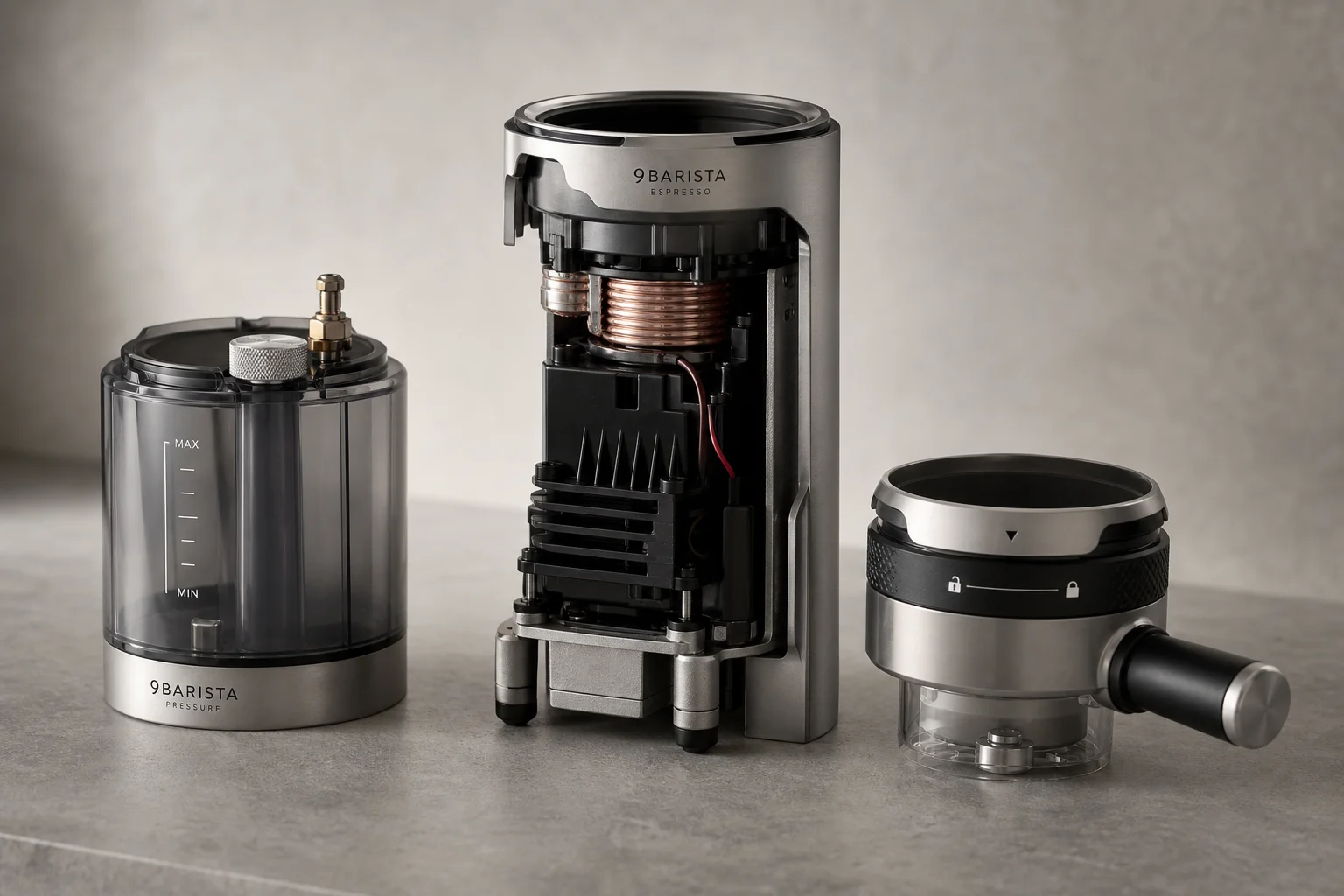
9Barista Espresso Machine Review: Stovetop Espresso for Single-Cup Enthusiasts
A cleverly engineered stovetop espresso maker that generates nine bars of pressure without electricity. Excellent coffee quality, but requires patience and suits solo drinkers only.
Coffee Equipment
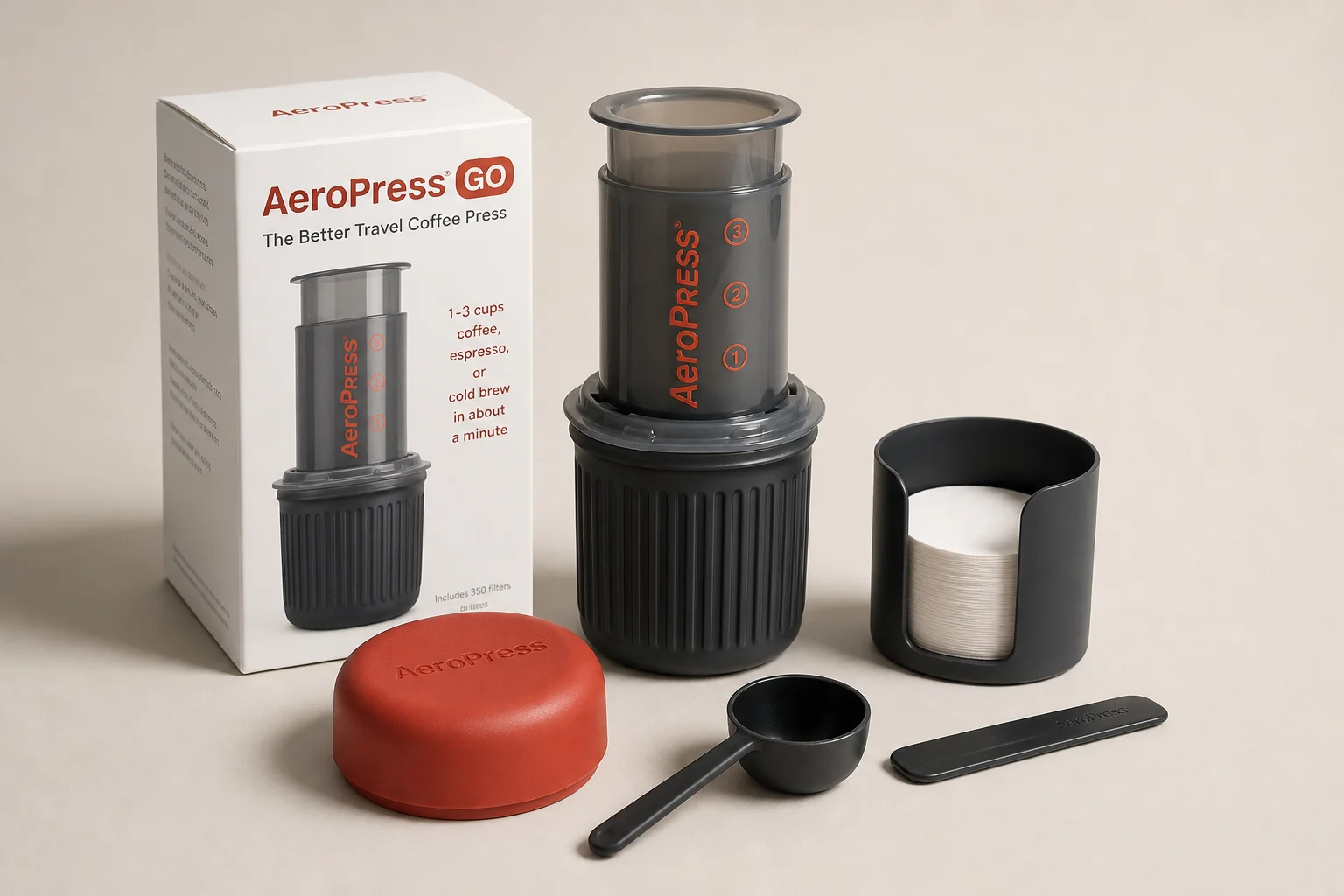
Aeropress Go Review: A Compact Travel Brewer That Solves One Specific Problem
The Aeropress Go shrinks the original design and adds an integrated cup, but it may not address the travel challenges most coffee enthusiasts actually face.
Coffee Equipment
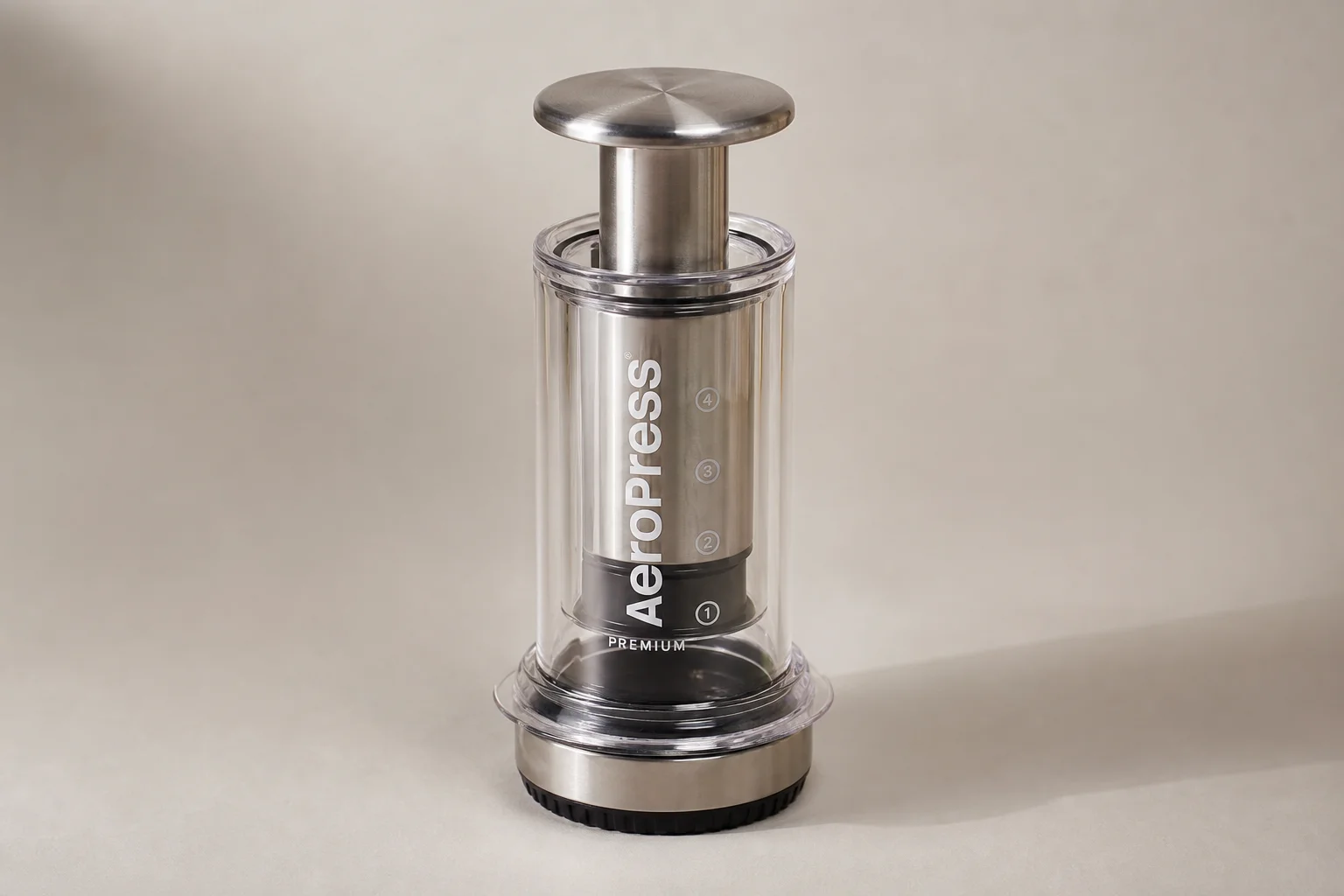
AeroPress Premium Review: Premium Materials, Practical Trade-offs
The AeroPress Premium brings glass and metal construction to a beloved brewer, but trades portability and durability for a more refined feel. Here's what changes in the cup and what matters before you buy.