Astrophotography
Budget Astrophotography Telescopes: Refractor vs Reflector at Around $300
A budget-focused comparison of two deep sky astrophotography telescopes, plus the coma correctors and upgrade options that make a real difference.
Introduction
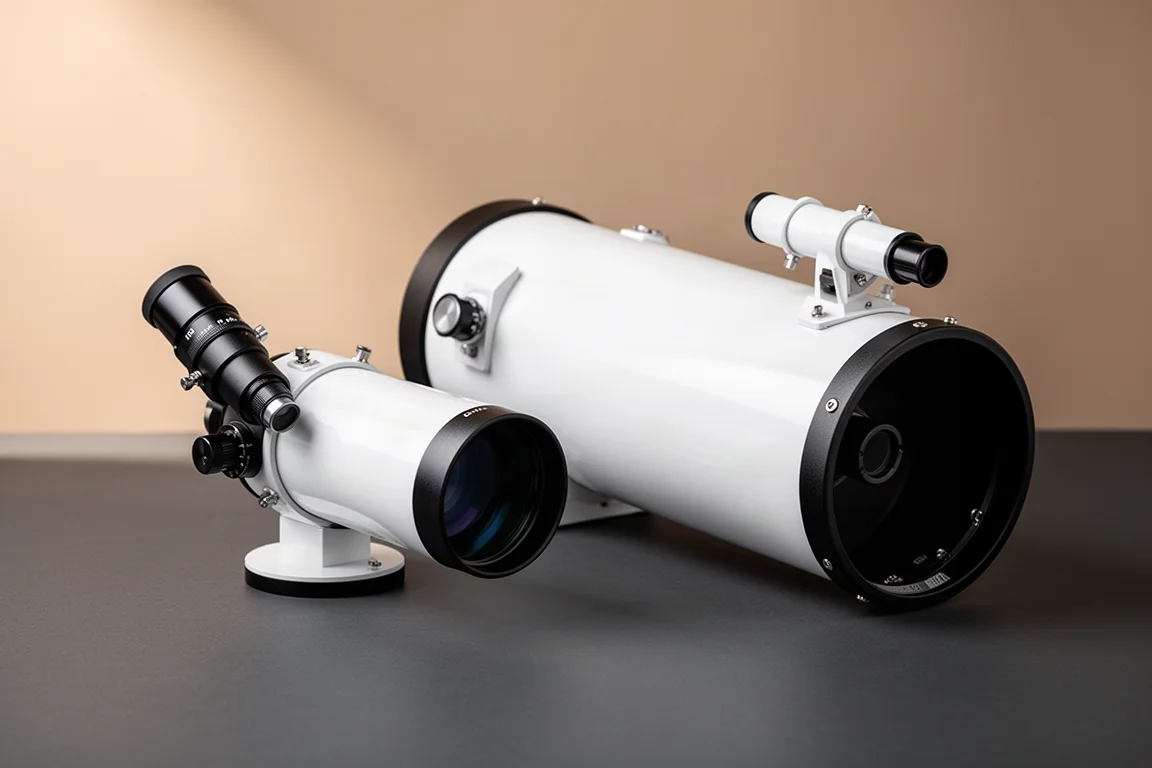
If you want to move from camera-lens astrophotography into telescope-based deep sky imaging without spending a fortune, two budget optical tube assemblies dominate the conversation: a small achromatic refractor and a six-inch imaging Newtonian reflector. Both sit around the 300 US dollar mark, and both can produce genuine nebula images with a basic DSLR. This comparison looks at how they differ in weight, ease of use, image quality, and upgrade potential, so you can choose the path that fits your budget and your patience for mechanics.
One term worth clarifying up front: both products here are technically OTAs, or optical tube assemblies, meaning the telescope without the mount. Deep sky astrophotography at these focal lengths is not practical without a motorized mount, and it has become normal to buy the scope and the mount separately for flexibility. A good astrophotography mount often costs three to five times the price of the telescope, so plan the whole system, not just the tube.
Refractor vs Reflector: Why the Standard Advice Points to Refractors First
Experienced astrophotographers usually tell beginners to start with a refractor, and the reasons are practical. Refractors are smaller and lighter, and their design is essentially a long telephoto lens: light enters the front, gets bent into focus by glass elements cemented firmly in place inside the tube, and lands on the camera sensor. All you have to manage is connecting the camera to the focuser and focusing, which with a dual-speed focuser and a lock underneath can be easier than focusing a camera lens. Many people also add a field flattener to improve star shapes toward the edges of larger sensors, though matched flatteners for full-frame sensors tend to cost noticeably more.
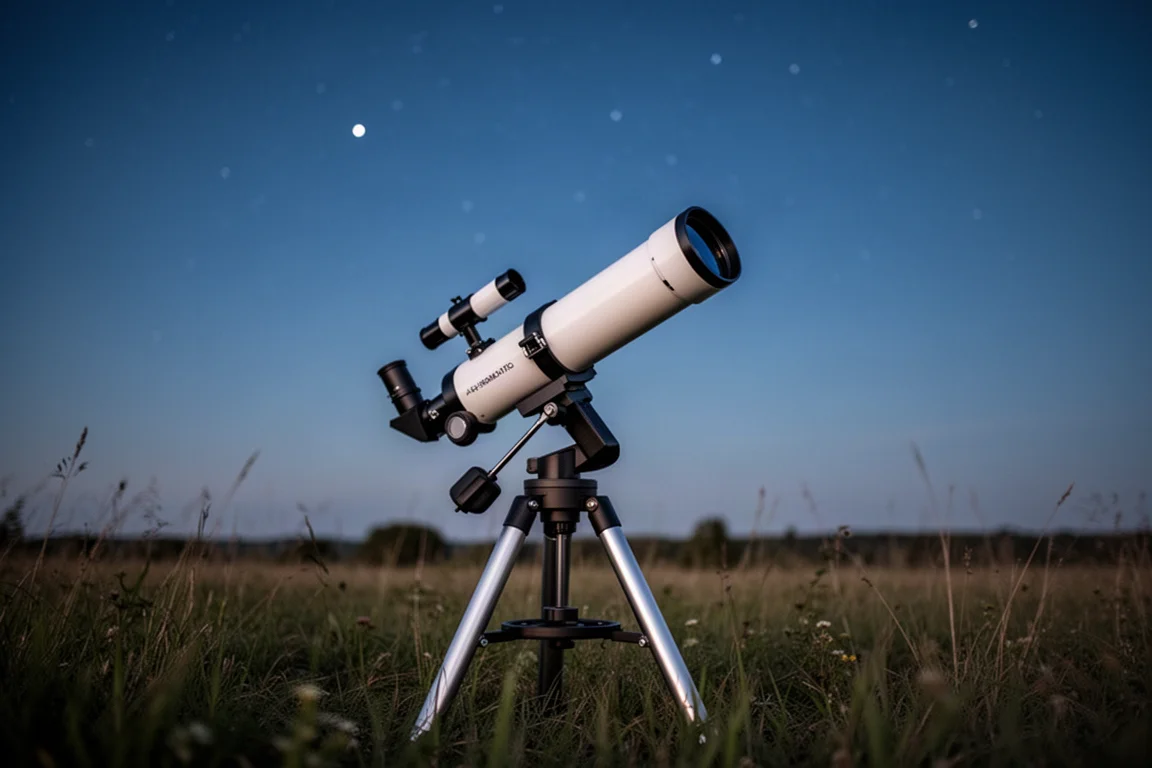
Achromatic refractors do have a known weakness. With only two glass elements bringing two wavelengths of light to the same focal plane, bright stars, the moon, and planets can show chromatic aberration, visible as color fringing around stars in deep sky images. A minus-violet filter can help control the bloating, but it is a workaround rather than a fix.
The SVBONY SV48 Refractor
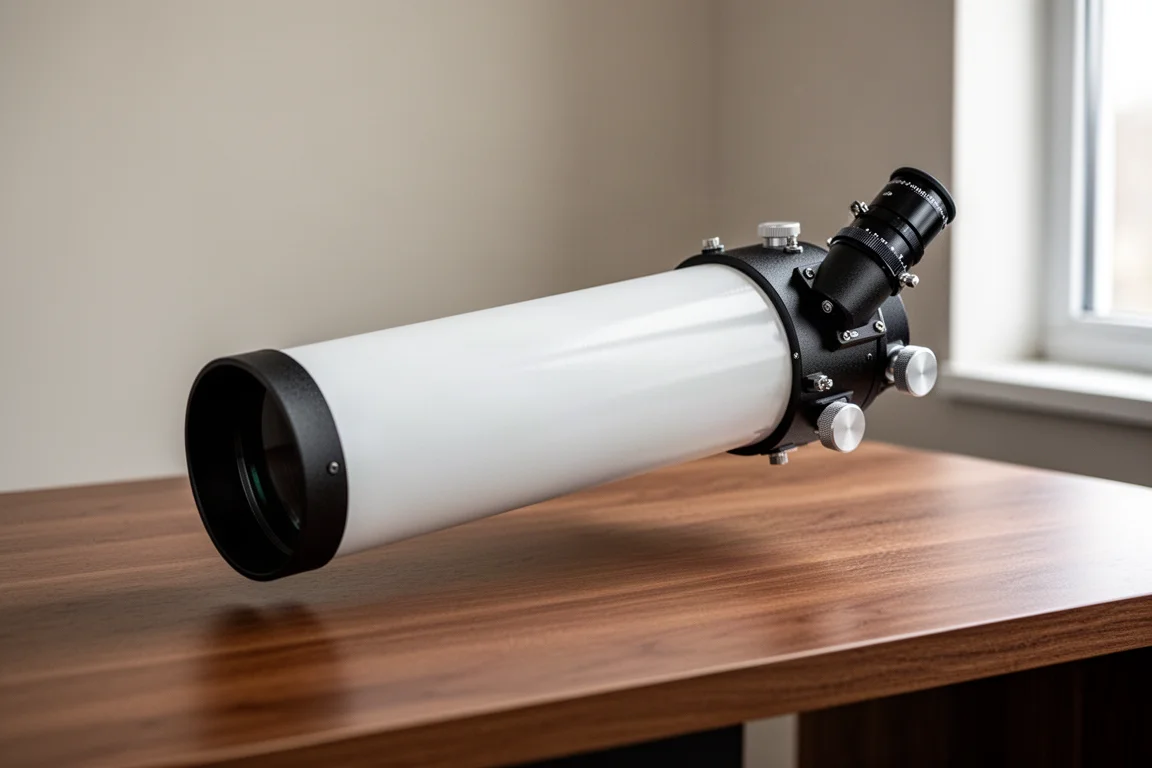
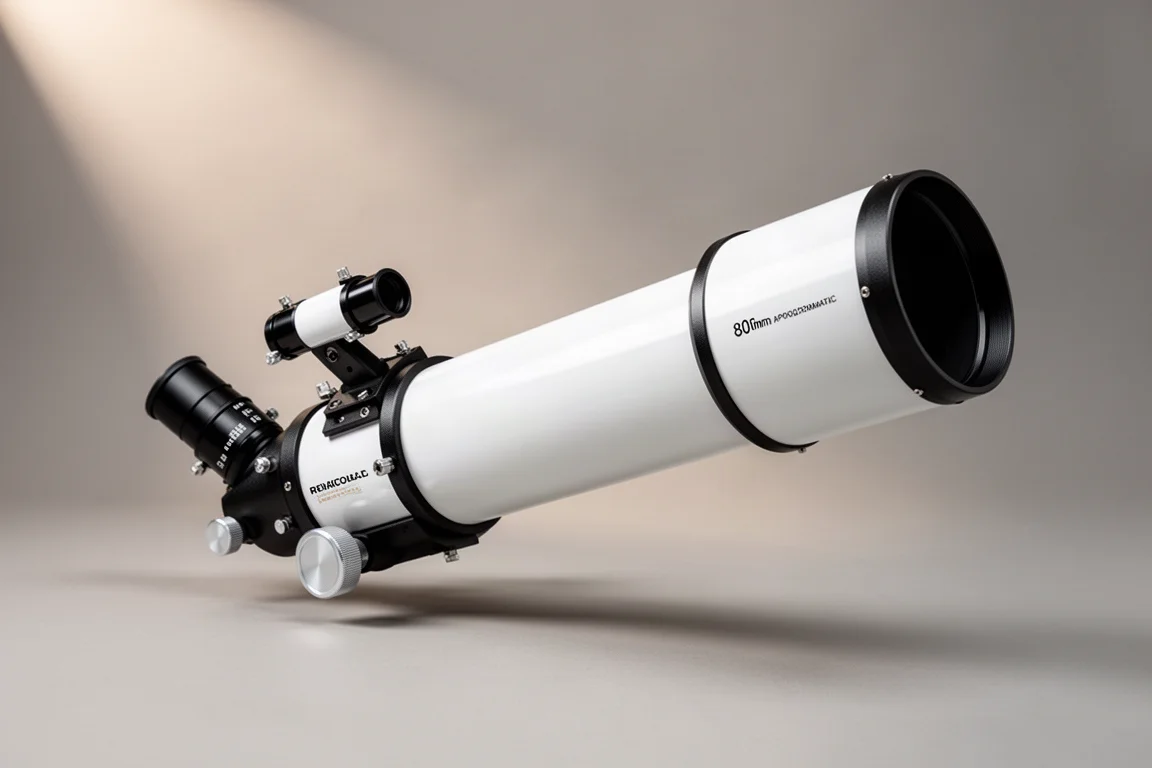
The SVBONY SV48 is a 90mm achromatic doublet with a 500mm focal length at f/5.5, a focal length well suited to deep sky targets on a motorized mount. It weighs only 2.2 kilograms (4.9 pounds), which is its biggest advantage: it balances easily on small, inexpensive mounts. On a mount like the iOptron Smart EQ with a 12-pound limit, the light payload keeps you well away from the extreme of the weight rating, and short exposures are workable even at 500mm. It comes with a hard-sided case, and pricing typically sits around 275 to 300 US dollars depending on the current sale. As achromats go, it performs just as well as other budget achromats, and it is cheaper than many telephoto lenses.
The Apertura 6” f5 Newtonian Reflector
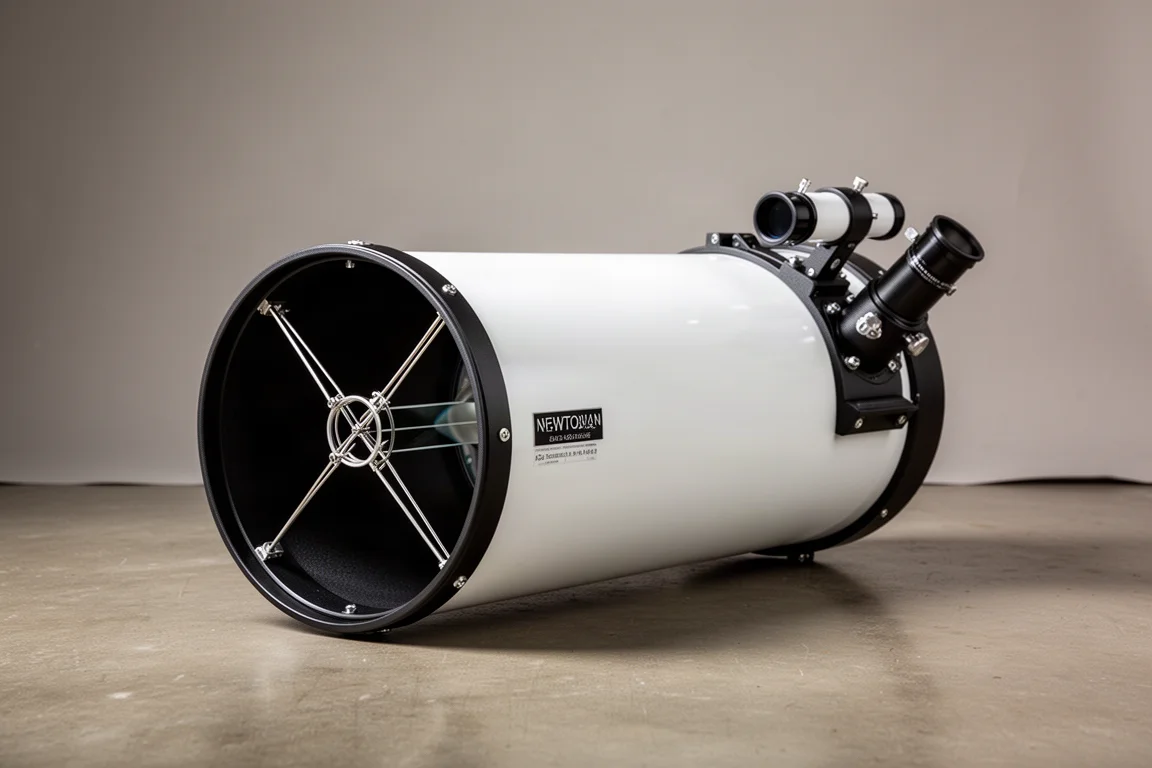
The Newtonian reflector works differently: light travels down the tube to a primary mirror, reflects back up to a 45-degree secondary mirror, and exits through a side-mounted focuser. This six-inch f/5 version has a 750mm focal length and is designed for imaging, which matters because many Newtonians lack the focuser inward travel for a DSLR to reach focus. Budget Newtonians also typically use very good mirrors, with the weaker parts being the mechanics.
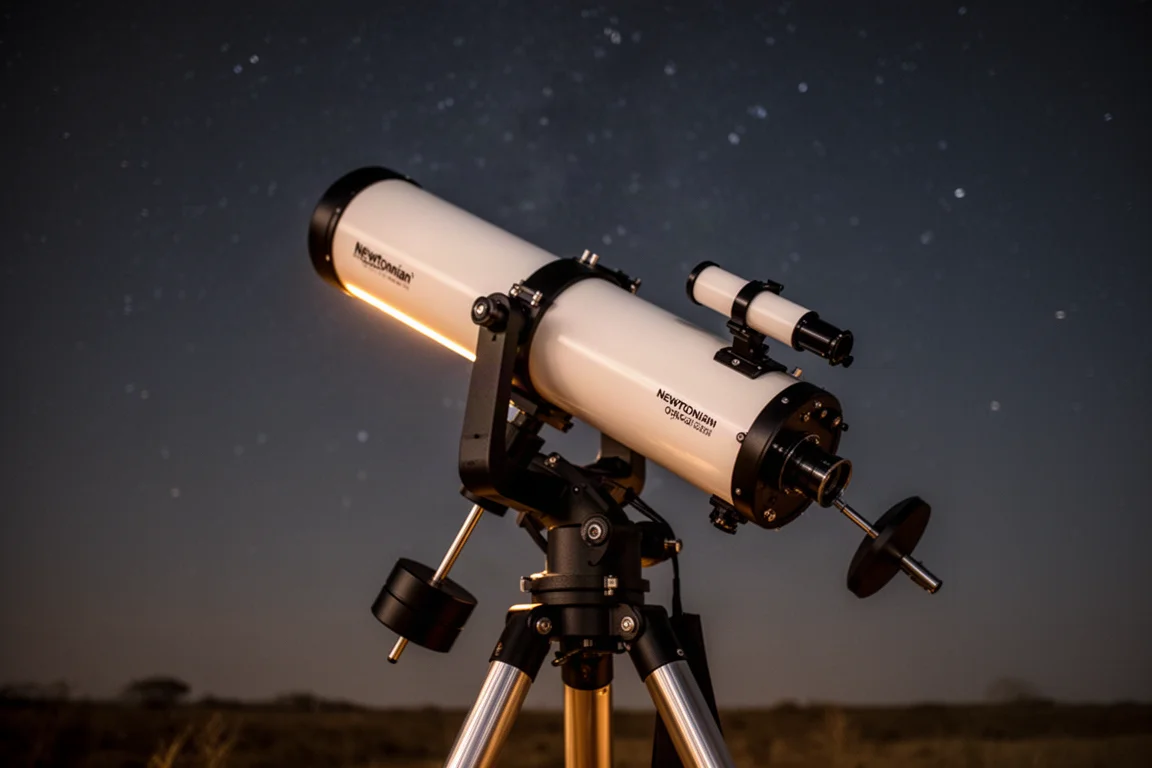
The trade-offs are significant, though. The OTA alone weighs nearly 6 kilograms (13 pounds), which rules out small mounts entirely; on the Smart EQ it exceeds the literal weight limit, so you need something like a Sky-Watcher EQ6-R class mount. The large surface area also acts like a wind sail, and gusts that would not bother a refractor can completely ruin an exposure. Finally, Newtonians need collimation, the periodic realignment of the primary and secondary mirrors. With a laser collimator it adds only a few minutes and can be done in daylight, so it is less of a burden than its reputation suggests. Expect the full supporting kit to push the total well past 2,000 US dollars and likely over 3,000.
Coma Correctors: Apertura vs Tele Vue
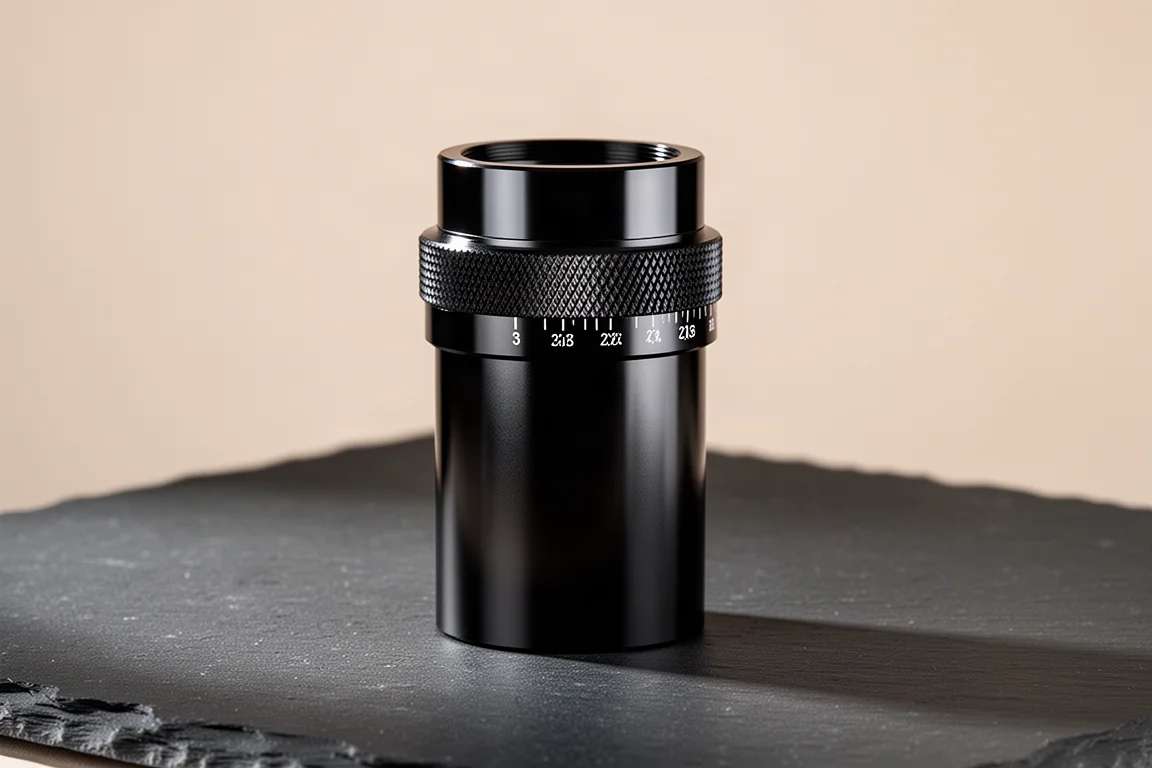
Shooting deep sky with a Newtonian without a coma corrector means stars away from the center of the field stretch into egg or oval shapes, getting worse toward the edges. A coma corrector fixes this, and for deep sky work it should be considered essential and baked into the budget from the start; only planetary shooting, which uses just the center of the field, can skip it. Most coma correctors use a 55mm back focus, so with a DSLR you simply attach a T-adapter, screw it on, and slide the assembly into the two-inch focuser. Watch that the corrector does not dip down into the tube; spacers can solve that if it happens.
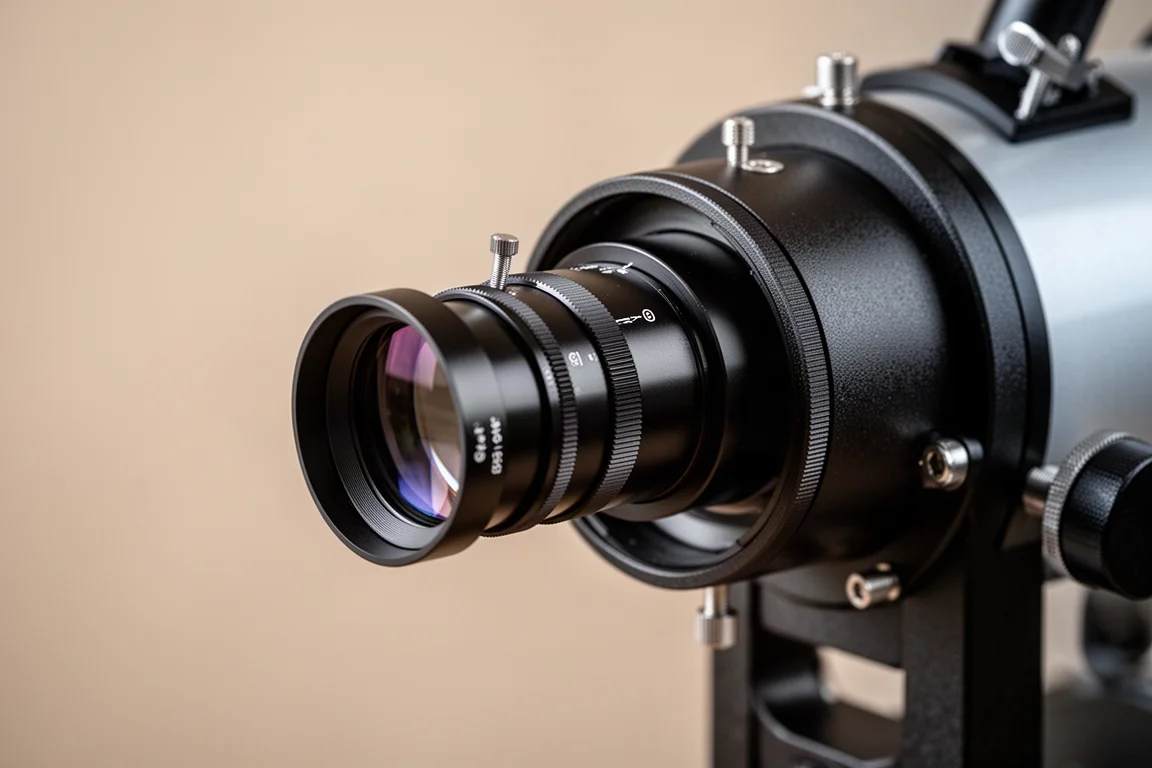
The Apertura coma corrector costs about 120 US dollars and works really well. The Tele Vue Paracorr costs considerably more, but testing both showed only a very small performance difference, which makes the Paracorr hard to justify at this budget level.
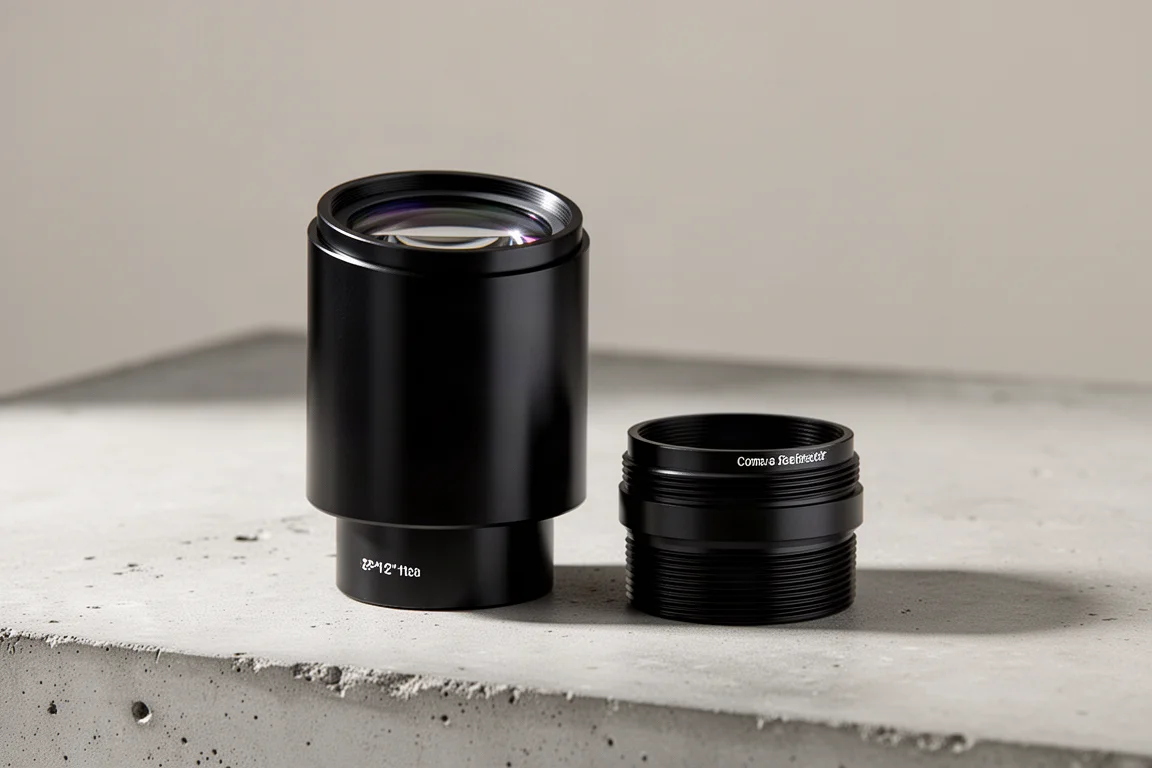
The Paracorr remains a premium option, and some imagers will still want it, but the value case at this price point clearly favors the budget corrector.
Upgrade Paths: The Apertura 60 EDR Kit and the SVBONY SV503
If you have a bit more budget, an ED doublet refractor with a matched field flattener is the natural upgrade from a budget achromat. ED stands for extra-low dispersion, and paired with a flattener designed for that specific telescope, the result is much better color correction and tighter stars, approaching triplet performance. The price doubles quickly though: from a 300 dollar achromat to roughly 600 dollars for the cheapest ED doublet with a flattener, and around 1,200 for a triplet with a flattener.
The Apertura 60 EDR kit is one such option at 600 US dollars and is a very nice small refractor. Because it is short, compact, and lightweight, it pairs well with a very small mount or star tracker, making it a strong choice if you want to dip a toe into a small telescope without committing to a heavy setup.
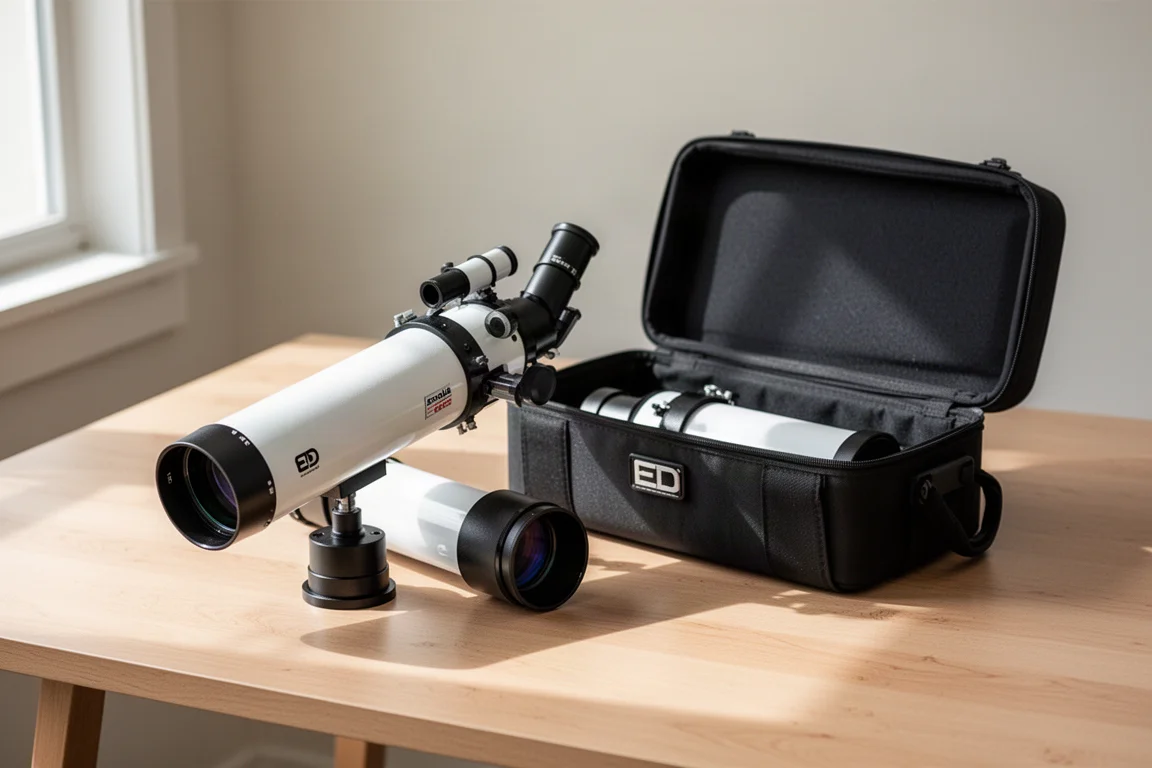
The SVBONY SV503 80mm f/7 is another step-up candidate, and it can be paired with a matched SVBONY field flattener/reducer. Compared to the SV48, it delivers noticeably better color correction and tighter stars, making it a much closer rival to a six-inch Newtonian on image quality, at considerably more money for the OTA alone.
Overall Buying Advice
In a direct image comparison, both telescopes photographed the North America Nebula region on the same night with the same modified DSLR on the same mount, no guiding, 15 to 30 second exposures, identically processed with calibration frames and photometric color calibration. The Newtonian’s larger aperture, finer pixel scale from its longer focal length, and better color correction produced a sharper, higher-quality image with much smaller stars that let the nebula shine.
That result comes with conditions. If you have the money and are mechanically minded, perhaps already familiar with Newtonians from visual astronomy, a reflector can make sense even relatively early, and the DIY potential is enormous: fan projects to fight tube currents, 3D-printed mirror clip masks, secondary mirror heaters, advanced collimation systems, focuser upgrades, and baffles. Stock, the mechanics are frustrating, but done well the cumulative improvements can be night and day.
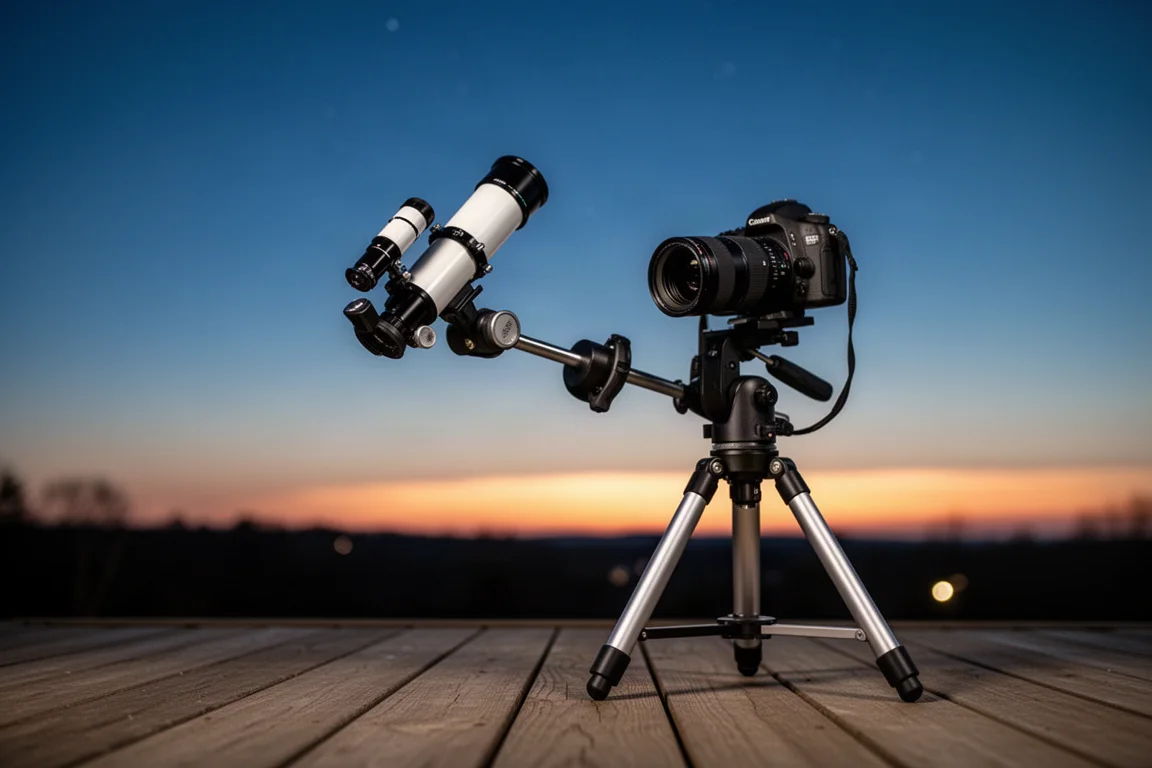
If you want the cheapest, simplest path into telescope-based deep sky imaging, the achromatic refractor is the sensible entry. Use it to gain experience at a longer focal length, and treat a minus-violet filter as your only realistic image-quality upgrade, since no matched field flattener exists for this model. When you are ready to spend more, the ED doublet options above deliver a much bigger jump than any accessory ever will.
Conclusion
At around 300 US dollars, the budget refractor wins on weight, simplicity, and mount flexibility, while the six-inch Newtonian wins on raw image quality once you factor in the coma corrector, a capable mount, collimation tools, and patience with mechanics. Choose the refractor to start cheaply and simply, and the reflector if your budget and hands-on instincts can support the full system around it.
Further reading
Related Reviews
Astrophotography
ASKAR FRA400C Review: A Versatile 400mm Refractor for Astrophotography and More
The ASKAR FRA400C is a compact 72mm refractor that balances reach, versatility, and portability for astrophotographers and visual observers.
Astrophotography
Askar SQA106 Review: A Premium 106mm Astrograph With Exceptional Optics
The Askar SQA106 is a premium 106mm quintuplet astrograph with impressive sharpness across full-frame sensors, though its price and weight demand careful consideration.
Astrophotography
Astro Imaging Gear 2026: Eight New Products Worth Watching
A look at the most interesting new astrophotography and astronomy products announced this year, from fast telescopes to smart cameras and wireless accessories.