Subwoofers
Budget 12-Inch Subwoofer Roundup: Six Models Compared
Six budget 12-inch subwoofers compared on frequency response linearity, measured output, and build quality, with clear picks and the trade-offs behind each.
Introduction
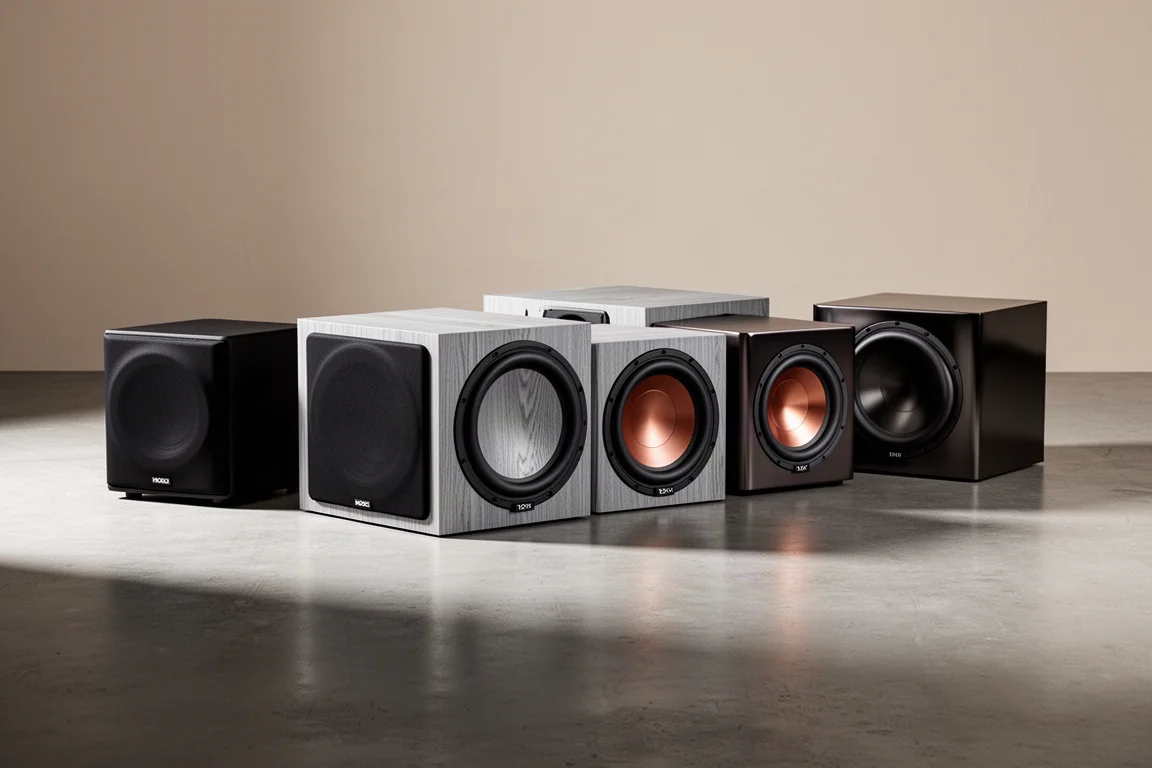
Budget subwoofers are usually described in feel rather than figures, which makes it hard to tell whether a low price is hiding a real compromise or just a smart design. This roundup covers six 12-inch subwoofers sitting in the roughly $170 to $300 range, all put through the same process: frequency response sweeps, CEA-2010 tone-burst output testing, and rub-and-buzz checks for rattles and internal resonances.
The short version: the Infinity SUB R12 finished first, the Jamo C912 is the strongest alternative, and every other model here carries a specific trade-off worth understanding before you spend. Build quality and finish were also checked on each cabinet, because at this price the details matter more than they do further up the market.
How These Budget 12-Inch Subwoofers Were Compared
Three measurements shaped the conclusions.
Frequency response linearity comes first. A cabinet that peaks at one frequency tends to sound muddy, bloated, or ringing, and that ringing is often what people mean when they call a subwoofer slow. A more linear response produces the quick, punchy bass that most listeners are actually after.
CEA-2010 output testing comes next. A tone burst at a set frequency is played through the cabinet and the microphone captures both the fundamental and its harmonics. Once the harmonics cross the threshold defined by the standard, the test fails and that point becomes the maximum output for that frequency. Reading this data alongside the frequency response matters, because a very high number at 20 Hz means little if the response has already fallen away by 50 Hz.
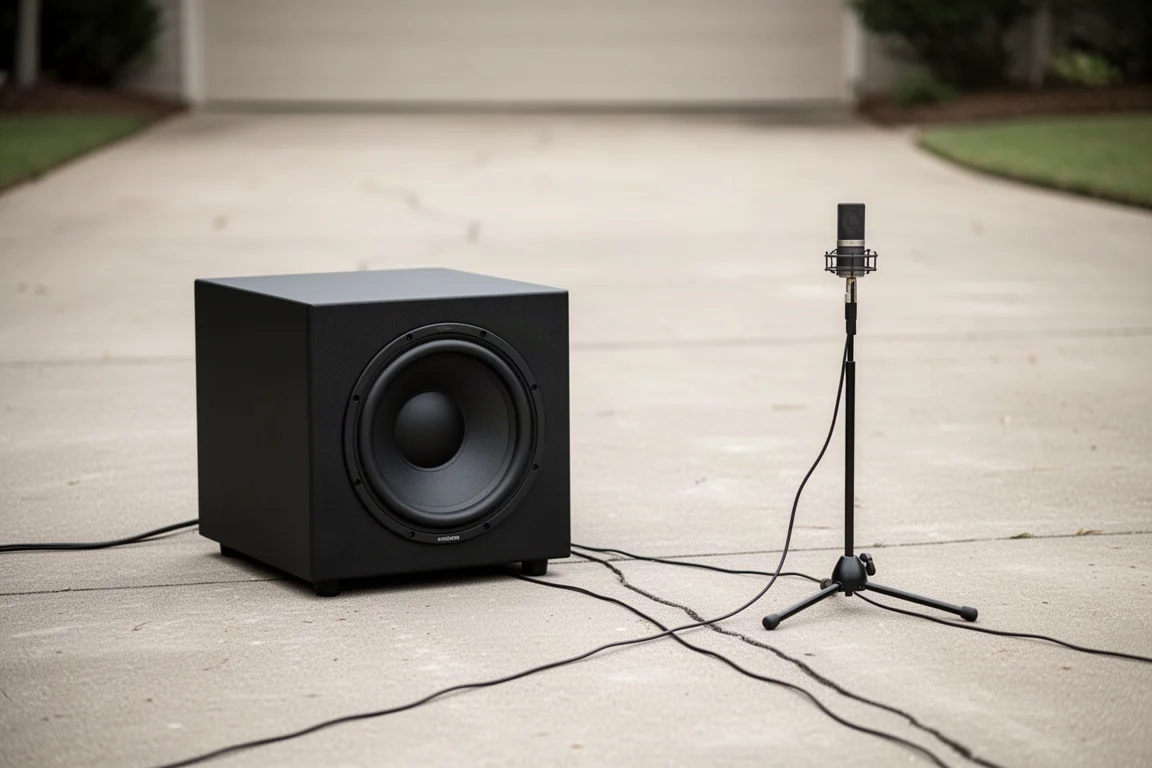
Rub and buzz testing rounds it out. A swept band of frequencies is played through each cabinet while listening for rattles or resonances coming from the enclosure itself. This is best done outdoors, where a room cannot add its own buzzing from windows, walls, or framed pictures.
One expectation worth setting early: budget 12-inch subwoofers rarely dig far below about 30 Hz, and serious output at the lowest frequencies generally starts higher up the price range. What separates these models from each other is how cleanly and how linearly they cover the range they can reach, not how deep they go.
Infinity SUB R12: The Top Performer
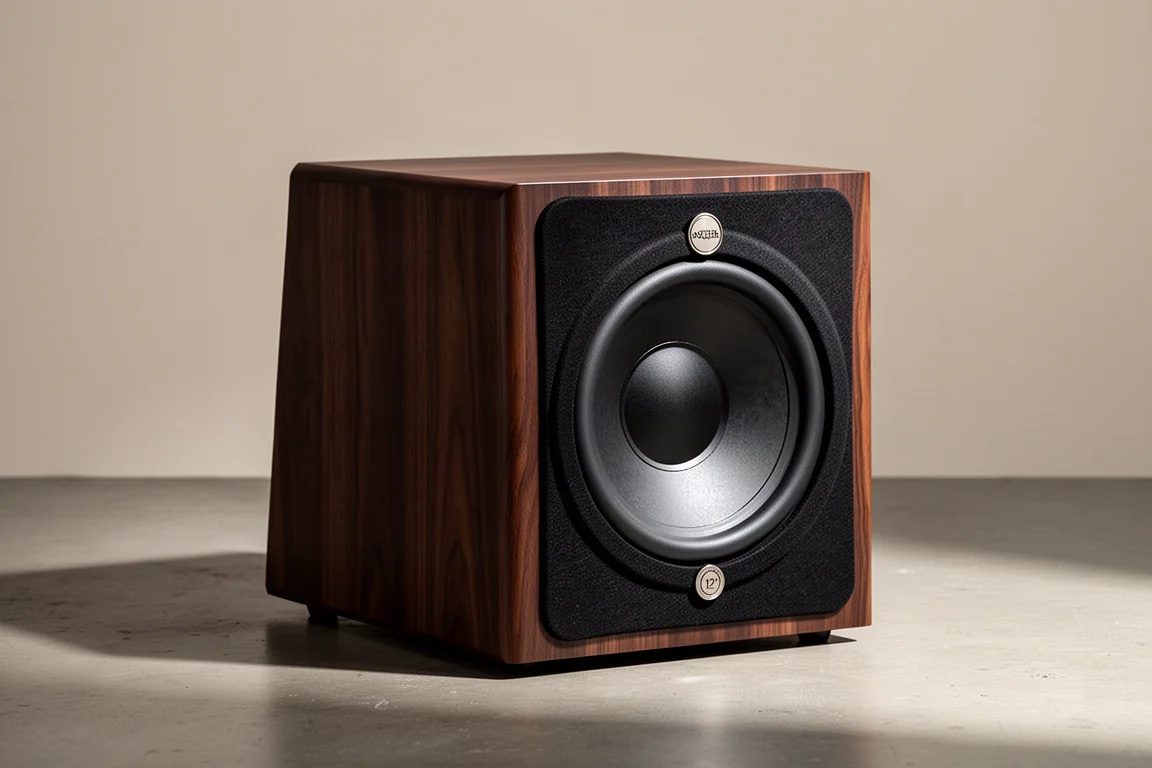
The Infinity SUB R12 has a plastic grille with cloth wrapped around the front and a small round badge at the centre, and the cabinet tapers toward the rear rather than sitting as a plain box. The rear panel carries an RCA line-level input, subwoofer gain, power mode, phase, crossover adjustment, and an on/off switch, plus an LFE trim switch offering 0, +2, and +4 positions. That trim switch was left in its default setting during measurement, so it remains an extra adjustment to explore.
Measured response was the most linear of the group, and the CEA-2010 results were the highest overall, reaching 106.3 dB at 31.5 Hz. At the sale price this model is often seen at, that combination is difficult to argue with.
Jamo C912: The Linear Alternative
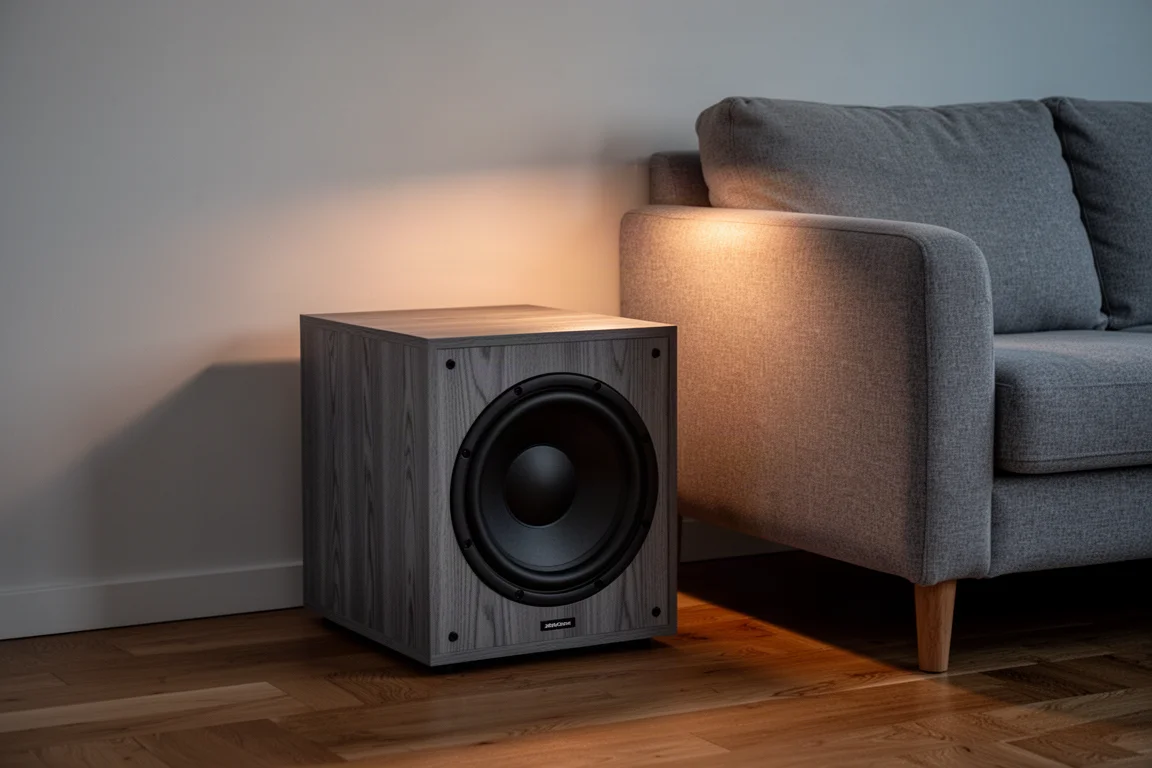
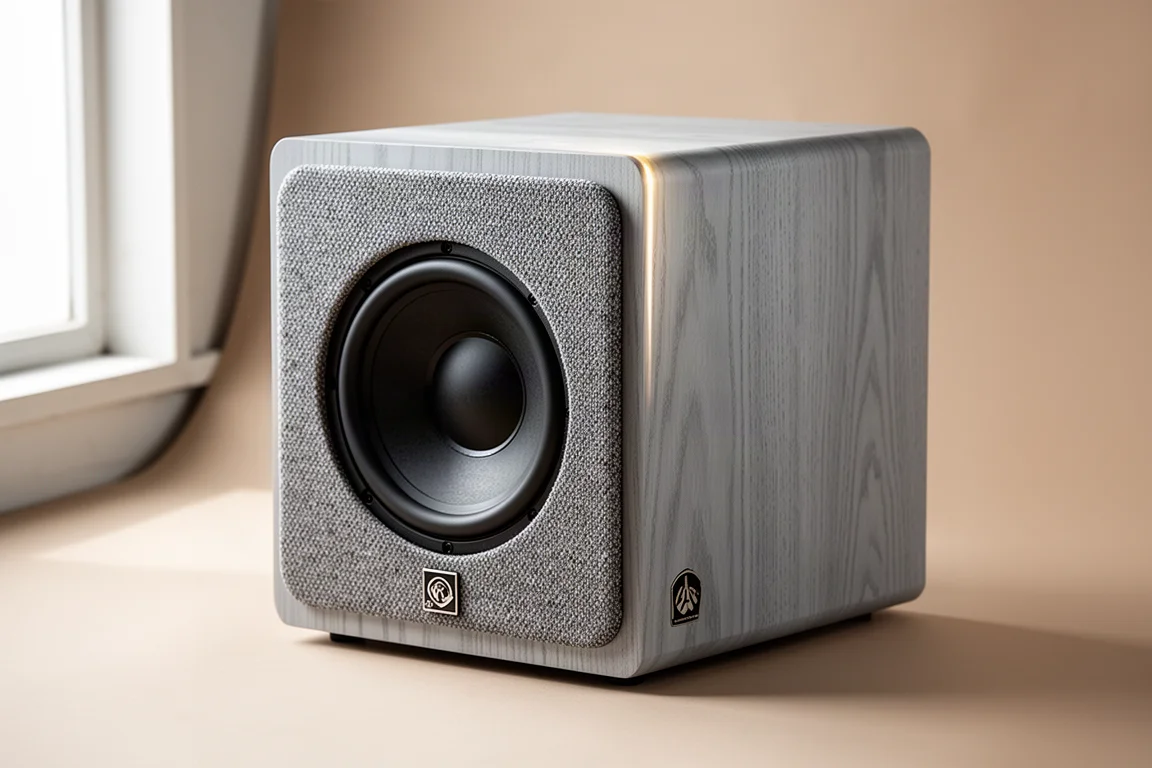
The Jamo C912 arrives with a tweed grille and a grey wood veneer cabinet with the brand name set into the side panel. The rear panel offers a low-pass frequency adjustment, a volume knob, RCA inputs, a 0/180 phase switch, and a power input. One omission stands out: there is no auto power-on, so there is no signal sensing through the RCA inputs the way several of the other cabinets here provide.
Output figures are not the highest in this group, but the response is more linear than most. It holds together well in the very low frequencies and through the mid and upper bass, giving up a little at the highest subwoofer frequencies. Just as importantly, no internal noise or resonances turned up during testing.
That combination of linearity and quiet operation is what makes it a credible second choice when the top pick is unavailable or has drifted above your budget.
Klipsch R-12SW: Strong Numbers With a Reliability Caveat
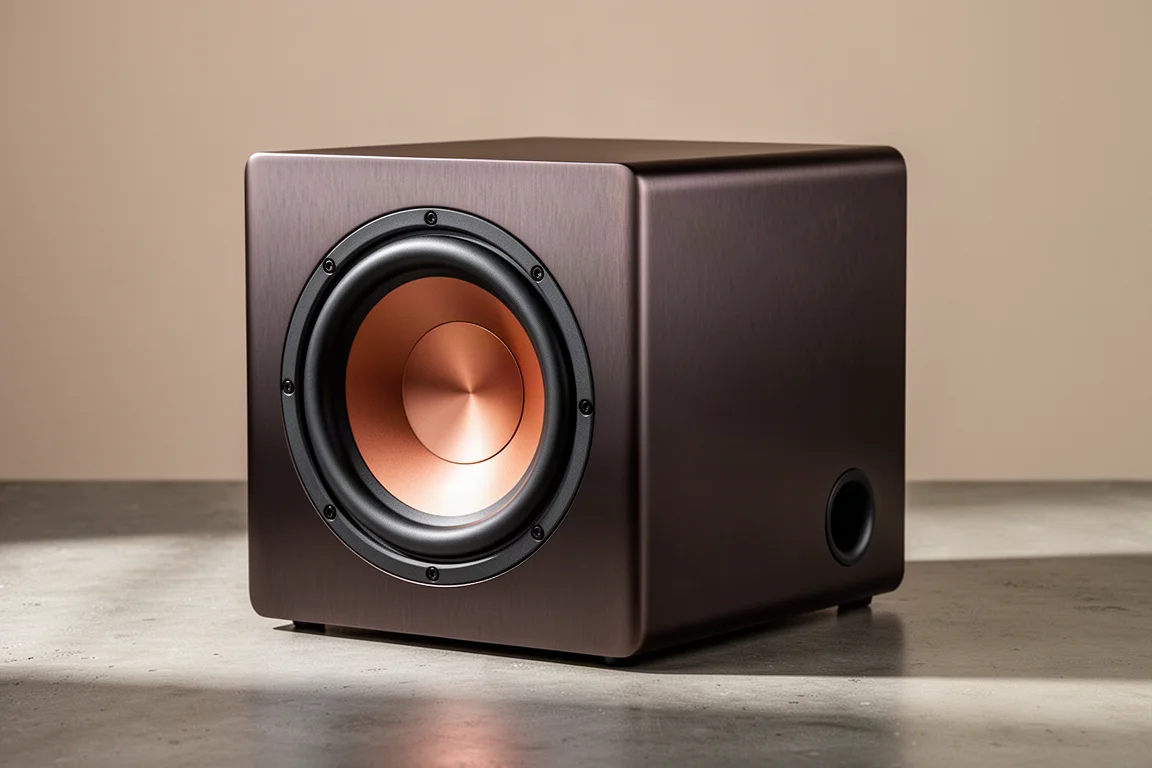
The Klipsch R-12SW is the model many buyers run into through warehouse clubs, where it is discounted regularly, and it typically sits around $200 elsewhere. The front driver carries the copper tone the brand is recognised for, and the cabinet has a satin finish that feels well executed. The rear panel includes a port, a gain knob, a low-pass filter, an auto on/off switch, a 0/180 phase control, and RCA line inputs.
Measured output is solid through the mid band and good at lower frequencies. The concern here is not performance but longevity: the tested sample lost power partway through and never came back. Anyone drawn to this model should buy from a seller with a straightforward return process and confirm the warranty terms first.
BIC America F12: Decent Output, Internal Resonance
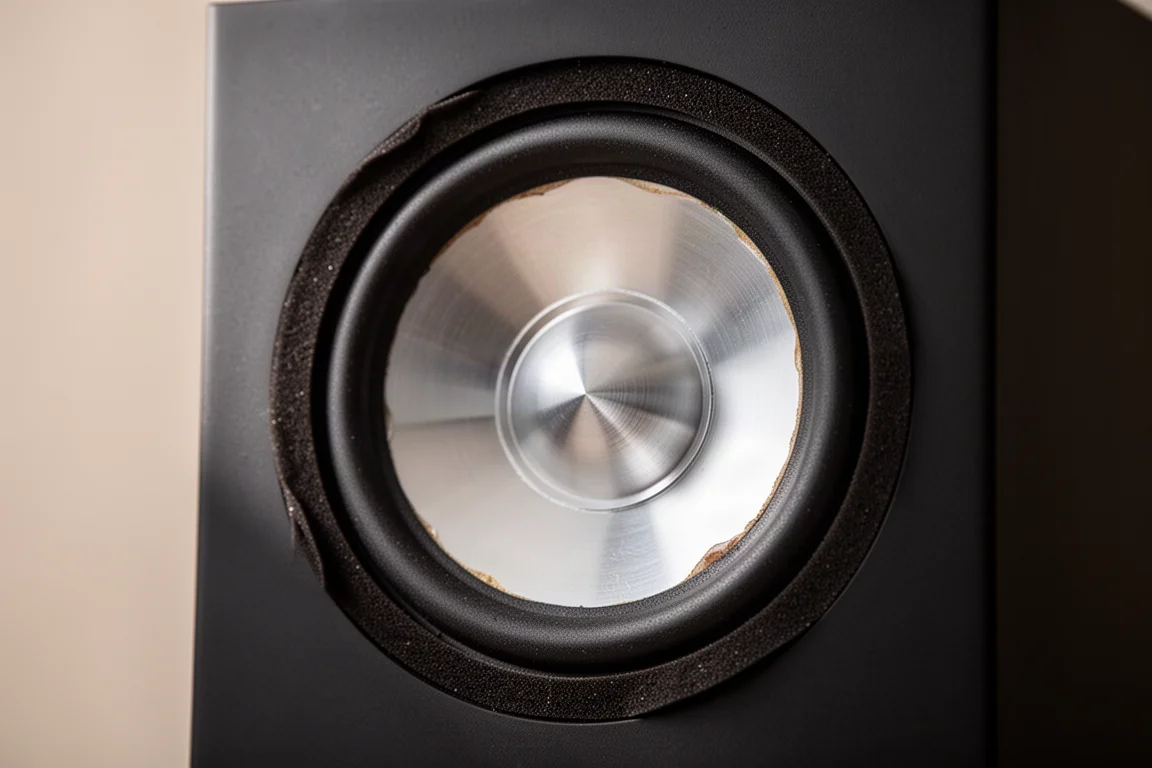
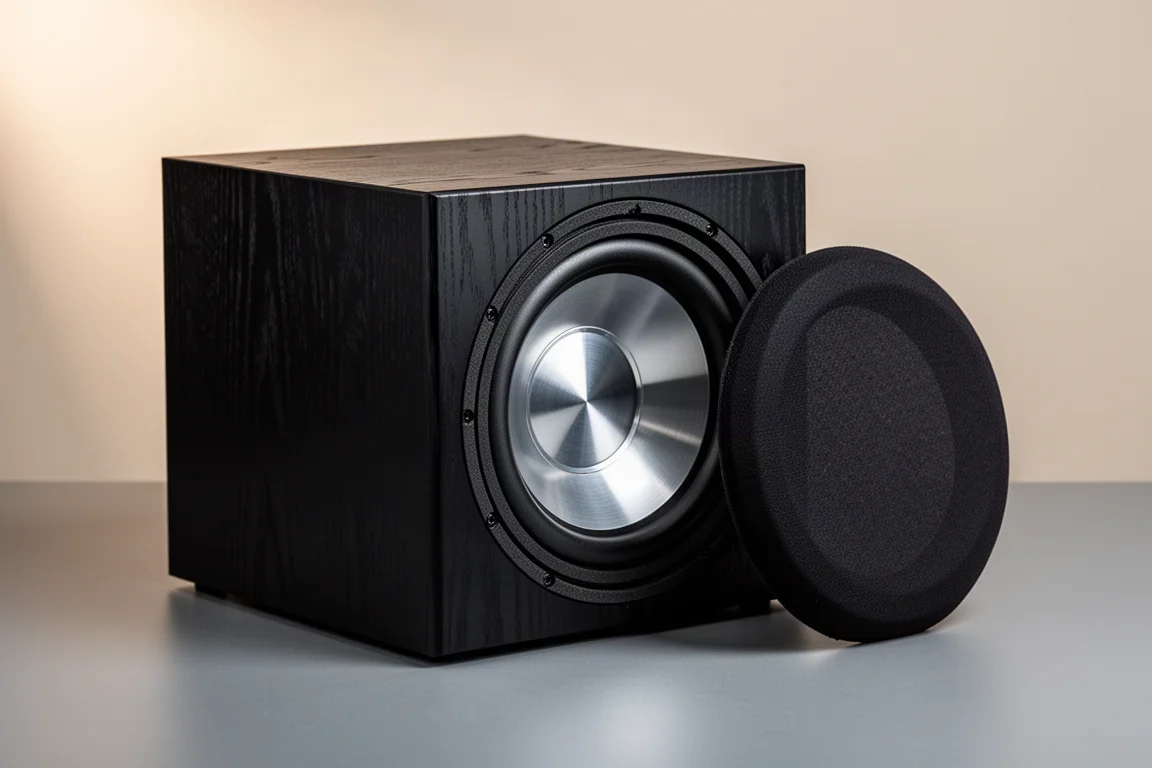
The BIC America F12 uses a black veneer cabinet and a grille that lifts away to reveal an aluminium cone with a foam surround. That surround is not the neatest piece of assembly work, with a slightly uneven edge where it meets the cone. The rear panel, on the other hand, is well equipped: subwoofer input, a switch for analog or digital receiver and pro logic receiver setups, volume, crossover, off/auto/on power, 0/180 phase, high-level inputs and outputs, and an externally accessible fuse that can be replaced without opening the cabinet.
On frequency response it does okay without ranking alongside the better cabinets, and its output capability is reasonably strong. The problem is an internal resonance in the region of 50 to 60 Hz.
That resonance is the kind of flaw that cannot be corrected later with placement or settings, and it is the reason this model is difficult to recommend despite a genuinely useful feature set.
Dayton Audio SUB-1200: Familiar Value
The Dayton Audio SUB-1200 uses a vinyl wrap over the cabinet and a small removable grille. The wrap was already peeling in a couple of places near the base, which says something about how the finish will hold up over time, though it is a cosmetic issue rather than a performance one. The amplifier panel includes auto on/off power, gain and crossover knobs, RCA inputs, high-level inputs and outputs, and a 0/180 phase control. Those high-level connections are a useful addition for anyone running a setup without a dedicated subwoofer output.
Response rolls off a little earlier than the strongest performers here, and the cabinet did not place near the top of the group. It ran without any functional problems, though, and at its typical price with free shipping it remains a sensible value.
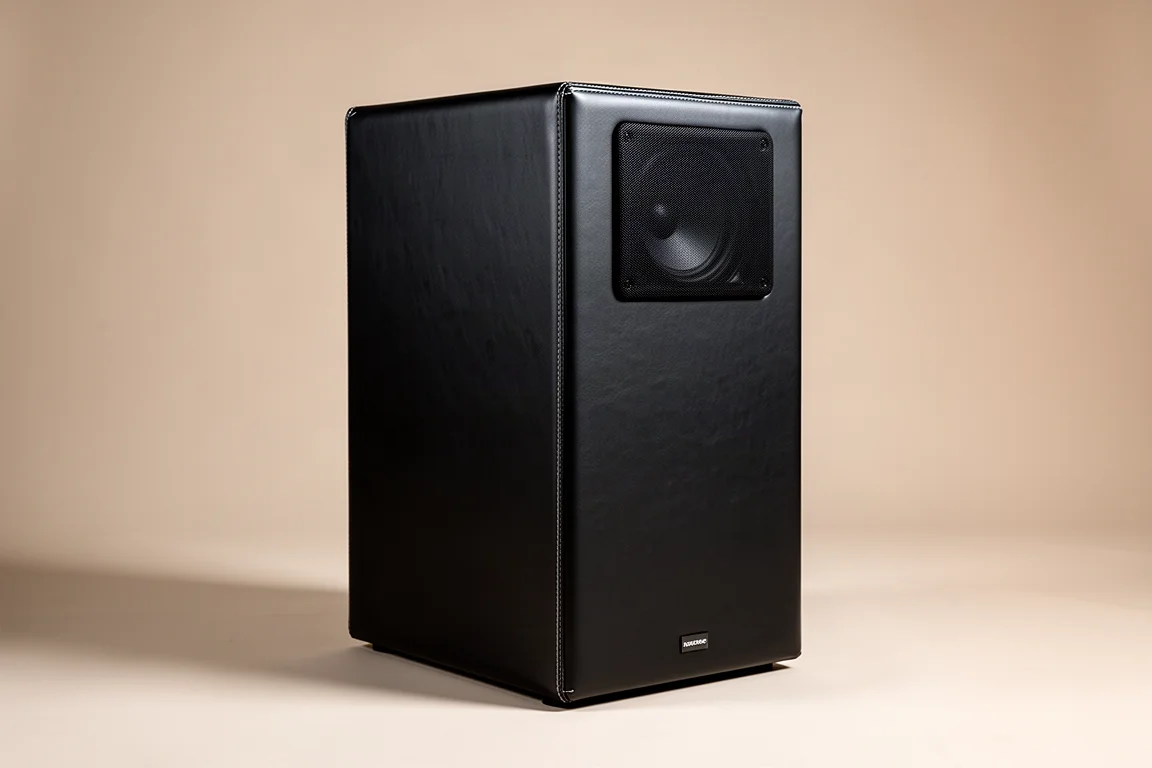
OSD Trevoce 12 DSP: Great Features, Limited Output
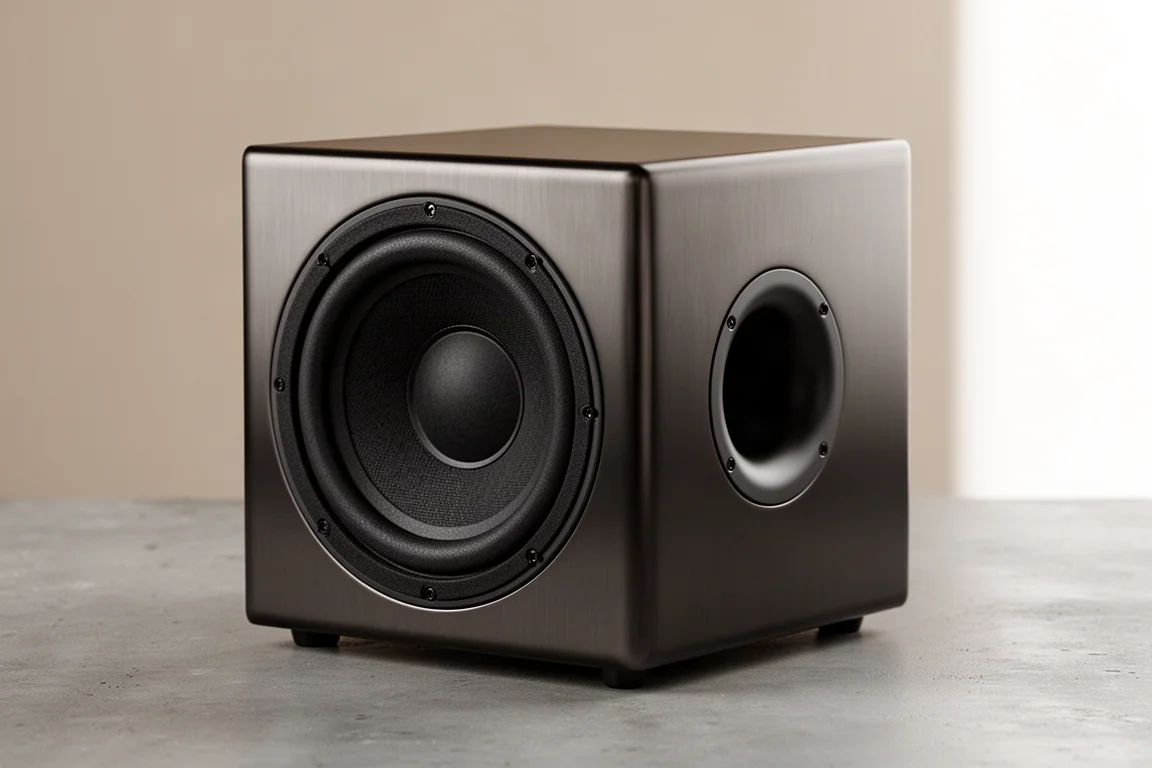
The OSD Trevoce 12 DSP has the best-looking finish of the six and takes a different acoustic approach: a passive radiator design with the main woofer on the front and passive radiators on the sides, rather than the vented cabinets used by the others. The plate amplifier provides high-level and RCA or LFE inputs, volume, a low-pass filter, 0/180 phase, an auto on/off switch, and DSP.
The DSP is the headline feature. It is controlled from a phone app and offers a wide set of parametric EQ bands, which is rare and genuinely useful at this price. The catch is output. This cabinet cannot match the others, particularly at lower frequencies, and measurements taken with the DSP enabled came out worse than with it switched off. With that little headroom to work with, EQ flexibility cannot close the gap.
Buying Advice: What to Consider Before You Choose
Start with the top pick if the price is right. The Infinity SUB R12 is the strongest all-round performer here, and it stays worth considering even if it climbs toward $250 or $300. If it is unavailable or too costly, the Jamo C912 is the alternative that holds up on linearity and quiet operation, despite lower output figures.
Two practical points matter as much as the model you choose.
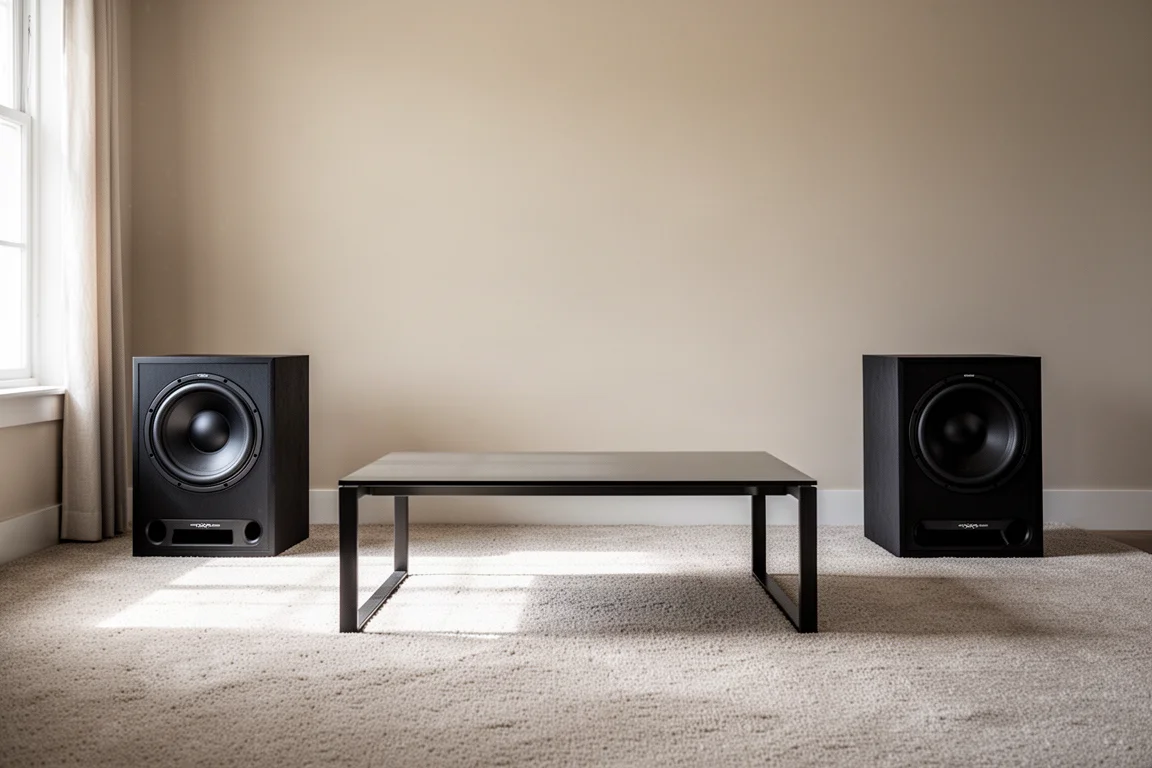
First, consider buying two subwoofers rather than one. A single subwoofer produces a response at the main listening position that can differ substantially from what everyone else in the room hears, which means guests get a very different experience from yours. Two or more cabinets smooth the response across multiple seats. If the budget will not stretch right now, waiting or adding a second cabinet later is a reasonable plan.
Second, think about floor space and foot space before committing. These are large cabinets, and placement flexibility is part of getting good results in a real room.
Prices also move. If a model you like has drifted upward, waiting a few weeks or a month often brings it back down.
Whichever model you end up with, matching it to the room and to how many people will actually sit in it will do more for the result than any single specification on a page.
Conclusion
Six budget 12-inch subwoofers, and a fairly clear order of merit. The Infinity SUB R12 leads on linearity and measured output. The Jamo C912 follows as the quieter, more linear alternative with lower peak numbers. The Klipsch R-12SW measures well but carries a reliability question worth weighing. The BIC America F12 has a resonance issue, the Dayton Audio SUB-1200 is a solid value without standing out, and the OSD Trevoce 12 DSP offers excellent DSP flexibility that its output cannot support. Buy the one that fits your budget and your room, and consider two if space and funds allow.
Further reading
Related Reviews
Subwoofers
Arendal 1961 Subwoofer 1S Review: Beautiful Build, Modest Punch at $1,000
A sealed $1,000 subwoofer with a gorgeous cabinet, plus three lower-priced alternatives that deliver more impact for movie nights.
Subwoofers
Arendal Sound 1723 2V Subwoofer Review: Dual 13.8-Inch Drivers Under $3,000
A flagship ported subwoofer with dual opposing 13.8-inch drivers, a 1,200W RMS amplifier, app-based DSP, and a 10-year warranty.
Subwoofers
Ascendo 16 Sub Active Sealed Review: Sealed Bass Built on Real Engineering
A close look at the Ascendo 16 Sub Active Sealed, a 16-inch sealed home theater subwoofer with independently verified measurements, a purpose-built driver, and genuinely controlled output.