Bookshelf Speakers
Buchardt S400 MKII vs ELAC Uni-Fi Reference UBR62: A Bookshelf Speaker Comparison
Two similarly voiced bookshelf speakers at very different prices, compared in a level-matched blind listening test with placement and amplifier pairing notes.
Introduction
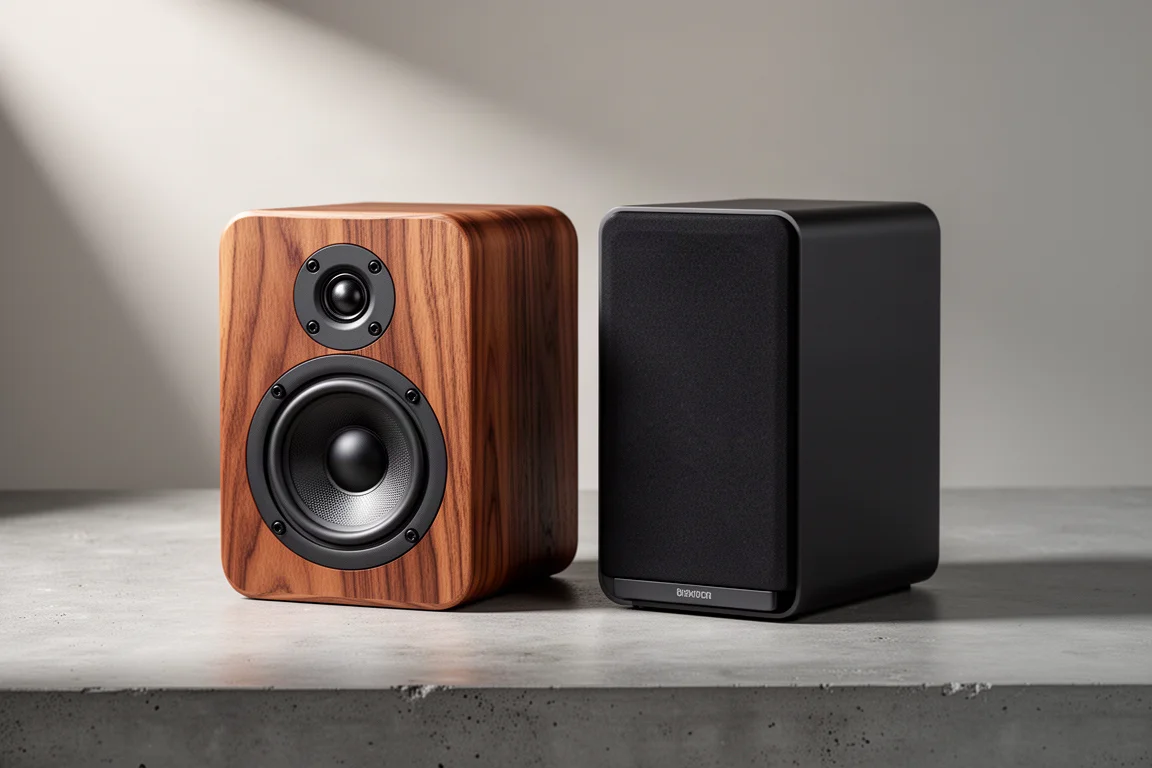
The Buchardt S400 MKII and the ELAC Uni-Fi Reference UBR62 make an unusually fair comparison. They share a similar tonal balance and a similar overall character, but the Buchardt costs roughly twice as much as the ELAC. That price gap turns a straightforward listening comparison into a value question: does the more expensive speaker do enough to justify the difference, or does the cheaper one get close enough that the premium stops making sense?
Both speakers were set up in the same room, on the same electronics, at a matched volume, and compared across ten familiar tracks in a blind listening test. The short answer is that the Buchardt won, and won consistently. The longer answer is more interesting, because the gap between the two speakers is narrower than the price difference suggests.
How We Compared Them
Fair comparisons start with fair levels. Both speakers were measured at 1 kHz with a dB meter and matched so that neither had a loudness advantage, then played at a normal listening level of around 76 dB. Ten well-known tracks were used, and each pass was a preference choice rather than a guess at which speaker was playing. That distinction matters: the question was never which speaker is which, but which one sounded better on that particular piece of music.
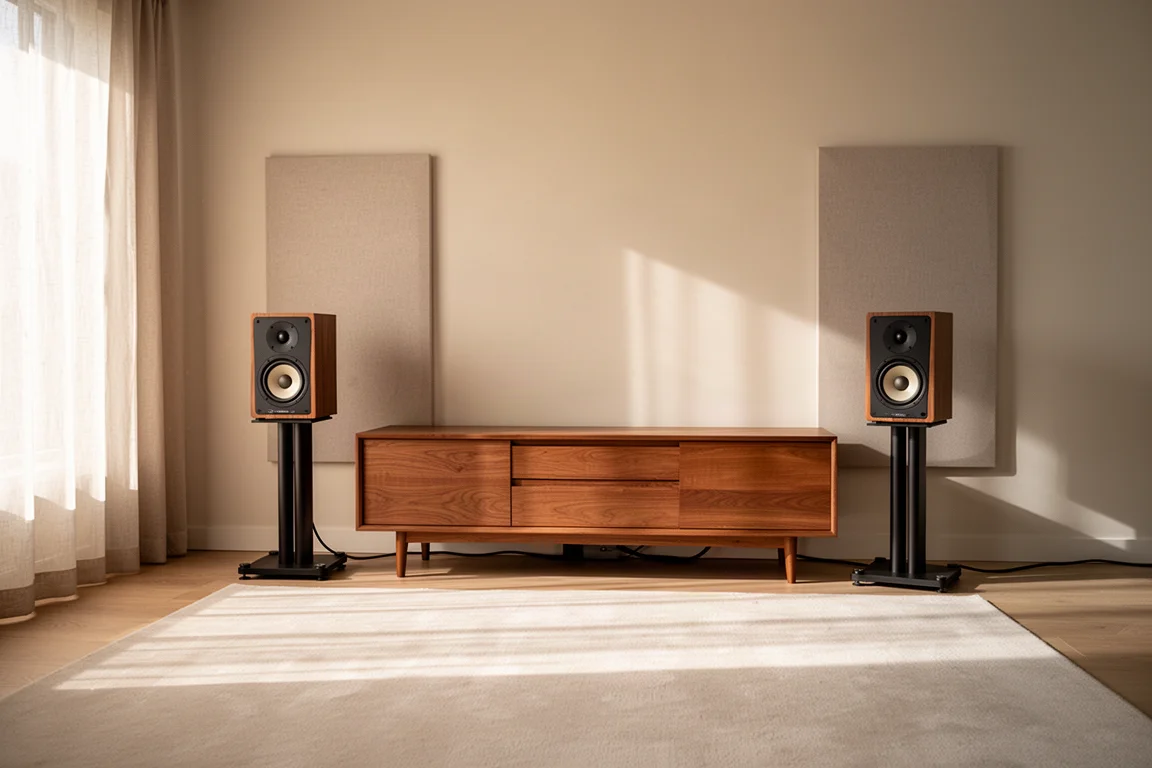
The setup was deliberately domestic. Both speakers sat about one foot from the rear wall with diffusion panels behind them, and the rest of the chain stayed in the same price class as the speakers, including the internal DAC of a compact streamer and plain, affordable cabling. Neither speaker is designed for near-field listening, so both were heard from a normal seated distance.
Buchardt S400 MKII: The More Refined Performer
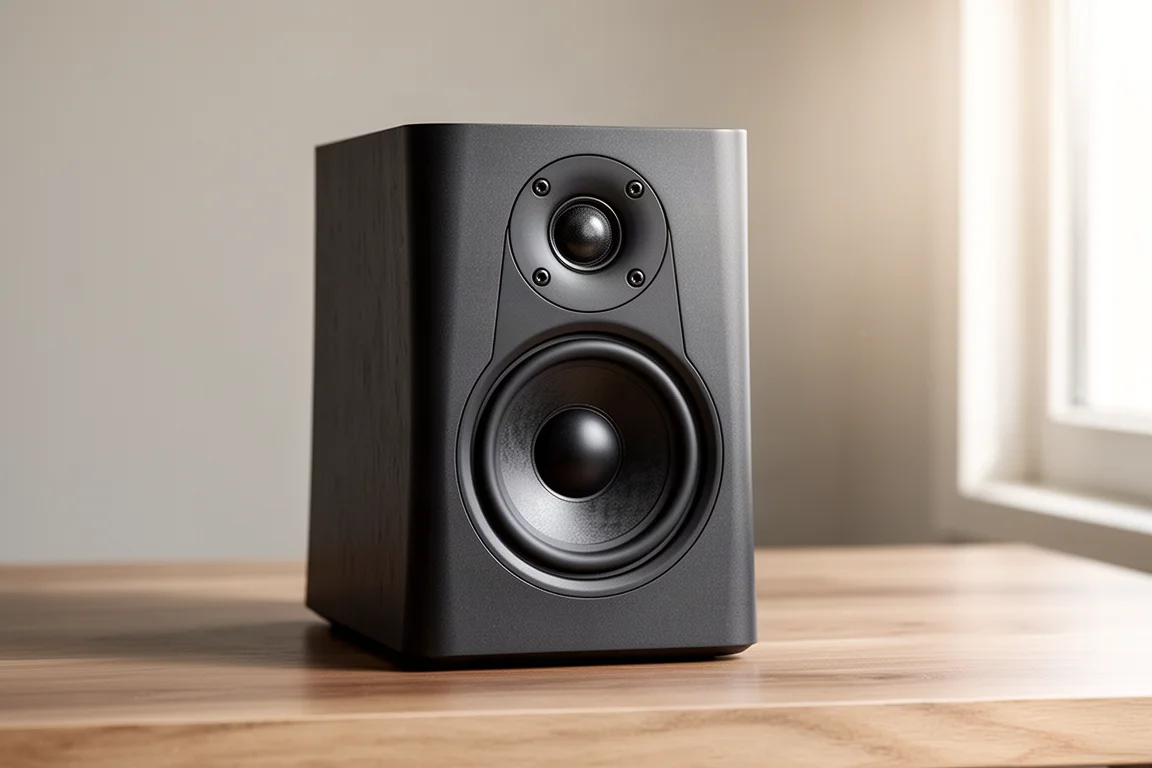
The S400 MKII is a compact passive bookshelf speaker, available in finishes that include a rosewood veneer. It is designed to sit fairly close to the wall behind it, which reinforces the low end, and it performs best when it has a little room to breathe in front of the listener.
That combination produces something unusual for a cabinet this size. Bass extension reaches well into sub-bass territory, and the speaker renders low notes as distinct events rather than a general rumble. On a track with two clearly separated bass notes, one higher and one much lower, the S400 MKII tracked both cleanly, delivering the kind of weight usually associated with a floorstander.
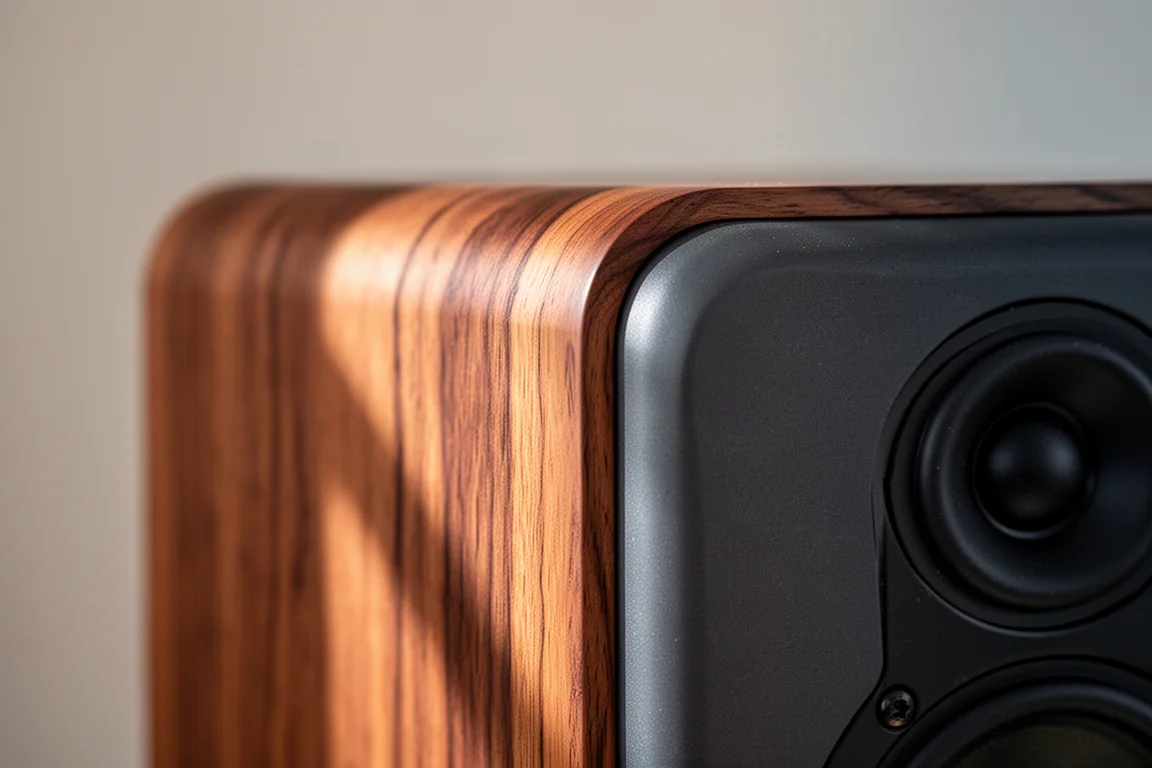
The rest of the range follows the same philosophy. Vocals are smooth rather than edgy, and the treble extends without ever shouting. Instrumental tone, particularly the bite of an electric guitar, comes across as realistic and immediate. Imaging is pinpoint and the soundstage is wide, so instruments hold their positions even on busy recordings.
Two things are worth knowing before buying. First, listeners who prefer a bright, forward top end may find the presentation a little polite; nothing is missing from the information, but it is delivered without emphasis. Second, the speaker needs a transistor amplifier with genuine current delivery. Tube amplification is a poor match, and very smooth-sounding solid state gear can make the S400 MKII sound softer than it should.
ELAC Uni-Fi Reference UBR62: The Value Alternative
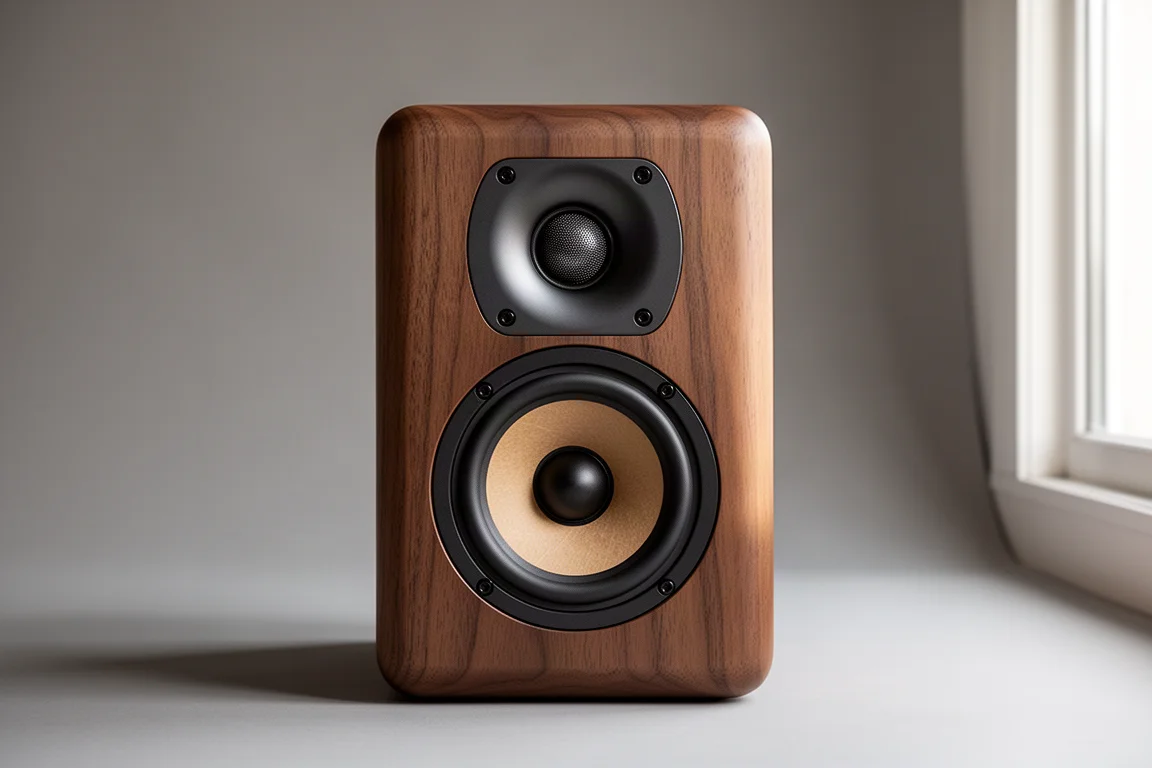
The Uni-Fi Reference UBR62 sits at roughly half the price and shares much of the same character. It is a genuinely enjoyable speaker with a similar balance, which is exactly why the comparison is useful. On most material it sounds like a close relative of the Buchardt rather than a budget substitute.
Where it gives ground is at the extremes. Low-frequency extension and impact are both reduced, so deep bass lines lose some of their physical presence, and the midrange can sound a little grainier and more forward by comparison. Imaging and soundstaging are also less precise.
It is not a one-sided story, though. On one vocal-led track the ELAC was the preferred speaker, because its extra body and weight suited that recording better. That single result is a useful reminder that preference is not purely a matter of technical capability.
What the Listening Test Revealed
Across ten tracks, the Buchardt S400 MKII was chosen nine times by one listener and eight times by the other. Both listeners described the same differences, which is a good sign that the result reflects the speakers rather than the room or the moment. Better imaging and separation, deeper bass extension, greater low-end impact, and a smoother, more refined midrange all pointed the same way.
The clearest gap was in the low end. The ELAC simply did not extend as low and did not hit as hard, and that difference showed up early in most tracks rather than only on bass-heavy material.
None of this makes the ELAC a weak speaker. It is a strong performer in its own right, and the two models sit in the same family of sound. The difference is one of degree: the Buchardt takes a familiar signature and pushes it further in every direction, rather than offering a fundamentally different presentation.
Placement, Room, and Amplifier Pairing
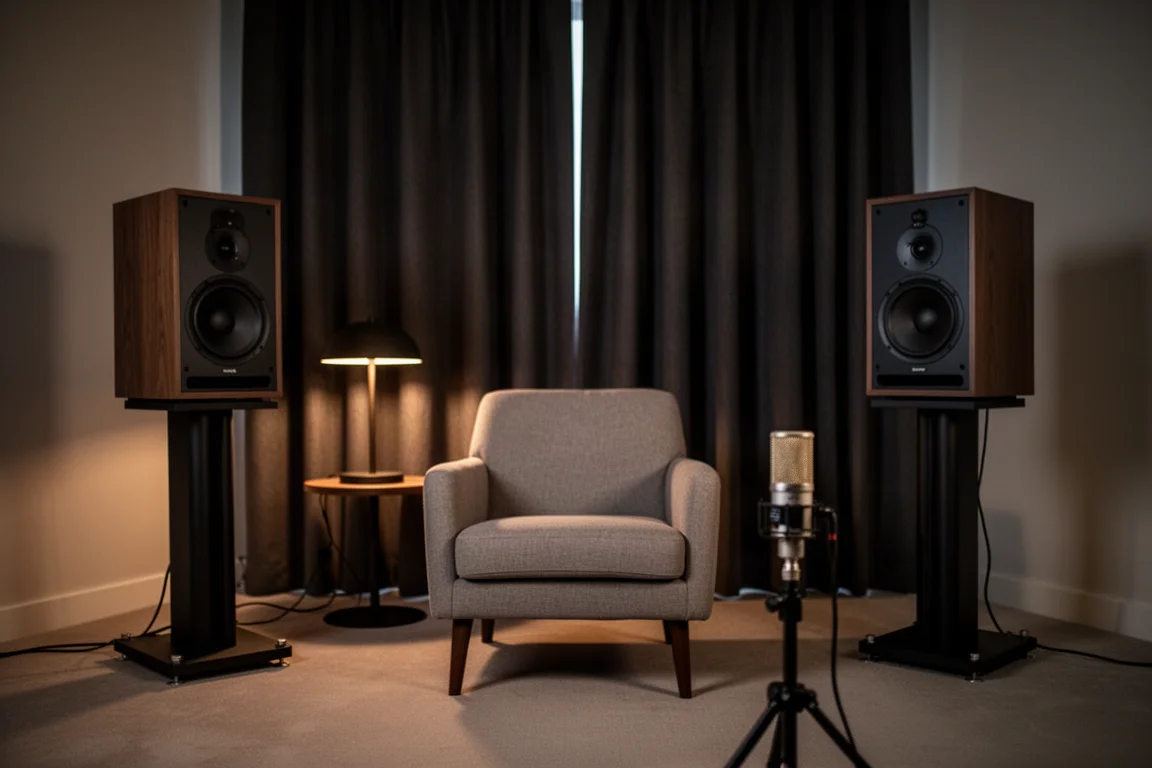
Placement affects both speakers, but not in the same way. The Buchardt S400 MKII actually benefits from being close to the wall behind it, because that placement reinforces its bass. The ELAC is less comfortable there. In this comparison, one foot from the wall was the best compromise for the pair, which is a realistic distance in most rooms.
Distance from the listener matters too. Both speakers stay cohesive at around two metres, but they improve as you move further back and give them room to breathe. Low-frequency bass needs some space to develop, so near-field listening mostly reveals mid-bass rather than true extension. That is one likely explanation for the very different impressions some listeners report from small rooms.
Volume plays a part as well. At levels below roughly 70 dB, the Buchardt’s smooth top end can seem slightly muted, and a subwoofer helps restore the sense of scale. When adding one, a subwoofer that extends low and linearly is a better match than a model with a pronounced mid-bass lift, which can blur vocals over long sessions. On amplification, transistor designs remain the safer choice for the S400 MKII.
Buying Advice: Is the Buchardt Worth the Extra Cost
The honest framing is that the Buchardt S400 MKII is an upgrade in essentially every area: imaging, soundstaging, tone, bass, treble, smoothness, extension and refinement. The ELAC is not beaten in one category while matching the Buchardt in the rest; it is beaten across the board, by degrees.
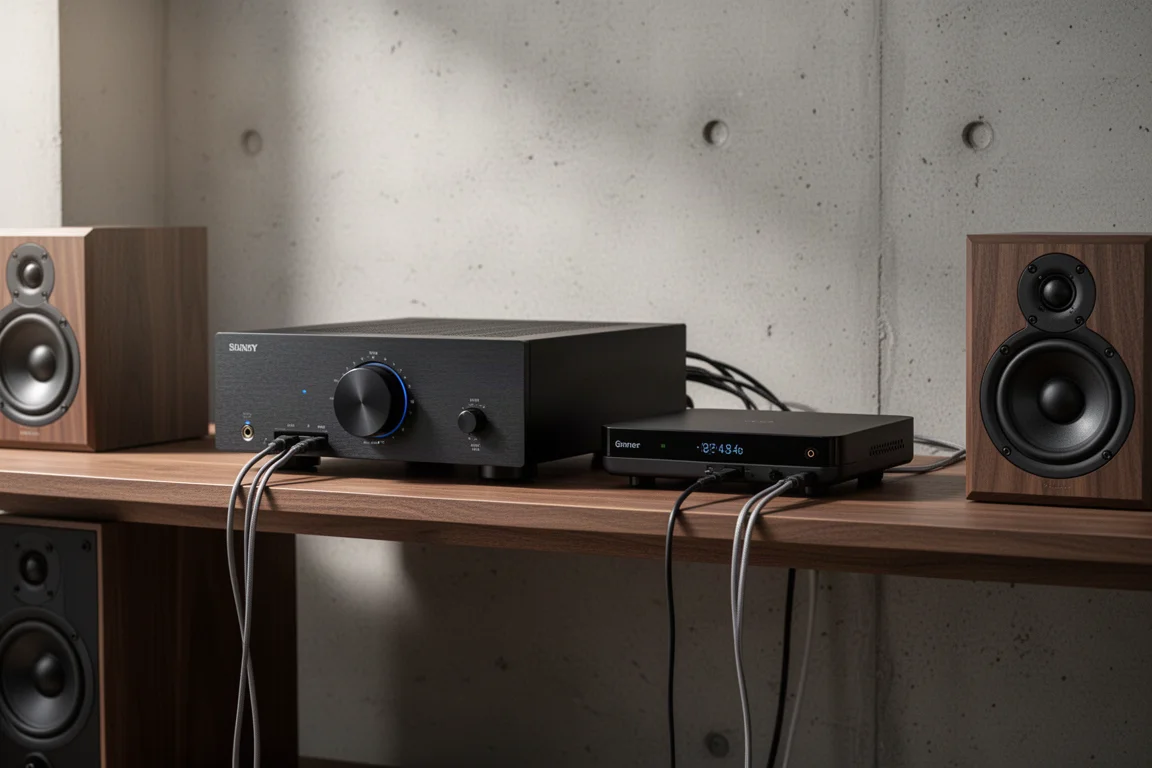
Whether that justifies roughly double the price depends on the rest of the system. With a resolving amplifier and DAC, the differences are easy to hear and the premium is easier to accept. With more modest electronics, the ELAC will close much of the gap in practice.
If you already own the Uni-Fi Reference UBR62 and like its character, the S400 MKII is a logical step up within the same sonic family rather than a change of direction. If the budget is fixed, the ELAC remains a genuinely satisfying speaker that leaves money for a subwoofer and careful setup.
Conclusion
Two speakers, one signature, two prices. The ELAC Uni-Fi Reference UBR62 delivers a large part of the Buchardt S400 MKII experience for roughly half the money, which makes it one of the more sensible value picks in its class. The S400 MKII is still the better speaker, and it is better in almost every way that matters to a listener: deeper bass, smoother treble, more precise imaging and a more refined midrange.
If your system is already built around quality electronics and you want the most capable bookshelf speaker of the two, the Buchardt is the clear choice. If you are assembling a system on a tighter budget, the ELAC takes you into the same sonic territory and leaves room for the accessories that make a real difference.
Further reading
Related Reviews
Bookshelf Speakers
Acoustic Energy A100 Mark II Review: A Compact Standmount With an Expansive Soundstage
The Acoustic Energy A100 Mark II brings clarity, natural tonality and a wide soundstage to an entry-level standmount, with a few setup details worth knowing first.
Bookshelf Speakers
Acoustic Energy AE-100 Mark II Review: Compact Bookshelf Speakers With Standout Imaging
A compact British two-way bookshelf speaker with deep, layered imaging, fast bass, and a slight treble lift to weigh against a crowded $500 field.
Bookshelf Speakers
Acoustic Energy AE100 MK2 Review: Measured Performance and Four Alternatives
A close look at the Acoustic Energy AE100 MK2 bookshelf speaker, what its measured performance reveals, and four alternatives with different trade-offs.