Hi-Fi Speakers
Buchardt S400 Mark II vs KEF LS50 Meta: Which Stand-Mount Speaker Fits Your Room?
A side-by-side look at two compact stand-mount speakers: one sold direct with deeper bass and a fuller sound, one coaxial design built for transparency and nearfield listening.
Introduction
The Buchardt S400 Mark II and the KEF LS50 Meta are both compact stand-mount loudspeakers built for serious two-channel listening, and they reach the same buyer from two very different directions.
The S400 Mark II is designed in Denmark and manufactured in Indonesia. It is sold direct for around 2,000 euros per pair, with free shipping worldwide, a 45-day home demo, and a 10-year warranty. The LS50 Meta is designed in the UK and made in China, and it reaches listeners through a dealer and distributor network. In Germany it sells for roughly 1,300 euros per pair, which makes it the less expensive speaker of the two.
That price gap matters, but it is not the deciding factor. Driver layout, low-frequency behaviour, and the space each speaker needs around it will shape what you actually hear, and they will shape how easy the speakers are to live with.
What to Compare in a Stand-Mount Speaker
Four things separate these two designs in daily use.
The first is driver architecture. The S400 Mark II places two conventional drivers on a canted front baffle, while the LS50 Meta uses a coaxially aligned driver in which the tweeter sits at the centre of the mid-bass cone. Coaxial alignment changes how close you can sit and how forgiving the speaker is about placement.
The second is how each cabinet extends its bass. Buchardt uses a large passive radiator rather than a port. KEF uses a rear bass reflex port and supplies port bungs so the speaker can be run quasi-sealed.
The third is electrical behaviour. Nominal impedance and sensitivity determine which amplifiers each speaker rewards.
The fourth is the sales model itself, because it decides what you pay, what warranty you receive, and how straightforward it is to get help if something goes wrong.
Buchardt S400 Mark II: Direct-Sale Value and a Bigger Sound
The S400 Mark II carries a 0.74-inch tweeter, deliberately smaller than average. Buchardt states that a smaller tweeter gives better off-axis response, and it sits inside a large aluminium waveguide that controls its dispersion. Below it is a six-inch paper mid-bass driver. The Mark I used an aluminium mid-bass unit, so paper is a change for this generation.
The layout is unusual in two ways. The mid-bass driver sits above the tweeter rather than below it, and the front baffle is canted backwards so the mid-bass driver sits a little further from the listener than the tweeter. Buchardt crosses the two drivers at 1.8 kHz, a lower figure than the KEF manages, which is possible because of the tweeter and waveguide design.
At the back there is no port. Instead, the S400 Mark II uses a passive radiator measuring eight inches across. Combined with a larger cabinet and a larger mid-bass driver, that helps it reach lower than the LS50 Meta. It begins to roll off as it approaches 30 Hz, where the KEF rolls off in the mid-40s.
The audible result is a speaker that sounds bigger and more muscular, and meatier with voices, particularly male voices. It also throws a wider and taller soundstage, and its slightly richer, warmer balance makes it a comfortable match for a broader range of electronics.
Buchardt rates it nominally at 4 ohms, which makes it a more current-hungry load, but its 88 dB sensitivity is three decibels higher than the KEF, so in that sense it is the easier speaker to drive. Its own stands use mid-century modern legs and cost around 400 euros per pair.
KEF LS50 Meta: Transparency and Nearfield Flexibility
The LS50 Meta is built around a coaxially aligned driver system that KEF calls Uni-Q, now in its twelfth generation. A five-inch mid-bass cone carries an aluminium dome tweeter at its centre, with a tangerine waveguide around the tweeter and the cone itself acting as an additional waveguide. The drivers cross over at 2.1 kHz.
Because the tweeter and the mid-bass unit share a single acoustic centre, the two drivers never need a listening distance in order to coalesce. That makes the LS50 Meta far better suited to nearfield listening, to very small rooms, and to setups where the speakers must sit close to the front wall. In a larger room, the supplied port bungs allow quasi-sealed operation from the rear bass reflex port.
On character, the LS50 Meta has the edge in top-to-bottom transparency. It sounds like a clean, clear window onto the recording, and it is crisper at the top end, with a little more detail and specificity in the depth domain. The trade-off is low-frequency weight, since it rolls off in the mid-40s rather than near 30 Hz.
Its cabinet fit and finish is a step above the Buchardt, and the same applies to the matching S2 floor stand, which sells for around 450 euros per pair. The LS50 Meta is nominally an 8-ohm speaker and, with lower sensitivity than the S400 Mark II, it rewards an amplifier with a slightly rounded character, such as a 50-watt-per-channel integrated.
Sound Character: Warmth Versus Transparency
Describing these two side by side comes down to a trade between weight and clarity. The S400 Mark II is the richer and warmer of the pair. It fills a room more easily, gives voices more body, and keeps a sense of scale that compact stand-mounts often lose.

The LS50 Meta goes the other way. It gives up some low-end heft in exchange for a cleaner window onto the recording, a crisper top end, and more precision in the depth of the soundstage. Neither approach is a fault. They simply suit different rooms, different amplifiers, and different listening habits.
Room Size, Placement, and Nearfield Listening
Placement decides which of these speakers will work in your space. The S400 Mark II needs a listening distance so that its two separate drivers coalesce properly at the listening position, and it does not respond well to being pushed against the front wall. Give it room to breathe.
In a room measuring around six metres by five metres, the S400 Mark II is the more enjoyable speaker of the two. It sounds less studious, with more dynamic bounce and get-up-and-go. The LS50 Meta is the more flexible choice in cramped conditions, on a desk, or in a room where the speakers have to sit close to the wall behind them.
Build Quality, Cabinetry, and Stands
Both speakers are well made, but the LS50 Meta has the edge in fit and finish, and that holds true even though it is the cheaper speaker. Its cabinet feels a level above the Buchardt’s, and the same gap shows in the stands. The KEF S2 floor stand is exceptionally well put together at around 450 euros per pair, while the Buchardt stands, at around 400 euros per pair, are perfectly reasonable rather than exceptional.
The S400 Mark II’s walnut veneer has a matte finish that looks fine without standing out. Nothing about it feels cheap, but it does not match the precision of the KEF cabinet.
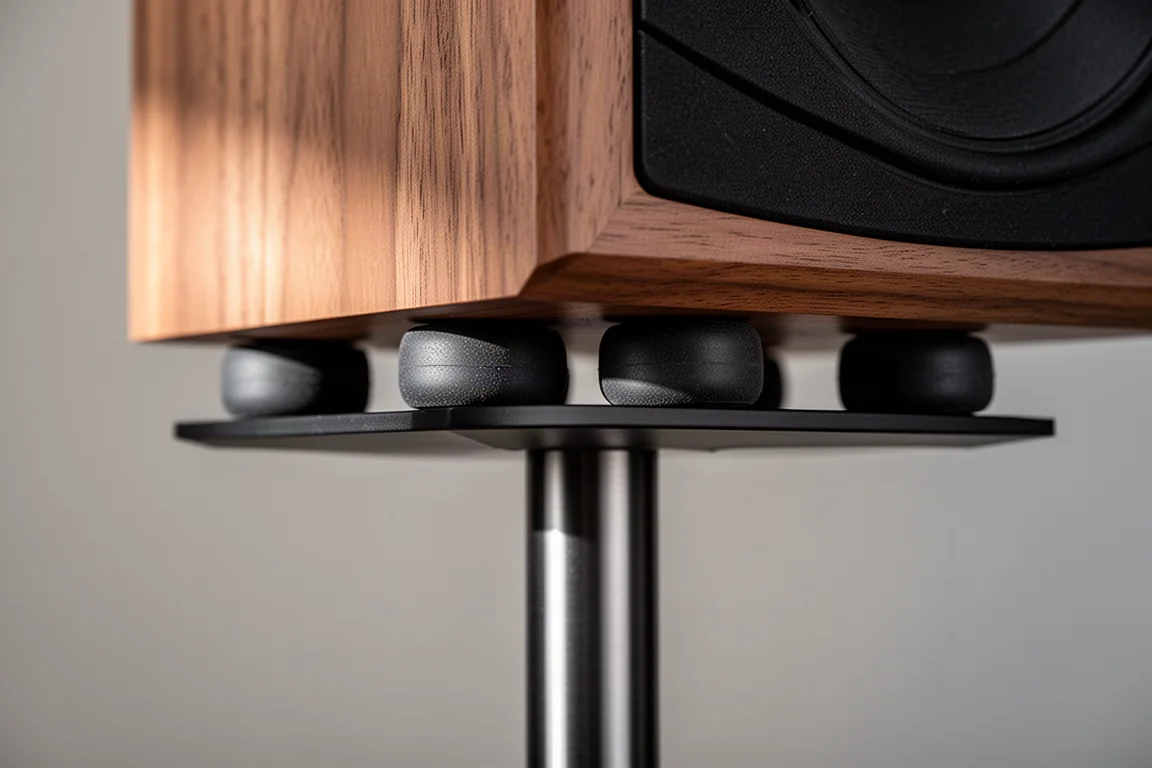
Buchardt supplies damping pads that sit between the top of the stand and the base of the cabinet. They are stretchy in all directions and made in Germany, and they allow the speaker to shift slightly when nudged, which decouples it from the stand and makes it harder to knock off accidentally.
Amplifier Matching and Impedance
The numbers here can be read two ways. The S400 Mark II is nominally a 4-ohm design, so it asks more current from an amplifier, but its 88 dB sensitivity is three decibels higher than the LS50 Meta, so it needs less power for a given loudness. In practice, the Buchardt works well with a more analytical amplifier, while the KEF rewards a slightly more rounded one. The LS50 Meta is nominally 8 ohms, and a 50-watt-per-channel integrated with a warmer tonal balance is a good match.
Which Speaker Should You Buy?
Choose the Buchardt S400 Mark II if you have a medium or large room, want deeper bass and a livelier, more dynamic presentation, and value buying direct. The free worldwide shipping, 45-day home demo, and 10-year warranty are meaningful advantages, and the direct model is precisely why the speaker lands near 2,000 euros rather than the higher figure a dealer and distributor chain would add. The trade-off is service: if something goes wrong, support in your own territory is less straightforward, and a repair may mean shipping the speaker back to Denmark.
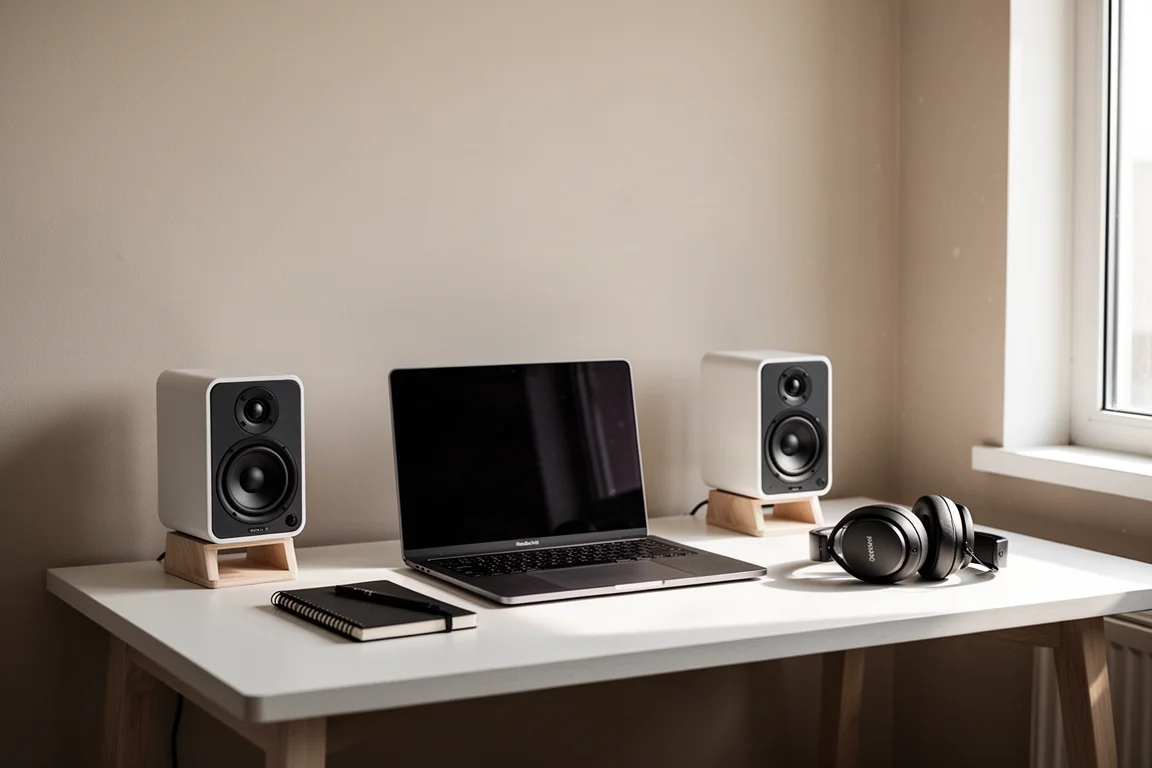
Choose the KEF LS50 Meta if you listen nearfield, work in a small room, or need speakers that can sit close to the wall behind them. It is the more transparent and more crisply detailed speaker, it is cheaper at the till, and buying through a dealer network makes local support simpler. If you have the space and want the fuller, more energetic sound, the Buchardt is the stronger performer overall.
Conclusion
These are two genuinely different answers to the same question. The S400 Mark II trades a little transparency for weight, scale, and a more forgiving, energetic character, and it arrives with unusually generous direct-sale terms. The LS50 Meta trades low-end heft for clarity, precision, and placement flexibility, with better cabinetry and easier local support. Match the speaker to your room and your amplifier, and either one will reward the decision.
Further reading
Related Reviews
Hi-Fi Speakers
1723 THX Tower vs 1528 Bookshelf: Which Speaker Fits Your Room?
Two speakers at roughly the same price, built very differently. How the 1723 THX tower and the 1528 bookshelf compare on construction, bass, power needs, and sound.
Hi-Fi Speakers
Acoustic Energy AE 300 Review: Deep Bass From a Compact Standmount
A two-way standmount with real wood veneer, surprising low-end weight, and a warm, easygoing character. Here is what to know before buying.
Hi-Fi Speakers
Acoustic Energy AE1 40th Anniversary Review: A Modern Take on a British Classic
A compact standmount that revives a 1980s favorite with all-new parts, a warm mid-centric balance, and a price of £1,499 per pair.