Hi-Fi Speakers
Buchardt P300 Review: A Compact Stand-Mount Speaker With Real Bottom End
A two-way stand-mount speaker with a rear passive radiator, a warm and full tonal balance, and enough bass weight to fill a room without a subwoofer.
Introduction
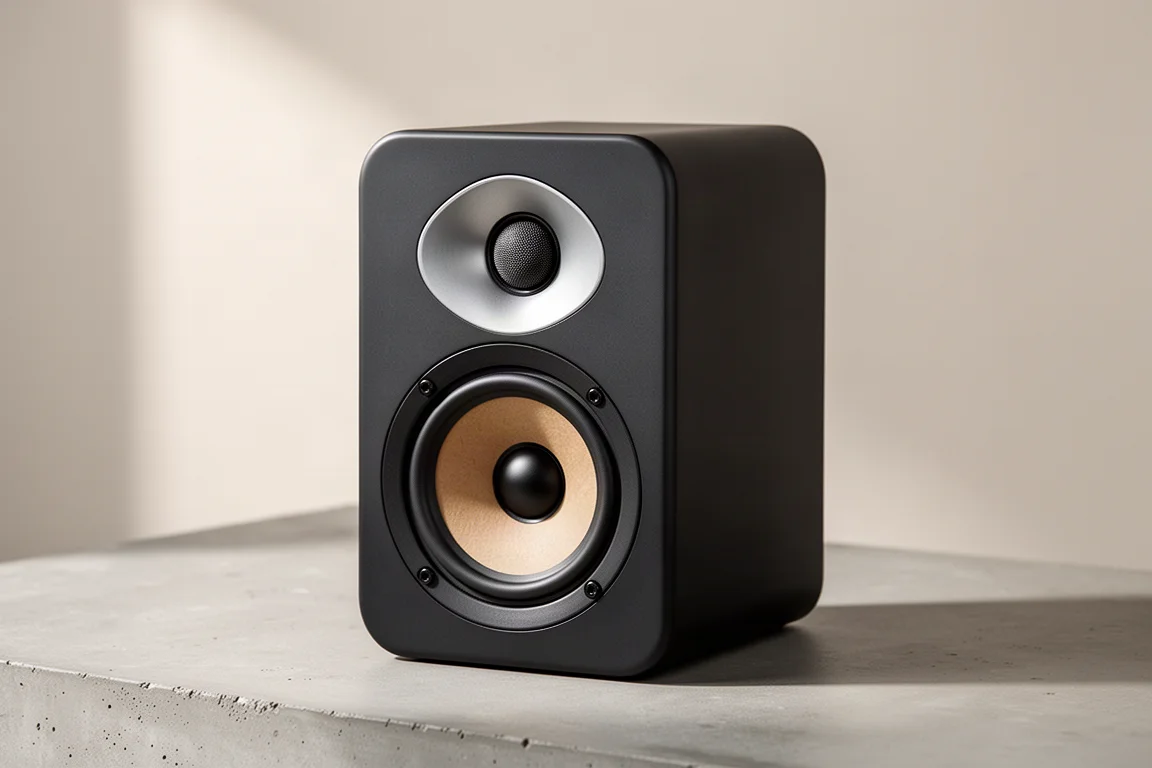
Two-way stand-mount speakers are one of the most crowded categories in hi-fi, so a new model has to bring something specific to earn a place in a small room. The Buchardt P300 is a compact two-way with a rear passive radiator, a 0.74-inch fabric dome tweeter loaded into a waveguide, and a six-inch paper cone woofer. Buchardt designs its speakers in Denmark, sells them direct to listeners around the world, and has the P300 built in Indonesia, which is stated plainly on the back of the cabinet.
The most interesting thing about the P300 is how much it shares with a more expensive stablemate, the Buchardt S400 Mark II. The two speakers use the same cabinet construction, the same tweeter and waveguide, and the same passive radiator, yet they do not sound the same. Understanding where they converge and where they part ways tells you a great deal about what the P300 is and who should buy it.
Who the Buchardt P300 Is For
The P300 suits listeners who want a small speaker that behaves like a larger one. Its rear passive radiator helps it produce more low-frequency output than a typical stand-mount of this size, which makes it a sensible choice for rooms where a subwoofer is impractical and for anyone who listens to bass-heavy material alongside acoustic, vocal and jazz recordings.
It is also a natural fit for a two-channel film setup. A pair of P300s can carry dialogue and music for a television without a centre channel, and because the speaker is sold both singly and in pairs, an odd number can be used across a five-channel system.
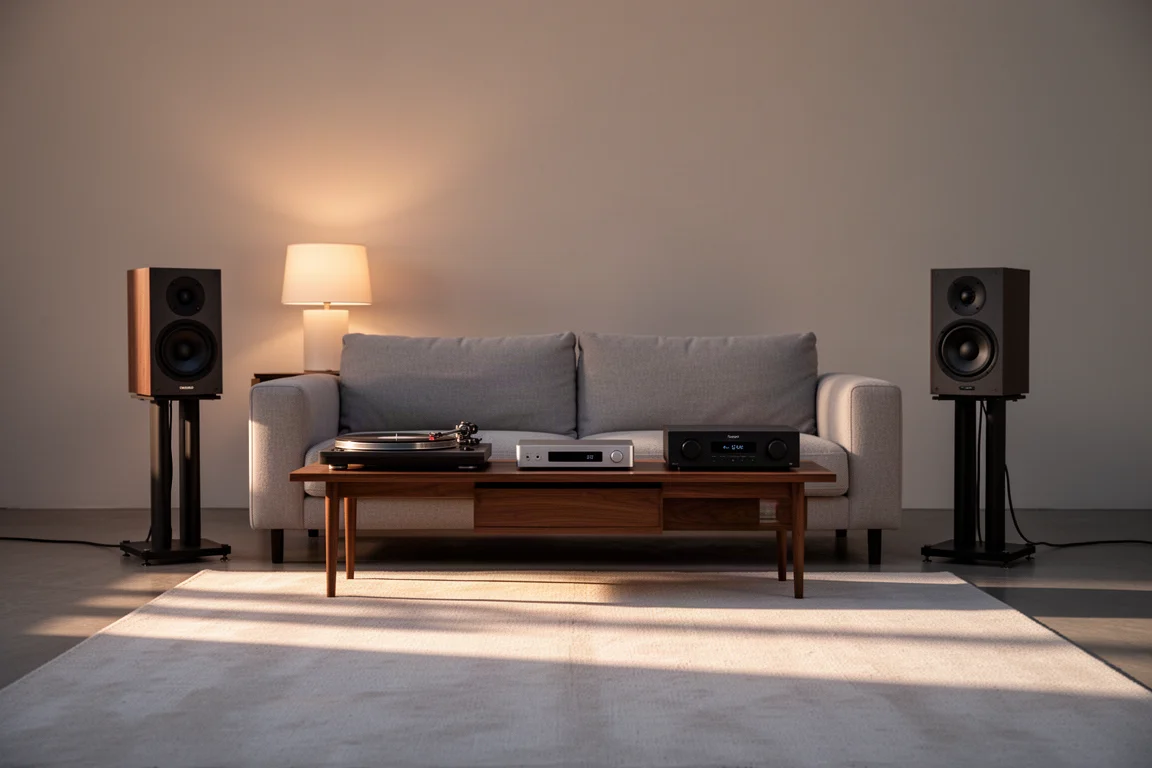
One detail shapes who should buy it. The P300 is a four-ohm speaker, so it wants an amplifier that is comfortable driving a four-ohm load. Plenty of good integrated and power amplifiers are, but an inexpensive receiver is unlikely to be the right partner.
Sound Quality: Warmth, Bass, and Imaging
The first thing that stands out is bass. For a cabinet this size, the P300 produces a surprising amount of low-frequency weight, and the passive radiator is doing much of the work. The overall tonality leans warm and full. It is not soft or flabby, but there is genuine heft behind the midrange, which sounds natural rather than forced, and the treble stays clear without becoming fatiguing over a long session.
Imaging is another strength. The P300 presents a wide wall of sound that moves forward into the room rather than sitting flat between the cabinets, and it releases music into the space in a way that does not read as a typical small two-way design.
Played loud, it stays composed. Driven by a Class AB stereo power amplifier rated at 100 watts per channel into eight ohms and 200 watts into four ohms, the speaker reached the low 90 dB range without any sense of strain and never sounded as though it was working hard.
Build, Finishes, and Room Placement
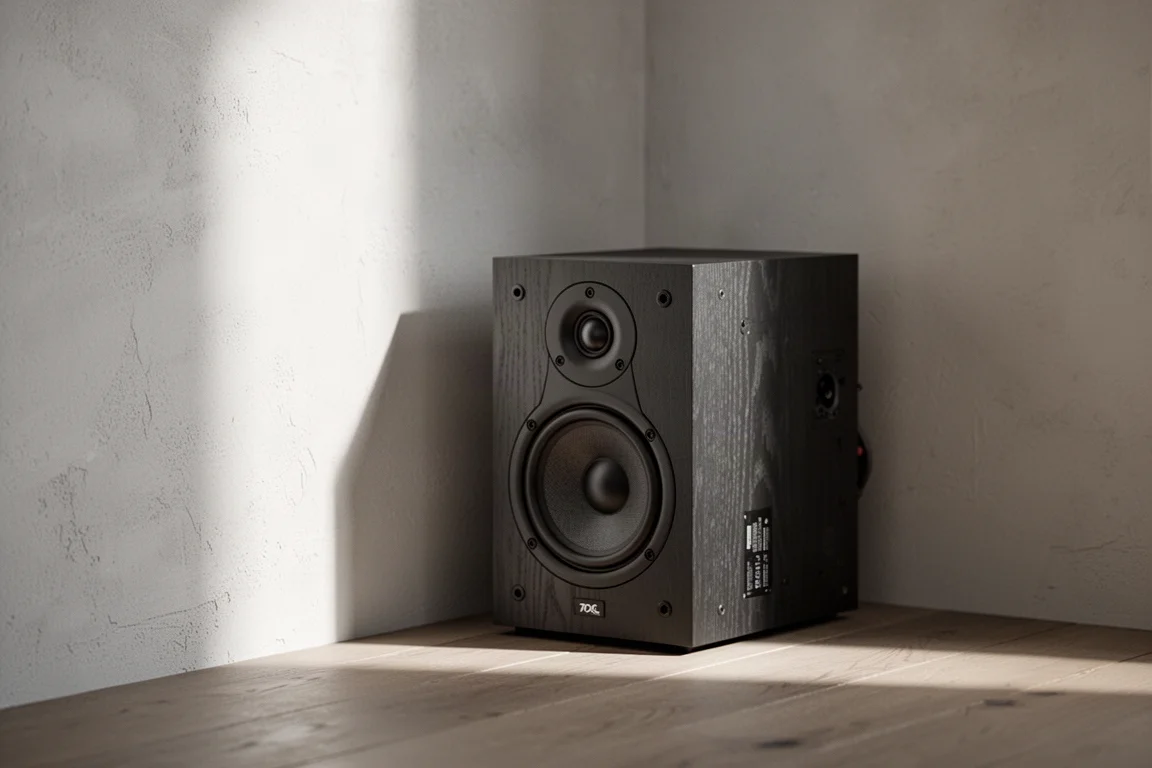
Build quality is high. The cabinet matches the construction used for the S400 Mark II, including the internal bracing, and the speaker feels solid and carefully assembled. The 0.74-inch fabric dome tweeter and its waveguide are shared with that model, as is the five-inch by eight-inch passive radiator on the rear panel. The six-inch paper cone woofer is where the two designs begin to separate, because the S400 Mark II uses a higher-quality woofer of the same size.
The P300 is offered in a range of painted finishes rather than vinyl wrap, which is worth noting at this price.
Placement matters more than usual here. Because the passive radiator sits on the back and moves a good deal of air, the speaker needs real clearance from the wall behind it. A few inches will not do. One foot is the practical minimum, 18 inches works well, and three and a half to four feet is better still.
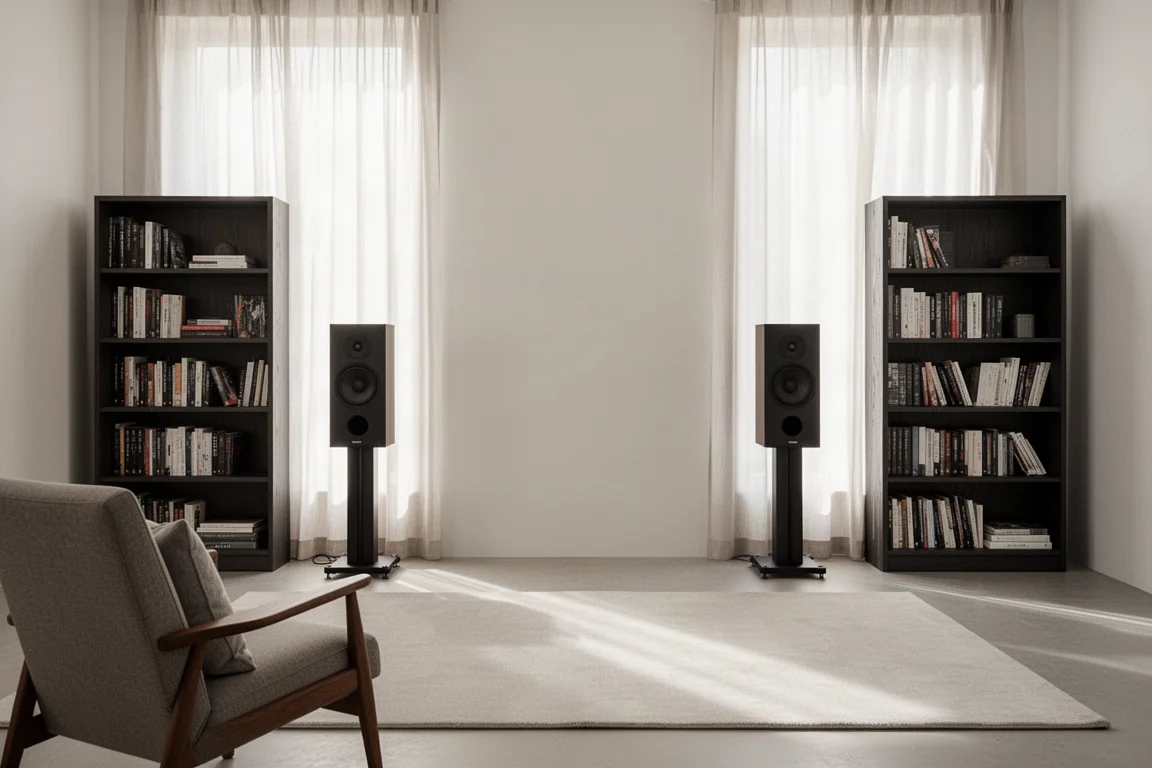
Beyond that clearance, the P300 is undemanding. It is compact enough for a small room, it can be bought as a single unit or as a pair, and the cabinet can be laid on its side in landscape orientation if a horizontal centre channel is needed in a multi-channel setup.
Amplifier Matching and Everyday Use
A four-ohm load is not a problem, but it is a decision point. During testing the P300 was driven by three very different amplifiers: the Emotiva TA2 integrated amplifier, a Vidar 2 stereo power amplifier rated at 100 watts per channel into eight ohms and 200 watts into four ohms, and the NAD M23 stereo power amplifier rated at 200 watts per channel into eight ohms and 400 watts into four ohms.
The differences between them were clearly audible. The P300 is transparent enough to show what a better amplifier brings to a system, which makes it a reasonable match for owners who plan to upgrade their electronics over time. It also means the speaker will not flatter a weak amplifier.
Listening Notes Across Genres
Start with Allen Toussaint’s The Bright Mississippi, a beautifully recorded album from 2008. Through the P300 the piano tone was excellent and the shuffling New Orleans rhythms came through with a grace that small speakers often lose.
Dave Brubeck’s Live at Carnegie Hall from 1963 was next, and the drums had remarkable dynamic presence. The splash of the cymbals was striking, and the unusual time signatures that define the performance stayed easy to follow. This is a 60-year-old live recording that still outclasses many modern ones, and the P300 let it breathe.
Not every recording is flattered. Amy Winehouse’s Back to Black is a phenomenal album with a compressed, hard, bright and grainy sound, and the P300 does not smooth any of that over. The drums in particular sound heavily squashed. The music remains enjoyable, but if most of your library is made up of poor recordings, you will hear exactly why. Across rock, acoustic music, jazz and even EDM, the speaker holds its footing thanks to that low-frequency output.
Home Theater in Two Channels
The P300 was also used as a straightforward stereo pair for film, with no subwoofer, no centre channel and no surrounds. On the gospel choir section of Let It Be from Across the Universe, the voices filled the room and pushed forward of the plane of the speakers. The Steven Spielberg version of West Side Story showed off the Bernstein score, and the ambient sounds of the city scenes inhabited the space convincingly.
Dialogue stayed locked to the centre, and the presentation was three-dimensional on its own. A subwoofer could have been added, since the integrated amplifier in use had a subwoofer output, but there was no real urge to do so.
How It Compares and What to Weigh Before Buying
The S400 Mark II is the closest comparison. It uses the same cabinet, tweeter, waveguide and passive radiator, but a higher-quality woofer, a far more expensive crossover built from premium capacitors, inductors and resistors, and nicer binding posts. It costs 2,100 euros per pair against 1,450 euros for the P300. Switching between the two revealed a substantial jump in clarity and immediacy, and the S400 Mark II gets out of the way of the music more completely. The P300 answers with extra warmth and fullness, and some listeners may genuinely prefer that character.
The KEF LS50 Meta sits at almost exactly the same price. It pulled the listener further into the studio and resolved the recording space a little more clearly. The P300 responded by sounding like the larger speaker it is: more bottom end, more ease at high volume, and more dynamic kick when pushed hard.
The GoldenEar BRX is a third reference point. It uses smaller passive radiators mounted on the sides of the cabinet, and its tweeter is exceptionally pure, extended and delicate, with a large, detailed stage and a strong sense of depth. It sells for 1,900 dollars a pair, a little more than the P300.
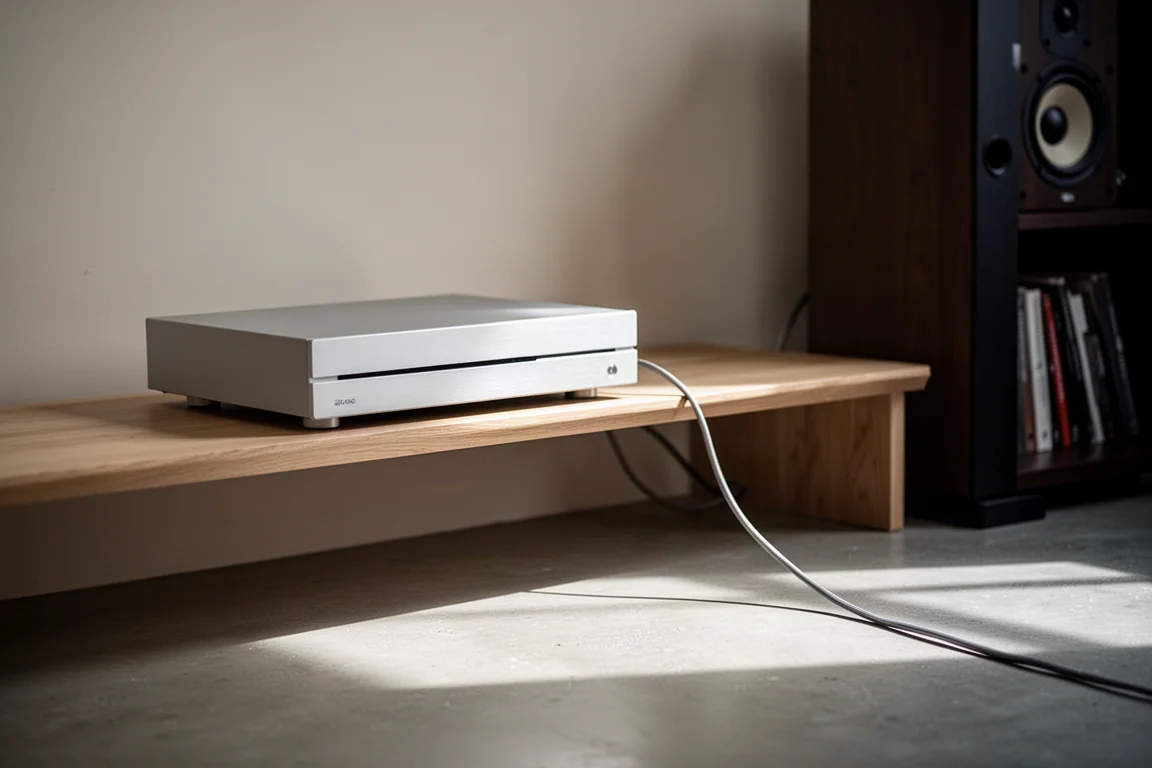
One last practical point is how the P300 is sold. Buchardt sells direct, with no local distributors, at the same price wherever you are in the world, and shipping is always free. Every pair comes with a 45-day home trial, so the speaker can be evaluated in your own room. If you decide to return it, a 100 euro fee covers the cost of shipping it back.
Conclusion
The Buchardt P300 is a compact stand-mount that does not behave like one. Its passive radiator gives it bass weight that small speakers usually lack, its tonality is warm and full without turning soft, and it stays composed when pushed loud. The trade-offs are clear and manageable: give it a foot or more of space behind it, partner it with an amplifier that is happy driving four ohms, and accept that it will not disguise a bad recording.
At 1,450 euros per pair, with free worldwide shipping and a 45-day home trial, it is a strong contender for anyone building a small system around a pair of stand-mount speakers, and it handles rock, acoustic music, jazz and electronic material with equal confidence.
Product link
View more details for Buchardt P300
This product is mentioned in the review. Check the specifications, options, and compatibility before buying.
View more details for Buchardt P300Further reading
Related Reviews
Hi-Fi Speakers
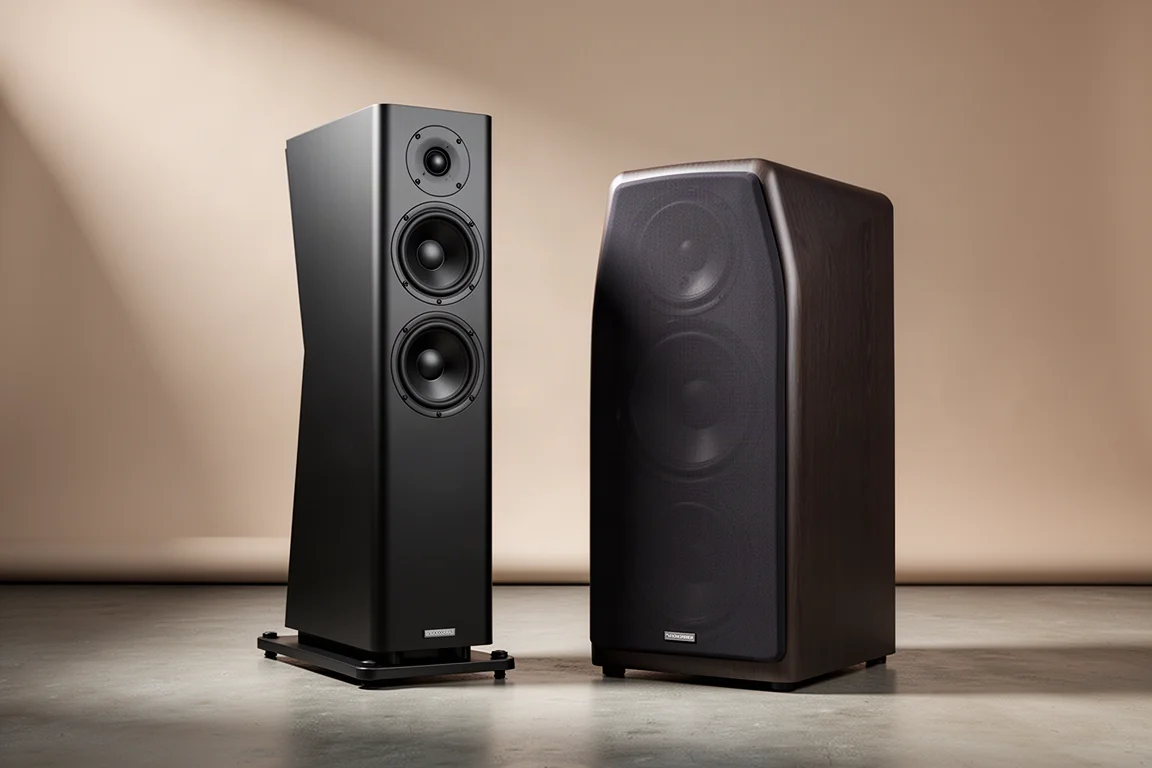
1723 THX Tower vs 1528 Bookshelf: Which Speaker Fits Your Room?
Two speakers at roughly the same price, built very differently. How the 1723 THX tower and the 1528 bookshelf compare on construction, bass, power needs, and sound.
Hi-Fi Speakers
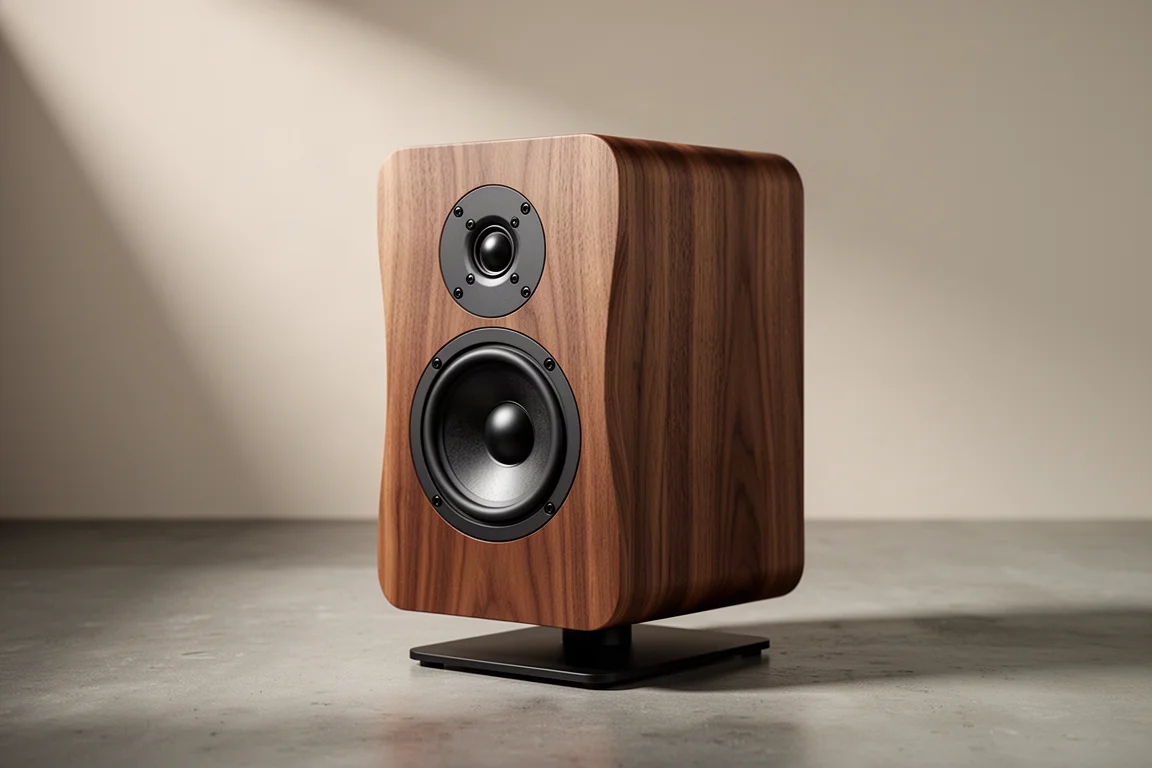
Acoustic Energy AE 300 Review: Deep Bass From a Compact Standmount
A two-way standmount with real wood veneer, surprising low-end weight, and a warm, easygoing character. Here is what to know before buying.
Hi-Fi Speakers
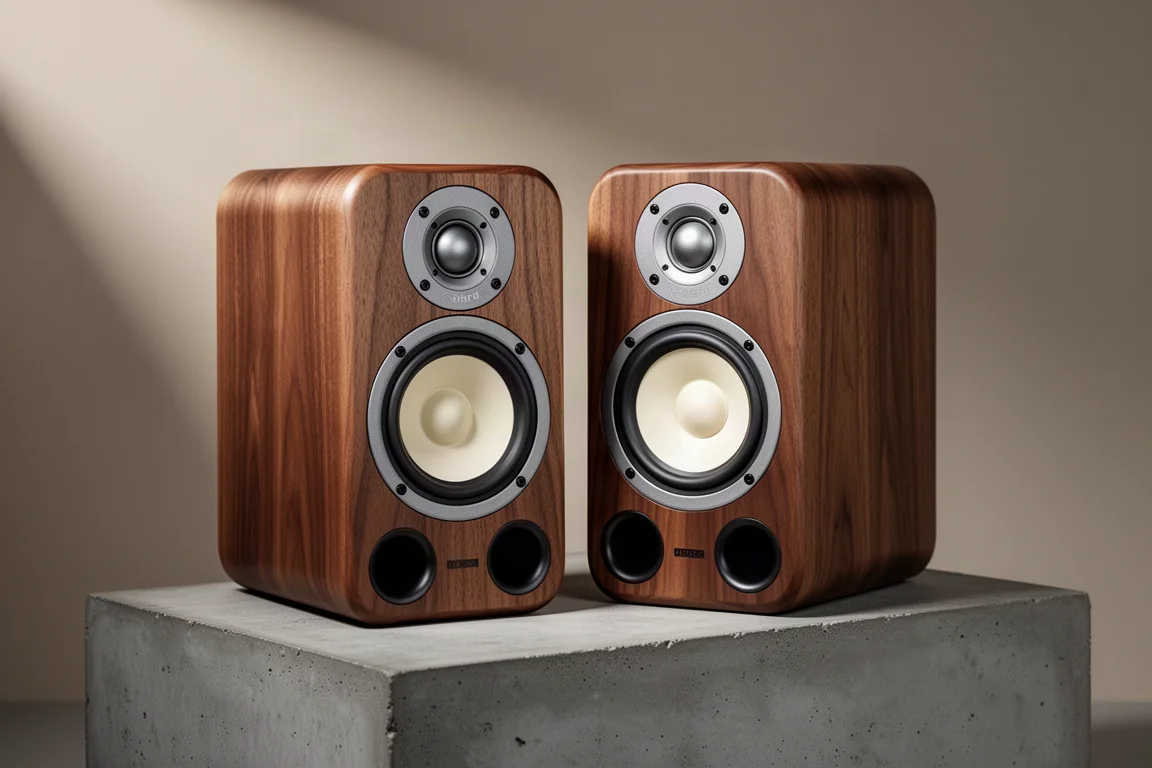
Acoustic Energy AE1 40th Anniversary Review: A Modern Take on a British Classic
A compact standmount that revives a 1980s favorite with all-new parts, a warm mid-centric balance, and a price of £1,499 per pair.