Bookshelf Speakers
Buchardt E50 Bookshelf Speaker Review: Deep Bass, Neutral Mids, and a Deliberate Dip
A compact two-way passive radiator speaker with genuinely deep bass and a clean, neutral midrange, plus one intentional tuning choice that shapes everything above 1 kHz.
Introduction
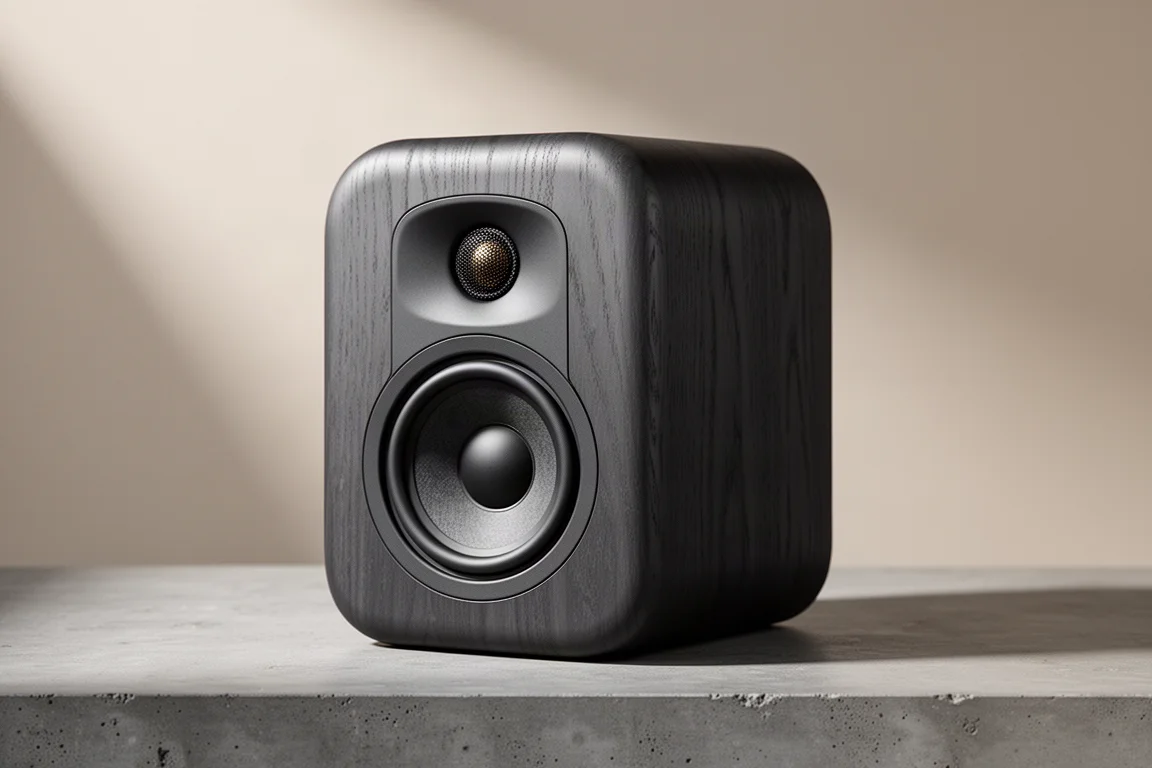
The Buchardt E50 is a compact two-way bookshelf speaker sold as a pair, and it takes an unusual route to low frequencies. Instead of a port, the cabinet uses two passive radiators on the rear panel to extend bass, while a 1-inch custom Scanspeak dome tweeter with a waveguide and a 6.5-inch Purifi extended stroke driver handle the rest of the range. Each cabinet weighs about 8.6 kg, the crossover sits at 2,000 Hz with first and third order slopes, and the speaker is offered in several colors and finishes.
Anechoic bass extension reaches roughly 40 Hz, which is unusually deep for a cabinet this size. The midrange stays neutral and free of coloration. The one thing worth understanding before buying is a deliberate dip through the upper midrange and lower treble, a tuning decision that removes some of the bite from snares, saxophones, and certain vocals.
Who the Buchardt E50 Is For
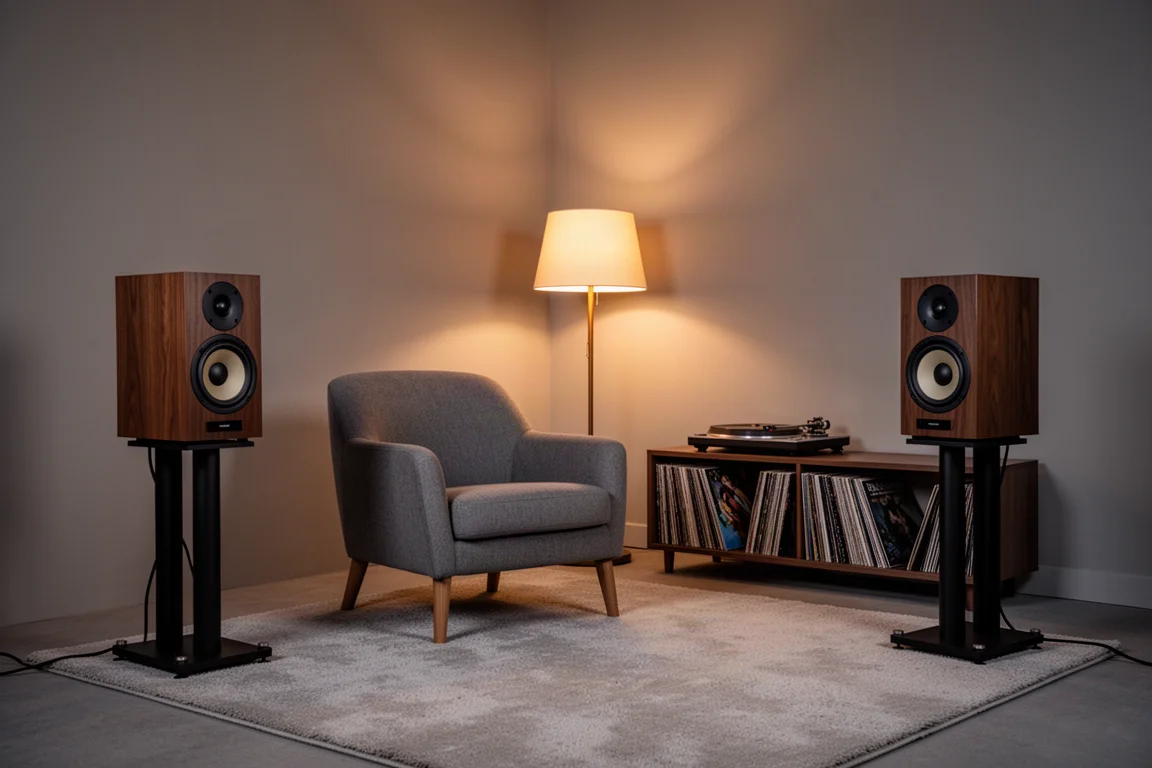
This is a speaker for listeners who want a small cabinet that still reaches down into the low bass, and who are willing to give it a little room to breathe. It suits setups where the speakers can sit out from the wall rather than tucked into a bookshelf, and it rewards anyone who takes a few minutes to adjust toe-in and seating height.
It is a less obvious match for anyone who wants forward upper-midrange attack straight out of the box, or who plans to drive it with a modest low-powered amplifier. The E50 asks for a bit of care in placement and partnering gear, and gives back a lot in bass depth and midrange cleanliness in return.
Main Strengths
The case for the E50 rests on two things that are genuinely difficult to achieve in a cabinet this size: real low-frequency extension and a midrange that stays out of the way of the music.
Deep Bass From a Compact Cabinet
Low-frequency output is the headline. Rumble in the bass was audible from the very first track, and it kept showing up across a wide range of music rather than on one boosted note that happened to excite the room. Measurements back this up: anechoic F3 sits at 40 Hz and F10 at 34 Hz, which means the speaker reaches roughly 40 Hz without any help from the room.
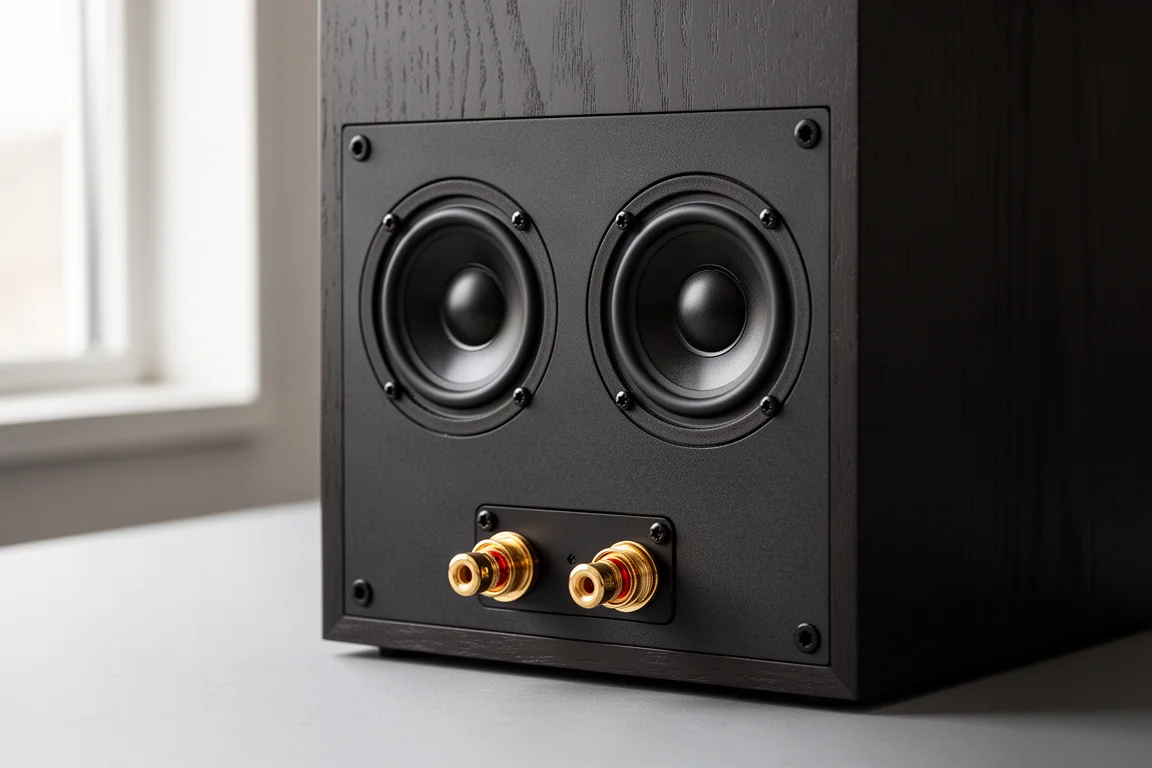
Placement changes how that bass behaves. Pushed too close to a wall, the extended low end can start to sound boomy, though the same position also generates extra free bass that equalization can tame if you have the tools. Pulled out a little further, the low end stays cleaner and better controlled.
A Clean, Neutral Midrange
The mid and lower midrange are very neutral. There is no coloration and no significant dip in that region, which points to properly designed baffle step compensation rather than a cabinet tuned to sit against a wall. Harmonic distortion stays low through the midrange even at 96 dB, and it remains under a 3% threshold up to the upper midrange.
Dynamic behavior holds up well too. Transient dynamic compression is well controlled, with only a small dip of around 1 dB near 500 Hz. Directivity is consistent at roughly plus or minus 60 degrees at the -6 dB point, which gives a useful sense of stereo width without throwing excessive energy at the sidewalls.
Design Details and Build
The cabinet looks purposeful. The waveguide is integrated into the cutout of the baffle, so there are no visible screws and no plastic-to-wood transitions around the drivers, which gives the front a clean, glassy appearance. The rear panel carries a pair of oversized banana jacks, and the speaker is available in several colors and finishes.
Things to Consider Before Buying
Two behaviors dominate the buying decision here: how the upper midrange is voiced, and how much amplifier the speaker asks for.
The Upper Midrange Dip
Measured response is close to flat from the bass region into the midrange, rises about 3 dB around 1 kHz, then dips roughly 3 dB through the upper midrange and lower treble. In practice that dip removes snare attack and a degree of vocal presence, and on some material it reduces speech intelligibility. It can read as a recessed or even dull quality depending on the recording.
The dip is not an accident. Listening tests during development found that most participants preferred this response shape over a flat on-axis response, so the voicing was chosen deliberately. Because the dip behaves consistently on and off axis, equalization can be used to lift that region if you want more presence. Turned 30 degrees off axis, the dip eases to roughly plus or minus 1.5 to 2 dB instead of about 3 dB, largely because the horizontal radiation of the midrange driver lines up better with the tweeter.
Treble and Placement
Pointed straight at the listening position, the high frequencies are likely to sound too bright for many listeners, with excess hi-hat and snare energy. Aiming the speaker away from the listening position helps considerably. Somewhere between 10 and 20 degrees of toe-out is the best middle ground, while a full 30 degrees reduces treble energy further and smooths the upper midrange dip even more.
Vertical placement matters just as much. Ears should sit essentially level with the tweeter. Sitting below the tweeter, in the gap between tweeter and mid-bass driver, produces a much larger dip in the upper midrange than the speaker already has.
Power and Amplifier Matching
Sensitivity is specified at 85 dB but measures around 83.1 dB, so having plenty of power on tap is worthwhile, and more than a basic 50 to 100 watts is a reasonable target. Minimum EPDR is 2.3 ohms, which means class AB amplifiers should be well ventilated.
Amplifier output impedance also shifts the tonal balance. With a high output impedance design, midrange output can change by as much as 2 dB, the upper midrange can rise by about half a dB, and the treble can drop by nearly 1 dB. A modern solid state amplifier with low output impedance avoids the issue entirely; a poorly matched tube amplifier will not.
Buying Advice
The E50 is a strong buy for listeners who value deep, room-filling bass and an honest midrange more than they value upper-midrange bite. If the snare crack and vocal edge described above are the parts of the music you listen for first, budget for equalization or audition carefully before committing.
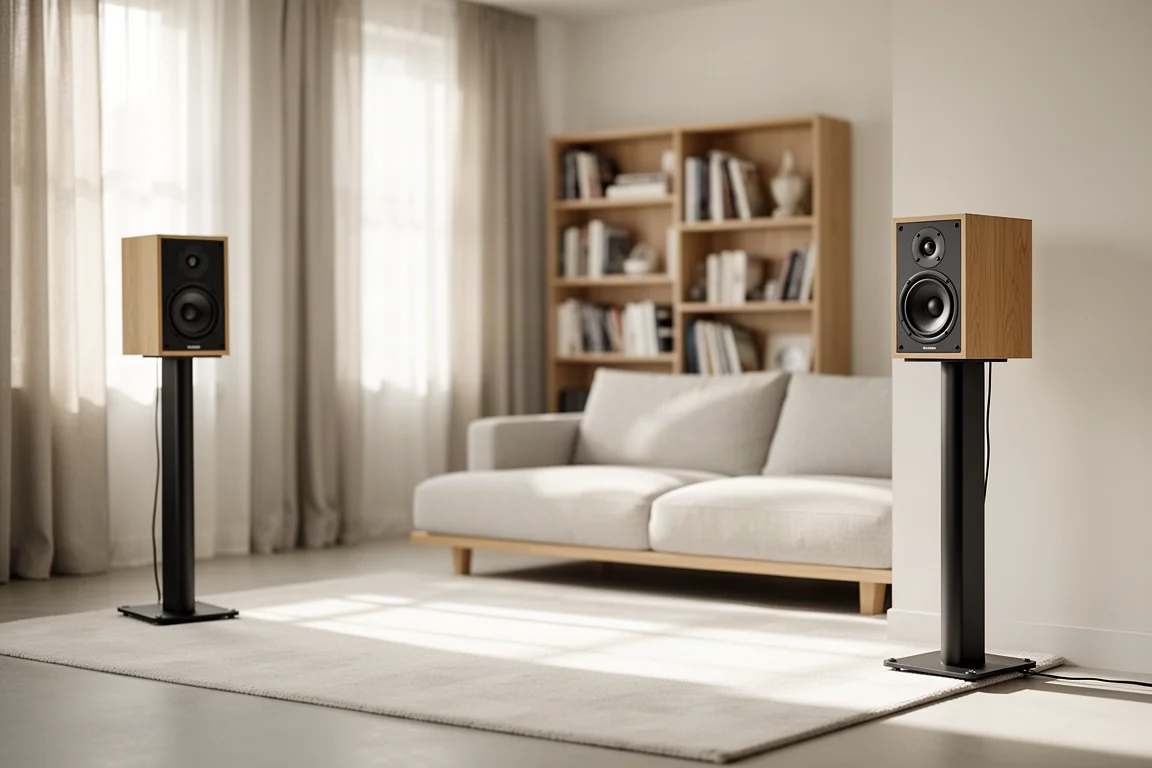
Placement is the other half of the decision. Plan on stands or a shelf that lets the cabinets sit out from the wall, aim them somewhere between 10 and 20 degrees off the listening position, and set your ears at tweeter height. Get those three things right and the speaker plays to its strengths.
On amplification, prioritize power and a low output impedance over exotic designs. This is a speaker whose tonal balance can legitimately shift with the amplifier behind it, so a clean, well-ventilated solid state amplifier is the safer pairing. In a lively room, the roughly plus or minus 60 degree radiation pattern is wide enough to feel enveloping but not so wide that imaging collapses, which makes it a flexible choice for ordinary living spaces.
Conclusion
The Buchardt E50 delivers bass depth that few bookshelf speakers of this size can match, backed by a neutral, low-distortion midrange and a well-executed cabinet. Its one meaningful compromise is the deliberate dip through the upper midrange and lower treble, which trades instrumental attack and vocal presence for a warmer overall balance that many listeners prefer. Buy it for the bass and the midrange clarity, plan for a little toe-out and a capable amplifier, and it makes a convincing case for a small pair that behaves like something considerably larger.
Product link
View more details for Buchardt E50
This product is mentioned in the review. Check the specifications, options, and compatibility before buying.
View more details for Buchardt E50Further reading
Related Reviews
Bookshelf Speakers
Acoustic Energy A100 Mark II Review: A Compact Standmount With an Expansive Soundstage
The Acoustic Energy A100 Mark II brings clarity, natural tonality and a wide soundstage to an entry-level standmount, with a few setup details worth knowing first.
Bookshelf Speakers
Acoustic Energy AE-100 Mark II Review: Compact Bookshelf Speakers With Standout Imaging
A compact British two-way bookshelf speaker with deep, layered imaging, fast bass, and a slight treble lift to weigh against a crowded $500 field.
Bookshelf Speakers
Acoustic Energy AE100 MK2 Review: Measured Performance and Four Alternatives
A close look at the Acoustic Energy AE100 MK2 bookshelf speaker, what its measured performance reveals, and four alternatives with different trade-offs.