Powered Speakers
Buchardt A10 Review: Compact Powered Speakers With Real Low-End Reach
A two-way active speaker with Purifi drivers, eighteen tuning configurations, and deep in-room bass, plus the setup choices that decide how it sounds.
Introduction
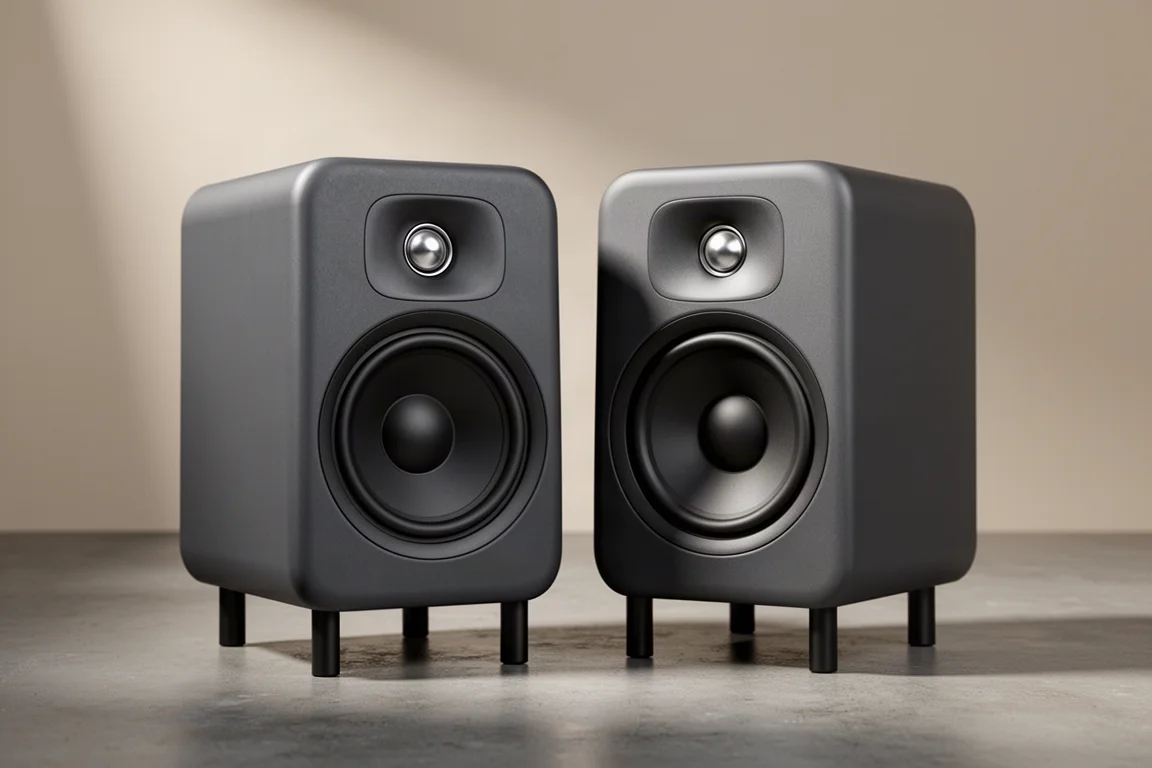
The Buchardt A10 is a compact powered two-way speaker built around a simple promise: deep bass from a small cabinet without adding a subwoofer. Retail sits at about $450. Each cabinet pairs a 150 W amplifier for the midwoofer with a 50 W amplifier for the tweeter, and the enclosure is sealed rather than ported.
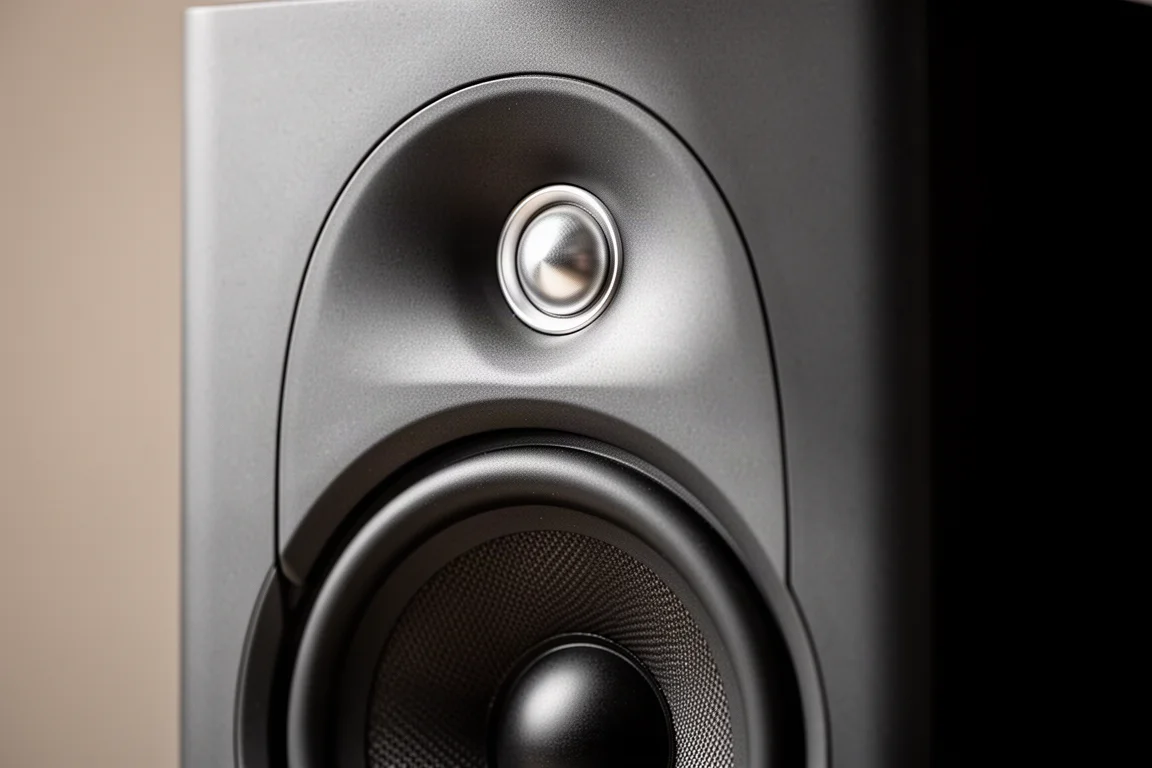
The driver complement is unusual for the size. The midwoofer is a 6.5-inch Purifi extended-stroke unit, and Purifi drivers rank among the lowest-distortion designs available today. Above it sits a 19 mm aluminum dome tweeter loaded by an aluminum waveguide. Onboard amplification and digital signal processing handle the crossover and the voicing, which is what makes the speaker’s tuning options possible in the first place.
Who the Buchardt A10 Is For
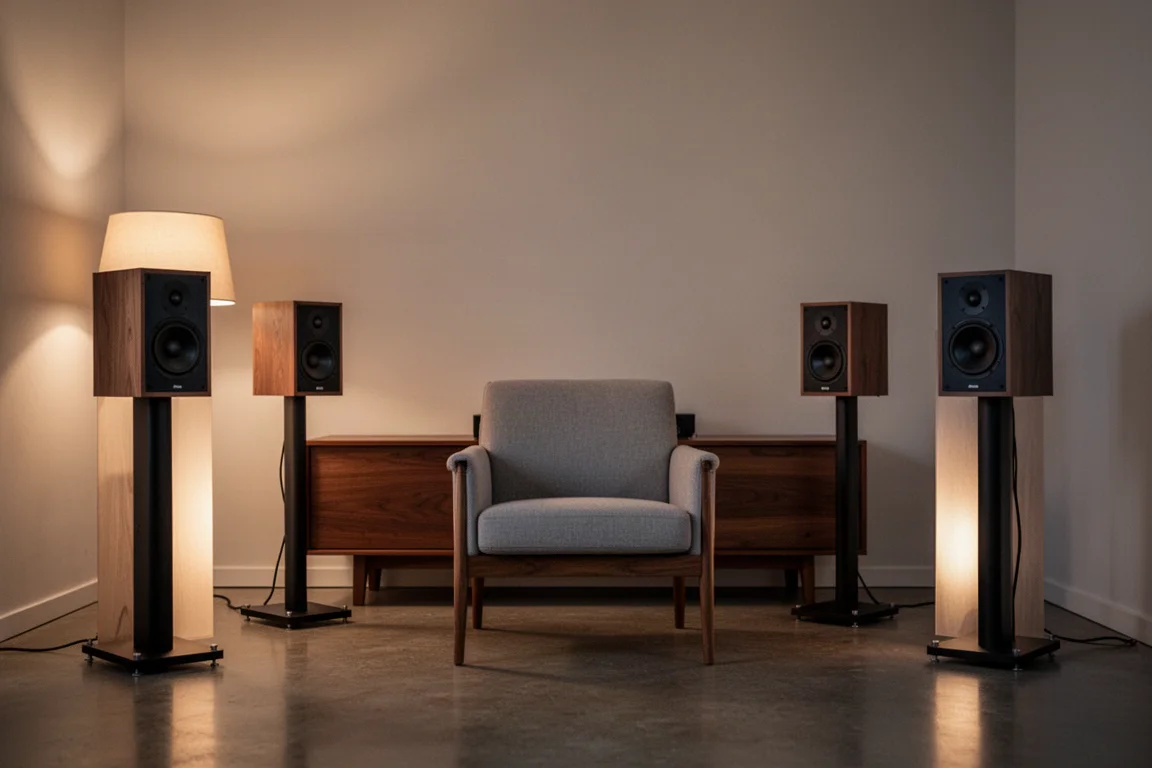
This is a speaker for listeners who want genuine low-frequency extension in a small footprint and would rather not add one or more subwoofers to the room. Using a THX-style room baseline, a compact space of roughly 10 ft by 10 ft by 10 ft and a medium space of roughly 12.5 ft by 12.5 ft by 12.5 ft are both sensible fits.
It also rewards moderate listening levels. At a seated distance of about 10 ft, roughly 65 dB to 75 dB keeps the A10 in its comfort zone, and that is where the low end feels most complete. If you sit closer, the same perceived loudness arrives at a lower number on a meter. If you sit further away, you will need more.
The A10 is not aimed at listeners who want to push a small speaker to party levels. That distinction matters more than any single specification, because it shapes what you should expect from the low end once the volume climbs.
Main Strengths
Start with extension. Measured output is down 3 dB at 30 Hz and down 10 dB at 21 Hz, and in-room boundary gain typically adds more, so usable output can reach into the mid-20s in a normal room. For a sealed two-way of this size, that is the headline.
Directivity control is the second strength. The speaker behaves close to a constant-directivity design, which means the sound radiating to the sides keeps the same overall profile as the sound aimed forward, with the treble simply reduced off axis. The practical benefit is a wide sweet spot. A listener sitting off to one side hears a tonality similar to the person in the middle seat rather than something noticeably different.
The tuning system is the third. Nine master tunings are available, and each one ships in a standard version and a relaxed version, for eighteen total configurations. The difference between the two comes down to bass compression and output limiting. The standard version limits bass output, while the relaxed version lets you turn things up further at the cost of potential distortion. You can audition the options and decide which balance suits your room.
Measured distortion supports the driver choice. Harmonic distortion looks good at both 86 dB and 96 dB, and the speaker does not cross a 3 percent threshold until roughly 60 Hz to 70 Hz. Because the crossover and voicing run in the digital domain, the two cabinets can also be matched to each other very precisely.
Things to Consider Before Buying
The on-axis response runs about 1.5 dB above the median through the treble, so a speaker pointed straight at the listening position can come across as bright. Toeing the speakers out roughly 30 degrees from the listening position brings the in-room balance closer to neutral. This is a placement decision, not a flaw, but it is one you should plan for.
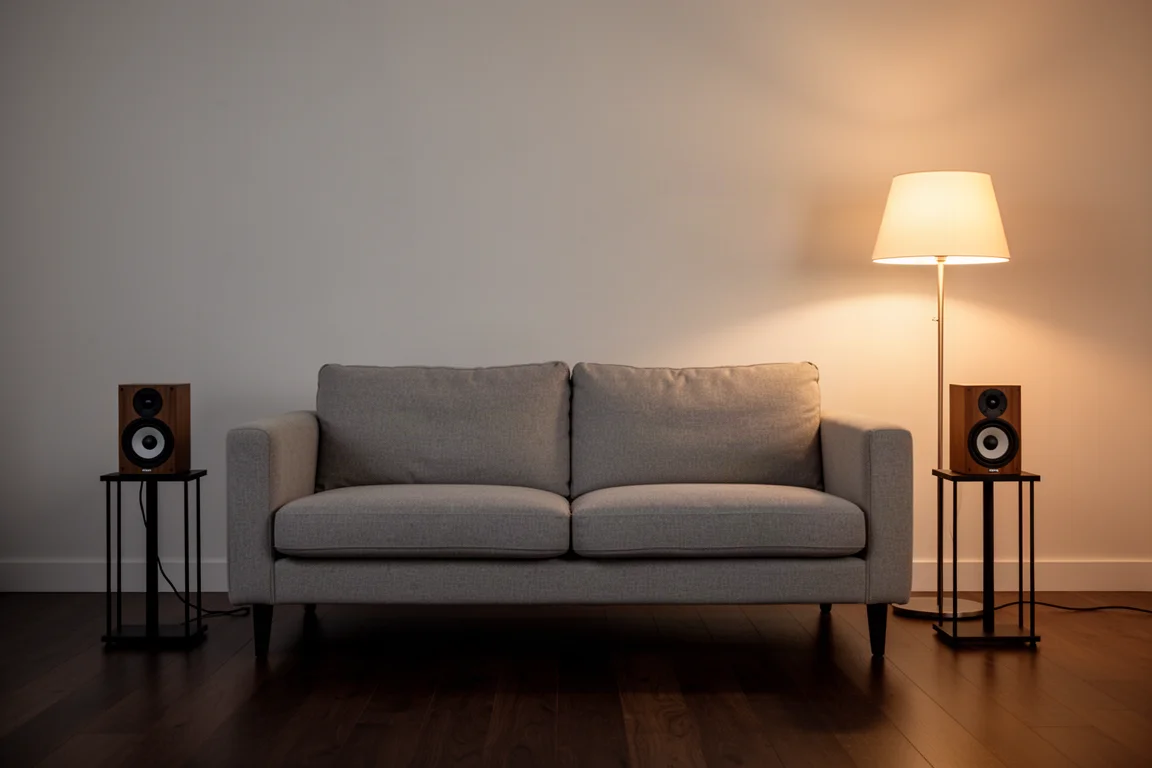
Vertical placement matters just as much. Your ears should sit between the waveguide and the midwoofer, with the midpoint height of the cabinet as the ideal target. Move about 15 to 20 degrees above or below that midpoint and an upper-midrange suckout becomes audible as the midwoofer hands off to the tweeter.
Output limits are the third thing to understand. Like most DSP-driven powered speakers, the A10 reduces its low-end boost as volume rises in order to protect the drivers from over-excursion and heat. Around 75 dB to 80 dB at 10 ft, the shift in low bass impact becomes audible, and above 80 dB the bass tapers further. At 96 dB at 1 m there is roughly 2.5 dB of compression, which puts realistic maximum output closer to 94 dB at 1 m, and multi-tone distortion becomes a concern at the highest levels. If you want to listen loud, the 60 Hz master tuning is the practical route.
Adding a subwoofer changes that picture considerably. High-passing the A10 at 80 Hz limits midwoofer excursion, which cuts multi-tone distortion by roughly 5 to 10 dB and reduces compression from about 2.5 dB to roughly 1 to 1.5 dB. If high output is part of your plan, pairing the speaker with a subwoofer is the cleaner path.
Buying Advice
Begin with the stock tuning and live with it for a while before changing anything. The stock flat tune with relaxed compression is the version worth recommending on its own merits, and it is a sensible first stop if you want the most bass the speaker will give you at moderate levels. From there, work through the other master tunings if you want a warmer balance or a more forward midrange.
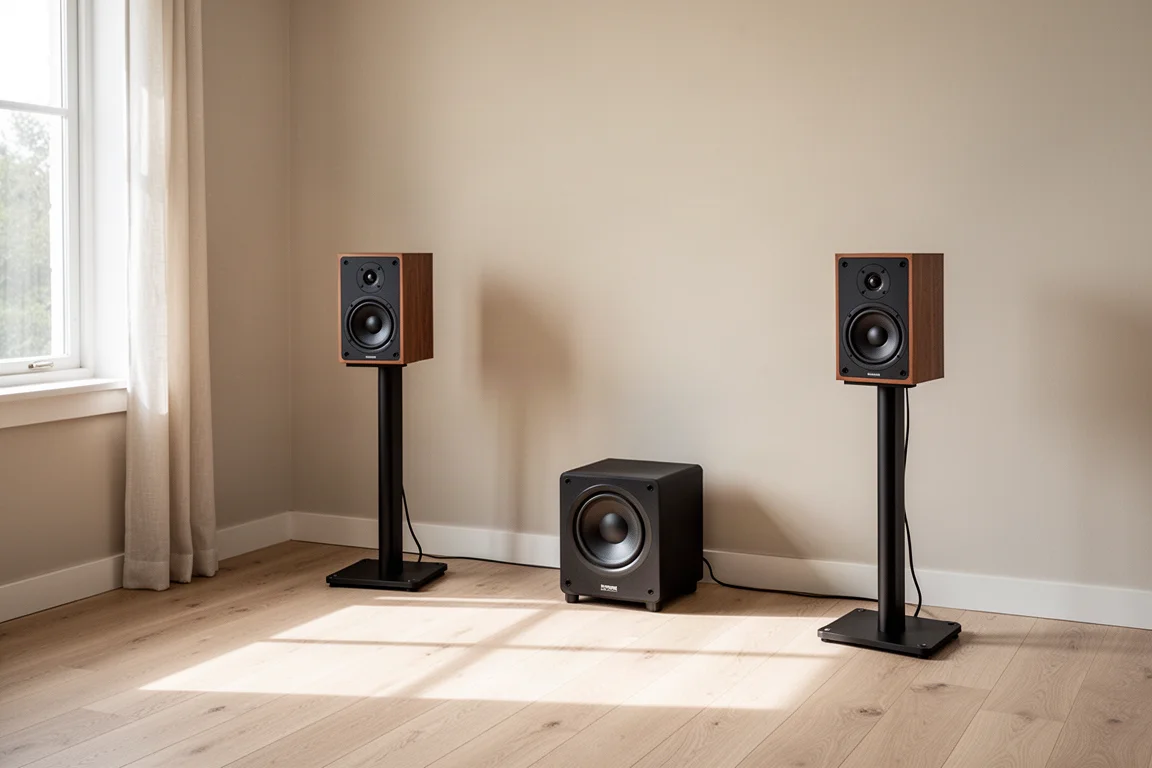
Set the speakers up before you judge them. Toe them out about 30 degrees, keep your ears at the midpoint height between the tweeter and the midwoofer, and give them a little space from the back wall, since they can also be placed close to one. Because directivity is well controlled, equalization behaves predictably: a high-shelf filter tames brightness without altering the character of the reflected sound, and a small boost around 8 kHz to 10 kHz adds snap without damaging tonality. Speakers with weaker directivity control do not respond nearly as cleanly to the same treatment.
At its retail price, the A10 is worth considering if you want a small speaker that reaches genuinely low in a small to medium room and does not demand multiple subwoofers. If you want to play loud, treat it as a main speaker with a proper crossover to a subwoofer, or look at something physically larger.
Conclusion
The Buchardt A10 delivers what it promises: in-room extension into the mid-20s, a wide and stable sweet spot, and eighteen tuning configurations that let you shape the balance to your room and taste. It sounds best at low to moderate levels, it wants a modest amount of toe-out, and its vertical listening window rewards careful setup.
Buy it if you value deep bass and flexible tuning in a compact cabinet. Pair it with a subwoofer, or choose a larger speaker, if high-output listening is the priority. Understanding that design intent is the difference between a satisfying purchase and a mismatched one.
Product link
View more details for Buchardt A10
This product is mentioned in the review. Check the specifications, options, and compatibility before buying.
View more details for Buchardt A10Further reading
Related Reviews
Powered Speakers
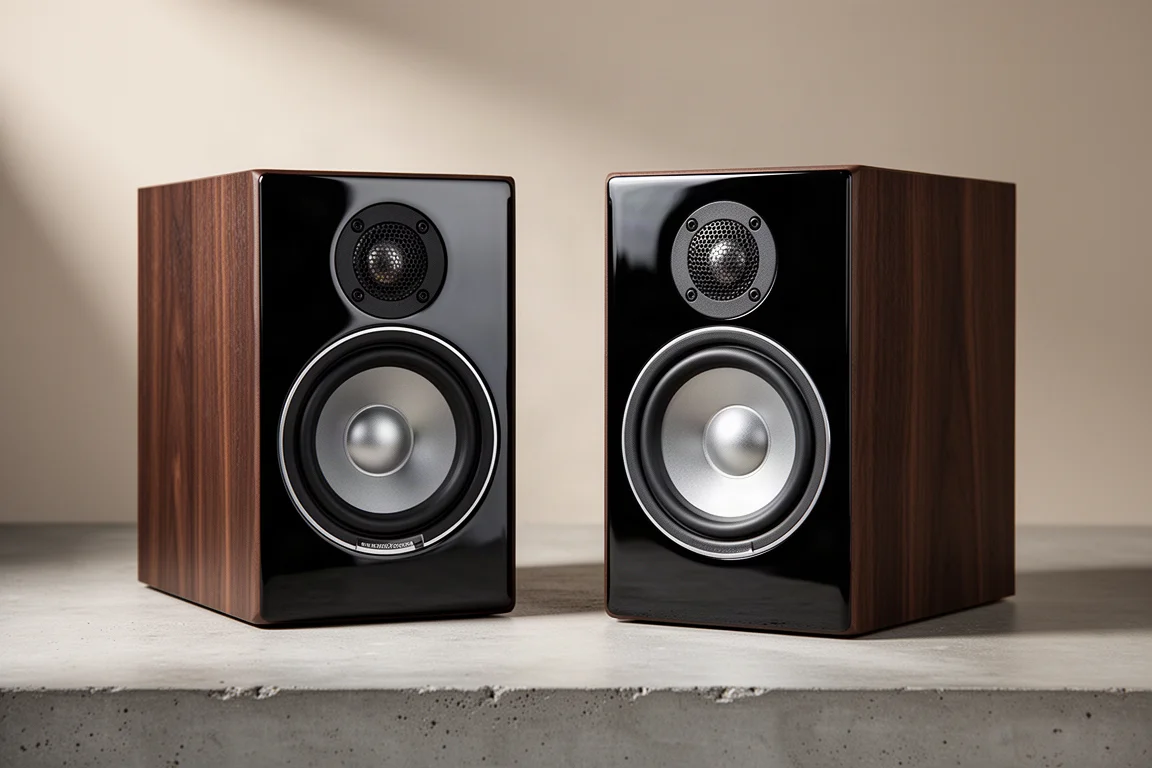
AbramTek X50 Review: Powered Speakers With Real Bass and a Full Feature Set
The AbramTek X50 pairs a phono preamp, HDMI ARC, optical, and Bluetooth with genuinely capable sound. Here is what it does well and what to check before buying.
Powered Speakers
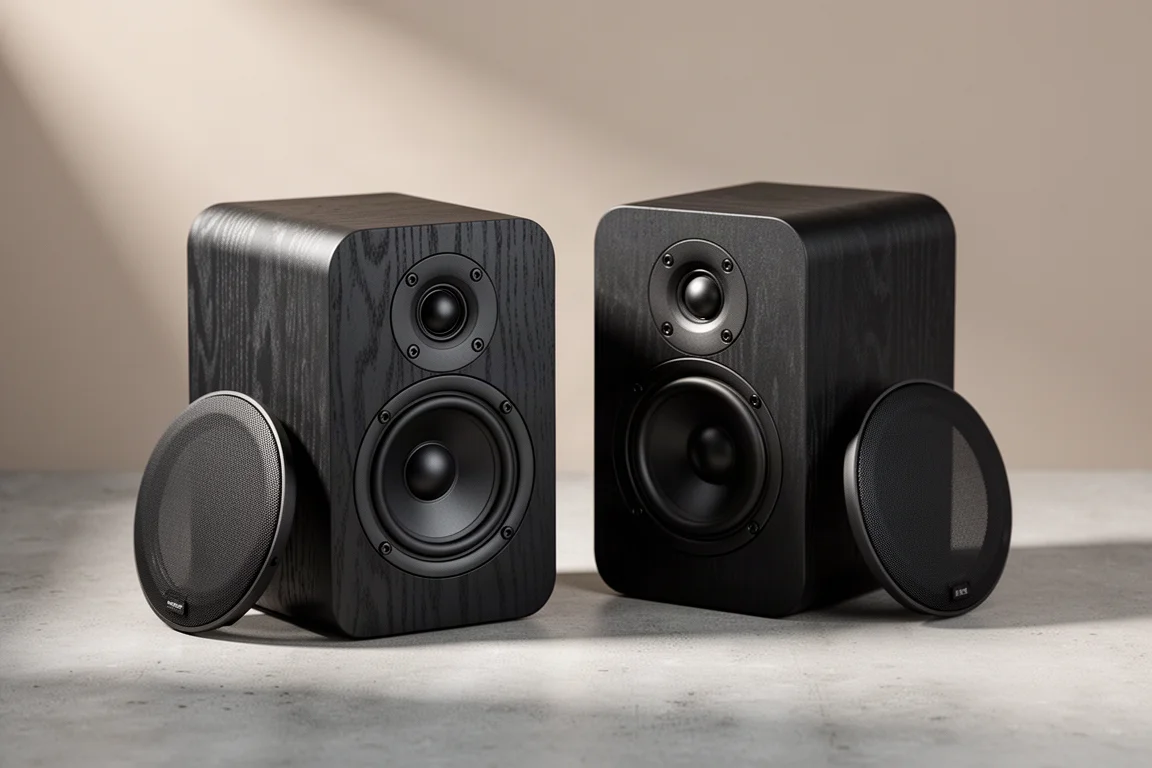
Amazon Basics Powered Speaker Review: Useful Features, Compromised Sound
A practical look at the Amazon Basics Powered Speaker: a handy remote and an optical input, held back by shouty upper mids, minimal bass, and erratic pricing.
Powered Speakers
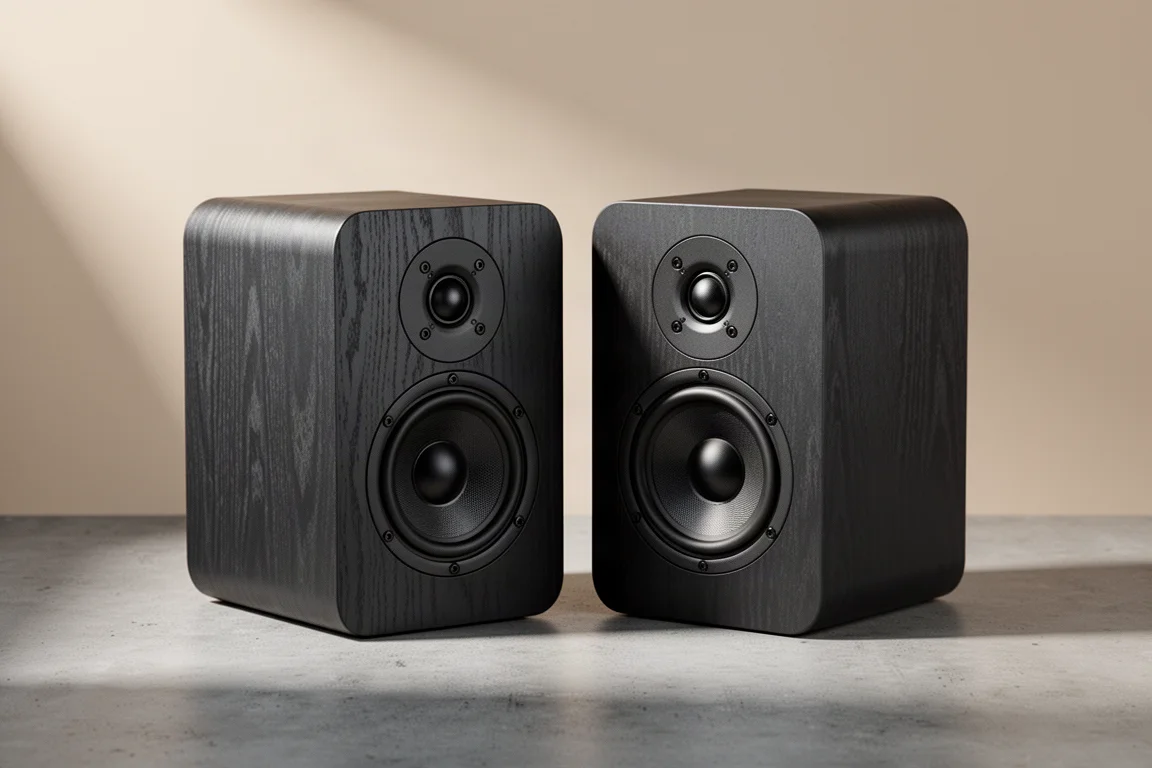
Aperion Audio Alaire Review: Compact Powered Speakers With Serious Bass
A compact two-way powered speaker with genuine low-end punch, excellent imaging, and a control scheme that depends entirely on its remote.