Hi-Fi Amplifiers
BRZ HiFi A1 Clone Review: A $250 Class A Amplifier Worth Trying?
A hands-on look at the BRZ HiFi A1 clone, a budget Class A amplifier with a warm, tube-like voice, real build quality, and a few limits worth knowing before you buy.
Introduction
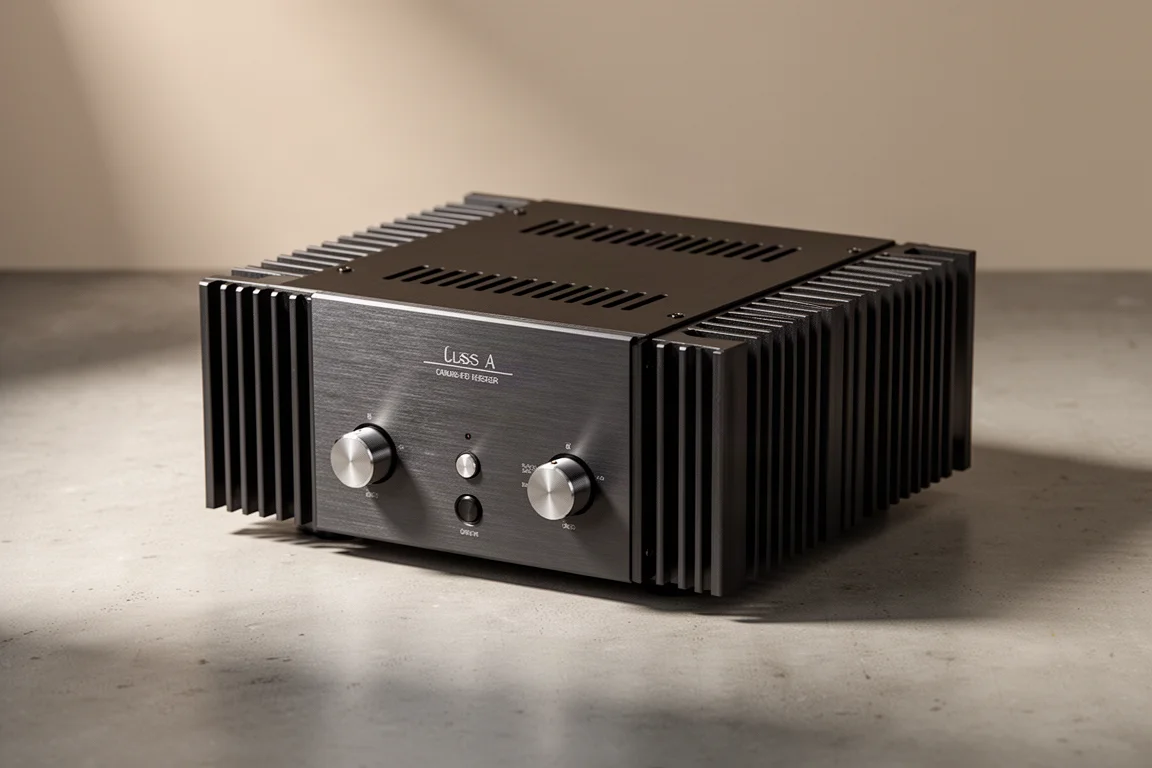
The BRZ HiFi A1 clone is a Class A power amplifier sold through AliExpress for about $175, with shipping adding roughly $75, for a total of around $250. It claims 20 watts of Class A output into 8 ohms and 25 watts into 4 ohms, and it is built around an older circuit design whose patents have long since expired. That is the reason a clone like this can exist at all, and it is also why the amplifier arrives with very little documentation in English.
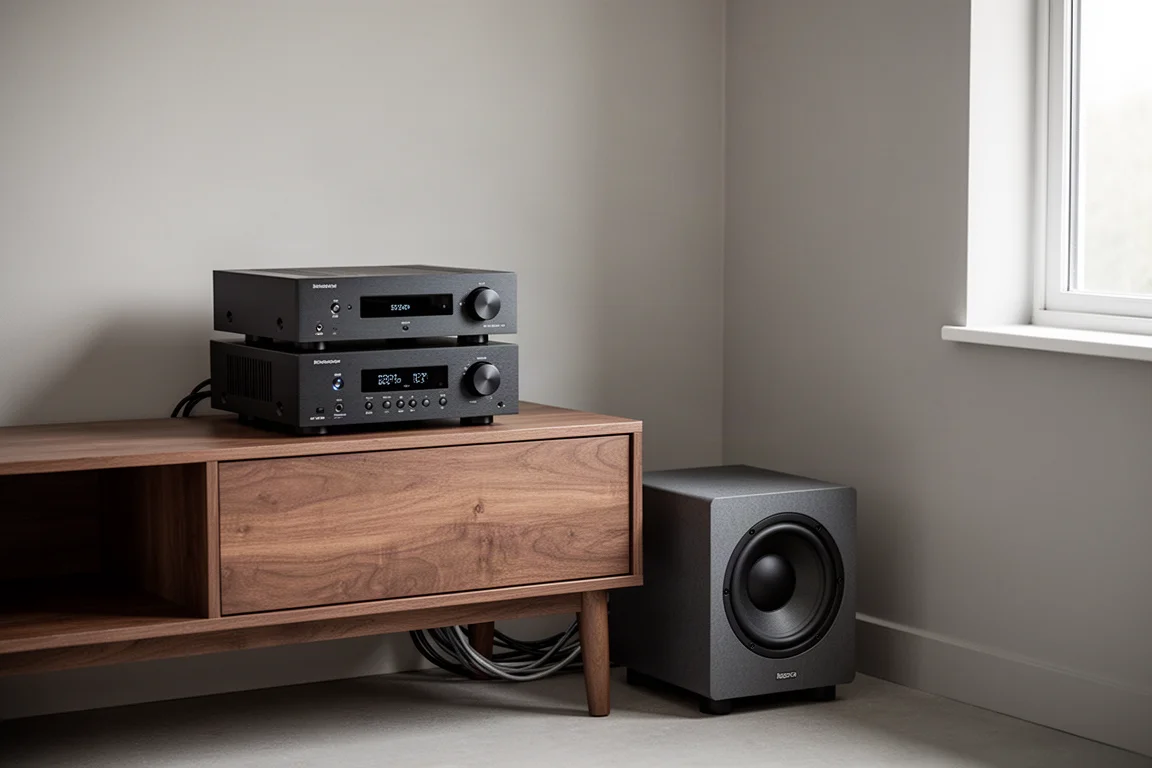
Physically, it is a metal box with heatsink fins down both sides and ventilation on the top and bottom. It is heavier than its footprint suggests, and the surface finish sits a step or two below what the chassis design implies. The front panel is sparse: one volume knob for the left channel, one for the right, and a power button. The rear panel carries a set of binding posts that resemble the hardware used on far more expensive amplifiers, though they are clearly built to a lower cost.
What follows is a practical look at what this amplifier does well, where it falls short, and who should consider spending around $250 on it.
Who This Amplifier Is For
This is not an amplifier for every system. Its character leans warm and midrange-forward, which flatters acoustic material, singer-songwriter records, and anything built around voices and small ensembles. Listeners who mostly play bass-heavy electronic music or hard rock will likely want more weight at the bottom than 20 watts of Class A can deliver on its own.
Speaker sensitivity matters a great deal here. With less efficient bookshelf speakers, this amplifier runs out of headroom quickly. Pair it with efficient speakers, or plan to use it as a nearfield amplifier where listening distances are short and volume demands are modest.
There is also a tinkering angle. Inside, the layout is simple enough that someone comfortable with a soldering iron could treat it as a platform rather than a finished product.
Build and Design Notes
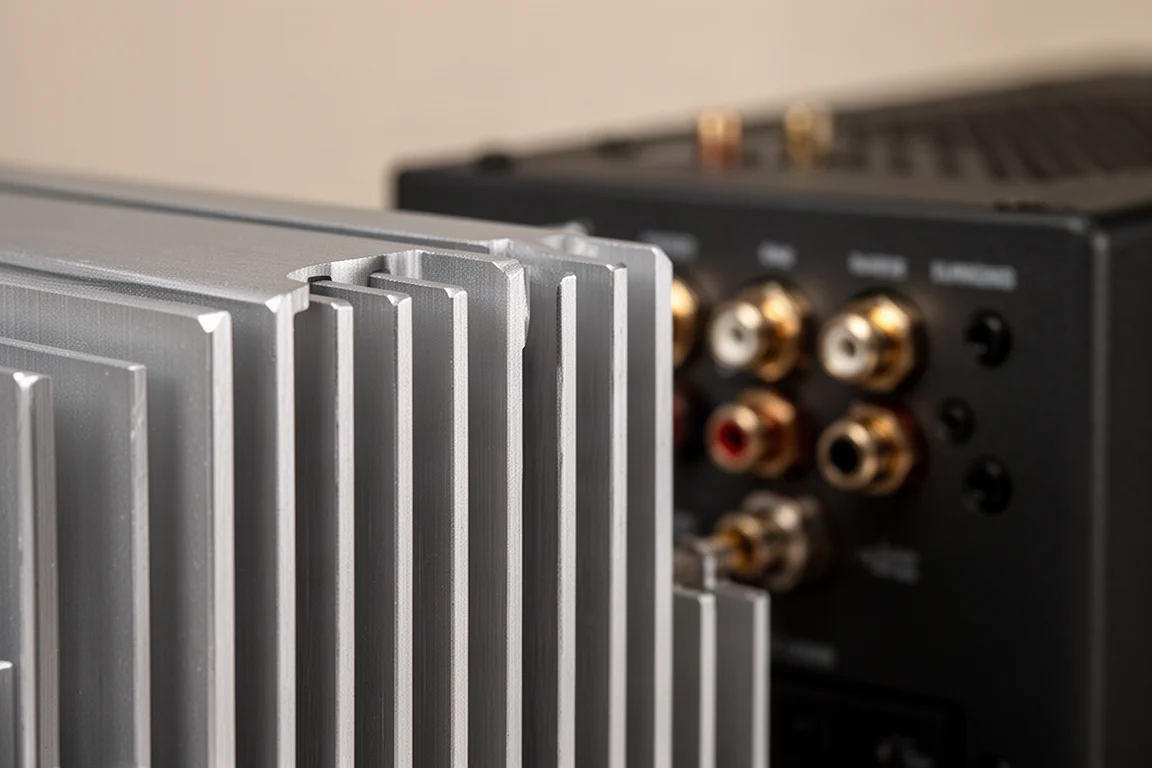
For the money, the construction is better than expected. The chassis is metal throughout, the knobs are metal and secured with set screws, and the side heatsinks are functional rather than decorative. The binding posts are the weakest part of the physical package: they look like the premium parts used elsewhere, but the finish and tolerances give away the price point.
The documentation is entirely in Chinese, apart from the brand name on the warranty card. Whether that card leads to any actual warranty service is an open question. The front panel also carries a Krell badge, which is an odd choice for a product that is not made by Krell, and it is the kind of detail that invites skepticism before the amplifier is even switched on.
Under the hood, the design is refreshingly simple: four large filter capacitors per channel, a handful of resistors, some smaller capacitors, and a transformer that is substantial for the size of the enclosure. It warms up during use, as Class A amplifiers do.
Main Strengths
The sound has an airy, open quality that is closer to a tube amplifier than to the Class D designs that dominate this price bracket. There is sweetness in the treble and in the midrange, and the amplifier stays composed even when the volume is pushed close to its limit. Running it near full tilt produced no audible distortion with the speakers used for testing.
The value story is also stronger than the price suggests. The chassis alone is the sort of thing a DIY builder might pay $250 for, and the internal layout leaves obvious room for component upgrades. Buyers who enjoy modifying gear will find plenty to work with.
Things to Consider Before Buying
Output power is the main limitation. Twenty watts into 8 ohms is not a lot, and with less efficient bookshelf speakers at a listening distance of five or six feet, reaching 80 dB was a struggle. The bottom end is not beefy. Bass lines are present and reasonably full, but they do not hit with real force, and midrange-forward material can start to feel pushed forward rather than balanced.
There are also unknowns. The longevity of the amplifier is untested, and the grade of the internal components is impossible to verify at this price. One practical quirk showed up during setup: engaging room correction through the front end produced a pulsing, in-and-out effect that disappeared once room correction was switched off. It is worth keeping in mind if you plan to run the amplifier behind a streaming preamp with automatic correction.
If you are expecting a single amplifier to handle everything from acoustic folk to bass-heavy club music, this is probably not the right choice.
Buying Advice
Budget for the total delivered cost rather than the sticker price, since shipping is a significant part of the outlay. Match the amplifier to efficient, warm-sounding speakers, which complement its midrange-forward character rather than fighting it. If you want more low-end authority, plan on a front end with a subwoofer output rather than expecting the amplifier to supply it.
Think of this as a fun second amplifier, a nearfield companion, or a DIY platform rather than a do-everything centerpiece. Buyers with reasonable expectations about power and component quality are likely to enjoy it.
Availability, shipping, and support can also vary, and the language barrier in the documentation means most troubleshooting will fall to you.
Conclusion
The BRZ HiFi A1 clone is a genuinely interesting piece of budget audio gear. It is well built for the money, it sounds noticeably different from the Class D amplifiers that dominate its price range, and its simple internals make it an appealing project for anyone who likes to tinker. Its limits are real: 20 watts, a midrange-forward voicing, and a bottom end that will not satisfy bass-first listeners without help from a subwoofer.
For the right listener, on the right speakers, it is a lot of amplifier for around $250. For everyone else, it is a novelty worth understanding before you buy.
Product link
View more details for BRZ HiFi A1 Clone Amplifier
This product is mentioned in the review. Check the specifications, options, and compatibility before buying.
View more details for BRZ HiFi A1 Clone AmplifierFurther reading
Related Reviews
Hi-Fi Amplifiers
Accuphase E-280 Review: Entry-Level Accuphase With Flagship Attention to Detail
A close look at the Accuphase E-280 integrated amplifier, covering its champagne build, AAVA volume control, sound quality, and the speakers and sources that suit it best.
Hi-Fi Amplifiers
Advance Paris A10 Classic vs Yamaha A-S301: Two Integrated Amplifiers Compared
A practical comparison of a $350 integrated amplifier and a $2,500 reference model, covering the differences that matter and the ones that do not.
Hi-Fi Amplifiers
Affordable Chinese Amplifiers Worth Buying: Five Budget Hi-Fi Amps Compared
A practical look at five affordable amplifiers, what each one does well, and the trade-offs to weigh before you buy.