Folding Bikes
Brompton G Line Review: A Folding Bike Built for Longer, Rougher Rides
The Brompton G Line keeps the familiar fold but adds 20-inch wheels, wider tyres and disc brakes for riders who want to go beyond the city.
Introduction
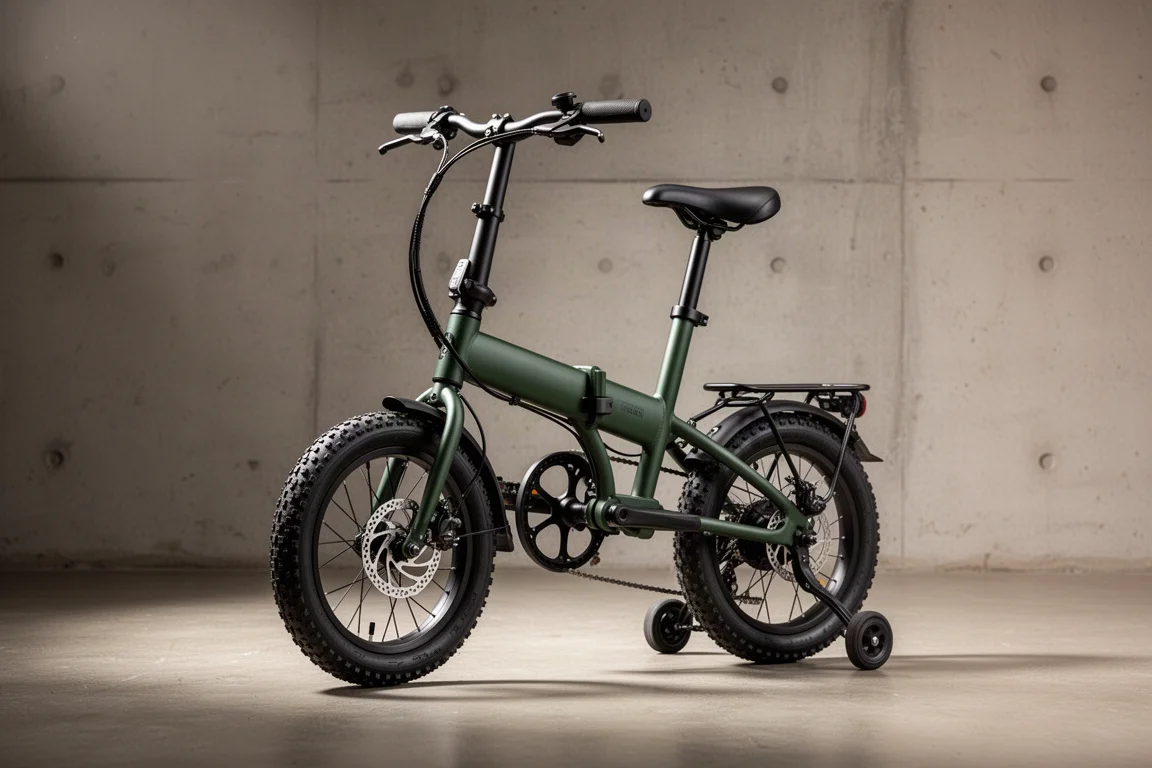
The Brompton G Line is the biggest change to the folding bike in the brand’s 50-year history. Brompton’s silhouette is unmistakable, whether it sits folded on the luggage rack of a commuter train or unfolded on city streets, and the G Line keeps that identity while changing almost everything about how the bike is meant to be used.
Think of it as a Brompton in hiking boots. The wheels grow from 16 inches to 20 inches, the tyres are wider and more rugged, the brakes move to discs, and the geometry is tuned for longer rides and mixed surfaces rather than short city hops. It is still a Brompton, and it still folds, but the goal is a bike that feels like a full-size machine underneath you.
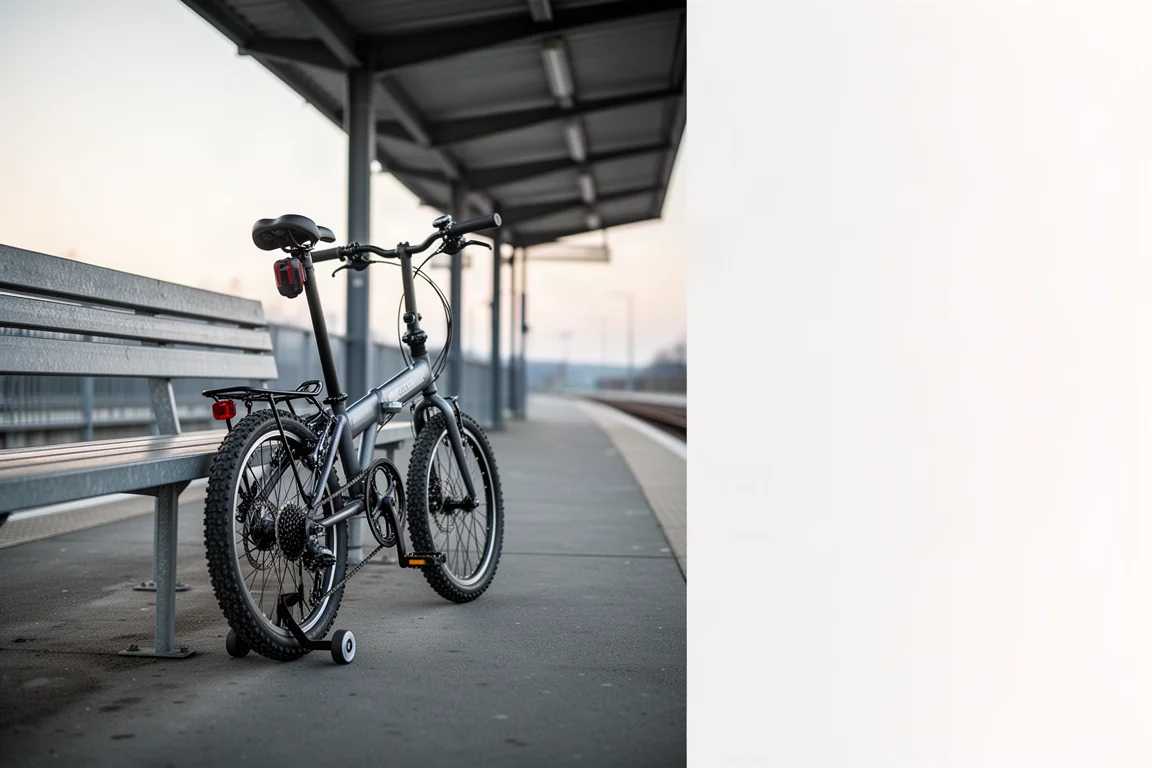
That combination is the whole point of the model: the portability riders already trust, with the capability to go further than a city street.
Who This Bike Is For
The G Line makes most sense for riders who have outgrown the idea of a folding bike as a short-distance tool. Brompton frames have already been taken far beyond cities, and this model is the first one designed from the start for that kind of use.
It suits commuters who combine train travel with mixed-surface riding, riders who want a single bike for the weekday journey and a three or four hour weekend ride, and existing Brompton owners who want a more capable companion for rougher routes. It is also a reasonable entry point for people who never considered a folding bike because they assumed small wheels meant short distances.
One detail that widens the audience considerably is sizing. For the first time, the G Line is offered in three sizes, which helps both smaller and taller riders find a position that is neither cramped nor stretched out.
Main Strengths
The headline change is the wheel size. Moving to 20-inch wheels with higher-volume, wider tyres means the bike rolls over bumps more easily, which matters once you leave smooth tarmac. On a traditional Brompton this is rarely an issue in the city, but on more demanding terrain it becomes one, and the G Line addresses it directly.
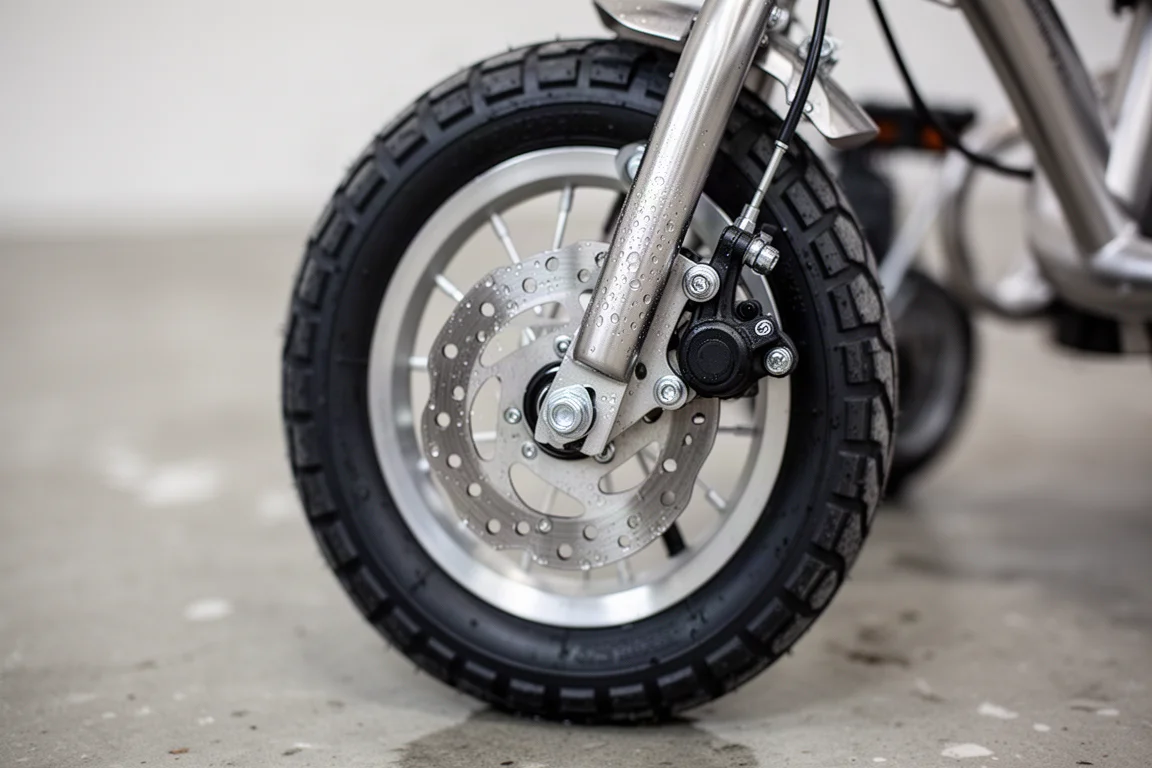
Disc brakes are the second major upgrade. Traditional Brompton brakes are plenty strong for urban riding, but discs perform better when dirt is involved, both in stopping power and in long-term durability of the rims. The G Line also uses an 8-speed Shimano Alfine hub, which broadens the gearing range for longer and hillier routes.
Contact points have been rethought as well. There is a wider handlebar with ergonomic grips and wider, grippier pedals, all of which add control on loose surfaces. Crucially, the fold and unfold sequence is exactly the same as ever: handlebars, seat, unfold, lock into place.
Practical touches carry over too, including a rear rack with rollers that let you wheel the folded bike rather than carry it. The G Line is also assembled in Brompton’s West London factory, where frames are brazed and wheels built, with the exception of the titanium model in the range, which is produced by a titanium specialist further north in the UK.
How the G Line Rides
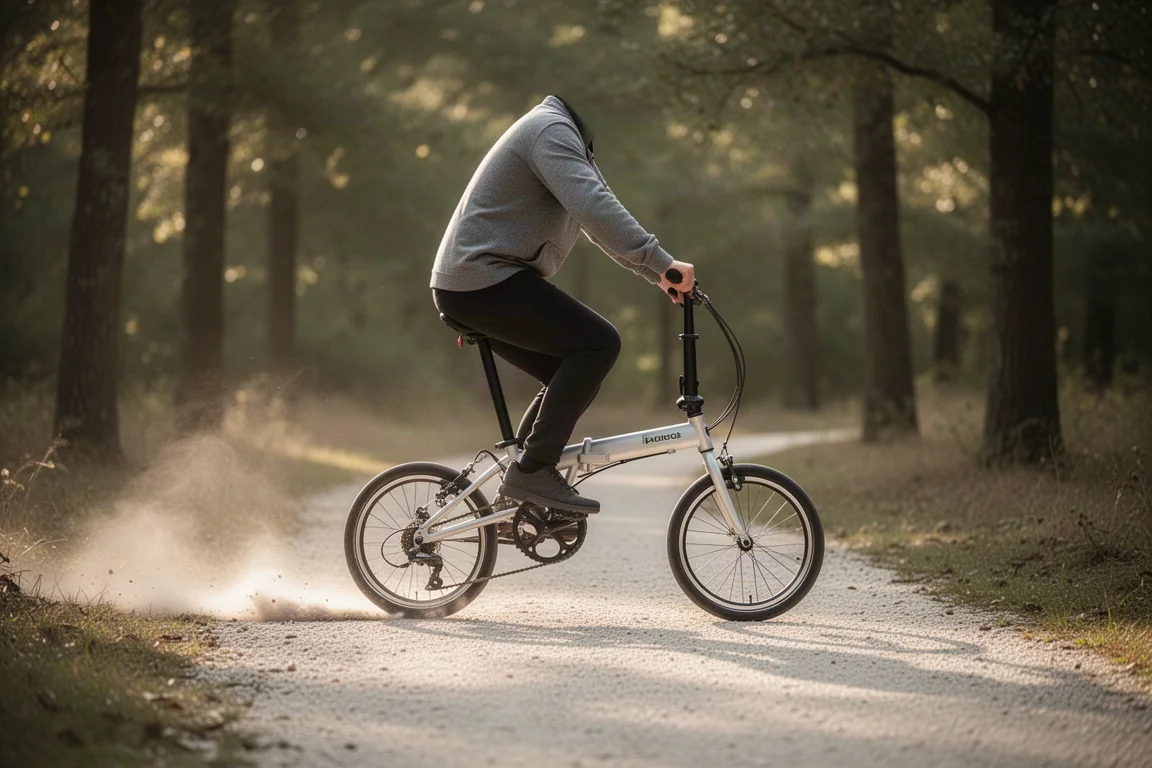
In practice, the G Line rides much more like a full-size bike than its folding proportions suggest. The larger wheel diameter and revised geometry soften the quick, twitchy character of the 16-inch bike into something calmer and better suited to long distances, while still keeping enough agility to feel responsive.
The clearest difference shows up out of the saddle. On a traditional Brompton, standing on the pedals takes some getting used to, since the bike was never designed for it. For longer rides, and especially off-road, you need that option, and the G Line handles it well. It feels familiar and planted.
It is not a mountain bike, and it does not pretend to be. Smaller wheels also give up a little efficiency compared with a full-size gravel bike on rough ground. The trade-off is deliberate: this is still a folding bike first, and it folds like one.
Things to Consider Before Buying
The extra capability comes with extra weight. In its lightest configuration the G Line comes in at 13.9 kg, and with the rack and mudguards fitted that rises to 14.8 kg. The electric version reaches 19.5 kg. For context, the titanium T Line sits between 7.45 kg and 8.8 kg, the traditional C Line is around 11.35 kg, and the P Line, which is closest in specification and price, is around 10.4 kg.
In daily terms, that means you can lift a titanium Brompton with very little effort, carry a P Line through a station without much trouble, and with the G Line you will probably prefer to wheel it on longer walks through a station. The rack rollers make that straightforward.
It is worth being honest about what you are buying. If your priority is the lightest, most compact folded package possible, a lighter Brompton remains the better answer. The G Line trades some of that compactness and weight advantage for ride quality, braking and stability away from smooth roads. The weight is far less noticeable once you are actually riding, which is the point of the design.
Sizing, Weight, and Everyday Ownership
The three available sizes all share the same frame, and the seatpost still offers plenty of adjustment. What changes is the reach to the handlebars, so riders at either end of the height range can find a position that works without feeling stretched or squeezed.
Brompton spent four years developing this model, starting from a blank sheet rather than adapting the existing 16-inch design. The engineers worked through wheelbase, front and rear centre, bottom bracket height, wheel drop, stack and reach individually and then in combination, with the 20-inch wheels setting the starting point. Folding the result came second, after the ride quality was right.
There is also a range of rugged accessories and luggage built around the G Line, which makes it easier to set the bike up for commuting, touring or mixed-surface days out. Production happens alongside the rest of the range in West London, in a factory that has been building these bikes for nearly 50 years.
Buying Advice
Pricing starts at £2,395, with the configuration that includes mudguards and the rack at £2,495. The electric version is £3,495. If you are comparing the two, the decision comes down to how much assistance you want on longer or hillier routes versus how much weight you are willing to move around when the bike is folded.
Choose your size carefully, because the reach difference is the main variable across the range and it has a bigger effect on comfort over distance than most specification details. If you already own a Brompton, think of the G Line as a second, more capable bike rather than a straight replacement, since the lighter models still win on pure portability.
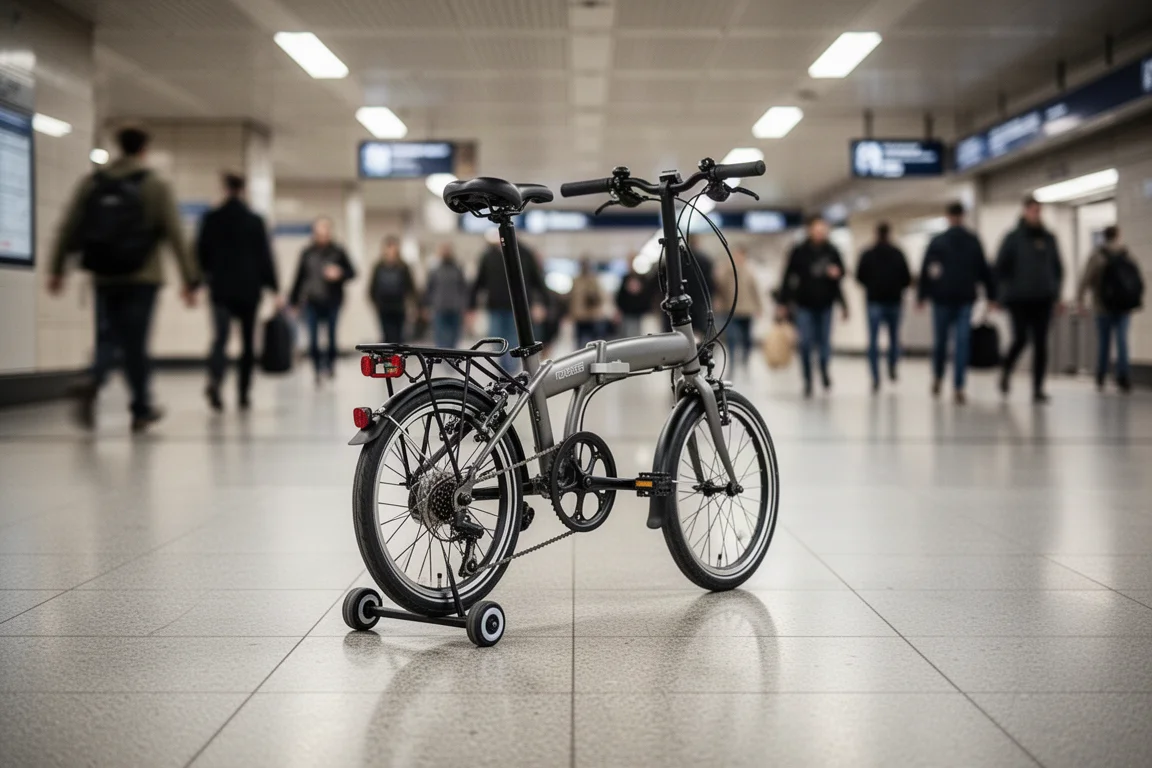
For anyone coming to folding bikes for the first time, the sensible approach is to decide which matters more: the smallest folded package, or a ride that holds up on gravel, towpaths and long weekend routes. The G Line is clearly built for the second answer.
Conclusion
The Brompton G Line is the most substantial update to the folding bike formula in decades, and it solves a real problem. It keeps the fold that made Brompton famous, then adds the wheels, tyres, brakes and geometry needed to ride comfortably well beyond the city.
It is heavier than the lighter models in the range and it is not a mountain bike, so it will not suit every rider. But for anyone who wants a folding bike that genuinely feels like a full-size bike on longer and rougher rides, it is a convincing answer.
Product link
View more details for Brompton G Line
This product is mentioned in the review. Check the specifications, options, and compatibility before buying.
View more details for Brompton G LineFurther reading
Related Reviews
Folding Bikes
Brompton G Line and G Line Electric: Two Folding Bikes Take On a 66 km Gravel Event
A hand-brazed steel folder and its electric sibling ride 66 km of forest gravel, and both finish with their reputations improved.
Folding Bikes
Brompton G Line and G Line Electric Review: Two Folding Bikes Tested on a 66 km Gravel Event
A practical look at the Brompton G Line and G Line Electric after both were ridden through a full 66 km gravel event, plus who each one actually suits.
Folding Bikes
Brompton T Line Review: Titanium, Carbon and the Lightest Brompton Yet
A practical look at the Brompton T Line, the titanium folding bike with carbon components, a redesigned rear triangle, and a price of around £4,000.