Folding Bikes
Brompton Folding Bikes Compared: A Line, B75, P Line and T Line
A practical look at four Brompton folding bikes, from the steel-framed A Line to the titanium T Line, with notes on the fold, gearing and luggage.
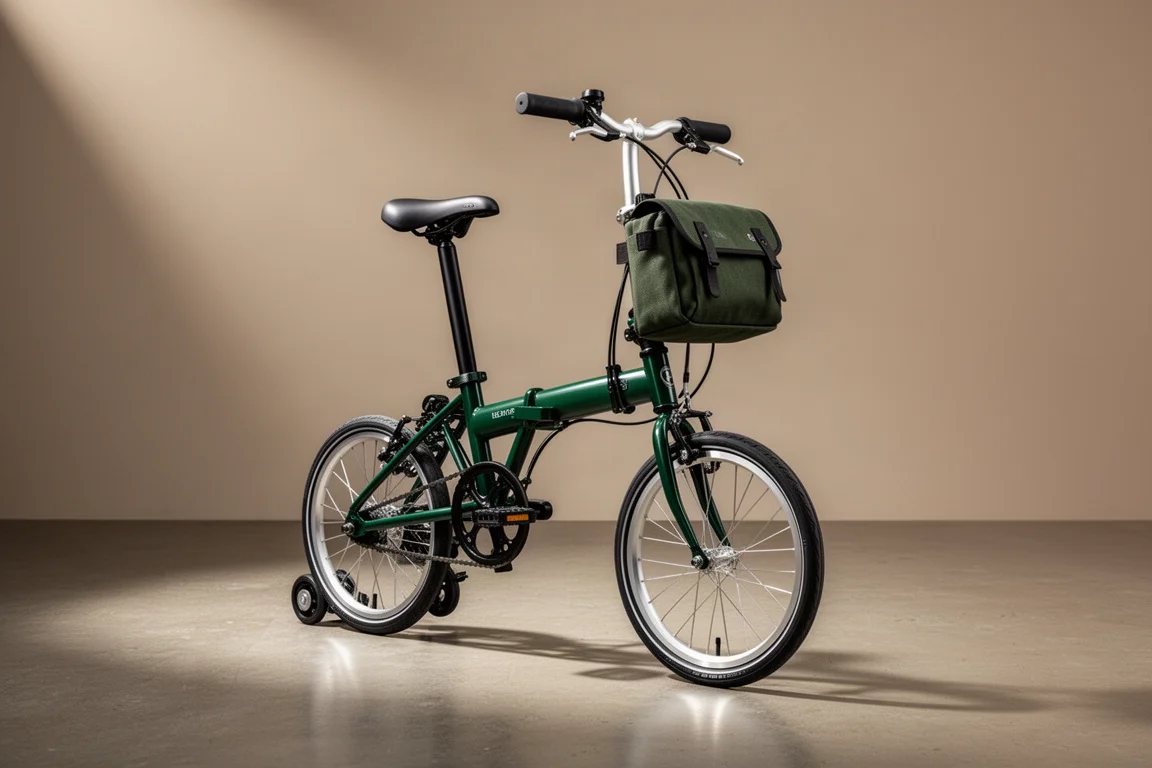
Introduction
Brompton builds one of the most distinctive folding bicycles on the market, and it is the three-part fold rather than the specification sheet that explains why owners become so attached to them. The original idea was the first and last mile of a journey: ride to the station, fold the bike, take it on the train, unfold at the other end and cover the rest of the trip without taxis, car parks or a lock.
This guide covers four models from the current and recent range: the steel-framed A Line, the limited-edition B75, the P Line with its titanium parts, and the titanium T Line at the top of the range. The notes below come from time spent folding, unfolding and riding each of them back to back.
What Makes a Brompton Different
The design began in 1970s London, where the aim was a bicycle that worked for commuters moving around the city. The name comes from the London district the design was named after.
Most folding bikes use a two-part fold. The Brompton uses three, and that extra movement is what makes the folded package so compact and so stable. Folded, it can be carried like a suitcase, taken on buses and trains, wheeled into a cafe, and kept beside you instead of locked up outside.
The fold itself is straightforward once learned. Fold the pedal in first, so it cannot rotate and catch the frame. Raise the handlebars and clamp them. Lift the saddle, which drops in behind the rear wheel and locks the whole package together. Unfolding runs in reverse: the rear wheel swings under the frame and doubles as a stand, then the frame hook, the saddle, the handlebars and the pedal. On 16-inch wheels, the ride is the real surprise. It does not feel like a tiny bike.
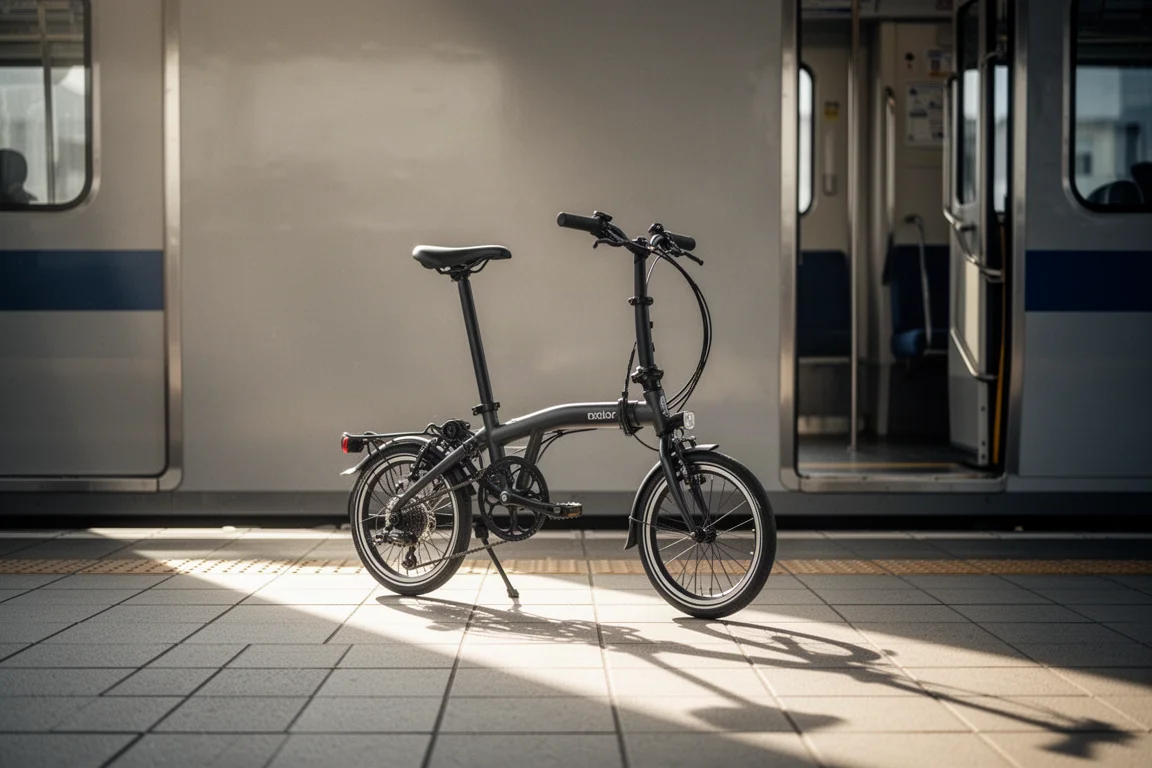
The practical result is a bicycle that behaves like luggage when you are not riding it, which is the whole point of the format.
Brompton A Line: The Entry Point
The A Line is the most basic Brompton and the most affordable way into the format, at around £950. It uses a steel frame, and that frame is made by the same people on the same jig as the more expensive models, so the fold and the geometry are unchanged. What you give up is gearing and finishing kit.
The A Line runs a three-speed internal hub. You have to stop pedalling to change gear, which takes a little getting used to, but the upside is that internal hubs are largely maintenance free. They do not collect much dirt and grime, so ownership mostly comes down to a bit of lubrication and an occasional clean.
On the road, the small wheels make the steering quick and the brakes sharp, and the ride feels closer to a road bike than a mountain bike. The trade-offs are that you feel every pothole, and a long climb on three speeds asks more of the rider than a wider gear range would.
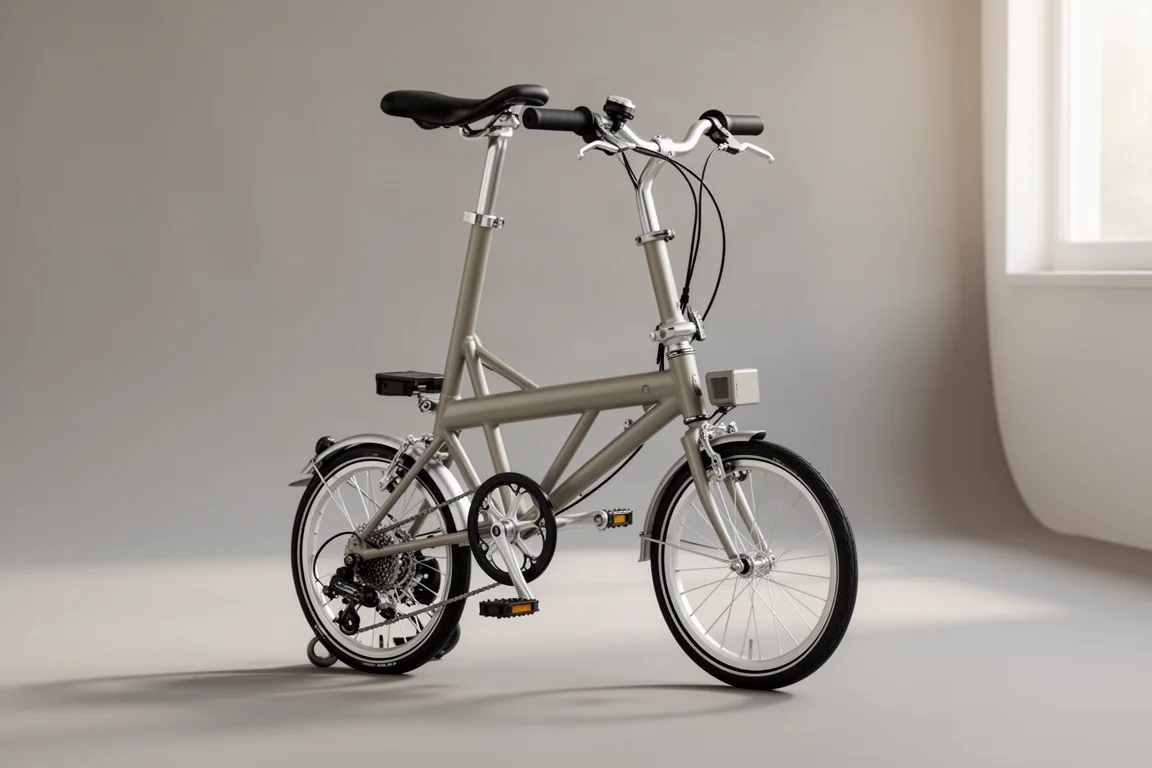
Brompton B75: The Limited Edition
The B75 is a limited edition built as a tribute to the founder of the brand, who has been obsessive about the design since he was 21 and is now approaching 80. Editions of this kind are as much about the details as the specification: the bell and bolt fittings, the different handlebars, and the small finishing touches owners use to make a bike their own.
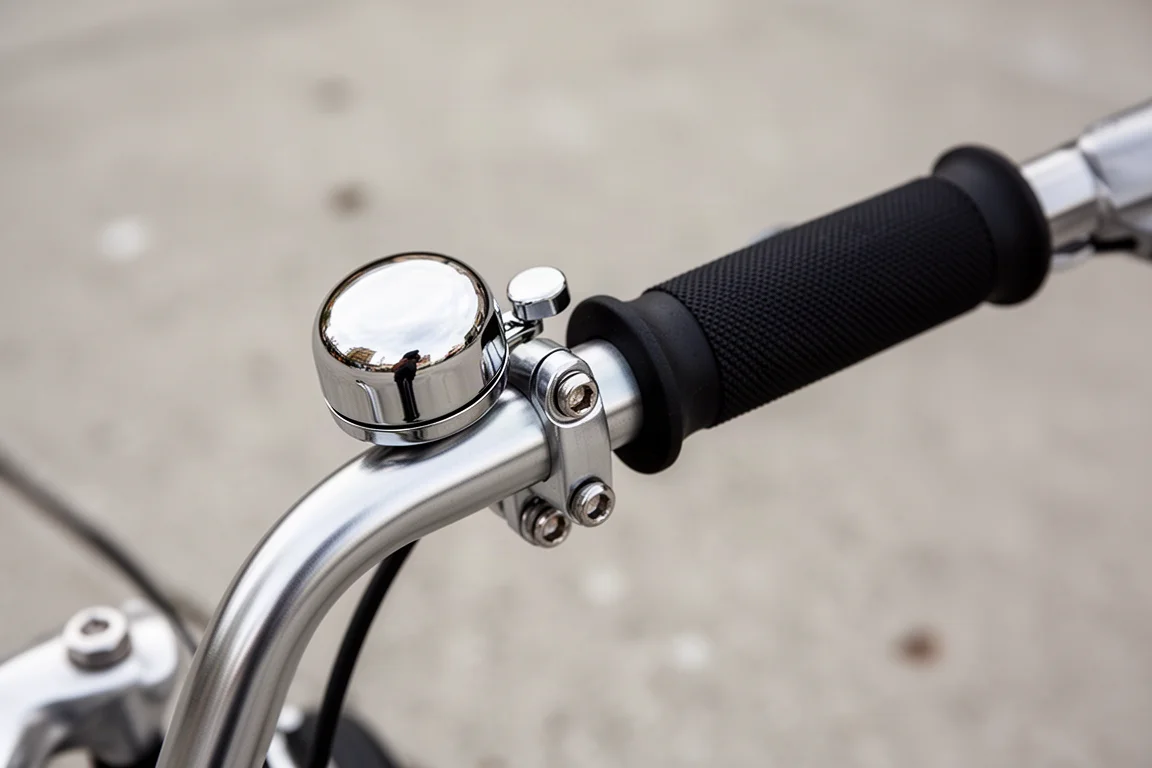
Mechanically it stays close to the classic formula, with a steel frame and a three-speed hub. If part of the appeal of a Brompton is the story behind it, this is the model that carries that story most directly.
Brompton P Line: The Middle of the Range
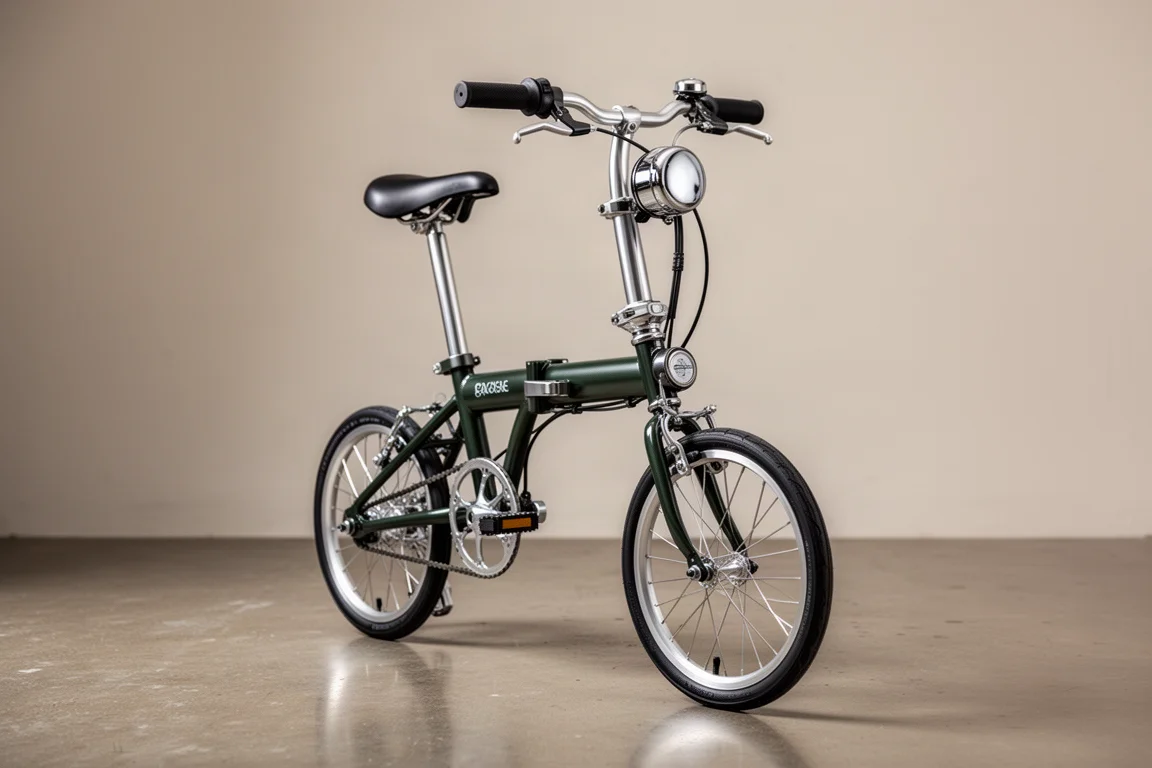
The P Line sits between the steel models and the titanium flagship, using titanium parts to trim weight without going all the way to the top of the range. It is also available in a 12-speed configuration, which pairs a three-speed hub with a derailleur for a much wider spread of gears than the three-speed bikes offer.
That gearing matters most on climbs and on loaded rides. The P Line is the natural answer for riders who want titanium lightness in some components but cannot justify the flagship price. The electric P Line is a different proposition again, with a four-speed setup, and it deserves a proper look on its own rather than a line in a roundup.
Brompton T Line: The Lightweight Flagship
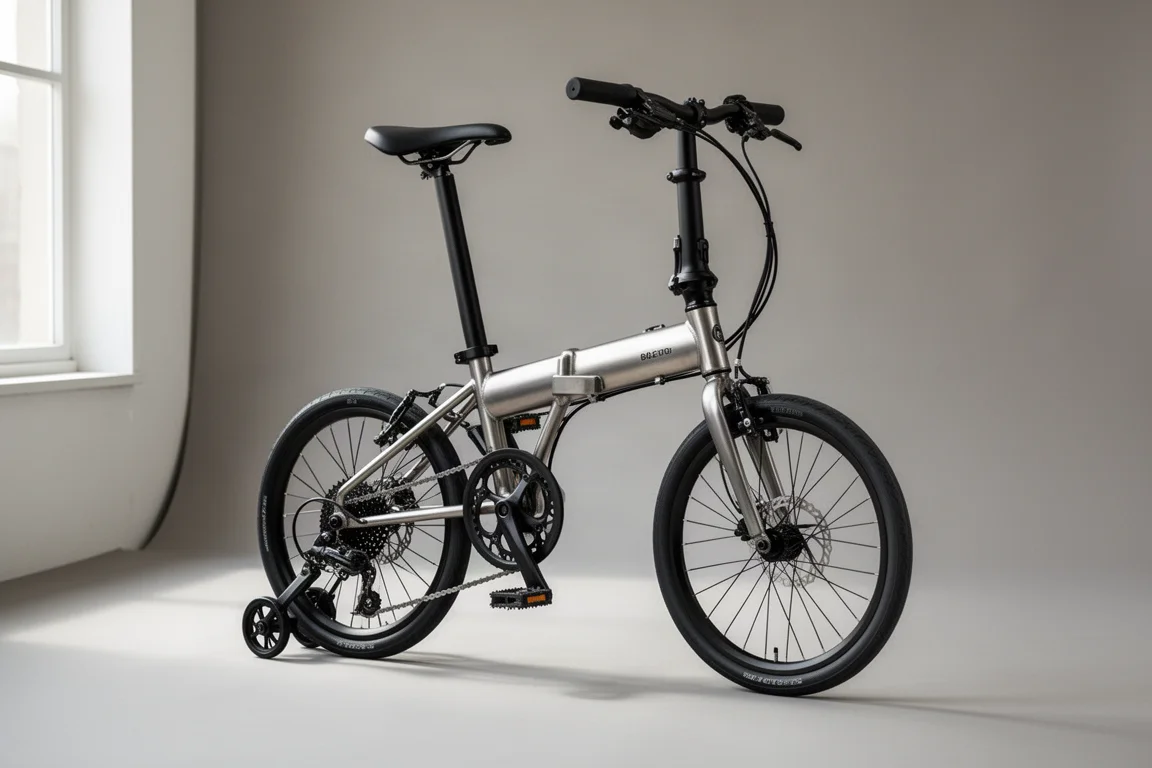
The T Line is the titanium model, and the first thing you notice is the weight. Lifting one with a little finger is genuinely possible, and that is the difference between carrying a bike up station stairs and dragging it.
Gearing is a 12-speed arrangement: a three-speed hub paired with a four-speed derailleur. Out of the factory it comes with a carbon crankset, and the frame follows the same fundamental design as the rest of the range, simply built in a lighter material.
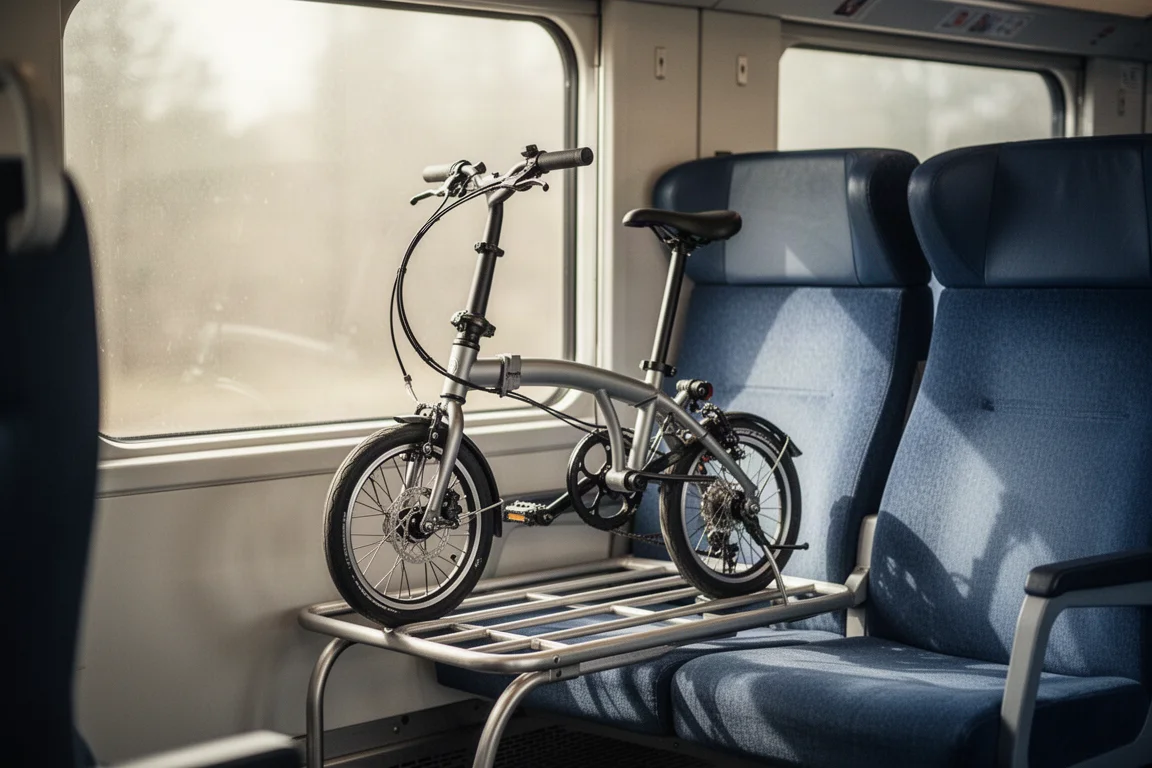
In practice, a T Line can end up heavier than the brochure suggests. One owner’s example runs a rear rack, Schwalbe Marathon Plus tyres chosen for puncture resistance, and a standard Brompton saddle fitted because it is more comfortable than the superlight alternative. That is a sensible build for touring, and it shows how much the finishing kit shapes the finished weight.
Pricing sits at the top of the range, with the owner quoting a figure approaching £5,000 for a well-specified build.
Living With a Brompton: Gearing, Tyres and Luggage
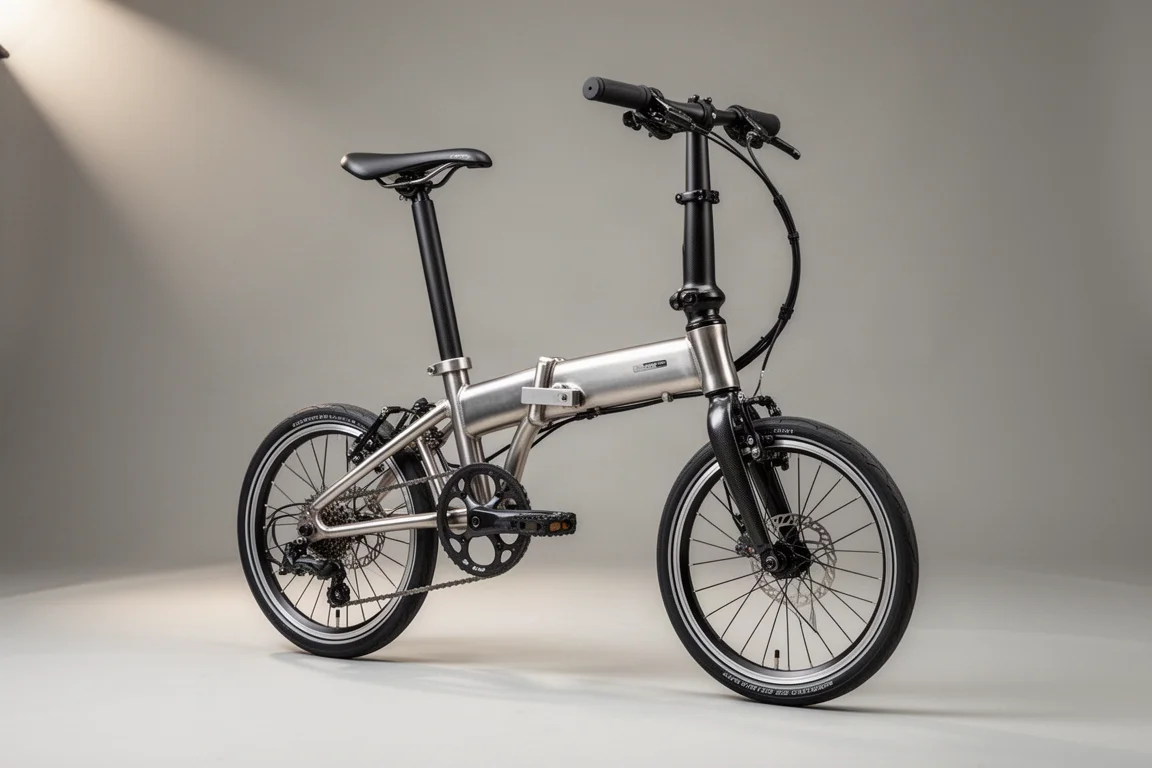
Everyday ownership is simpler than the engineering suggests. Hub gears need you to pause pedalling before shifting, while the derailleur side of a 12-speed setup is a fail-safe design that tolerates shifting under load. Tyres need more attention: the rubber compound used on the standard tyres is porous, so air escapes gradually and a weekly top-up is normal.
Luggage is where the platform gets interesting. A front carrier block takes a range of bags, including a roughly 25-litre touring bag that is showerproof and comes with a rain cover, and a simple open basket that is handy for shopping. Newer bags are fully waterproof, though the colour options are limited. Weight carried on the front tends to balance well, and a bag on the rear rack works too.
For camping and bikepacking, the appeal is not technical terrain. It is the ability to ride between the places you would otherwise walk, to link up lowland camps and valleys, and to carry everything on the bike. The folded package also fits neatly into a campervan or a train carriage. There is even an international Brompton championship for riders who want to race them.
Buying Advice: Which Brompton Suits You
Start with how you will carry the bike, not how you will ride it. If the bike mostly stays on the ground and the priority is the lowest entry price, the steel A Line delivers the fold, the frame and the format for around £950.
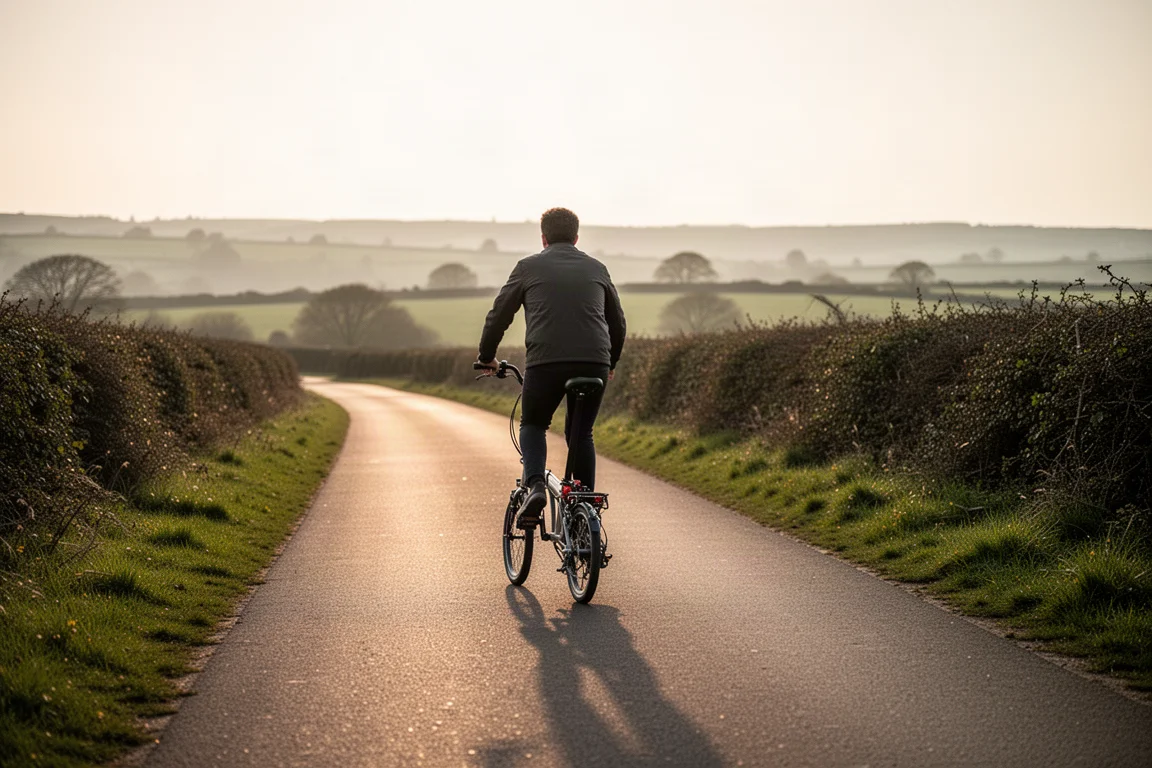
If you lift the bike onto trains several times a day, weight becomes the specification that matters most, and the titanium T Line earns its price in that one repeated movement. The P Line is the compromise: titanium parts, a 12-speed option, and a lighter carry than steel without the flagship cost. The B75 is the enthusiast’s choice, bought for the limited-edition connection as much as for the ride.
Two things are worth remembering whichever model you pick. First, the frames across the range share the same design and the same fold, so the differences come down to materials, gearing and finishing kit rather than the core experience. Second, a Brompton holds its value well, which softens the cost of buying at the top of the range if you ever sell. Fold one yourself before deciding; the sequence takes a few attempts to learn, and it is far easier to judge in person than on paper.
Conclusion
The Brompton format solves a specific problem well: getting a real bicycle through a journey that involves trains, buses, stairs and small spaces. Within the range, the A Line is the sensible entry, the P Line the balanced middle, the T Line the lightest option for anyone who carries a bike constantly, and the B75 the one to choose if the history matters to you. Whichever you pick, the fold is the feature you are really buying.
Further reading
Related Reviews
Folding Bikes
Brompton G Line and G Line Electric: Two Folding Bikes Take On a 66 km Gravel Event
A hand-brazed steel folder and its electric sibling ride 66 km of forest gravel, and both finish with their reputations improved.
Folding Bikes
Brompton G Line and G Line Electric Review: Two Folding Bikes Tested on a 66 km Gravel Event
A practical look at the Brompton G Line and G Line Electric after both were ridden through a full 66 km gravel event, plus who each one actually suits.
Folding Bikes
Brompton G Line Review: A Folding Bike Built for Longer, Rougher Rides
The Brompton G Line keeps the familiar fold but adds 20-inch wheels, wider tyres and disc brakes for riders who want to go beyond the city.