Ski Resorts
Bridger Bowl Review: Montana's Hidden Gem with World-Class Extreme Terrain
A nonprofit Montana town hill with modest infrastructure but some of the most demanding inbounds skiing and riding in North America, all at surprisingly reasonable prices.
Introduction
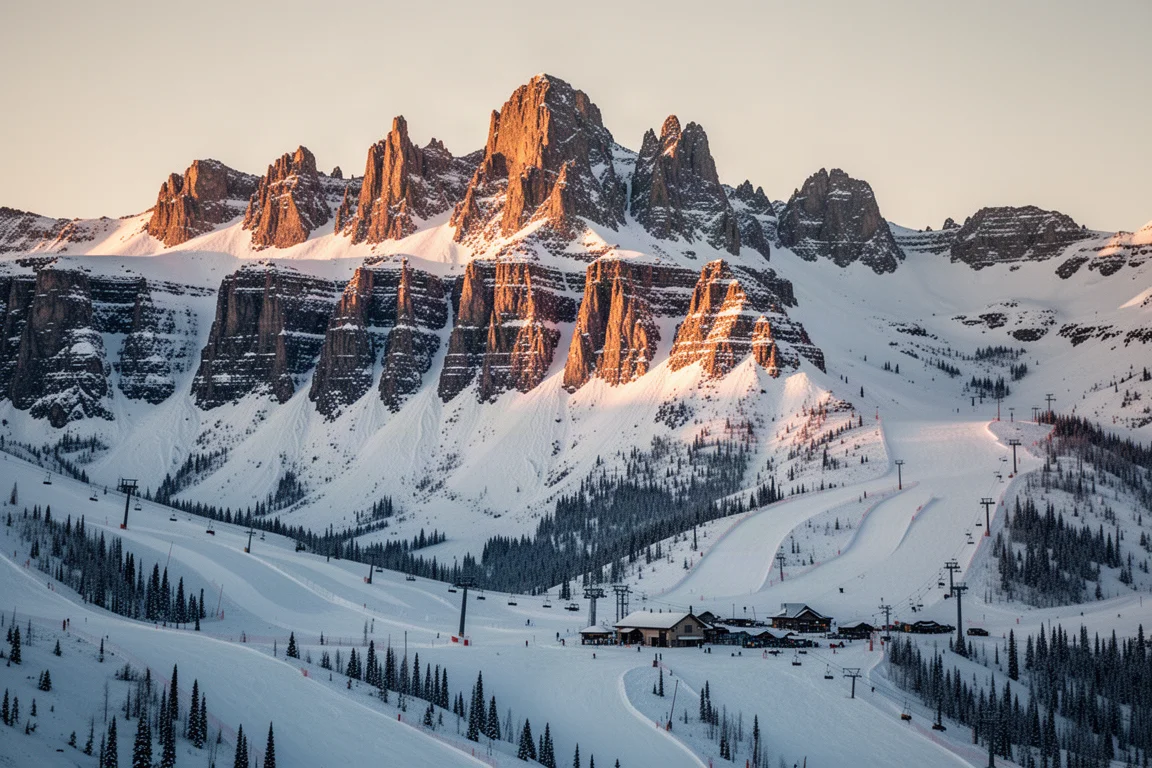
Dreaming of a local ski hill with world-class terrain? Bridger Bowl might be the hidden gem you have been looking for. With under 2,000 skiable acres and no on-site lodging, this Montana ski area may not look like a world-beater on the surface. But the terrain itself makes for one of the most memorable resort experiences you can have, provided you are proficient enough to handle it. This guide covers the overall mountain experience, how the resort handles beginners through experts, and how it stacks up in our rankings.
The Mountain Experience
With 1,640 skiable acres, Bridger Bowl is generously sized for a local hill, though quite a bit smaller than most destination resorts. The resort starts with one base area and widens as it climbs, getting progressively steeper with elevation. The lower mountain serves almost exclusively beginner terrain, mid-mountain areas specialize in intermediate and advanced trails, and the upper mountain is home to an abundance of steep chutes and cliffs.
Bridger is essentially the town hill for Bozeman, Montana, and it offers a reasonably strong experience for those learning. The lower-mountain Virginia City and Sunnyside chairs serve easier green runs, while the mid-mountain Alpine lift offers a handful of greens plus some unique open glade areas for this ability level. A Snowflake triple chair and a few magic carpets provide access to a small bunny hill near the base. Since everyone returning from higher terrain funnels through these zones, the wide variety of runs keeps any one trail from attracting all the traffic.
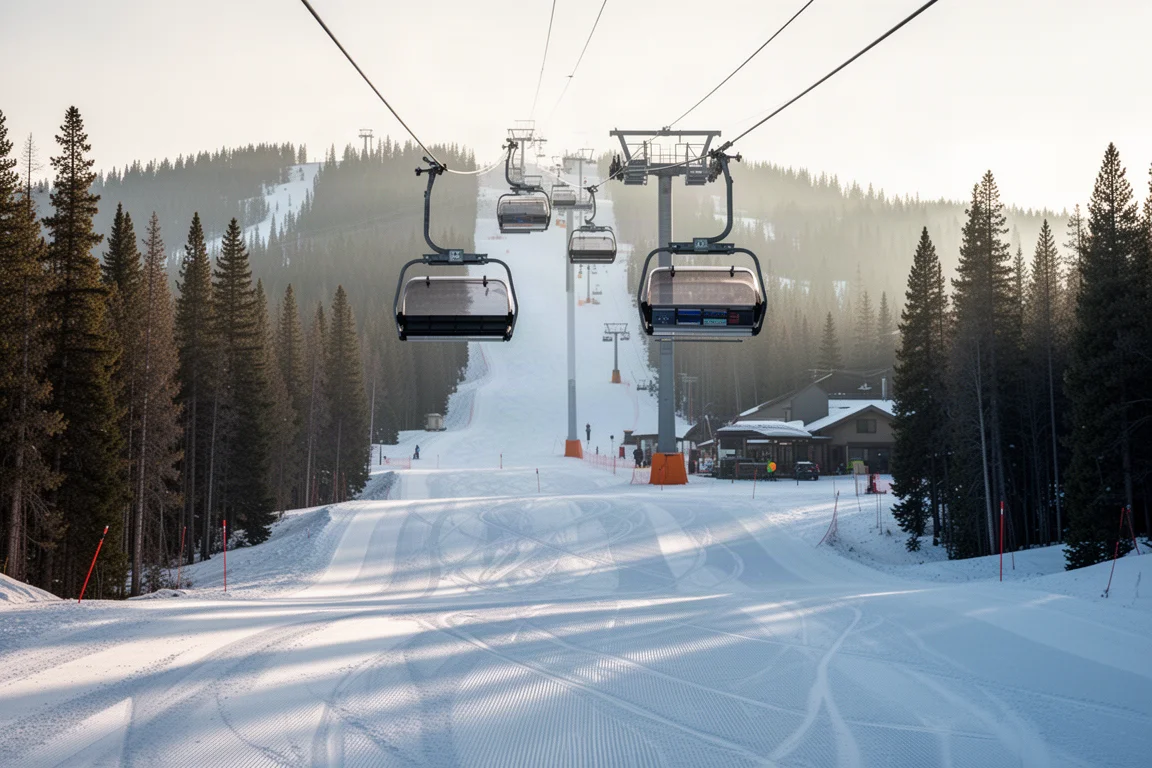
Intermediate skiers and riders have solid options too. The Alpine, Powder Park, and Pierre’s Knob lifts serve groomed blue cruisers, and the Alpine lift also accesses some mellow glade terrain. Bridger is not exactly a park destination, but two lower-mountain terrain parks with features from small to large, including boxes, rails, jumps, and jibs, will keep freestyle enthusiasts reasonably satisfied. For single-black terrain, the Bridger lift past its mid station serves a series of advanced bowls and chutes that mogul up quickly, while Pierre’s Knob and Powder Park offer shorter advanced runs that can be nice for trying mogul terrain for the first time.
Extreme Terrain: Schlasman’s and the Ridge
While Bridger has a good variety for all ability levels, the expert terrain is what makes it worth traveling out of the way. The lower tier of expert runs, marked double black diamond, sits mainly off the Bridger lift via the high traverse. These chutes involve steep, high-consequence fall lines with very little room for error, some lined by rocks for a dramatic backdrop.
Where confident experts really want to be is the Ridge terrain, denoted with a purple shade on the trail map. These zones have no official trails, are fair game for unmarked obstacles such as cliffs and chutes, and are so highly exposed that an avalanche beacon is required to access them. The name is slightly misleading: beyond the primarily hike-only ridge itself, the zone also encompasses the Schlasman’s area, a fully lift-served freeride zone on the far skier’s right of the resort. Because Schlasman’s is part of this restricted area, guests need a working avalanche transceiver to ride it, making it, as far as we know, the only lift in the United States with such a requirement.
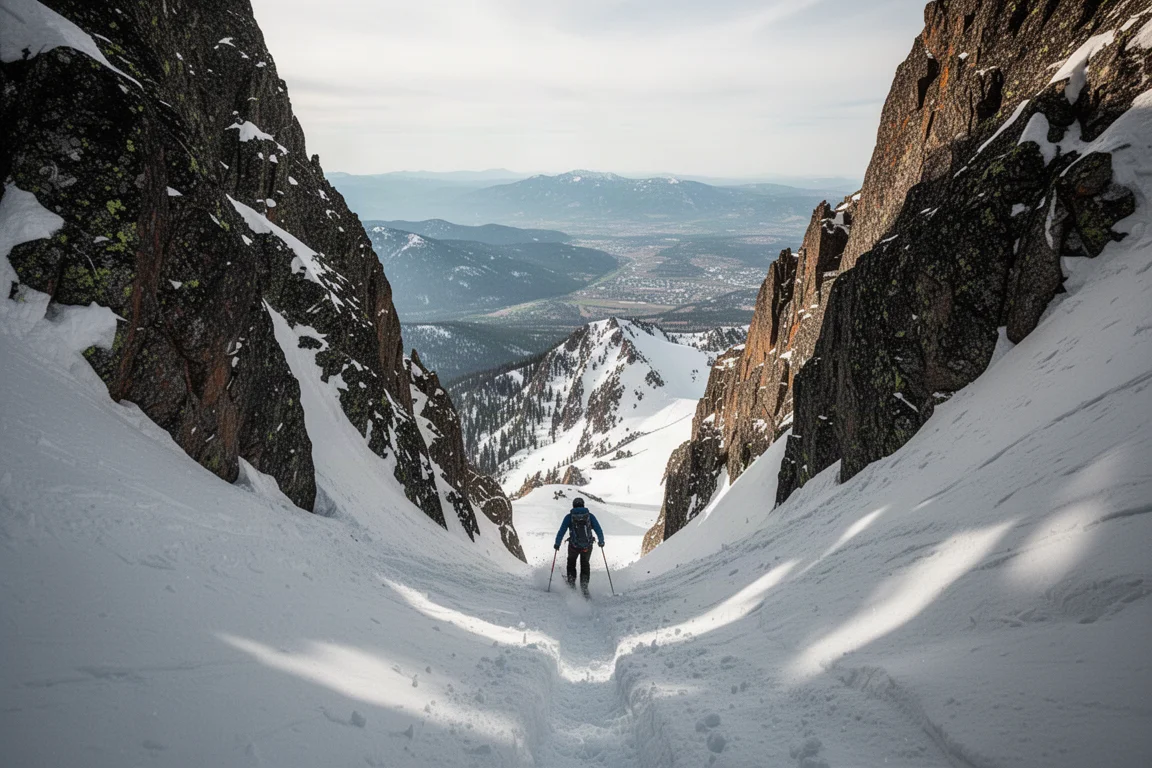
There is good reason for this. Schlasman’s provides access to what might be one of the most unhinged lift-served skiable footprints in the world, with no warning markings, mandatory straight-lining or cliffs depending on where you end up, and very little guidance on how to avoid or find these obstacles. Several routes down are regular expert level, but if you are not familiar with the area, it is best to find an experienced guide or partner to avoid unwanted hazards.
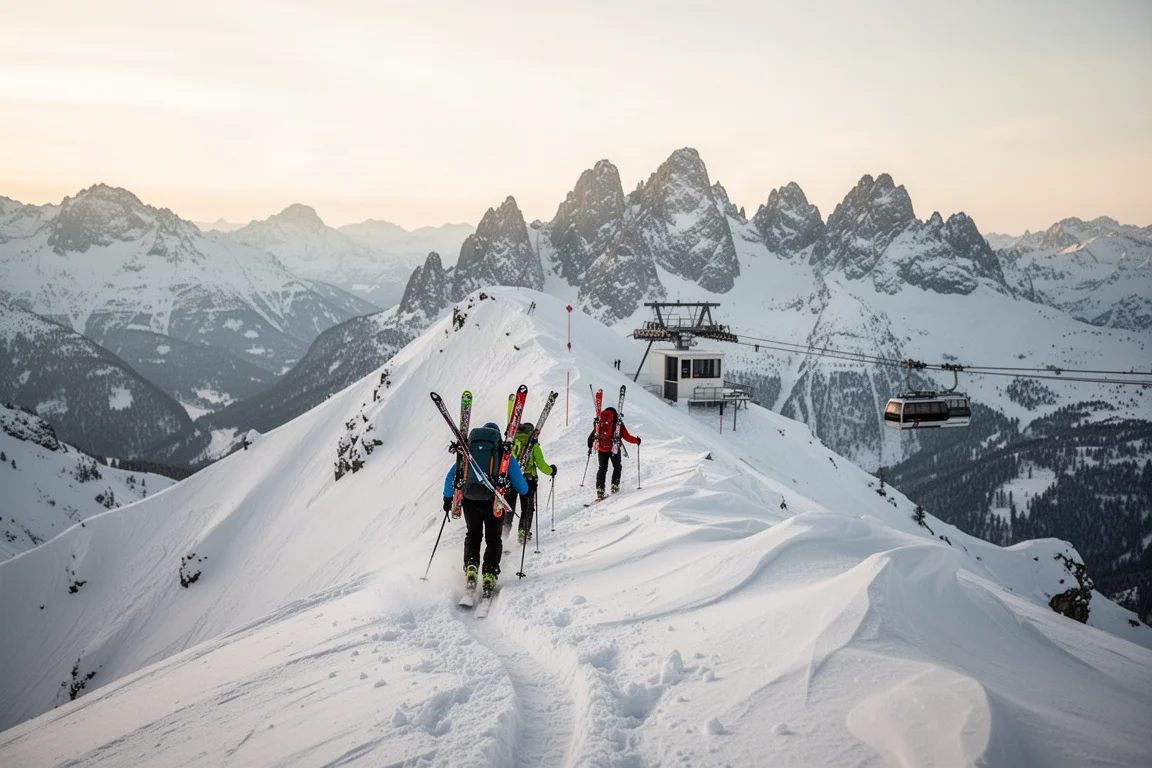
If you want terrain even more extreme than Schlasman’s, a hike up the ridge itself may be the way to go. The Bridger Ridge hikes are not the longest but are quite steep, so you will want good cardio shape. From the top of the Bridger lift toward the C and D routes, you face terrain where you are highly likely to get cliffed out if you do not know where you are going, and you will need to handle extremely steep, narrow, tight chutes at a bare minimum. Several seemingly okay-looking routes involve mandatory cliffs, some paired with mandatory straight-lining before or after depending on the snowpack. Ski patrol will not close runs while the hike is open, so it is up to you to judge which lines are sendable. Bridger does offer a photograph-based guide to this terrain with unofficial route names, but it is no substitute for experience. One interesting quirk: a surface lift runs alongside the ridge hiking path, but it is reserved for ski patrol only, so regular guests will earn their turns the old-fashioned way.
Infrastructure, Food, and Getting Around
Bridger may be a world-beater when it comes to extreme terrain, but the same is not true of its infrastructure. Everything is well maintained and in good working order, yet all lifts are slow: Schlasman’s is a double, Sunnyside is a quad, and the rest are triple chairs. About 17% of the terrain requires hiking to reach.
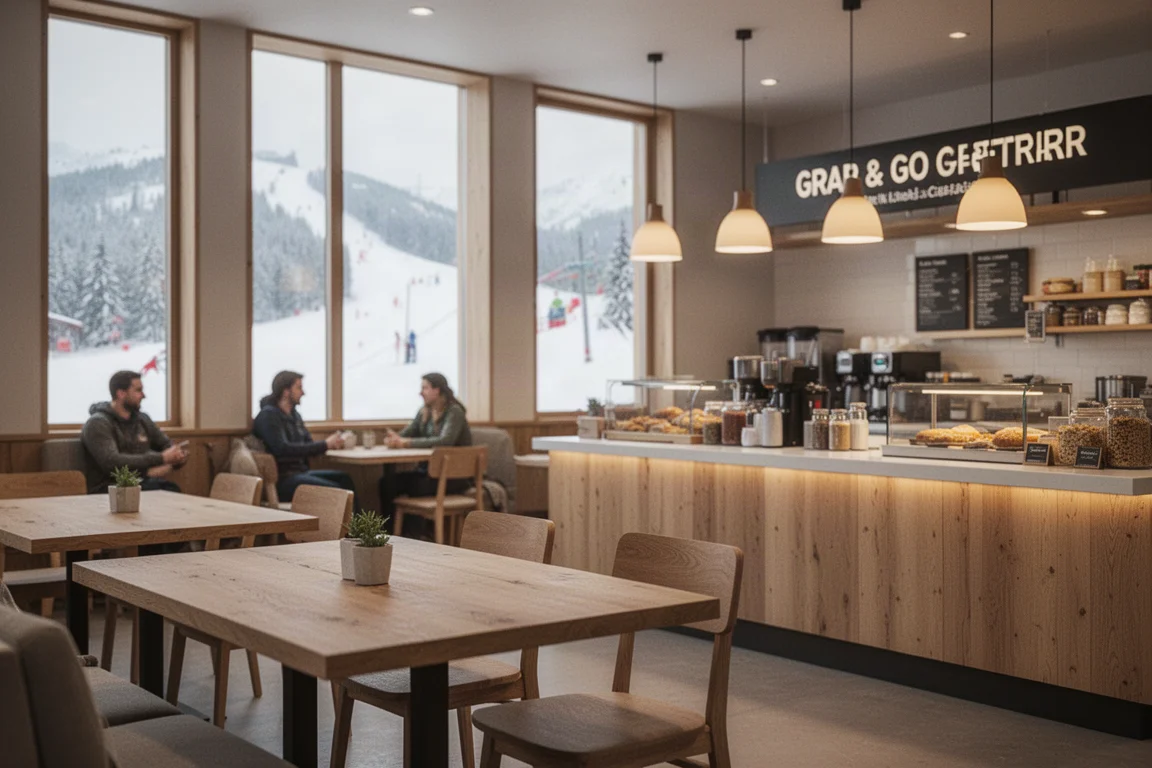
On-mountain food options are more functional than fancy. The Deer Park Chalet and Alpine cabin offer grab-and-go cafeteria food close to the bases of the mid-mountain lifts, though the Alpine cabin can be a bit tough to find depending on your route down. The food at the lodges is pretty average but more reasonably priced than at a typical destination resort, especially at the base lodge.
Snow totals typically range between 200 and 300 inches per season, generally respectable and reliable, though some mid and lower mountain areas can experience thin cover in low seasons. The summit tops out at just 8,800 feet, and combined with primarily east-facing terrain, the resort is prone to sun bake if it has been clear with no recent snow. Snowmaking is extremely limited and concentrated on the lower mountain, but strong grooming keeps beginner, intermediate, and even some advanced runs in good shape throughout the season.
Navigating the more family-friendly areas is straightforward, and a nice touch is the Deer Park Magic Carpet connecting the base of Pierre’s Knob to the base of the Bridger lift, avoiding a lengthy sidestep. However, the Ridge areas have almost no signage, which is not exactly an accident, and getting to and from Schlasman’s can be a pain: it is easy to miss the turn after the access gate near the top of Pierre’s lift, and leaving Schlasman’s requires some flat terrain to get back to other areas.
Crowds are worth noting. Bridger appears on no multi-resort pass products, including Epic, Ikon, or the Indy Pass, yet it can still get busy on weekends and holidays, especially at the beginner- and intermediate-focused lifts as Bozeman locals arrive. Limited parking does cap how bad things can get, but if you are hoping to escape crowds during peak times, you may be slightly disappointed.
Lodging, Logistics, and Après
Bridger Bowl’s proximity to Bozeman is a genuine benefit. It is about a half-hour drive from Bozeman Yellowstone International Airport, with most practical lodging options significantly closer to the resort than the airport. As a state-owned ski area rather than a true resort, Bridger lacks on-site lodging, but there are plenty of options in and around Bozeman proper: from the cheap and social shared-room Treasure State Hostel to the high-end five-star hotel, with a range of hotels, Airbnbs, and vacation rentals in between.
Bridger itself is about the skiing and riding rather than the party scene, and it stays fairly low-key after the slopes close. A bar and grill in the Jim Bridger base lodge has enjoyable happy-hour vibes and a good chance to connect with locals. Less than half an hour away, Bozeman offers far more options, including a huge variety of bars and restaurants, and as a college town you can expect some sort of scene every night.
Pricing and Value
One of the best parts about Bridger Bowl is that its locally run nonprofit roots extend to its pricing. One-day adult rates top out at just $97 at the window, or $82 if bought online, even after a $10 reloadable card charge. That is quite reasonable by today’s standards for any 1,600-acre ski area, let alone one with some of the most extreme skiable terrain on the continent. If you have missed the Epic and Ikon pass deadlines, Bridger can be a nice bargain alternative to the big destinations.
How It Ranks
Our resort rankings use ten categories, and Bridger earns an overall score of 66, placing it seventh in the northern Rockies and 46th in North America as of early 2025. Snow scores an 8, reflecting the strong totals typical of a Rocky Mountain resort even if accumulation is not as plentiful as the best big-mountain destinations. Resiliency gets a 6: the northern location keeps conditions reasonably consistent, but modest elevation, extremely limited snowmaking, and an east-facing footprint hurt operations in bad seasons.
Size scores a 6, since only 1,640 of the roughly 2,000 claimed acres are actually skiable. Terrain diversity also scores a 6, as beginner through advanced runs do not stand out versus bigger destinations. Challenge, however, earns our highest score of 10, with Schlasman’s and the Ridge offering some of the most dangerous skiable terrain to be found anywhere, even right off the lifts in some cases.
Lifts score a 3 given the slow fleet and the hiking requirement. Crowd flow earns a 7: out-of-towners are few, though peak dates and powder days can still see lines. Facilities score a 7 for practically placed if unfussy lodges, navigation a 6 for the Schlasman’s access quirks, and mountain aesthetic a 7, since the Ridge is quite the iconic beast and nobody will mistake this place for a commercialized mega-resort.
Conclusion
Bridger Bowl is a family-friendly local ski hill for the Bozeman area that also happens to offer some of the best inbounds extreme skiing and riding in the world. If beginner through advanced slopes are your focus, it will not beat out true fly-to-ski destinations such as Big Sky or Jackson Hole. But if you are looking for the hardest inbound ski terrain North America can offer, this nonprofit Montana hill puts up one heck of a fight for that title, and it does so at a price that is hard to argue with.
Product link
View more details for Bridger Bowl
This product is mentioned in the review. Check the specifications, options, and compatibility before buying.
View more details for Bridger BowlFurther reading
Related Reviews
Ski Resorts
Alyeska Resort Review: Alaska's Largest Ski Resort, Worth the Journey?
A deep look at Alyeska Resort: heavy snowfall, expert terrain, an Icon Pass connection, and the trade-offs of a near-sea-level mountain in the Last Frontier.
Ski Resorts
Bear Valley Ski Resort Review: Northern California's Quiet Sierra Alternative to Tahoe
A lesser-known Sierra resort with over 1,300 skiable acres, surprisingly strong expert terrain, and crowd levels Tahoe can only dream of. Here is what to know before you go.
Ski Resorts
Colorado Ski Resorts Ranked: The Best Destination Mountains for Overall Experience
A ranked guide to Colorado's destination ski resorts, covering terrain, snow, logistics, crowds, and cost so you can pick the right mountain for your trip.