Home Audio
Bowers & Wilkins Zeppelin Review: The Redesigned All-in-One Music Player
A close look at the redesigned Bowers & Wilkins Zeppelin, an all-in-one wireless music system built around premium speaker components and app-based streaming.
Introduction
The Bowers & Wilkins Zeppelin is back in a fully redesigned form, and the name carries a lot of history. The original arrived in 2007, at a time when iPod docks were the most common way to move a music collection from a pocket player into the living room. Most of those docks were inexpensive and sounded merely acceptable. The Zeppelin was a different proposition: it looked unlike anything else on the shelf and it delivered the big, rich, full and accurate sound the brand was known for. It was by far the most expensive dock of its time, and it was popular enough that the vast majority of docks selling above $500 were Zeppelins.
Two further models followed, the Zeppelin Air in 2011 and the Zeppelin Wireless in 2015, each bringing more streaming options and revised components. When the line was eventually discontinued, it left a gap. The new Zeppelin fills it, and this time it is built around wireless streaming from the ground up rather than around a dock connector.
Who this product is for
This is a system for listeners who want one piece of furniture that plays music properly, without an amplifier, a pair of speakers and a tangle of cables. It suits anyone who streams from a phone or tablet and wants the music to fill a room rather than sit politely in a corner. It also suits households already using the brand’s wireless ecosystem, since the Zeppelin can join a multiroom setup alongside other units and compatible wireless headphones.
It is not aimed at listeners who want to connect a turntable or improve their television sound. There are no analog or optical inputs on the cabinet, so the Zeppelin is a music streamer first and a music streamer only. Buyers who need those connections should look elsewhere.
Main strengths
Design and build quality
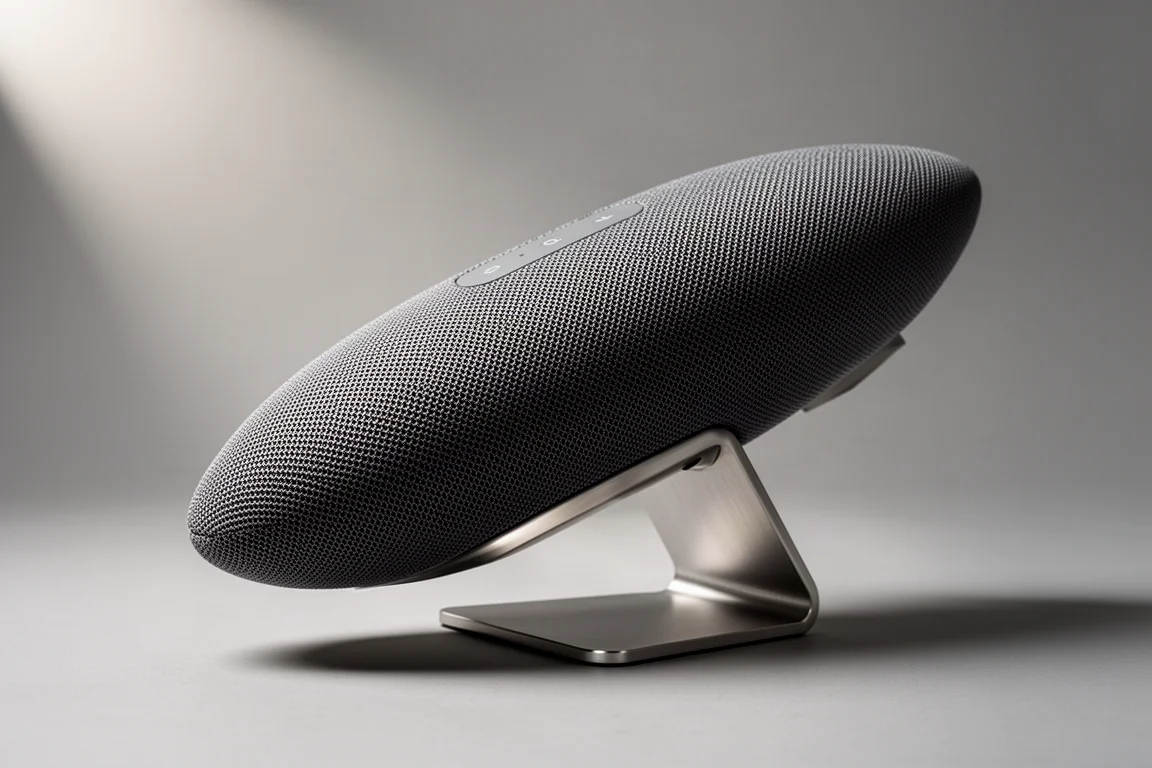
The silhouette is unmistakable. The tapered, blimp-like cabinet comes in Midnight Gray or Pearl Gray, and it sits on a sleek aluminium stand that tilts the unit upward so it fires into the room rather than straight ahead. A small light underneath can be switched on for a subtle glow, a nice touch for evening listening. A wall bracket will be offered as an optional accessory for anyone who wants the Zeppelin mounted permanently.
The shape is not only about looks. The brand’s more expensive speakers place their high-frequency and mid-range drivers in curved, tapered housings for the same reason: the geometry reduces diffraction and helps deliver a more precise, less coloured sound into the room. The cabinet itself was designed using finite element analysis, which produced thick walls and a custom-designed port for the bass driver.
Sound performance
The driver complement is unusually serious for an all-in-one system. A 6-inch bass driver sits in the middle of the cabinet and works as a subwoofer, with discrete drivers handling the left and right channels. The tweeter is a double dome design carried over from the brand’s 600 Series Anniversary Edition speakers, while the 3.5-inch mid-range uses the same FST, or fixed suspension technology, found in the company’s better floorstanding models. Five discrete amplifiers, each designed around the drivers and the acoustic character of the enclosure, power the whole array, and the internal DAC handles 24-bit/96kHz high-resolution audio.

In listening, the result is a room-filling presentation with a very natural balance. There is no artificial boost at either end of the spectrum, just a clean and uncoloured reproduction of the music. Off axis, the high frequencies stay clear, while the mid-range, as with any speaker, falls away as those drivers are more directional. The consistent listening window extends to roughly 60 degrees from the centre of the cabinet, which is generous and covers most rooms well.
Volume behaviour is another strength. The Zeppelin can be pushed hard without falling apart, holding its composure and character as it gets loud. At the other end of the scale, the volume control offers plenty of fine increments, so quiet late-night listening stays easy to dial in.
Streaming, app, and connectivity
Setup runs through the brand’s music app, available for both iOS and Android. The app finds the unit, asks for a name and the network password, and the system is ready. Supported services inside the app include Deezer, NTS Radio, Qobuz, SoundCloud, Tidal and TuneIn, with Amazon Music, Apple Music and Pandora expected to follow. One genuinely useful feature is that playlists and favourite albums from multiple services are combined into a single view, which removes a lot of hopping between apps.
Wireless options cover AirPlay 2, Bluetooth and Spotify Connect, and Alexa voice control is supported as well. Because the platform is software based, it can be updated over time with new features and performance improvements. Multiroom is handled through the same app: more than one Zeppelin can be linked, and the system can also be paired with compatible wireless products and headphones from the brand’s wider range.
Tone controls and placement
Placement matters more than it might seem. Most owners will put the Zeppelin on a counter or table with its back near a wall, which gives the strongest bass reinforcement. Positioning the cabinet about 6 inches off the rear wall produced the most balanced result. The good news is that the app includes tone controls, so a unit pushed right against the wall can have its bass reduced by around 2dB to land in very similar territory. That flexibility makes the system far easier to live with in real rooms.

In practice, that means a unit placed against a wall can still sound balanced, and owners who prefer a leaner low end have a straightforward way to get there.
Things to consider before buying
The main compromise is connectivity. Apart from power and a USB-C port reserved for service, there are no connections on the back, which means no turntable and no television duties. Everything runs over the network, so a stable wireless setup is essential.
Physical placement also shapes the sound. Bass output changes noticeably depending on how close the cabinet sits to a rear wall, and while the tone controls help, buyers should expect to spend a little time finding the right spot. The packaging is extremely protective, though not especially eco-friendly, which is worth noting for anyone trying to reduce waste.
Finally, an all-in-one system has limits. The Zeppelin will not match a pair of good bookshelf speakers driven by a quality integrated amplifier, and it is not intended to. Judged as a single-box music player, though, it sits at the top of its price class.
Buying advice
Pricing lands close to what the original Zeppelin sold for once inflation is accounted for, which is a fair reflection of the components inside. Buyers weighing the decision should start with the room: a space where the unit can sit on a stable surface, ideally with a little breathing room behind it, will get the best from the bass driver and the tone controls.
The second question is what else the system needs to do. If the answer is simply to stream music well and fill the room, the Zeppelin is a strong choice. If a turntable or a television is part of the plan, this is the wrong product, and no amount of setup will change that.

For listeners who want an all-in-one music player that is clearly better than most, this should be near the top of the shortlist. It sounds excellent for its price, it looks like a piece of art in most rooms, and its software platform gives it room to improve over time.
Conclusion
The redesigned Bowers & Wilkins Zeppelin keeps what made the original special, namely a distinctive form, serious speaker engineering and a sound that stays pure when pushed loud, and rebuilds everything else around modern wireless streaming. The trade-off is a closed, input-free design that will not suit every system. For a dedicated music system in a single enclosure, it is one of the most convincing options available.
Product link
View more details for Bowers & Wilkins Zeppelin
This product is mentioned in the review. Check the specifications, options, and compatibility before buying.
View more details for Bowers & Wilkins ZeppelinFurther reading
Related Reviews
Home Audio
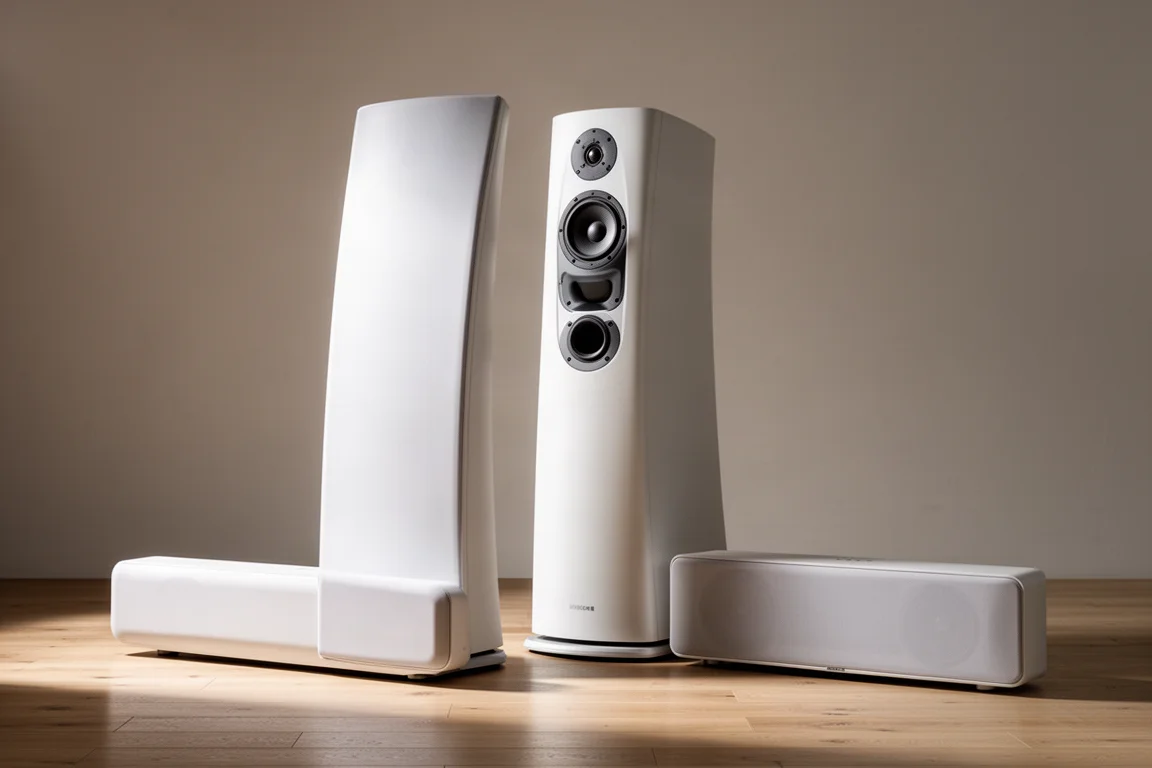
Aperion Novus Tower and Center Review: Punchy Home Theater Sound With Real Refinement
A close look at the Aperion Novus tower and center speakers, from their layered paint finish and punchy bass to the 4-ohm load and what the price actually buys.
Home Audio
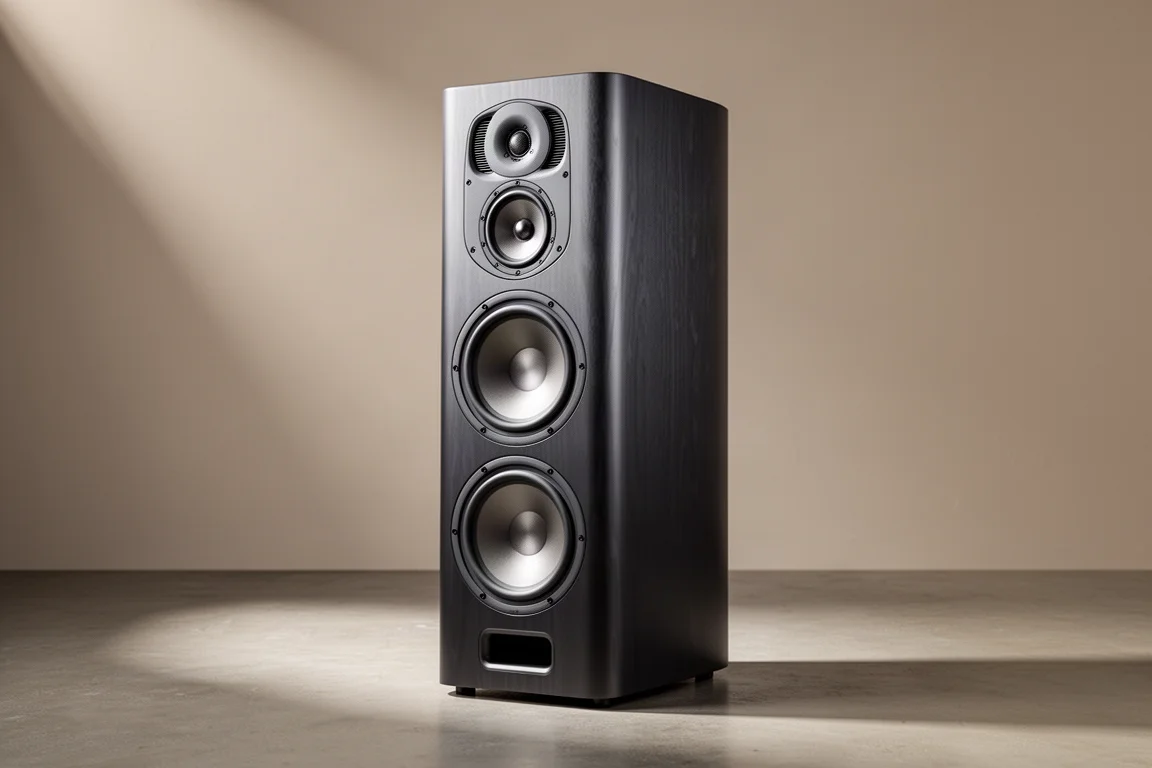
Arendal 1610 Tower Review: Flagship Dynamics in a Room-Friendly Tower
A compact floorstanding tower with three 8-inch aluminium woofers, a 5-inch carbon midrange, and the kind of bass heft usually reserved for much larger speakers.
Home Audio
Arendal 1723 S THX Review: A Reference Speaker Built Like a Tank
A practical look at the Arendal 1723 S THX, a sealed, THX-certified speaker with exceptional build quality, a very flat top end, and a midrange that responds beautifully to EQ.