True Wireless Earbuds
Bowers & Wilkins Pi6 vs Pi8: Which Noise Cancelling Earbuds Should You Choose?
A practical comparison of the Bowers & Wilkins Pi6 and Pi8, covering drivers, wireless codecs, battery life, fit and the case features that separate them.
Introduction
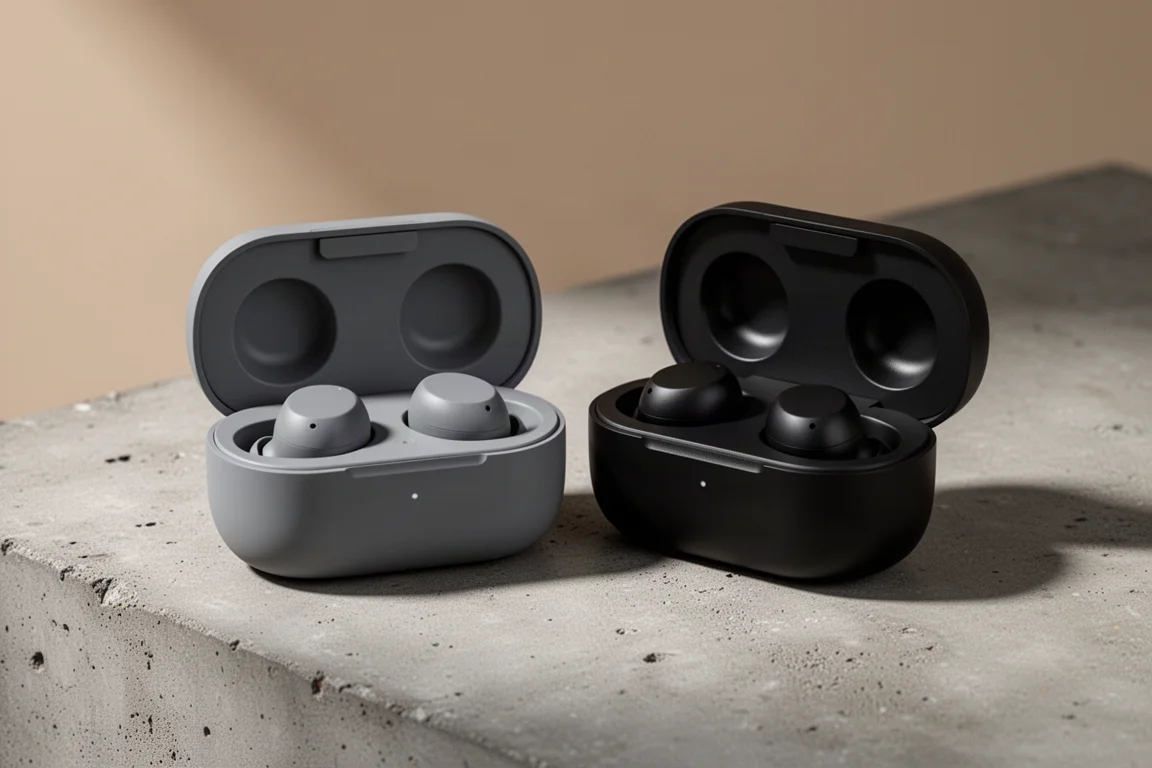
Bowers & Wilkins has added two new pairs of noise cancelling true wireless earbuds to its line-up: the Pi6 and the Pi8. Both are direct updates to earlier models in the range, and both bring acoustic technology developed for the company’s high-end loudspeakers and over-ear headphones into a much smaller form. They share a redesigned charging case and a larger 12 mm driver, but they differ in driver material, wireless codec support, charging features and price positioning. This guide walks through what each model does well and where the trade-offs sit.
What Changed With the Pi6 and Pi8
The most immediate change is the charging case. It is wider and slimmer than the previous generation and finished with a matte texture. The pairing buttons are gone: to put either pair into pairing mode, hold the top of each earbud while it sits in the case. A small LED under the logo on the front shows whether the earbuds are pairing, connected or running low on battery, while the USB-C port sits on the bottom and a reset button is recessed so it needs a pin to press.
The lid and the internal magnets both hold up well. In a shake test designed to simulate a case being jostled inside a bag, the lid stayed shut and the earbuds stayed locked in their positions.
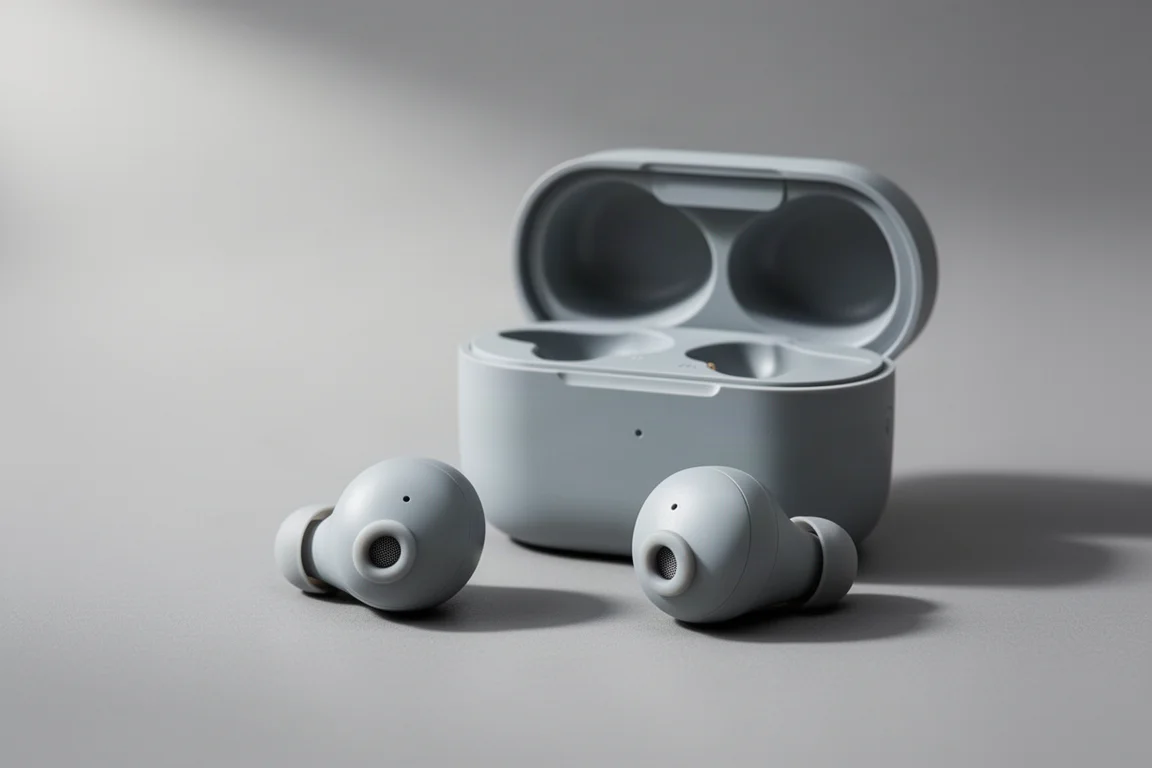
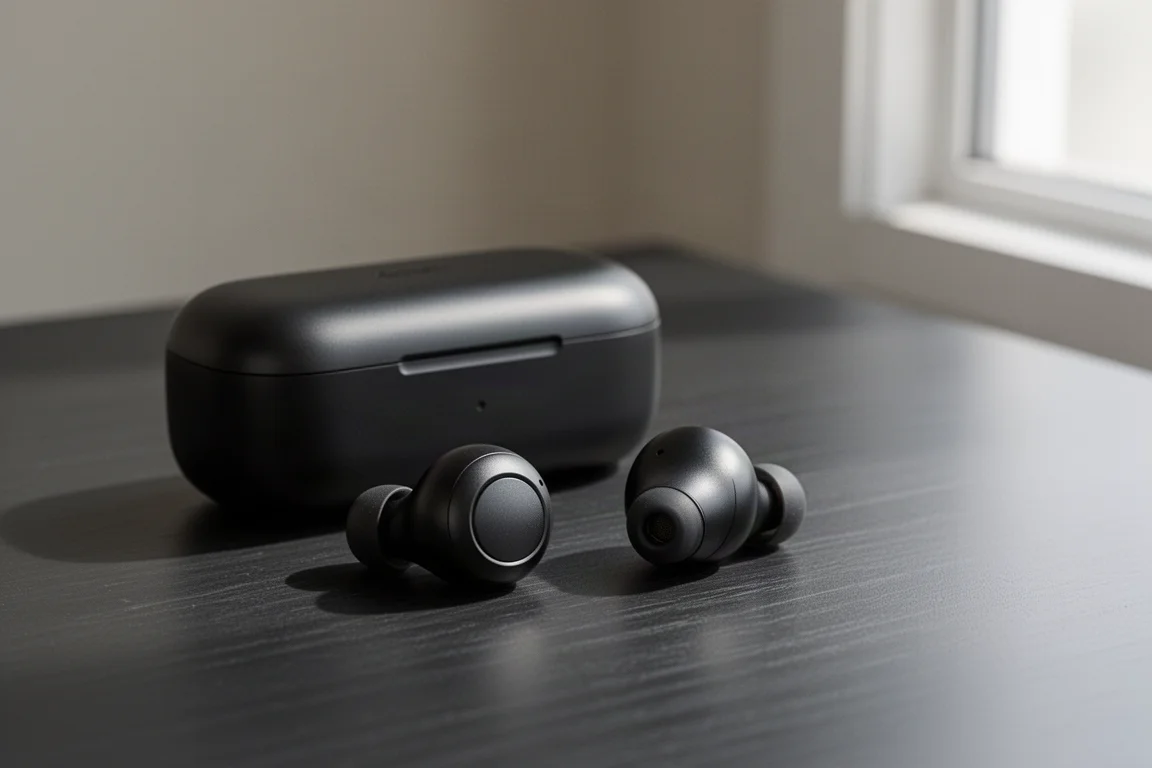
Bowers & Wilkins also revisited the earbud shape itself. Each earbud now carries a slightly raised rubber lip, something the earlier models did not have, which helps hold the earbud in place and keeps it from getting uncomfortably warm during long sessions. The result is a more secure fit that holds up during harder workouts as well as desk work. Both models are IP54 rated, so light dust and sweat are not a concern.
Bowers & Wilkins Pi6 Overview
The Pi6 uses 12 mm biocellulose drive units, a material adapted from the company’s Px7 S2e over-ear headphones. Compared with the 9.2 mm drivers used previously, the larger diaphragm gives the earbuds more surface area to work with, which supports clarity and detail across the range.
On the wireless side, the Pi6 handles a 24-bit/96 kHz connection over aptX Adaptive. The codec adjusts its bit rate dynamically, which helps keep audio glitch-free as conditions change, and latency is low enough that video and games stay in sync.
Battery life is one of the strongest arguments for this model. Bowers & Wilkins rates the Pi6 at 8 hours with noise cancelling on, with a further 16 hours available from the charging case. Finish options include Storm Gray, Cloud Gray, Glacier Blue and Forest Green.
Bowers & Wilkins Pi8 Overview
The Pi8 steps up to carbon cone drive units, a technology drawn from the company’s flagship over-ear headphones. Carbon is extremely rigid, so the diaphragm stays stiff across the frequency range. That reduces distortion and lets the driver respond to transient attacks in a more pistonic way, which tends to show up as better resolution and top-end extension when a lot of instruments are playing at once.
The Pi8 also runs the latest generation Qualcomm chipset with aptX Lossless. A CD file runs at 1,411 kbps, and aptX Lossless transmits around 1,100 to 1,200 kbps, so although some compression is applied in transit, the signal is unpacked bit for bit. For comparison, aptX Adaptive tops out at around 420 kbps. iPhone users should note that aptX Lossless is not supported there, though an iPhone 15 or later can connect through the smart charging case over USB-C and still take advantage of aptX Adaptive. Android owners can check Qualcomm’s published list to confirm whether their phone supports aptX Lossless.

The Pi8 case adds two features the Pi6 case does not have. It supports wireless charging, so it can be dropped onto any charging pad, and it works as a smart case: it can connect to an external audio source such as an in-flight entertainment system, a PC, a tablet or a phone over 3.5 mm or USB-C and retransmit that audio wirelessly to the earbuds. That makes the Pi8 a single pair for flights, desktop listening and everyday use.
Battery life is rated at 6.5 hours with noise cancelling on, with 13.5 hours more in the case. Finish options include black, dove white, midnight blue and jade green.
Noise Cancelling and Transparency
Both models offer three listening states: noise cancelling off, a pass-through mode that lets surroundings in, and active noise cancelling. You can cycle through them with a tap on the earbud or from the companion app.
The active noise cancelling is effective, and it is tuned with a clear priority in mind. Rather than chasing the most extreme isolation possible, Bowers & Wilkins blocks distracting background noise while keeping the music natural and uncoloured. If your goal is to remove every last trace of background sound, even at the cost of sound quality, this is not the approach for you. For most listeners the result is easier to live with over long sessions.
Pass-through has improved noticeably as well. The microphones have been moved further from the ear and grouped into a small grille area between the end cap and the earbud housing, which also houses the antennas. The effect is a more cohesive, realistic transparency mode where nearby sounds come through comfortably rather than being amplified unevenly.
Battery Life, Charging and the App
The Pi6 is rated at 8 hours with noise cancelling on and the Pi8 at 6.5 hours, with the cases adding 16 hours and 13.5 hours respectively. In real-world use, with a mix of calls, noise cancelling and varying volume levels, closer to 7 hours and 5 hours is a realistic expectation. Even so, both are among the longer-lasting true wireless options available.
Quick charging is supported on both. A short 15-minute top-up is enough for roughly 2 hours of listening.
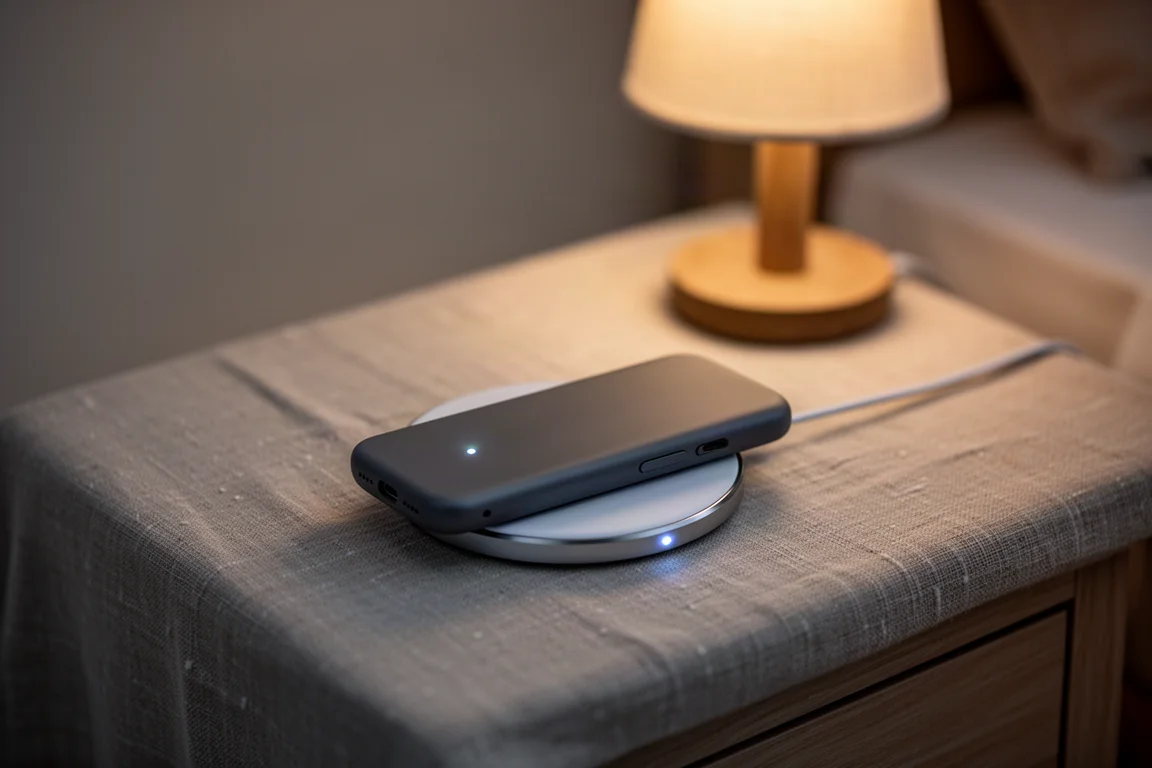
The Bowers & Wilkins Music app handles setup and day-to-day control. It is quick to pair and gives you a five-band equaliser on the Pi8, adjustable volume touch controls, a toggle for the wear sensor, battery status and software updates. It also lets you sign into a preferred music streaming service and play directly from within the app, which means you can reach your settings and your music without hopping between apps. If you want more low-end weight for certain genres, a small bass boost in the equaliser makes an audible difference.
Fit, Comfort and Call Quality
Ear shape matters enormously for both comfort and acoustics, since these earbuds sit inside the ear canal. To address that, Bowers & Wilkins carried out an anthropometric study over several months covering different genders, ethnicities and ages, with the aim of designing a shape that seals and fits comfortably across a wide range of listeners.
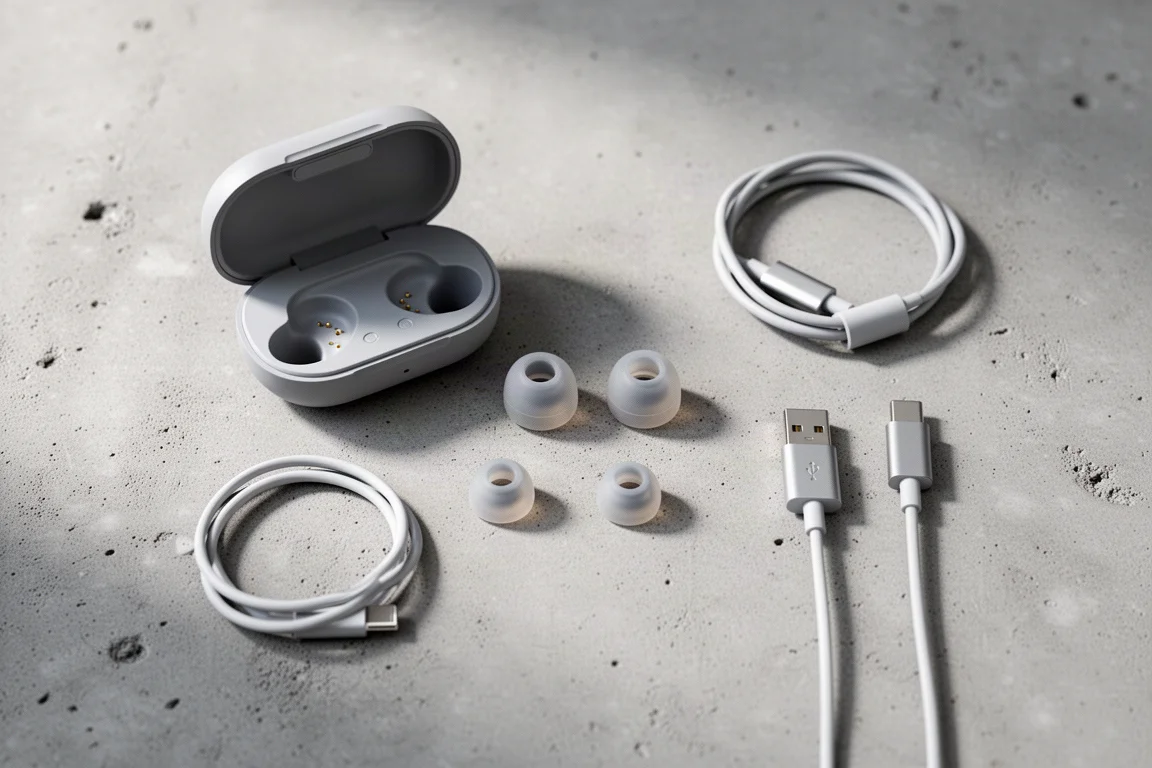
In the box you get the earbuds with medium tips fitted, plus extra tips in extra small, small and large, a USB-C to 3.5 mm cable, a USB-C to USB-C cable and a quick start guide. Inserting a tip and giving the earbud a slight twist locks it into place.
Call quality benefits from the revised microphone placement. Voices come through smoothly and clearly on the other end, which makes either model a reasonable choice for meetings and phone calls as well as music.
Overall Buying Advice
Choosing between the two comes down to which features you will actually use. The Pi6 is the more accessible option and gives you the core experience: the larger 12 mm biocellulose driver, aptX Adaptive at up to 24-bit/96 kHz, strong battery life and the same redesigned fit and IP54 rating. If your priority is sound quality per dollar, this is the model to look at first.

The Pi8 adds the carbon cone driver, aptX Lossless support, a wireless charging case and the smart case that can pull audio from an external source. Those extras are meaningful for anyone who travels with an in-flight entertainment system, listens at a desk from a laptop, or wants the highest wireless resolution their phone can deliver. The trade-offs are a higher price and slightly shorter battery life. If you use an iPhone, the smart case still earns its place through USB-C audio, but aptX Lossless itself will not be available to you.
Both models make the most sense for listeners who put sound quality first. The noise cancelling is effective, but it is deliberately tuned to preserve musicality rather than to deliver maximum isolation, and the level of cancellation is handled automatically rather than through a manual slider.
Conclusion
The Pi6 and Pi8 show a clear line of thinking: take what the company learned from its previous true wireless models, refine the fit and the case design, and lean on acoustic engineering borrowed from its over-ear range. The Pi6 delivers that formula at a lower cost, while the Pi8 adds lossless-capable wireless audio, a wireless charging case and the ability to retransmit audio from almost any source. Neither is the cheapest option in the category, and neither offers granular control over noise cancelling strength, but for buyers who care most about how music sounds, both belong on the shortlist.
Further reading
Related Reviews

Backpacking Gear
Building a 10 lb Base Weight: An Ultralight Backpacking Gear List
A practical walkthrough of the ultralight pieces behind a 10 lb base weight, from a 765 g pack and a roomy one-person tent to a full camp chair and a dependable water filter.

Road Bikes
10 New Road Bikes Worth Watching: Aero, Titanium, Steel and Endurance Standouts
A practical roundup of 10 new road bikes, from aero flagships chasing single-watt gains to titanium, steel and endurance platforms built for real roads.

Bikepacking Gear
11 Bikepacking Essentials for Long-Distance Cycling
Eleven bikepacking essentials for long-distance cycling, from a steel gravel frame and a two-person tent to helmet lights, packable gloves, and a frame bag that puts weight in the right place.