Hi-Fi Speakers
Bowers & Wilkins 804 D5 vs Vivid Audio Kaya 45 vs T+A Talis S330: Three Floorstanders Compared
A close look at how three three-way floorstanding loudspeakers differ in cabinet construction, bass reach, and mid-range character before you audition.
Introduction
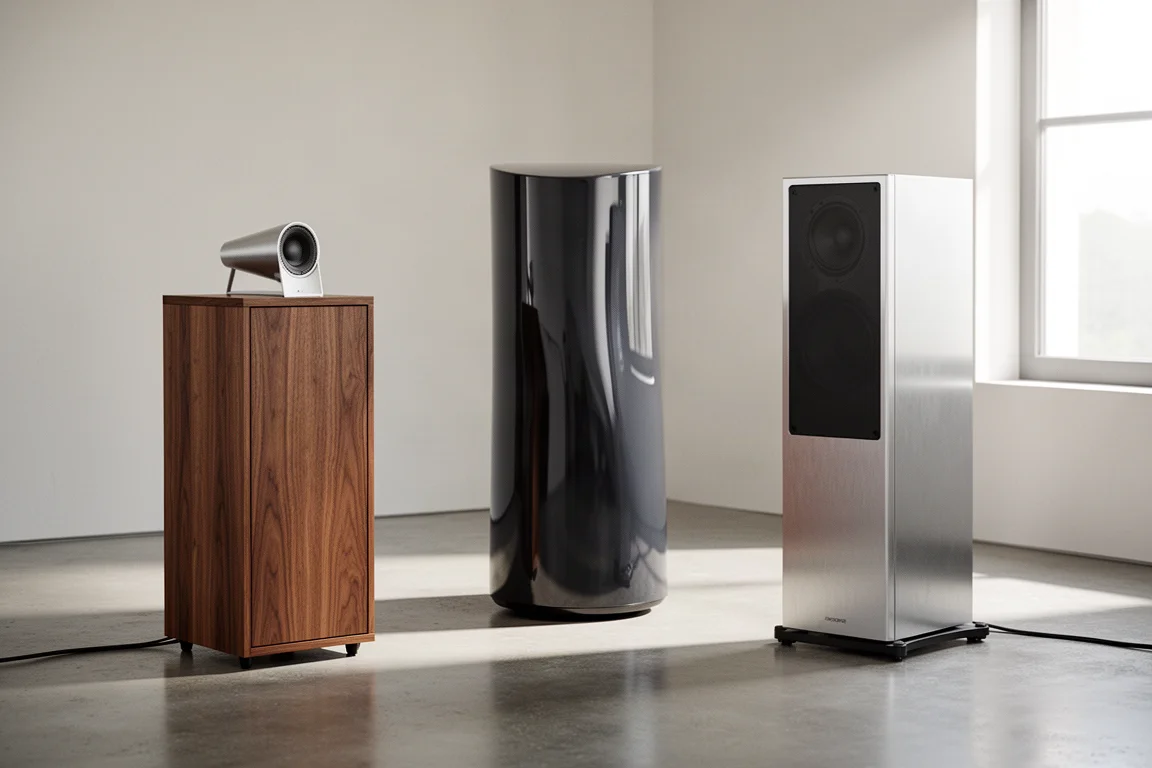
Three three-way floorstanding loudspeakers, one broad price bracket, and three very different design philosophies. That is the short version of what happens when the Bowers & Wilkins 804 D5, the Vivid Audio Kaya 45, and the T+A Talis S330 end up in the same room.
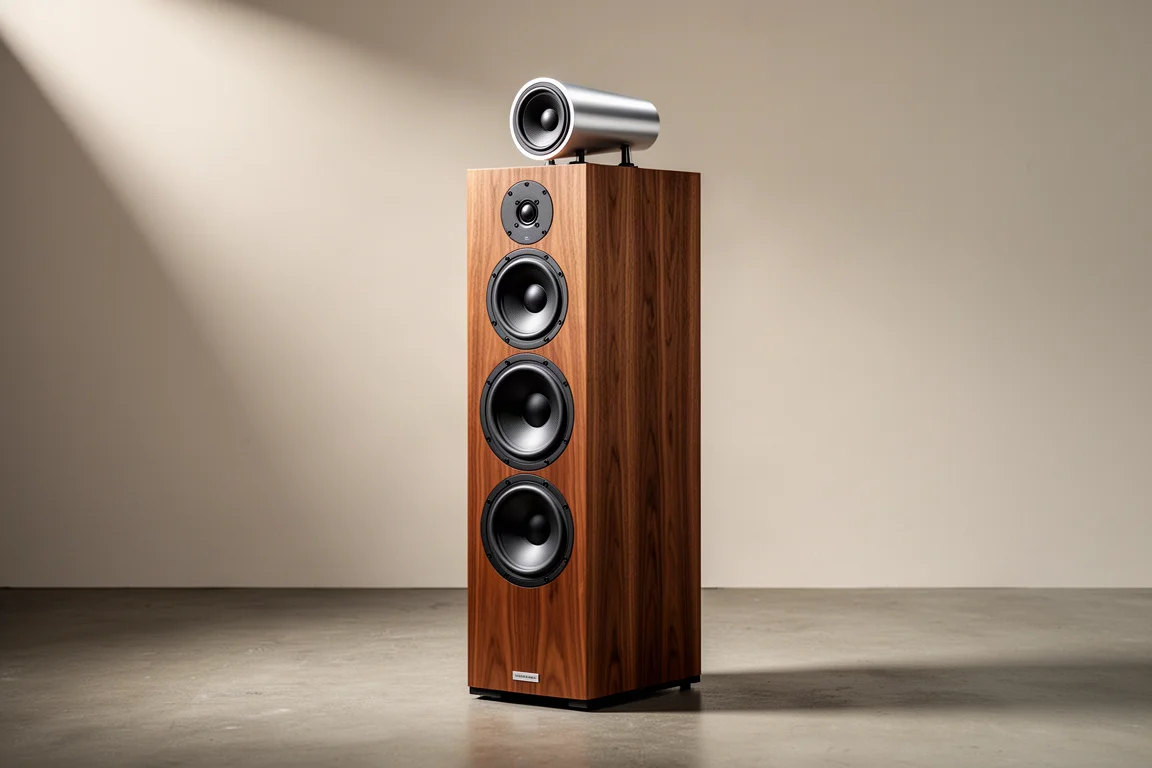
The 804 D5 is the smallest of the four floorstanders in the 800 Series Diamond D5 range. Above it sit the 803, 802, and the flagship 801, while the 805 stand-mount fills out the line below. It is also the only floorstander in the range without the turbine head, which means its tweeter sits on top of the cabinet and its mid-range driver stays in the main enclosure. In Europe it sells for €18,000 per pair, and in the USA for $25,000 per pair.
The two alternatives are just as serious. The Vivid Audio Kaya 45 sells for around $18,000 per pair in the USA, and the T+A Talis S330 is priced at $18,950 per pair there.
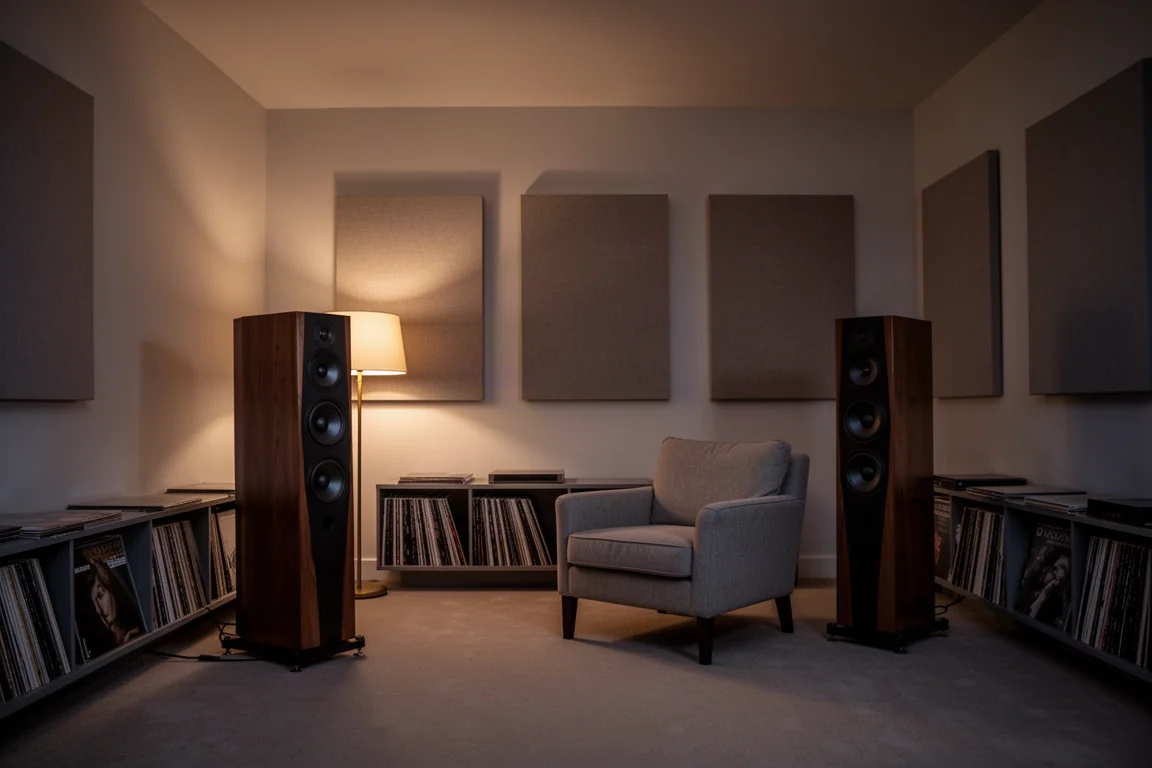
The reason this comparison is worth your attention is that at this level loudspeaker design does not converge on a single ideal. These three cabinets, driver arrays, and tunings disagree with each other in ways that are clearly audible.
How These Three Floorstanders Differ in Construction
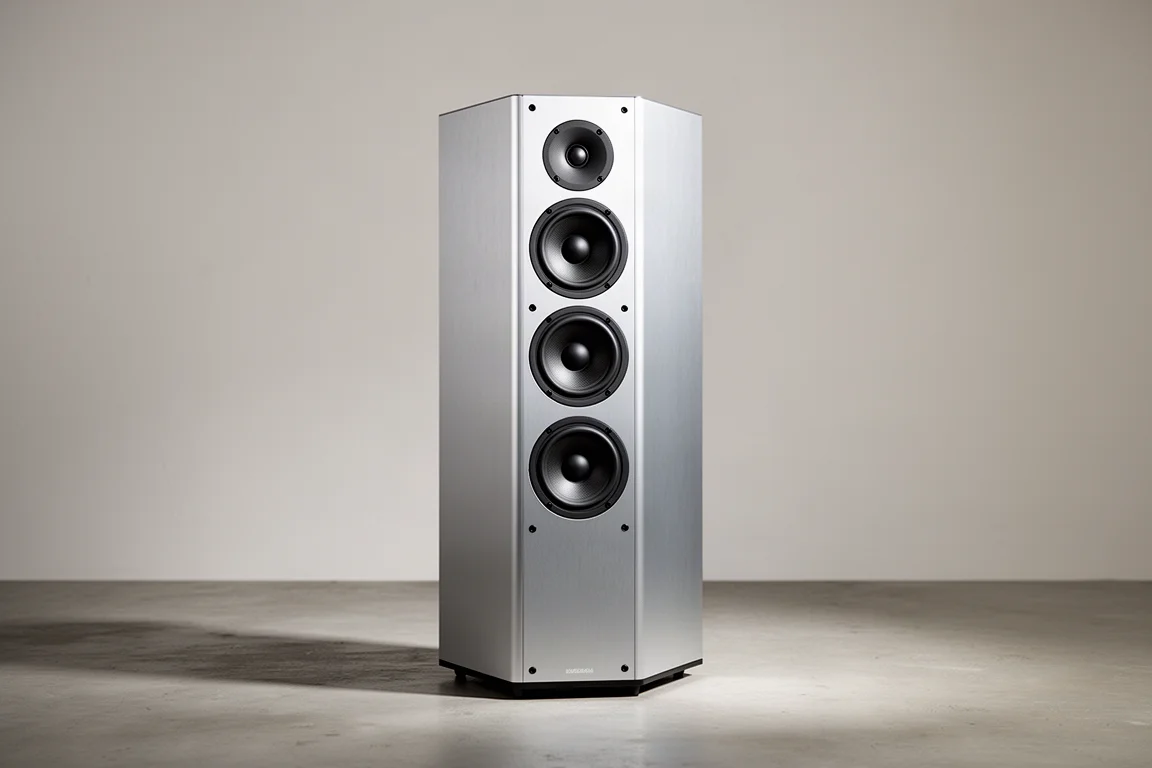
All three are three-way designs, and that is roughly where the similarities end. The T+A Talis S330 uses an all-aluminium cabinet. The Vivid Audio Kaya 45 goes a different route with a curved glass-reinforced sandwich composite built around a soric core. The 804 D5 sits between them in terms of cabinet curvature.
Its cabinet is formed from twelve dry layers of beech, each one bonded with a sheet of resin adhesive. Those layers are formed over metal plates heated to around 135 °C, which activates the adhesive, and then pressed with 80 tonnes of vertical force and 60 tonnes of horizontal force. A layer of black paper and an outer veneer complete the exterior, in this case American walnut. Inside, matrix bracing reinforces the structure, as does a metal panel running down the back of the cabinet.
Mass follows the construction. Each 804 D5 cabinet weighs just over 40 kg, against 33 kg for the T+A and 25 kg for the Vivid.
Bass loading is handled differently in each design as well. The 804 D5 uses a single port that fires downward, with air escaping through the gap between the underside of the cabinet and the plinth below it, and it is rated down to around 20 Hz at -6 dB. The T+A claims 25 Hz and fires two ports to the rear. The Vivid uses two side-firing ports and is rated at around 37 Hz at -6 dB, which may have something to do with its twin 5-inch bass drivers standing against the twin 6.5-inch units in the 804 D5.
Bowers & Wilkins describes those bass cones as Aerofoil drivers. Seen from the side, the cone has a wing-like profile, thicker in the middle and thinner at the edges. The company says this shape maintains rigid pistonic behaviour and reduces distortion, while the lighter cone is easier for an amplifier to drive. Sensitivity is quoted at 89 dB, the highest of the three, which is good news if you run a lower-powered amplifier.
Bowers & Wilkins 804 D5: Deep Bass and an Open, Revealing Top End
On low-frequency material, the 804 D5 is the only one of the three that reaches all the way down into the sub-bass with real authority. Across minimal techno, low-end-heavy doom jazz, and ambient funk with bass sitting right at the bottom of the mix, the cabinet keeps its weight and menace without smearing anything above it.
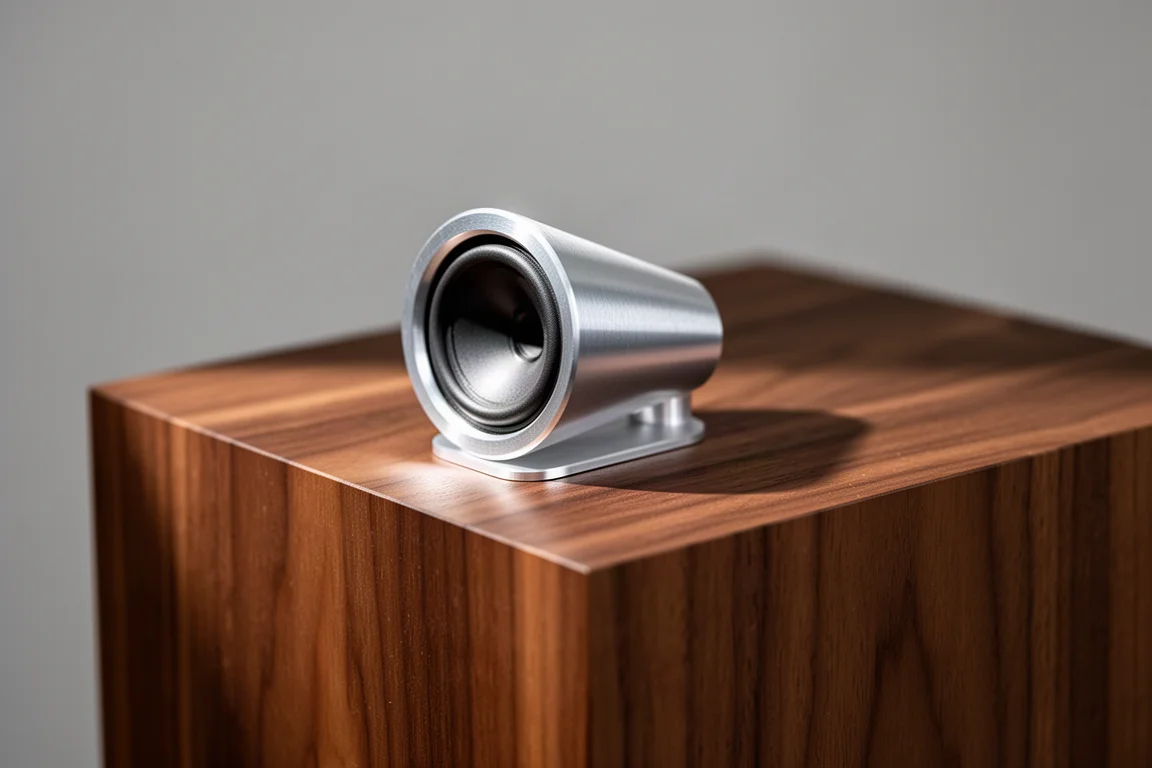
Treble is handled by a diamond dome tweeter in a housing machined from a single block of aluminium and mounted with enough give that it can be moved slightly by hand. That play decouples the tweeter from cabinet vibration, and the tapered housing is shaped to stop the back wave from returning to the driver. Brightness is a common concern with this arrangement, but it does not appear here. On productions with a bright digital sheen, including Donald Fagen’s The Nightfly and shimmering, sample-heavy tracks, the top end stays refined and airy, with incisive, clean transients that never overstate themselves. Staging is wide and tall, close to the wide-open presentation of the Vivid.
The mid-range is a single 5-inch Continuum cone FST driver, and the name deserves unpacking. Continuum is a woven composite developed in house to replace the Kevlar that the company previously licensed. FST stands for fixed suspension transducer, a compressed foam ring that replaces the usual rubber surround so the cone’s outer edge stays fixed and controlled. A central metal draw rod, based on the rod system used in the 801’s turbine head, manages the driver’s movement and also helps isolate the metal enclosure from the rest of the cabinet. Biomimetic suspension is the term for an open polymer ring that replaces the flat fabric spider at the bottom of the driver.
The audible result is an upfront and highly revealing upper mid-range. A gravelly baritone vocal arrives with presence, detail, and full chest resonance, which makes the 804 D5 the most transparent of the three. It lays detail bare rather than wrapping it in warmth, and that is the clearest dividing line between this speaker and the T+A.
Vivid Audio Kaya 45: Speed and an Expansive Stage
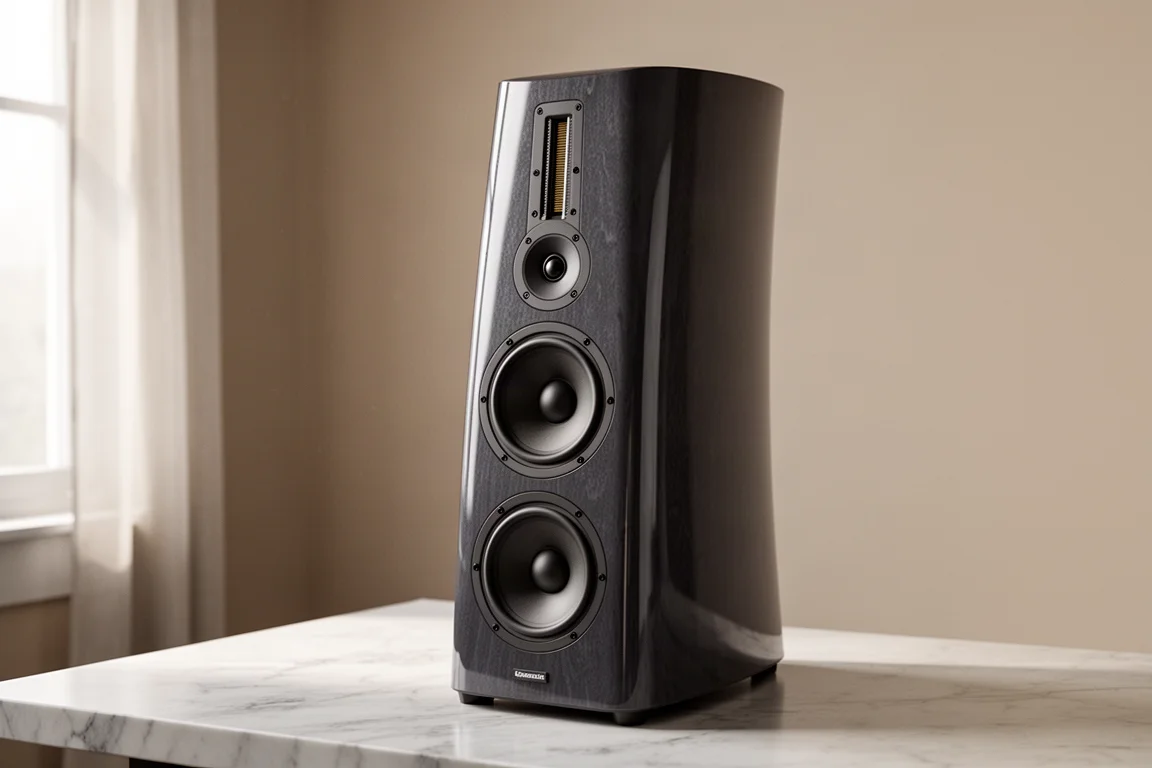
The Kaya 45 is the lightest and, in micro-dynamic terms, the quickest of the three. Its curved composite cabinet, twin 5-inch bass drivers, and side-firing ports produce a fast, agile sound with a stage that is as wide and as tall as anything here. If maximum speed is your priority, this is the loudspeaker that delivers it.
The trade-off sits at the bottom. With a low-frequency limit of around 37 Hz at -6 dB, the Kaya 45 cannot reach into the sub-bass the way the 804 D5 does. Its styling is also the most divisive of the three, so it is a speaker to see in person before deciding. In the USA it sells for around $18,000 per pair.
T+A Talis S330: A Darker, More Velvety Presentation
The Talis S330 takes the opposite approach to the 804 D5. Its aluminium cabinet, rear-firing ports, and claimed 25 Hz low-frequency limit give it genuine reach, but its voicing trades some upper-mid detail for vocals with enough body to carry real weight. Music arrives wrapped in something slightly darker and more velvety.
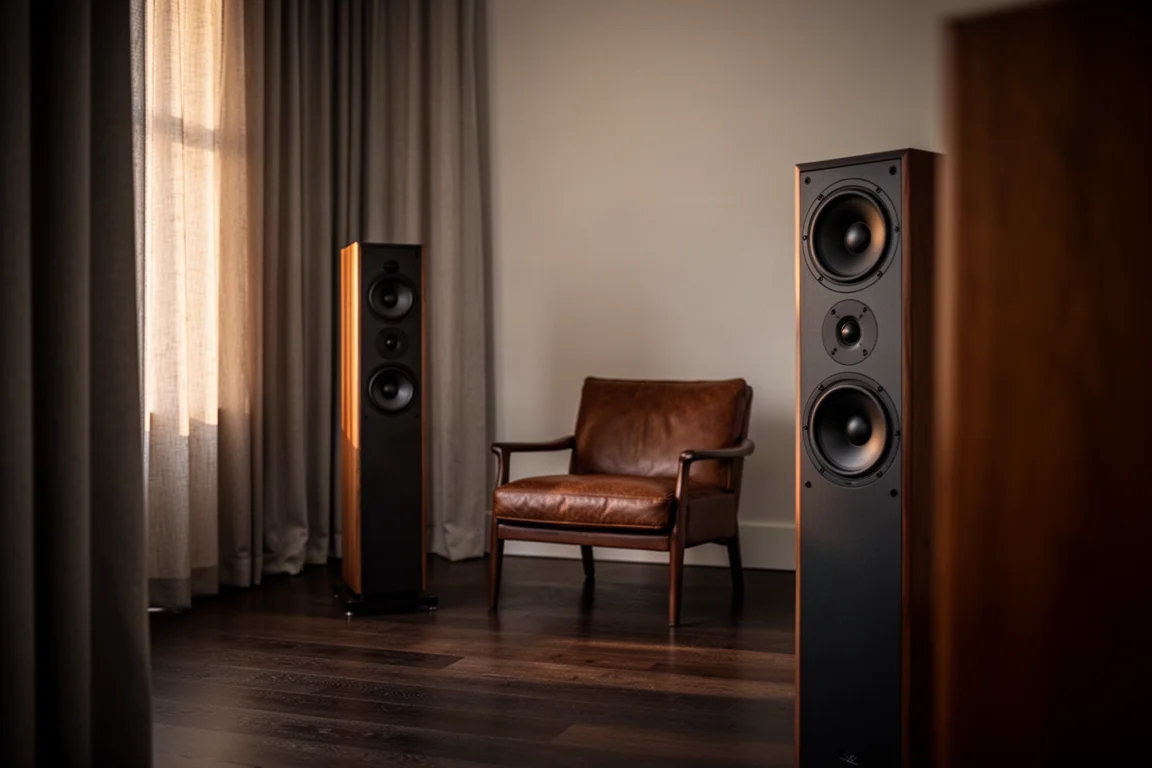
Its soundstage is more closed in and intimate than the other two, playing through what feels like thicker air, and that intimacy reads as a deliberate character rather than a shortcoming. In Europe the Talis S330 sells for about a third less than the 804 D5, while in the USA it is priced at $18,950 per pair. If warmth and fullness matter more to you than maximum resolution, this is the one to hear.
Matching the Speaker to Your Amplifier and Room
Partnering equipment shapes how much of each character you actually hear. With two amplifiers of contrasting temperament, one leaning toward speed and clarity and the other toward richness, the 804 D5 never tipped into edginess, even on brighter and denser recordings. The differences between these three loudspeakers were consistently larger than the differences between the amplifiers and digital sources used, but room treatment mattered more than either. If your listening room is untreated, that is worth addressing before committing at this level.
What to Listen For Before You Buy
Bring your own music, and bring something sparse. A dusty, chugging country track is a useful test: through the 804 D5 it arrived with unusual presence, micro detail, vocal texture, and upper-octave air, with the acoustic windows left wide open and a soundstage that felt dense and expansive at the same time. The presentation is dynamically athletic and engaging, with an intensity that backs off just before it becomes tiring.
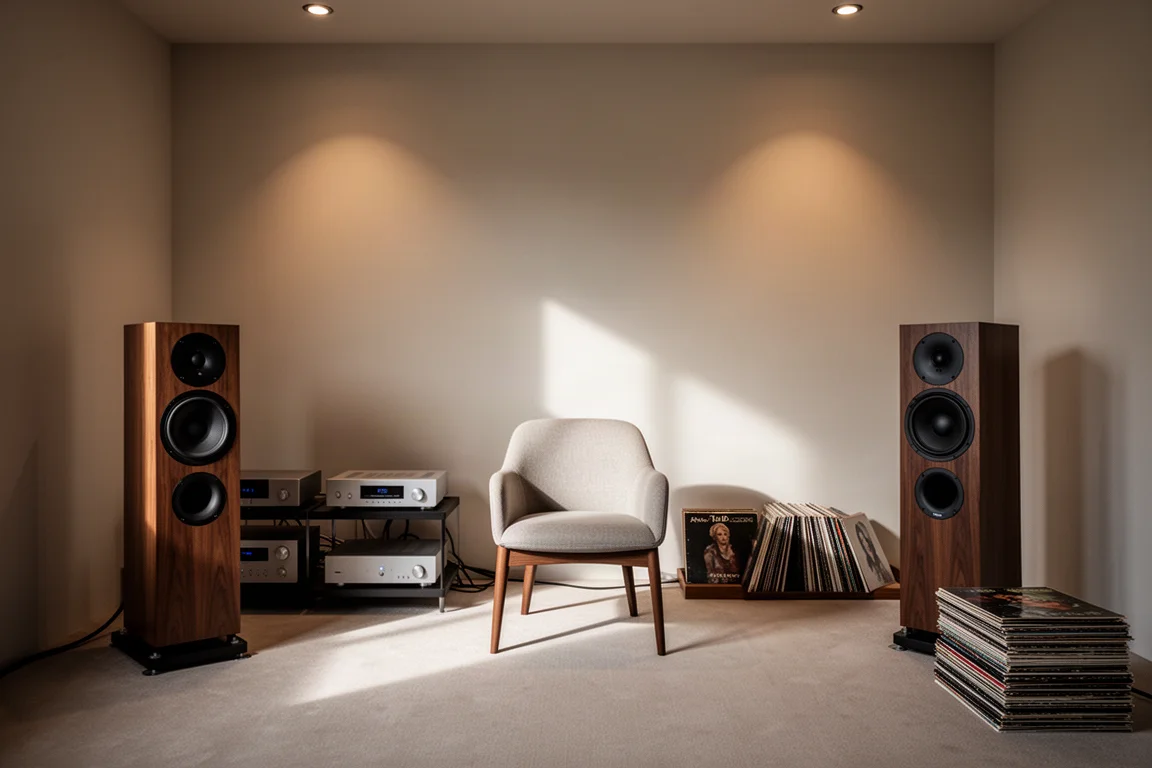
Ask for the same track on all three speakers in the same room. Listen for how far the bass reaches, whether the upper mid-range feels exposed or rounded, and how wide the stage sits. Bowers & Wilkins also maintains a broad dealer network, which makes hearing the 804 D5 in person easier than it is with many rival brands.
Conclusion
Three floorstanders, three distinct answers. The Bowers & Wilkins 804 D5 pairs deep, authoritative sub-bass with an open, highly revealing mid-range and treble, and its 89 dB sensitivity makes it the friendliest of the three for modest amplifiers. The Vivid Audio Kaya 45 trades sub-bass reach for speed and a very expansive stage. The T+A Talis S330 offers a darker, richer presentation with a more intimate perspective.
Match the speaker to the sound you want, audition all three where you can, and treat the room as part of the system. At this level the differences are not subtle, and that is exactly what makes a careful listen worthwhile.
Further reading
Related Reviews
Hi-Fi Speakers
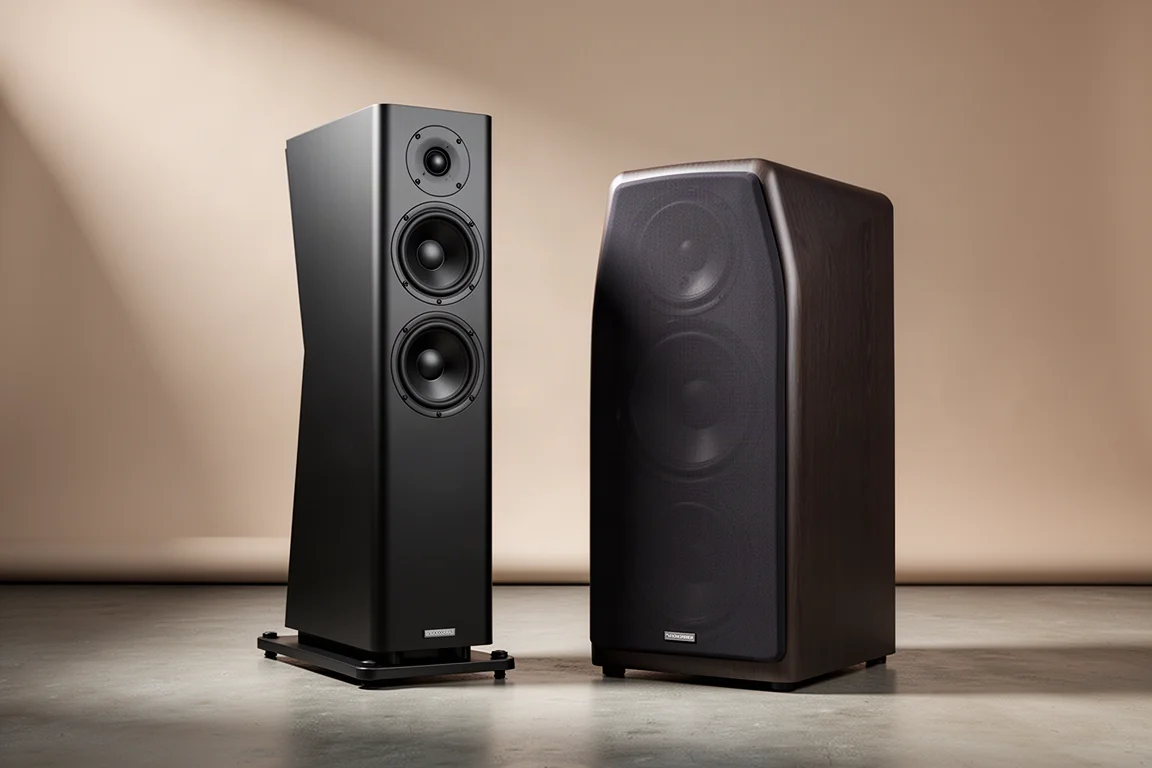
1723 THX Tower vs 1528 Bookshelf: Which Speaker Fits Your Room?
Two speakers at roughly the same price, built very differently. How the 1723 THX tower and the 1528 bookshelf compare on construction, bass, power needs, and sound.
Hi-Fi Speakers
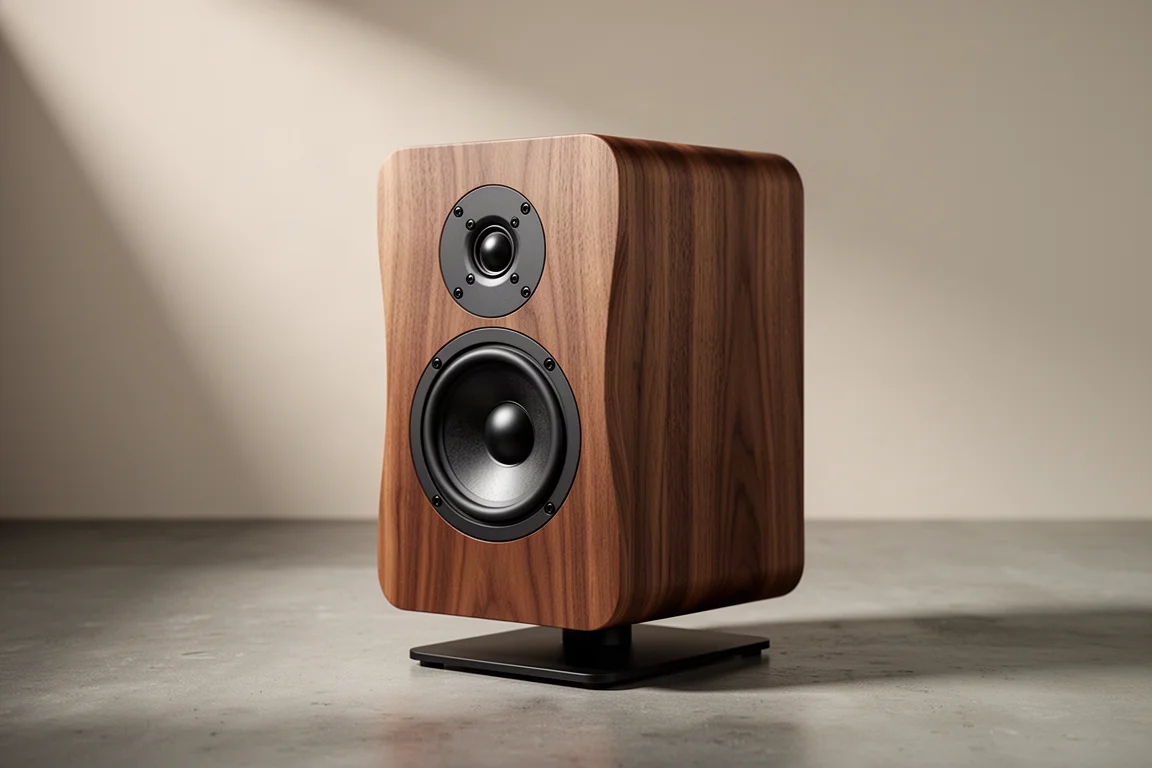
Acoustic Energy AE 300 Review: Deep Bass From a Compact Standmount
A two-way standmount with real wood veneer, surprising low-end weight, and a warm, easygoing character. Here is what to know before buying.
Hi-Fi Speakers
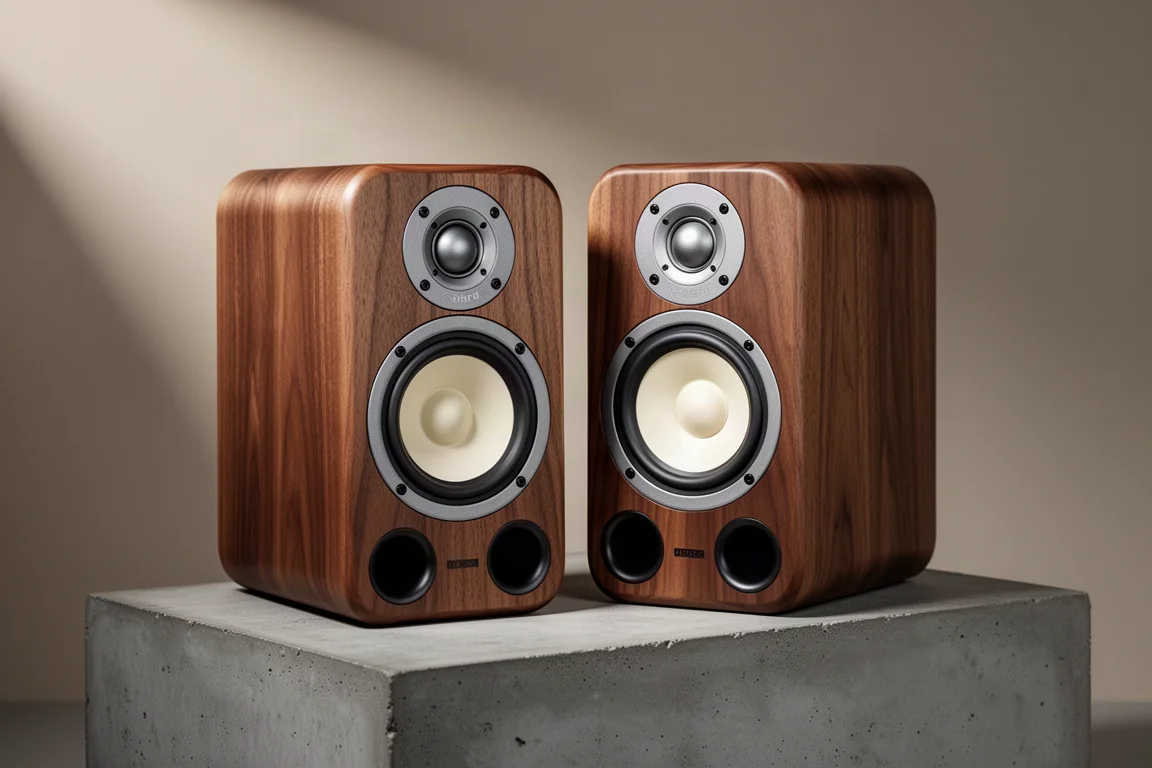
Acoustic Energy AE1 40th Anniversary Review: A Modern Take on a British Classic
A compact standmount that revives a 1980s favorite with all-new parts, a warm mid-centric balance, and a price of £1,499 per pair.