High-End Audio
Bowers & Wilkins 801 D4 Signature Review: Scale, Precision, and a Treble You Can Tune
A flagship floorstanding loudspeaker with an enormous soundstage, convincing film performance from a stereo pair alone, and a forward treble character that responds well to careful tuning.
Introduction
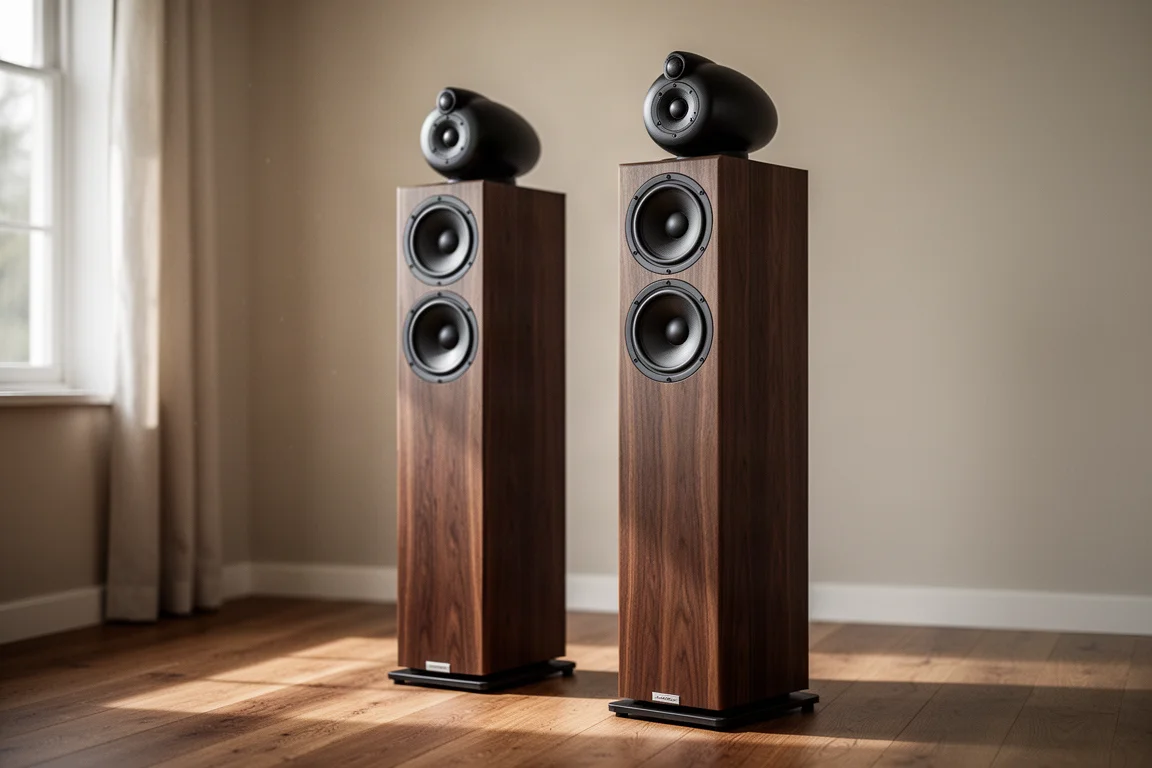
The Bowers & Wilkins 801 D4 Signature is the flagship floorstanding loudspeaker in the company’s 800 Series Diamond line, and it is built for listeners who treat a stereo system as the center of a room rather than a background detail. A pair arrives as substantial furniture: tall cabinets, a tweeter housed in its own enclosure on top, and finishes that reward close inspection.
What stands out over extended listening is not a single trait but a combination of scale and precision. The soundstage is enormous, and the placement of individual instruments and voices inside it is unusually specific. That pairing of size and accuracy is what makes the 801 D4 Signature worth serious attention, and it is also why the speaker asks a fair amount of the room and the electronics around it.
Who This Speaker Is For
This is a speaker for listeners who want a high-end two-channel system that can also carry a film soundtrack without a separate home theater array. In practice, the 801 D4 Signature works best for people who can give it space. A room roughly 20 to 21 feet wide and 25 to 26 feet deep, open on one side, is about the smallest space that makes sense for a pair. Smaller rooms will still produce sound, but the speaker’s strongest qualities depend on being able to spread the cabinets apart.
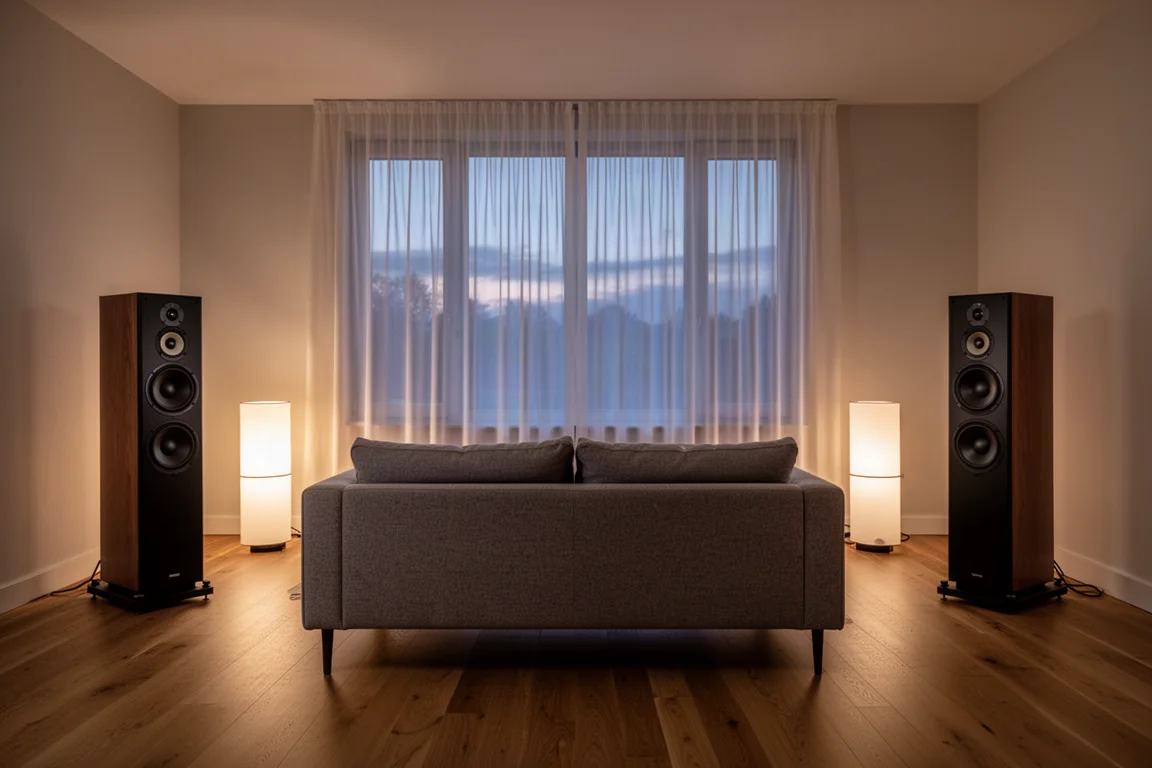
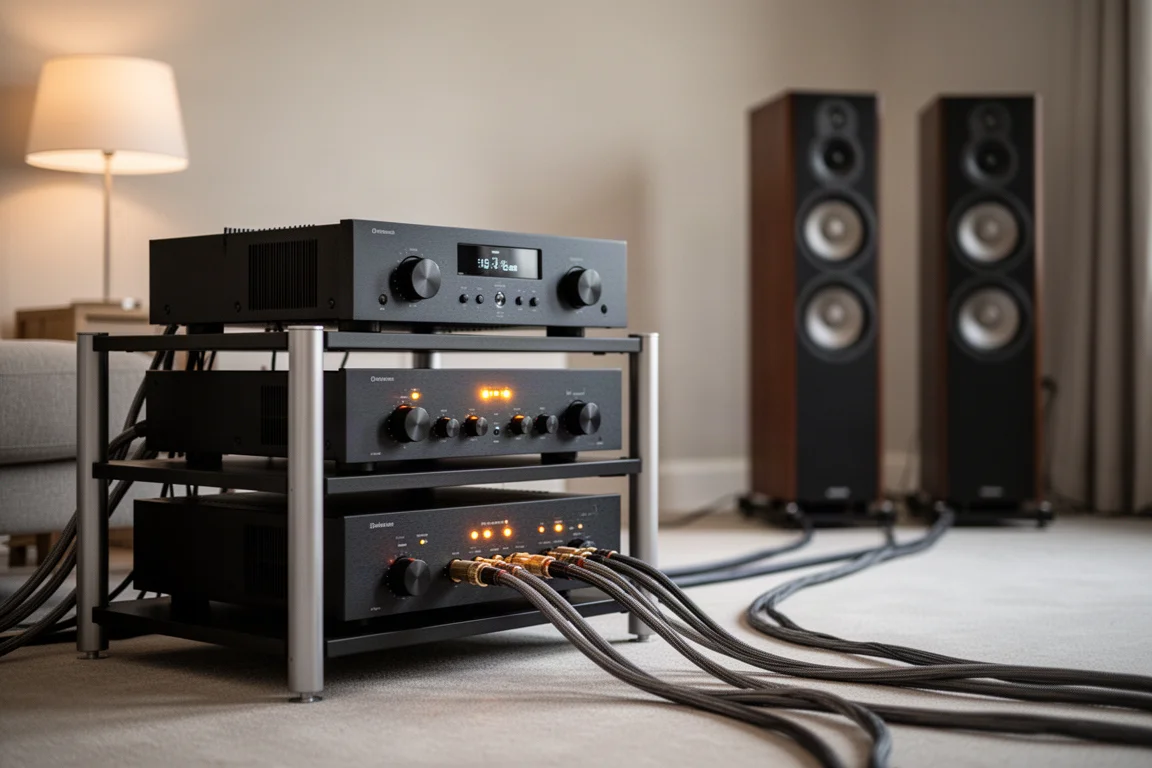
It also suits owners who already have, or plan to invest in, quality amplification. A typical setup pairs these speakers with a high-end preamplifier and power amplifier, running straight PCM with no surround processing or virtualization engaged. Buyers who like the idea of tuning the sound themselves rather than accepting a fixed voicing will get more from this design than those who want a plug-in-and-forget solution.
Main Strengths: Soundstage and Imaging
The most immediate quality is the sheer size of the presentation. The stage extends well beyond the cabinets in every direction, and the dispersion is among the best available in this class of speaker. Instruments and voices occupy specific, stable positions rather than blurring into a general left-to-right smear.
The closest point of reference for that combination of scale and pinpoint placement is a pair of Focal Utopia Color Evo bookshelf speakers, which sit at roughly half the price. That comparison flatters both designs: the smaller Focal model shows how much can be achieved in a compact cabinet, while the 801 D4 Signature demonstrates what a full-size flagship adds on top of it in dynamics and room-filling presence.
Dynamics, Bass, and Low-Volume Detail
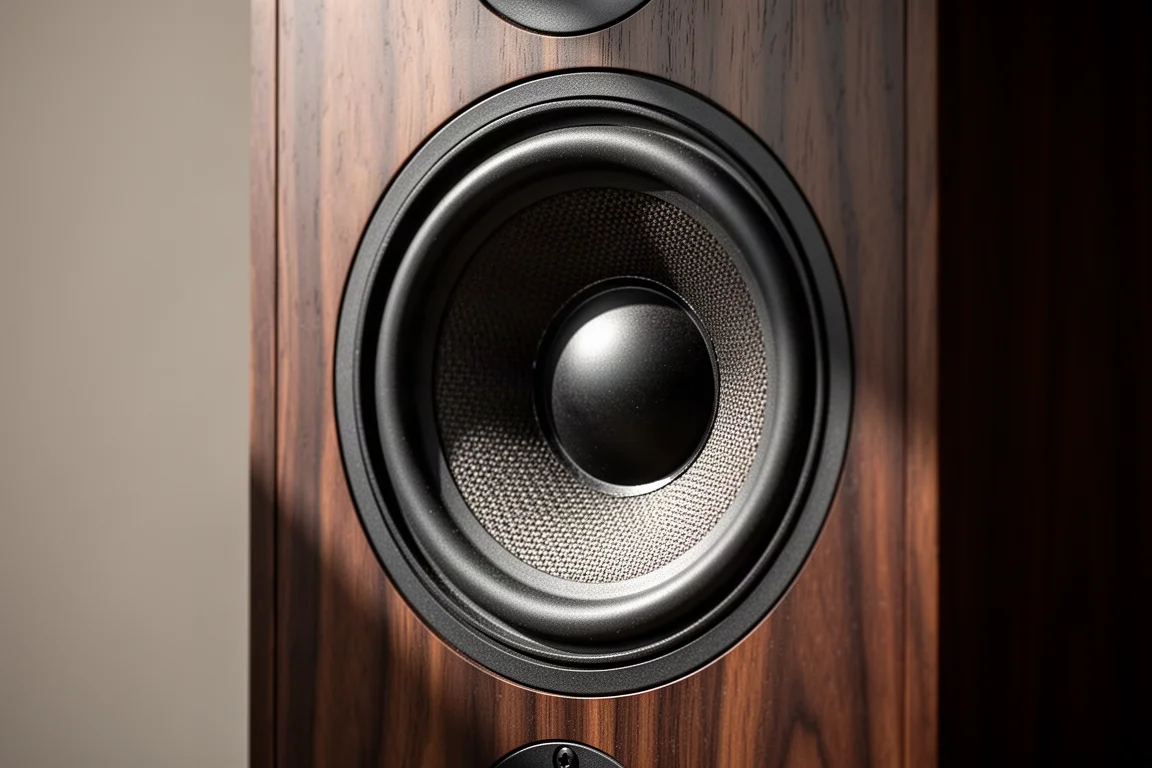
Compared with earlier generations of the 801, including the original Diamond series model, the D4 Signature is more dynamic and more lively. The tweeter is more extended and cleaner, and the bass has gained texture as well as depth. The low end still punches, but it now has a quicker snap and a faster recoil from the woofer. The midrange has changed far less over the years and remains one of the design’s steadiest strengths.
Low-volume listening is another area where the newer design separates itself. Earlier 801 models needed a real jolt of power before the full detail of a recording came through, and power demands were high enough that bi-amping with 1,500-watt monoblocks, which works out to 3,000 watts per side, was a practical approach. The D4 Signature plays well at low levels, so late-night sessions do not require the volume to be pushed before the recording opens up.
Home Theater Performance Without a Center Channel
The surprise is how well a stereo pair handles film. Two 801 D4 Signature speakers alone rival some of the best full home theater systems, with an Atmos-like quality that makes it easy to believe height or surround speakers are active when they are not. Small cues on screen, the kind of details that should be easy to miss, appear around and above the listener with enough precision to turn heads.
A center channel is not automatically required. Dedicated center speakers serve listeners who want every element arranged in a specific way, and some systems genuinely benefit from one, but the 801 D4 Signature is a clear example of a pair that does not need it. All of this happened through a simple signal path: straight PCM into a preamplifier with no surround or virtualization settings available, which makes the result a statement about the speakers rather than about processing.
Build Quality, Design, and Finish Options
Styling is subjective, and the 801 D4 Signature is a design people either love or question. Build quality is a different conversation. There is a density of detail in the cabinet, the driver surrounds, and the finishes that only becomes clear in person, and the distance between this and an entry-level floorstander with exposed fasteners is obvious the moment both are in the same room.
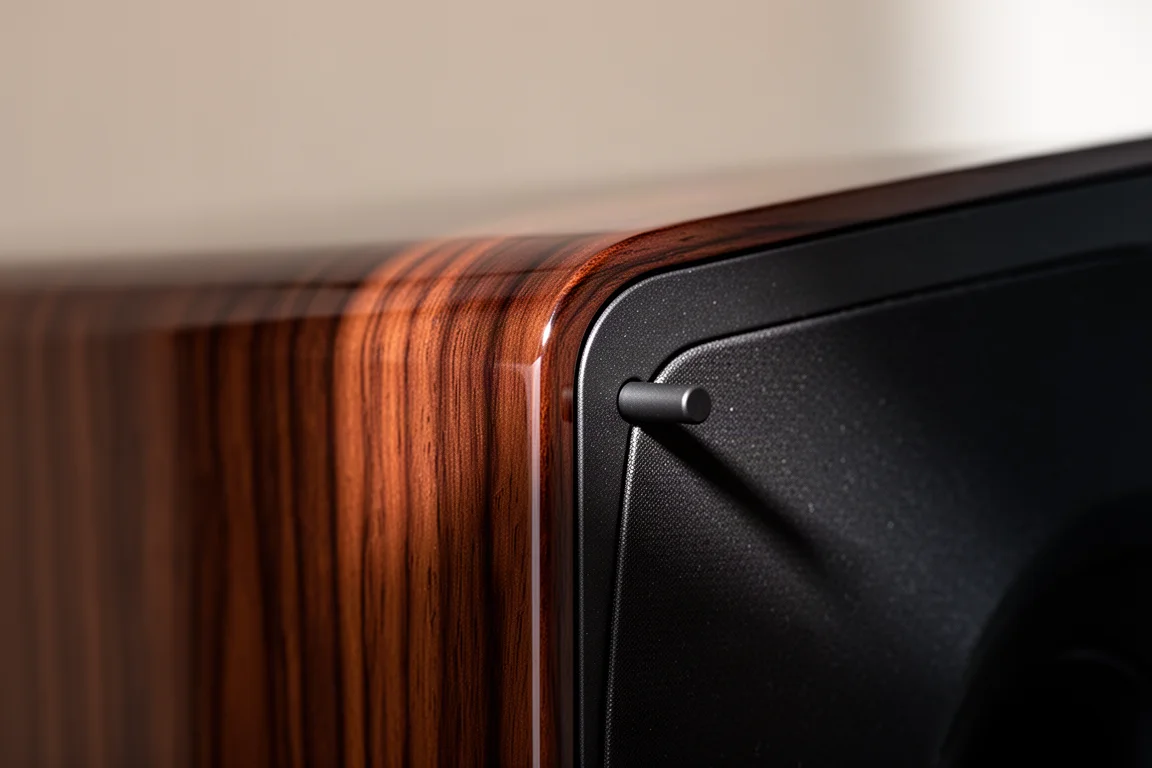
Earlier generations of the 801 hold a different appeal for some listeners. The original 800 Series D2 and D3 models were offered with real walnut veneer and bird’s-eye or tiger-eye maple finishes, used leather more prominently, and carried a broader, mid-century stance that many still prefer on looks alone. Buyers who choose an older pair will trade some dispersion and pinpoint accuracy for that appearance. As a speaker, the 801 D4 Signature is the better design; as an object, the preference is personal.
Placement, Room, and Power Requirements
Placement matters more than almost anything else with this speaker. Spacing a pair 5 feet apart produces a noticeably monaural result. The sweet spot in a real room ran from 8 to 13 feet apart, with 13 feet starting to soften the center image until a slight toe-in corrected it. A useful rule of thumb is to leave about two feet to either side of each cabinet, which means an 8-foot spread calls for roughly four additional feet of width.
Amplification shapes the result as well. Earlier 801 models were notably power hungry, and while the D4 Signature is easier to drive well at low volume, it still rewards an amplifier with genuine headroom.
Room acoustics and the interaction between speaker and room account for the overwhelming majority of what a listener ultimately hears. Acoustic treatments can help, but they are not a shortcut to better sound, and treatments are often chosen because of what other systems use rather than because of what a specific room needs. In a room that has been measured carefully, a coffee table or a television between the speakers had almost no measurable effect on frequency response. Getting the speaker-to-listener relationship right does far more than draping a blanket over a screen.
Things to Consider Before Buying
The treble character is the detail most likely to divide listeners. The 801 D4 Signature can lean forward, and it can sound sharp or even sibilant on some material, depending on the mix and on the character of a particular voice. Those moments tend to be brief rather than constant, and the rest of the time the speaker is exceptionally clear with excellent intelligibility.
The saving grace is tunability. Because the tweeter is clean and low in distortion, trimming a decibel or two around 5 kHz and 10 kHz is usually enough to take the edge off without losing detail. That is the opposite of working with a speaker that rolls off naturally and needs energy added through EQ, which raises the risk of distortion artifacts that sound worse than a well-behaved tweeter ever will.
Price is the other consideration, and it is a personal one. Plenty of speakers at this level sound excellent, and only the buyer can decide whether this particular set of trade-offs is worth the outlay. Listeners who want more scale for less money have real options, and listeners who want a complete system with fewer boxes have a different set of real options.
Buying Advice
Anyone considering the 801 D4 Signature should budget for the whole chain, not just the speakers. A pair at this level is typically matched with high-end amplification, and the total cost of a system that plays at the speaker’s best can approach six figures.
That makes all-in-one alternatives worth a look. The B&O Beolab 50 sits at roughly the same price as the 801 D4 Signature, but it includes amplification, streaming, connectivity, and DSP tuning in the cabinet, so it can be adjusted to taste without a separate rack of electronics. On that basis it may be the better value of the two for listeners who want fewer components. The larger Beolab 90 is a different proposition: it is DSP-driven and has only been experienced in showroom conditions, so it is not a direct comparison with a passive floorstander.
Listeners who want a taste of this kind of scale for less should consider the SVS Titan, which has been compared directly against the 801 D4 Signature on identical amplification. The differences are clear, but the Titan delivers real scale, dynamics, and low-frequency weight, with a treble character that can be bright or can be tamed depending on setup. On a subjective scale where the 801 D4 Signature is a perfect 10, the Titan earns a solid B or B plus, which is remarkable given the price gap. The Martin Logan F100 is another option with similar scale and a slightly more bombastic presentation.
Horn-loaded designs offer a different route to the same sense of presence. The Klipsch La Scala delivers scale, immediacy, and a suspension of disbelief that is hard to find elsewhere, while the Klipsch Cornwall IV is arguably the better tonal match for the 801 D4 Signature once it is properly powered and given some EQ. More affordable options such as the Q Acoustics Concept 50 and the KEF R11 Meta also deliver excellent performance for a fraction of the price.
Within Bowers & Wilkins, buyers stepping down should look at the 705 rather than the 600 Series S3. The 705 uses a decoupled tweeter similar in concept to the 800 Series and represents a meaningful step up in sound quality, enough that many listeners would stop there. The 600 Series S3 is more refined than earlier versions and no longer needs a warning label, but at its price it is unlikely to be the final purchase for anyone who has heard the flagship.
Conclusion
The Bowers & Wilkins 801 D4 Signature earns its place among the best loudspeakers available, and it does so with a specific character: an enormous, precisely drawn soundstage, convincing film performance from two cabinets alone, and bass that is as textured as it is deep. Its forward treble is a genuine consideration, and its appetite for space, amplification, and budget is real. Listeners who can meet those conditions, and who value the ability to tune a revealing speaker to their own taste, will find very little to fault.
It is not the single finest loudspeaker ever heard, but it belongs in a top three alongside the Revel Salon 2 driven by Mark Levinson monoblocks and the Klipsch La Scala. That is a meaningful position for a speaker that also happens to be one of the most capable two-channel home theater solutions in its class.
Product link
View more details for Bowers & Wilkins 801 D4 Signature
This product is mentioned in the review. Check the specifications, options, and compatibility before buying.
View more details for Bowers & Wilkins 801 D4 SignatureFurther reading
Related Reviews
High-End Audio
Accuphase E-3000 Review: A Class AB Integrated Amplifier Built to Last
The Accuphase E-3000 is the entry point into a legendary Japanese high-end line. Here is how it sounds, how it is built, and who should consider it.
High-End Audio
Arreté Floorstanding Speakers and Benchmark HPA2: A Premium Pairing Worth Hearing
A close look at how Arreté floorstanding speakers and Benchmark HPA2 power amplifiers pair up, what each component contributes, and what to weigh before buying.
High-End Audio
Aurelia Acoustics MRB1 Review: Marble Cabinets and a Big, Lively Sound
The Aurelia Acoustics MRB1 pairs a marble cabinet with Accuton ceramic drivers and a lively, spacious sound that stays easy to listen to. Here is what to know before buying.