Hi-Fi Speakers
Bowers & Wilkins 800 Series Diamond D5 Review: A Real Generational Change
A close look at the Bowers & Wilkins 800 Series Diamond D5 range, from space frame cabinet bracing and signature-derived motors to how the 801, 802, 803, 804, and 805 actually sound.
Introduction
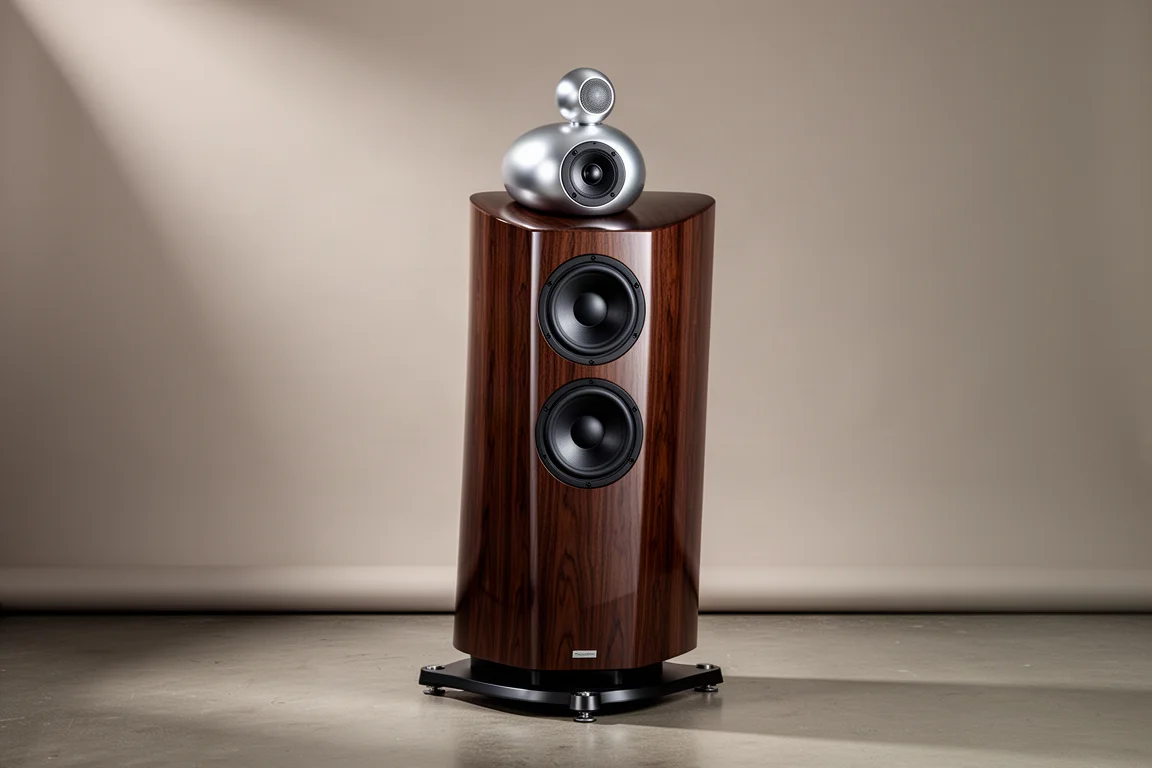
Bowers & Wilkins has launched the 800 Series Diamond D5, and by the company’s own account this is not a minor refresh. The drive unit motors, cabinet bracing, plinth, crossover mounting, and tweeter housing have all been reworked in this generation. One of those changes, the space frame bracing, is a structural addition that was not present on the D4 or even the D4 Signature, and it hints at how much engineering sits behind a range that still looks familiar from the outside.
This year is also Bowers & Wilkins’ 60th anniversary. The original 801 appeared in 1979 and quickly became the reference monitor at Abbey Road Studios, a role the brand has held there ever since. Recording engineers need a speaker that adds nothing and takes nothing away, because their work depends on hearing exactly what the recording is doing, and that is the standard the D5 is held to.
Bowers & Wilkins describes each generation of the 800 Series as taking roughly five years to develop, and says work on the following generation has already begun.
What the 800 Series Diamond D5 Range Includes
The D5 range follows the same structure as the D4. Five stereo models cover the lineup: the 801 D5, 802 D5, 803 D5, and 804 D5 as floorstanders, with the 805 D5 as the stand mount. Two center channels join them, the HTM81 D5 and the HTM82 D5.
The 801 D5 is the flagship of the range. It uses a three-way design with dual 10-inch Aerofoil bass drivers, a 6-inch Continuum cone FST midrange housed in the turbine head, and the diamond dome tweeter. Bowers & Wilkins rates it at 90 dB sensitivity with an 8-ohm nominal impedance and a 3.5-ohm minimum, and recommends amplifiers from 50 to 1,000 watts into 8 ohms.
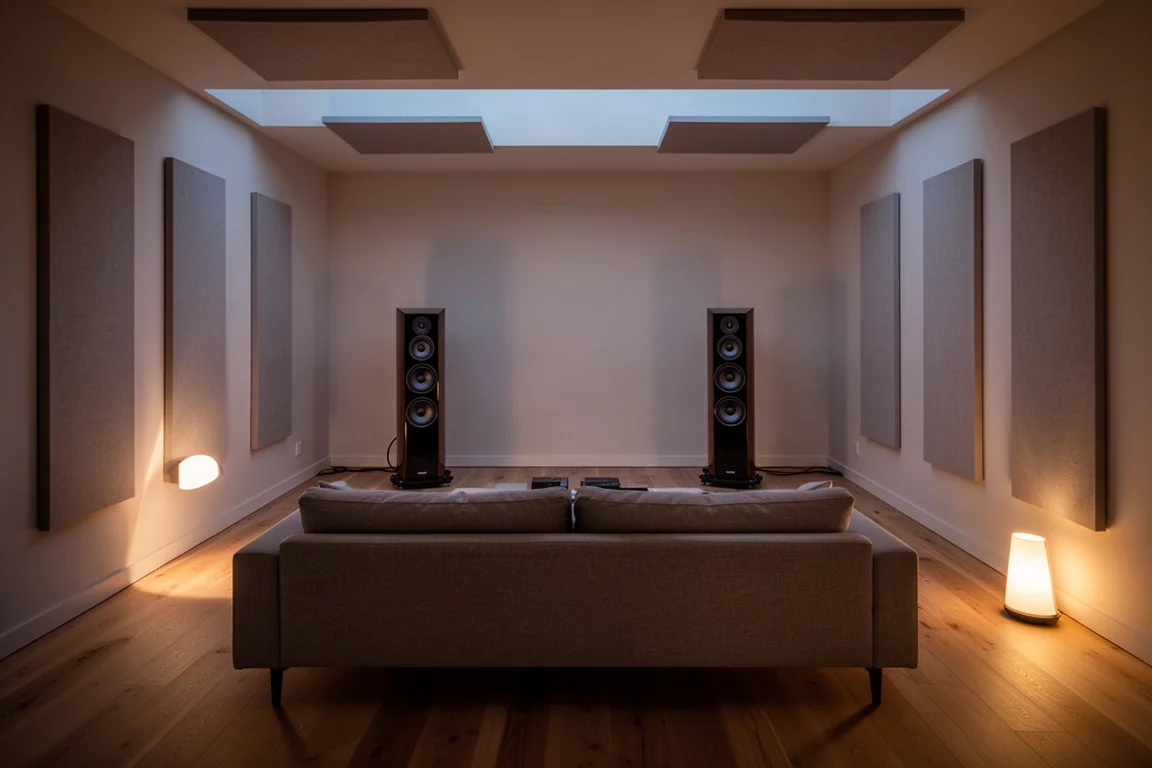
The 802 D5 and 803 D5 both keep the turbine head and the same 6-inch Continuum cone FST midrange as the flagship, and separate mainly in their bass sections. The 802 D5 runs dual 8-inch Aerofoil woofers, while the 803 D5, the most compact floorstander to use the turbine head, steps down to dual 7-inch Aerofoil woofers.
The 804 D5 is the more conventional floorstander, without the turbine head, pairing a 5-inch Continuum cone with dual 6.5-inch Aerofoil woofers. The 805 D5 is the stand mount option: a two-way design with a reverse wrap cabinet, a diamond dome tweeter, and a 6.5-inch Continuum cone driver handling both midrange and bass duties.
Sensitivity across the range is 90 dB for the 801, 802, and 803, and 89 dB for the 804, following the same pattern as the D4. None of these models are difficult to drive, though each will reward a serious amplifier.
Who This Range Is For
The 800 Series Diamond D5 is aimed at listeners who want monitoring-grade reproduction at home, and at the studios and engineers who need a neutral reference. The structure of the range is designed to cover different rooms and different budgets within that group. The 803 D5 is a strong option for rooms that simply cannot accommodate the larger models, while the 805 D5 stand mount suits smaller setups that still want the diamond dome tweeter and the Continuum cone driver.
For home theater builds, the two center channels are matched to specific pairs in the range. The HTM81 D5 belongs with the 801 D5 or 802 D5 and uses the same 6-inch midrange sizing as those two. The HTM82 D5 pairs with the 803 D5 or 804 D5. The midrange driver sizes between the centers and their matching floorstanders are aligned deliberately, so the pairing is worth paying attention to when a system is built around any model in the range.
Cabinet and Drive Unit Upgrades
Every drive unit across the D5 range receives an upgraded motor system derived directly from the Bowers & Wilkins signature models, the top-tier versions of the 800 Series. Motors determine how cleanly a drive unit converts an electrical signal into physical movement, so better motor design means less distortion, more accurate excursion, and a more revealing presentation overall. Bowers & Wilkins states that the D5 drive units deliver cleaner, lower distortion sound than the D4.
The second major development is the space frame bracing, which is entirely new to the D5. Aluminum bracing rails run along the rear of each cabinet, in parallel, reinforced both longitudinally and transversely, and they bolt directly to the rear of the matrix inside the cabinet. The reverse wrap cabinet and the internal matrix already do their work; the space frame adds a third layer of mechanical control aimed specifically at the rear panel, where vibration is hardest to eliminate. The result, according to Bowers & Wilkins, is the most mechanically quiet enclosure the company has ever built.
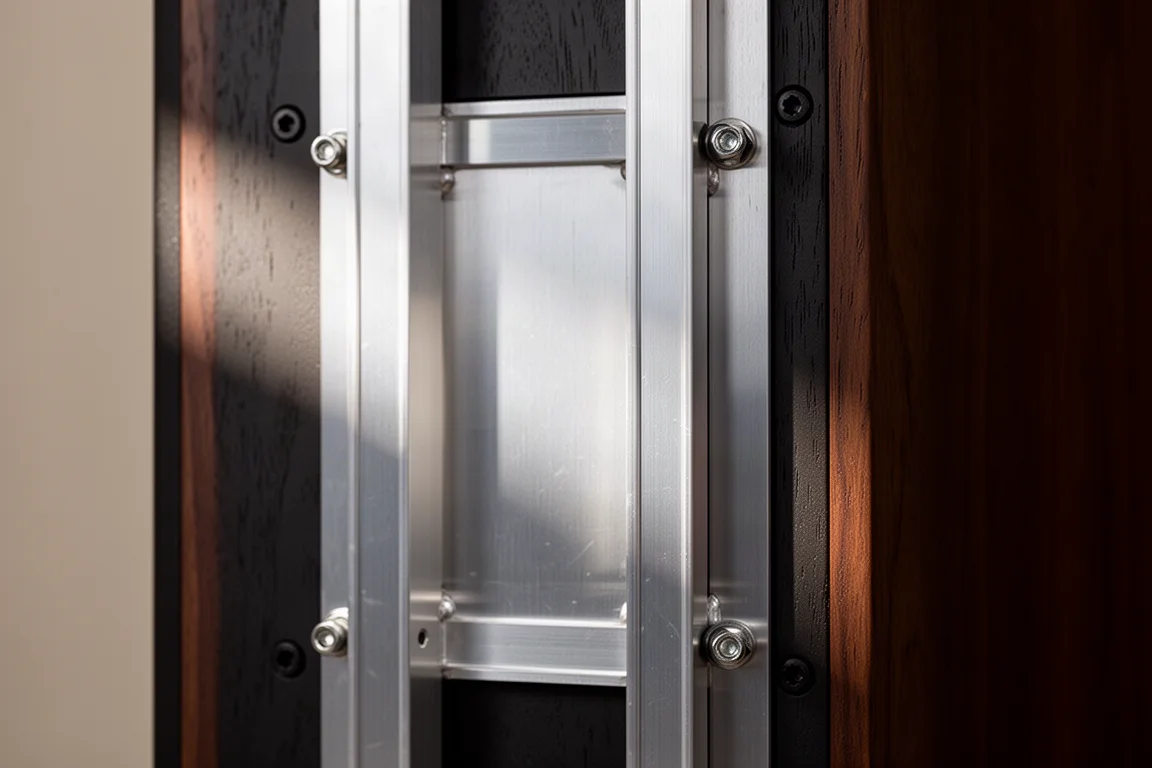
The matrix bracing itself has been refined again. The D4 introduced aluminum pieces into the matrix to address specific low-frequency flex measured in the cabinet front. In the D5, that design combines solid plywood construction with aluminum bracing targeted at the highest stress points in the structure.
The plinths were rethought as well. The D4 moved to aluminum plinths with constrained layer damping across the full floorstanding lineup, sandwiching a steel sheet and damping material to make the plinth far more inert. The D5 floorstanders go further with tuned mass dampers inside the plinth, individually optimized to the mechanical resonances of each specific model. The 801 D5 plinth is tuned differently from the 804 D5 plinth because the two cabinets do not behave the same way.
External crossovers have been upgraded too. The D4 brought external crossovers to the full stereo range, where they had previously appeared only on the upper models. In the D5, the crossovers mount on stiffer aluminum spines, which isolate the sensitive capacitors from air pressure movement inside the enclosure and give the electronics a more stable mechanical home. Revised wiring harnesses contribute to greater resolution across the entire listening range.
The solid body tweeter housing on top also gets attention. Bowers & Wilkins describes the new grille as more acoustically transparent while still protecting the dome, with higher resolution and better dispersion off axis. The housing remains milled from a single solid block of aluminum and stays carefully decoupled from the cabinet, so mechanical noise from the enclosure does not reach the tweeter.
One change is specific to the 804 D5. The 804 has always been the floorstander without the turbine head, which means its midrange driver did not benefit from an isolated aluminum housing the way the 801 through 803 models do. In the D5, Bowers & Wilkins builds a thick-walled aluminum enclosure with critical internal damping inside the 804 cabinet to do the same job: a mechanically isolated, properly damped home for the Continuum cone FST midrange driver. The company’s center channels have used a similar separated enclosure for years, but this is the first time a floorstanding 804 has received the treatment, and Bowers & Wilkins says the model now sounds much closer to a turbine head design than it ever could before.
Technology Carried Over From the D4
Not everything is new, and the carryover items are worth understanding because they remain among the strongest parts of the design. The diamond dome tweeter is grown through a chemical vapor deposition process, which pushes its breakup frequency out to around 70 kHz, well past the limits of most tweeters and well past what anyone can hear. The audible range therefore stays clear of the distortion that appears once a tweeter starts to flex.
The turbine head, the aluminum housing on top of the 801 through 803 cabinets, isolates the midrange driver completely from the rest of the speaker, and its rounded shape cuts down on cabinet diffraction, which is a large part of why these speakers image so well. Inside it sits the Continuum cone, a midrange material Bowers & Wilkins spent years developing to remove the coloration that most cone surrounds add at the edge.
The driver also uses the FST design, short for fixed suspension transducer, which replaces the usual flexible surround with a fixed foam ring and removes another source of coloration at the cone edge. Behind the cone, the spider that keeps the voice coil centered has been replaced by what Bowers & Wilkins calls a biomimetic suspension, a skeletal composite design that creates less air resistance than a standard fabric spider, so less turbulence reaches the sound as distortion.
The Aerofoil woofers use a carbon fiber composite whose thickness varies across the cone, which is how they stay stiff and light at the same time. On the floorstanders, those woofers also carry an anti-resonance plug that keeps the driver from flexing as frequencies drop. All of this sits inside the reverse wrap cabinet, built by bonding and bending multiple sheets of material into a single continuous shell with no flat front and no seams.
How the D5 Range Sounds
Across the full range, this is the best sounding 800 Series generation to date. The most immediate difference from the D4 shows up in the low end. On the 801 and 802, bass notes have real shape and control, and notes stop where they are supposed to stop instead of blurring into the note behind them. The speakers never sound as though they are working to keep up with the music.
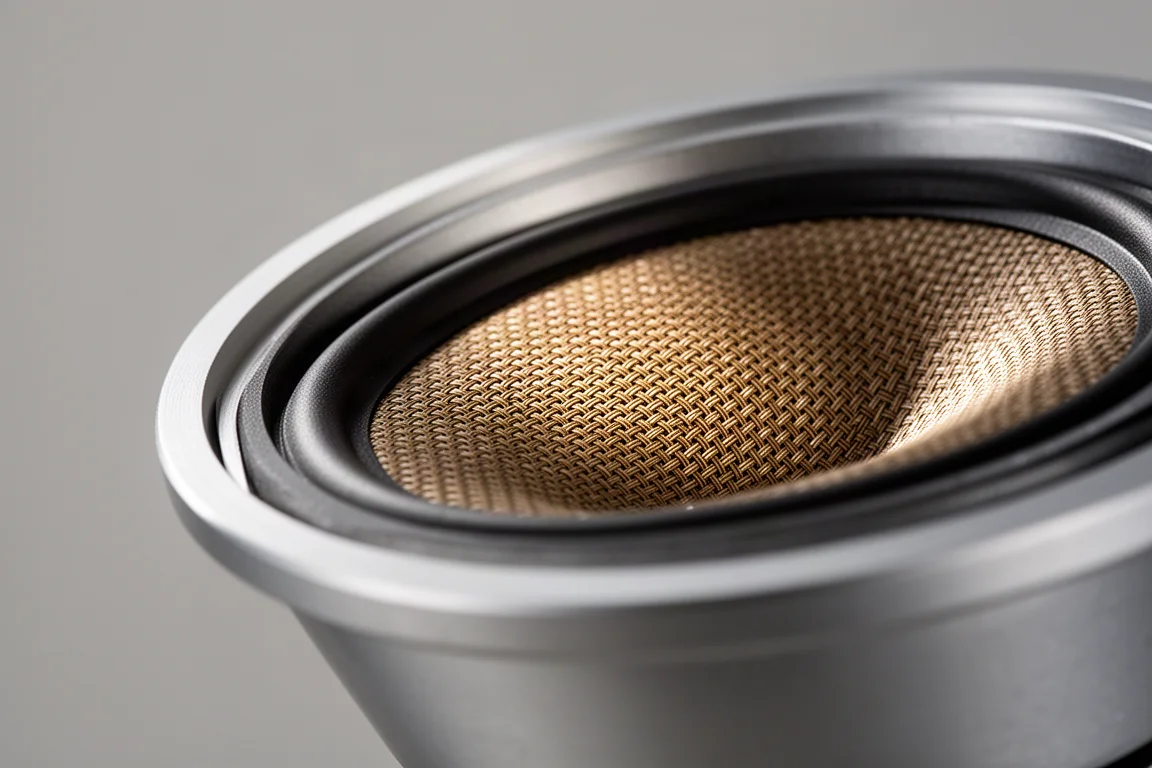
The midrange is where this generation separates itself most clearly. A sparse recording such as Norah Jones’ “Don’t Know Why”, which leaves the vocal almost completely exposed, comes through with more texture and a touch more warmth, less like information being reproduced and more like a person in the room. Up top, the diamond dome tweeter and the redesigned solid body housing handle demanding material with ease. On a track like Steely Dan’s “Asia”, where the cymbal work and horn detail forgive nothing harsh or grainy, the top end lets that detail through without ever tipping into brightness, even at the volumes the recording invites.
Finishes and Materials
The D5 range updates the color palette to stealth black, warm white, light walnut, and dark walnut. On all stereo models, the aluminum top plate keeps its leather by Connolly trim: black leather on the stealth black and dark walnut cabinets, and light gray leather on the warm white and light walnut finishes. The leather detail arrived with the D4 and has been updated here to complement the new finishes.
Things to Consider Before Buying
Pricing is the first thing to be direct about. The 801 D5 is $65,000 per pair, the 802 D5 is $45,000, the 803 D5 is $35,000, the 804 D5 is $25,000, and the 805 D5 is $15,000. Those figures reflect motors derived from the signature line, an entirely new layer of cabinet bracing, individually tuned plinths on every floorstander, and a development process that runs over five years per generation with a team of engineers working full time.
Where a listener is coming from matters as much as the price. Moving up from the D2 or D3 generations is a substantial jump, because the D5 brings everything the D4 introduced, including the biomimetic suspension and the full external crossover work, plus the new space frame bracing, signature drive motors, and tuned plinths on top of that. Moving from the D4 to the D5 is a closer call, since the two generations share so much core technology and the differences are concentrated in the motor systems, the mechanical control of the cabinet, and the revised tweeter housing. An in-person listen is the sensible way to judge whether the step is worth it for a particular room.
Buying Advice
The range is structured so that a listener can match the speaker to the room rather than the other way around. The 803 D5 is the most compact floorstander with the turbine head and a sensible choice where larger cabinets simply will not fit. The 805 D5 stand mount carries the diamond dome tweeter and the Continuum cone driver into smaller spaces. The 801 D5 and 802 D5 are for listeners with the room and the amplification to use their larger bass sections properly.
Whichever model is under consideration, amplification matters. The range is not difficult to drive, with 90 dB sensitivity on the 801, 802, and 803 and 89 dB on the 804, but the recommended 50 to 1,000 watts into 8 ohms on the flagship makes clear that these speakers respond to quality upstream electronics.
If a home theater system is part of the plan, match the center channel to the floorstanders: the HTM81 D5 with the 801 D5 or 802 D5, and the HTM82 D5 with the 803 D5 or 804 D5. The midrange driver sizes line up deliberately between each pairing, which keeps the front stage consistent.
For anyone still running a D2 or D3 generation system, the accumulated engineering in the D5 makes for a clear step forward. For D4 owners, listening first is the practical approach, since the case for upgrading rests on how much the new motors, space frame bracing, and tuned plinths matter in a specific room.
Conclusion
The 800 Series Diamond D5 is a genuine generational change rather than a cosmetic update. Space frame bracing, signature-derived motor systems, individually tuned plinths, stiffer crossover spines, and the 804’s new midrange enclosure all address specific mechanical problems, and the audible result is the most accomplished 800 Series range so far. For listeners building a reference-grade system, the range offers a model for most rooms and a clear engineering reason behind the price.
Product link
View more details for Bowers & Wilkins 800 Series Diamond D5
This product is mentioned in the review. Check the specifications, options, and compatibility before buying.
View more details for Bowers & Wilkins 800 Series Diamond D5Further reading
Related Reviews
Hi-Fi Speakers
1723 THX Tower vs 1528 Bookshelf: Which Speaker Fits Your Room?
Two speakers at roughly the same price, built very differently. How the 1723 THX tower and the 1528 bookshelf compare on construction, bass, power needs, and sound.
Hi-Fi Speakers
Acoustic Energy AE 300 Review: Deep Bass From a Compact Standmount
A two-way standmount with real wood veneer, surprising low-end weight, and a warm, easygoing character. Here is what to know before buying.
Hi-Fi Speakers
Acoustic Energy AE1 40th Anniversary Review: A Modern Take on a British Classic
A compact standmount that revives a 1980s favorite with all-new parts, a warm mid-centric balance, and a price of £1,499 per pair.