Bookshelf Speakers
Bowers & Wilkins 705 S3 Signature Review: A Refined Standmount With Real Scale
A close look at the Bowers & Wilkins 705 S3 Signature standmount, covering the Signature upgrades, sound character, amplifier needs, and who should buy it.
Introduction
The Bowers & Wilkins 705 S3 Signature is the special-edition version of the company’s compact standmount, and it arrives with a handful of changes that are easy to miss on a specification sheet but matter once the music starts: a revised crossover, upgraded binding posts, a revised suspension system for the woofer, and a new grille for the decoupled tweeter that is said to improve transparency.
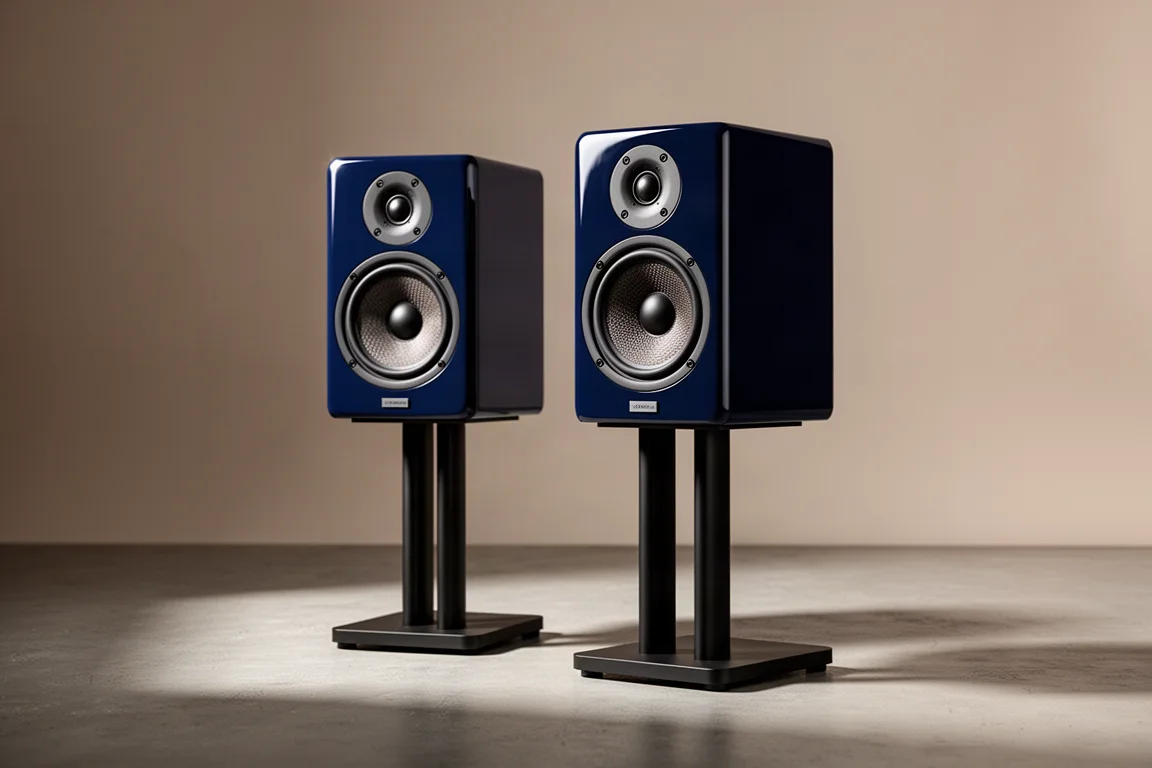
The Signature edition also brings two finishes unavailable on the standard model: Midnight Blue Metallic, carried over from the 800 Series Signature, and Datuk Gloss.
It sits in an interesting place in the range. The flagship 801 D4 Signature retails at $55,000, and the 705 S3 Signature costs less than a tenth of that. The question worth answering is how much of that flagship character survives the drop in size and price.
Who the 705 S3 Signature Is For
This is a speaker for listeners who want a compact two-way that behaves like a serious hi-fi component rather than a lifestyle accessory. It suits small to medium rooms, moderate listening levels, and setups where the speakers sit relatively close to a wall or in a space that is open on one side.
It is also a natural fit for a two-channel system that doubles as a movie setup. Because Bowers & Wilkins offers the HTM71 S3 Signature centre channel, the 705 S3 Signature can anchor the front of a Signature-series home theatre, or step aside for the larger 702 S3 if the room demands more output.
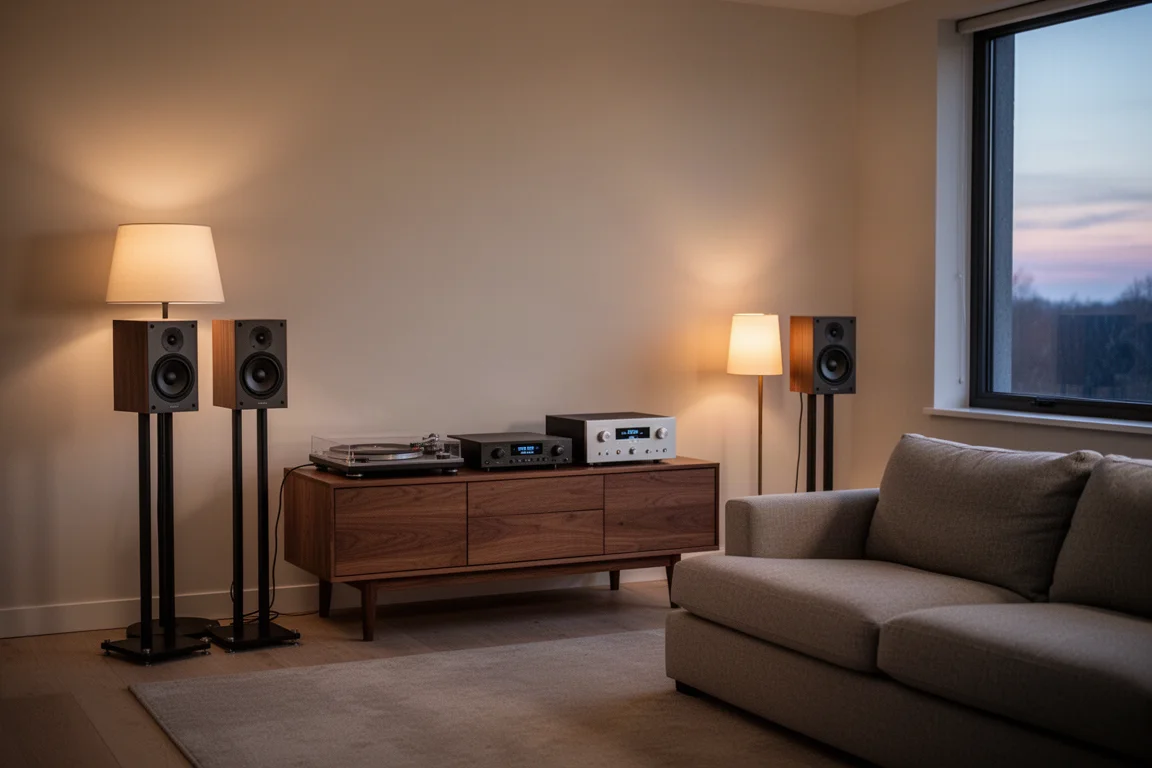
It is not, however, a plug-and-play speaker for every amplifier. The 88 dB sensitivity and the impedance that dips to 3.7 ohms mean it rewards a capable amplifier.
What the Signature Edition Changes
Underneath the finishes, the Signature and the standard 705 S3 share a great deal. Both use a 1 inch carbon dome tweeter and a 6.5 inch Continuum cone woofer, both have stout cabinets with a rear-facing port, both are rated 50 Hz to 28 kHz, and both are nominally 8 ohms.
The Signature adds the revised crossover, the upgraded binding posts, the new woofer suspension and the decoupled tweeter grille, and it can dip to 3.7 ohms where the standard model’s load is less demanding. In listening, the most audible difference shows up in the treble: the original 705 S3 carried a greater boost in the highs, while the Signature is more refined and less forward up top. It also images slightly better, and it locks in a solid centre image with the speakers pointed straight ahead rather than toed in.
Main Strengths
Sound Character and Detail
The 705 S3 Signature is not a textbook linear speaker. Its in-room response, measured from the listening position at 75 dB, shows little output below 50 Hz, a broadly linear midrange, a dip between 2 and 3 kHz, and treble that rolls off well after 10 kHz. That dip draws complaints from specification-focused listeners, but in practice it does not dominate the experience.
What stands out is how coherent the speaker sounds from top to bottom, and how much decay and air it gives to notes and lyrics. Vocals and midrange instruments such as acoustic guitars and the middle and upper registers of a piano come across as realistic and present without turning shouty. In detail retrieval and overall clarity, it gets ahead of the KEF R3 Meta and a comparable Yamaha standmount.
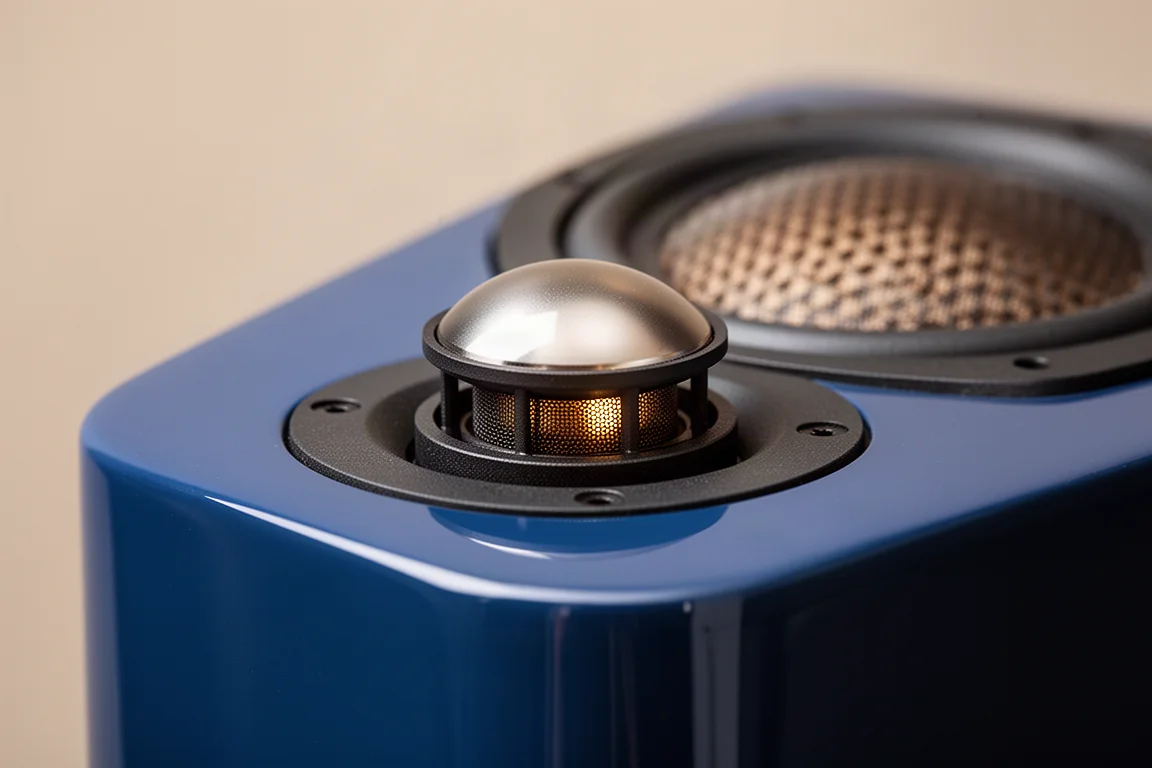
The decoupled tweeter is not as airy or as effortless as the diamond tweeter used further up the range, but within its class it ranks among the best available. Dispersion is excellent and the top end is not fatiguing.
Imaging and Soundstage
Imaging is a genuine strength. The centre image is strong enough to suggest a dedicated centre speaker is present when none is connected, and the speakers hold that focus when aimed straight ahead. Soundstage width and depth come close to the larger 805 D4, with a striking sense of separation and transparency for a cabinet this size.
Dynamics depend more on the amplifier and subwoofer than on the speaker alone. Driven with power, it scales cleanly and without strain. Push it hard without a subwoofer and the low end flattens and becomes more two-dimensional. Add a subwoofer and a well-sorted setup, and it sounds far grander than its size suggests.
At low volumes it is equally convincing. Even with a modest integrated amplifier, it keeps its inflection, detail and definition across the whole soundstage, which makes it easy to live with late at night.
Home Theater Potential
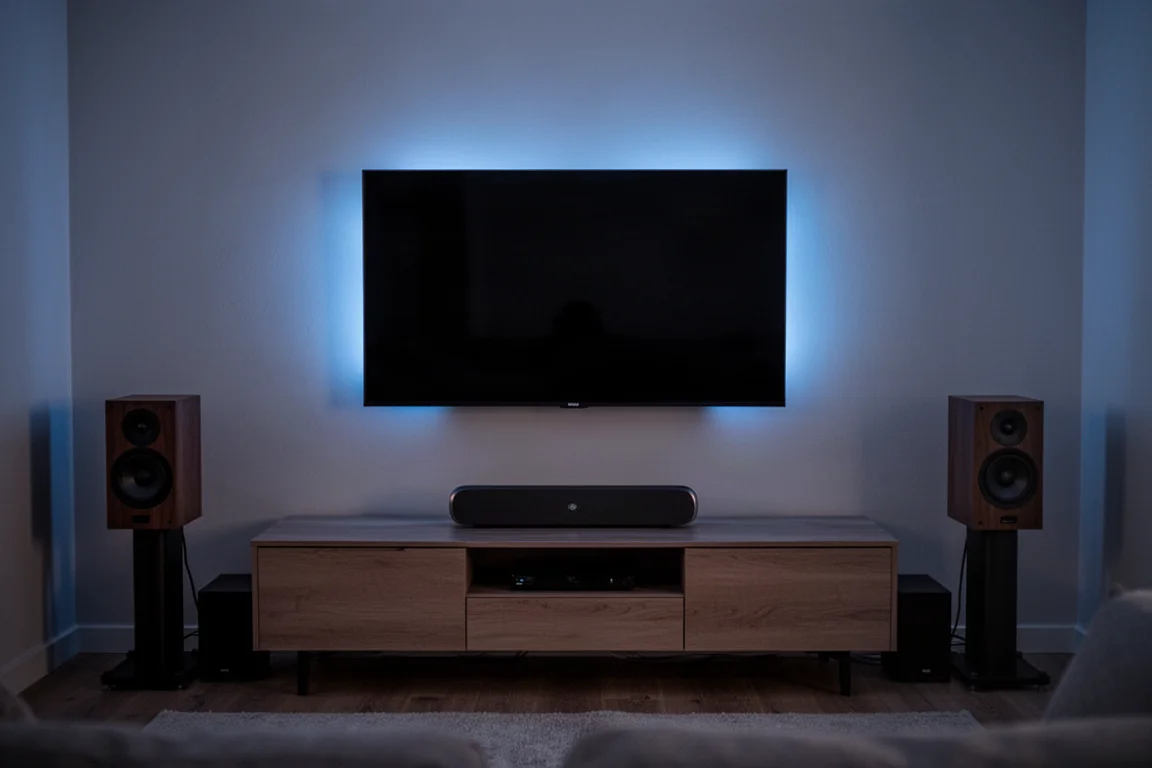
Paired with the matching HTM71 S3 Signature centre channel and a quality subwoofer, the 705 S3 Signature makes a compelling front trio. Dialogue stays crystal clear and hangs in space even when the centre channel sits below a television, thanks to the same strong imaging the standmounts show in two-channel use.
The result is a setup that delivers impact without sacrificing intelligibility, which matters more than most specification debates. If a living room has to serve as both a music room and a cinema, adding the matching centre is worth the extra spend.
How It Compares With the Alternatives
Against the KEF R3 Meta, the case is straightforward. On paper the KEF is the more technically accomplished speaker and the better value at a little over $2,000 a pair, and it will appeal to listeners who want the measurement-first answer. The 705 S3 Signature is the speaker that invites longer, more engaged listening sessions, which is a preference argument rather than a performance one.
Against the SVS Titan, the comparison is less obvious on paper because one is a full-range tower and the other a standmount with limited bass. Both cost roughly the same, and the Titan is the stronger value if you want full-range sound without adding a subwoofer; it is larger, but it can still work in smaller rooms. Its voicing is closer to the Bowers & Wilkins character than you might expect, aiming to captivate rather than to measure flat. Where the Signature pulls ahead is in build quality, finish quality and pedigree.
Against the 801 D4 Signature, expectations need managing. The 705 S3 Signature does not match or upset the flagship, and with a subwoofer and careful in-room tuning it reaches roughly 75 percent of what the 801 D4 Signature does for a fraction of the money. The flagship remains in a class of its own, but the gap is smaller than the price difference suggests.
Things to Consider Before Buying
Budget for an amplifier. The Signature’s load dips to 3.7 ohms, so budget amplification is a poor match. A moderately priced integrated amplifier such as the Marantz Model M1 pairs well, while the McIntosh MC312 represents the all-in option. For home theatre, the Marantz Cinema 30 and a Yamaha integrated amplifier both make solid partners.
Plan for a subwoofer in a large room or for movie duty. The 705 S3 Signature has limited output below 50 Hz, and while that is entirely workable in small to medium rooms or at low to moderate levels, a large space or a home theatre role makes a subwoofer essential. Feathering a subwoofer in through the amplifier’s bass management is an effective approach.
Follow the placement guidance. Bowers & Wilkins recommends 5 to 10 feet between the speakers and about 18 inches of clearance from the front and side walls. Keeping the speakers pointed straight ahead works well, though toe-in is worth experimenting with, since setup and placement change the sound considerably.
Expect a slightly bright presentation by some standards. The Signature is less boosted in the treble than the standard 705 S3, but it is still a Bowers & Wilkins voicing, and listeners who prefer a warmer balance may not agree with it.
Buying Advice
The decision between the Signature and the standard 705 S3 comes down to the treble. On paper the two are close, and the differences in overall capability are not huge until you reach the top end, where the Signature is more refined, less boosted and slightly better at imaging. If you want the version that is a touch less forward, the Signature is the one to choose, and it costs more for that privilege.
If you are chasing the sound of the 800 Series Signature, be realistic. The 705 S3 Signature gives a taste of that transparency and scale, not the full measure of it. What it does offer is an articulate, engaging standmount that pairs well with a good amplifier and a subwoofer and leaves money in the bank.
Buy it for the character, not the specification sheet. Listeners who value presence, decay and a live-sounding midrange will find a lot to like here, while those who want the flattest possible response should audition the alternatives first.
Conclusion
The Bowers & Wilkins 705 S3 Signature is a compact speaker that behaves like a much larger one. Its midrange and imaging are its strongest cards, its treble is calmer than the standard model’s, and its bass limits are predictable and easy to solve with a subwoofer. It is not the value pick of its class, and it will not replace a flagship, but it is one of the more enjoyable standmounts at its price. Match it with capable amplification, give it sensible placement, and it will reward long listening sessions.
Product link
View more details for Bowers & Wilkins 705 S3 Signature
This product is mentioned in the review. Check the specifications, options, and compatibility before buying.
View more details for Bowers & Wilkins 705 S3 SignatureFurther reading
Related Reviews
Bookshelf Speakers
Acoustic Energy A100 Mark II Review: A Compact Standmount With an Expansive Soundstage
The Acoustic Energy A100 Mark II brings clarity, natural tonality and a wide soundstage to an entry-level standmount, with a few setup details worth knowing first.
Bookshelf Speakers
Acoustic Energy AE-100 Mark II Review: Compact Bookshelf Speakers With Standout Imaging
A compact British two-way bookshelf speaker with deep, layered imaging, fast bass, and a slight treble lift to weigh against a crowded $500 field.
Bookshelf Speakers
Acoustic Energy AE100 MK2 Review: Measured Performance and Four Alternatives
A close look at the Acoustic Energy AE100 MK2 bookshelf speaker, what its measured performance reveals, and four alternatives with different trade-offs.