Home Audio
Bose 901 Review: Inside the Reflected-Sound Loudspeaker That Ran for 46 Years
A detailed look at the Bose 901: its nine-driver direct/reflecting layout, the active equalizer it depends on, its measured character, and what to weigh before buying a pair.
Introduction
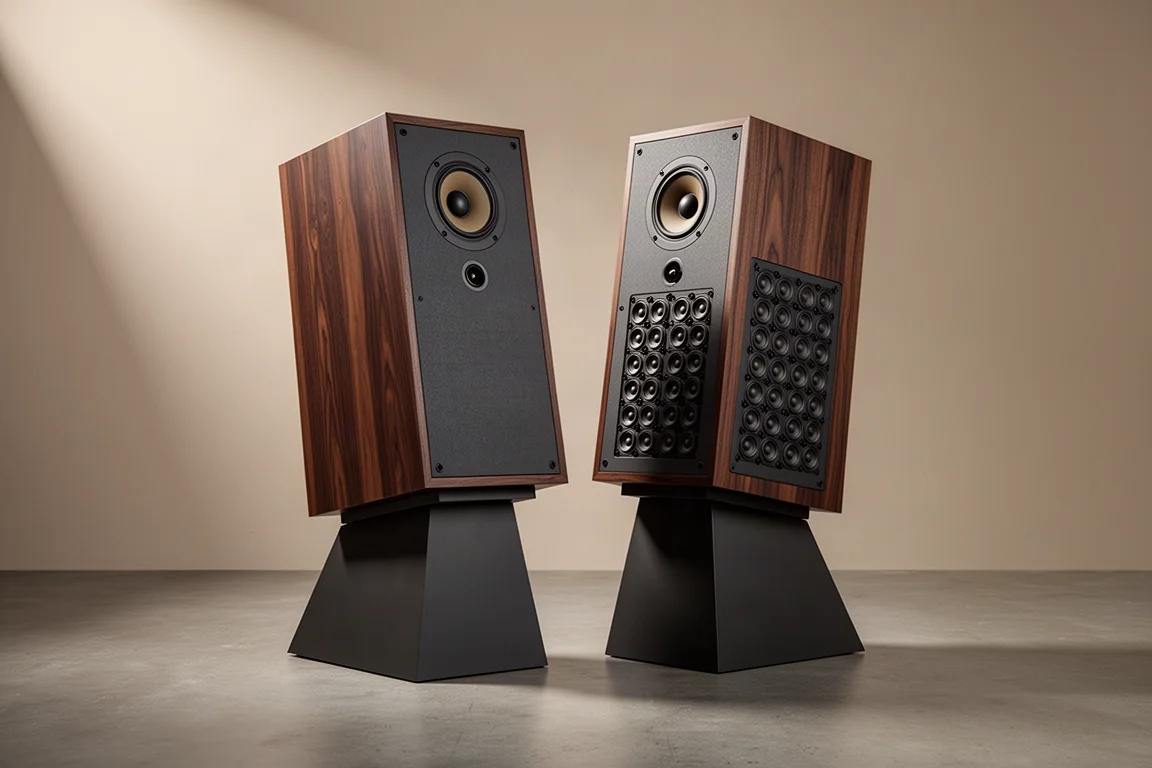
The Bose 901 is one of the most recognizable loudspeakers ever built. It arrived in 1968 and stayed in production across six series for roughly 46 years before being discontinued in 2014, outlasting nearly every rival of its era. Its layout is unusual: nine 4.5-inch full-range drivers per cabinet, eight of them firing backward to bounce sound off the walls and one firing forward. An active equalizer box is part of the package rather than an optional extra. Bose has announced a limited production run of a modern version, which makes this a good moment to look closely at what the original design does well and where it struggles.
Who the Bose 901 Is For
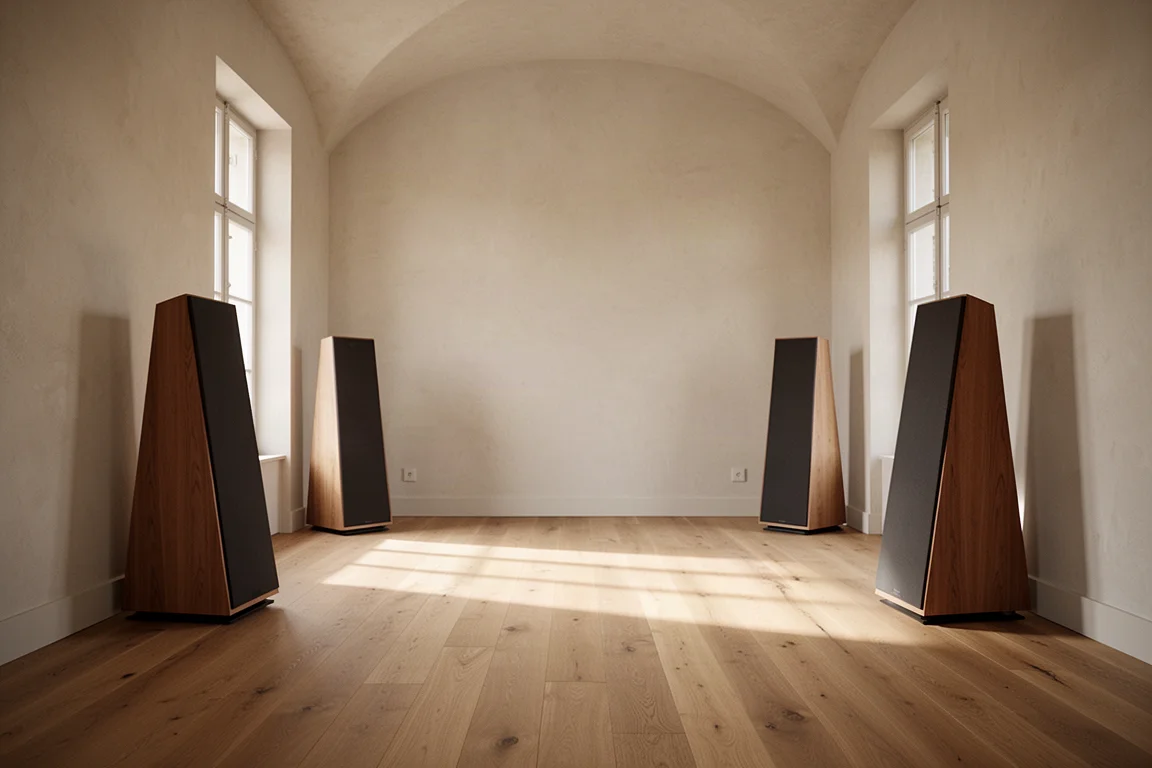
The 901 was built around a direct/reflecting philosophy, with roughly 89 percent of its output reflected from the rear wall and 11 percent fired directly at the listener. That approach suits listeners who want a broad, diffuse, room-filling presentation for background music in large spaces. In clubs and big rooms where several pairs were installed, the effect was a genuine wall of sound, and the speaker could play loud without strain.
It is a much weaker match for critical listening, home theater, or anything that depends on precise imaging. Instruments and vocals are poorly localized, and the soundstage lacks depth and definition. Anyone who wants a sharply focused phantom center, with dialogue locked firmly in front of the seating position, will find the 901 working against that goal rather than toward it.
Main Strengths
Give Bose credit for shipping a loudspeaker with equalization in 1968, when almost nobody else was doing it. Coaxing this much output from small full-range drivers was a real achievement, and the design had enough headroom to fill large spaces at high volume. The cabinet is durable, and the long production run says something about how well the concept resonated with buyers.
For a generation of enthusiasts in the 1970s and early 1980s, the 901 was the yardstick. The question people asked about any new speaker was whether it was as good as the 901, and that cultural footprint is difficult to overstate. Whatever its measured shortcomings, the speaker earned its place in audio history.
Design and the Active Equalizer
Each cabinet houses nine 4.5-inch full-range drivers. Eight fire toward the rear wall and one fires forward. Because those drivers have limited bandwidth on their own, the system depends on an active equalizer to become usable. Without it, the natural response is dominated by the midrange with very little bass or treble extension, and the result is close to unlistenable.
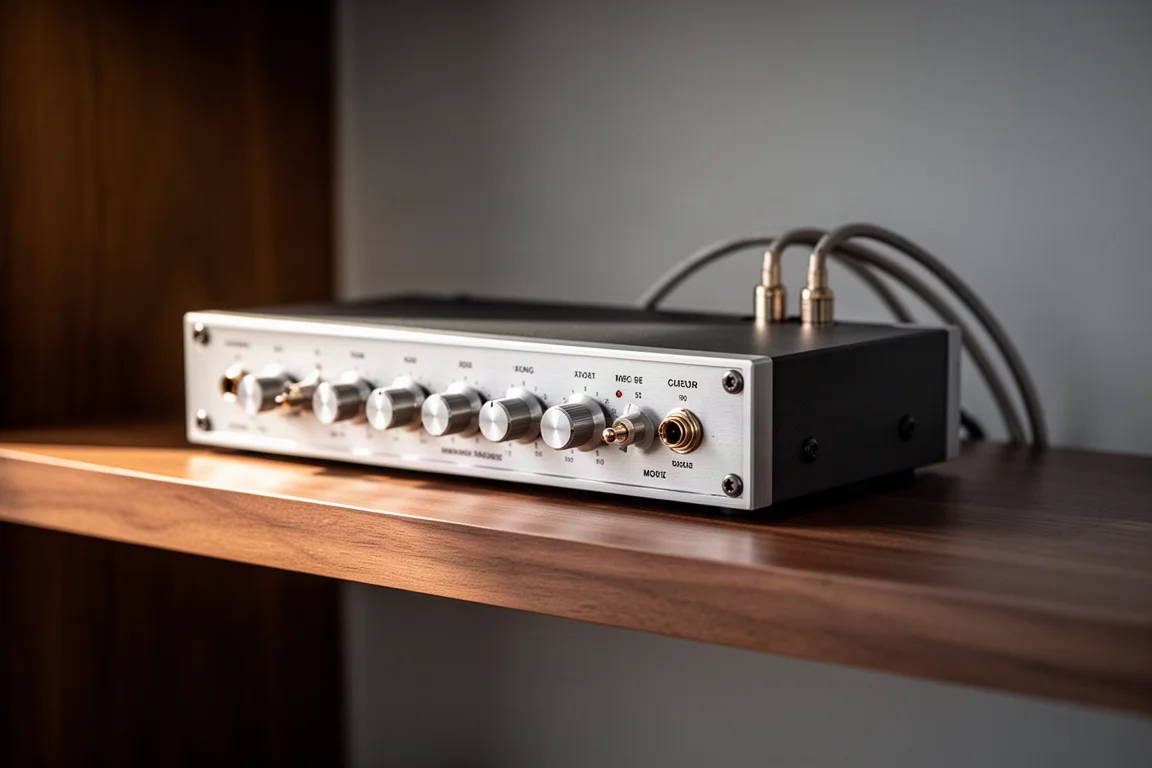
The equalizer in the original versions is analog, and it has to sit in the signal path, typically routed through a tape loop on an older receiver. That complicates setup and limits how easily the speaker slots into a modern system. It was a reasonable engineering decision for its time, but it is a genuine inconvenience today.
Things to Consider Before Buying
The drivers are inexpensive units with small motor structures and limited excursion, which is precisely why deep bass extension is hard to achieve from them. At moderate volume, total harmonic distortion exceeds 3 percent in the bass and midrange, which is high for loudspeakers in the same price bracket. The consequence is a muddy, undefined quality that becomes obvious in complex musical passages.
Off-axis performance is chaotic, with tonal shifts that can dominate the listening experience. Placement is critical as well. The 901 is finicky and generally needs to sit closer to the corners of a room to sound right, which restricts how freely you can arrange furniture around it. Many owners added a subwoofer and high-passed the 901s to take strain off the small drivers, a change that reduces distortion and noticeably improves overall sound quality.
Measured Performance and Sound Character
With the equalizer in place, measured frequency response runs from about 50 Hz to 15 kHz at minus 6 dB, and it stays uneven and colored across that range. Bass peaks somewhere between 50 and 100 Hz but lacks definition, producing a boomy, one-note quality rather than real weight. The midrange is overemphasized between 1 and 3 kHz, so vocals and instruments sound congested. Treble rolls off sharply above 10 kHz, leaving the presentation veiled and short on air. Dynamic range is limited, particularly in the low frequencies.
The broader point is that the 901 trades accuracy for scale. It creates the impression of a big, enveloping performance, but precision and tonal neutrality were never part of the deal. Listeners who value realism will notice the gap quickly.
Placement and Room Setup
Placement does a large share of the work with this speaker. It is finicky, and getting it to sound right usually means working with the room rather than against it, typically with the cabinets angled toward the corners so the reflected energy arrives the way the design intends. Owners frequently report that adding a subwoofer and filtering low frequencies away from the 901s pays off in cleaner output and less strain on the drivers. Some go further with post-processing after the equalizer to linearize the response.
Aesthetic taste matters here too. The tall cabinet on its angled pedestal stand has a strongly period look, and that look divides opinion. Some listeners love the furniture-like presence, while others find it dated next to slimmer modern designs.
Buying Advice
The final Series 6 iteration retailed at $1,398 per pair, which places the 901 in the upper mid-range of the market. At that figure, modern loudspeakers in the same bracket offer better detail, better dynamics, and far more tonal accuracy. Named alternatives at a comparable price include the KEF LS50 Meta and the ELAC UniFi Reference, while even budget models from JBL, Klipsch, and Polk deliver more versatility for everyday listening and home theater use.
Buy the 901 if you specifically want its diffuse presentation, its heritage, or a large-space background system where precise imaging is not a priority. If you are shopping secondhand, budget for the equalizer as part of the purchase, since the speaker is not really usable without it. Anyone curious about the announced modern version has reason to pay attention: Bose’s recent headphones show a notably neutral tonal balance, which suggests the company can tune a product carefully when it chooses to. A limited run built around modern DSP is worth watching.
Conclusion
The Bose 901 is a product of its time. It was innovative in concept and genuinely influential, and it remains an engaging listen when used the way it was designed to be used, as a room-filling system in a large space. It is also deeply compromised by modern standards, with uneven response, elevated distortion, limited low-bass extension, and a hard dependency on an outboard equalizer. Buy it for the experience and the history, not for accuracy.
Product link
View more details for Bose 901
This product is mentioned in the review. Check the specifications, options, and compatibility before buying.
View more details for Bose 901Further reading
Related Reviews
Home Audio
Aperion Novus Tower and Center Review: Punchy Home Theater Sound With Real Refinement
A close look at the Aperion Novus tower and center speakers, from their layered paint finish and punchy bass to the 4-ohm load and what the price actually buys.
Home Audio
Arendal 1610 Tower Review: Flagship Dynamics in a Room-Friendly Tower
A compact floorstanding tower with three 8-inch aluminium woofers, a 5-inch carbon midrange, and the kind of bass heft usually reserved for much larger speakers.
Home Audio
Arendal 1723 S THX Review: A Reference Speaker Built Like a Tank
A practical look at the Arendal 1723 S THX, a sealed, THX-certified speaker with exceptional build quality, a very flat top end, and a midrange that responds beautifully to EQ.