Hi-Fi Speakers
Borresen X3 Review: A Tower Speaker With Real Strengths and a Recessed Midrange
A detailed look at the Borresen X3 floorstanding speaker, its measured behaviour, and how it compares tonally with the Wharfedale Super Linton and the Audio First Designs Fidelia.
Introduction
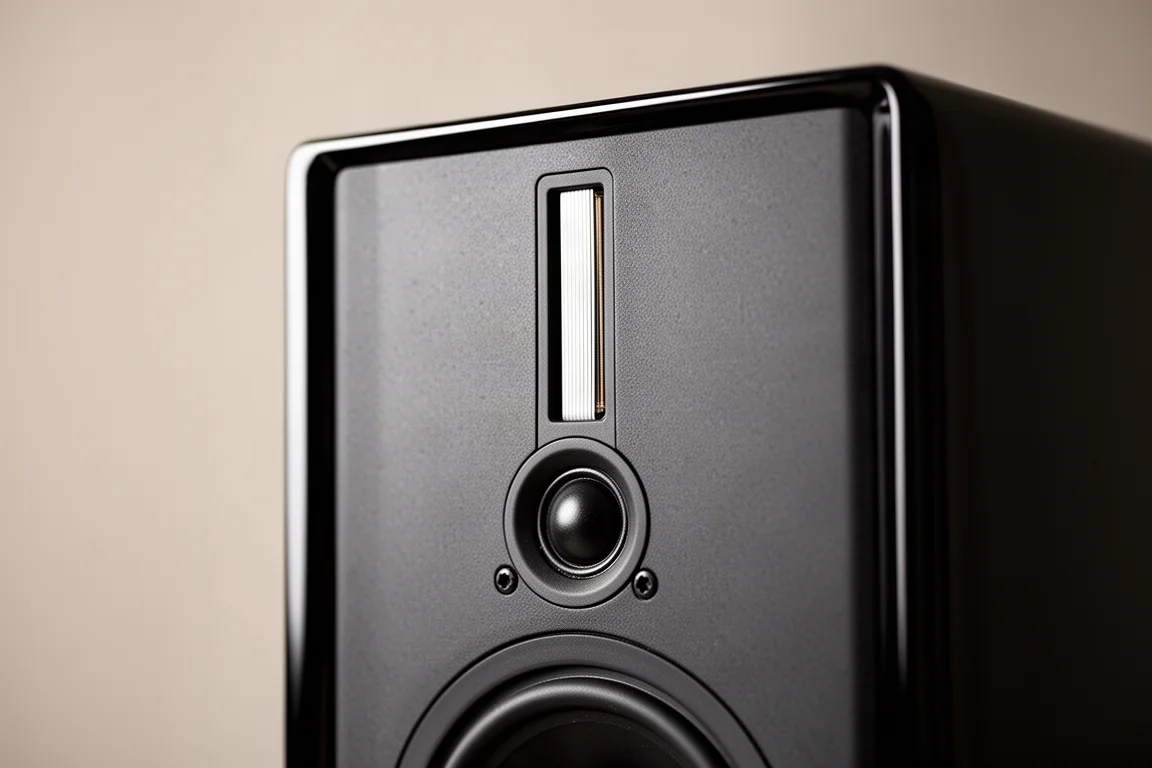
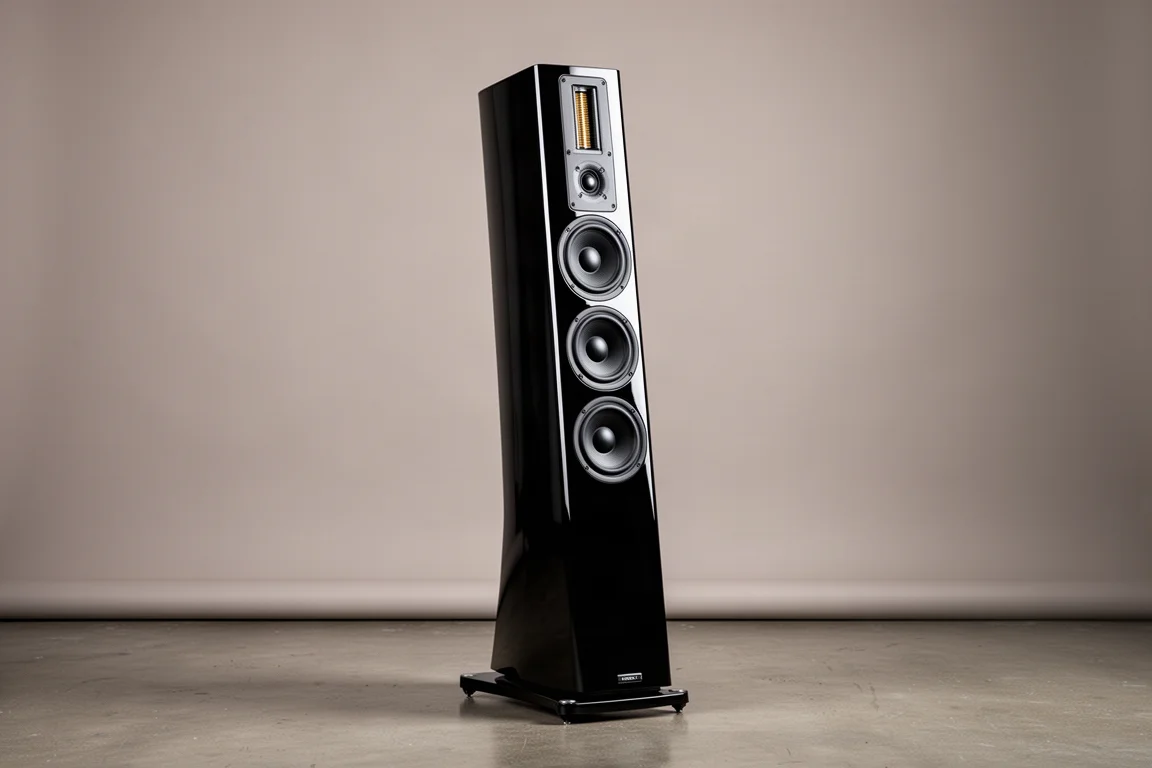
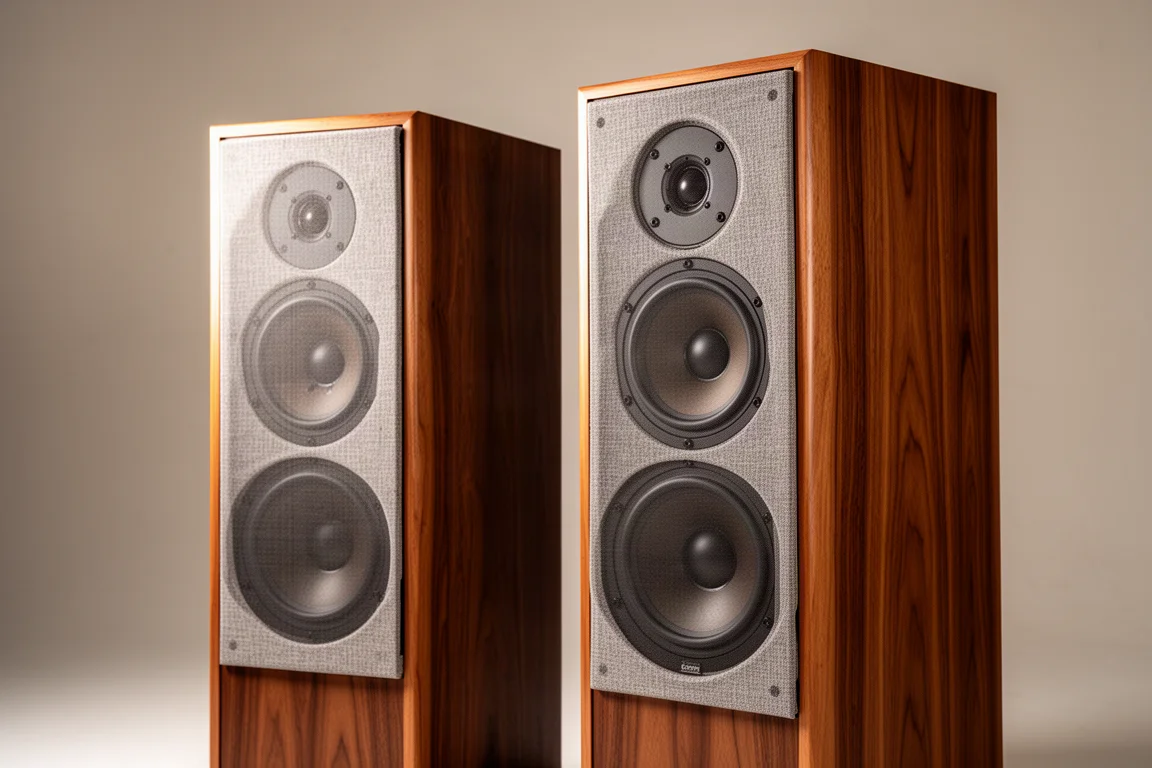
The Borresen X3 is a tall, slim floorstanding loudspeaker that pairs a planar ribbon tweeter with a 4.5-inch midrange driver and two 4.5-inch bass drivers. Each cabinet stands about 51 inches (129 cm) high, weighs roughly 55 kg (121 lb), and is available in gloss white or gloss black. The rated frequency response spans 35 Hz to 50 kHz, sensitivity is specified at 88 dB at 1 watt, nominal impedance is listed at 4 ohms, and the manufacturer recommends a minimum of 50 watts of amplifier power.
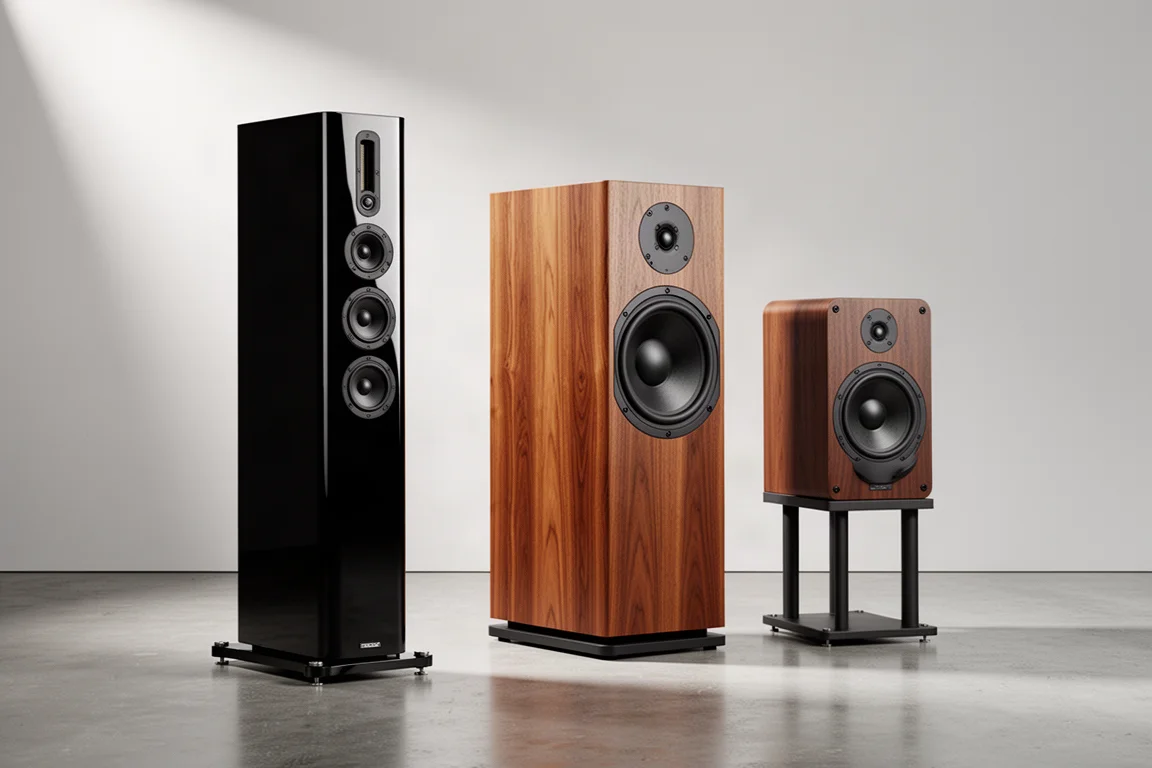
That is a large tower with a relatively small driver complement, and that combination shapes almost everything about the way it sounds. This evaluation covers a full listening programme alongside measured data, plus direct tonal comparisons against two speakers whose behaviour is already well understood: the Wharfedale Super Linton and the compact Audio First Designs Fidelia kit. Used together, they make it much easier to describe exactly where the X3 sits in tonal terms.
The pair assessed here was purchased new by an owner and made available for a complete evaluation.
How This Speaker Was Evaluated
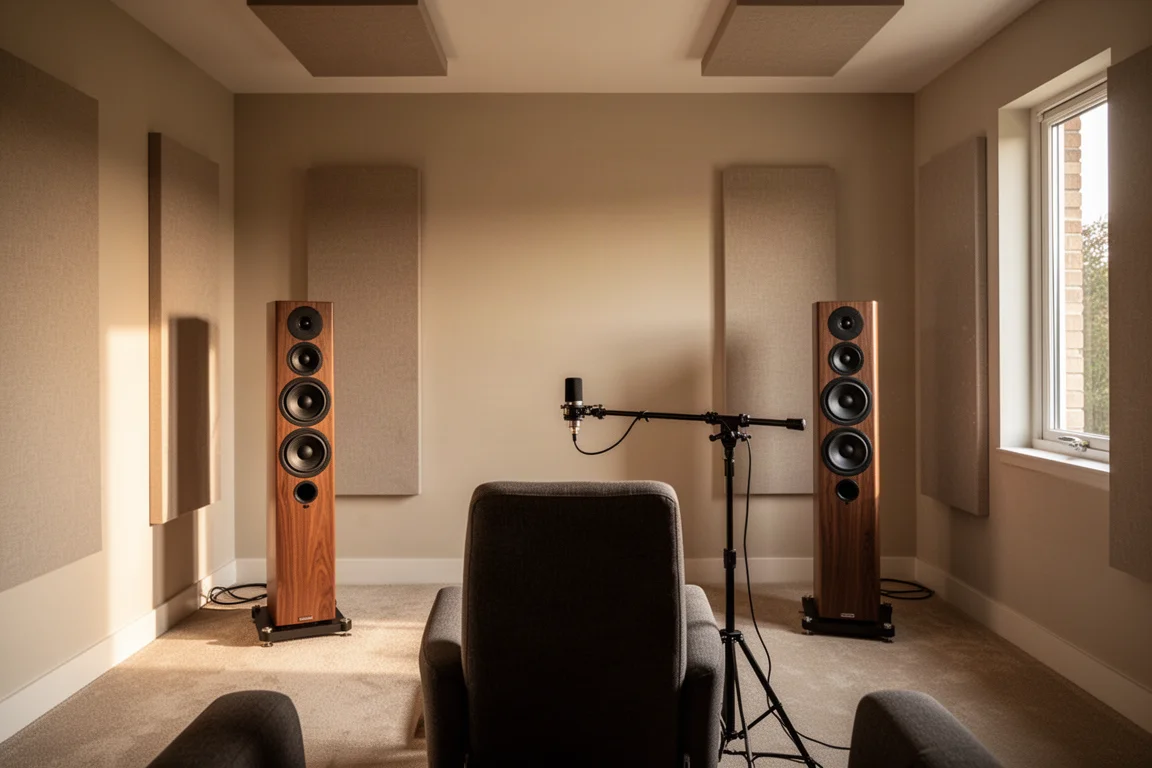
Setup began at the manufacturer’s recommended position of about 50 cm (roughly 20 inches) from the back of the cabinet to the wall behind it. The speakers were then moved further out, to around 3 feet, before settling at approximately 24 inches (60 cm), which is where the final listening sessions took place. Toe-in followed the manufacturer’s guidance, with the speakers aimed just outside the listener’s shoulders, a slight toe-out arrangement.
Two different amplifier setups were used across the listening programme, and both produced broadly the same conclusions about the speaker’s character.
Listening was supplemented with nearfield scanning, which allows the speaker to be characterised before the room imposes its own influence. This matters most in the bass region, where room modes otherwise obscure what the cabinet itself is doing and muddy the picture considerably.
The two reference speakers were then placed alongside the X3, roughly two feet apart, all aimed at the same listening position, with music summed to mono and output levels matched to within about half a decibel. That arrangement isolates tonal balance, which is the variable that mattered most here.
Borresen X3: Design and Specifications
The driver complement is unusual for a cabinet of this size. A planar ribbon tweeter handles the top end, a single 4.5-inch driver covers the midrange, and two further 4.5-inch drivers handle bass. Rated frequency response runs from 35 Hz to 50 kHz, sensitivity is quoted at 88 dB at 1 watt, and nominal impedance is 4 ohms.
Measured impedance tells a friendlier story than the nominal figure suggests. Minimum impedance comes in at about 6.1 ohms above 80 Hz, and minimum EPDR sits around 3.7, so the load is not especially demanding for a competent amplifier despite the 4-ohm rating. Impedance traces also reveal resonances, one strong around 300 Hz and another near 2 kHz.
The cabinet leans back slightly, which means the tweeter axis aims above the head of a seated listener. According to the manufacturer, this is intentional, with the explanation that a listener in a hall sits below the musicians on stage. Whatever the merits of that reasoning, it has practical consequences for setup, because the vertical listening window is narrow. Both cabinets measured practically identically, which is a good sign for pair matching and worth noting before the measured data is examined.
Borresen X3: Listening Impressions
The low end has real attack and kick, with a solid, punchy character through the 70 to 90 Hz region, typically centred around 80 Hz. It is an enjoyable quality, and it shows up consistently across both amplifier setups. What it does not do is sound like it extends below roughly 50 Hz in room, which is surprising given the size of the cabinet.
The treble is genuinely good. It sounds detailed, natural, and free of hardness, and it is supported by a very wide sense of space. Imaging is superb, with clear layering and a real sense of precision around individual instruments. The near-identical behaviour of the two cabinets plays a direct role here, since mismatched response between left and right is what usually smears an image.
The midrange, however, has a hole in it. That impression held up under direct comparison with known neutral speakers placed side by side, level matched, and playing the same mono material. Alongside the scoop in the midrange, the 2 to 4 kHz region covering the upper midrange and lower treble sounds soft, losing some presence and detail. Sitting below the tweeter axis made that softness worse. Removing the small pucks from the front feet to tilt the cabinets up slightly, and raising the seating position so the ears lined up with the tweeter axis, reduced the effect, though it did not remove it entirely.
One further observation: the soundstage projection is a little larger and more diffuse than that of the two smaller reference speakers, and there is an audible handoff between the tweeter and the midrange vertically. Some listeners will prefer that extra sense of envelopment; others will prefer the more point-source presentation of a smaller design. It is a trade-off rather than a fault.
Borresen X3: What the Measurements Reveal
The measurements explain the listening notes closely, which is reassuring given how specific some of those impressions were.
Average sensitivity measures about 86 dB at 2.83 volts at 1 metre. F3 lands at roughly 50 Hz relative to the mean SPL taken between 300 Hz and 3 kHz, and F10 sits at about 25 Hz. Against that mean level, there is approximately 8 dB of bass boost centred near 80 Hz. That lift is what produces the satisfying thump, and it also rings for a long time in the waterfall plot, the longest decay observed to date, with additional ringing around 350 Hz and a smaller one near 2 kHz. Other Borresen models show a similar high-Q bass lift in measurement, which points to a deliberate design choice rather than a defect.
A major resonance sits between roughly 200 and 300 Hz, the same one visible in the impedance trace. It creates a suckout of around 11 dB relative to the mean SPL in the raw data. By ear, the scoop reads more like 7 to 8 dB, since hearing does not resolve detail the way a graph does, but the shape is unmistakable. Adding the smoothed midrange depression, the midrange sits somewhere between 8 and 10 dB below the tweeter level. That is the mechanism behind both the reports of a hollow middle and the reports of a bright top end, depending on which reference point a listener uses.
The estimated in-room response summarises the three tonal features heard during listening: the 80 Hz bump that provides thump but lingers, the hollow midrange, and the soft upper midrange that lacks detail and presence. Horizontal coverage averages around plus or minus 70 degrees, which is wide and welcome. Vertically, the listening position needs to be on the tweeter axis or within roughly 15 degrees of it.
Harmonic distortion at 86 dB and 96 dB shows a largely clean midrange with more activity at higher frequencies, and multitone distortion stays below a 3 percent threshold. That is reasonable given the two 4.5-inch bass drivers. The apparent peak near 2 kHz reflects the response dip rather than a distortion problem, since the plot is relative to the fundamental.
Compression data rounds out the picture. Referenced to 76 dB at 1 metre, output at 86 dB is mostly well behaved, with about 1 to 1.5 dB lost near 90 Hz. Push to 96 dB and noticeably more is lost, primarily around 80 Hz. At 102 dB, across roughly a 26 dB span, the loss in that region grows further. This matches the listening notes precisely: the speaker has a solid thump at low volume but sounds less impactful as the volume rises.
Wharfedale Super Linton: A Linear Reference Point
The Wharfedale Super Linton sells for about $2,500 per pair with stands, and it served as the primary tonal reference in this comparison. Placed next to the X3 and level matched, it comes across as noticeably more linear across the range. The practical result is a more natural, more neutral, and more accurate tonal presentation, without the pronounced bass lift or the midrange scoop.
That linearity makes it a useful yardstick rather than a rival. It shows how much of the X3’s character comes from deliberate voicing choices rather than from any limitation of the design, and it gives a clear reference point for anyone trying to decide which presentation they would rather live with.
Audio First Designs Fidelia: A Compact Reference
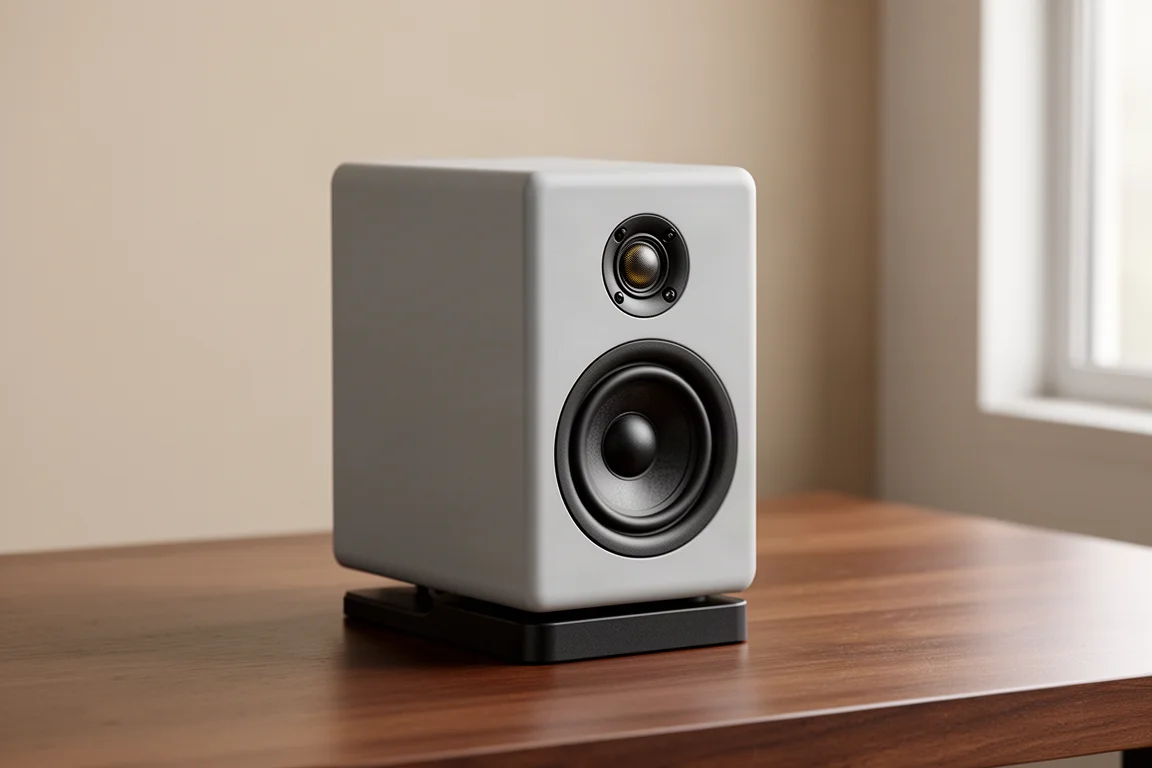
The Audio First Designs Fidelia is a small kit bookshelf speaker retailing for around $900 for the kit pair. It has a known neutral tonal balance and does an excellent job as a tonal reference, which is exactly why it was brought in for this comparison.
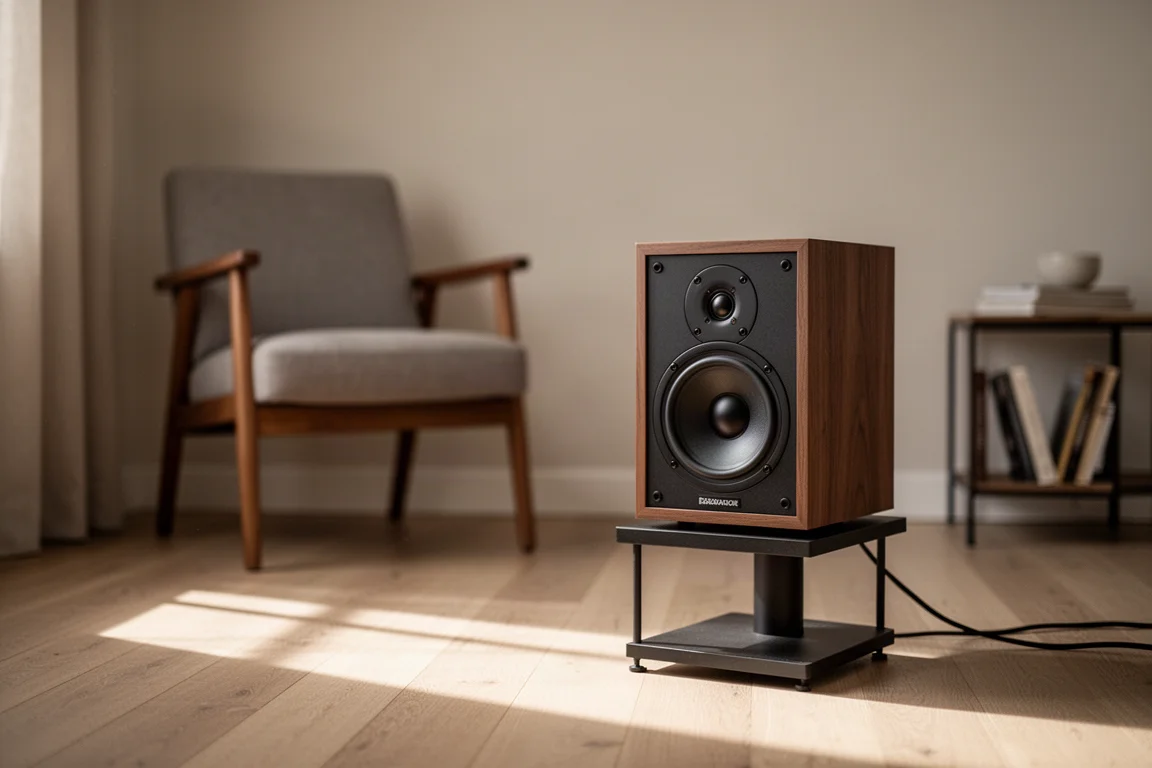
Its limits are equally clear. As a compact bookshelf design it does not offer a lot of bass or a lot of output, so it is not a full-range alternative to a large tower. What it does provide is a trustworthy point of comparison for tonal balance, and in that role it made the X3’s midrange scoop immediately obvious.
Buying Advice: Who Should Consider Each Speaker
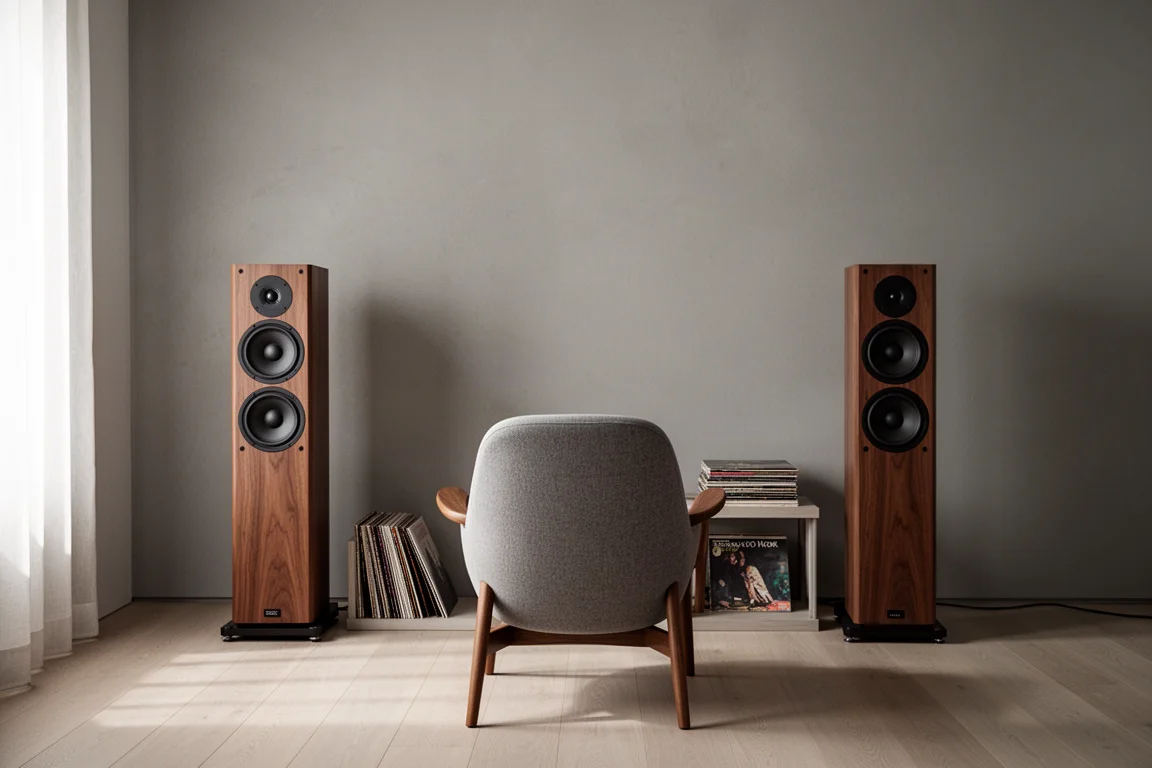
The Borresen X3 makes the most sense for listeners who value a wide, enveloping soundstage, precise imaging, and a lively, punchy low end, and who are willing to accept a recessed midrange and a soft upper midrange in exchange. Setup matters more than usual here. Getting the ears on the tweeter axis, or at least within about 15 degrees of it, recovers some of the presence that is otherwise missing, and positioning the cabinets roughly 24 inches from the wall behind them gave the best balance during this evaluation. The speaker also rewards a listening position where the 80 Hz lift is heard as punch rather than as overhang.
Listeners who prioritise tonal accuracy above all else will likely prefer the Wharfedale Super Linton, which is considerably more linear and therefore more neutral across the range. Those who want a compact, neutral reference for tonal comparisons, in a room where output demands are modest, will find the Audio First Designs Fidelia a sensible and affordable option.
It is worth remembering that tonal descriptions are relative. A speaker with a scooped midrange can sound bright next to a neutral one, and a neutral speaker can sound dull next to a bright one. Knowing which reference point a description is measured against is often more useful than the description itself.
Conclusion
The Borresen X3 gets a great deal right. The high frequencies are detailed and natural, the horizontal radiation is wide, room involvement is strong, and the 80 Hz emphasis delivers a genuinely enjoyable thump. Imaging precision is excellent, supported by very close pair matching between the two cabinets.
The reservations are equally clear. That bass lift rings longer than it should, the midrange is scooped out relative to the tweeter, and the upper midrange and lower treble are soft enough to cost some presence and detail. Whether those trade-offs matter depends entirely on what a listener is looking for. Anyone who wants a speaker to deliver the recording as neutrally as possible should compare carefully before committing, while anyone who prizes soundstage scale and a punchy low end may find a lot to like here.
Further reading
Related Reviews
Hi-Fi Speakers
1723 THX Tower vs 1528 Bookshelf: Which Speaker Fits Your Room?
Two speakers at roughly the same price, built very differently. How the 1723 THX tower and the 1528 bookshelf compare on construction, bass, power needs, and sound.
Hi-Fi Speakers
Acoustic Energy AE 300 Review: Deep Bass From a Compact Standmount
A two-way standmount with real wood veneer, surprising low-end weight, and a warm, easygoing character. Here is what to know before buying.
Hi-Fi Speakers
Acoustic Energy AE1 40th Anniversary Review: A Modern Take on a British Classic
A compact standmount that revives a 1980s favorite with all-new parts, a warm mid-centric balance, and a price of £1,499 per pair.