Bookshelf Speakers
Three Bookshelf Speakers Compared: Arendal 1723, Philharmonic BMR Mini Monitor, and Klipsch RP-600M II
A dispersion-focused comparison of the Arendal 1723 Bookshelf, Philharmonic BMR Mini Monitor, and Klipsch RP-600M II, and how each design shapes soundstage width, depth, and image precision.
Introduction
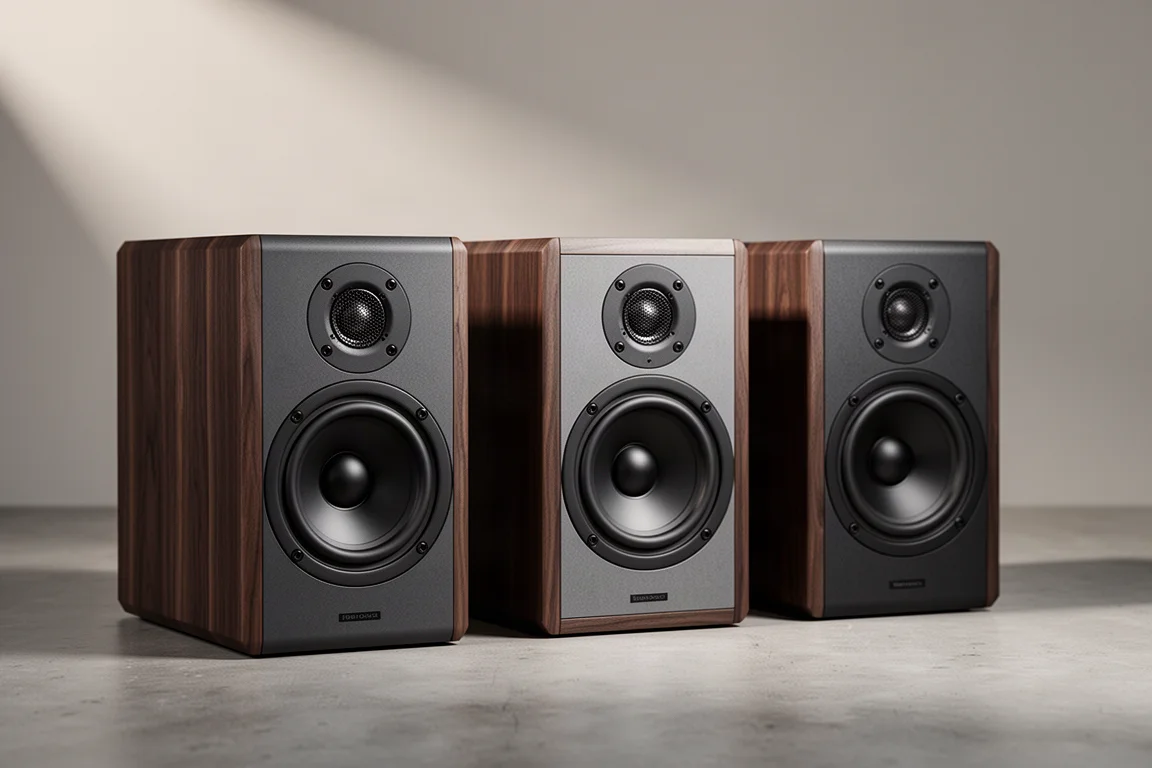
Bookshelf speakers rarely differ as much as their spec sheets suggest, but dispersion is one area where design choices show up immediately in the listening room. The Arendal 1723 Bookshelf, the Philharmonic BMR Mini Monitor, and the Klipsch RP-600M II all aim at the same job, yet they take three distinct routes to get there. Two of them use waveguides to control how their higher frequencies leave the cabinet. The third uses a thin ribbon tweeter with an unusually wide radiation pattern and no waveguide at all. The result is three noticeably different presentations of width, depth, and image placement, and this guide explains what each one does well so you can choose the character that suits your room.
How Dispersion Shapes the Soundstage
A speaker’s soundstage is shaped by more than its on-axis frequency response. Much of what you perceive as width and depth arrives at your ears after leaving the cabinet, striking the side walls, and reflecting back into the room. How much of that reflected energy reaches you is governed by the speaker’s horizontal radiation pattern, and that pattern is largely set by the design of the tweeter and the faceplate around it.
Waveguides, used on the Arendal 1723 Bookshelf and the Klipsch RP-600M II, take the sound that would normally spread further out across the baffle and push it into a narrower, V-shaped pattern. The practical effect is that higher frequencies are constricted into a more controlled dispersion angle, so less energy is thrown toward the side walls. A thin ribbon tweeter with a very wide dispersion angle, as used in the Philharmonic BMR Mini Monitor, does the opposite. It sends more energy out toward the room boundaries, which increases room interaction and, with it, the sense of space.
That single design difference explains most of what separates these three speakers. The two waveguide designs end up with a narrower stage and sharper placement of individual instruments. The wide-dispersion design ends up with a larger, more enveloping stage that is less exact about where each element sits.
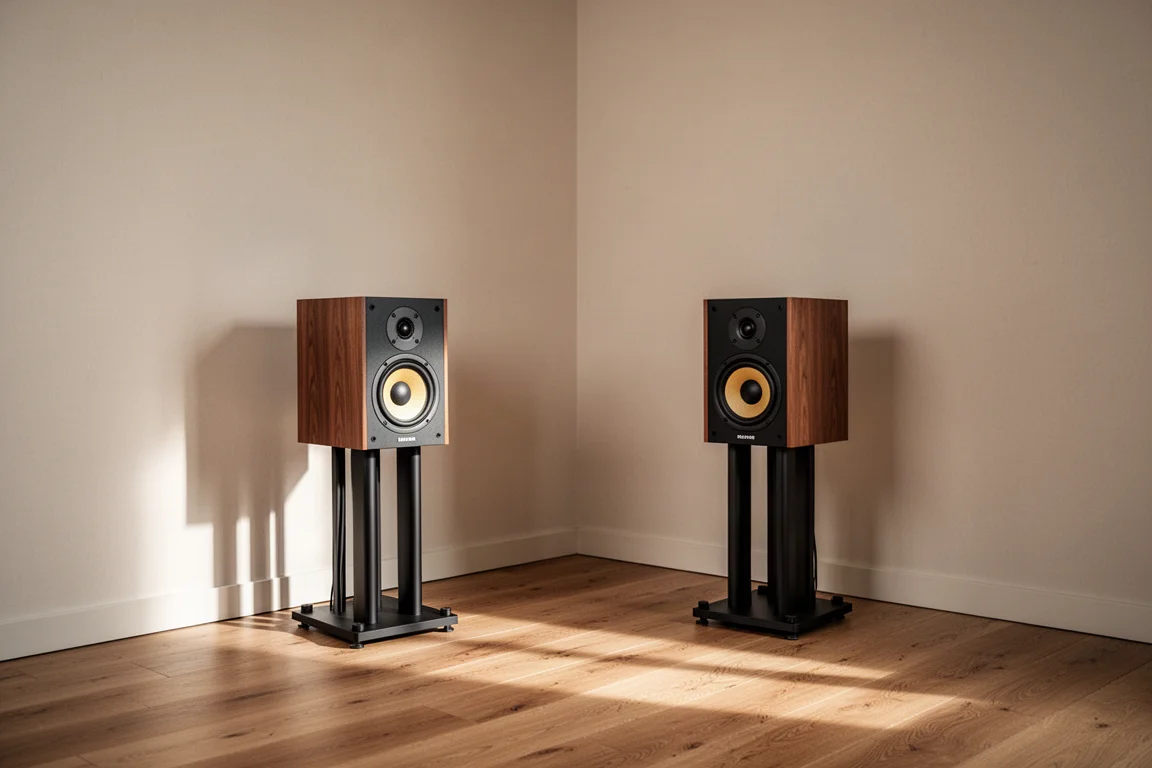
A useful way to think about it: a speaker’s horizontal radiation is one of the two factors that most influence soundstage character, with left-right matching of the pair being the other. Everything below looks at those two variables rather than at overall tonality, because tonality can be adjusted at the listening position while dispersion cannot.
Arendal 1723 Bookshelf: Controlled and Consistent
The Arendal 1723 Bookshelf keeps its horizontal radiation tightly managed. In the midrange it holds roughly plus or minus 50 degrees of usable width, narrowing to about plus or minus 40 degrees as the response moves into the mid-high and high frequencies. That narrowing is deliberate. It keeps reflected energy at the top end under control and gives the speaker a very linear off-axis response.
Compared with the Klipsch RP-600M II, the Arendal is the more controlled of the two. The two speakers are close in width, and in a direct comparison their soundstage character is remarkably similar, close enough that telling them apart takes real concentration. Where the Arendal pulls ahead is consistency. Its off-axis behaviour stays tidy across the range rather than developing the response irregularities that show up on the Klipsch.
For listeners who want a stage that is wide enough to feel open but precise enough to place a singer, a violin, or a snare drum without ambiguity, this is the balance the Arendal strikes. Its narrower dispersion means the room contributes less, so the presentation stays closer to what the speaker itself is doing.
Philharmonic BMR Mini Monitor: Wide, Diffuse, and Room-Dependent
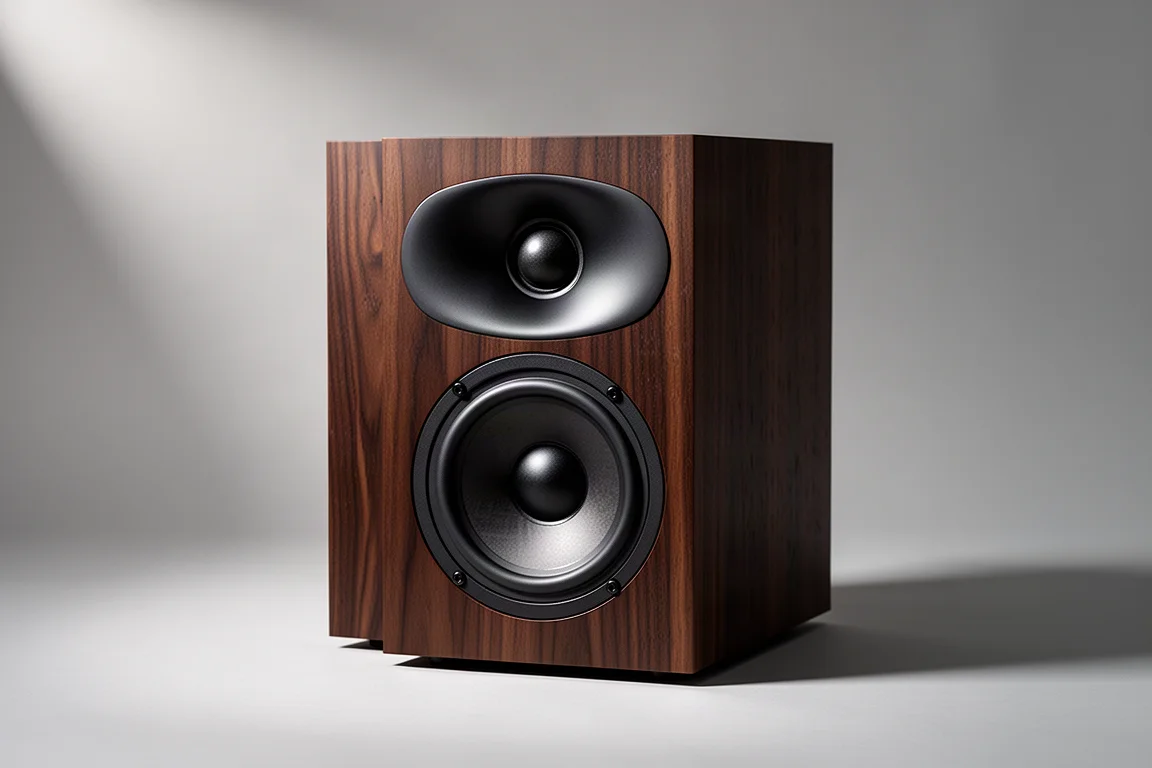
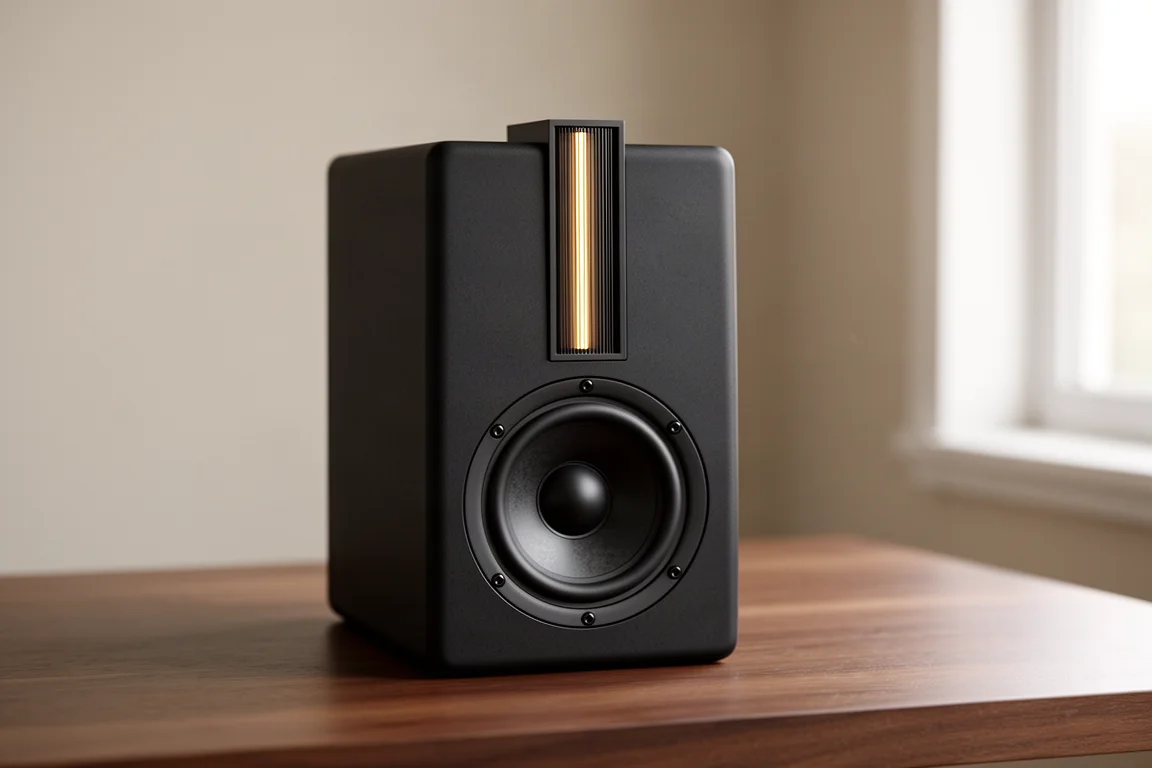
The Philharmonic BMR Mini Monitor is the outlier of the group, and the measurements explain why. Its radiation width sits at roughly plus or minus 80 degrees across most of the range, at some points nearly twice as wide as the Arendal. Almost all of that extra energy ends up interacting with the room.
The audible result is a much larger sense of space. Instruments and voices are still placed within the stage, but the edges are softer and the whole presentation is more diffuse. Pinpoint placement gives way to a broad, enveloping image, and some listeners have described the effect as similar to a speaker running out of phase. It is not a phase problem. The low end stays solid and taut in the centre and vocals remain anchored, which is exactly what would not happen with a polarity error.
Room dependence is the other half of the story. In a different room, the BMR’s presentation became noticeably more precise, though still not as precise as the two waveguide designs. That is the trade-off this speaker asks you to accept. You get the widest stage of the three, and you give up some of the razor-sharp image placement that comes with a narrower radiation pattern.
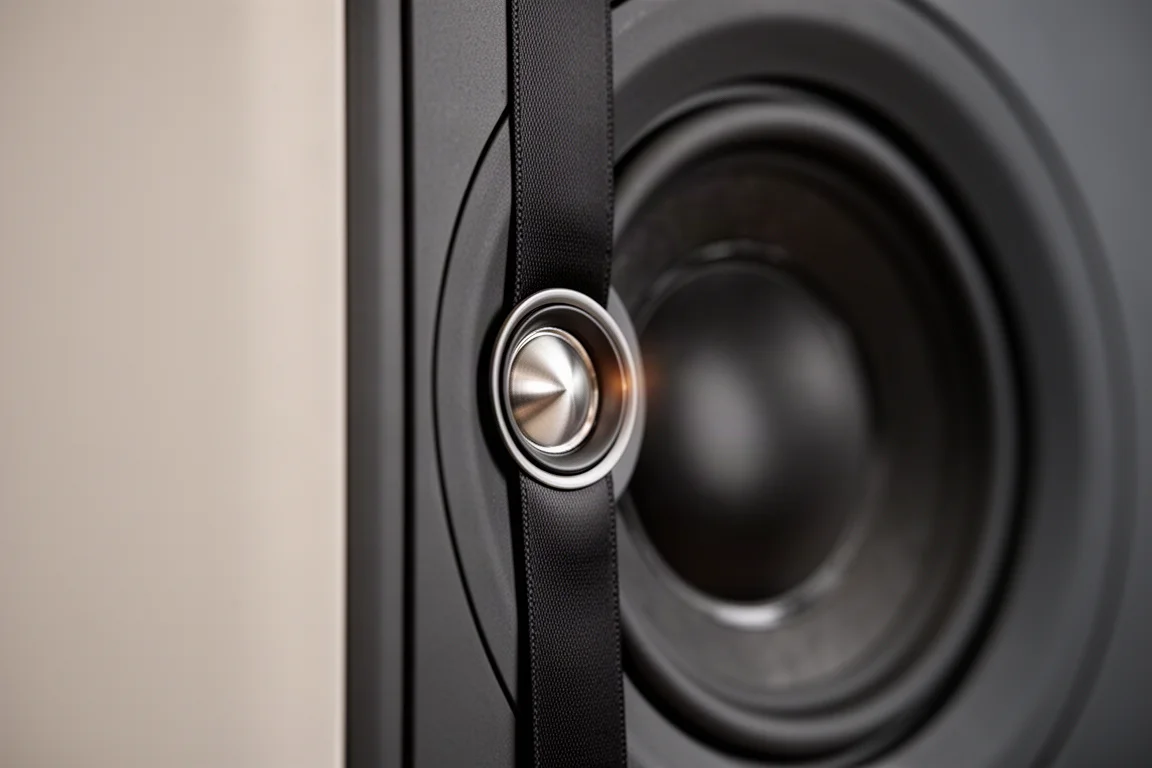
It is worth being clear about what this speaker is and is not. It is not less accurate than the others; it simply makes a different set of compromises. If your listening space is on the lively side, or if you sit close to the side walls, the extra reflected energy will be more obvious. If you have room to place them well and you value a big, immersive stage over surgical precision, the BMR’s approach is the more rewarding one.
Klipsch RP-600M II: Precise Imaging, Narrower Stage
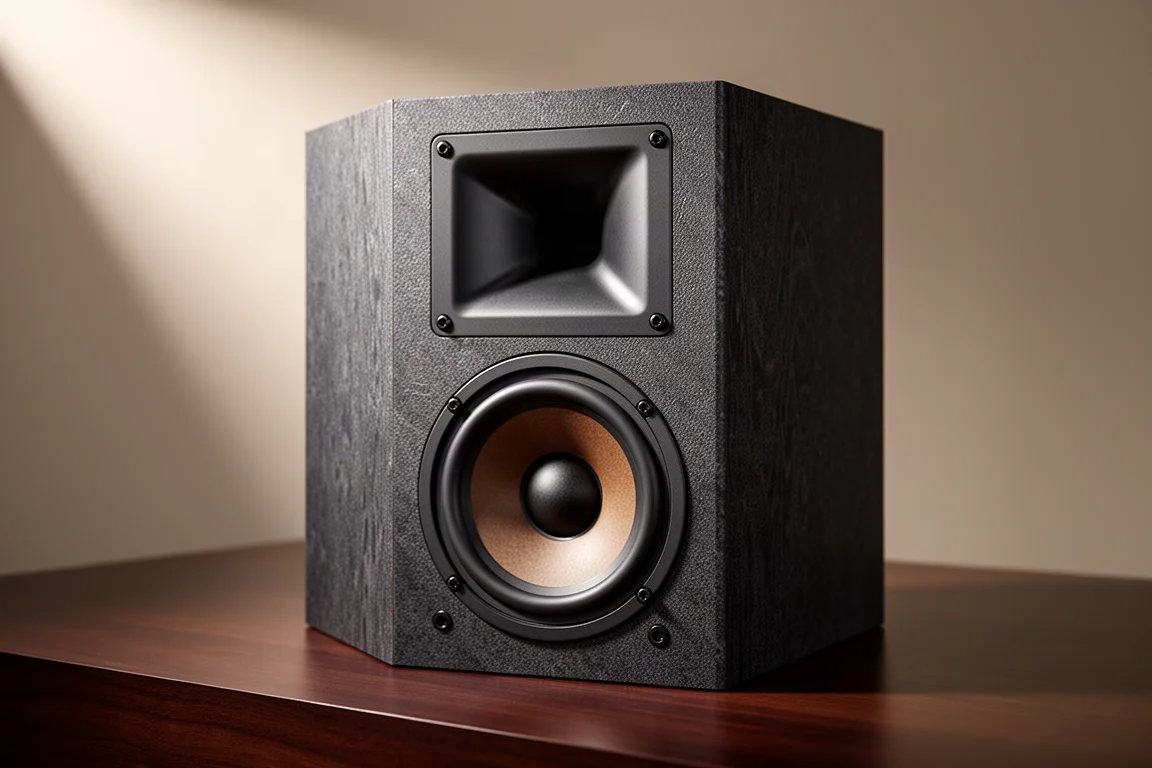
The Klipsch RP-600M II also uses a waveguide, and its horizontal radiation lands between the other two. It measures about plus or minus 60 degrees through the midrange, tightening to roughly plus or minus 40 degrees at the top. That is wider than the Arendal in the mids and comparable at the high end.
Precision is where this speaker earns its place. Its imaging is the most exact of the three, with individual instruments locking firmly into position. That precision comes at the cost of stage width, since the same controlled dispersion that sharpens placement also keeps the presentation from spreading as far past the speakers.
The one measurement worth knowing about is a dip centred around 8 kHz. It is not a narrow artefact that appears only on axis. It tracks through the off-axis response as well, which makes the Klipsch slightly less linear overall than either the Arendal or the BMR. In practice it shows up as a small coloration rather than anything dramatic, and it does not undermine the speaker’s strongest quality, which is the accuracy with which it places sounds in the room.
Left-Right Matching and Level Balance
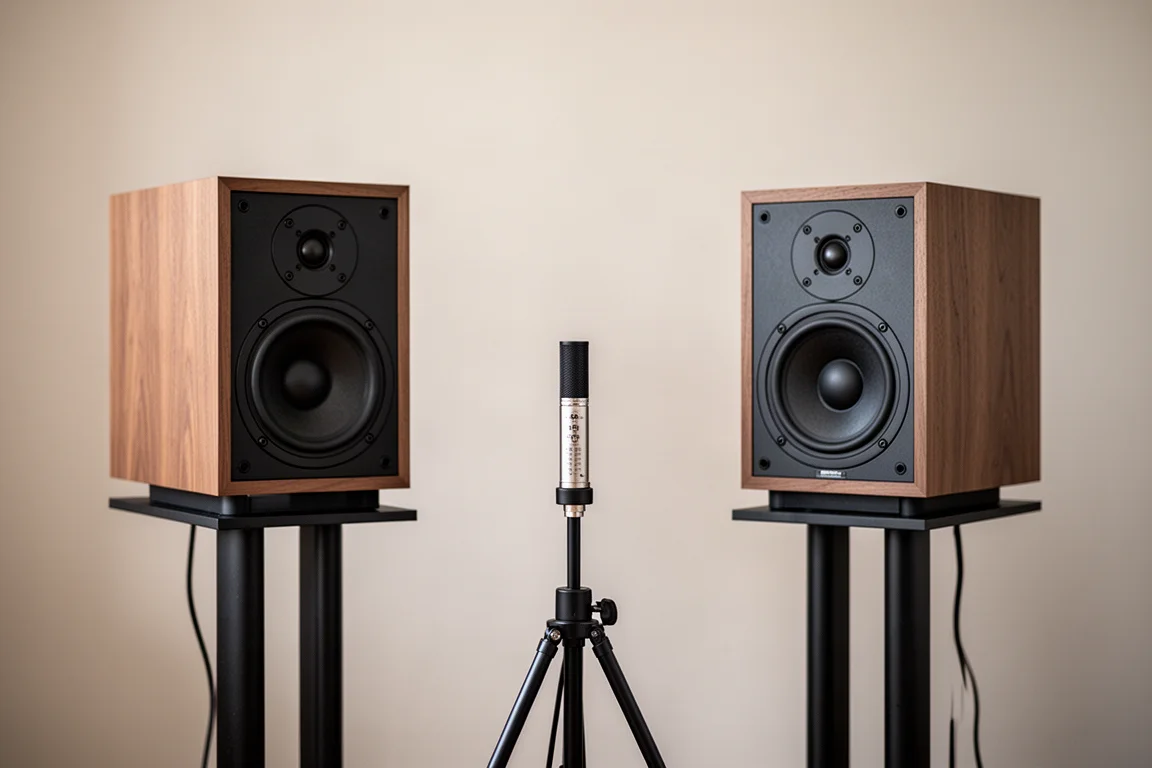
Dispersion sets the overall shape of the stage, but the stability of that stage depends on how well the two speakers in a pair match each other. A simple example makes the point. Play a mono signal through a stereo pair and the image sits dead centre. Reduce the left channel by 3 dB and the image slides to the right, because that side now sounds louder. Any imbalance between channels will make parts of the stage wander or slip.
Level matching is the obvious part. Frequency response matching matters just as much, and it can be fine-tuned at the seated position with an equalizer so both sides behave alike where you actually sit. Once left and right are balanced, the horizontal radiation of the speaker becomes the dominant variable in how the stage behaves, which is why it is worth checking both before you draw conclusions about a speaker’s imaging.
This is also why two listeners in the same room can describe the same speaker differently. A small difference in seating position, toe-in, or the distance to a side wall changes how much reflected energy arrives at each ear, and that changes the perceived width and precision of the stage. Balancing the pair first removes one variable and makes everything else easier to judge.
Room Interaction and Placement
Room interaction follows directly from radiation width. The Arendal and the Klipsch, with their narrower patterns, send less energy toward the side walls, so what you hear is dominated by the speakers themselves. The BMR, radiating at roughly plus or minus 80 degrees, hands a much larger share of the presentation over to the room.
That makes placement more consequential for the wide-dispersion design. In a room where the BMR had more space around it, its stage grew more diffuse. In a different, more constrained setting, the same speaker produced a noticeably tighter and more precise image. Neither result is wrong, but they are different enough that the room, not the speaker alone, decides what you end up hearing.
Buying Advice: Matching the Speaker to Your Priorities
There is no single winner here, and that is the point. The three speakers differ in character, not in quality, and the right choice depends on the trade-offs you are willing to accept.
If precise placement matters most to you, the Klipsch RP-600M II delivers the sharpest imaging of the group, with a midrange that spreads wider than the Arendal’s before tightening at the top. If you want that same controlled, waveguide-led presentation with more consistent off-axis behaviour, the Arendal 1723 Bookshelf is the more even performer of the two, and the two sound close enough in stage character that the difference is one of refinement rather than kind. If a wide, enveloping stage is what you are after, the Philharmonic BMR Mini Monitor is the only one of the three that goes there, at the cost of pinpoint precision and with a stronger dependence on the room.
Two other trade-offs are worth keeping in mind because they are unavoidable in speaker design. A more sensitive speaker tends to play louder for a given input but gives up some low-end extension. A less sensitive design can offer more bass while asking more of your amplifier. Both approaches are legitimate, and knowing which compromise you prefer will do more for your satisfaction than any single measurement.
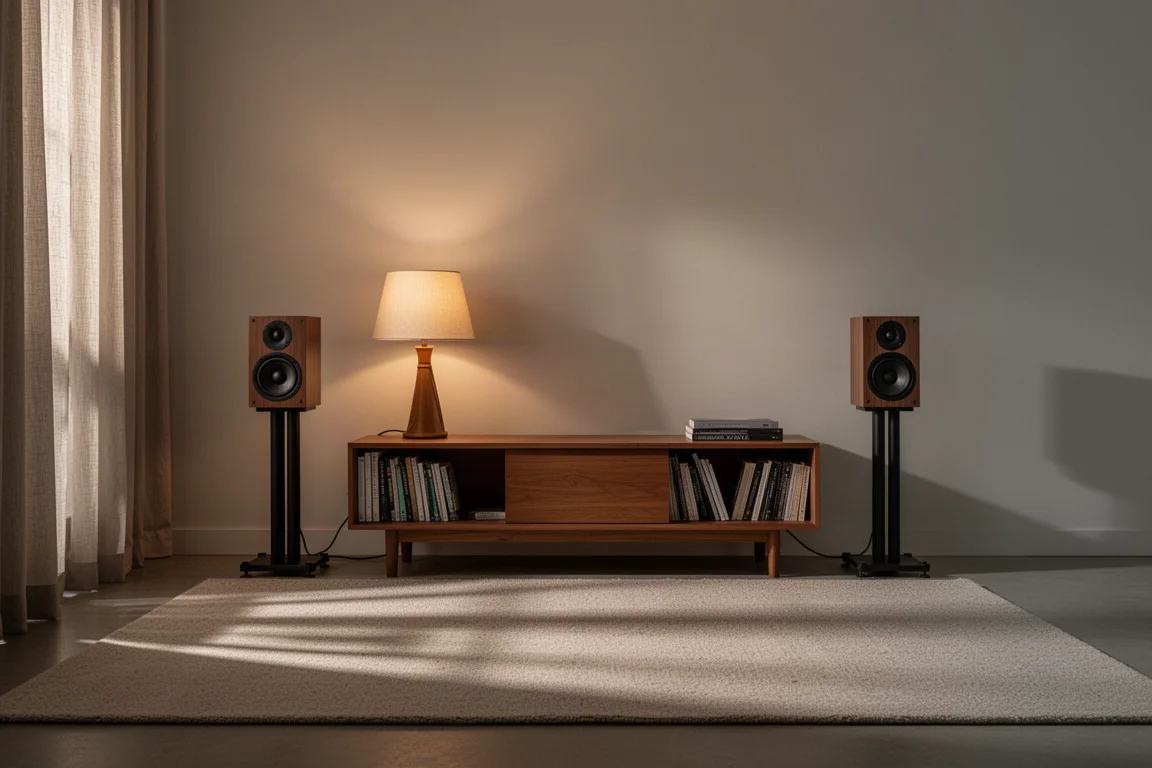
The practical advice is to listen for the two things dispersion controls: how wide the stage extends past the speakers, and how firmly individual sounds are locked in place. Then check that your pair is level-matched at the seated position. Those two factors account for most of the difference between these designs, and they are the ones you will live with every day.
Conclusion
The Arendal 1723 Bookshelf, the Philharmonic BMR Mini Monitor, and the Klipsch RP-600M II show how much of a speaker’s character comes down to dispersion. Waveguides give the Arendal and the Klipsch a narrower, more controlled stage with precise imaging. A wide-dispersion ribbon tweeter gives the BMR a larger, more diffuse presentation that leans heavily on the room. None of them is objectively better. Matching the design to your room and your priorities is what turns a good measurement into a speaker you enjoy.
Further reading
Related Reviews
Bookshelf Speakers
Acoustic Energy A100 Mark II Review: A Compact Standmount With an Expansive Soundstage
The Acoustic Energy A100 Mark II brings clarity, natural tonality and a wide soundstage to an entry-level standmount, with a few setup details worth knowing first.
Bookshelf Speakers
Acoustic Energy AE-100 Mark II Review: Compact Bookshelf Speakers With Standout Imaging
A compact British two-way bookshelf speaker with deep, layered imaging, fast bass, and a slight treble lift to weigh against a crowded $500 field.
Bookshelf Speakers
Acoustic Energy AE100 MK2 Review: Measured Performance and Four Alternatives
A close look at the Acoustic Energy AE100 MK2 bookshelf speaker, what its measured performance reveals, and four alternatives with different trade-offs.