Mountain Bikes
Boardman MHT 8.9 vs MTR 8.6: Hardtail or Full Suspension?
A budget mountain bike comparison of the Boardman MHT 8.9 hardtail and the Boardman MTR 8.6 full suspension bike, covering geometry, components, and which one is worth buying.
Introduction
Budget full suspension mountain bikes have improved a great deal over the last few years. Spending around a thousand pounds or a thousand dollars now unlocks performance that was previously out of reach, and that has changed the answer to a long-standing question. Until recently, the only realistic way to get a bike that rode well on red-graded trails at this price was a hardtail with front suspension only. Full suspension bikes at the same money could not match the componentry that made a hardtail worth buying.
That gap showed up beyond the spec sheet as well. Budget full suspension designs often seemed slower to move on from old-fashioned angles and cockpit setups. So the question stands: at the same budget, are you better off with a hardtail or a full suspension bike?
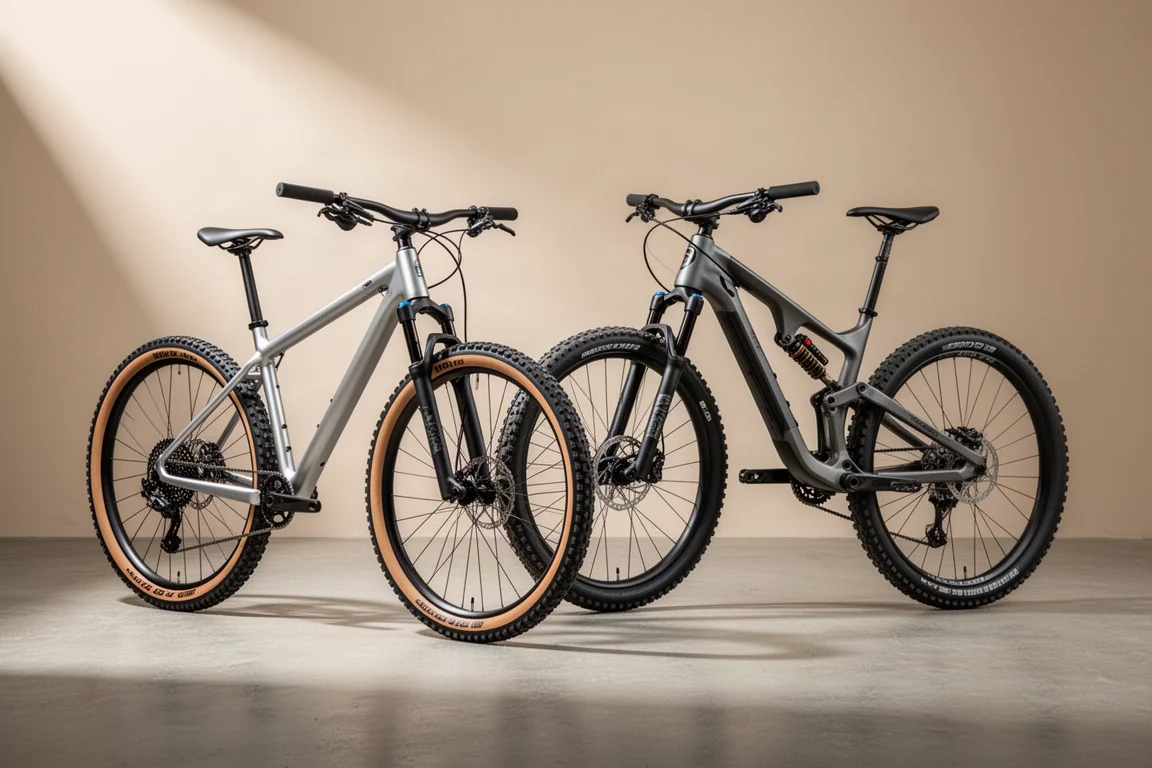
To find out, we put the Boardman MHT 8.9 hardtail directly against the Boardman MTR 8.6 full suspension bike. Both come from the same brand, both sit in the same price bracket, and both claim modern geometry. The Boardman MTR 8.6 full suspension bike looks like it should put any outdated notion of hardtail dominance to rest, and it arrives with a bang up to date shape that is ready to go head to head on any terrain or trail type. So which is better: a better frame and better parts, or having suspension at both ends?
Evaluation Criteria: What Matters at This Price
At around a thousand pounds, every decision on a bike is a trade-off, and it helps to know what to look for before choosing.
Frame material and finish matter, but so does the way a frame is built. Smooth welds and tidy tube junctions can reduce flex and support durability, while chunkier construction may look tougher but can add weight. Geometry shapes how a bike steers, how stable it feels at speed, and how much room you have to move around. Suspension travel, drivetrain range, brake quality, tyre choice, and hub standards all feed into the same value equation.
Because the money has to go somewhere, a hardtail will normally put more of it into components. A full suspension bike will spend a large chunk of it on a shock, a linkage, and the extra frame hardware that comes with rear travel. The interesting question is whether that trade still leaves you with a bike that outperforms the better-equipped hardtail where it counts.
Boardman MHT 8.9: A Refined Hardtail
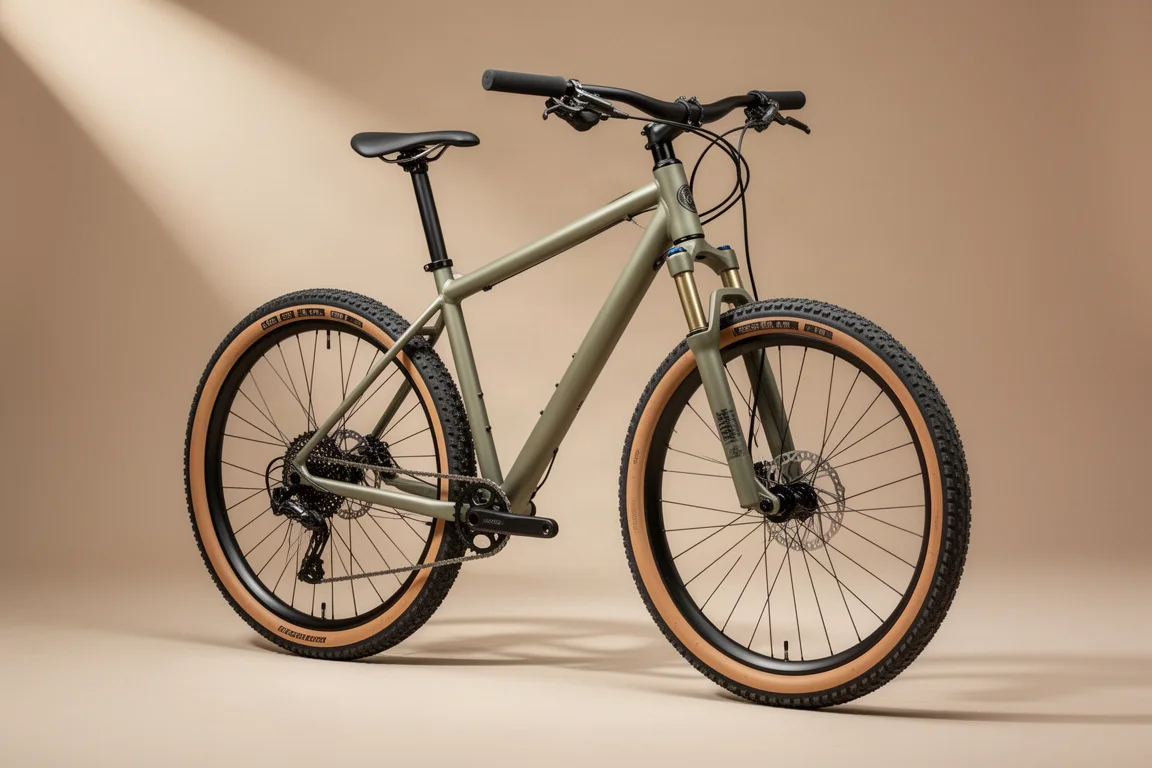
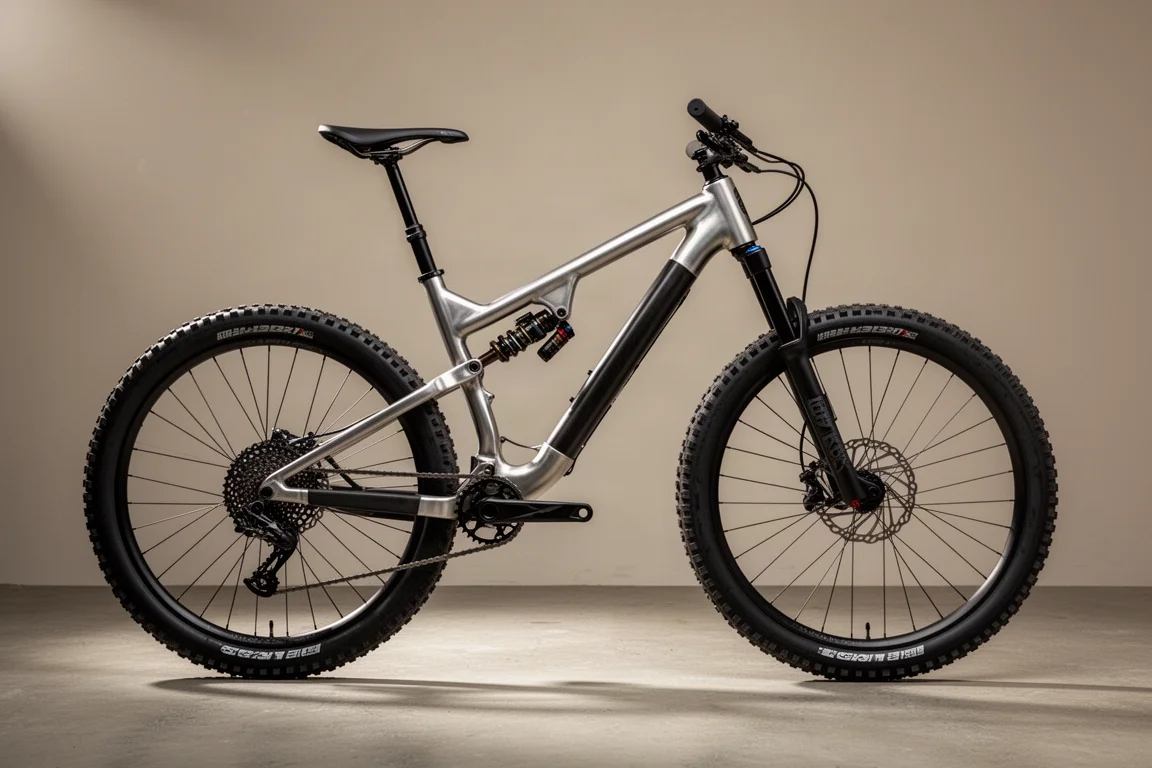
The MHT 8.9 is Boardman’s top-tier hardtail, and it looks fantastic in its retro colourway with gumwall tyres, which will appeal to the aesthetically conscious. It pairs a lightweight aluminium frame with a clean-looking smooth-welded front triangle that could almost pass for carbon fibre from a distance. The matching tube junctions look neater and also reduce weld flex, one of the main ways an alloy frame can crack.
Designed to walk the line between trail and cross-country riding, the 8.9 uses a 120 mm travel RockShox Reba RL fork and wide-ranging 12-speed gearing. Because there is no rear shock and no complicated linkage, the money saved goes back into better equipment.
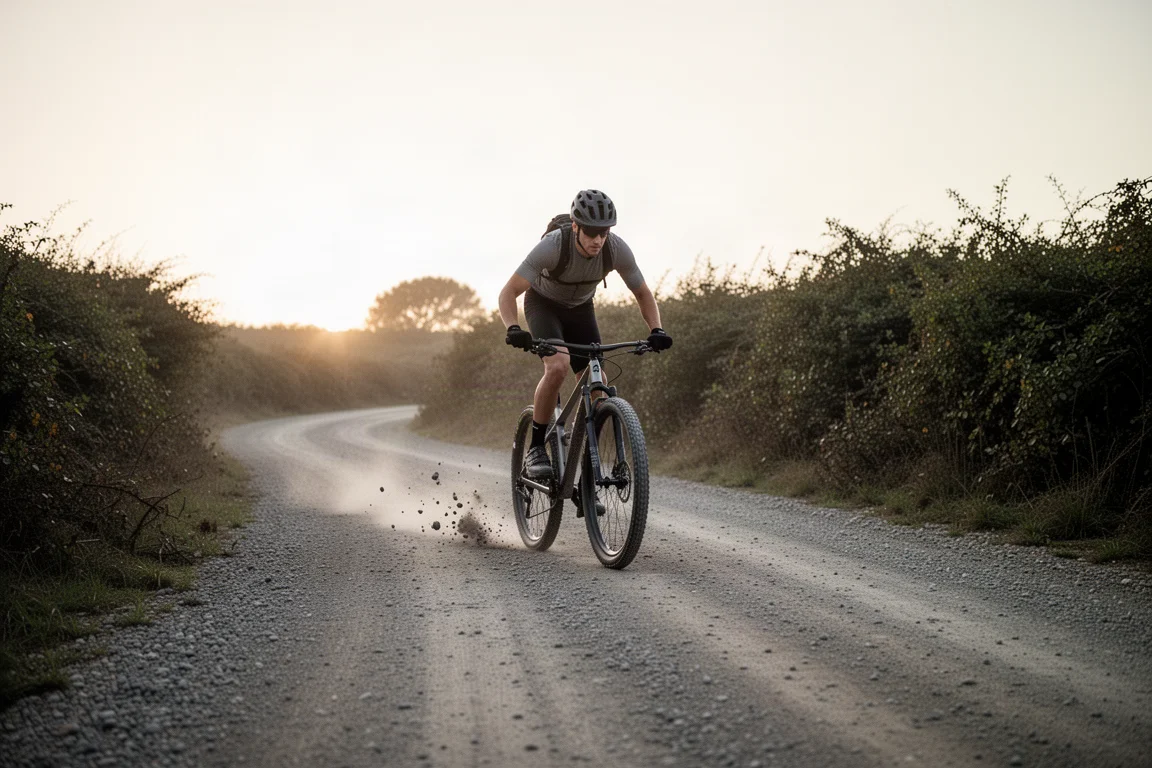
On the trail, the MHT 8.9 delivers an impressively smooth ride. It is definitely not a rattle-your-fillings, rock-hard, cheap-feeling alloy hardtail, and the frame follows the line traced by the smooth Reba fork over bark-strip roots and dusty rocks. The air-sprung fork is easy to tune to rider weight and offers a rebound damping dial plus a progressive low-speed compression lockout to firm things up when pedalling hard on tarmac or smoother fire roads.
Its 68-degree head angle is relaxed rather than razor-sharp, giving lighter, more reactive steering supported by a shorter wheelbase. The shorter frame places more rider weight forward for better balance when climbing out of the saddle, while the taller top tube takes advantage of having no rear travel and pairs with a lower bottom bracket height for extra stability and better cornering.
Component highlights include SRAM Level T brakes, which are more refined and powerful than the brakes on its full suspension sibling, plus higher-quality Formula hubs and lighter, more sculpted Boardman rims. These are fitted with fast-rolling Vittoria Barzo tyres made from a graphene rubber blend that rolls considerably faster than the tyres on the full suspension bike.
Boardman MTR 8.6: Full Suspension Value
The MTR 8.6 is a value full suspension bike that brings the same geometry as top-of-the-range machines into the budget price bracket. Its 6-series alloy frame packs thick, beefy tubes joined by fish-scale TIG welds, giving it a chunkier and tougher look.
The frame delivers 145 mm of rear-wheel travel through a horst-linked four-bar linkage, a design favoured by top brands including Specialized and Canyon. The design uses a secondary pivot on the chainstays to keep the suspension active when you grab the brakes on the way down the steepest tracks. The rear end’s squared-off tubing uses 148 mm Boost hub spacing, though Boardman saved cash here with an old-fashioned quick-release skewer rather than the MHT’s stiffer bolt-through axle. Rear travel comes from a long-stroke RockShox shock driven by a rocker link mounted to the top tube, with just enough space underneath for a water bottle.
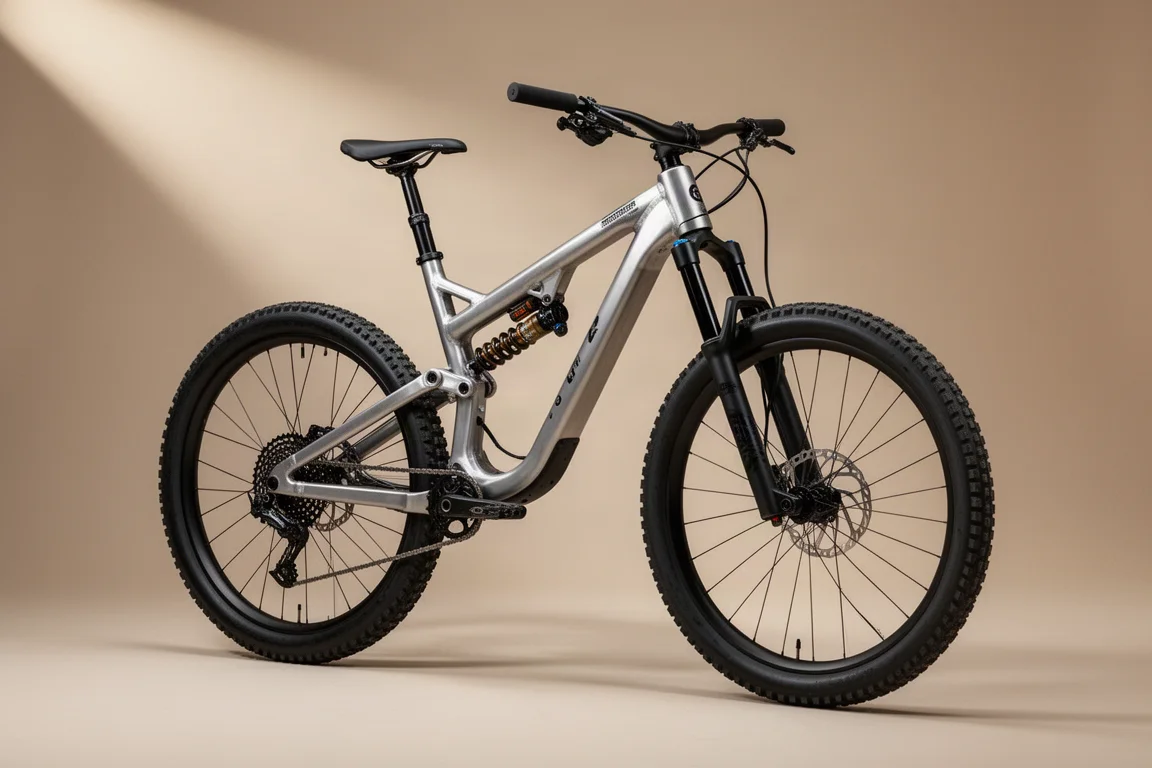
Up front, an air-sprung SR Suntour XCR-34 fork offers 140 mm of travel and is easy to tune to rider weight. It shares the same adjustment options as the Reba: a rebound damping dial and a progressive low-speed compression lockout. The fork uses light alloy legs rather than the skinny steel ones found on plenty of cheap forks, though its quick-release axle is fiddly if you regularly remove the front wheel. The rear shock is a custom-tuned RockShox Deluxe limited to rebound damping adjustment only.
The MTR 8.6 keeps cost down with Tektro brakes and runs a Shimano Deore 10-speed drivetrain. Its wider, heavier rims are wrapped in Maxxis Minion tyres, which roll slower than the Vittoria Barzos but grip far better once the conditions turn wet.
Geometry and Handling Differences
Beyond the shock bolted onto the frame, geometry is where these two bikes diverge most.
The MTR 8.6 is significantly slacker, with a raked-out 66-degree head angle compared to the hardtail’s more upright 68 degrees. It also has a much longer reach. Where the large MHT places your hands 441 mm from your feet, the equivalent MTR stretches that to 475 mm. The extra length makes the full suspension bike more stable, while the shorter hardtail frame keeps more of your weight forward for climbing.
That longer, slacker setup gives the MTR noticeably calmer and more neutral steering through tricky sections. It can feel lazier at the handlebar at low speed, but as speeds ramp up its steering is less prone to getting bounced offline in rough terrain or tucking suddenly on steep downhill sections.
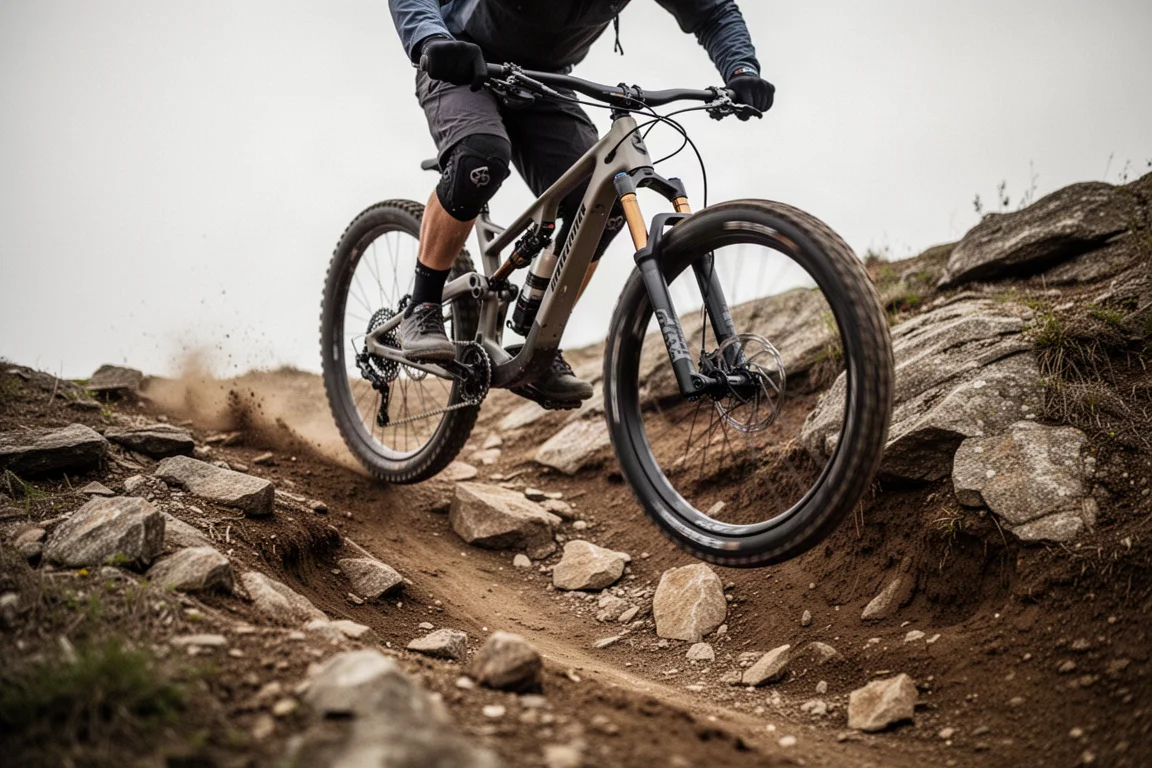
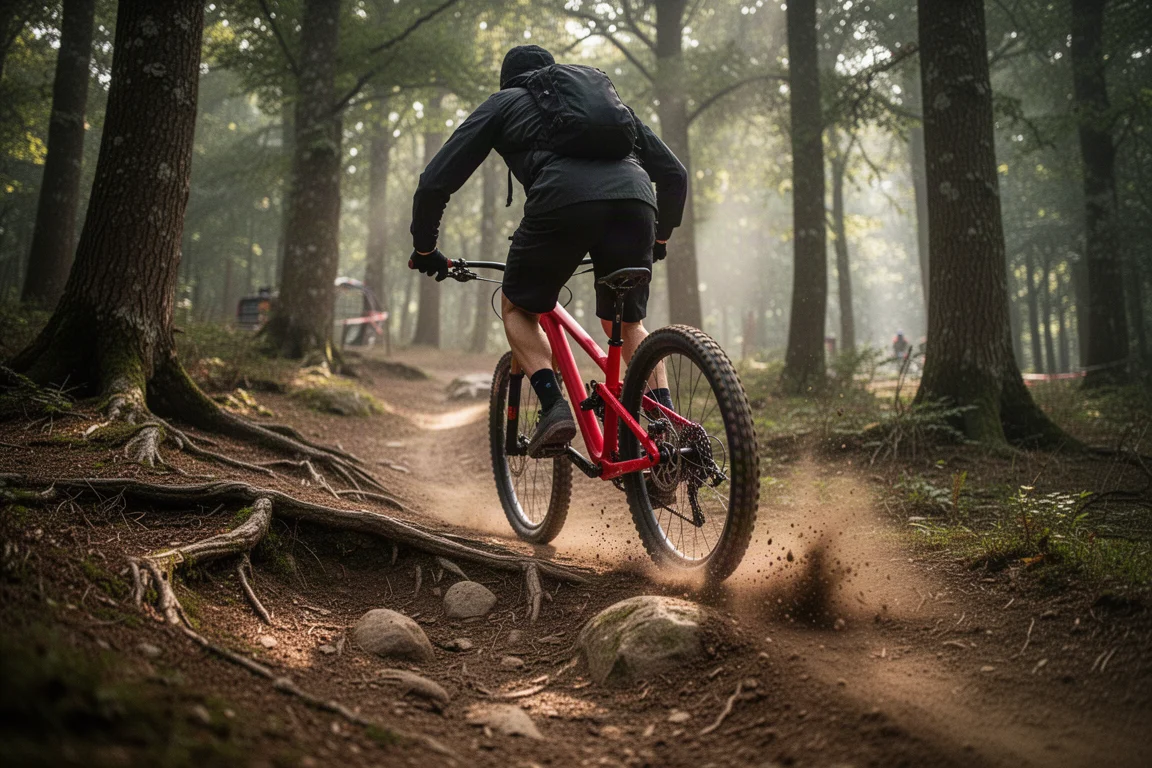
On flatter trails, the hardtail’s speed advantage is not as clear-cut as you might expect. The MTR’s 145 mm of rear suspension and Maxxis tyres often carry you across small technical sections without dabbing, while the MHT 8.9 can bobble and hunt for traction. This was clear even at a local trail centre where the tracks are heavily eroded: despite its superior fork, the hardtail was less capable of staying smooth when threading through technical lines, and it felt more hectic on rougher trails thanks to the lack of rear suspension travel. That is not about bombing downhill either, just maintaining fluidity and rhythm through lumpy rocky sections where you would expect the lighter bike to find pace more easily.
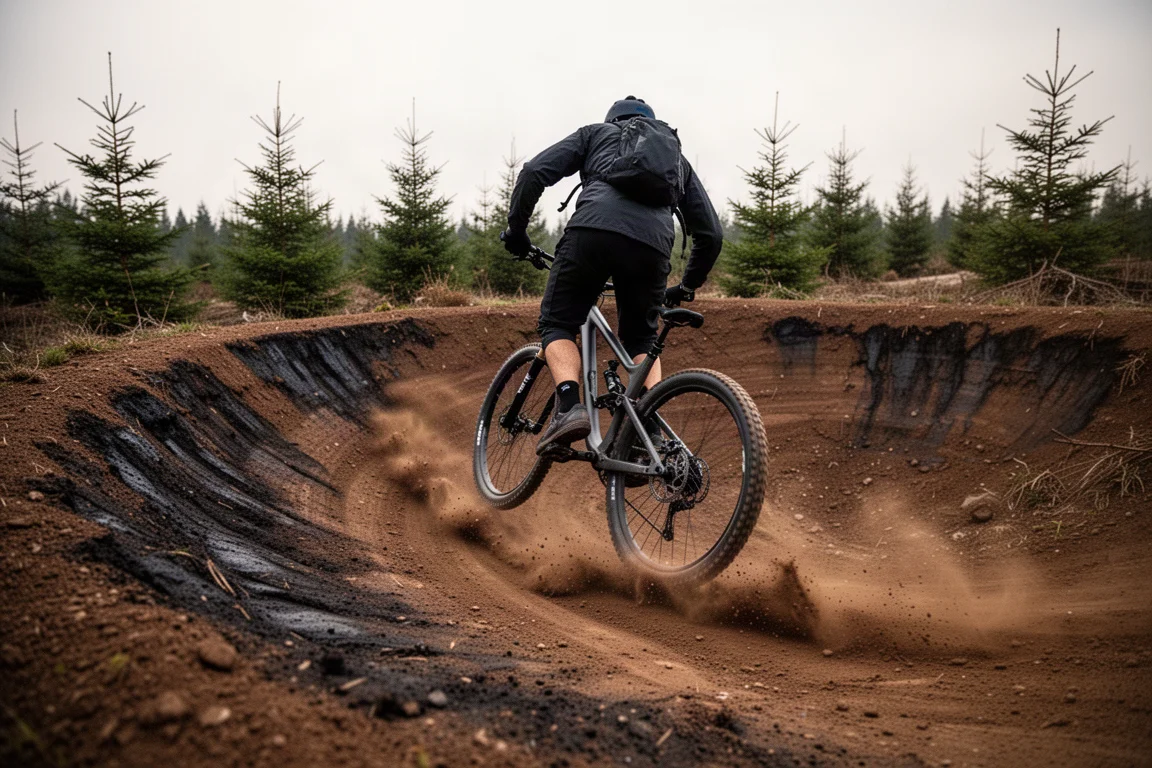
What we would call proper mountain biking, meaning anything a gravel bike cannot handle, is where the MTR 8.6 is in its element and calmness personified. It rides much more like an expensive trail bike and smooths out hefty bumps, giving you the confidence to get off the brakes and find some flow. The full suspension allows power delivery when you want to inject pace or winch back to the top of the trail without too much drama.
Componentry and Drivetrain Trade-offs
Fitting ten gears instead of twelve sounds like a significant downgrade, but the numbers do not tell the whole story here.
The MTR 8.6’s Shimano Deore drivetrain has 10 cogs against the 12-speed SRAM SX Eagle setup on the MHT 8.9, yet the Deore setup feels smoother and more positive overall. There were no issues with excessive jumps between gears and no trouble scaling climbs, even with the full suspension bike’s 46-tooth biggest cog. It reads like a lesson in good budgeting: the better-quality 10-speed drivetrain can out-shift the cheaper 12-speed setup.
Neither bike comes with a dropper post, which is an obvious first upgrade on either machine. Both bikes use an air-sprung fork that is easy to tune to the rider’s weight, and both offer the same adjustment approach, so fork tuning is not the deciding factor. Note that the MHT 8.9’s Reba has 20 mm less travel than the 140 mm SR Suntour XCR-34 on the MTR 8.6, though the difference in performance caused by the lower travel figure is hard to notice because the Reba’s action is significantly smoother and more controlled.
The MTR’s rear shock deserves its own mention. If you add more than a few clicks of rebound damping it can get bogged down, which can leave it unable to return into position fast enough to handle consecutive impacts when you need to slow down.
Overall Buying Advice
Deciding between these two comes down to what kind of riding you actually do.
If your priority is efficiency on flatter, smoother trails and you want the better parts list for the money, the MHT 8.9 is a refined hardtail that punches above its price on components. Its lighter, more sculpted rims, faster-rolling tyres, stronger brakes, and 12-speed drivetrain are genuine advantages.
If your priority is confidence on rougher, more technical trails, the MTR 8.6 is the more capable bike. Its rear suspension and slacker geometry make it feel much more like an expensive trail bike, and it stays composed where the hardtail gets rattled.
The MTR 8.6 costs around a hundred pounds more than its better-dressed sibling, and it is not perfect. Hard-charging riders may find the frame flexible and eager to smash through the first part of its travel, and the rear shock feels soft off the top. For new or intermediate riders, though, that softness gives good grip and comfort over hard sections, and matched with the front suspension and geometry it makes it easy to have fun and find your limits.
There is also the wider market to consider. At this budget it is genuinely hard to find a full suspension contender that comes close to offering such trail-taming geometry for the money, particularly now that Calibre’s award-winning Bossnut appears to no longer be available.
Conclusion
Put head to head, the MTR 8.6 full suspension bike is the one we would choose from this pair. Messing about in corners, rattling over bumps, and flashing through berms is what mountain biking is all about, and the MTR’s rear suspension and slacker geometry let you get stuck in and play on proper tracks with more confidence and security than the sharper, janglier ride of the MHT 8.9.
That said, the MHT 8.9 remains a very good hardtail and the better-equipped bike. Its smooth-welded frame, stronger brakes, and faster-rolling tyres are real advantages, and on flatter or smoother trails it is a strong choice. The honest answer is that both bikes make sense when they match the riding you actually do.
Further reading
Related Reviews
Mountain Bikes
Atherton AM.130 Review: 3D-Printed Titanium Lugs and a 130mm Trail Bike That Descends Like a Bigger Machine
The Atherton AM.130 pairs 3D-printed titanium lugs with carbon tubes and a DW6 suspension platform. Here is how it rides, what the build delivers, and who it suits.
Mountain Bikes
Beginner Mountain Bike Buying Guide: What to Look For in a Trailworthy Hardtail
A practical framework for evaluating beginner mountain bikes, whether new or used, by examining key components that indicate real trail capability.
Mountain Bikes
Best Aluminum Mountain Bikes 2026: Five Alloy Bikes Worth Your Attention
Five aluminum mountain bikes that show how far alloy has come, from a 120mm trail bike and a versatile machined frame to a 180mm freeride machine.