Mountain Bikes
BMC TwoStroke 01 vs TwoStroke AL: Two Hardtail Builds Compared
The same BMC TwoStroke geometry taken in two directions: a lightweight carbon cross-country race build and an aluminium trail build, compared on climbs, fire roads and descents.
Introduction
Full-suspension mountain bikes dominate the upper end of the market, and the reasons are easy to understand: they are often faster, more comfortable and more appealing to riders who want one bike that covers everything. That does not make the hardtail obsolete. Hardtails are frequently lighter, they give a more direct connection with the trail, and with many gravel bikes edging into hardtail territory, there is a real argument that one well-chosen hardtail could replace a gravel bike and a full-suspension bike at the same time.
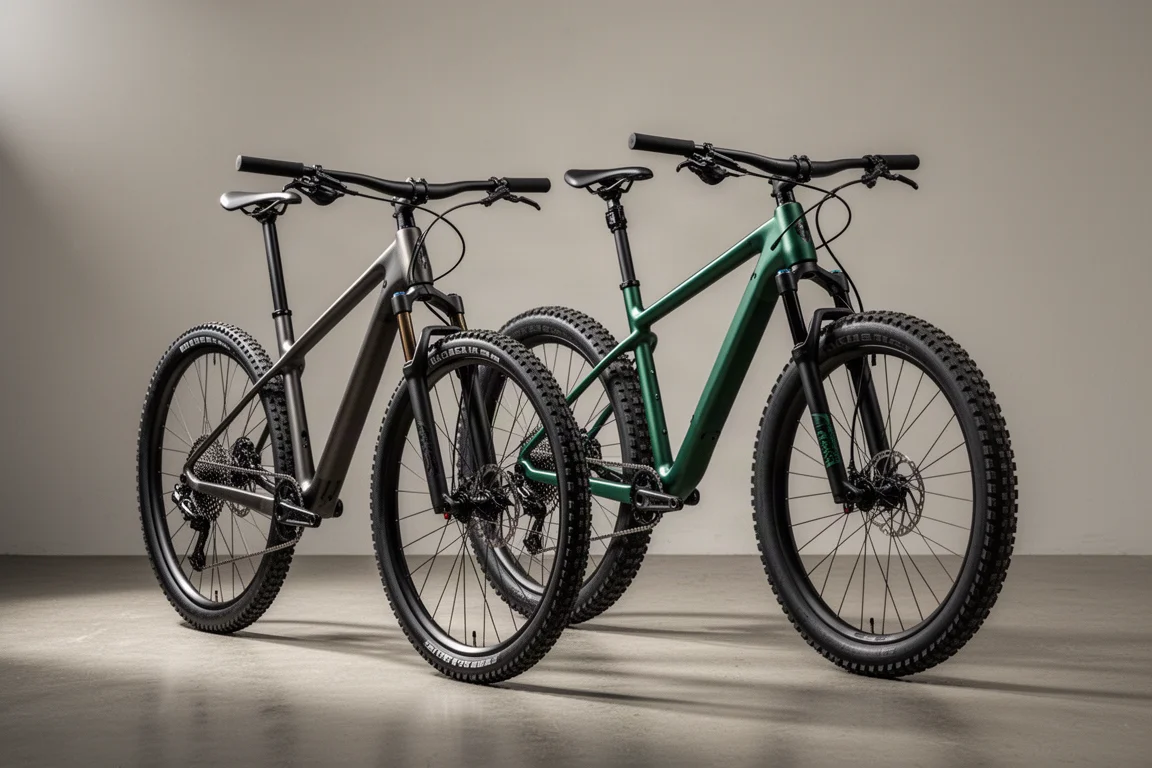
To put that idea under pressure, the same BMC TwoStroke platform was taken in two very different directions. One build became a lightweight cross-country race machine intended to crush climbs and worry gravel bikes. The other became a trail-focused hardtail built to take rough, repetitive hits without complaint. Because both bikes share the same geometry, the comparison is unusually clean: what changes is the component choice, not the frame shape.
The Two Platforms: Same Geometry, Different Direction
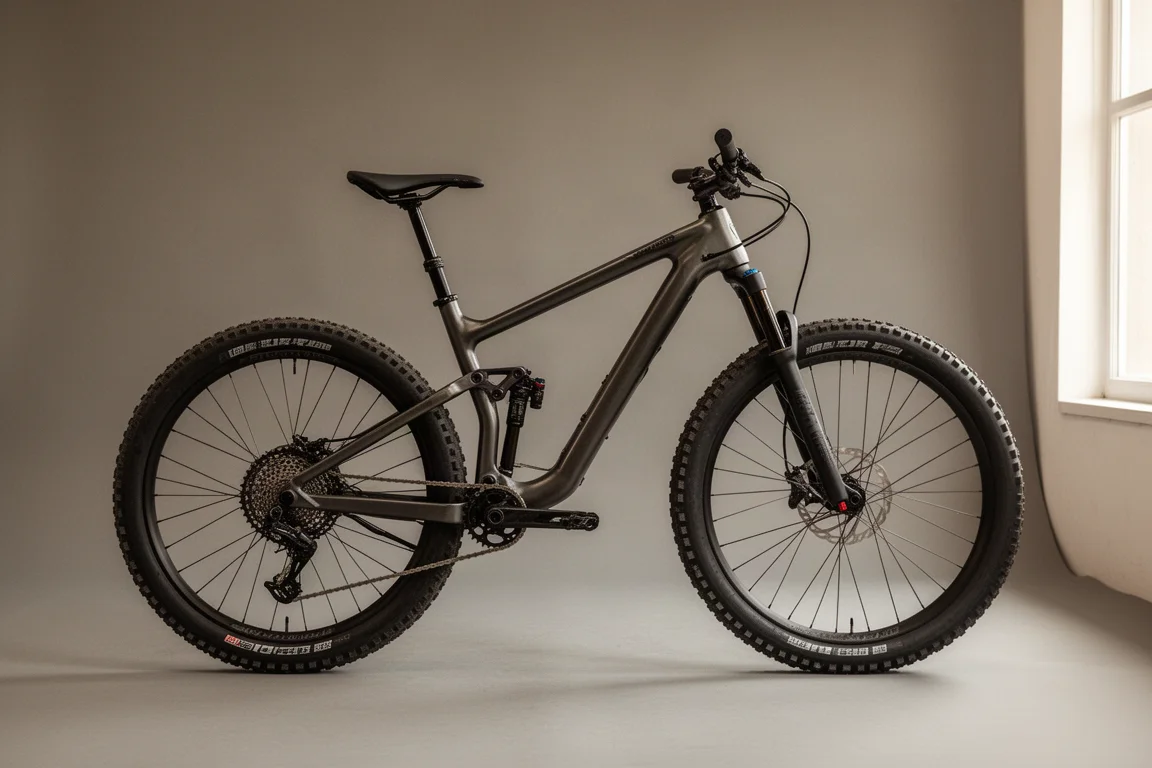
The TwoStroke 01 begins with a lightweight carbon frame and a weight- and cost-conscious build kit, which makes it a logical starting point for a rider chasing climbing speed. The TwoStroke AL sits at a more accessible starting point, with an aluminium frame and budget-focused parts as standard, including a basic RockShox Judy fork.
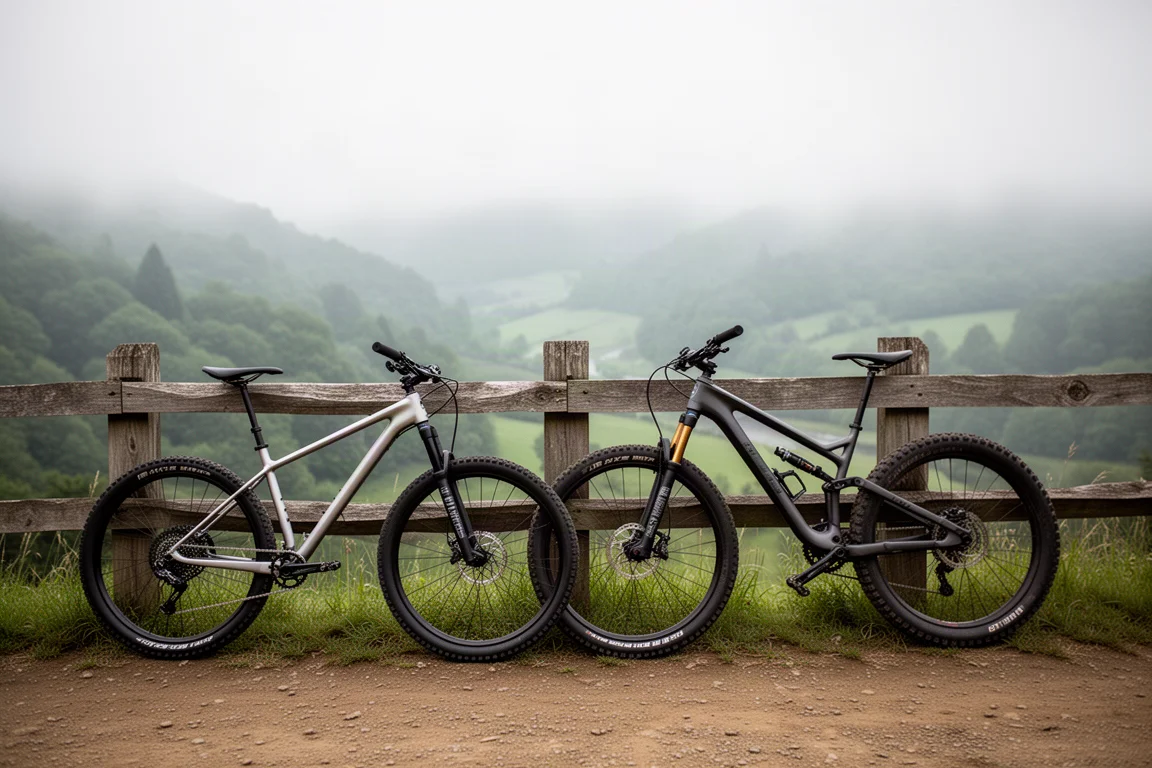
That difference in starting point shapes everything that follows. A carbon frame with a light build kit only needs a few targeted swaps to become a race bike. An aluminium frame with entry-level parts leaves far more room to change, which is exactly what happened here: one bike kept most of its original specification, while the other was rebuilt almost from the frame up.
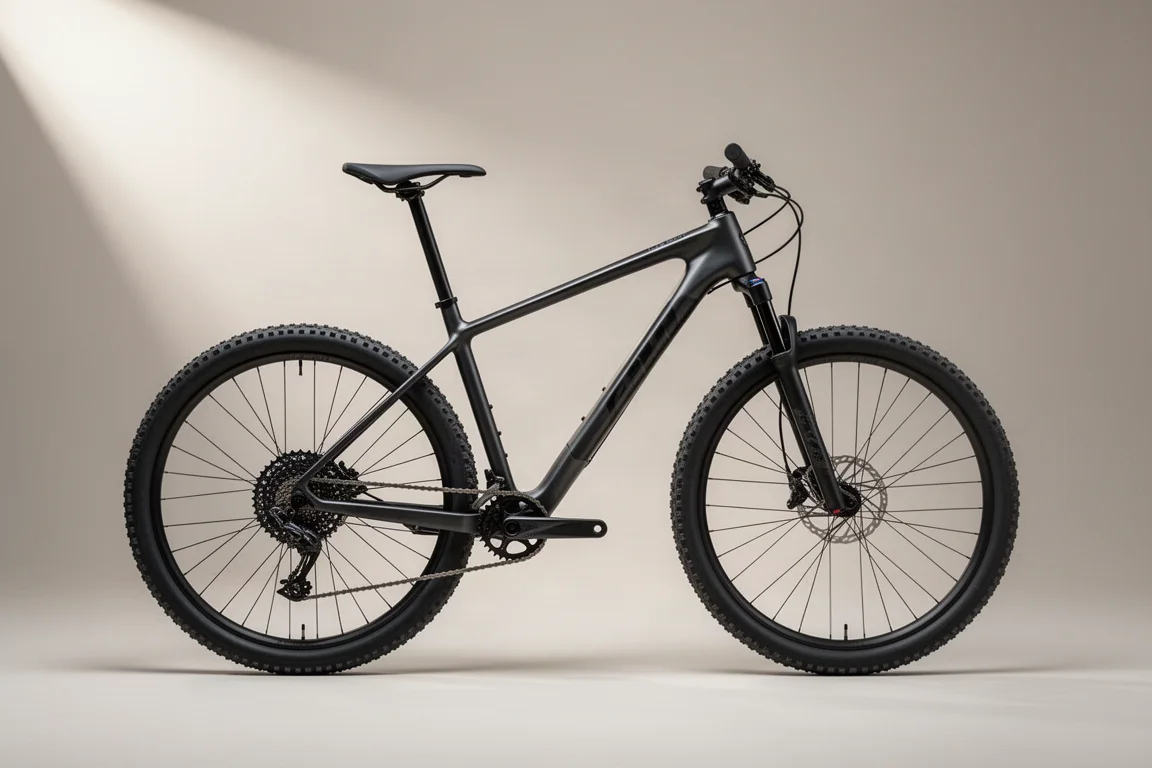
BMC TwoStroke 01: A Cross-Country Race Build
As it comes, the TwoStroke 01 was never heavy, and there was nothing wrong with its stock DT Swiss wheels or its GX cassette. Even so, the weight-saving theme went further, because wheels are one of the most effective places to lose rotating mass.
The finished build runs a carbon-spoked cross-country race wheelset that weighs less than 1,300 grams, along with a lighter aftermarket cassette in place of the stock GX unit. That is a deliberately narrow set of changes: the frame, the geometry and the overall riding position stay as BMC intended, while the parts that most affect acceleration and climbing speed are trimmed down.
The result is a hardtail that behaves like a classic cross-country bike on smooth and moderately technical ground. It spins up to speed quickly, holds momentum well on smoother surfaces, and the fork lockout makes it easy to stiffen the front end for efficient fire road efforts.
BMC TwoStroke AL: A Trail-Oriented Build
The TwoStroke AL was treated very differently. Once the work was finished, the only original parts left were the frame, the grips, the headset and the crankset. Everything else was swapped out with trail riding in mind.
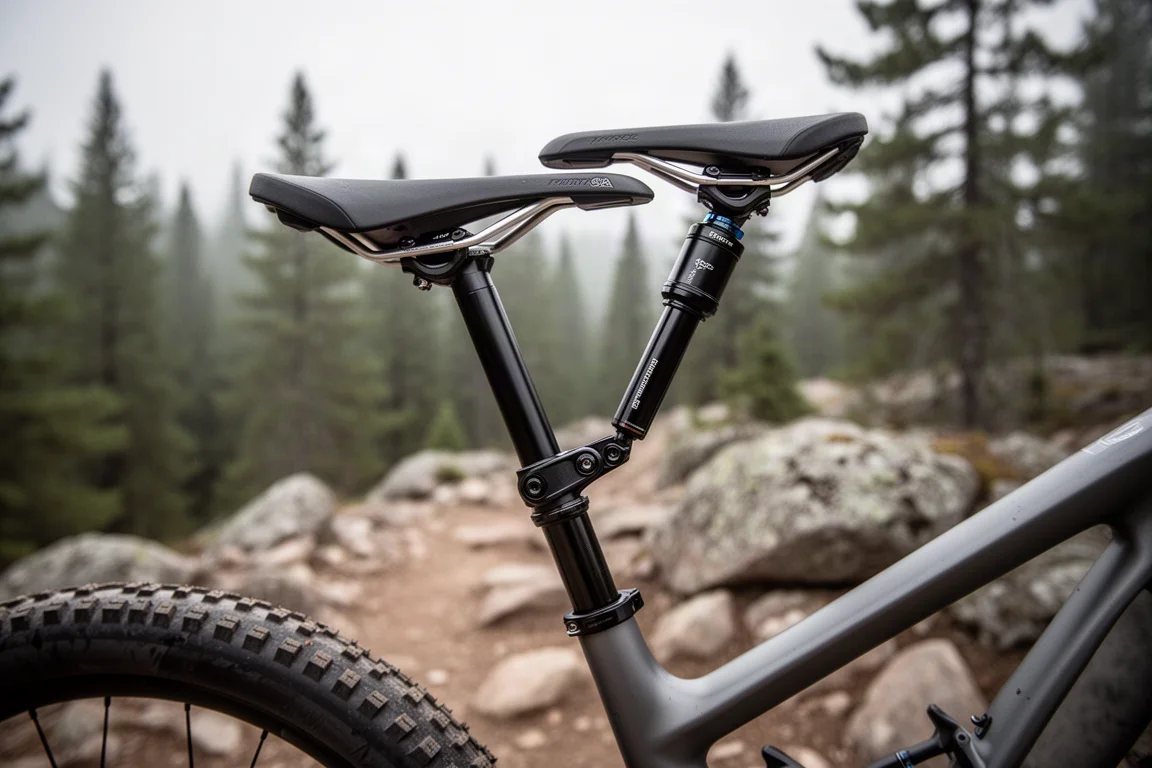
The biggest change is up front, where a 120mm RockShox SID fork replaces the stock Judy unit. That is only 20mm more travel, but it gives the bike a more aggressive stance and more control on descents. A RockShox Reverb dropper post was added so the rider can move weight around when the trail points downhill.
Wheels and tires follow the same logic. A wheelset with a wider 30mm internal width and stronger rims is paired with grippier tires, which should make the bike more capable in technical terrain and more composed over rock.
The cockpit was widened with a broader handlebar and a shorter stem, and the brakes were upgraded for more stopping power. The drivetrain was also reworked, with the cassette from the other build plus a matching derailleur and shifter, which makes this the more heavily modified of the two bikes by a wide margin.
Climbing Performance
Climbing was tested on a steep, technical trail with tight switchbacks, and then again on a fire road climb where efficiency rather than technique decides the outcome.
On the technical climb, the cross-country build felt like a classic race bike. It accelerated quickly, carried speed well and made the most of the fork lockout on smoother ground. The trail build gave away some of that zip, and its heavier, grippier tires did not spin up as quickly out of tight switchback corners.
Where the trail build clawed ground back was traction and composure. The bigger tires and wider rims helped over rocky sections, and the bike felt less prone to being bounced off line. On the lighter build, staying smooth over the same ground took noticeably more work.
The fire road test made the gap much clearer. Over a full-gas climb, the lighter cross-country build finished roughly 25 seconds ahead of the trail build. That difference comes down almost entirely to wheels, tires and overall build weight rather than the frame itself.
Descending Performance
The first descent was a flowy trail centre run with berms, rollers and jumps. On the cross-country build, with narrower tires and no dropper post, the run felt sketchy from the very first corner. The trail build was noticeably more confident across cambered rock, and the difference in composure was obvious well before the bottom.
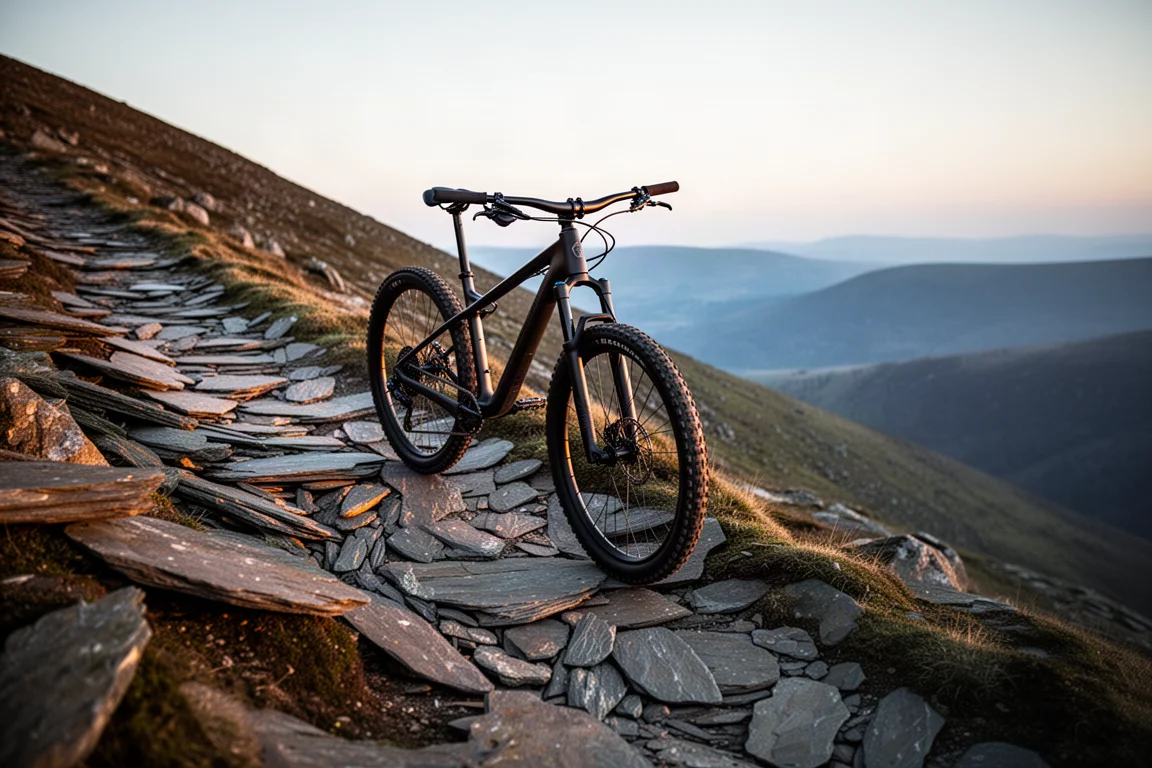
The second test was a rocky, technical descent on a public right of way, so no timing was used and no racing was done. Here the character of each build came through clearly. The cross-country bike felt nervous and skittery over the rocks, with its shorter-travel fork and narrower tires transmitting more of the trail back to the rider. The trail build, with its wider handlebar, stouter fork, chunkier tires and dropper post, invited the rider to let loose. The cross-country bike was still very good fun on the descents, but the trail build was the clear winner on this kind of terrain.
Even so, the stopwatch told a more nuanced story than the feel did, and that is where the comparison gets genuinely interesting.
What the Timed Runs Showed
On the technical climb, the cross-country build recorded 1:05 against 1:13 for the trail build for one rider, an eight-second gap. A second pair of runs reversed that result, with 1:17 on the trail build against 1:22 on the cross-country build, which suggests that tire grip mattered more than build weight on that particular climb.
The fire road climb was far more consistent. Both riders found roughly a 25-second advantage for the cross-country build, with times of 1:25 and 1:20 against 1:50 and 1:45 for the trail build. On sustained, smooth climbing, the lighter wheels and faster-rolling tires are simply worth real time.
The timed descent was closer than the ride feel suggested. The trail build recorded 2:54 against 3:18 for the cross-country build in one set of runs, while the other pair of runs were only five seconds apart over roughly two and a half minutes. Build choice clearly changes confidence more than it changes outright descending speed, at least on trails of this kind.
Which Hardtail Build Makes More Sense for You
The rider who spent the day on the cross-country build would choose that bike. It was faster on the climbs, it did not hold him back on singletrack, and for genuinely rough terrain he would simply reach for a bigger bike with more travel. The one thing he would borrow from the other build is its lightweight wheels and tires for cross-country racing, because they made a clear difference to rolling speed.
The rider on the trail build would choose the trailified bike as the one hardtail to rule them all. It was more confident on descents and more fun to ride, even where the stopwatch barely separated the two. The wider bar, stouter fork, chunkier tires and dropper post all contributed to that sense of control.
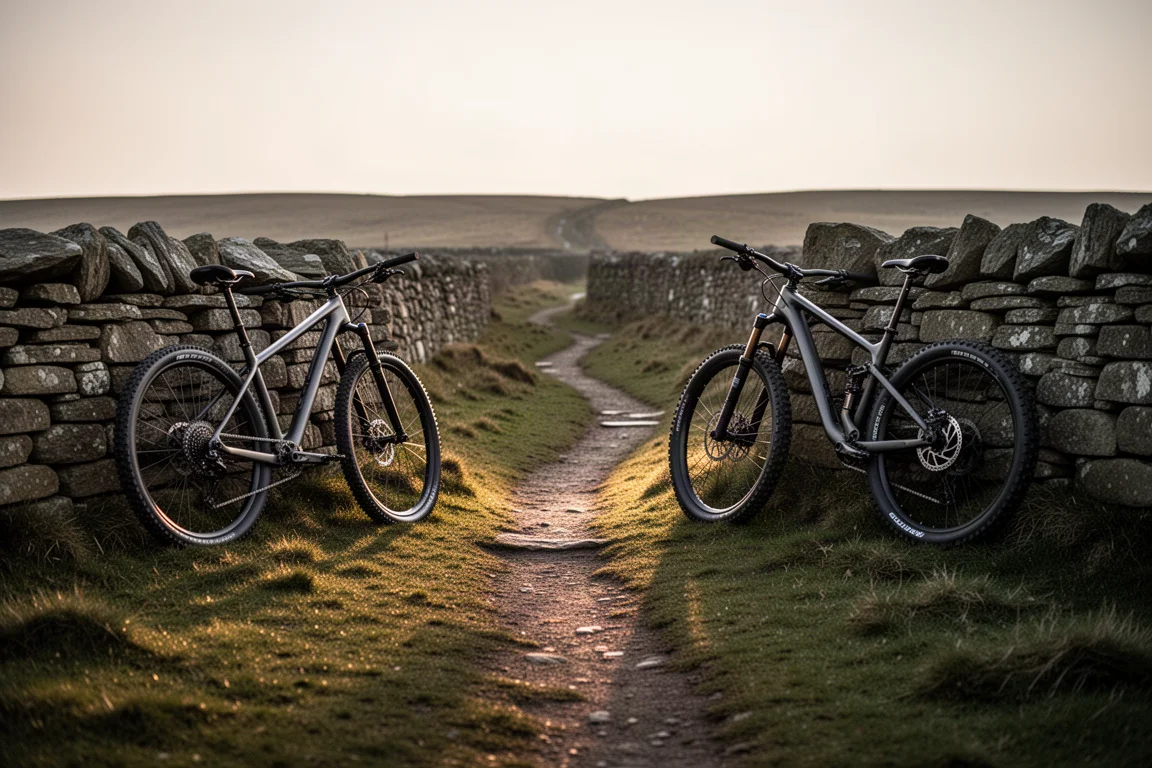
Which of those positions fits you depends on where you ride and what you enjoy. If your riding is built around long climbs, fire road efforts and race-style courses, the lighter, faster build is the one that will feel rewarding every time the gradient steepens. If your local trails are rocky and technical, and you would rather trade a little climbing speed for composure on the way back down, the trail-oriented build is the more satisfying machine. Both start from the same geometry, so the difference in character comes almost entirely from the parts bolted to the frame.
Conclusion
Taken together, these two builds show how much of a hardtail’s personality lives in its components rather than its frame. The cross-country build is the faster machine whenever the trail points uphill or runs smooth, and it gives away surprisingly little on descents. The trail build gives up real time on climbs but returns it in confidence, control and enjoyment on rocky, technical ground. Neither approach is wrong. The right one is simply the one that matches the trails you actually ride most often.
Further reading
Related Reviews
Mountain Bikes
Atherton AM.130 Review: 3D-Printed Titanium Lugs and a 130mm Trail Bike That Descends Like a Bigger Machine
The Atherton AM.130 pairs 3D-printed titanium lugs with carbon tubes and a DW6 suspension platform. Here is how it rides, what the build delivers, and who it suits.
Mountain Bikes
Beginner Mountain Bike Buying Guide: What to Look For in a Trailworthy Hardtail
A practical framework for evaluating beginner mountain bikes, whether new or used, by examining key components that indicate real trail capability.
Mountain Bikes
Best Aluminum Mountain Bikes 2026: Five Alloy Bikes Worth Your Attention
Five aluminum mountain bikes that show how far alloy has come, from a 120mm trail bike and a versatile machined frame to a 180mm freeride machine.