Home Audio
Bluesound Pulse Cinema and Pulse Cinema Mini: Dolby Atmos Soundbars Compared
A practical look at Bluesound's new Dolby Atmos soundbars, plus the wireless subwoofer and surround speakers that turn either one into a full system.
Introduction
Soundbars have improved to the point where standing out takes more than a familiar feature list. Bluesound’s new Pulse Cinema and Pulse Cinema Mini take a different angle: build the bar around the BluOS platform, then let owners expand into a full wireless Dolby Atmos system as their room and budget allow.
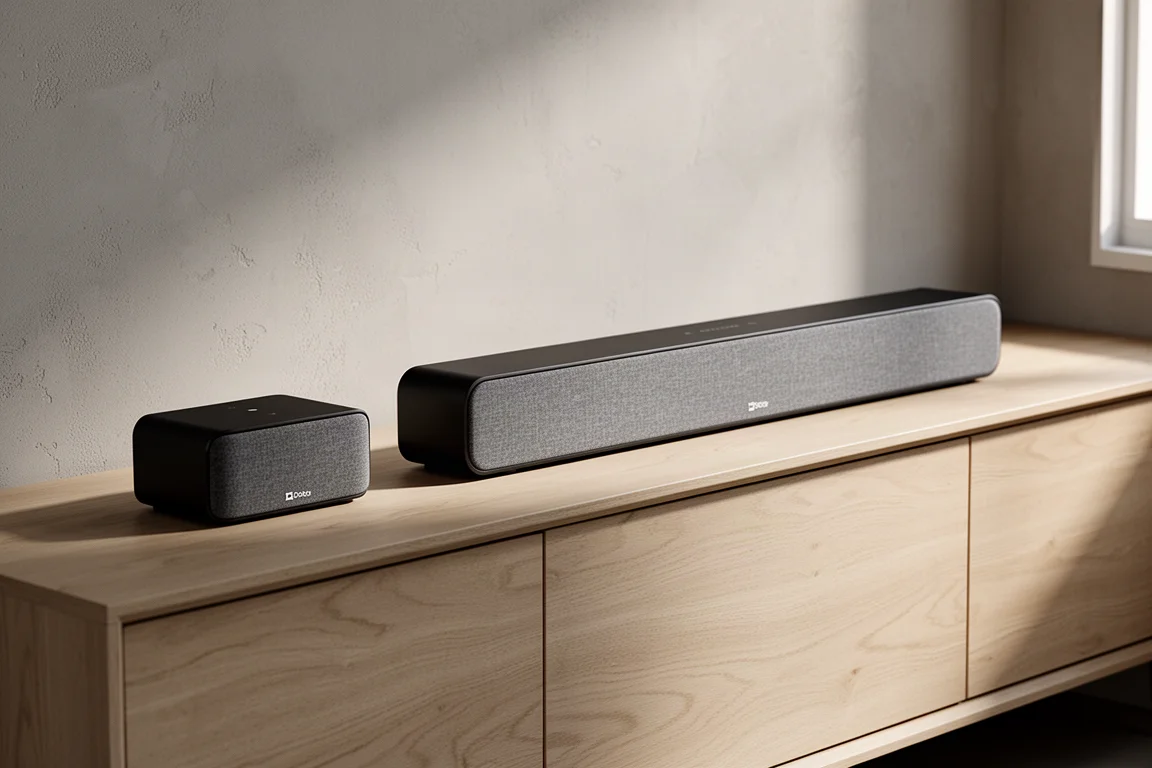
The larger Pulse Cinema uses genuine upfiring height drivers and a dedicated center channel. The compact Pulse Cinema Mini trades height drivers for Atmos virtualization and gains far more freedom in where it can sit. Both share the same connections, the same streaming feature set, and the same upgrade path through a wireless subwoofer and wireless rear speakers.
What Sets These Soundbars Apart
Both bars share one design language: a gray fabric-wrapped front, a black aluminum body with rounded edges, and capacitive touch controls on top that stay dark until a proximity sensor detects a hand nearby. The Pulse Cinema Mini is also offered in a tan and white finish. A wall mount is included in the box, and each bar rotates flat against the wall and uses auto orientation sensing to reassign each driver’s role, so the same hardware works properly whether it sits under a TV or hangs on a wall.
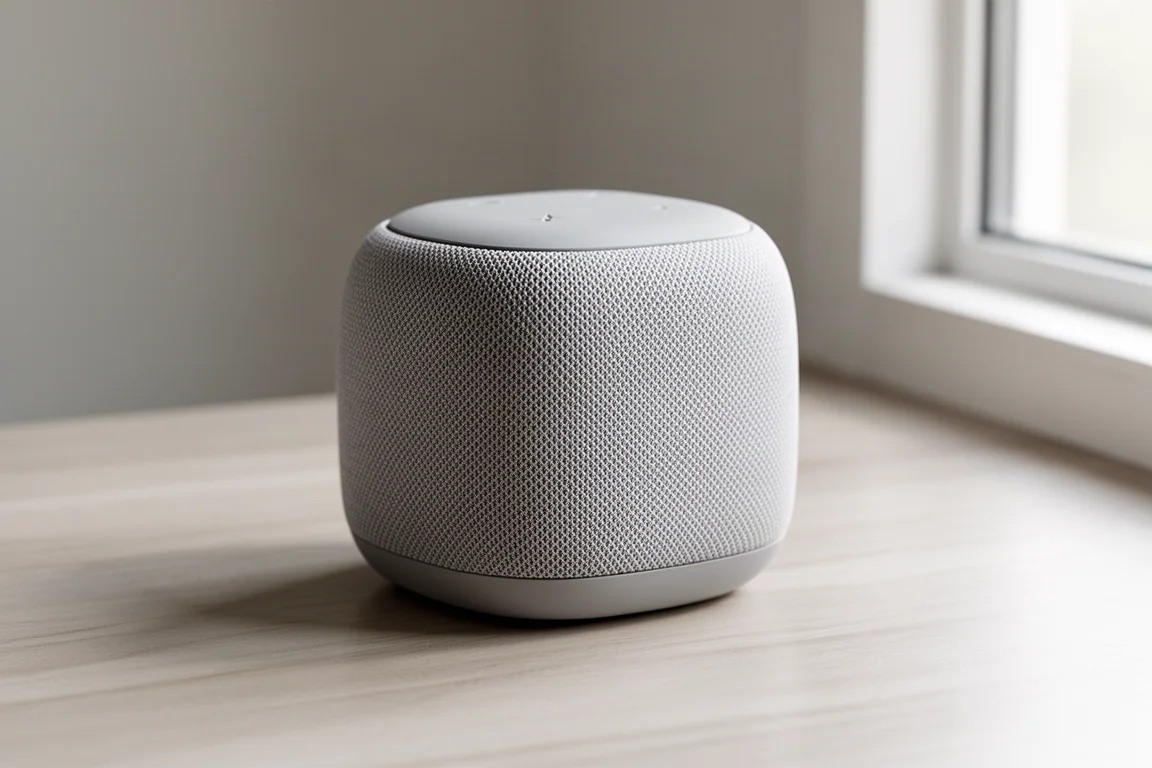
Inside, both support high-resolution playback up to 24-bit/192 kHz and DSD 256, with AirPlay 2, Spotify Connect, Tidal Connect, adaptive Bluetooth 5.2, and Roon readiness. Bluetooth works in both directions, so audio can be sent out to a pair of headphones for late-night listening. The rear panel is identical on both models: Ethernet, optical in, HDMI eARC, analog in for legacy gear, USB Type-A for local file playback, and a subwoofer output.
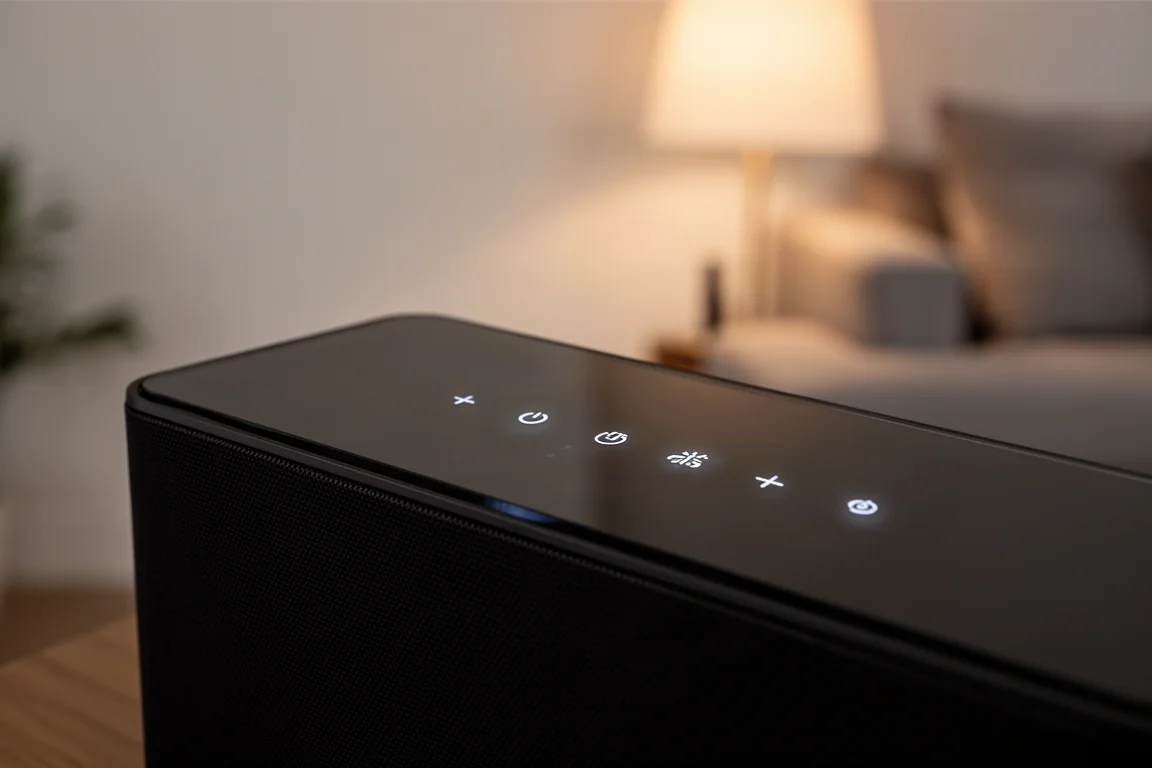
That subwoofer output deserves attention. Some soundbars in this class leave it out entirely, and having it means an existing subwoofer can be connected right away, or a more powerful model can be chosen later rather than being locked to one brand. Everything is controlled from the BluOS app, which includes the major streaming services and access to local music libraries, along with deeper settings such as subwoofer crossover, tone controls, zone grouping, rear level and delay adjustments, and listening modes for movie, music, and late night.
Bluesound Pulse Cinema: Real Height Drivers and a Dedicated Center
The Pulse Cinema is a 3.1.2 design with 500 watts of power: left, center, and right channels across the front, a pair of discrete upfiring height channels, two 4-inch internal woofers, and four passive radiators, for 16 drivers in total. That is enough output to fill a medium to large room comfortably.
The dedicated center channel is the detail that matters most for everyday viewing. Dialogue stays anchored and clear rather than sounding like it comes from a small speaker and gets buried in an action-heavy mix. Height effects come from the upfiring drivers bouncing sound off the ceiling. That is not the same as having in-ceiling speakers, but it is convincing given that no speakers sit above or behind the listener.
At roughly 48 inches wide, the Pulse Cinema pairs best with TVs around 55 inches and larger, and it performs at its best in a room with a flat, unobstructed ceiling roughly 10 to 12 feet high, since the height drivers need a clean surface to reflect from. One small note on the finish: the black glass cutout that houses the top-mounted touch controls is reflective, which is worth knowing in a dark media room.
Bluesound Pulse Cinema Mini: Flexible Atmos for Smaller Rooms
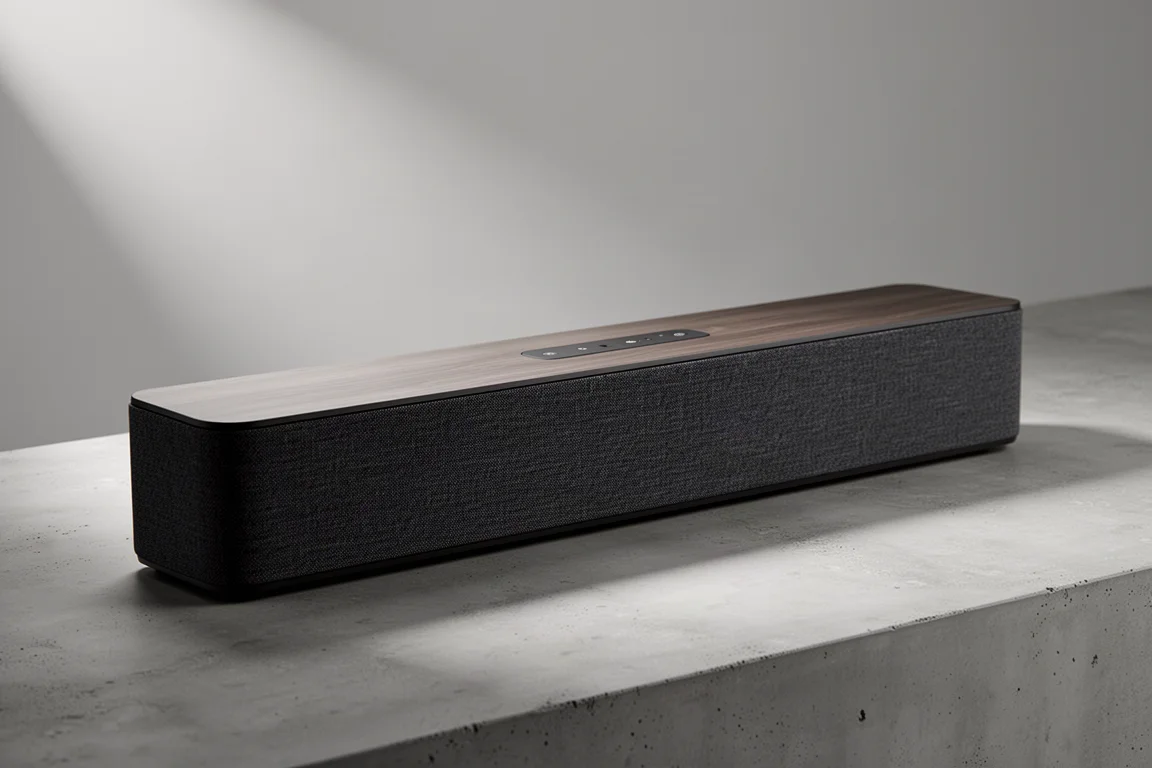
The Mini takes a different route. It is a 2.1 array with two angled drivers that widen the front stage, two 4-inch woofers, and two passive radiators, powered by 280 watts. Dolby Atmos is virtualized rather than delivered by upfiring drivers, and the cabinet is roughly 34 inches wide, which suits smaller TVs in a bedroom or an office.
Virtualization is not as convincing as physical height drivers, and that is the honest trade-off. What it buys is placement freedom. A sloped ceiling, a ceiling fan, or a shelf directly above the bar would all interfere with upfiring drivers, and the Mini sidesteps that problem entirely. It can even sit inside a cabinet, as long as it is kept flush with the front edge.
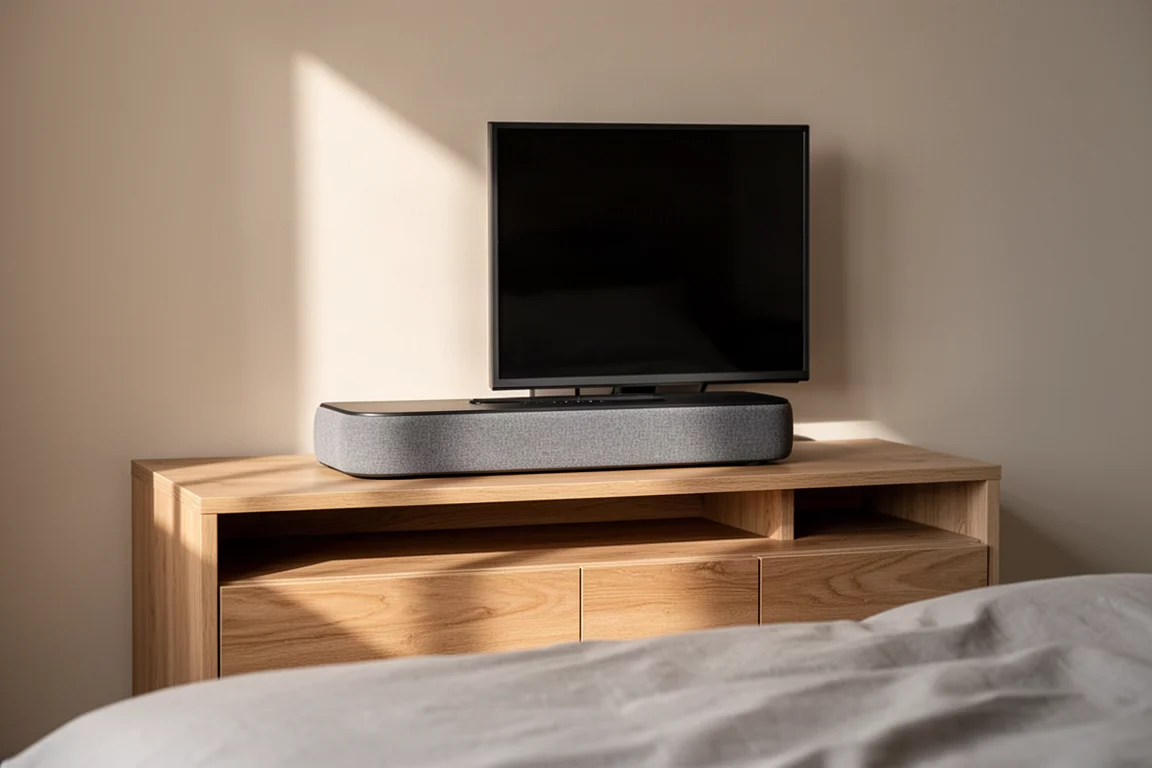
For anyone moving up from TV speakers, the improvement is substantial: clear dialogue and surprisingly effective height effects for a bar this size. It is one of the stronger options in the compact category.
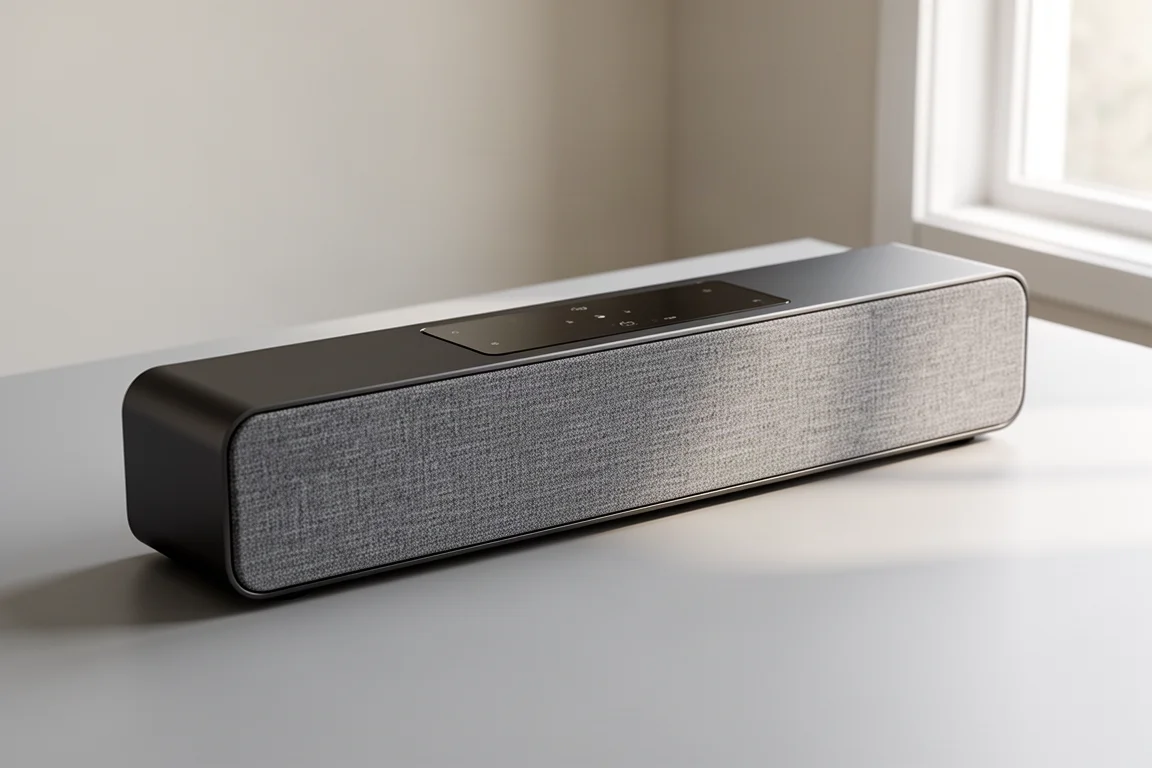
Adding Bass: Bluesound Pulse Sub Plus
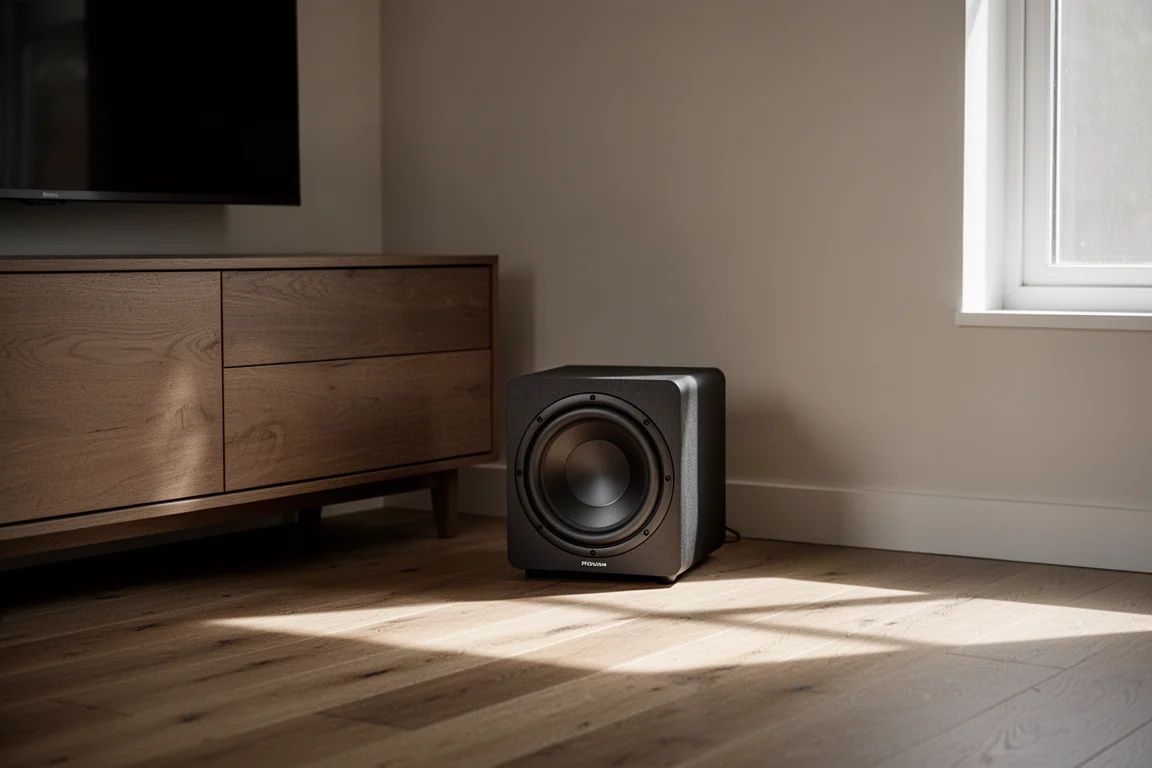
Both bars carry meaningful low end on their own, but adding the Pulse Sub Plus changes how much work the bar has to do. It connects wirelessly, so it can be placed wherever it sounds best in the room rather than wherever a cable reaches.
With the low-frequency load handled separately, dialogue becomes clearer and large effects such as explosions sound considerably more realistic. Adding a subwoofer before adding surround speakers is the single most effective first step for most rooms, and positioning matters just as much as the hardware. Owners who already have a subwoofer can use the subwoofer output on either bar instead.
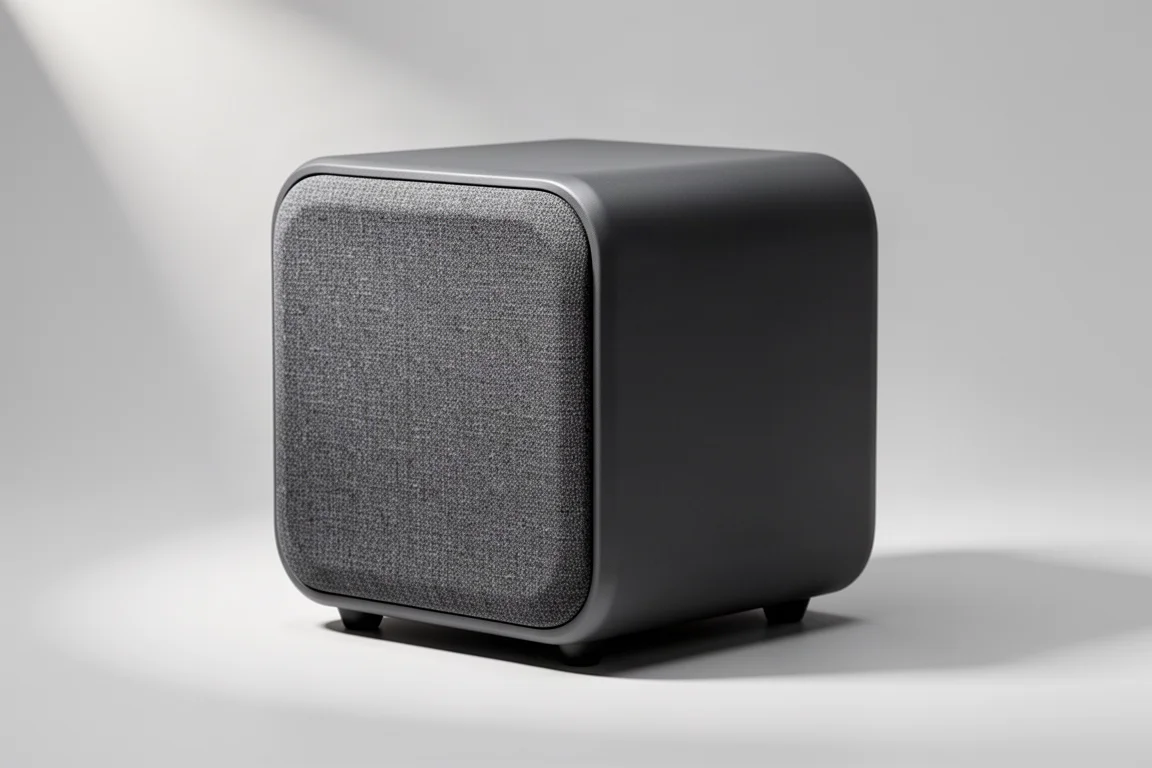
Wireless Surround Options for a Fuller System
The bars reach their full potential with wireless rear speakers. Bluesound’s own Pulse speakers pair directly, and the same hardware doubles as a whole-home music system when movies are not playing: bars can be grouped with speakers in other rooms, or with a Node, through the BluOS app.
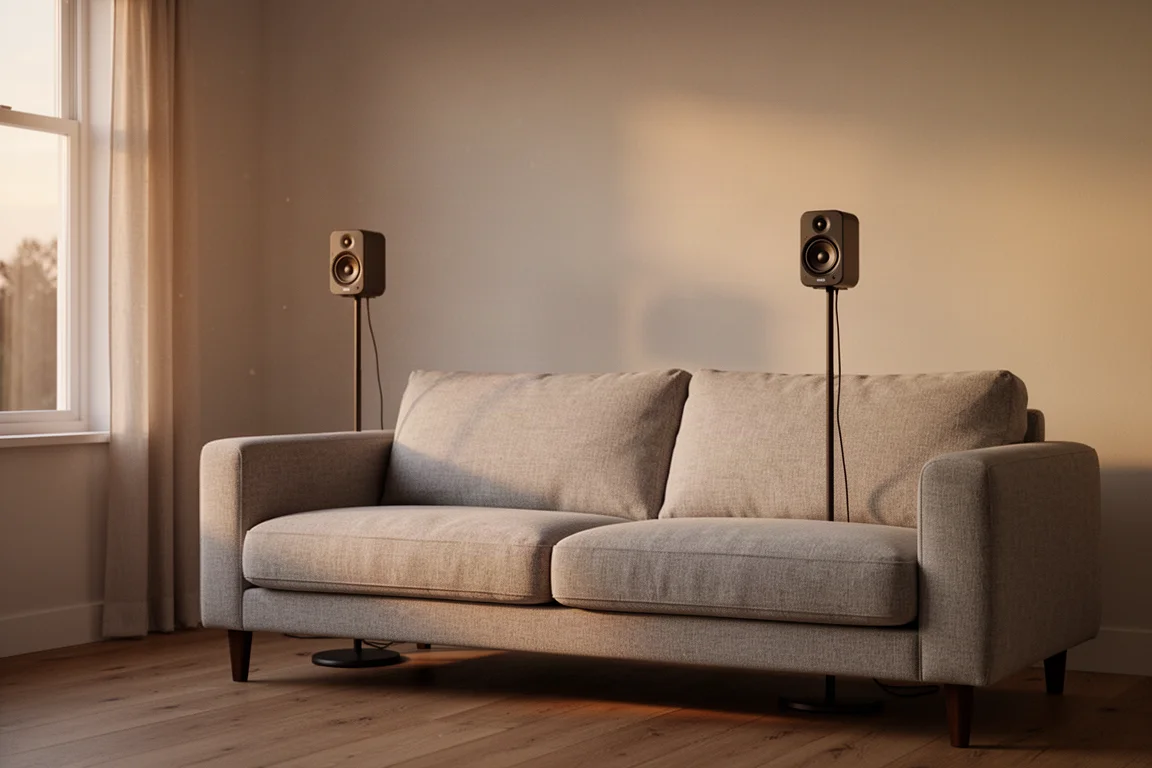
Whichever speakers are used as rears, they should sit at roughly ear level and in the correct position relative to the listening seat. Setup is handled in the BluOS app, where rear levels and delay can be adjusted alongside listening modes for movie, music, and late night.
Pulse M as Rear Speakers
The Pulse M produced the most convincing surround effect of the available options, with enough low-end output to sell a scene where a helicopter moves around the listener. A pair runs about $1,000 at current pricing, which makes it the more serious investment of the two.
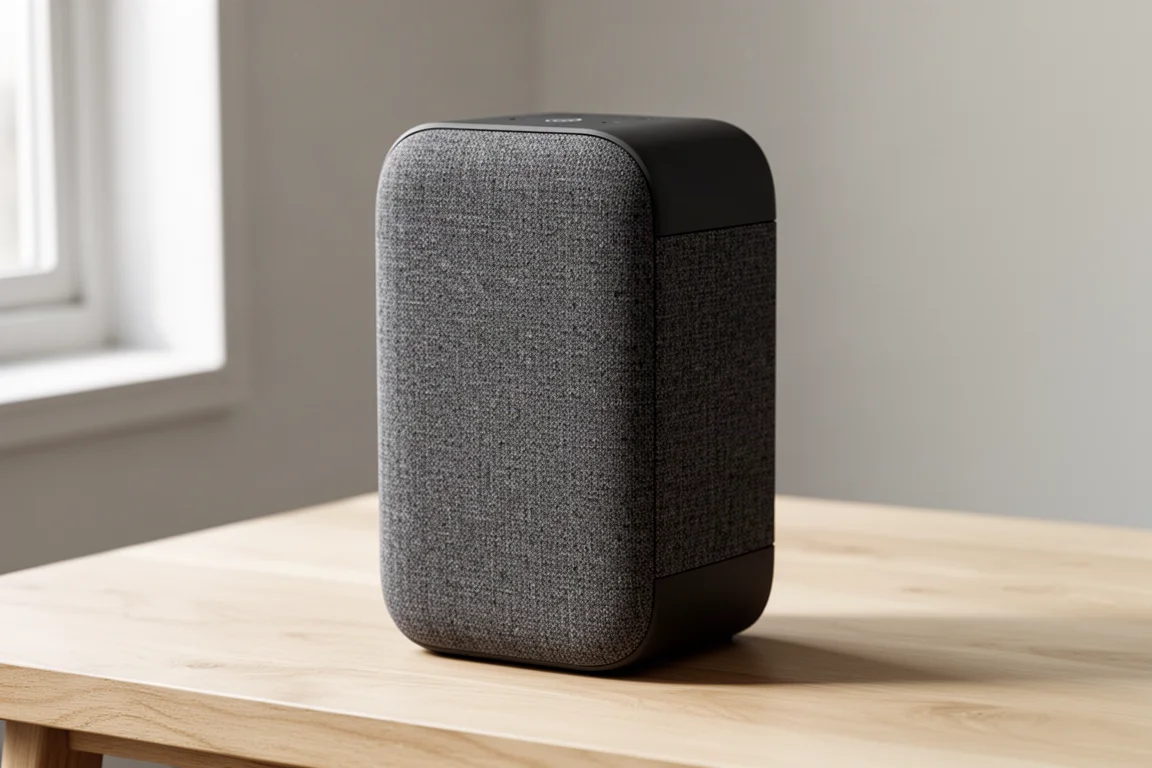
Pulse Flex as Rear Speakers
The Pulse Flex is the more affordable route to surround sound, and it works well for adding effects behind the listener without the cost or bulk of the larger option. It gives up some of the low-end weight that makes the Pulse M so convincing in the rear channel.
Buying Advice: Which Configuration Makes Sense
Start with the room. A medium to large space with a flat, unobstructed ceiling at roughly 10 to 12 feet is where the Pulse Cinema’s upfiring drivers and dedicated center channel earn their price. A smaller room, a sloped or obstructed ceiling, or a cabinet installation points to the Pulse Cinema Mini, where placement freedom matters more than the last degree of height realism.
Then think about upgrade order. A subwoofer first, then rear speakers, delivers the biggest gains for the money. If a Pulse M pair fits the budget, it is the stronger surround choice; if not, the Pulse Flex covers the job at a lower cost. Anyone who already owns a capable subwoofer can put the subwoofer output on either bar to use.
One limitation worth knowing before you commit: Dolby Atmos Music does not play through the streaming services built into the BluOS app, although it does play through an Apple TV connected over HDMI eARC. Regular high-resolution music playback through the app is unaffected.
Room Setup and Placement Considerations
Placement determines how much of the design’s potential is actually realized. Upfiring height drivers need a clear, flat ceiling path, which is why ceiling fans and sloped ceilings work against the Pulse Cinema. Virtualized Atmos in the Mini depends far less on the room, and the bar can sit flush inside a cabinet without blocking anything.
The subwoofer deserves the same attention as the bar. Getting it into the right position in the room does more for bass quality than any setting, and rear speakers should sit at ear level and be correctly placed relative to the listening position.
Software and app settings finish the job. Subwoofer crossover, tone controls, rear levels and delay, and listening modes are all adjustable in BluOS, and zone grouping extends the same system to speakers in other rooms of the house.
Conclusion
The Pulse Cinema and Pulse Cinema Mini make a strong case for themselves by combining capable hardware with the BluOS platform: high-resolution music playback, multi-room streaming, and straightforward expansion through a wireless subwoofer and wireless rears. The Pulse Cinema is the choice for a larger room where real height drivers can do their work, and the Mini is the smarter pick where the ceiling or the furniture will not cooperate. Either way, the system can grow one step at a time.
Further reading
Related Reviews
Home Audio
Aperion Novus Tower and Center Review: Punchy Home Theater Sound With Real Refinement
A close look at the Aperion Novus tower and center speakers, from their layered paint finish and punchy bass to the 4-ohm load and what the price actually buys.
Home Audio
Arendal 1610 Tower Review: Flagship Dynamics in a Room-Friendly Tower
A compact floorstanding tower with three 8-inch aluminium woofers, a 5-inch carbon midrange, and the kind of bass heft usually reserved for much larger speakers.
Home Audio
Arendal 1723 S THX Review: A Reference Speaker Built Like a Tank
A practical look at the Arendal 1723 S THX, a sealed, THX-certified speaker with exceptional build quality, a very flat top end, and a midrange that responds beautifully to EQ.