Music Streamers
Bluesound Node Nano Review: A Compact Streamer That Sounds Bigger Than Its Price
A focused, screen-free network streamer with a serious DAC, strong resolution and a few deliberate omissions worth knowing before you buy.
Introduction
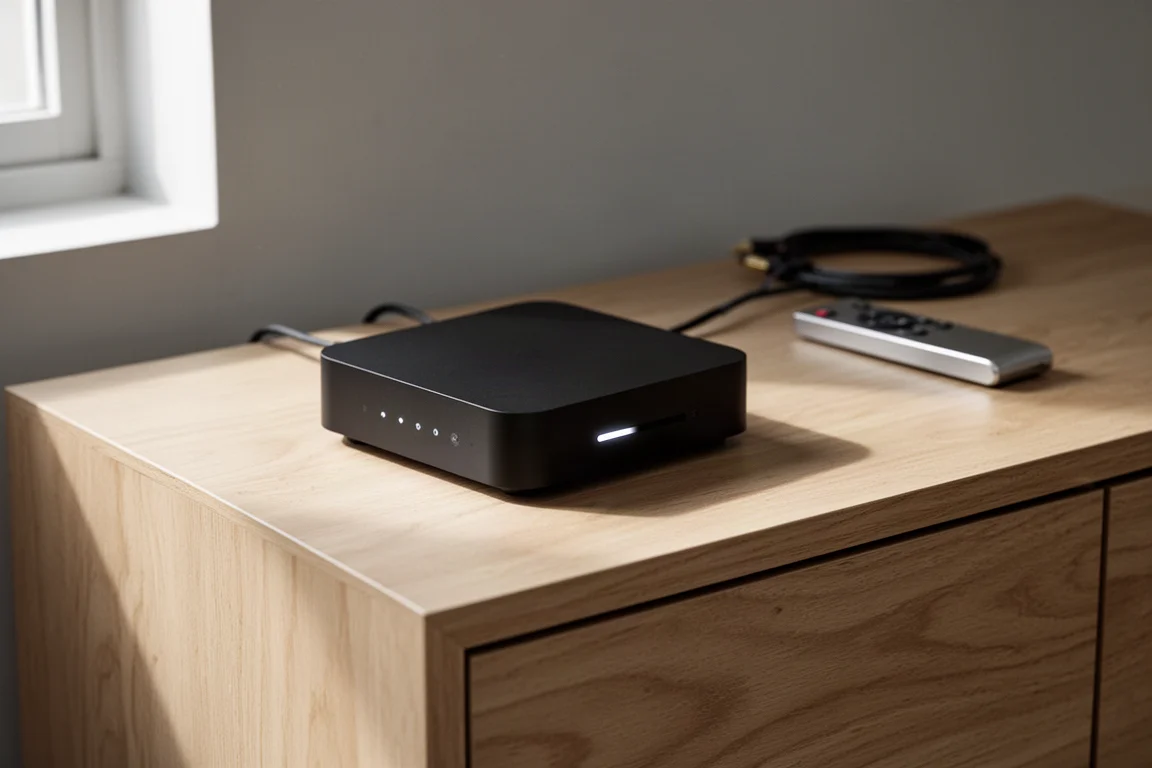
The Bluesound Node Nano arrives at an interesting moment for affordable streaming. It is the entry point in a refreshed three-model Node range priced from £299 to £899, and it sits directly beneath rivals such as the WiiM Ultra and the Eversolo DMP-A6. Rather than trying to out-feature those devices, the Nano takes the opposite approach: it strips streaming back to the essentials and puts the budget into sound quality.
At £299 in the UK, it is the cheapest of that group, yet it uses a DAC built around the ESS 9039Q2M chip, a more capable converter than the one found in the outgoing and considerably more expensive Node X. That combination of a modest price and a serious converter is what makes the Nano worth a closer look.
Who the Bluesound Node Nano Is For
The Nano is a pure streamer rather than a digital hub. It is aimed at listeners who already own a good DAC, or an integrated amplifier with a capable built-in converter, and who want a clean, well-behaved network transport to feed it. It also suits a desk or sideboard system, where a small, quiet box matters more than a screen or a long list of inputs.
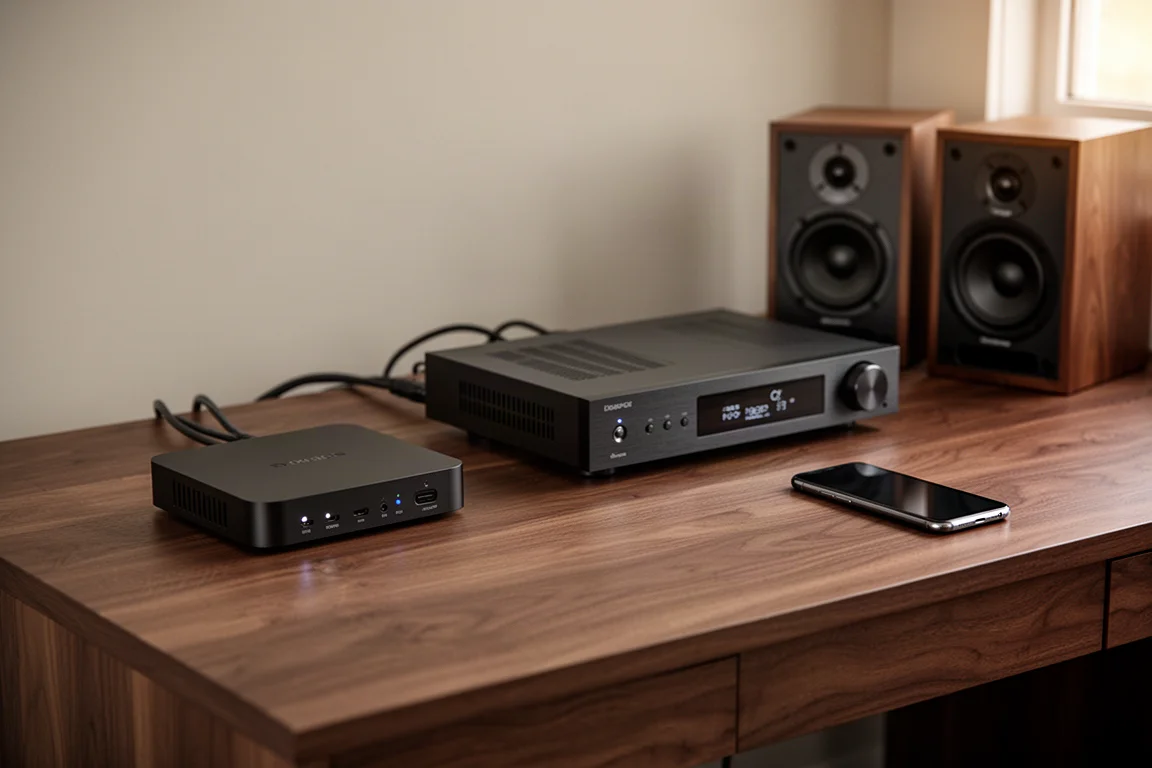
Because it measures just 143 x 36 x 143 mm and weighs 0.57 kg, it settles into a room without drawing attention. It is a natural partner for amplifiers and speakers costing under roughly £1,000, where it will not be the limiting factor, and it can hold its own in considerably more revealing setups as well.
Main Strengths
Sound Quality That Belies the Price
The Nano’s strongest argument is how it sounds. Its resolving ability sits a class above the WiiM Ultra: cleaner through the bass, midrange and treble, with better instrument separation and a noticeably wider soundstage. Bass is tight and weighty, vocals and lead instruments have real body with clear space between them, and notes finish with a natural sense of decay and air on top.
Set against the outgoing Node X, the Nano is the more resolving player. It sounds tighter in the bass, crisper through the midrange and more open in the highs. The Node X counters with a warmer tone, a slightly wider stage and a marginally better sense of separation, along with a built-in power supply of reasonable quality.
A Compact, Focused Design
Physically, the Nano is unassuming. There is no display, just proximity controls for track navigation and volume that illuminate when you reach for them. The rear panel is pared back in the same spirit: analog RCA outputs, coaxial and optical digital outputs, wireless and LAN network connections, and a USB port that works both as an input for media on flash drives and as an asynchronous output to an external DAC.
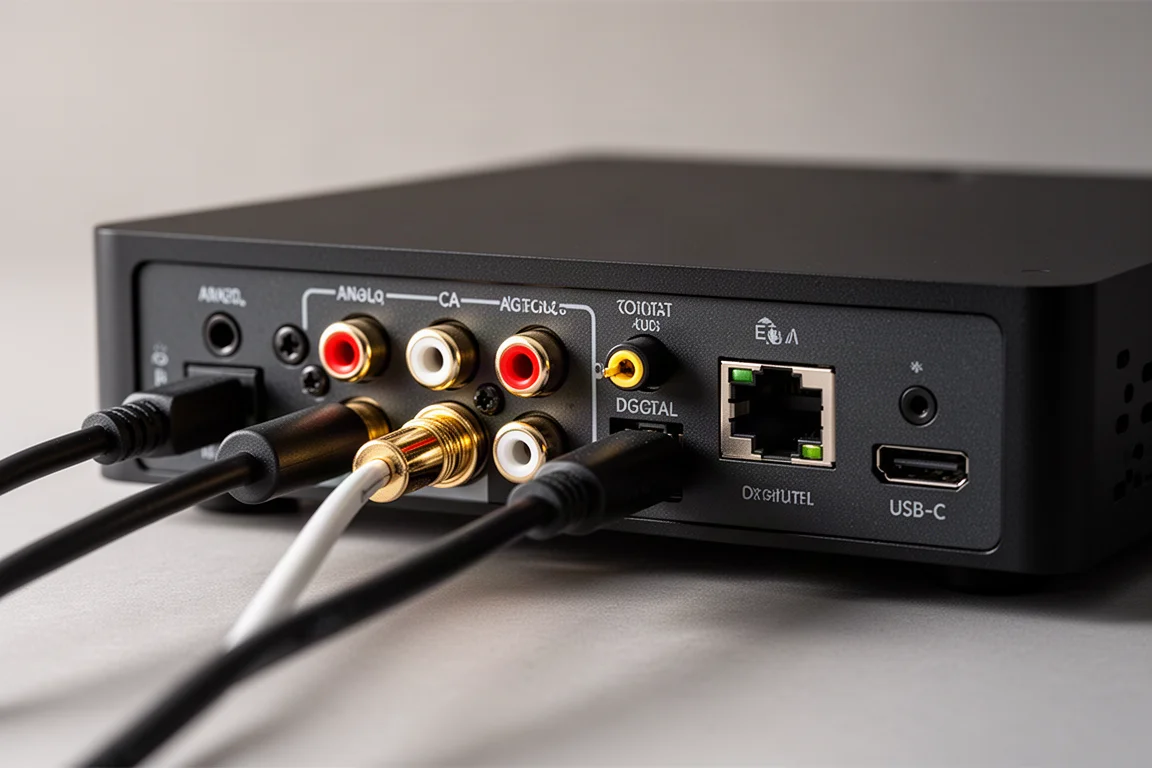
A 12V trigger terminal handles system integration with an infrared remote or power-up alongside compatible devices, and a USB-C input feeds the supplied external power supply. That last detail is worth noting: the stock supply is basic, and moving to a low-noise switch-mode or linear unit is an easy first step for owners who want to hear more of what the Nano can do.
BluOS, Connectivity and Streaming Support
Setup is straightforward. The BluOS app is available for Android and Apple devices, walks you through joining your network, and worked reliably over both Wi-Fi and Ethernet. From there you can sign in to Apple AirPlay, Amazon, Spotify, Qobuz, Tidal and many other services, and the Nano can also serve as a Roon endpoint.
The app itself is stable, quick and flexible. You can customise screens, build playlists that mix streaming services with stored media, and assemble a multi-room system. Apple AirPlay 2 is supported, which the WiiM Ultra does not currently offer. BluOS trails the WiiM and Eversolo interfaces slightly in slickness and does not include parametric EQ or room correction, but it remains a genuinely capable platform.
Things to Consider Before Buying
The Nano is deliberately limited. It has no digital inputs, no HDMI ARC, no screen for cover art and no phono stage, so it cannot anchor a television or turntable system the way the WiiM Ultra can. If feature count drives your decision, the WiiM Ultra is the far more versatile device at £349.
The single USB port also forces a choice: use it to feed an external DAC and you cannot use it to read media from a connected drive, so it is best reserved for music server duties. For transport duty, optical sounded cleanest in practice, closely followed by coaxial, while USB brought no advantage over the internal DAC. The supplied power supply is another compromise, and the compact chassis is light enough to be nudged out of place by nothing more than enthusiastic dusting.
Buying Advice
If you want one box that does everything, the Nano is not it. The WiiM Ultra offers far more connectivity for £349, and the Eversolo DMP-A6 at £799 adds a more polished interface, though it omits HDMI ARC. The outgoing Node X at £699 brings a warmer presentation and a better built-in power supply.
If, however, you mainly want a streamer to do the streaming, and you care most about how it sounds, the Nano is the one to choose. It is the most resolving of the group and also the cheapest, and it is the only one of these four that could be lived with in a high-end reference system without embarrassment. Paired with a modest amplifier and a sensible pair of speakers, it simply gets out of the way.
Conclusion
The Bluesound Node Nano is a small, plain-looking box that happens to sound exceptional for its price. Its stripped-back design, focused connectivity and excellent DAC make it a compelling choice for listeners who value resolution and tonal balance over inputs and screens. Add a better power supply when you can, feed it a clean digital signal, and it will reward the rest of your system far beyond what £299 would normally suggest.
Product link
View more details for Bluesound Node Nano
This product is mentioned in the review. Check the specifications, options, and compatibility before buying.
View more details for Bluesound Node NanoFurther reading
Related Reviews
Music Streamers
Arylic S10 Plus vs WiiM Mini: Two Affordable Music Streamers Compared
A practical comparison of the Arylic S10 Plus and the WiiM Mini, covering connections, apps, tone controls, and how each internal DAC actually sounds.
Music Streamers
Auralic Aries G1.1 Review: A Streaming Transport That Lifts a Resolving System
A close look at the Auralic Aries G1.1 streaming transport, covering its twin-transformer power supply, Tesla G2 processing, Lightning DS app and the systems where it genuinely pays off.
Music Streamers
Bluesound Nano Review: A Compact Streamer That Keeps Things Simple
The Bluesound Nano is a stripped-down network streamer at $299, with a solid chassis, quick setup, and a clean, punchy sound. Here is what to know before buying.