Music Streamers
Bluesound Node Icon Review: A Flagship Streamer With Dual DACs and Balanced Outputs
A close look at the Bluesound Node Icon, a sub-$1,000 music streamer with dual ESS Saber DACs, a fully balanced output path, HDMI eARC, and a full-size headphone jack on each side.
Introduction
Bluesound has spent more than a decade building streaming music players, arriving as a high-performance alternative to the mainstream multi-room platforms that dominated the space at the time. The brand comes from the Lenbrook Group, the same company behind NAD, whose value-focused amplifiers have earned steady praise since the late 1970s. When Bluesound was created, NAD engineers were given the brief to design it in the same spirit: top-tier performance at a price everyday music lovers could afford, supported by a software team dedicated to the interface people would use to stream their music.
That software is BluOS, and continuous updates have kept it polished and capable. The lineup now includes the Node Nano, a revamped Node, and the model this article focuses on, the Node Icon.
The Node Icon is the most expensive streamer Bluesound has ever made, sitting at roughly twice the price of the Node. It is positioned to compete with streamers that cost considerably more, and it comes in under $1,000.
Who the Bluesound Node Icon Is For
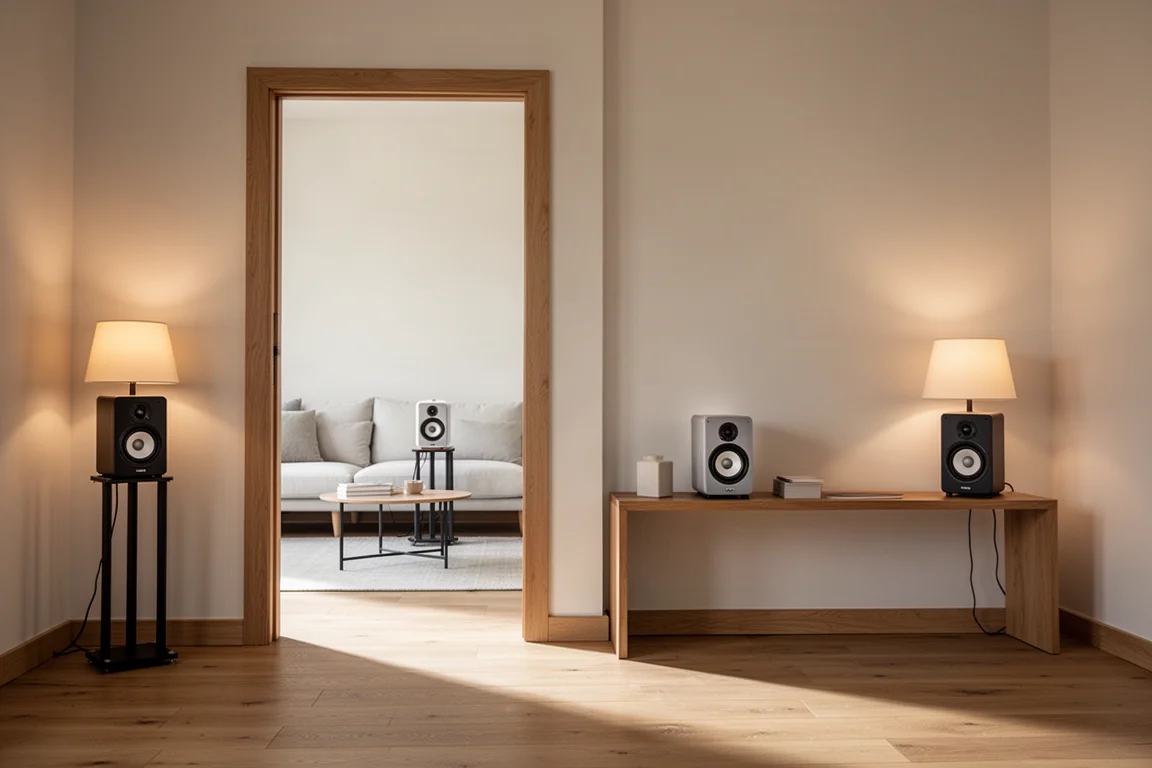
The Node Icon is aimed at listeners who want to move past Bluetooth streaming or a basic multi-room setup without paying for a premium two-channel streamer. It works equally well as a control hub. Fixed-level outputs feed a traditional audio system, while variable mode drives powered speakers or a power amplifier running passive speakers. Its compact footprint also allows it to sit neatly on top of a pair of powered speakers, forming a tidy, complete system.
It also makes sense for anyone who wants one box to handle a turntable, a TV, a subwoofer, and a pair of headphones.
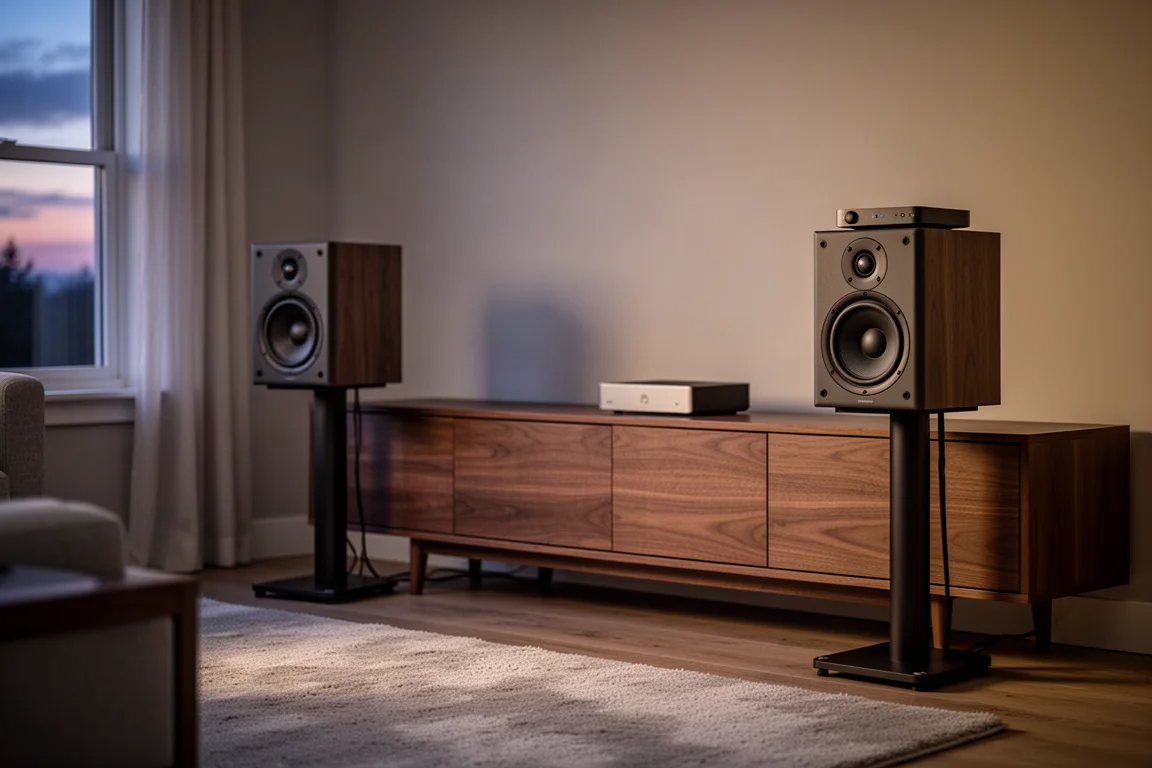
That flexibility matters, because the Node Icon is meant to anchor a system rather than serve a single purpose, and the range of inputs and outputs on the back panel reflects that intent.
Main Strengths: Sound, DAC Design, and Build
The DAC section is the headline. The Node Icon uses two ESS Saber ES9039Q2M converters, the same chip family found in the Nano and the Node, but here they run in a mono configuration for higher performance. The larger chassis also allowed Bluesound to strengthen the power supply, which in turn supports a fully balanced audio path through the XLR outputs. Those balanced outputs are not a simple conversion from an unbalanced signal; the entire path is balanced, which is unusual at this price.
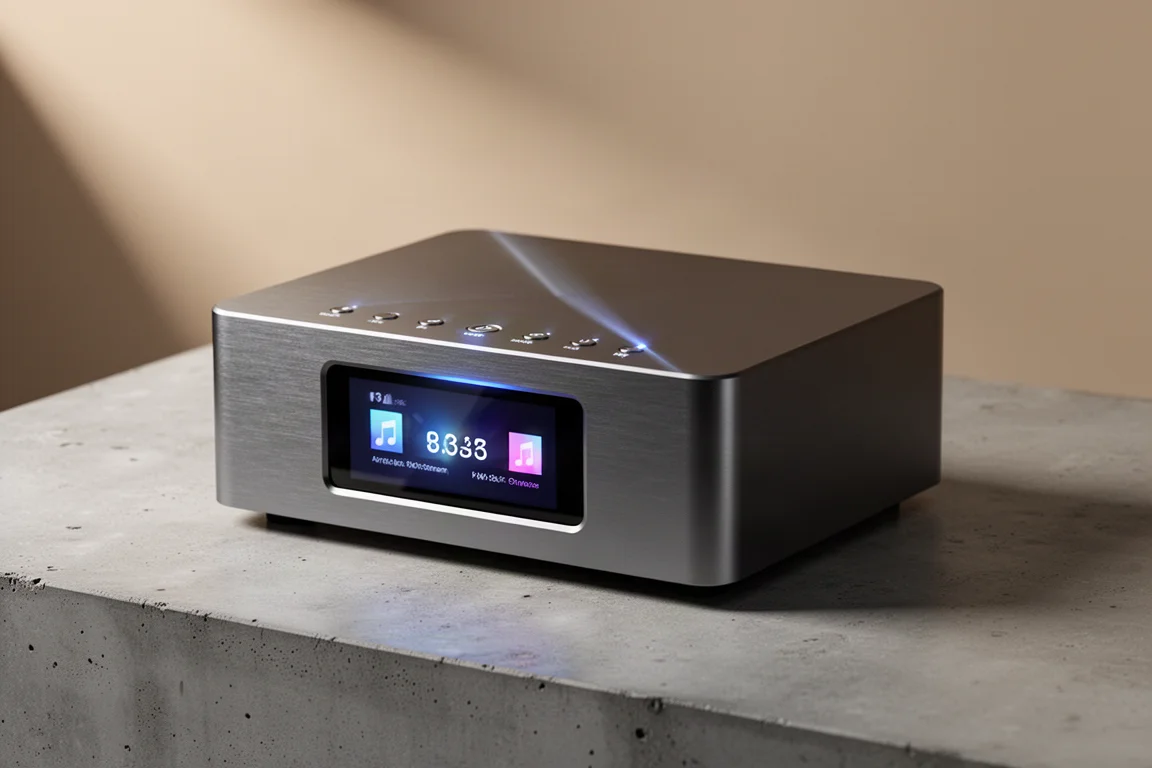
Physically, the Node Icon has a high-quality aluminium chassis measuring roughly nine inches wide, three and a half inches tall, and seven and a half inches deep. A five-inch colour display on the front can show the track that is playing or one of several custom clock faces. The gently sloped top panel holds backlit controls for volume, playback, track skipping, and five customisable presets, and they light up when you come near.
Sound quality is where the step up from the Node is most obvious. Across setups ranging from powered speakers to high-end amplification driving large speakers, the Node Icon keeps the warm Bluesound signature while adding noticeably more detail and realism than the Node or the Node Nano.
Connectivity, Inputs, and Headphone Support
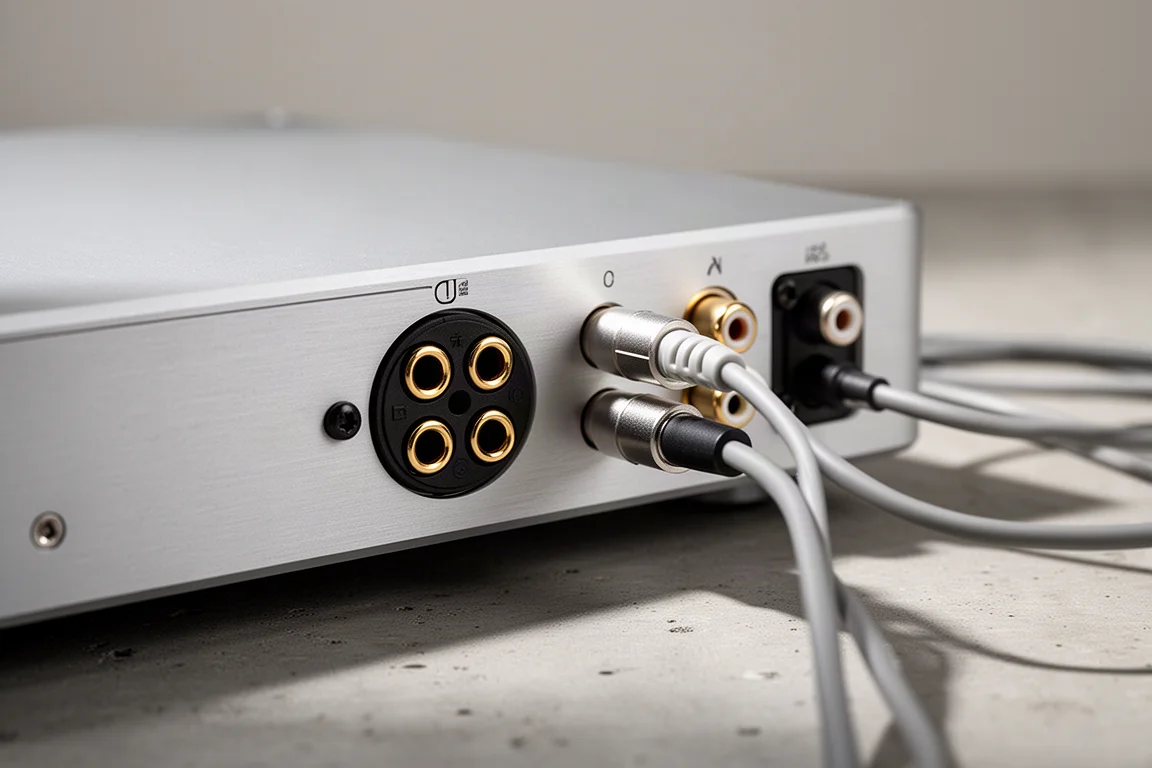
The Node Icon takes a clear step forward from the Node on connectivity. Full-size analog audio inputs make it easy to connect a turntable, though there is no phono preamp built in, so the turntable needs its own or an external one. A standard-size Toslink input adds further flexibility, and the HDMI eARC input lets a compatible TV send its audio straight to a two-channel system. With eARC, the TV remote can also control volume, so one remote is enough. Older TVs without eARC can usually connect over Toslink instead. The Icon also decodes Dolby Atmos files and mixes them down to two-channel stereo.
Around the back you will find two USB-A ports for hard drives full of music files, with network drives handled through BluOS as an alternative, plus a USB-C connection for a PC. Outputs include balanced XLR and standard RCA, along with coax and Toslink digital outputs for anyone who later wants to use the Icon purely as a digital streamer into a high-end DAC. A subwoofer output rounds out the panel.
Wireless options cover AirPlay 2 and aptX Adaptive Bluetooth, and Bluetooth works in both directions, so audio can be sent from the Icon to wireless headphones for late-night listening.
Headphone listeners get something unusual here: a full-size quarter-inch jack on each side of the unit, fed by a THX Achromatic Audio Amplifier designed for very low noise and distortion. Moving the jacks away from the front keeps the display area clean without giving up a proper connection.
BluOS, Dirac, and Everyday Use
BluOS is central to the experience. It supports 24-bit/192kHz playback and works with major high-res services such as Qobuz, Tidal, and Apple Music, as well as lower-resolution options like Spotify and Pandora. Music stored on a network library is integrated just as smoothly, search is quick and intuitive, and building playlists is straightforward. Rooms can be grouped for multi-zone listening, mixing Bluesound and NAD products that run the same platform.
A software update enables DSD over PCM playback on all three of the newest streamers, covering DSD 64, 128, and 256. DSD playback applies to locally stored files rather than streaming services.
Basic tone controls are included, and because there is a subwoofer output, crossover settings can be adjusted in the app to roll off bass to the main speakers, with full control over both the sub and the mains from the listening chair.
Dirac room correction and Dirac bass management are available for both the Node and the Node Icon as optional software upgrades rather than included features. Dirac addresses the acoustic quirks created by room shape and layout, and it can be applied to a classic separates system, a receiver-based setup, or a pair of powered speakers.
The Node Icon is also the first product known to use QRONO d2a, a piece of software that grew out of Lenbrook’s 2023 acquisition of MQA. It looks for timing errors as a digital signal is converted to analog and realigns the timing response, which helps recordings sound more natural. Top-of-the-line ESS analog-to-digital converters handle the digital inputs, though it is worth knowing that an analog source such as a turntable is converted to digital inside the Icon.
Things to Consider Before Buying
A few details are worth weighing before committing. There is no phono preamp on board, so a turntable needs its own or an external one. Analog inputs are converted to digital internally. Dirac room correction is a paid upgrade rather than part of the package. DSD playback is limited to locally stored files. And the Node Icon costs roughly twice as much as the Node, so it is worth being honest about whether the rest of the system is revealing enough to show the difference.
Buying Advice
For under $1,000, the Node Icon is one of the strongest streamers available, and the combination of balanced outputs, a beefier power supply, and dual ESS Saber DACs explains why. In direct comparisons it outperformed the WiiM Ultra on overall sound quality, and it held its own against similarly priced Eversolo streamers, with several listeners preferring it to some of those models. Whether those differences are obvious depends heavily on how revealing the rest of the system is.
Longevity is part of the value here as well. Bluesound has a long record of updating its app and software, which matters for a product that depends on streaming services and network features. The brand has also been in this space for years, with engineers dedicated to keeping the platform current.
Conclusion
The Bluesound Node Icon is the most ambitious streamer the company has built, and it earns its place at the top of the range. Dual ESS Saber DACs, a fully balanced output path, HDMI eARC, a subwoofer output with app control, and a full-size headphone jack on each side cover an unusually wide range of uses. It keeps the warm Bluesound character while adding detail and realism beyond the Node and the Node Nano, and it does so for under $1,000. For listeners who want one box to anchor a two-channel system, it is an easy recommendation.
Product link
View more details for Bluesound Node Icon
This product is mentioned in the review. Check the specifications, options, and compatibility before buying.
View more details for Bluesound Node IconFurther reading
Related Reviews
Music Streamers
Arylic S10 Plus vs WiiM Mini: Two Affordable Music Streamers Compared
A practical comparison of the Arylic S10 Plus and the WiiM Mini, covering connections, apps, tone controls, and how each internal DAC actually sounds.
Music Streamers
Auralic Aries G1.1 Review: A Streaming Transport That Lifts a Resolving System
A close look at the Auralic Aries G1.1 streaming transport, covering its twin-transformer power supply, Tesla G2 processing, Lightning DS app and the systems where it genuinely pays off.
Music Streamers
Bluesound Nano Review: A Compact Streamer That Keeps Things Simple
The Bluesound Nano is a stripped-down network streamer at $299, with a solid chassis, quick setup, and a clean, punchy sound. Here is what to know before buying.