Climbing Gear
Blakpad VS and Eon Knee Pads: Which One Suits Your Climbing?
A close look at two specialist climbing knee pads from Blakpad, the flexible VS and the more rigid Eon, and how to decide between them.
Introduction
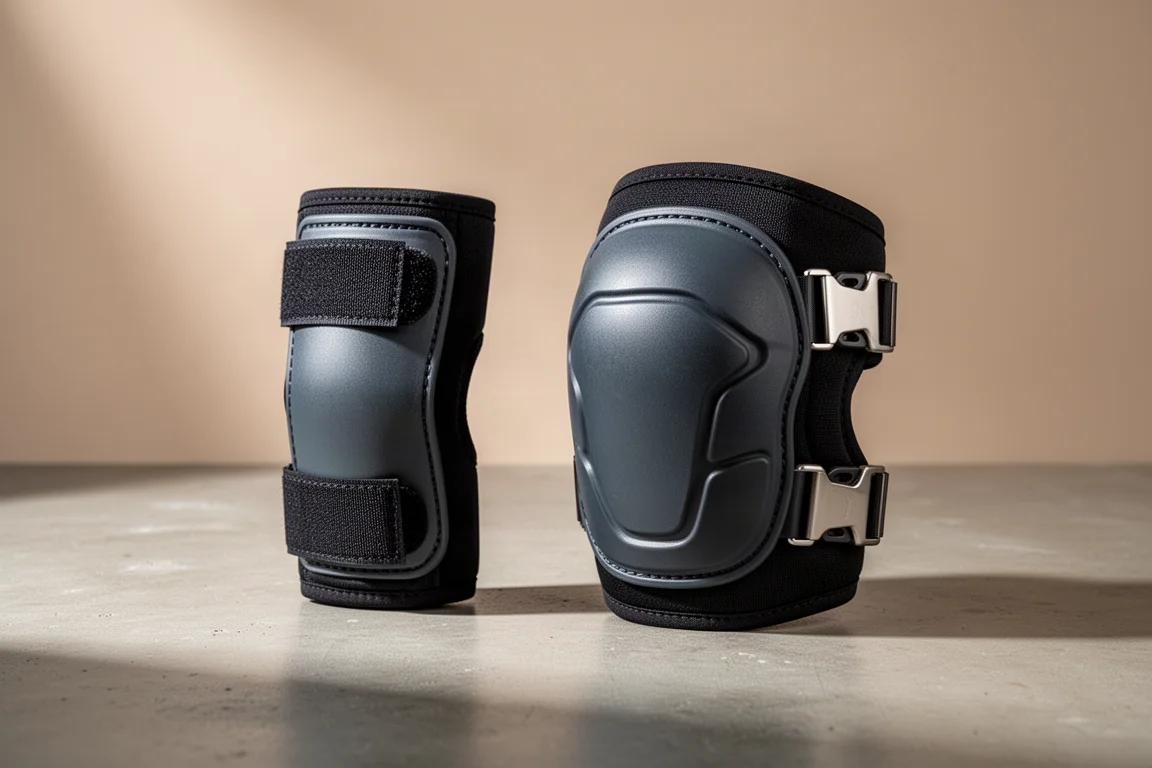
Knee pads have long been a compromise. For years the choice was close to one-size, and if the shape did not suit your leg, that was simply your problem. Blakpad takes a different route: the brand makes only knee pads, produces them in Spain, and builds them in left and right specific shapes across four sizes.
The company grew out of a specific frustration. A climber in Spain was injured by a pad whose rear strap sat too tight and dug into his leg during a knee bar rest, costing him a route he had been working on. That experience led him to design a pad where nothing sits behind the knee at all.
Two models sit at the centre of the range. The VS is the original design with a large hook-and-loop strap, while the Eon is a beefier version with metal buckles. They share the same philosophy but suit different styles of climbing.
What Makes Blakpad Knee Pads Different
The most distinctive detail is what is missing. Neither pad has a strap running around the back of the leg. Instead, the tensioning hardware sits on the side, and the rear of the pad is entirely elastic. That means nothing digs in during a knee bar rest, and nothing catches on the rock while you are moving.
The rubber is Vibram, and the back of the pad uses a sticky foam that is designed to hold position well. The pads are also left and right specific. Because knee bars are usually taken with the leg turned sideways, metal components would otherwise sit against the rock on the inside of the leg, where they would rub, dent, and eventually damage the material.
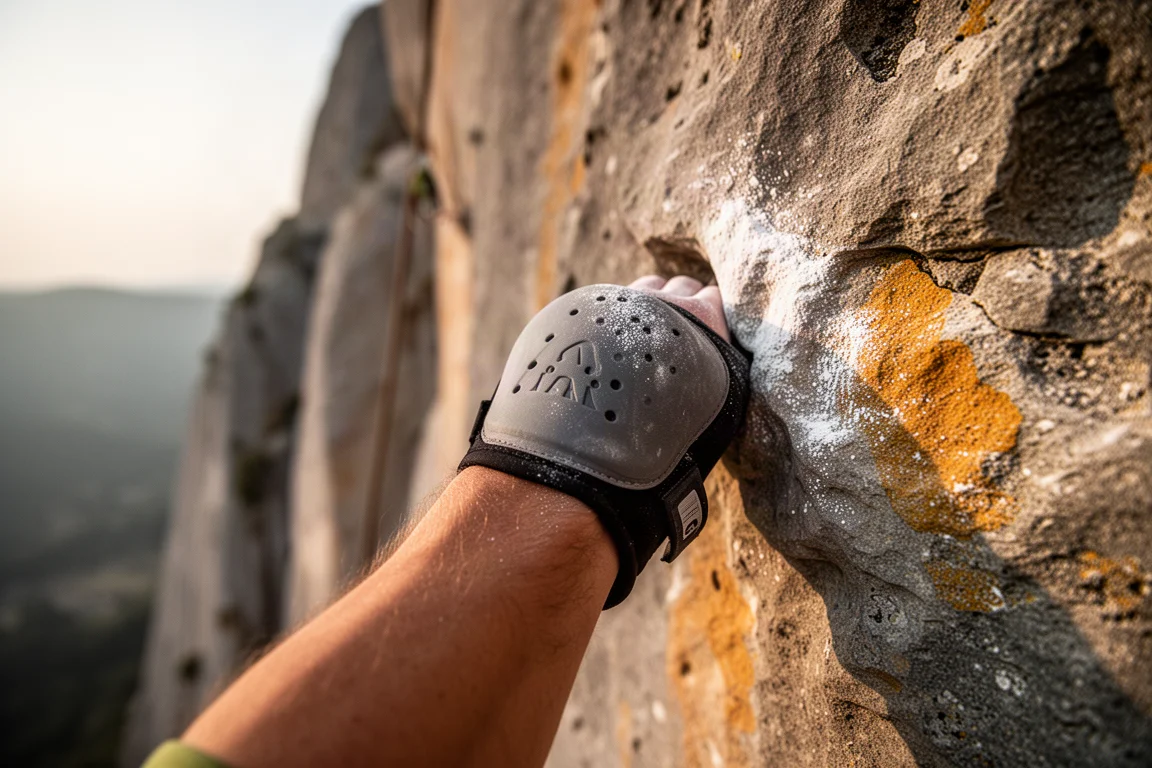
Construction quality is the other theme here. The brand makes nothing else, and both pads are built around a side-mounted tensioning system rather than brute-force tightening.
Blakpad VS Knee Pad: The Flexible Original
The VS was the designer’s first model, and it carries a large hook-and-loop strap. It is the more elastic of the two, with noticeably more stretch through the body of the pad. That stretch lets climbers size down for a tight, shoe-like fit that stays put without being cranked down.
It is the pad that suits powerful, comfortable knee bars. If you are on the boundary between two sizes and you want a close fit, the smaller option can be broken in, much like a pair of climbing shoes.
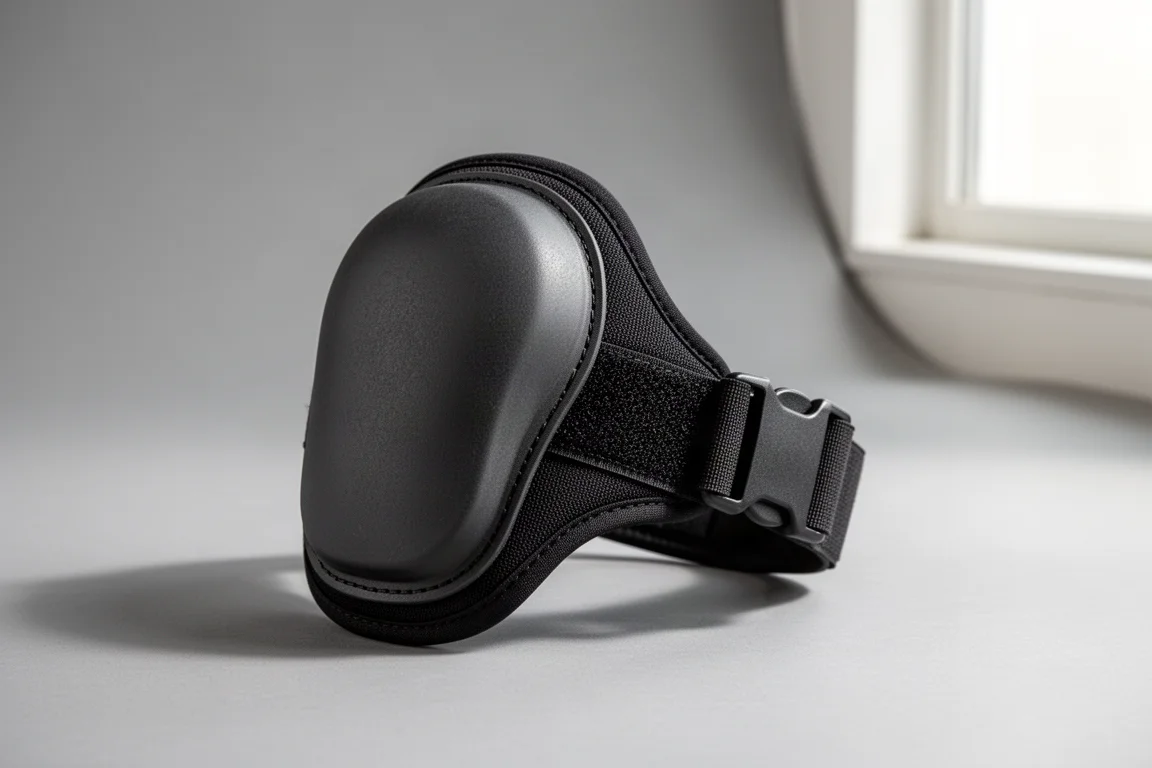
Blakpad Eon Knee Pad: More Rigid Support for Sustained Knee Bars
The Eon is the heavier-duty option. It is thicker and more rigid, uses metal buckles, and stretches less than the VS. The payoff is a pad that holds its position without being over-tightened, which matters on long routes and roof sections where knee bars come one after another.
Because there is less give in the Eon, correct sizing matters more. Go too small and the strap ends up sitting behind the leg, which is exactly the problem the design set out to solve.
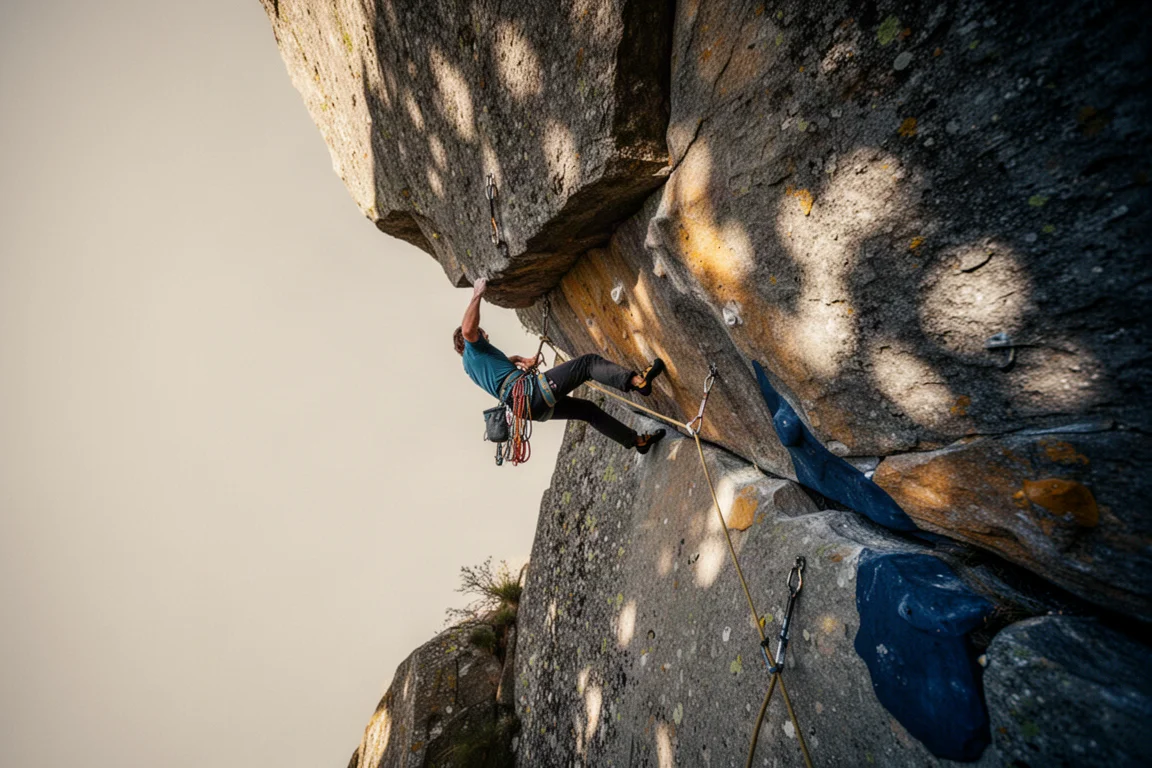
For most climbers the decision comes down to how much time they spend on sustained, steep terrain. The Eon is the choice for long, intense sequences where a stable pad is worth more than a softer feel against the leg.
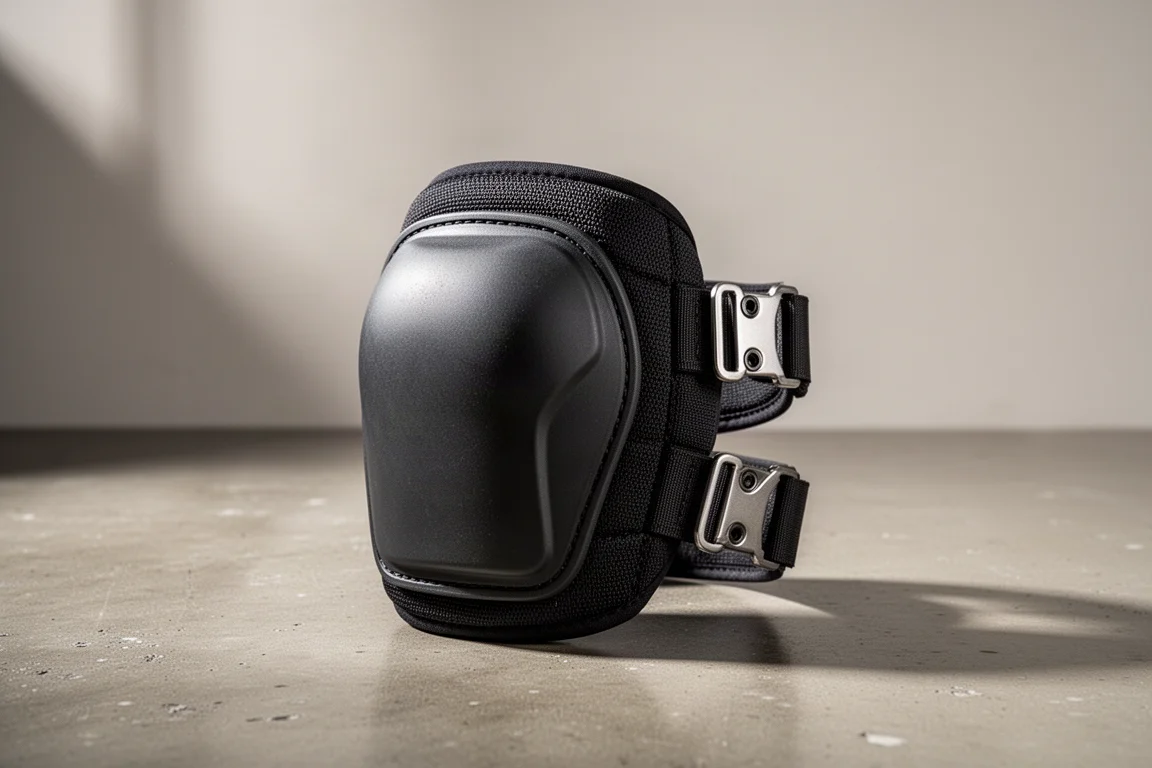
Left and Right Fit: Why Orientation Matters
Left and right specific pads mean buying two, and that is the main trade-off of the design. The alternative, a single ambidextrous pad, puts the metal hardware on the inside of the leg. On sideways knee bars that hardware contacts the rock, picks up dents, and can eventually cut into the pad material.
For climbers who use knee bars regularly, the orientation is not a gimmick. It is the difference between hardware that stays out of the way and hardware that slowly wears the pad out.
Sizing Guidance for the VS and the Eon
Blakpad provides a rough size guide based on measuring the thigh and the leg, and it is worth following that rather than guessing. The VS stretches more, so climbers who want a very close fit can often take the smaller size and break it in. The Eon has less stretch, so the correct size matters more than a tight one.
Placement matters as much as size. Leaving roughly three fingers between the kneecap at 90 degrees and the top edge of the pad allows the pad to settle into position when you stand up and the leg muscles contract.
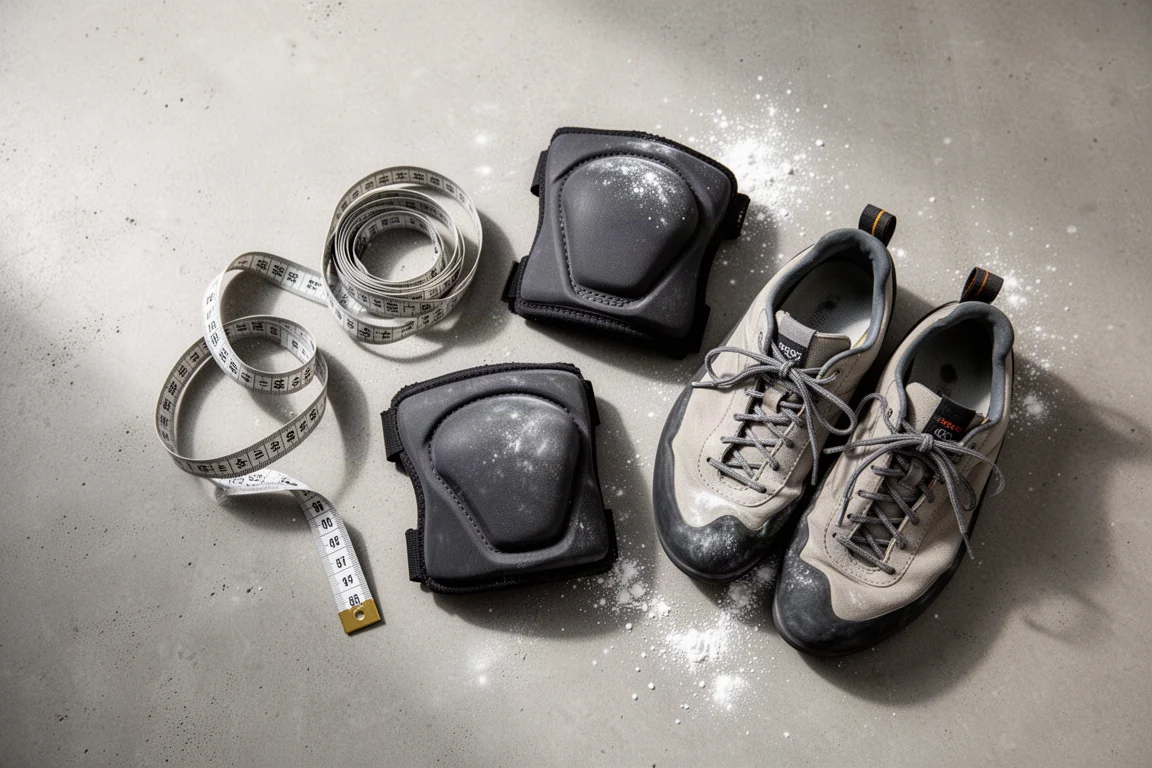
Once the pad is on, the tensioning system does the rest. You tighten it slightly to hold position, then use the buckle and its finger slot to pull the strap around to the side of the leg, clearing the back of the knee entirely.
Durability and Care: Why Knee Pads Are Personal
These pads mould to the shape of the leg that wears them. Lending them to another climber means stretching the elastic and the rubber to a different leg shape, and doing that repeatedly wears the material out faster. Sharing is best avoided.
The durability case is strong. A pair of Blakpad pads has stayed in service for four years, where previously a three to four month trip could go through as many as four pairs. The thick, sticky rubber resists the denting that eventually lets a pad walk out of position.
Buying Advice: VS or Eon for Your Climbing
Choose the VS if you want the most elastic, forgiving fit, if you like to size down for a shoe-like feel, and if your knee bars tend to be powerful and comfortable rather than endless. It is the more approachable of the two.
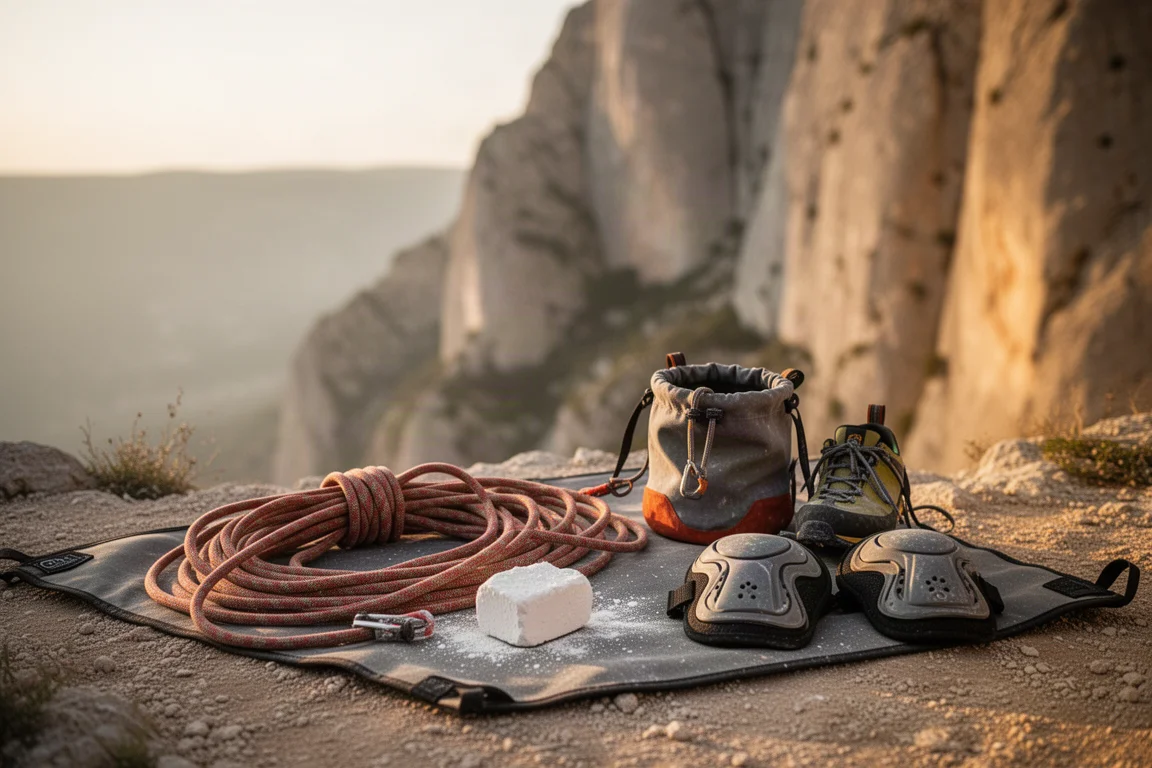
Choose the Eon if you are working long routes or roof sections with a lot of knee bars. Its rigidity means it stays in place without heavy tightening, and the metal buckles are built for repeated, precise adjustment.
Whichever you pick, plan for two pads, one for each leg. That is the cost of the left and right design, and it is also the reason the hardware stays away from the rock.
Conclusion
Blakpad solves a narrow problem very specifically, and that is exactly what makes these pads interesting. The VS offers a flexible, close-fitting feel for climbers who want a softer pad, while the Eon trades some stretch for rigidity and stability on sustained terrain. Both remove the rear strap that causes the discomfort the brand set out to fix, and both reward taking the time to get the size right.
Further reading
Related Reviews
Climbing Gear
Adam Ondra's Climbing Kit: Bags, Harnesses, Quickdraws, Shoes and Rope
A practical look at eleven pieces of climbing gear used across limestone and gritstone, from crag bags and harnesses to quickdraws, shoes and rope.
Climbing Gear
DMM Cortex Review: A T-Rated Ice Axe Built for Technical Winter Climbing
A close look at the DMM Cortex, a 50cm single-piece forged ice axe with T-rated pick and shaft, modular heads, and a reassuringly solid swing.
Climbing Gear
Mammut Assist Belay Resistor Review: Softening the Weight Gap on Sport Routes
A small all-metal accessory that adds friction at the first bolt, so a lighter belayer is not dragged into the wall by a heavier climber.