Backpacking Water Treatment
Bladders vs Bottles, Squeeze vs Pump: Choosing a Backpacking Water Filter Setup
A practical comparison of bladder and bottle carry styles, with the Sawyer Squeeze, Sawyer Mini, Katadyn Hiker, and CamelBak Hydrolink.
Introduction
Water is the one piece of gear you interact with constantly on a backpacking trip, which is why the choice between a bladder and a bottle, and between a squeeze filter and a pump, generates so much debate. Each combination solves a different problem, and none of them is perfect.
This guide looks at four products that cover both camps: the Sawyer Squeeze and the Sawyer Mini squeeze filters, the Katadyn Hiker pump filter, and the CamelBak Hydrolink adapter that makes filtering into a bladder far less awkward.
What Matters Most When Filtering on the Trail
Four factors decide whether a water setup suits you: how easy it is to drink while walking, how easy it is to filter at a source, how much the whole kit weighs, and what it costs to buy and maintain.
Access is where bladders have a clear advantage. Water stays in a tube within reach, so you can sip without stopping or unshouldering your pack. Bottles are less convenient: you either reach around to the side of your pack or add a shoulder strap holster, which puts a large bottle against your chest.
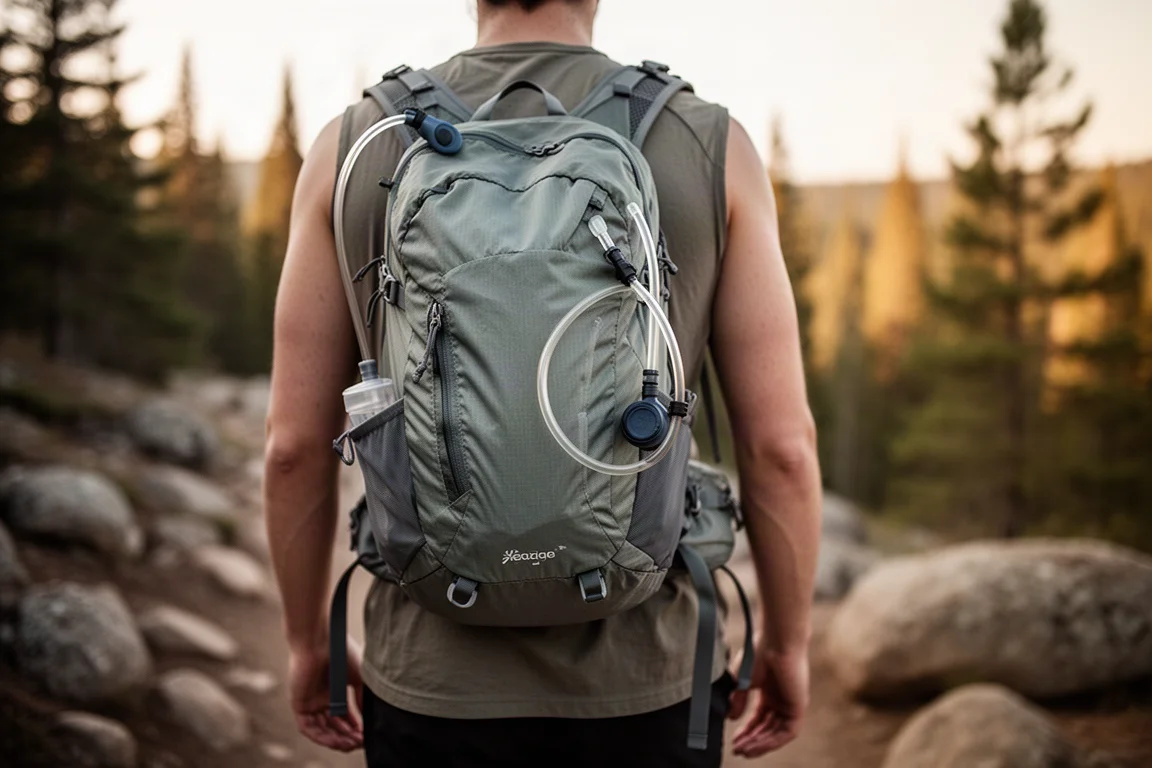
Filtering reverses the trade-off. A bladder is easy to drink from but awkward to work with at a stream, because a squeeze filter needs the reservoir held upright while you squeeze it. Bottles are easier on that front, since a Sawyer Squeeze or Sawyer Mini screws directly onto standard bottle threads, but then you are back to reaching for a bottle every time you want a drink.
Weight and cost round out the picture. A squeeze setup is lighter and cheaper up front, while a pump setup weighs more but handles larger volumes and can improve how the water tastes.
Best Squeeze Filter Overall: Sawyer Squeeze
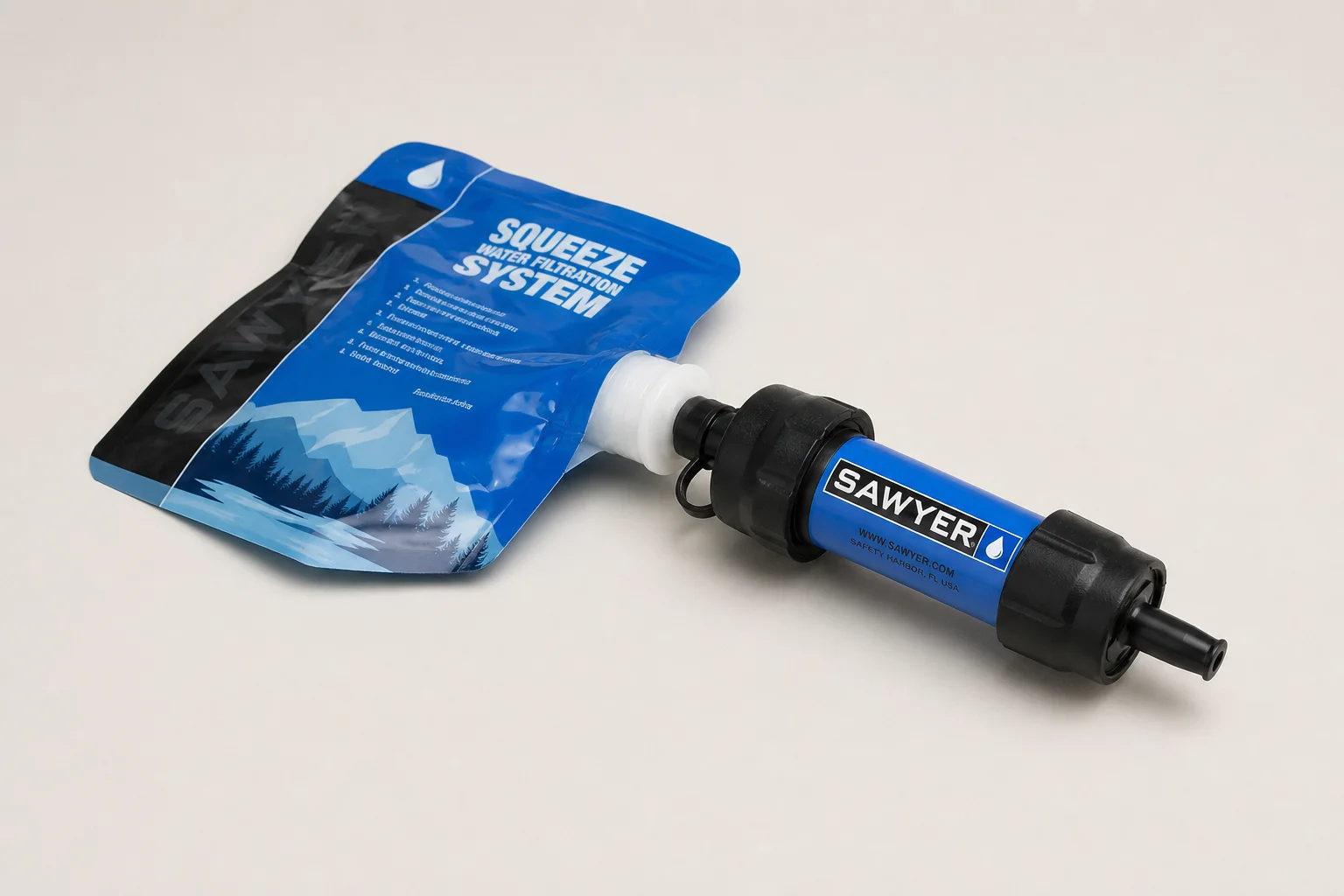
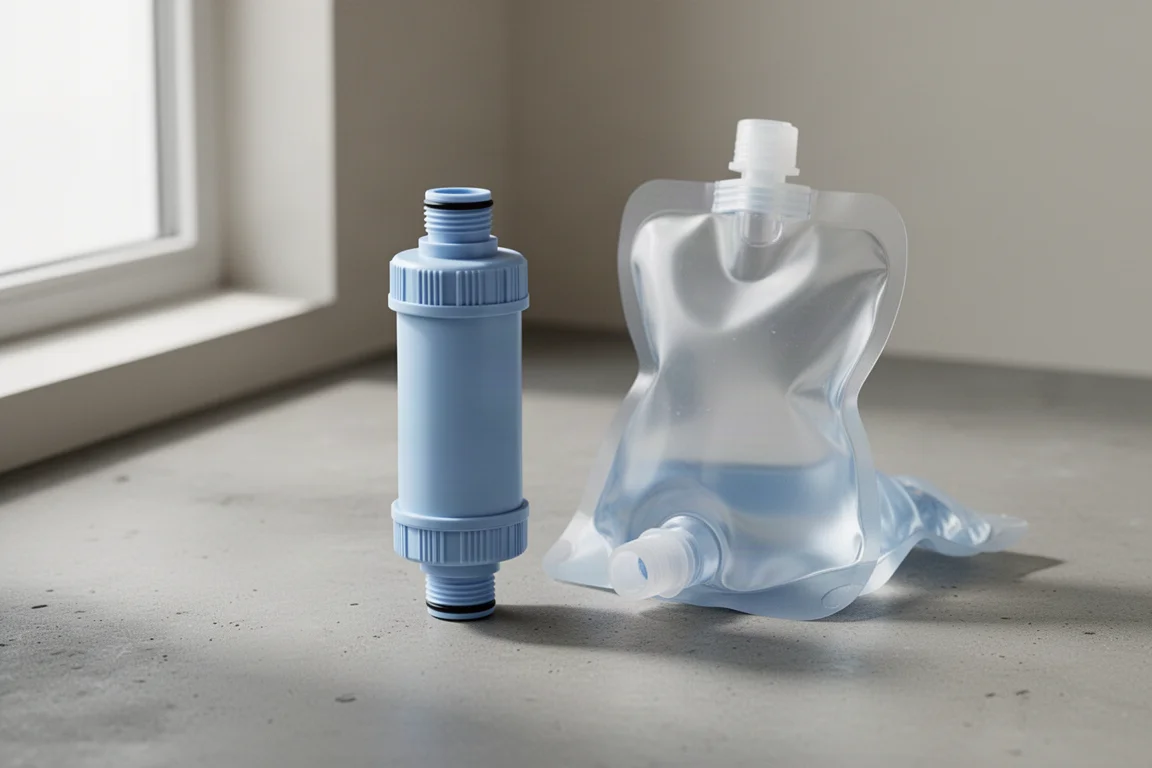
The Sawyer Squeeze is the most versatile of the squeeze filters here. It threads onto a standard water bottle, so you can filter straight into the bottle you already carry, and it can be backflushed for repeated use. Sawyer states the filter can be cleaned indefinitely this way.
The weak point is filling. The pouch that ships with the filter is difficult to fill from a shallow or fast-moving source, and a wide-mouth scoop bag makes the job considerably easier. Once you have one, the squeeze approach opens up a real advantage: you can scoop dirty water, carry it with you, and filter it later instead of standing at the source.
Two smaller annoyances are worth knowing about. You need a flat spot to keep the bottle upright while filtering, and there are several caps to keep track of. The Sawyer Squeeze also has no carbon core, so it does not change the taste of the water, and it should not be trusted if it has been exposed to freezing temperatures. It costs about $30.
Ultralight Option: Sawyer Mini
The Sawyer Mini works the same way as the Squeeze in a smaller, lighter package, and it costs about $20. It threads onto standard bottles, uses the same backflushing approach, and carries the same cautions: the included pouch is fiddly to fill, there is no carbon stage to improve taste, and a freeze means it should be replaced.
The weight case is compelling. A Sawyer Mini with two bottles and a wide-mouth scoop bag comes to 9.7 ounces in total, which is about as light as a complete water treatment and carrying setup gets.
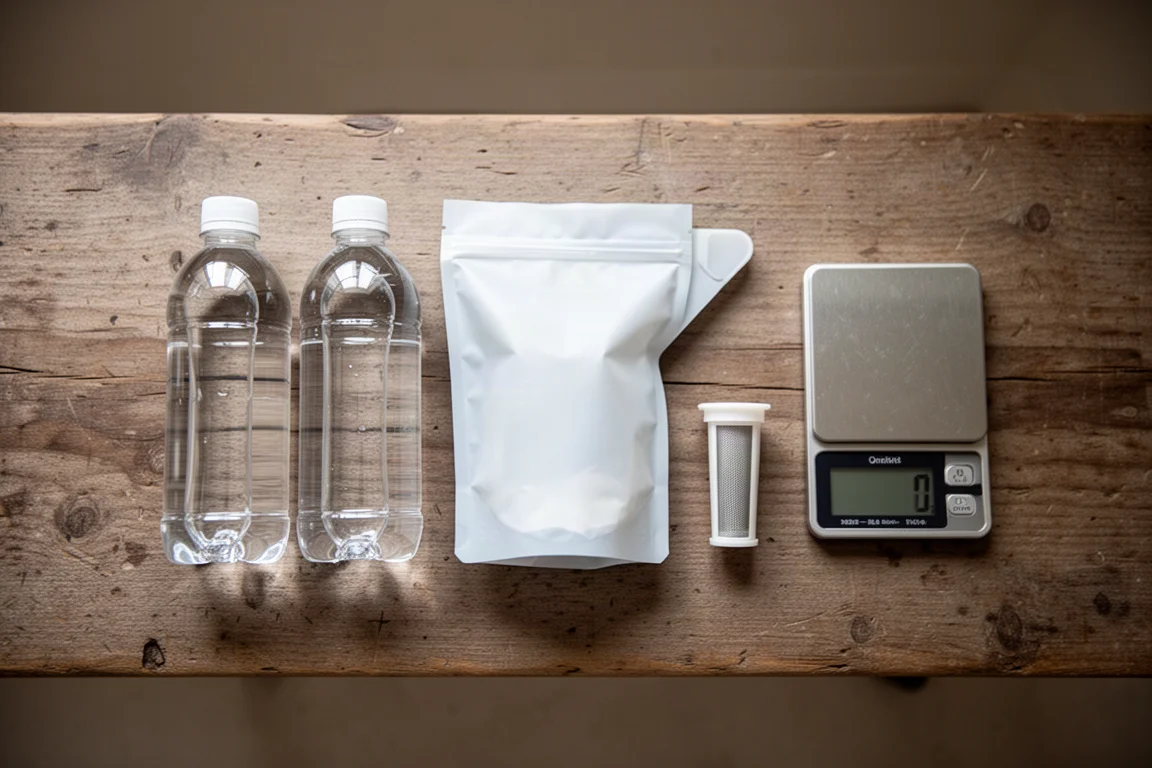
If you are counting ounces, this is the setup that wins, and the trade-offs are mostly about comfort rather than capability. You give up the convenience of sipping from a tube, and you take on the routine of filling a bottle and keeping it upright while you filter.
Best Pump Filter: Katadyn Hiker
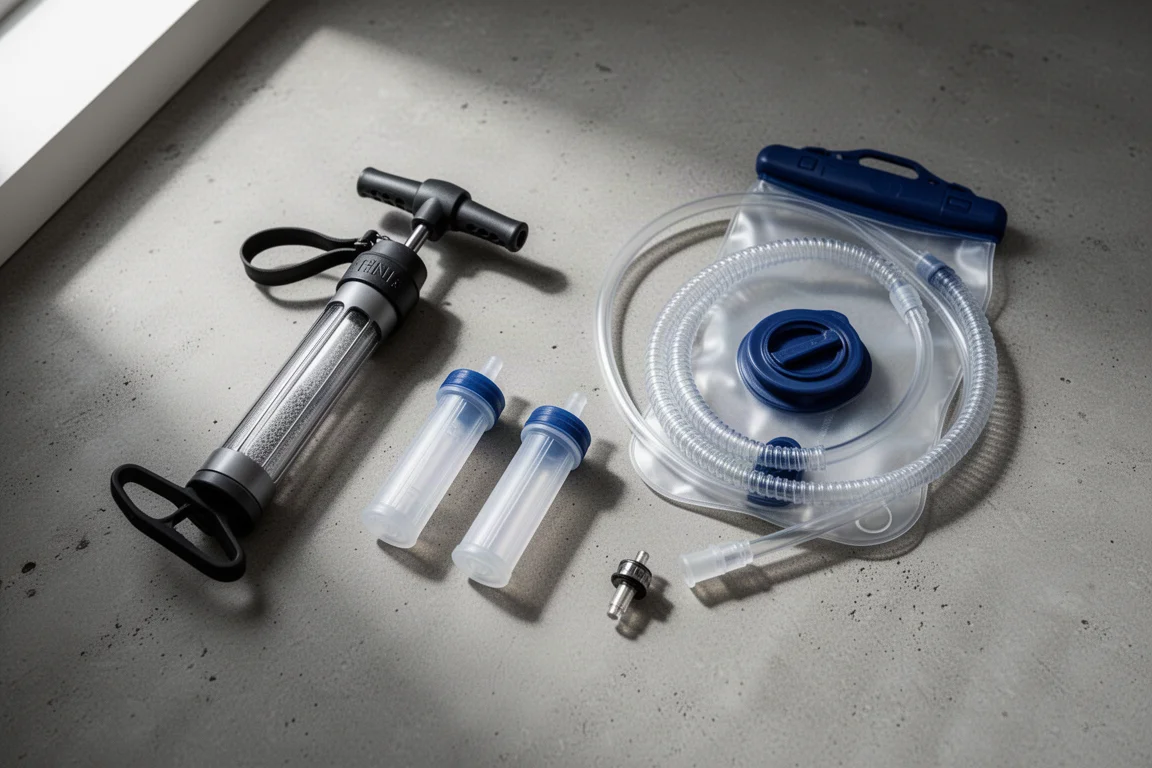
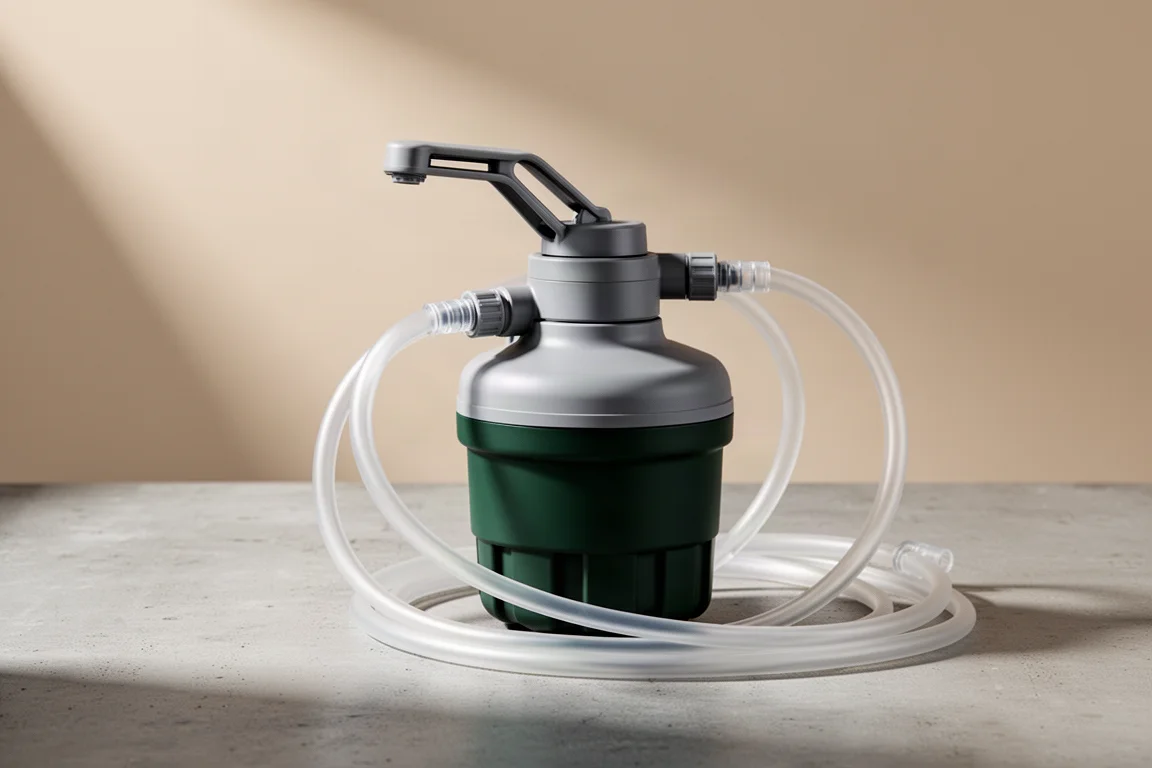
The Katadyn Hiker is the natural partner for a bladder. Most bladders have a quick-release valve, and a pump filter plugs straight into it without opening the bladder itself, so you are not wrestling a wet reservoir back into your pack.
Filtering with a pump is also easier to manage in practice. There is no bottle to balance on a flat surface, no risk of it tipping mid-filter, and no caps to keep track of. The trade-off is the pumping itself, which becomes tiring when you are treating a large volume of water, and the fact that you generally stay at the water source while you filter rather than carrying dirty water with you.
The Hiker has some clear long-term advantages. Its carbon core improves the taste of the water, though it can clog after heavy use, and its glass media filter is less susceptible to freezing than a hollow-fibre design. It is rated for 750 litres, or roughly 200 gallons, before replacement. It costs about $64.
Simplifying Bladder Filtering: CamelBak Hydrolink
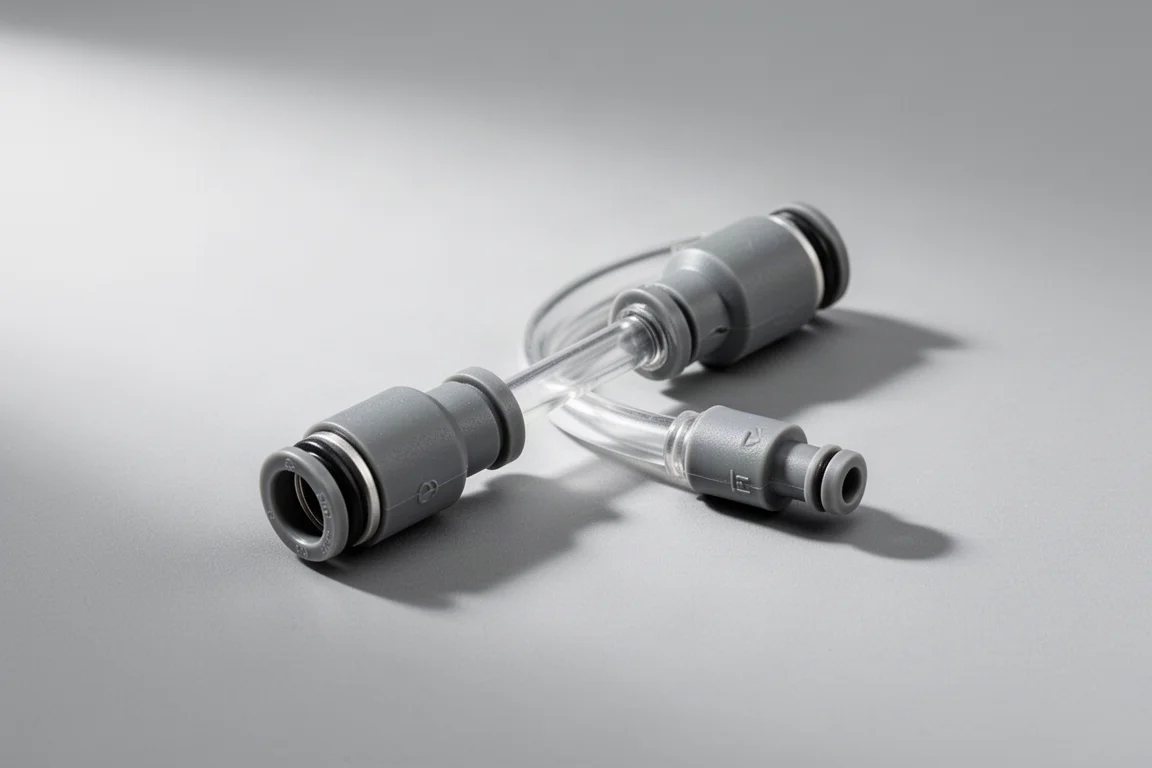
The CamelBak Hydrolink is a small, inexpensive adapter that solves the biggest complaint about filtering into a bladder. It connects a pump filter to the drinking tube, so you can pump directly into the bladder while it stays inside your pack. At about $8, it removes most of the hassle of the pump-and-bladder combination.
There are two caveats. You cannot tell how much water you have pumped in, though counting pump strokes gives a workable estimate of roughly 50 strokes per litre. You also cannot see how much water is already in the bladder before you start, which can lead to overfilling.
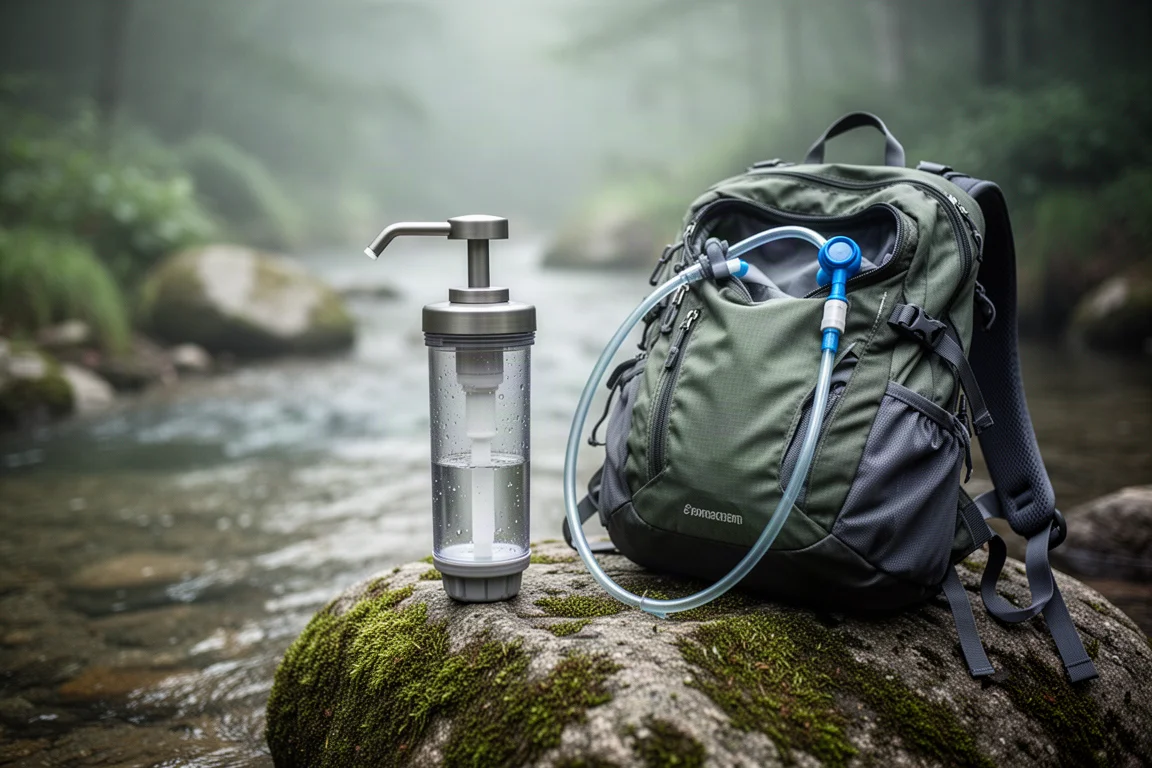
Even with those limitations, the adapter makes a bladder setup far more practical for anyone who prefers drinking from a tube while walking. It is the kind of small accessory that decides whether a system feels smooth or frustrating.
Bladder vs Bottle: Which Carry Style Fits Your Hike
The carrying question and the filtering question are linked, and it helps to decide them together.
If you hike long days and drink often, a bladder keeps water within reach and encourages steady hydration. Pair it with a pump filter and, ideally, an adapter, and you get easy sipping plus filtering that does not require emptying your pack.
If you count every ounce and want to keep costs down, bottles plus a squeeze filter are lighter and cheaper. You accept more awkward access, whether that means reaching around your pack or strapping a bottle to your chest, in exchange for a total setup that weighs about 10 ounces less in comparable configurations.
Buying Advice: Matching a Setup to Your Trip
Start with how you like to drink. If you prefer sipping from a tube and you want better tasting water, a bladder with a pump filter is the combination that delivers it, and the adapter removes most of the awkwardness. Expect a heavier kit: a bladder, the Katadyn Hiker, and the CamelBak adapter come to about 19.7 ounces together.
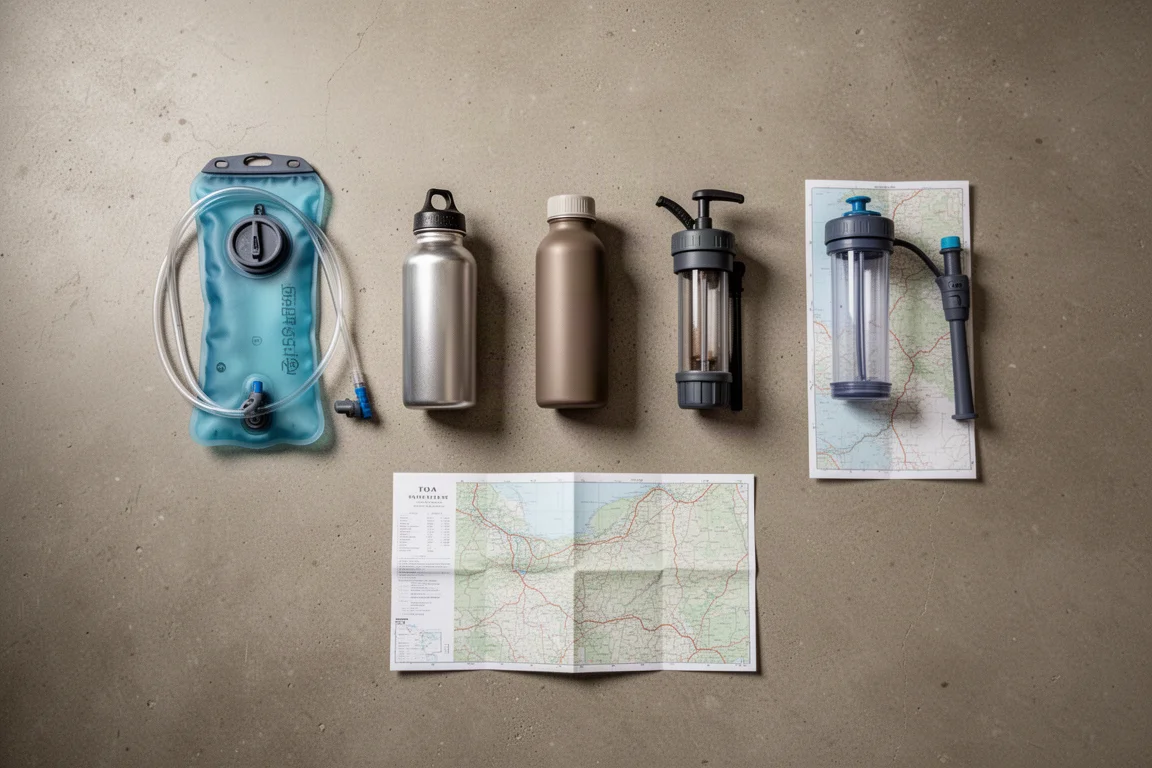
If you do not mind carrying a bottle on your chest or at your side, and you want to save both weight and money, a squeeze filter is the better match. A Sawyer Mini with two bottles and a scoop bag comes in at 9.7 ounces, and the Sawyer Squeeze adds a little more capability for about $30.
There is no single correct answer here. The setup that suits you is the one whose weaknesses you can live with on the trips you actually take.
Conclusion
Bladders and bottles each solve a different half of the problem, and the same is true of squeeze and pump filters. Bladders make drinking effortless but filtering awkward; bottles make filtering simple but drinking less convenient. Squeeze filters are lighter, cheaper, and flexible about where you filter; pump filters are easier to manage at the source, kinder to water taste, and better suited to bladder systems.
Choose the combination whose drawbacks bother you least, and the rest of the trip takes care of itself.
Further reading
Related Reviews
Backpacking Water Treatment
Best Backpacking Water Treatment Options: Filters, Drops, UV, and Boiling Compared
A practical look at five trail water treatment options, from squeeze filters and gravity systems to chemical drops and straw filters, plus how to match a method to your hike.
Backpacking Water Treatment
Bladders vs Bottles: Choosing a Backpacking Water Filter That Fits How You Hike
Squeeze or pump, bladder or bottle? A practical look at four water treatment options for backpackers, with real weights, prices, and trade-offs.

Backpacking Gear
Building a 10 lb Base Weight: An Ultralight Backpacking Gear List
A practical walkthrough of the ultralight pieces behind a 10 lb base weight, from a 765 g pack and a roomy one-person tent to a full camp chair and a dependable water filter.