Backpacking Water Treatment
Bladders vs Bottles: Choosing a Backpacking Water Filter That Fits How You Hike
Squeeze or pump, bladder or bottle? A practical look at four water treatment options for backpackers, with real weights, prices, and trade-offs.
Introduction
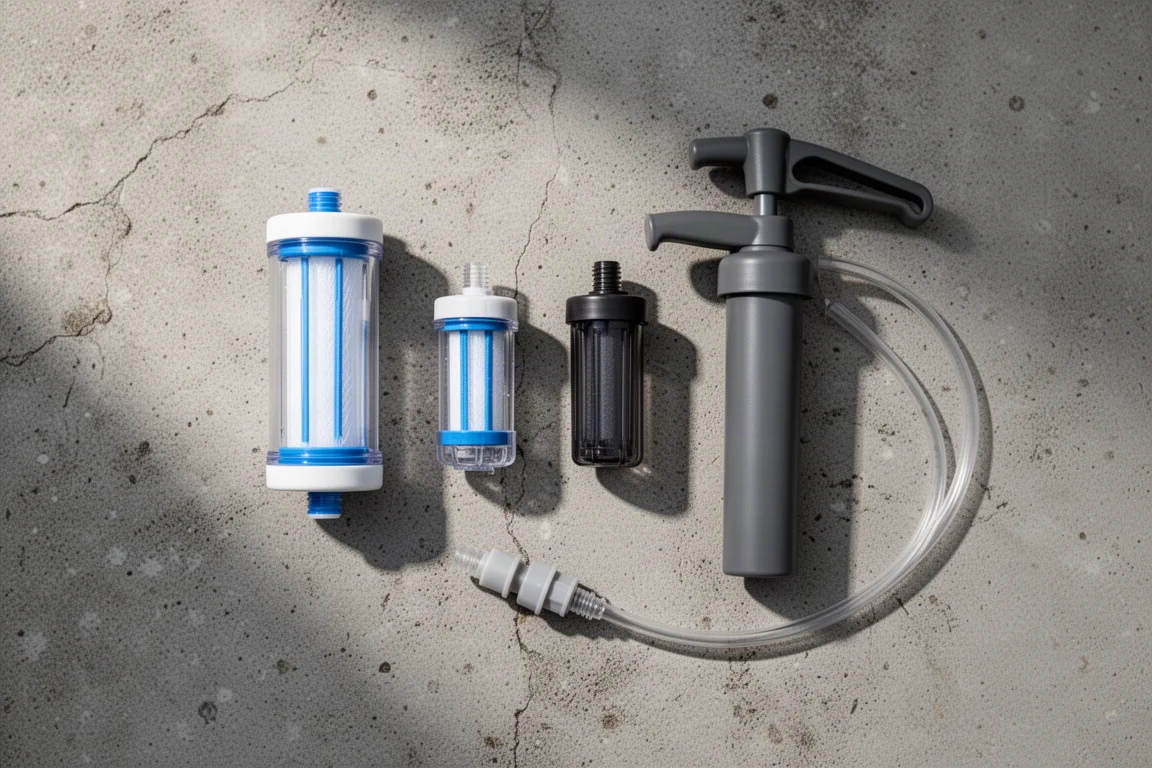
Backpacking water treatment tends to split into two camps. One is built around a squeeze filter and a pair of bottles. The other is built around a bladder and a pump. Both work, and both carry real compromises that only show up after a few days on trail.
This guide covers four pieces of gear that represent those two approaches: the Sawyer Squeeze and Sawyer Mini on the squeeze side, the Katadyn Hiker on the pump side, and the CamelBak Hydrolink, a small adapter that removes one of the biggest practical objections to carrying a bladder.
The aim here is not to crown a single winner. It is to show where each option is genuinely strong, and where it will frustrate you at the water source.
What Actually Matters When Choosing
Five things decide whether a water setup feels effortless or irritating: how easily you drink, how easily you filter, how much it weighs, how long the filter lasts, and what it costs.
Access comes first. A bladder keeps water on your back with a drinking tube always within reach, which makes steady hydration almost automatic. Bottles mean reaching around to the side of your pack, and a shoulder-strap holster solves the reach problem while putting a large bottle against your chest.
Filtering works in the opposite direction. Bladders are awkward to hold upright and squeeze, and they often have to be dug out from under the rest of your gear. Bottles are easier to manage, which is why squeeze filters and bottles have become such a common pairing.
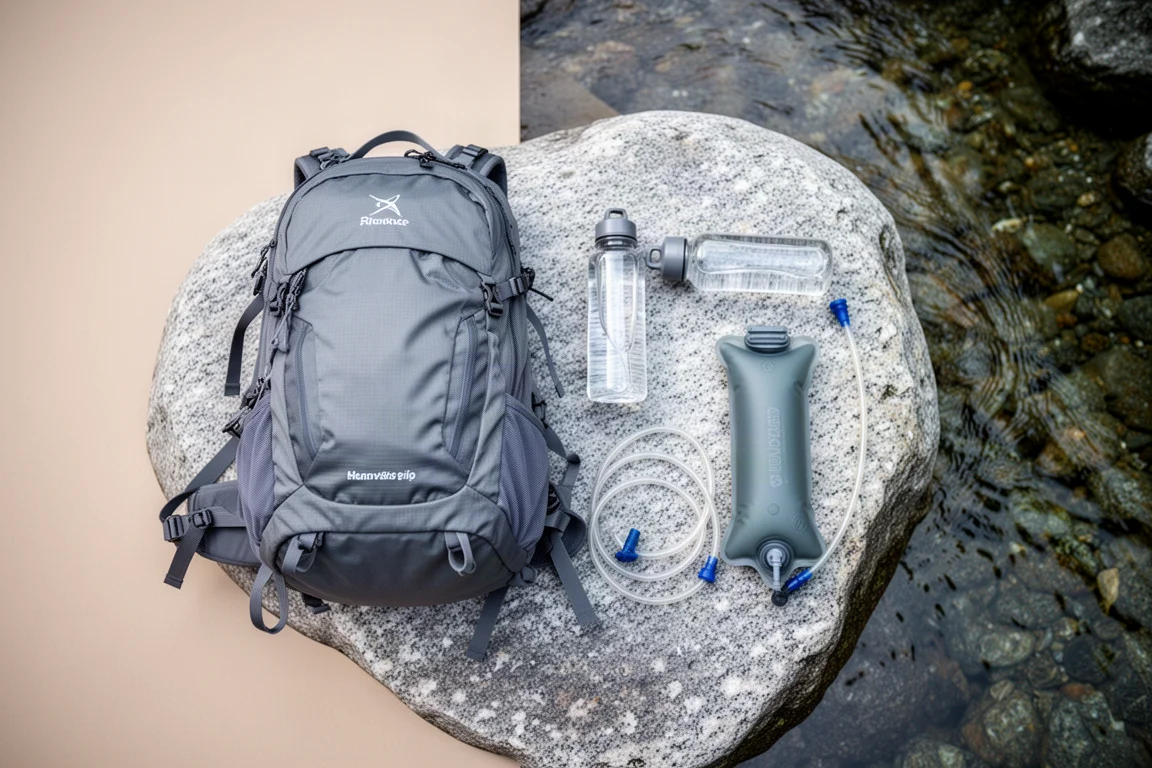
Weight, filter life, and price round out the picture. Squeeze setups are lighter and cheaper. Pump setups add weight in exchange for easier filtering, no bottle caps to keep track of, and, in the case of the Katadyn Hiker, better-tasting water.
Squeeze Filter for Bottle Users: Sawyer Squeeze
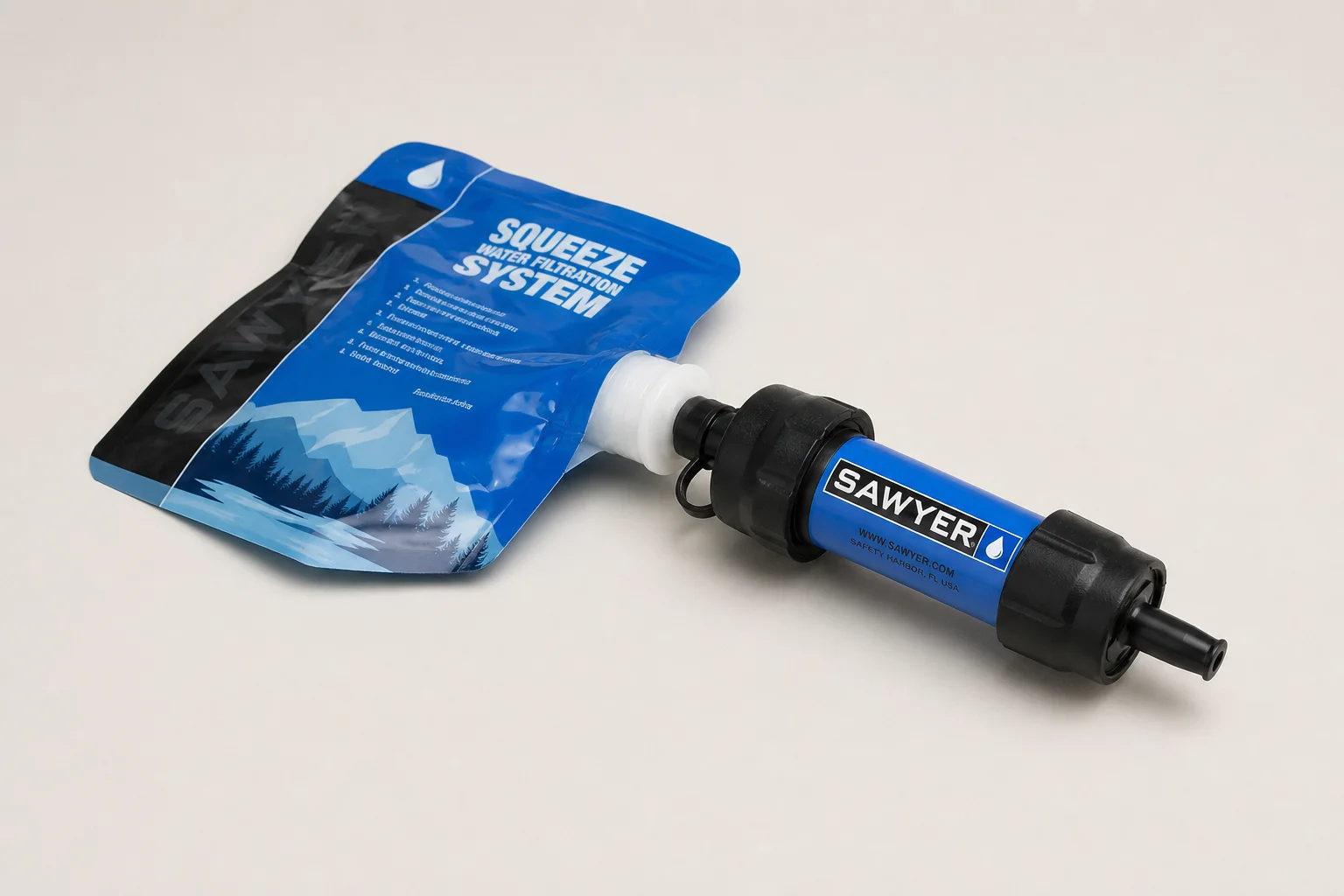
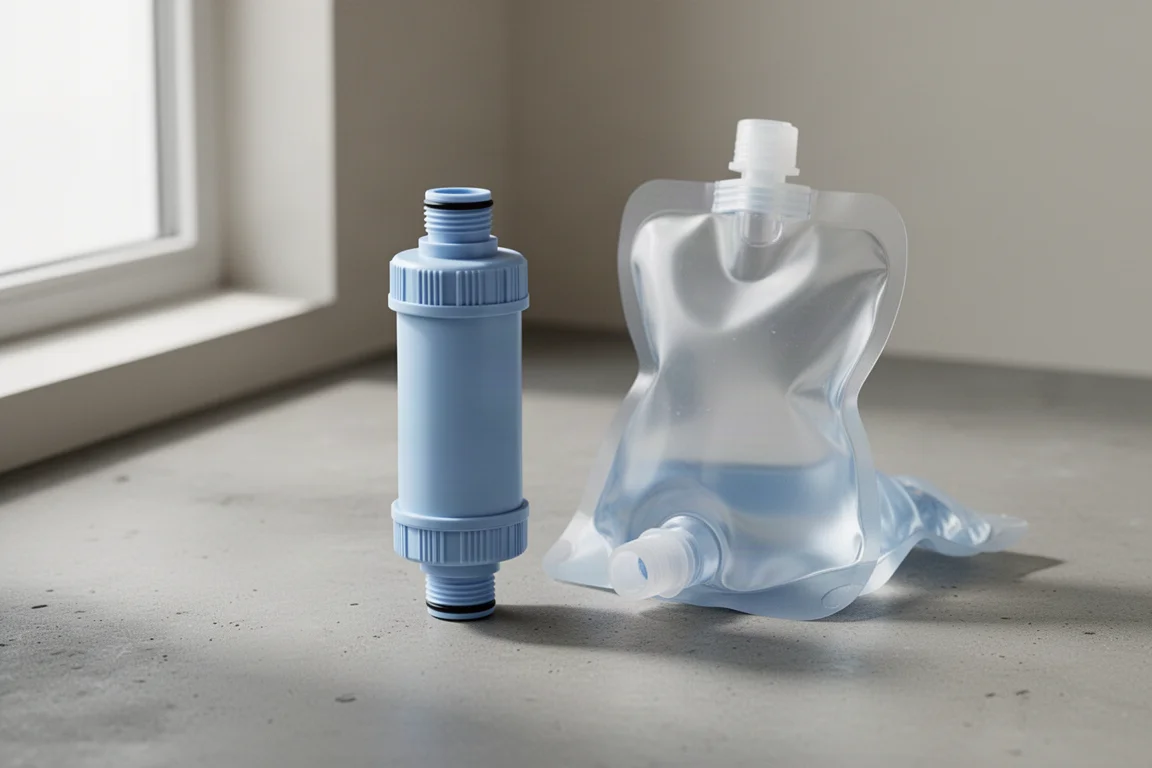
Sawyer Squeeze is the classic squeeze filter. It threads directly onto standard bottle threads, so a single bottle becomes both your dirty-water container and your drinking bottle, and the filter itself adds very little weight to your pack.
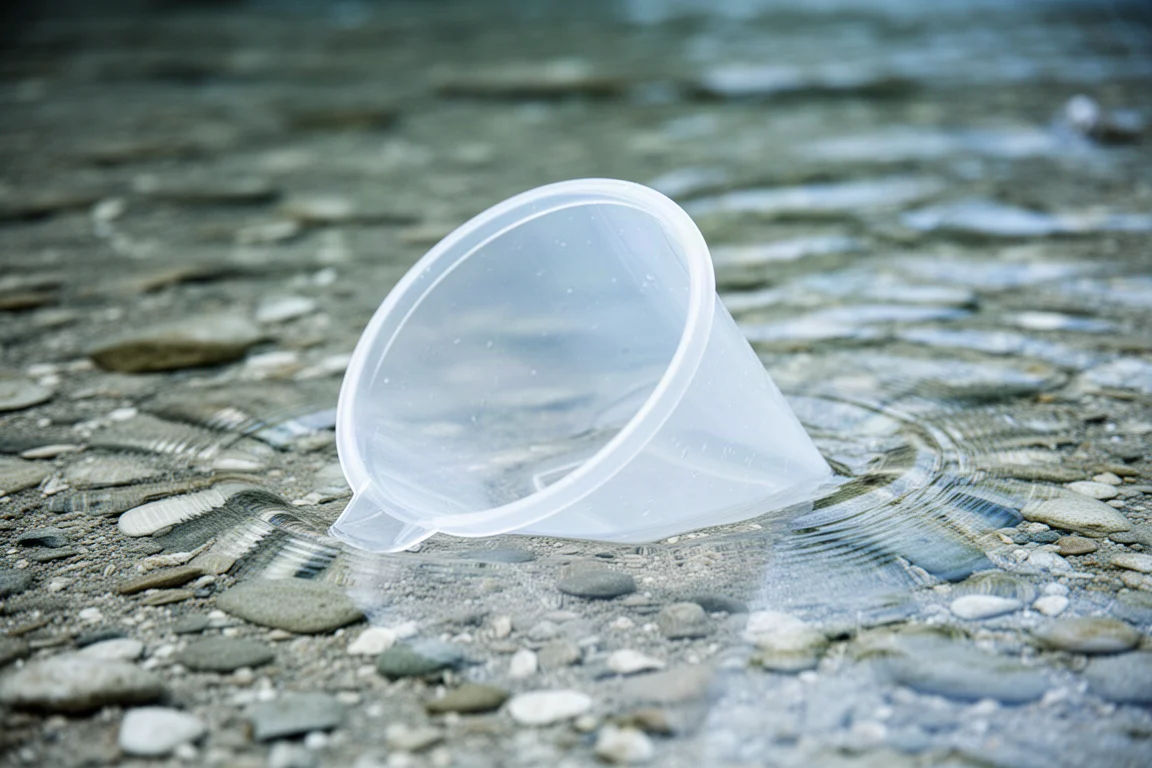
The catch is filling. The pouch that ships with squeeze filters is difficult to fill from a stream or lake. A wide-mouth scoop bag makes that job far easier, and it also lets you scoop dirty water, carry it with you, and filter later instead of standing at the water source.
Filter life is the other consideration. Sawyer states the filter can be cleaned indefinitely by backflushing. There is no carbon core, so it will not improve the taste of questionable water, and if the filter freezes it should no longer be trusted.
Lightest Option: Sawyer Mini
Sawyer Mini follows the same idea in a smaller, lighter, and less expensive package. It uses the same screw-on bottle approach and the same backflushing maintenance, which makes it a sensible starting point for anyone counting ounces or building a kit on a budget.
The trade-offs mirror the Squeeze: the supplied pouch is awkward to fill, there is no carbon stage to soften the taste of the water, and freezing compromises the filter.
In a complete kit, a Sawyer Mini paired with two bottles and a wide-mouth scoop bag comes to roughly 9.7 oz in total. That is the lightest setup in this comparison, and it is the main reason bottle-based filtering has become so popular.
If you want the lightest possible carry and you do not mind managing a bottle, this is the straightforward choice.
Pump Filter for Bladder Users: Katadyn Hiker
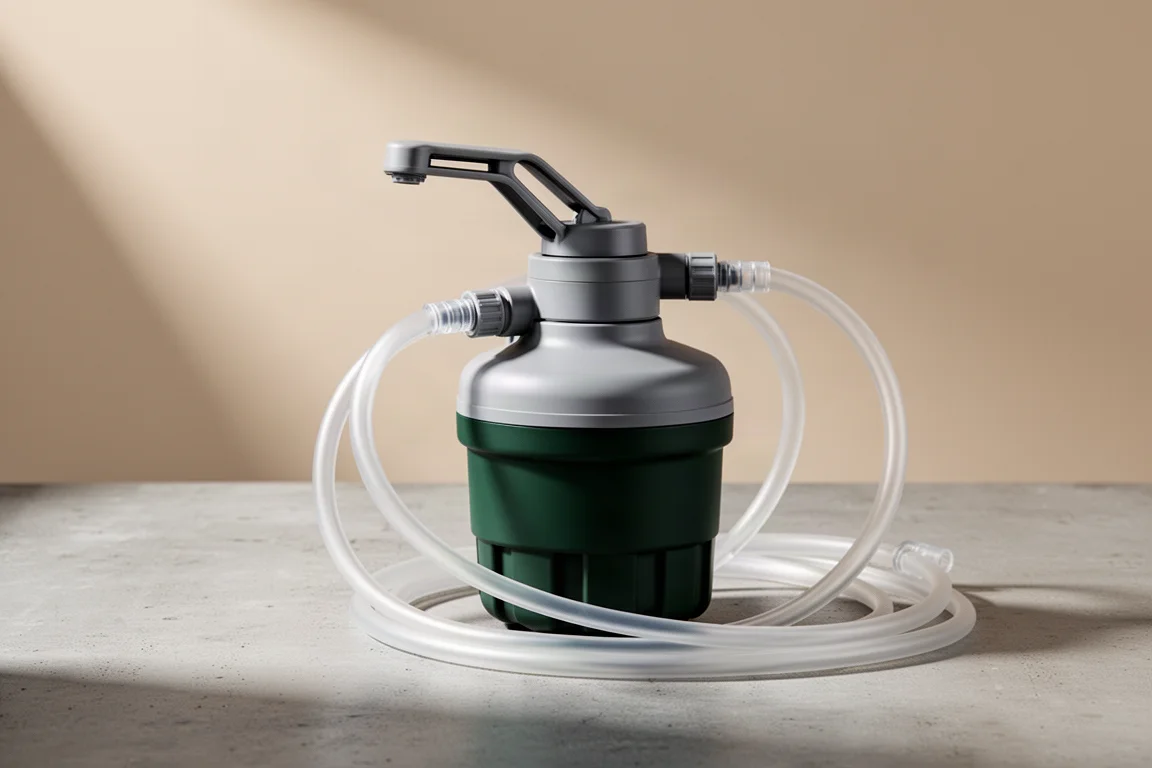
Katadyn Hiker takes the other approach. A pump filter draws water straight from the source, so you do not need to find a flat surface for a bottle, you do not risk a bottle tipping over mid-filter, and there are no bottle caps to keep track of.
The Hiker is rated for 750 L, or about 200 gallons, before the cartridge needs changing. Its carbon core is what improves the taste of the water, though that same carbon can clog after heavy use. The glass media inside is also less susceptible to freezing than a hollow-fibre squeeze filter.
The obvious cost is effort. Pumping a large volume of water is tiring, and with a pump you typically stay at the water source while you filter rather than carrying dirty water with you. The system is heavier too: a bladder, the Hiker, and the CamelBak adapter together come to about 19.7 oz, roughly 10 oz more than the bottle-based setup.
The Adapter That Makes Bladders Practical: CamelBak Hydrolink
The main complaint about bladders is filtering. A reservoir buried under gear is hard to reach, hard to hold upright, and hard to squeeze.
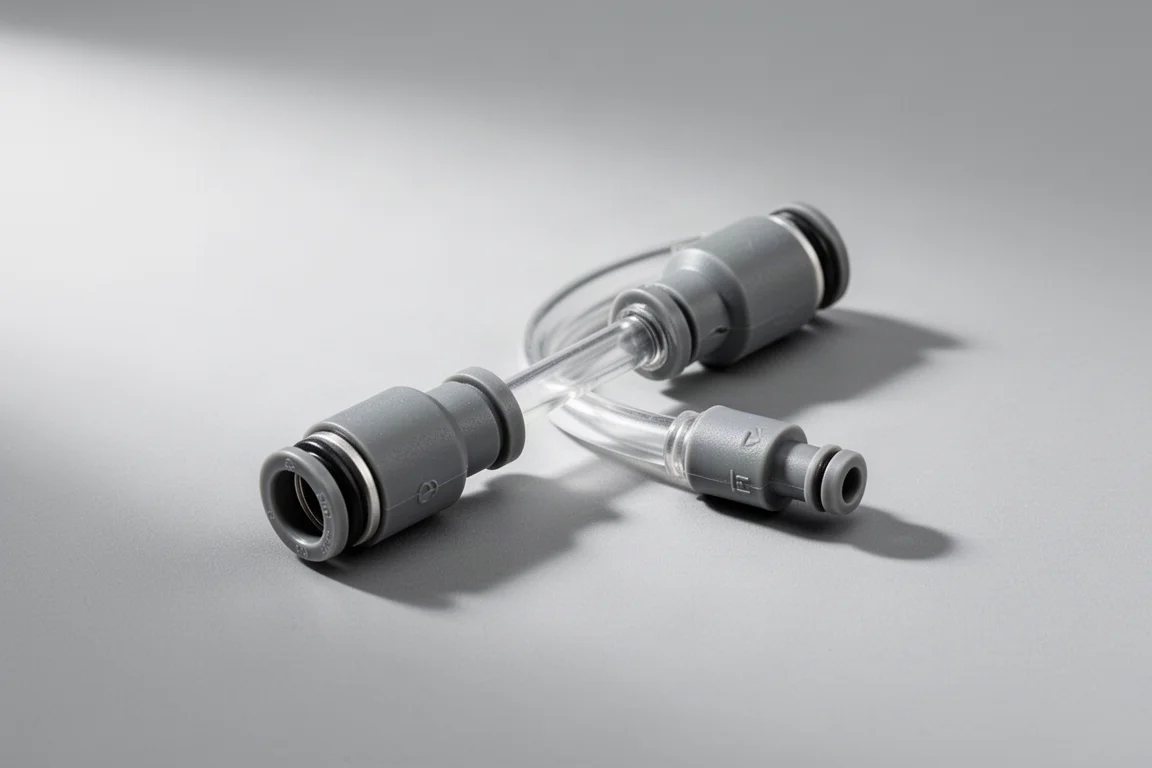
CamelBak Hydrolink addresses the access half of that problem. It is a small adapter that lets you pump straight into the drinking tube, so the bladder can stay in your pack while you fill it. Most bladders use a quick-release valve that a pump can plug into directly, and the Hydrolink removes even the need to open the reservoir itself.
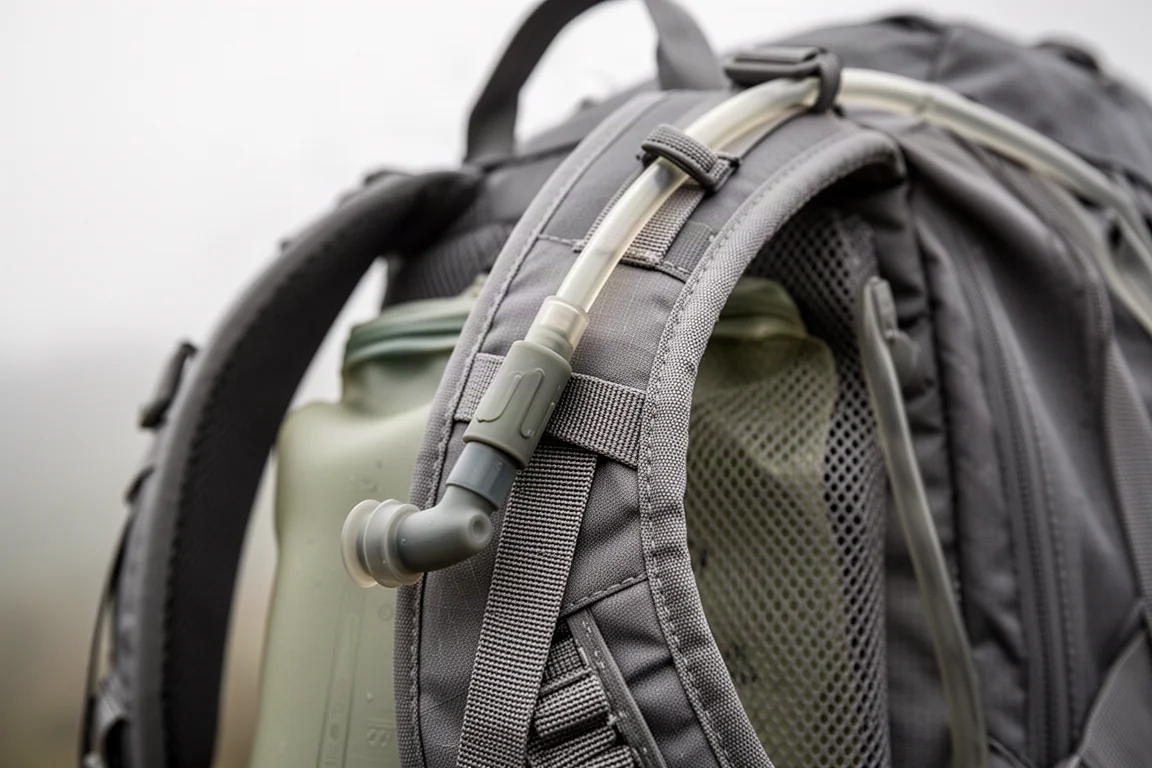
The limitation is measurement. You cannot easily tell how much water you have pumped, and you cannot see how much is already in the bladder, which raises the risk of overfilling. Counting pump strokes is a workable fix: roughly 50 strokes fills about a liter.
Weight, Cost, and Filter Life Compared
The numbers make the trade-off clear. A Sawyer Mini with two bottles and a scoop bag weighs about 9.7 oz, with the filter at around $20 and the bag at about $20 more. A bladder-based pump setup weighs about 19.7 oz, with the Katadyn Hiker at about $64, a Hydrapak bladder at about $33, and the Hydrolink adapter at $8. A Sawyer Squeeze sits between the two squeeze options at about $30.
Filter life rewards different priorities. The Katadyn Hiker is rated for 750 L and needs cartridge replacement, while Sawyer states its filters can be backflushed indefinitely. The Katadyn’s carbon core improves taste and its glass media tolerates cold better. The Sawyer filters are lighter and cheaper, but offer no taste improvement and should not be trusted after freezing.
Buying Advice
Choose based on how you drink, not on which system happens to be trending.
If you want the lightest pack and the lowest cost, a squeeze filter with bottles is hard to beat. Plan for a wide-mouth scoop bag, because the pouch included with squeeze filters is the weakest part of the system, and add a shoulder-strap holster if reaching for a bottle bothers you.
If you know you drink more consistently from a bladder, the pump route is worth the extra 10 oz. The Katadyn Hiker adds taste improvement and better cold tolerance, and the CamelBak Hydrolink removes the need to pull the reservoir out of your pack, which is the single biggest practical objection to bladder-based filtering.
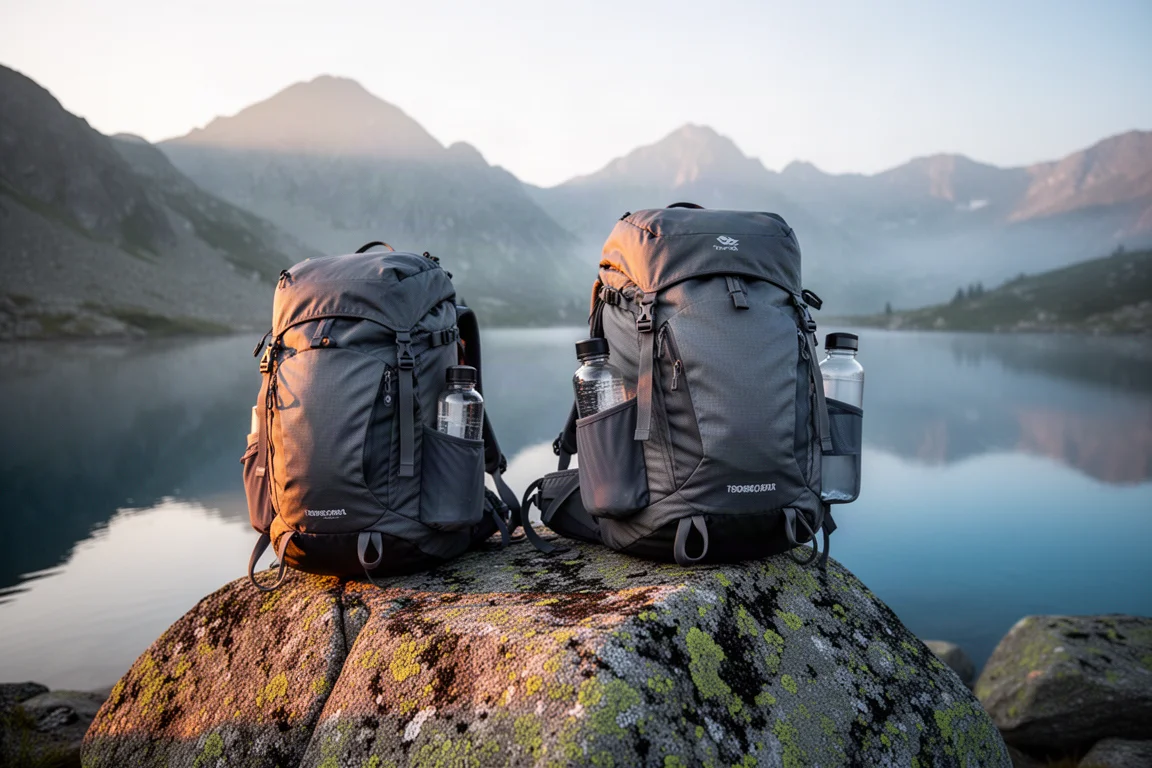
Either way, the deciding factor is usually access. A setup you actually use at every water source will serve you better than a lighter one you avoid.
Conclusion
Bladders versus bottles, and squeeze versus pump, is not a question with one correct answer. Squeeze filters paired with bottles are lighter and cheaper. Pump filters paired with bladders are more convenient to drink from and, with a carbon core, produce better-tasting water. Match the system to how you actually hike and hydrate, and either approach will do its job well.
Further reading
Related Reviews
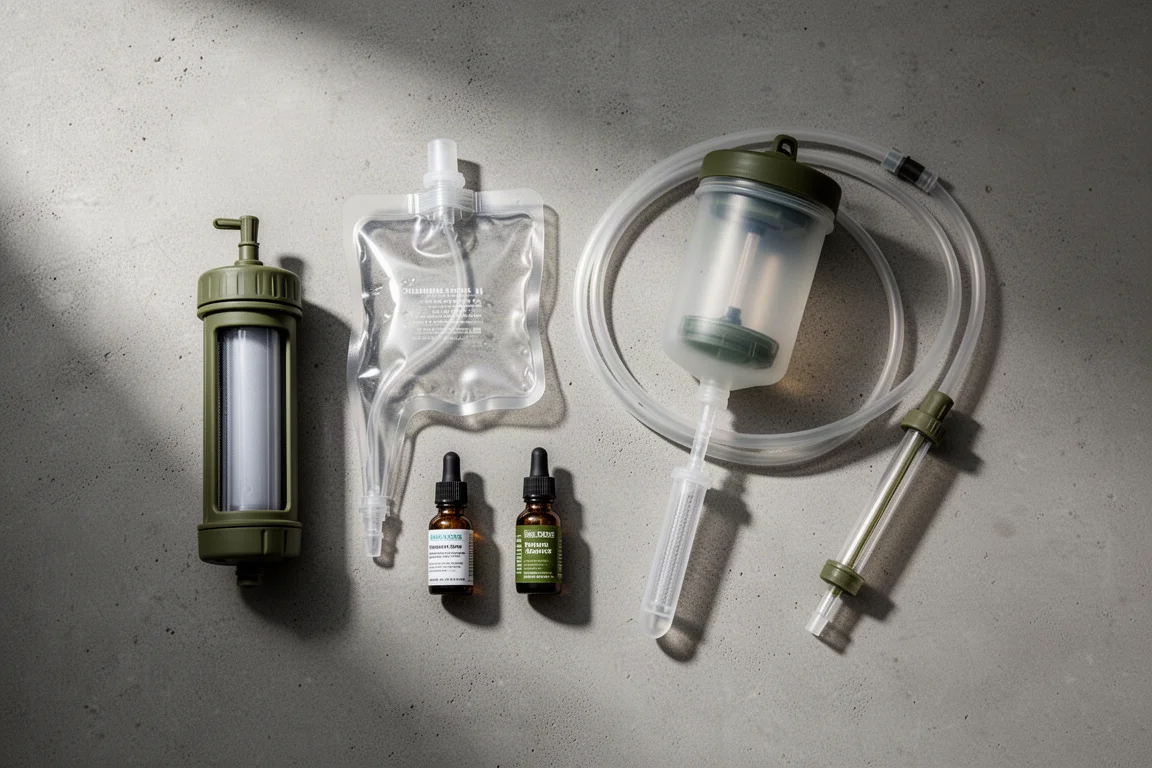
Backpacking Water Treatment
Best Backpacking Water Treatment Options: Filters, Drops, UV, and Boiling Compared
A practical look at five trail water treatment options, from squeeze filters and gravity systems to chemical drops and straw filters, plus how to match a method to your hike.
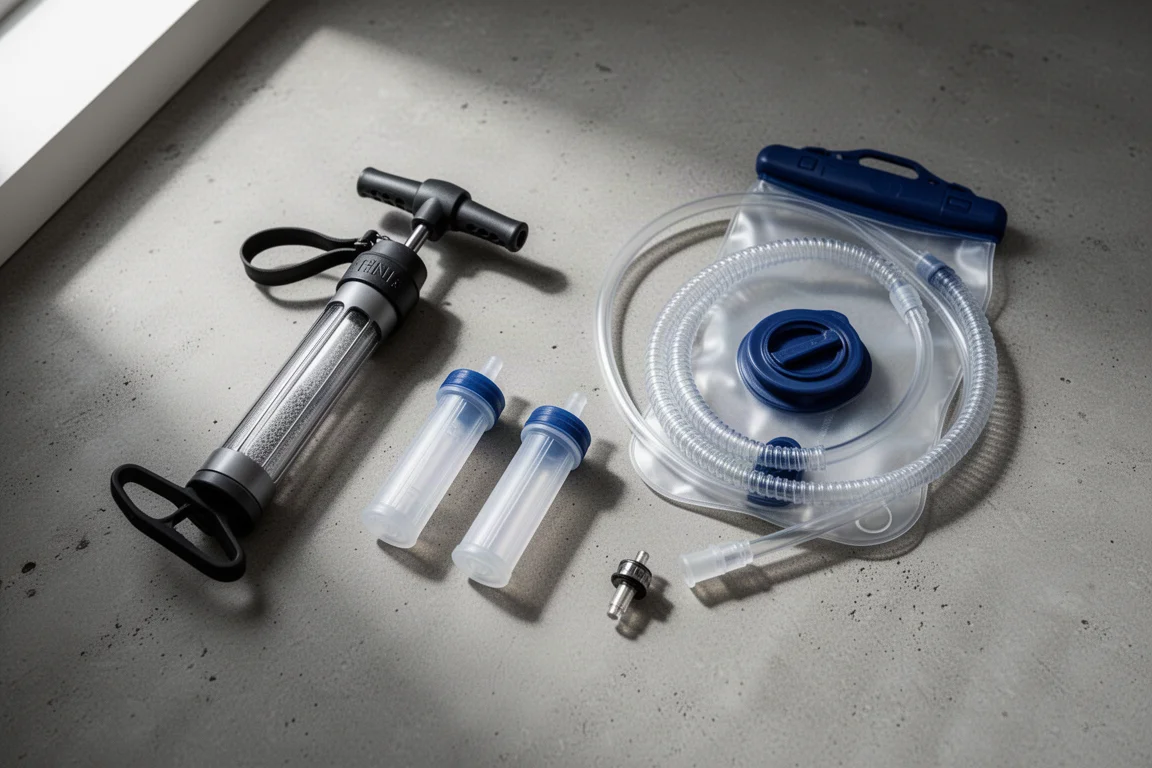
Backpacking Water Treatment
Bladders vs Bottles, Squeeze vs Pump: Choosing a Backpacking Water Filter Setup
A practical comparison of bladder and bottle carry styles, with the Sawyer Squeeze, Sawyer Mini, Katadyn Hiker, and CamelBak Hydrolink.

Backpacking Gear
Building a 10 lb Base Weight: An Ultralight Backpacking Gear List
A practical walkthrough of the ultralight pieces behind a 10 lb base weight, from a 765 g pack and a roomy one-person tent to a full camp chair and a dependable water filter.