Touring Skis
Black Crows Camox Freebird Review: A Lightweight Touring Ski Built to Earn Turns
The Black Crows Camox Freebird pairs a paulownia core and carbon reinforcement with a shape that stays agile in tight backcountry terrain. Here is what to know before buying.
Introduction
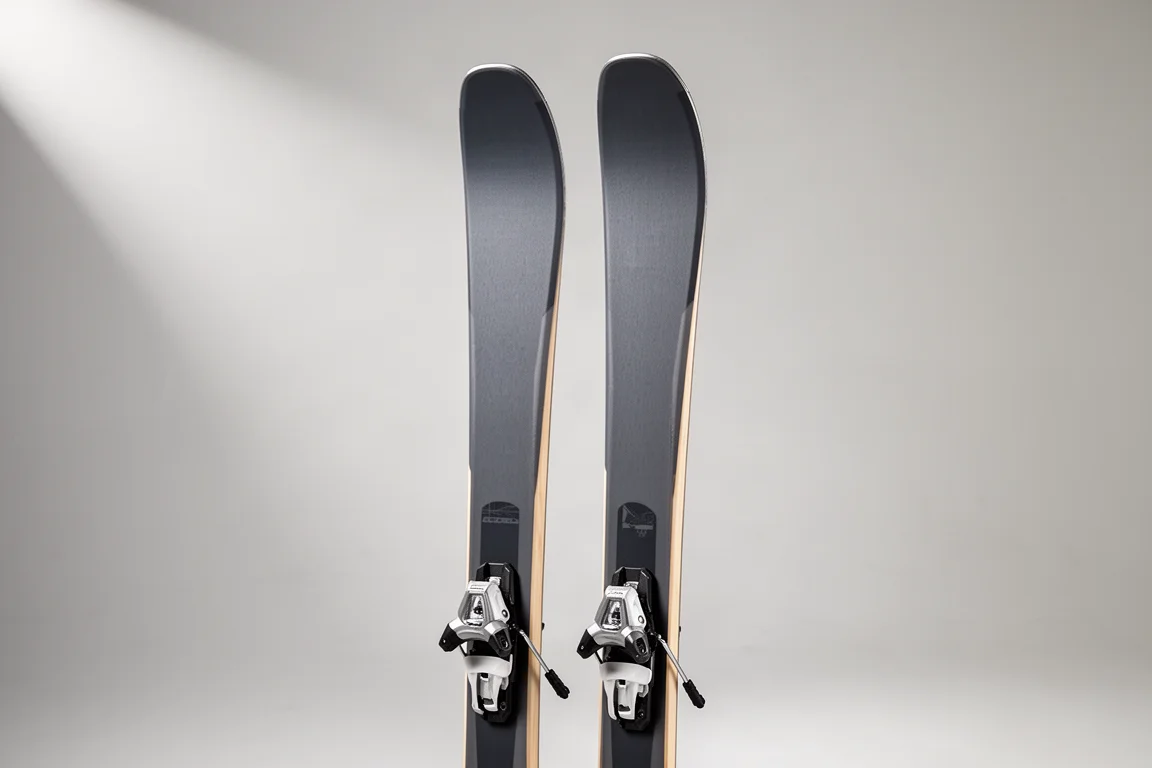
The Black Crows Camox Freebird sits squarely in the touring category. It is a ski built around the idea of leaving the lift line behind, and its construction points consistently in that direction: a light paulownia wood core, carbon fibre blended into the fibreglass layup, and a shape tuned for quick, confident turns in terrain that does not forgive hesitation.
It is also a genuinely versatile ski. The same platform is used from the east coast to the west coast and across a very wide range of snow conditions, which makes it an easier recommendation for skiers who would rather own one touring ski than a quiver.
Who the Camox Freebird Is For
This is a ski for people who want to earn their own turns. It suits skiers who prefer to avoid lift lines, head out early, and climb for their descent rather than ride a chair.
At roughly 95 mm underfoot it is narrow enough to be practical in more places than its backcountry focus might suggest. Skiers who like to skin up a groomer before the lifts open, then spin a few lift-served laps afterwards without switching skis, will find it perfectly appropriate for that routine. That said, it is not really a resort ski in the usual sense. The touring build and the binding choice it encourages are the whole point.

Its range is one of its strongest arguments. The Camox Freebird has been chosen and used successfully across a huge span of snow conditions and across very different regions, which means the decision is less about where you live and more about how you want to ski.
Main Strengths
The construction is the foundation of everything the Camox Freebird does well. The paulownia wood core keeps the ski light, and because paulownia is a less dense material, Black Crows adds a small amount of metal underfoot specifically for binding retention. That detail matters in the backcountry: a torn-out heel piece is a long walk home, and the metal mounting zone makes that outcome far less likely.
Carbon fibre is mixed into the fibreglass layer, which adds responsiveness and strength. A pure paulownia core can feel noodly underfoot, and the carbon gives the ski a more defined flex pattern without turning it into a plank. It is not the stiffest ski available, but it is decently stiff and predictable.
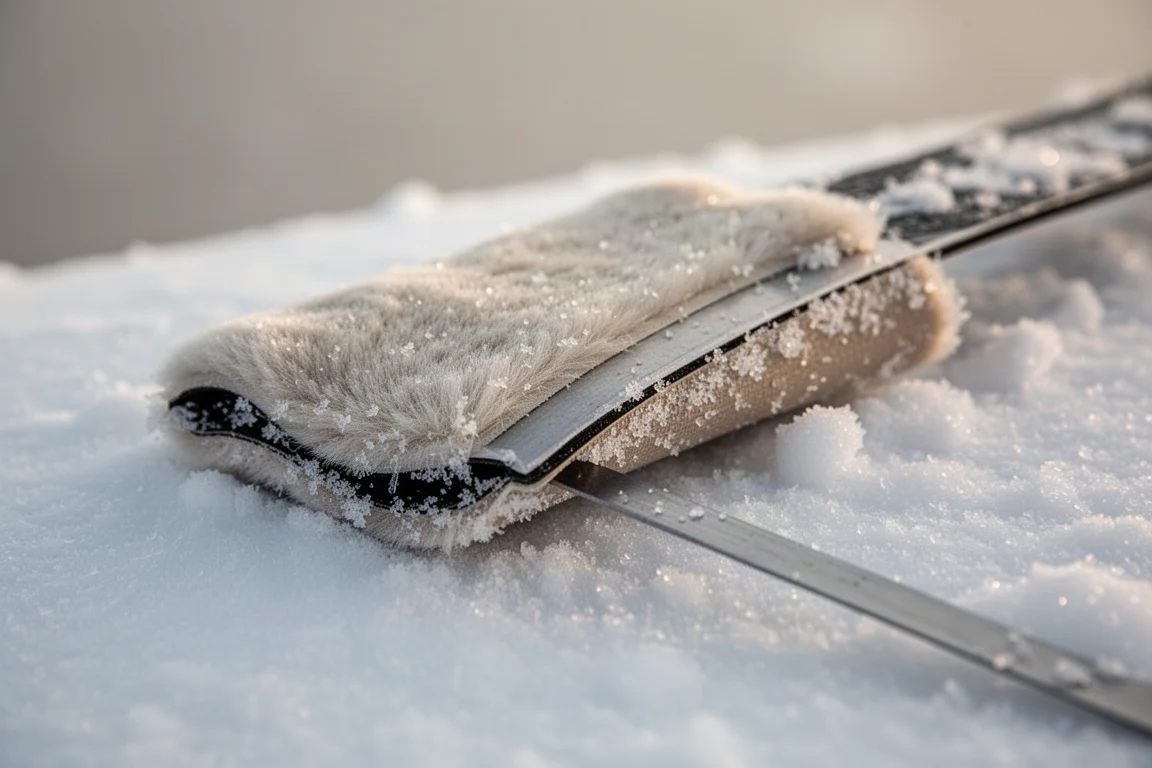
Light weight and a dependable flex matter most on long climbs and in variable snow, where a ski that feels vague underfoot costs energy on every turn.
How It Skis
The shape does a lot of the work. The Camox Freebird runs camber underfoot with rocker in the tip and tail, which keeps pressure on the edge through the middle of the turn while the rockered ends stay loose and easy to release.
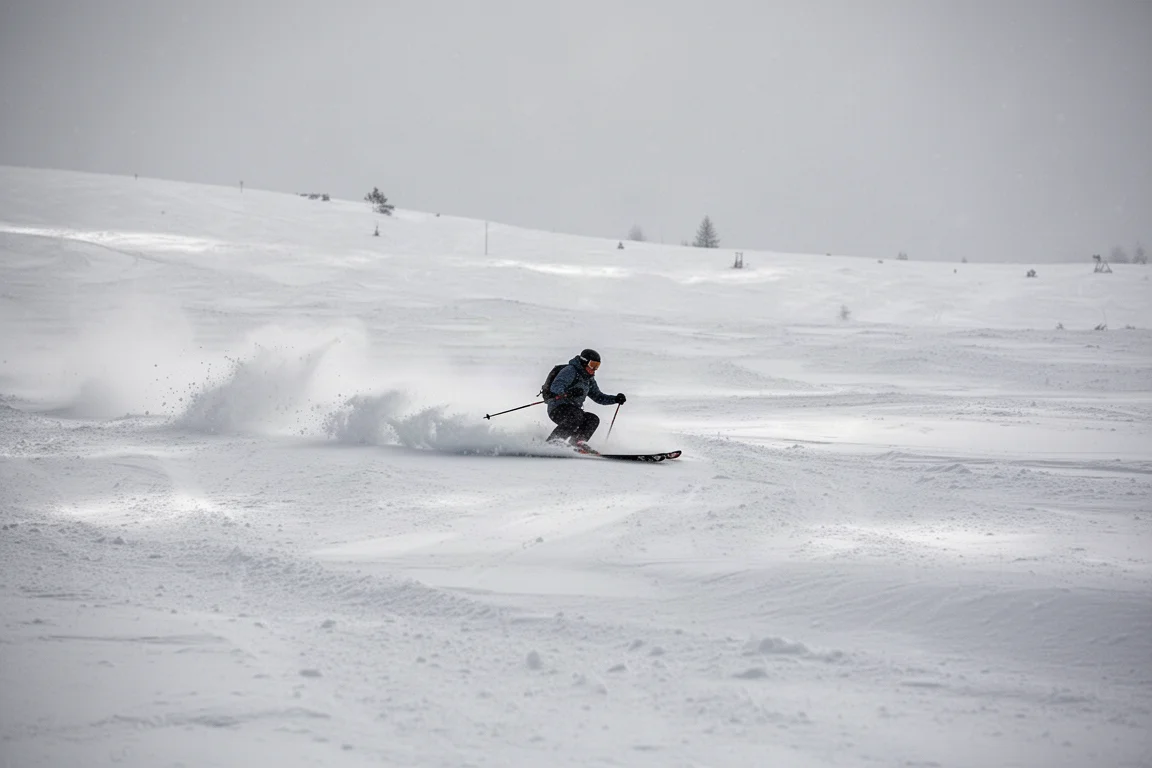
Black Crows also tapers the sidewall from a vertical profile underfoot to a full cap construction in the tip. The practical effect is that the tips and tails are less torsionally stiff than the middle of the ski. That makes turn entry and turn exit noticeably easier, and it is the main reason the ski feels agile in tight trees, narrow couloirs, and other technical terrain where you need the ski to move now rather than argue with you.
Underfoot, the vertical sidewall gives you a trustworthy section to stand on. The result is a ski that is lightweight on your feet but still stable when you commit to a turn.
Things to Consider Before Buying
The Camox Freebird is happiest when it is used the way it was designed to be used. It is a touring ski first, and skiers who spend most of their days on lifts should look elsewhere.
Total weight also depends heavily on your binding choice. Paired with a Kingpin 13, a setup comes in at just over 2,400 grams, which is on the heavier side for a pin binding on this ski. Going lighter is entirely reasonable and brings a complete setup closer to 2,000 grams.
Flex is another consideration. It is not the stiffest ski in the world, and heavier, more aggressive skiers may want more backbone. Most touring-focused skiers will find the balance of strength, stability, responsiveness, and playfulness to be the more useful trade-off.
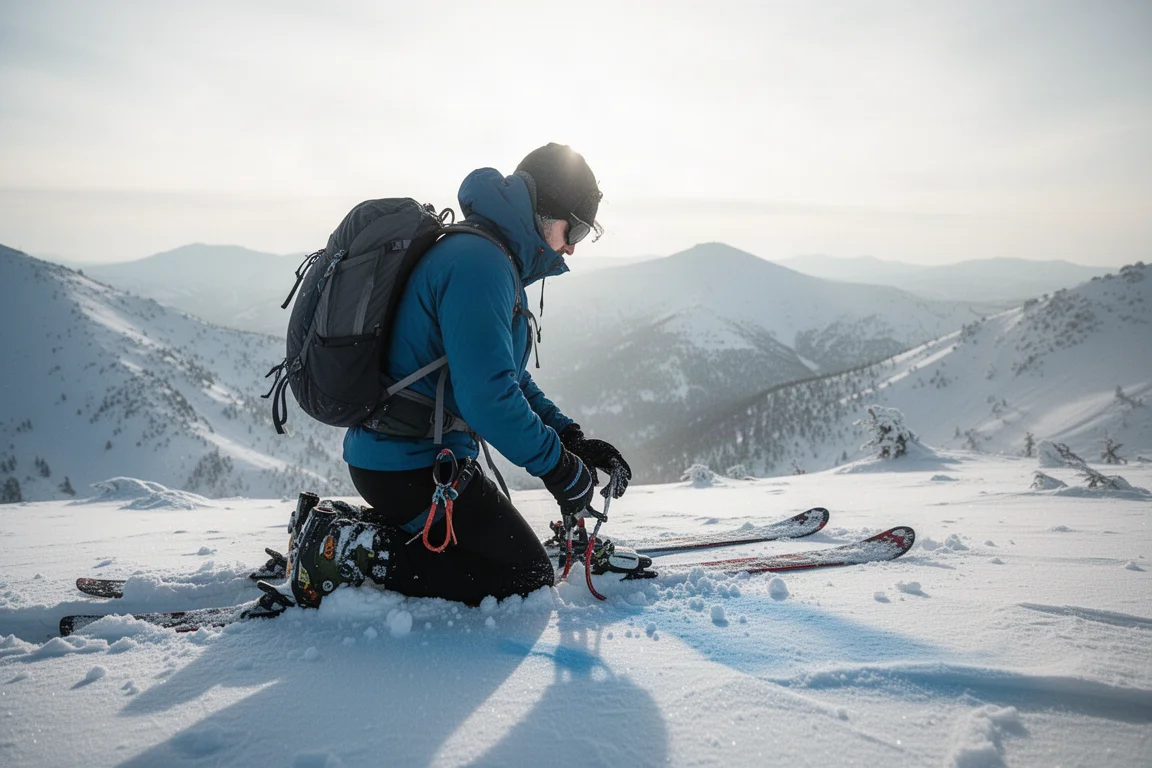
Finally, the ski rewards a skier who already knows how to move in the backcountry. Its easy turn release is a gift in tight terrain, but it is not a substitute for technique.
Binding and Setup Considerations
Because the core is light, the mounting zone was reinforced with metal, and that opens the door to a wide range of touring bindings. Lighter pin bindings suit the character of the ski and keep total weight down. Heavier options are workable, but they add grams you will feel on the skin track.
If you already own a touring binding you like, this is an easy ski to build around. If you are starting from scratch, it is worth deciding early whether you want the lowest possible weight or a little more downhill security, since that decision shapes the whole setup.
Buying Advice
Buy the Camox Freebird if you want a single touring ski that covers a lot of ground: different regions, different snow, different skier types. It is a strong fit for skiers who plan their days around climbing rather than chairlifts, and who value a ski that stays agile in technical terrain.
It is less compelling if you ski mostly in resorts, or if you are looking for a stiff, charge-hard freeride ski. In those cases the touring-focused build works against you rather than for you.
Think about your binding choice at the same time as the ski. The difference between a heavier pin setup and a lighter one is roughly 400 grams on your feet all day, and that is the kind of detail that decides whether a ski feels effortless on the way up.
Conclusion
The Black Crows Camox Freebird is a lightweight, versatile touring ski with a paulownia core, carbon reinforcement, a metal mounting zone underfoot, and a shape that makes turn entry and exit easy without giving up a trustworthy edge. It has been used successfully by a wide range of skiers across a wide range of conditions and regions. For the right skier, it is a confident choice.
Product link
View more details for Black Crows Camox Freebird
This product is mentioned in the review. Check the specifications, options, and compatibility before buying.
View more details for Black Crows Camox FreebirdFurther reading
Related Reviews
Touring Skis
Atomic Backland 100 Review: A Light Touring Ski That Still Holds an Edge
The Atomic Backland 100 is the lightest of Atomic's three 100mm-underfoot skis. Here is how its carbon build, tapered tail, and setup options shape the buying decision.
Touring Skis
Best Touring Skis 2025: Six Standout Picks from Lightest to Heaviest
A practical roundup of six touring skis, from featherweight uphill tools to confident freeride performers, with real weights, prices, and on-snow characteristics.
Touring Skis
Best Touring Skis 2026: Seven Lightweight Options Compared
Seven lightweight touring skis compared, from uphill-focused builds to descent-oriented shapes, with practical guidance on weight, flex, turn radius, and binding choice.