Bike Saddles
Bike Saddle Comfort Guide: Shape, Width, and Fit Explained
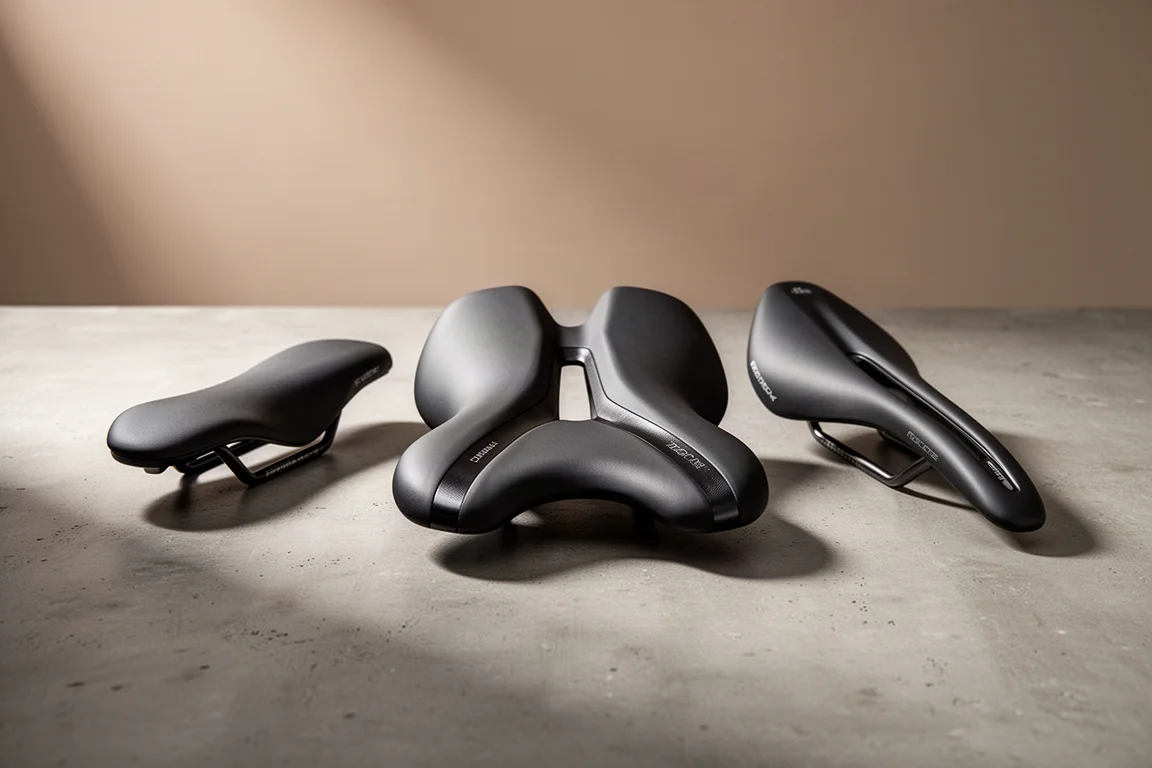
Saddle comfort depends on shape, width, padding, and position. Three saddles show how short-nose, channel-relieved, and narrower designs behave in practice.
Introduction
Few parts of a bike generate as much frustration as the saddle, and few are replaced as often in the hope that a different shape will finally solve the problem. In practice, saddle discomfort is rarely about one thing. Width, padding, saddle height, and reach all shape how a rider interacts with the saddle, and that interaction is often asymmetric rather than evenly distributed.
This guide looks at three saddles that represent three different answers to the same question. One is a short-nose design at a modest price, one is the shape that pushed the whole category toward shorter and wider profiles, and one is a narrower performance saddle with a central pressure relief channel. Together they show what changes when the saddle changes, and what stays the same.
How to Think About Saddle Comfort
The most useful starting point is a simple standard: the saddle should not be the loudest part of your awareness of your interaction with the bike. It should not be painful, and comfort does have a time value attached to it. A saddle that feels acceptable for thirty seconds on a fit rig can feel very different after four or five hours on the road.
Saddle discomfort tends to occur almost exclusively as the result of an asymmetric interaction with the saddle. That means the goal is not simply finding a softer or wider perch, but finding a shape that lets the pelvis sit level and load the saddle evenly.
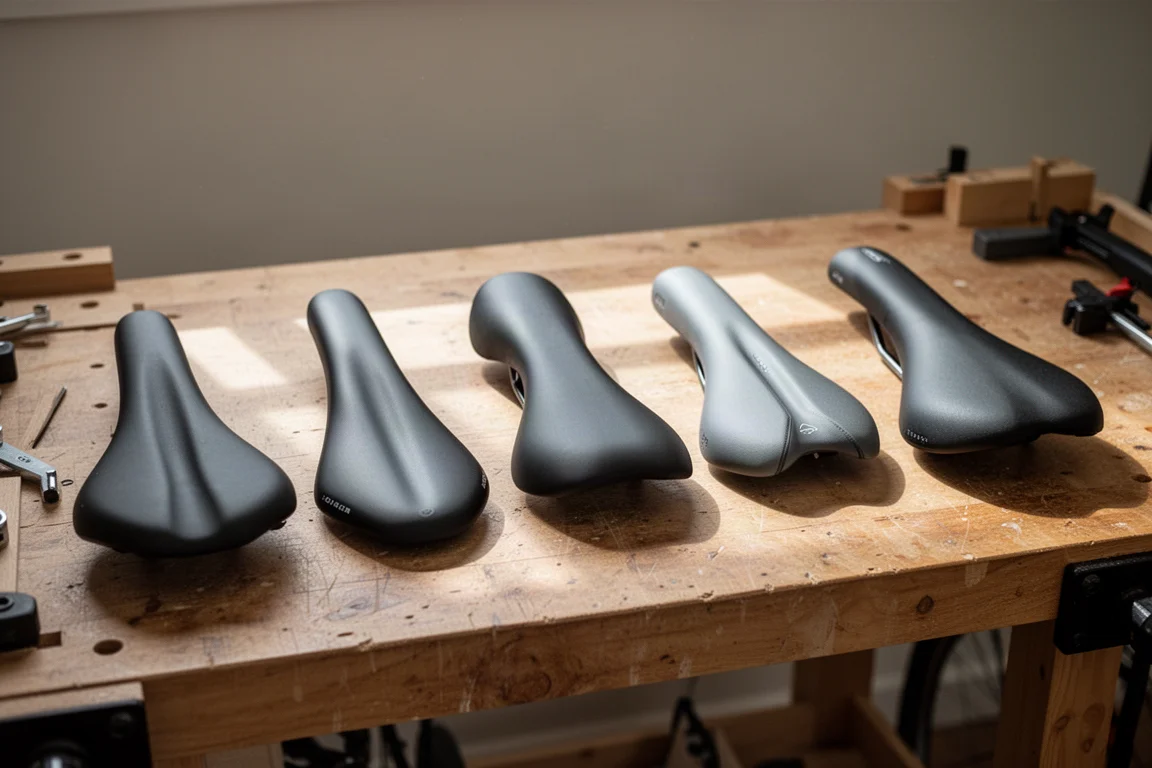
Saddle shapes are also partly a matter of legacy. Older profiles from decades past have stuck around, and the more recent changes came from two directions: the introduction of a pressure relief channel designed to relieve pressure from soft tissue in the perineum, and the move toward short-nosed designs, which largely came about to work around the 5 cm setback rule used in professional racing regulations.
Understanding those two ideas explains most of the modern market. A channel addresses soft tissue pressure, while a shorter nose allows an aggressive position without pushing the rider onto a long, unsupported front section.
Prime Primavera: A Short-Nose Starting Point
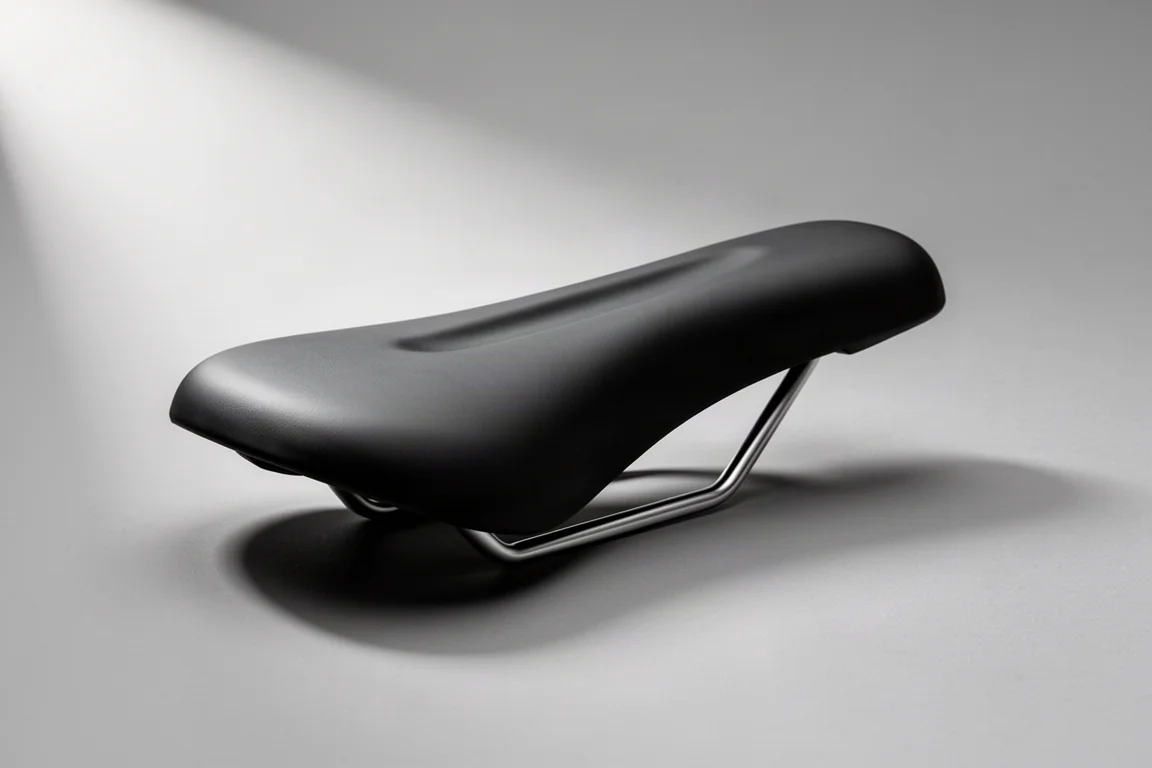
The Prime Primavera is a short-nose saddle around 140 mm wide, close in concept to the Specialized Power profile. It makes a sensible reference point because it sits in the middle of the current market: short enough to support an aggressive position, and narrow enough not to interfere with thigh clearance.
Under pressure mapping, this saddle produced a revealing pattern. There was twice as much pressure going through the nose as through the left wing, and twice as much through the left wing as the right. That kind of result is exactly why saddle discomfort can be so persistent. The rider is not sitting evenly, and the saddle is only part of the reason. Notably, this design does not include a central pressure relief channel.
Specialized Power: The Shape That Changed the Category
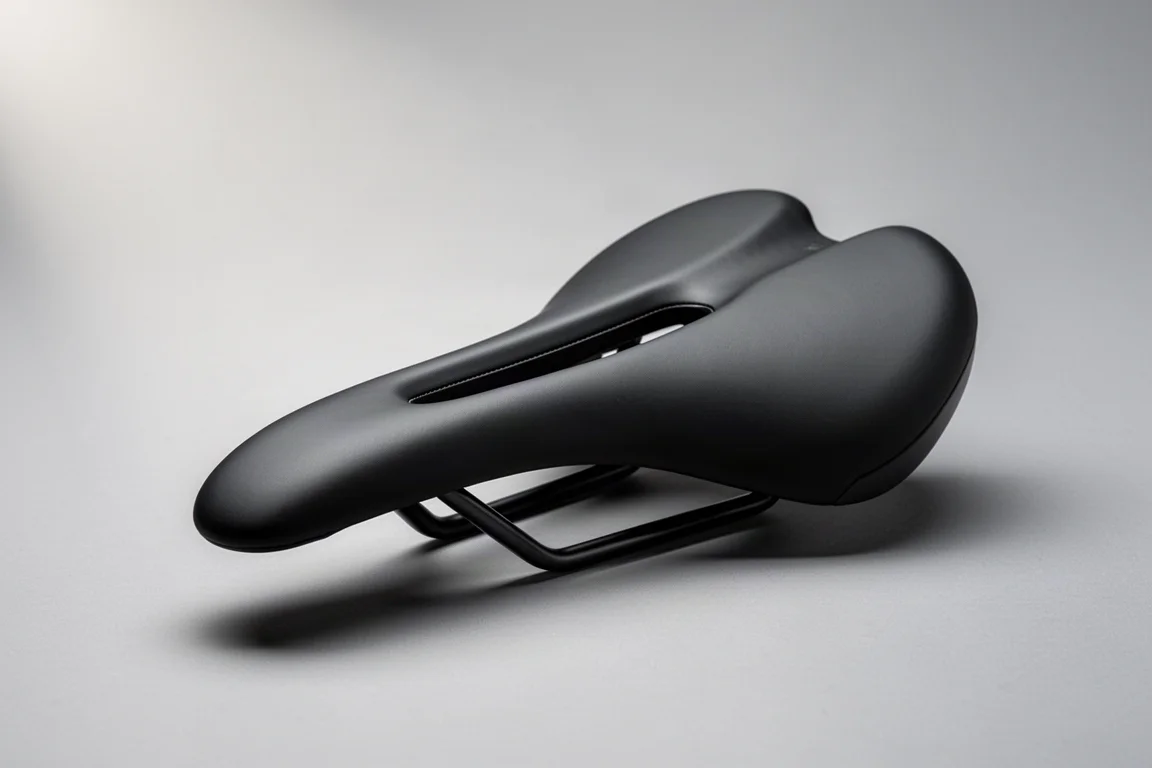
The Specialized Power has been one of the most influential saddles of the past decade. It popularized the short-nose profile, and it introduced the pressure relief channel intended to relieve pressure from soft tissue in the perineum. The range starts at around 140 mm wide and extends up to about 168 mm.
That upper end of the range is where the debate sits. Extremely wide saddles can prevent a rider’s thighs from clearing past the wings, and when clearance is compromised the pelvis tends to gravitate toward the nose, concentrating pressure exactly where it is least welcome. Width, in other words, is not automatically a comfort feature.
Selle Italia SLR Boost: Narrower With a Pressure Relief Channel
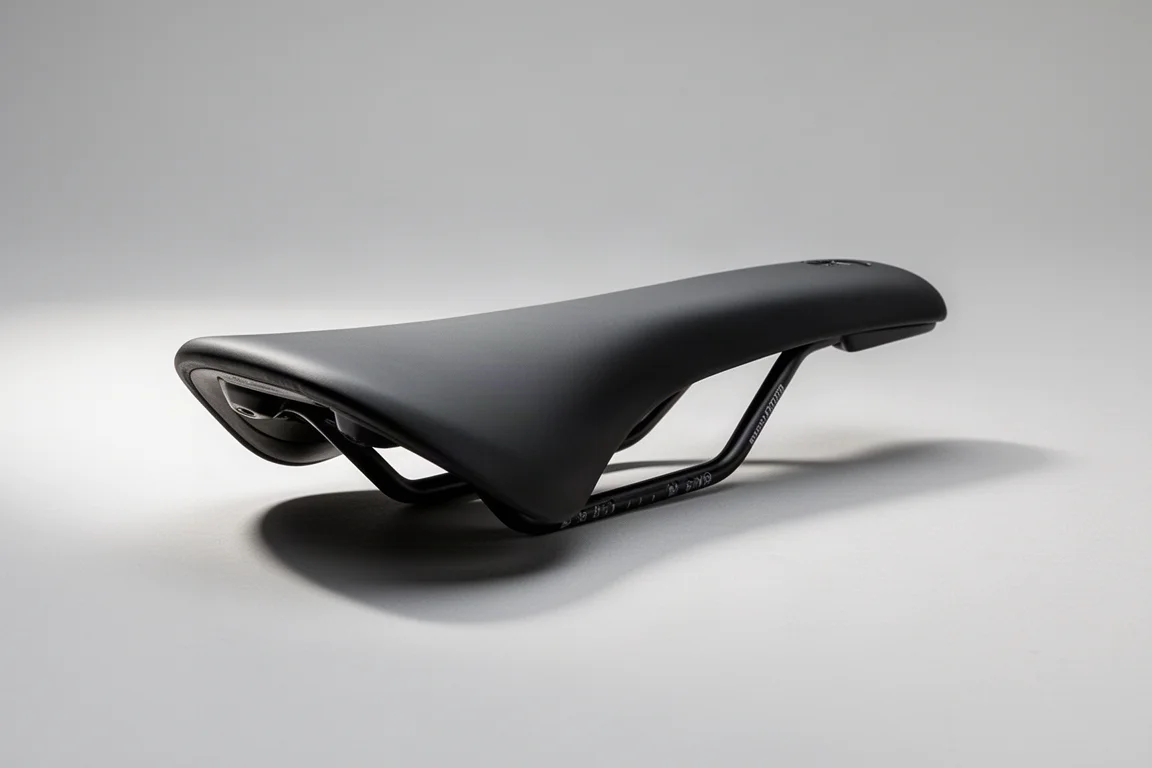
The Selle Italia SLR Boost is roughly 13 mm narrower than the Prime Primavera, and it adds a central pressure relief channel. Under pressure mapping it produced a more even spread of force across the rear of the saddle, which is a meaningful improvement in how the load is distributed.
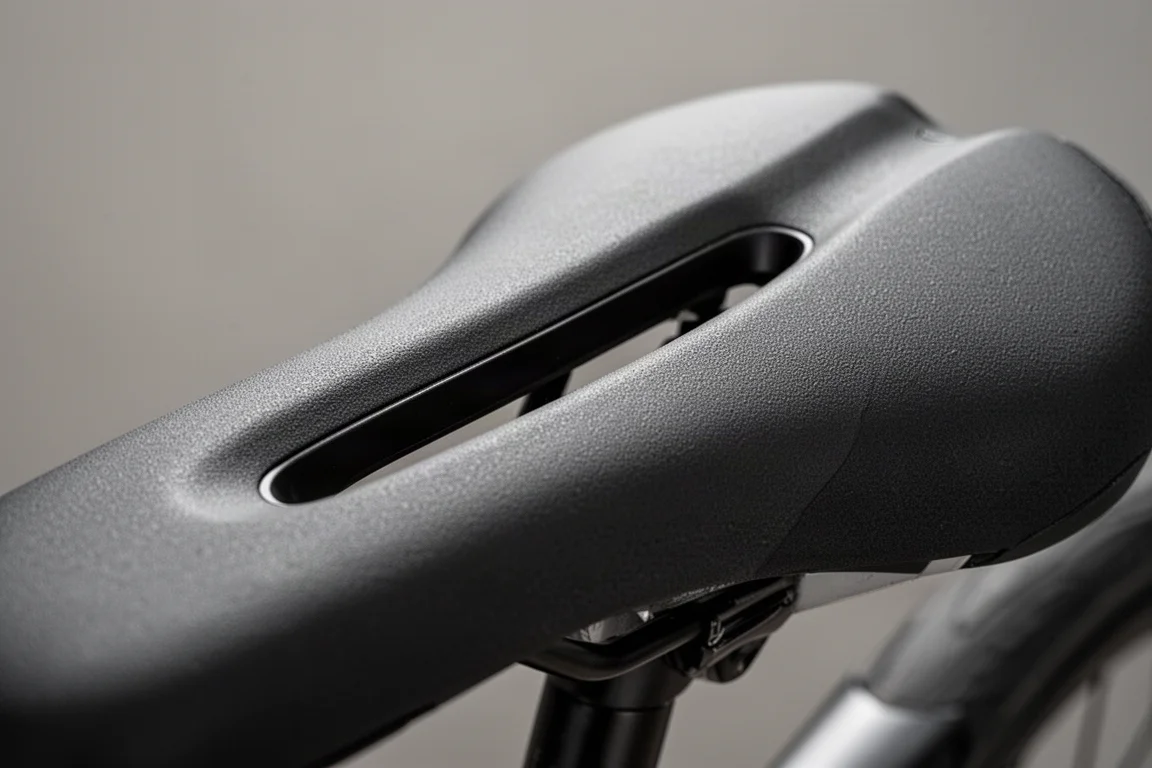
What it did not fix was a concentrated hotspot at the front of the saddle. That result is instructive: the remaining pressure was attributed to position rather than to the saddle itself, and it pointed to saddle height, reach, and drop as the more likely causes. A narrower saddle with a channel can improve distribution without resolving a fit problem that lives somewhere else entirely.
Width, Padding, and Common Misconceptions
Two ideas cause most of the confusion here. The first is that wider is safer. Measuring sit bones in a shop is a long-established practice, but it frequently results in a saddle that is too wide, and 168 mm is wider than most riders need. Saddle width interacts with thigh clearance just as much as it interacts with sit bone spacing.
The second is that more padding means more comfort. In practice, extra padding tends to destabilize the pelvis and give it room to rock, which can contribute to lower back pain and even foot discomfort. A relatively firm saddle is usually the better choice, particularly since most riders are already wearing padded shorts on a sport bike.
It is also worth knowing that the saddle is not always the source of the pressure. Something as distant as arch support in the shoes has been shown to reduce pressure through the saddle by up to 50 percent, which suggests that a narrow focus on saddle choice can miss the real cause.
Position First: Saddle Height and Reach
The two biggest drivers of saddle discomfort are excessive saddle height and excessive reach. Both push the rider into either an asymmetric interaction with the saddle or an over-reliance on the nose, and both tend to produce soft tissue problems.
The scale of the effect is significant. A 30 mm reduction in reach produced a 25 percent reduction in pressure through the nose of the saddle. That is a larger change than most saddle swaps will deliver.

Pressure mapping is best understood as a tool for evaluating positional changes rather than as a saddle selection system, despite how it is often presented. It is also worth remembering that a hotspot concentrated on one side usually points to the rider sitting off to one side, which can come from saddle position, reach, or drop rather than from the saddle itself.
Buying Advice: What to Try at Home
Some experimentation is reasonable without spending much money, provided the changes are small and reversible. Keep the saddle relatively level and flat, and make sure it is not set too high. If leveling the saddle introduces genital pressure, lowering it slightly is a sensible next step.
If you find yourself constantly sliding forward and loading the nose, shortening the stem by 10 mm, 15 mm, or even 20 mm is a reasonable experiment.
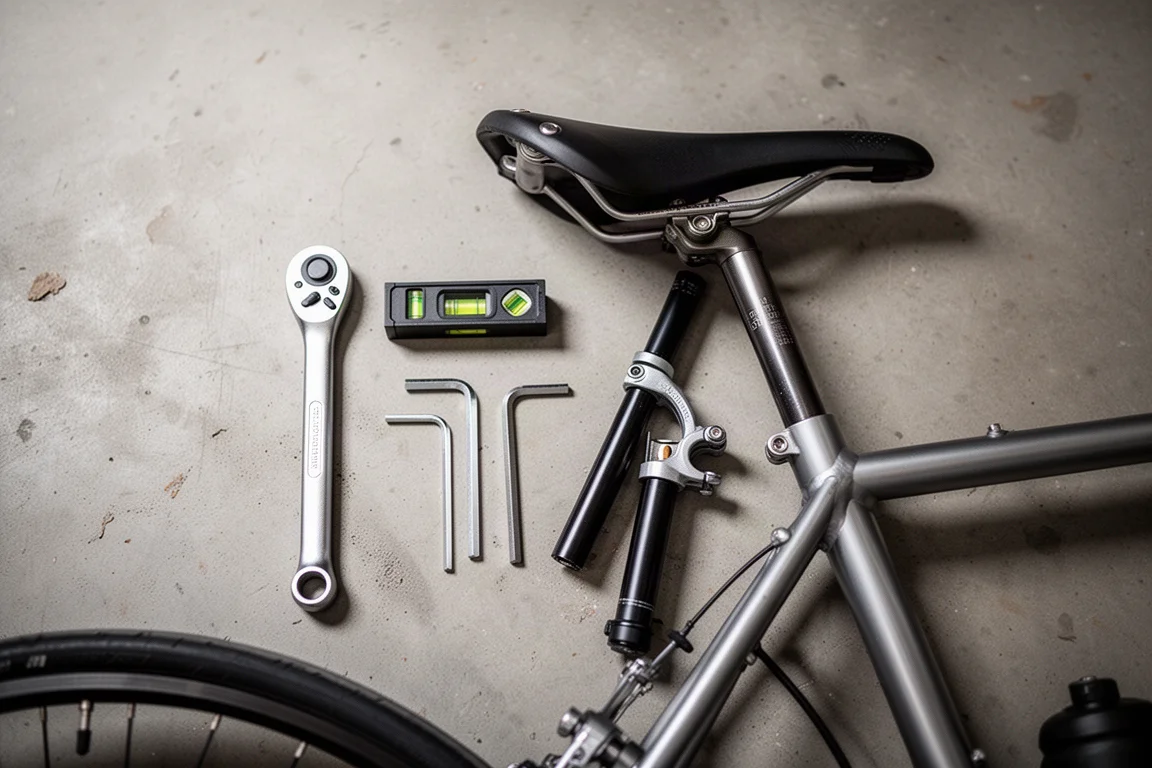
What home adjustments cannot replicate is comparative testing in a controlled environment, where different saddles and positional changes can be measured back to back. If discomfort persists after the basic adjustments, that is the point at which a structured fit session earns its cost.
As for choosing between the three saddles here, the short-nose Prime Primavera is a good starting point if you want the modern profile at a low cost. The Specialized Power makes sense if you want the shape that defined the category and you are prepared to work through the width options carefully. The Selle Italia SLR Boost suits riders who want a narrower platform with a pressure relief channel and a more even spread of load across the rear.
Conclusion
Saddle comfort is a system, not a single component. Shape and width set the foundation, padding is best kept firm, and height and reach determine whether the rider loads the saddle evenly or fights it for hours. The three saddles here cover the main approaches on the market today, and any of them can work well when the fit around them is right.
Further reading
Related Reviews
Bike Saddles
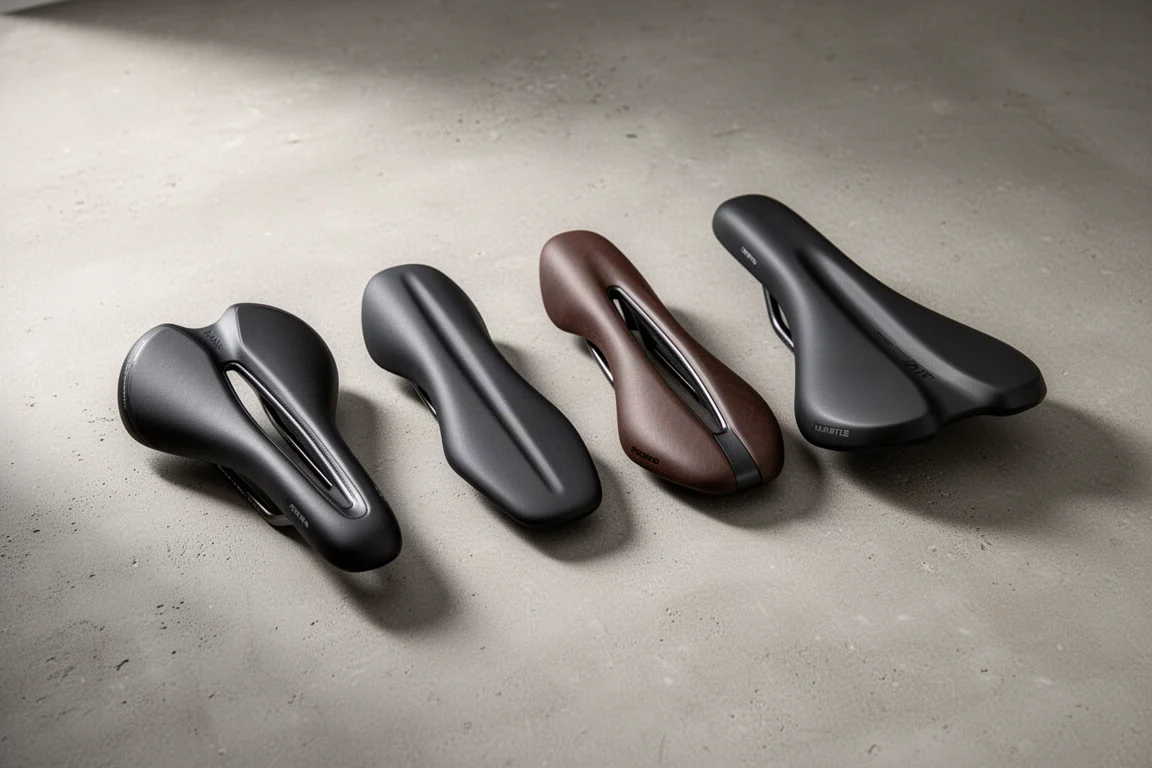
Best Road Bike Saddles for Comfort: Four Shapes Worth Trying
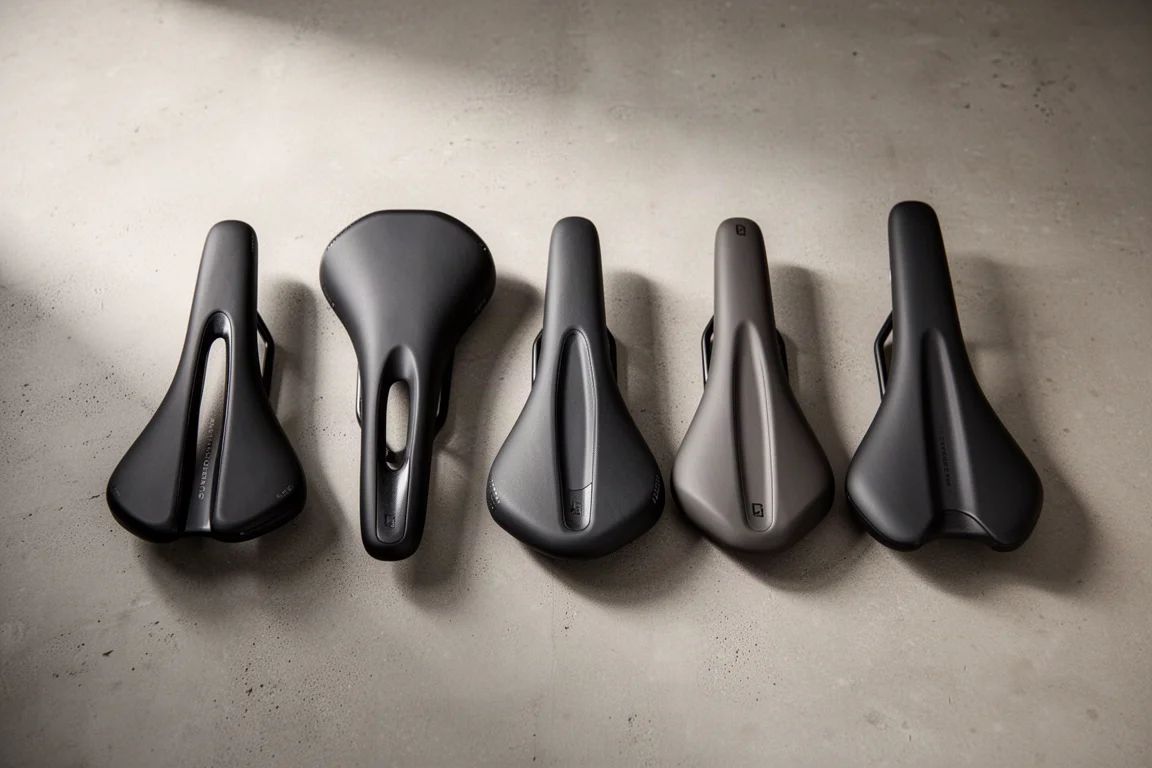
Short nose, narrow, flat or wide: how saddle shape changes pressure on the bike, and four road saddles worth testing before you buy.
Bike Saddles
Bike Saddle Width Compared: What Nine Saddles Reveal About Comfort
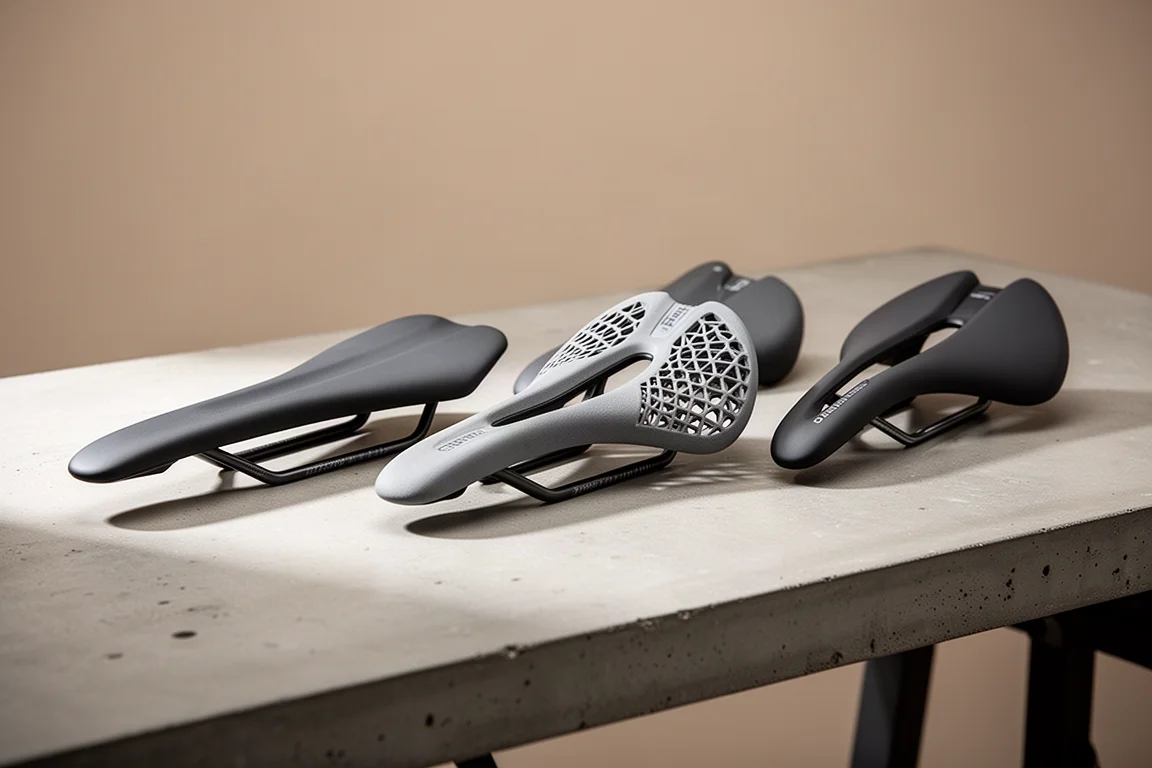
Nine road saddles from Selle Italia, Specialized and PRO, compared by width, pressure distribution and pelvic stability to see whether wider really means more comfortable.
Bike Saddles
19 Bike Saddles Ranked Worst to Best: What to Buy and What to Skip
A no-nonsense ranking of 19 road bike saddles, shaped by more than 15,000 bike fittings, from models to skip to genuine top-tier picks.