Cycling Components
Bike Groupsets Explained: Shimano, SRAM and Campagnolo Compared
A plain-English guide to road and gravel groupsets, from Campagnolo Super Record down to Shimano CUES, plus what all those cassette and chainring numbers actually mean.
Introduction
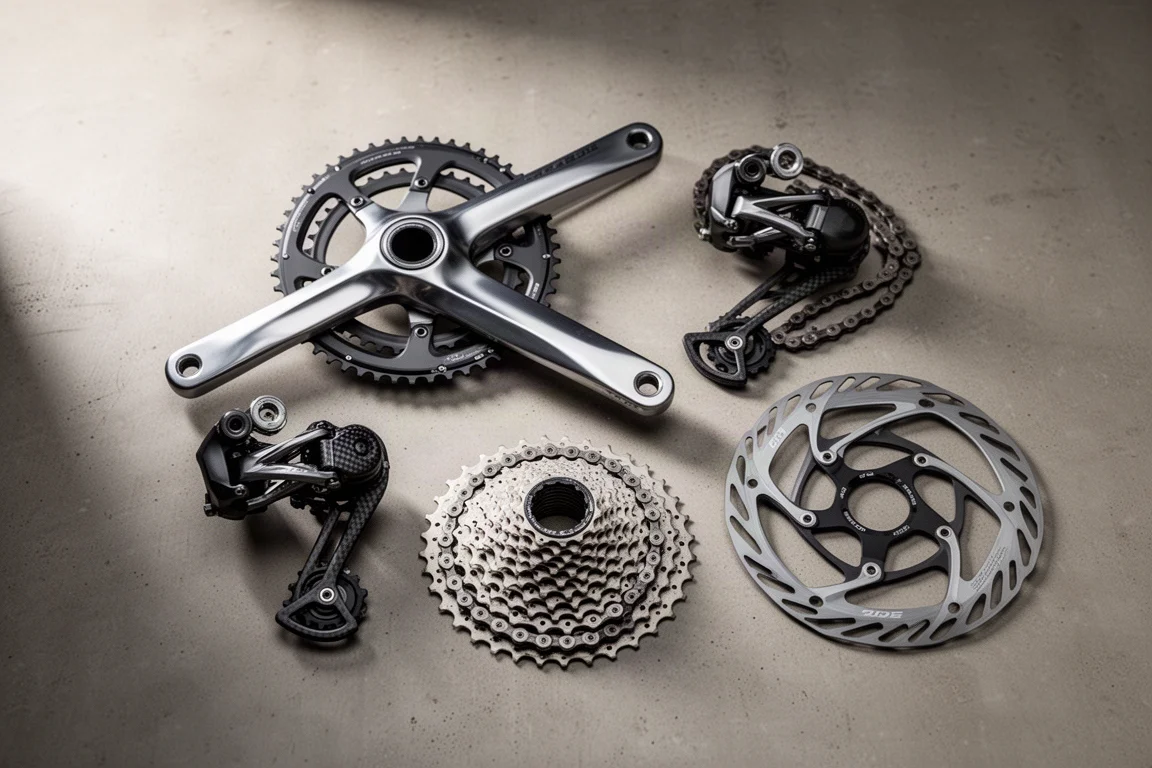
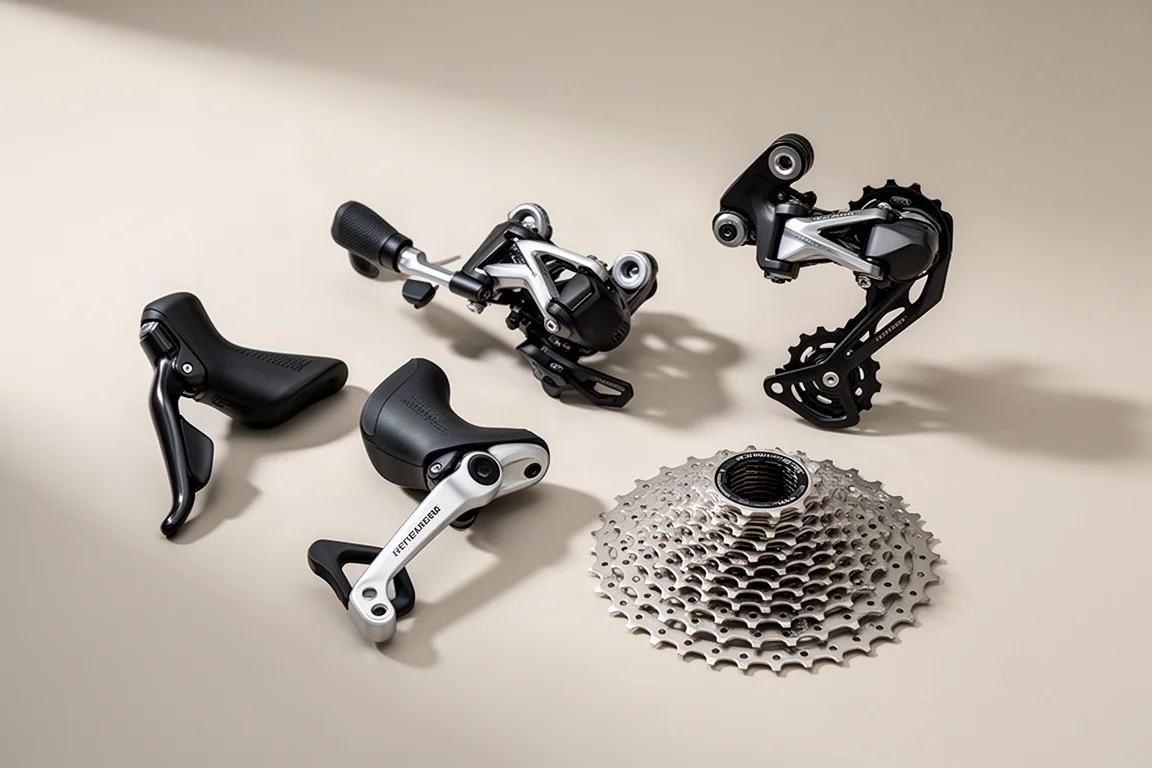
A groupset is simply the collective term for every part of a bike that deals with gears and brakes: the shifters, brake calipers, brake rotors, front and rear derailleurs, crankset, cassette and chain. When a rider says their bike runs Shimano 105 or SRAM Rival, they are naming the model family that those parts belong to.
Three companies dominate the market. Shimano is the largest, a Japanese manufacturer that supplies high-end road components used at the top level of the sport as well as affordable parts for hybrid and commuter bikes, and it has a long-standing reputation as the safe, reliable choice. SRAM is the second largest and American, and it builds only mid-range to high-end performance groupsets, with even its lowest Apex tier now available in an electronic version. Campagnolo is the Italian option, responsible for beautifully designed components that were by far the most popular choice from the 1960s to the mid 1980s, before Shimano overtook it with more reliable products and innovations such as a single control that handled both shifting and braking.
This guide walks through the current hierarchy of road groupsets, explains the numbers you will see on cassettes, chainrings and cranks, and finishes with practical buying advice.
How These Groupsets Compare
Groupsets from the big three are arranged in tiers, and each tier from one brand competes directly with the equivalent tier from the others. At the top sit the flagship electronic groupsets. Below them are performance groupsets that share most of the same technology in slightly heavier materials, then mid-range options, then entry-level ranges.
Two distinctions matter more than the badge. The first is how the gears are shifted: mechanically, with cables that physically pull the derailleurs into place, or electronically, where a button sends a signal and a small motor moves the derailleur. Electronic shifting is fast and precise, and it is easier to adapt to riders who need shift buttons in different positions. Shimano calls its electronic groupsets Di2, while SRAM uses eTap for its wireless shifting and AXS for its wireless component system. The two SRAM terms are often used interchangeably.
The second is braking. Hydraulic disc brakes push fluid through a hose to squeeze a disc mounted in the middle of the wheel, which makes them very powerful. Cable-operated brakes are cheaper and simpler to service. Disc rotors come in different sizes, most commonly 140 mm and 160 mm on drop-bar bikes, and a larger rotor gives more stopping power and better cooling.
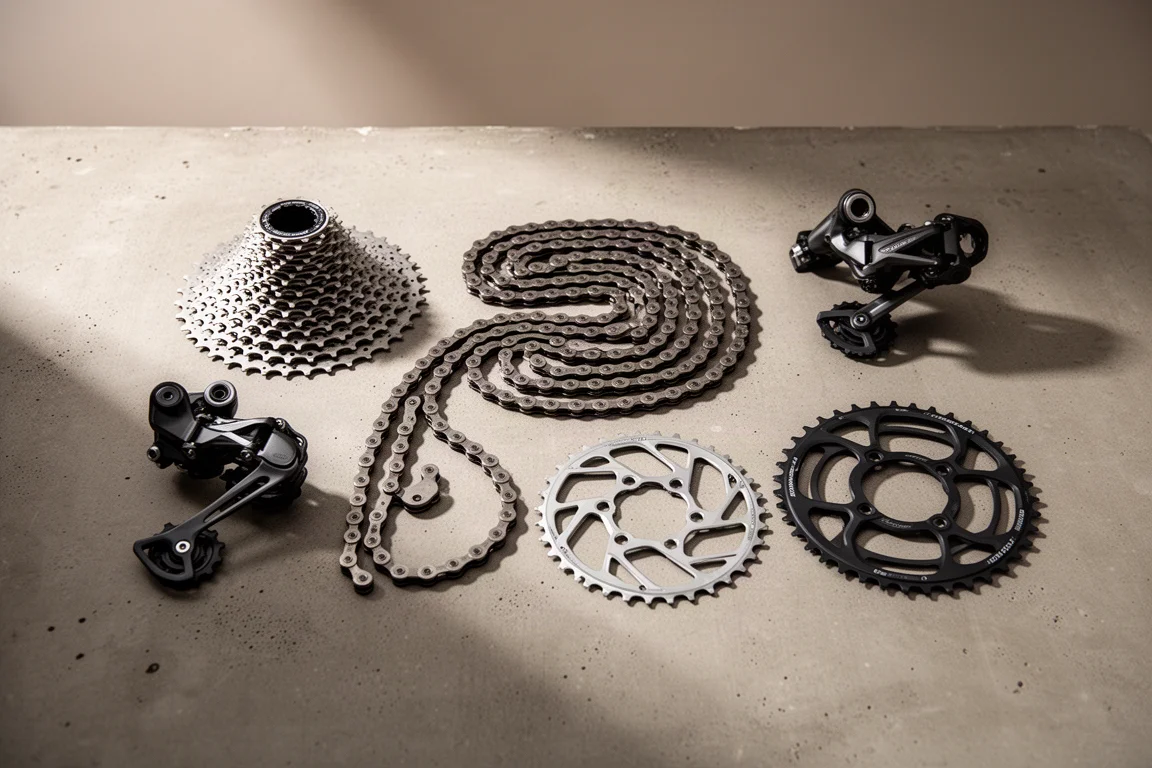
Speeds are the number of gears on the rear cassette. More gears means smaller jumps between them, so cadence stays smoother as you ride. Campagnolo’s 13-speed flagship has a particularly gentle progression, while an eight-speed setup will feel more gappy. Gear range is a separate question and often the more important one, and good range is now available at almost every price point.
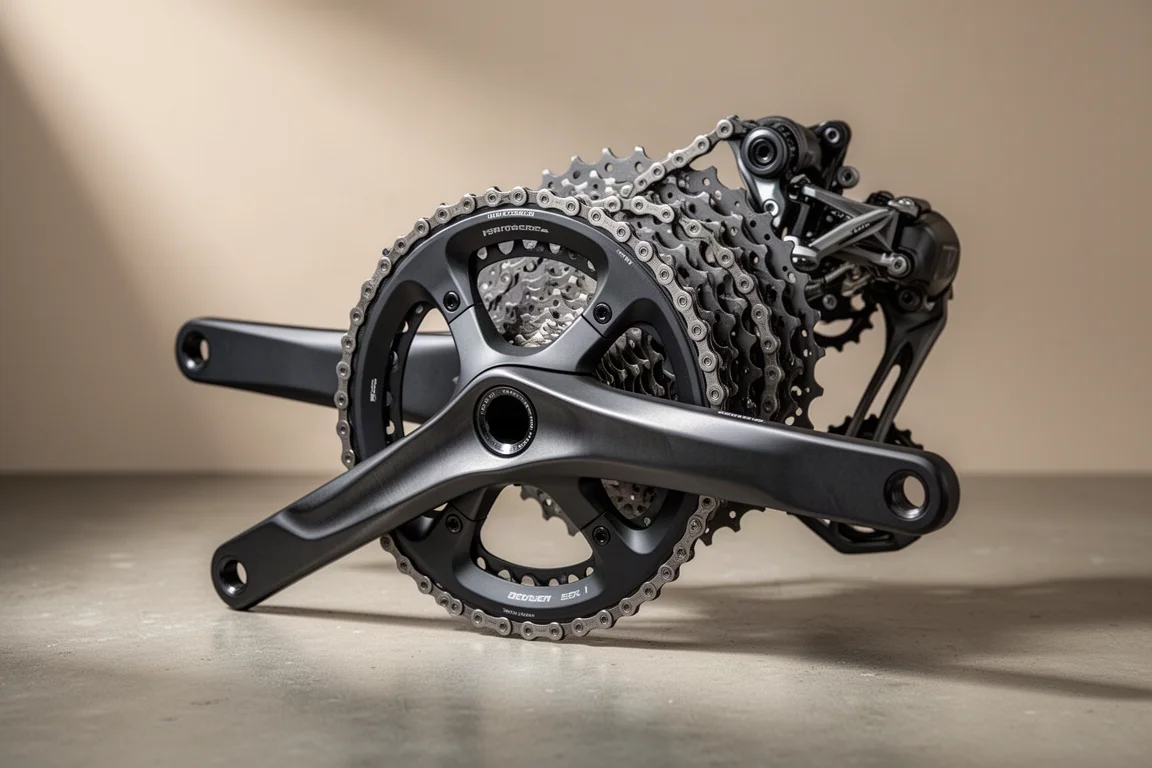
Cassettes are labeled with hyphenated numbers such as 11-28 or 10-34, which refer to the tooth counts on the smallest and largest sprockets. At the front, most bikes use two chainrings, known as a double. Some use a single ring, called 1x and more common off-road, and a few still use three, known as a triple. These are described by tooth count too, either hyphenated or with a forward slash. Cyclists also use the words standard, semi-compact and compact, which usually mean 53-39 for fast racing, 52-36 for quick riding and 50-34 for most normal riders. SRAM uses different chainring sizes and a 10-tooth smallest sprocket, so its numbers are not directly comparable with Shimano’s.
Crank length is the last common number, usually somewhere between 150 mm and 175 mm, though shorter and longer options exist from specialist brands. Shorter riders generally suit shorter cranks and taller riders longer ones, although racers are increasingly going shorter to hold a low, wind-cutting position while still pedaling comfortably.
Campagnolo Super Record: The Flagship Tier
Campagnolo Super Record sits at the very top of the hierarchy, in a category of its own. It is a 13-speed groupset, meaning 13 gears at the rear with either two chainrings at the front or a single ring if that is what you want. Shifting is fully wireless and electronic, the brakes are hydraulic, and it is built from the most expensive and lightest materials Campagnolo offers. It costs just under £4,000 without a power meter.
To be clear about the terminology, electronic here refers to the shifting rather than any kind of motor assistance. You press buttons on the controls, they communicate wirelessly with the derailleurs, and a small motor moves the chain onto a different sized gear.
SRAM Red: Wireless Performance at the Top
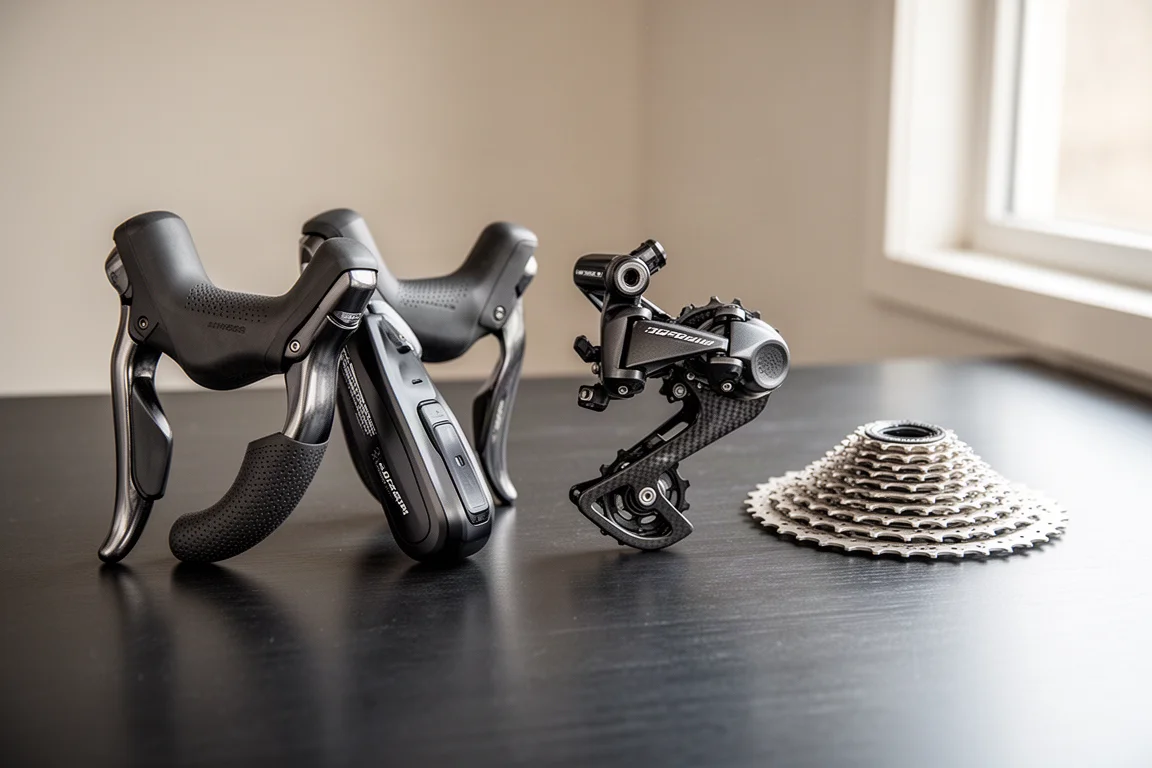
SRAM Red is the American brand’s flagship road groupset. It is 12-speed, uses hydraulic disc brakes and wireless electronic shifting, and it is extremely light. SRAM’s latest groupsets are widely regarded as offering some of the best braking available, and SRAM was the first to successfully introduce full wireless shifting. Red sits just below the Campagnolo flagship on price while doing the same job.
Shimano Dura-Ace: Shimano’s Electronic Flagship
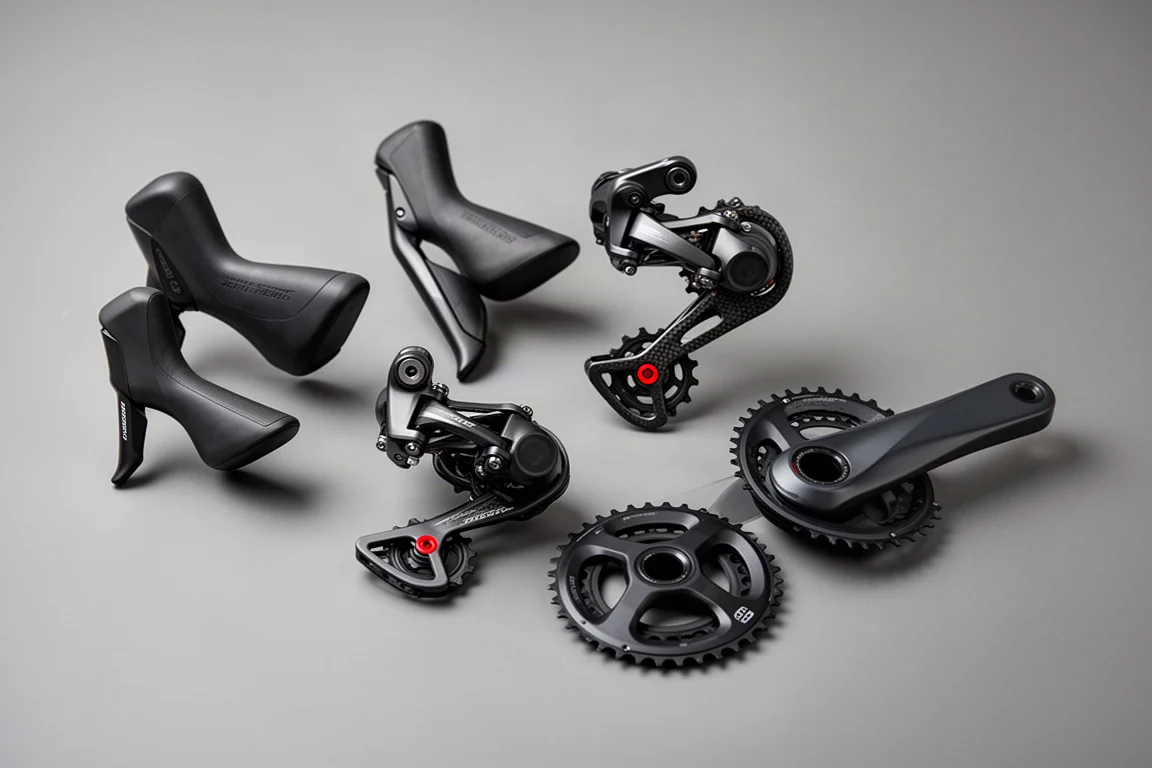
Shimano Dura-Ace is the Japanese brand’s top road groupset and sits alongside SRAM Red and Campagnolo Record in the hierarchy. It is 12-speed, uses hydraulic brakes and electronic shifting that is semi-wireless rather than fully wireless, and it is light enough to be raced at the top level of the sport. A new version is expected, so the details of the current generation may change.
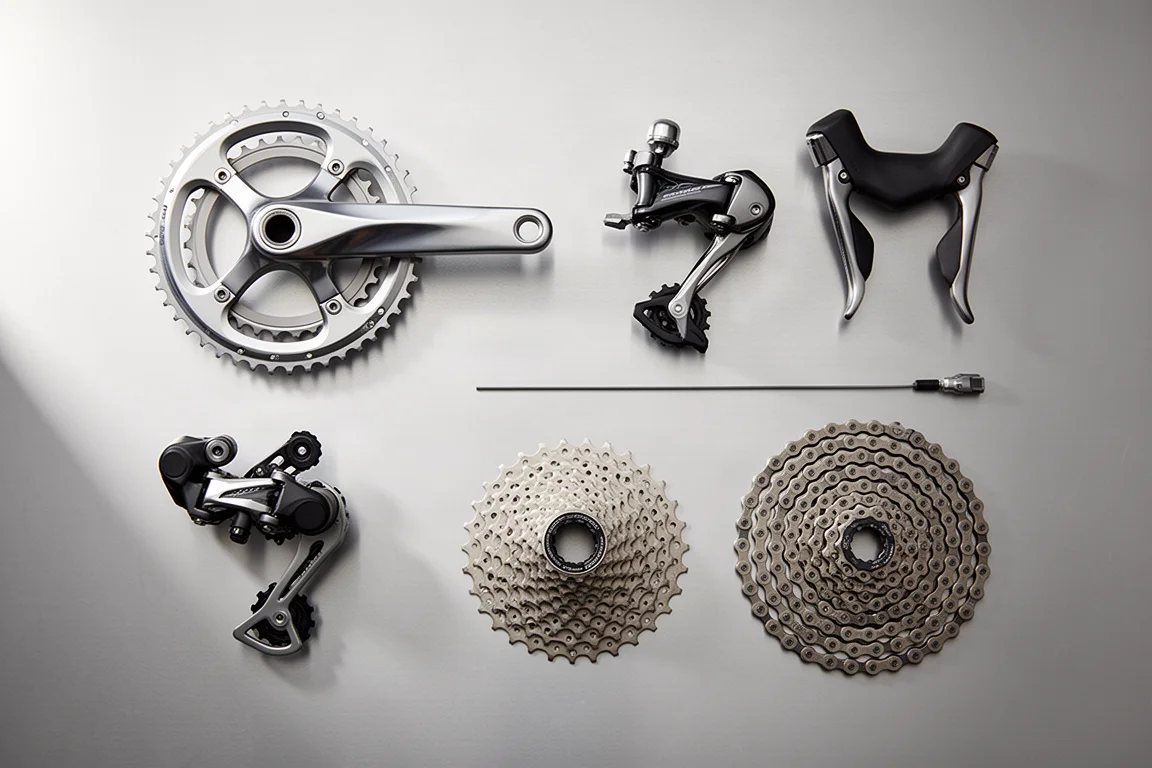
Shimano Ultegra: Performance One Step Down
Ultegra is one tier below Dura-Ace and broadly the same in function. It is 12-speed, electronic and hydraulic, with different materials and a little more weight. The differences in braking power and rotor cooling compared with 105 are small enough that most riders would not notice them.
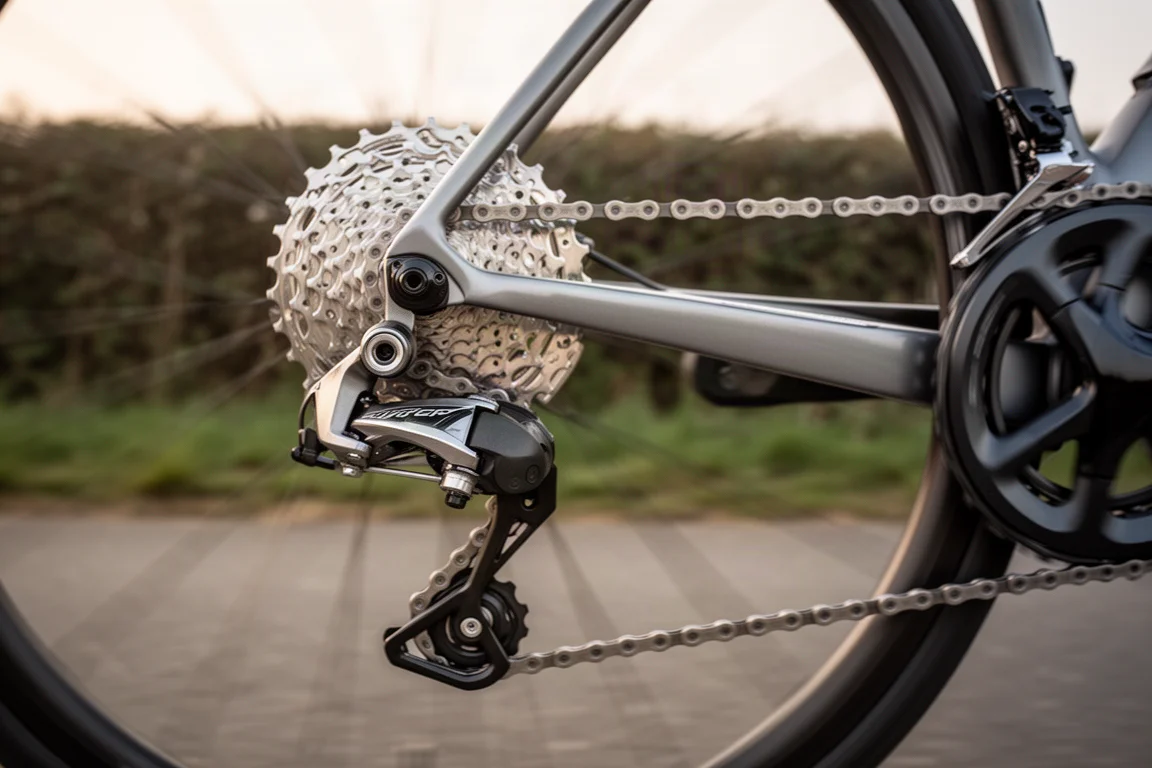
For riders who want near-flagship performance without the flagship tier, Ultegra is the point where electronic shifting and hydraulic brakes come together at a more approachable level. It is also worth noting that Ultegra used to be offered with a mechanical option, and that option is no longer available.
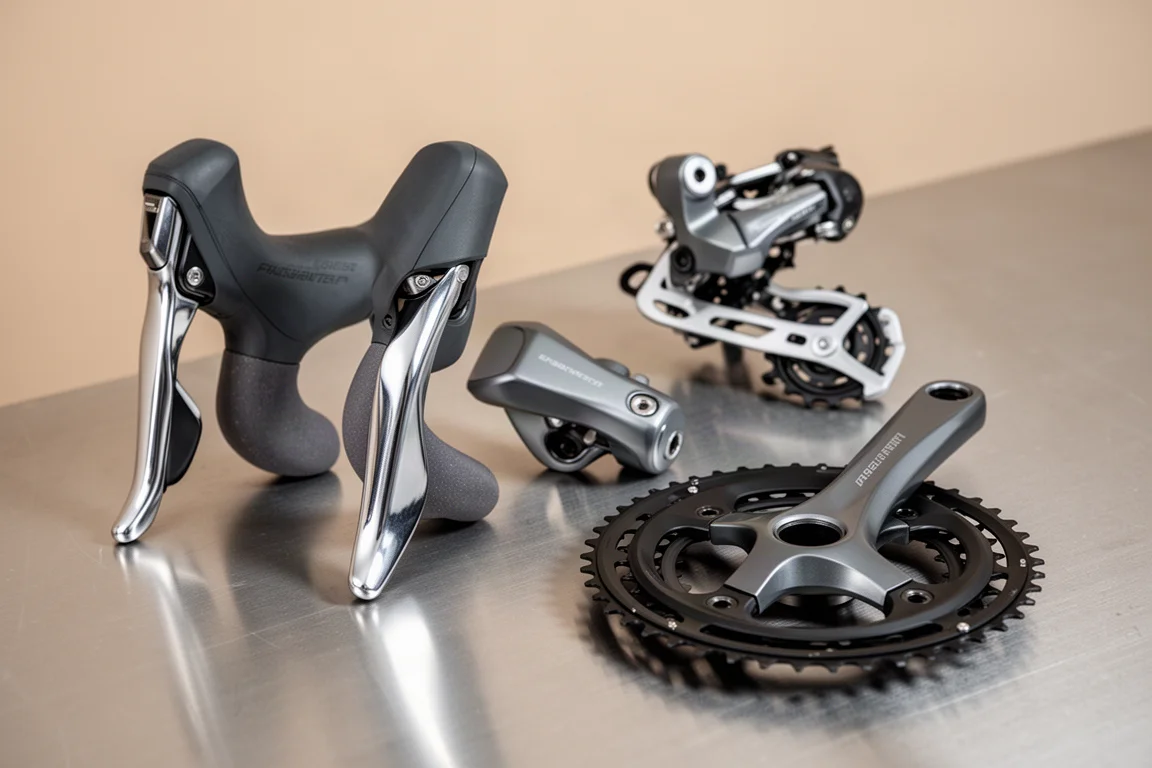
SRAM Rival: Electronic Shifting in the Mid-Range
SRAM Rival sits at the same level as Shimano 105. The differences between the two are small, mostly in materials and weight, and Rival offers fewer programmable shift buttons. Many parts across these tiers can be mixed and matched, so it is possible to build up the feature set you want rather than accepting a fixed specification.
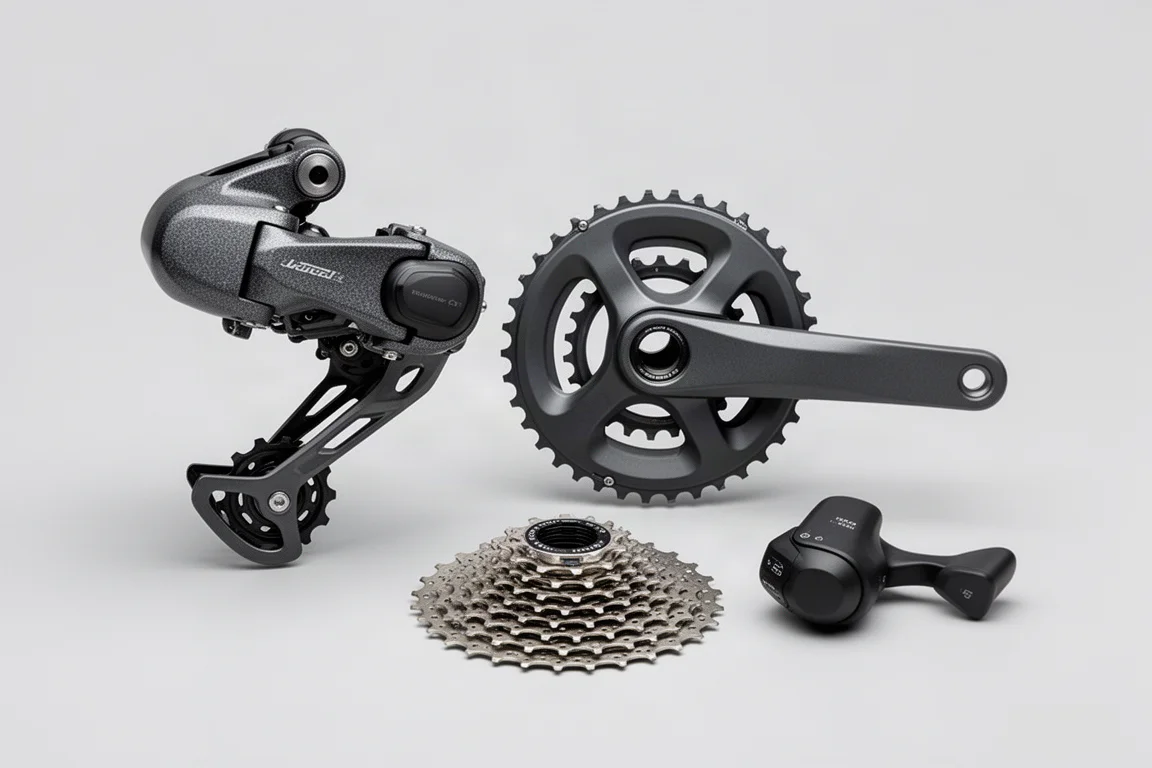
Shimano 105: The Practical Sweet Spot
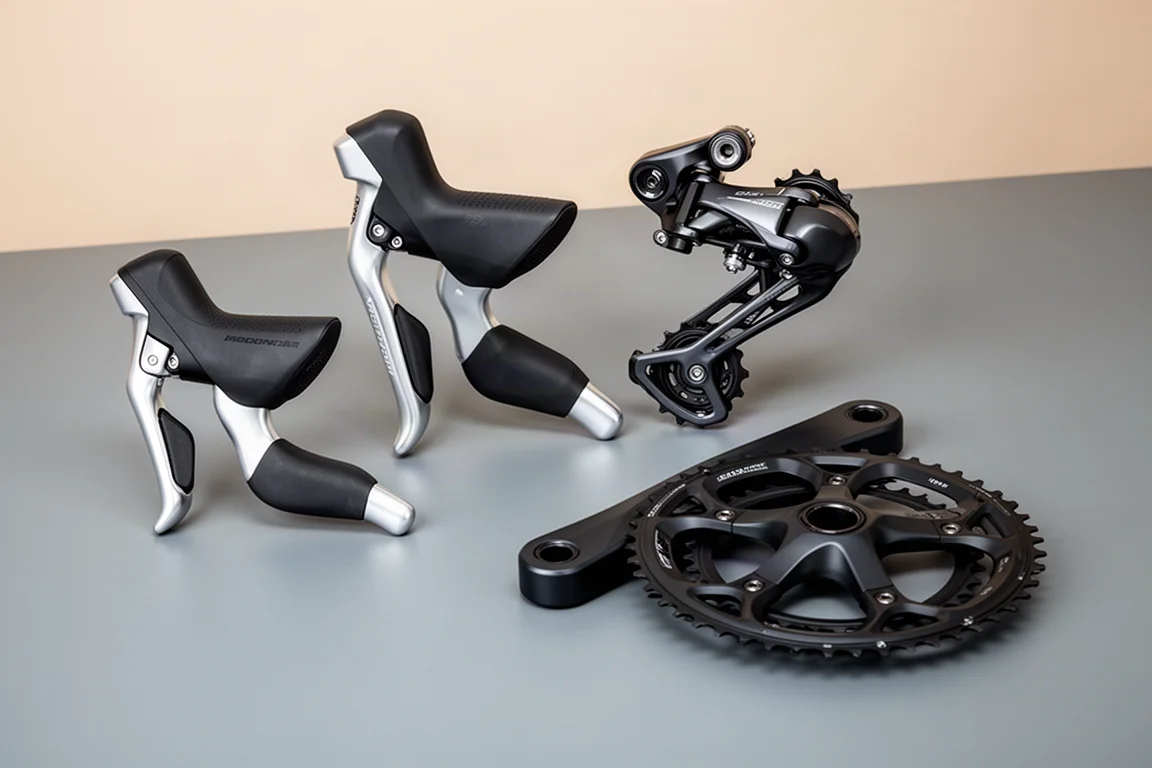
Shimano 105 is the level most riders end up at, and it is where the returns on extra spending start to flatten out. Two versions exist: a mechanical groupset that is cheaper and shifts remarkably smoothly, and an electronic Di2 version. The mechanical option is worth considering while it lasts, since Shimano has already dropped mechanical Ultegra and the mechanical 105 may eventually follow the same path.
Shimano Tiagra: Mechanical 11-Speed Value
Tiagra is one step below 105. It is 11-speed, so one gear fewer at the rear, mechanical only, and a little heavier. It is also worth knowing that Campagnolo has nothing at this level: Chorus is the cheapest road groupset the Italian brand makes, and historically some Campagnolo users considered Chorus to be on the same level as Red and Dura-Ace, although the technology has moved on and that comparison no longer really holds.
SRAM Apex: One Name, Several Very Different Kits
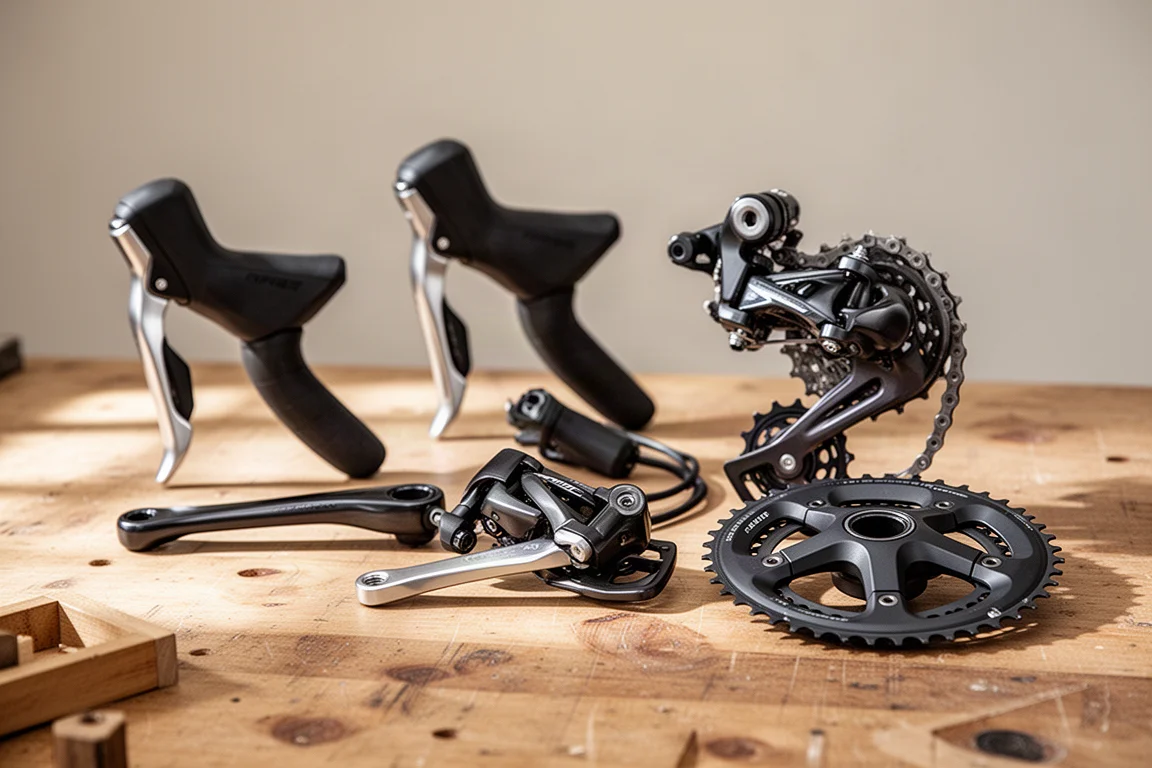
SRAM Apex is the most confusing tier in the range, because the same name covers several quite different setups: a fully wireless hydraulic 12-speed version, a mechanical 11-speed version with cable brakes, a mechanical 11-speed version with hydraulic brakes, and a mechanical 12-speed version with hydraulic brakes. SRAM does not even list Apex as a series on its website, and compatibility between the variants is limited despite the shared name. Check exactly which version you are buying.
Shimano CUES: The Entry-Level Range
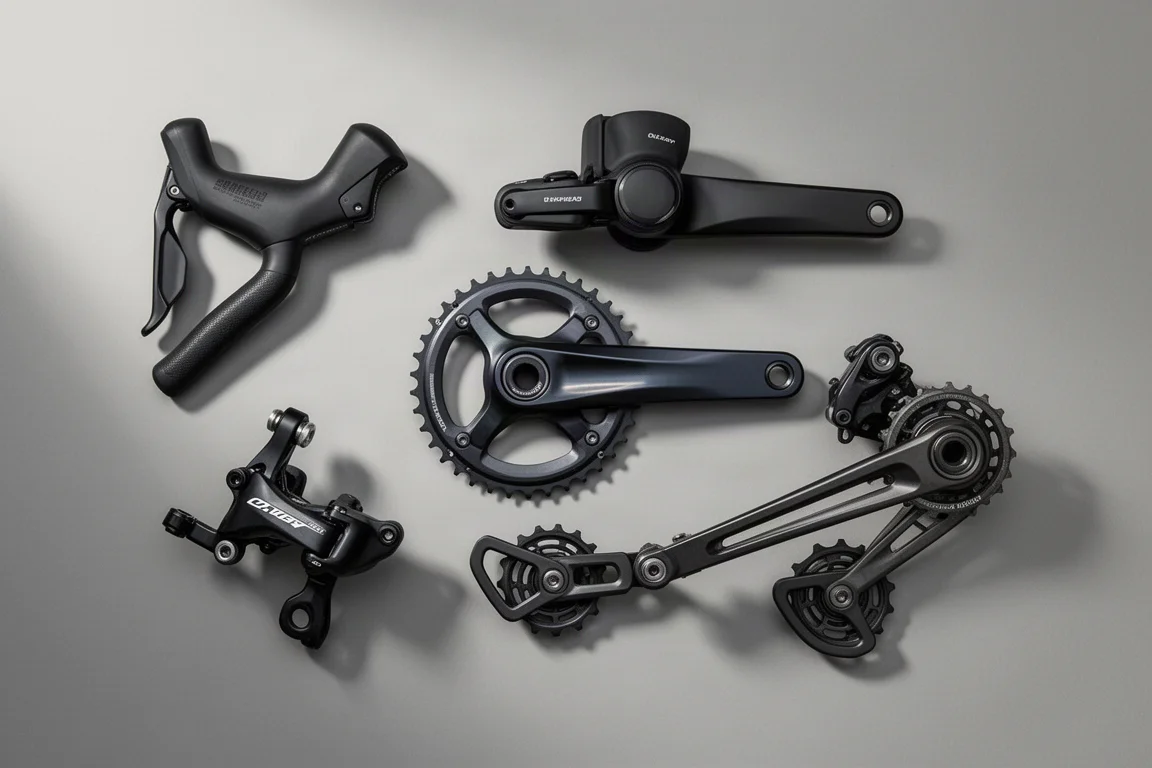
Shimano CUES is the name given to a newer range covering 9, 10 and 11 speeds, all mechanical. It was introduced to replace several older entry-level, hybrid and mountain bike groupsets, including Alivio, Acera, Altus, Claris and Sora, in an attempt to make the line-up less confusing. Tiagra survived the cull and remains a separate product.
The entry level deserves more respect than its position suggests. Claris has been tested and found excellent, and there is even a version with hydraulic brakes that is very powerful, so it is worth not turning your nose up at it. Acera is cheaper still and is compatible with a wider range of older components, and it is available with a road-style lever that puts gears and brakes in one control, although there are no hydraulic brakes at that level. An eight-speed Acera setup can still be paired with a small 32-tooth chainring and a large 45-tooth cassette cog for genuinely easy climbing.
Gravel and Off-Road Groupsets
All three major manufacturers build gravel-specific groupsets. These tend to use simplified shifting, single chainring setups and clutch mechanisms that stop the chain slapping around on rough surfaces. SRAM adds an extra gear on some of its gravel groupsets because the derailleur mounts to the frame differently, and it offers Explore versions of its top groupsets plus mullet setups that mix in mountain bike parts for even more gear range.
Shimano GRX: Gravel Options Around 105 and Ultegra Level
Shimano’s gravel line is called GRX, and it is available at a couple of price points that slot in around 105 and Ultegra level. Unlike SRAM, Shimano also offers two-by versions. Campagnolo takes a different route, with an all-road version of Super Record that includes a clutch and the gravel-specific mechanical Ekar. None of these are restricted to dirt, and there is nothing stopping you from riding them on the road as well.
Choosing the Right Groupset
Start with gear range rather than the badge on the derailleur. Unless you only ever ride somewhere flat, having enough gears for the hills matters more than having one extra sprocket at the back, and good range is available at nearly every price point.

The groupsets above the 105 and Rival level are broadly identical in function. The extra money buys lighter components, nicer finishes and a different name on the side. There is nothing wrong with wanting that, but it is worth being honest about what it delivers. Mid-range groupsets have never been better, and for most riders the sweet spot sits around the 105 and Rival level rather than at the top of the pyramid.
Mechanical or electronic is the next decision. Electronic shifting is a nice thing to have rather than a necessity, although it is hard to go back once you have tried it. It is also genuinely useful for riders with different levels of finger dexterity, or who need shift buttons positioned differently, and it delivers extremely fast, precise shifts for racers. Mechanical groupsets remain cheaper and simpler to live with.
Hydraulic brakes are powerful, but they are generally more expensive, harder to service and more trouble than traditional cable brakes. If you want the strongest, best-feeling brakes, ride a loaded bike, or do not have a strong grip, hydraulics are the better choice. Hybrid style calipers, which are cable operated but hold a small reservoir of hydraulic fluid inside the caliper, deliver strong braking at a lower price. At the top end, SRAM’s newest brakes are the strongest available, though they are expensive, while Shimano’s mid-range brakes are excellent.
Finally, the big three are not the only option. TRP, Microshift, FSA, Rotor, Wheel Top, L2 and Sensah all make groupsets, and quality varies quite dramatically between them. The established brands are the safer bet simply because they have refined their designs over so many generations.
Conclusion
Groupsets look complicated because the naming is dense, but the underlying structure is simple. A handful of tiers run from flagship electronic groupsets down to basic mechanical ones, and the differences between adjacent tiers are usually smaller than the price gap suggests. The most useful thing you can do is decide on the gear range you need, then decide whether electronic shifting and hydraulic brakes are worth the extra cost for the riding you actually do. Beyond that, the entry-level options are far better than their reputation implies, and the mid-range is where most riders will find the best value.
Further reading
Related Reviews
Cycling Components
A 20,000-Mile Budget Race Bike Build: Five Parts Worth Knowing
A rim brake race bike assembled from low-cost components and ridden for 20,000 miles. Here is what delivered real speed, what caused problems, and what to weigh before copying the formula.
Cycling Components
7 Bike Fit Products Fitters Avoid: What to Check Before You Buy
Seven bike components that regularly cause knee, foot and saddle problems, with the specific concerns behind each one and what to look for instead.
Cycling Components
Four Affordable Bike Upgrades That Improve Ride Feel
Four low-cost cycling products that make a real difference to ride feel, plus the free setup changes worth trying first.