Ski Resorts
Big White Ski Resort Review: Is This Under-the-Radar British Columbia Gem Right for You?
A large British Columbia resort with snow-ghost glades, a walkable ski-in ski-out village, and famously short lift lines. Here's the full picture before you book.
Introduction
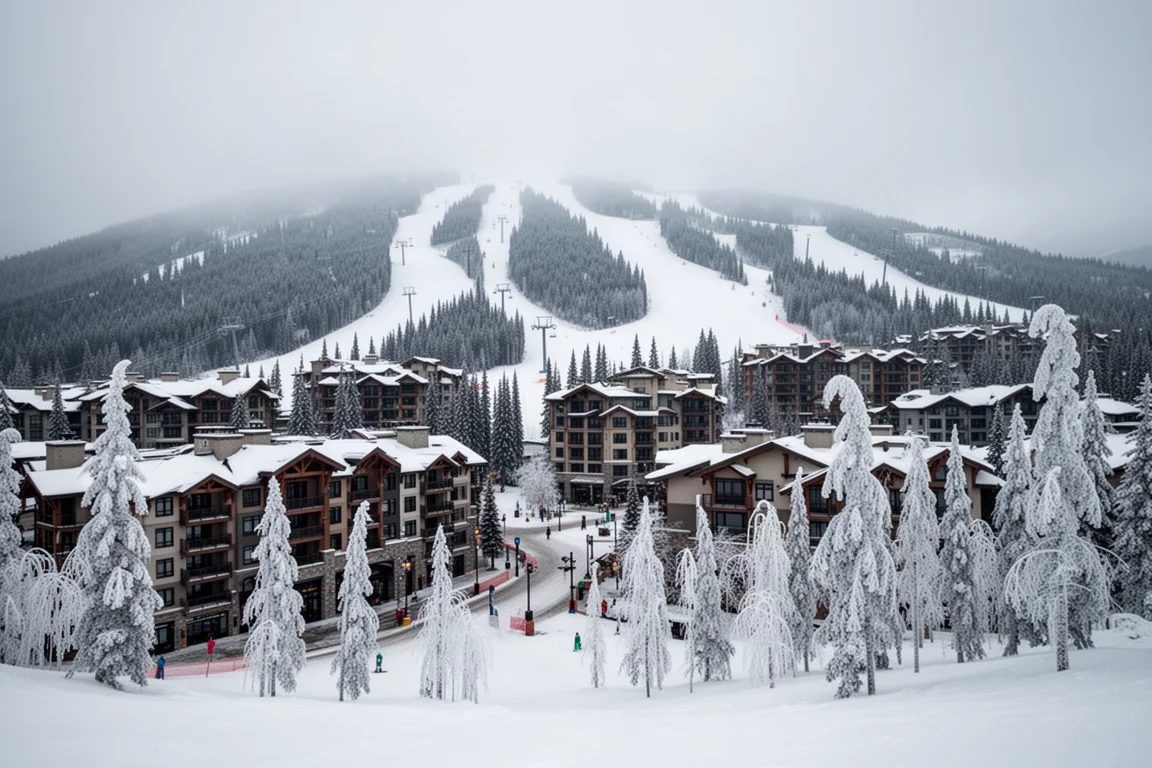
Some large North American ski resorts seem to fly completely under the radar, and Big White in British Columbia is the clearest example. Sitting just above the Okanagan Valley, this resort has a footprint comparable to many fly-to destinations in the US Rockies, plus a convenient on-site village, yet most Americans have never heard of it.
It may not be for everyone, but Big White hits a sweet spot for families and groups of differing abilities that is tough to replicate. This review covers the overall mountain experience and how the resort stacks up across key categories, so you can decide whether it deserves a spot on your winter calendar.
Snow Quality and Conditions
Snow is usually the first thing people think about with an out-of-the-way Canadian ski vacation, and Big White generally delivers. The resort receives the high-quality snowfall that interior North American mountains are known for. While it does not see quite the quantity of mountains further inland in the Canadian Rockies, snow typically arrives in small, constant doses, producing very consistent conditions. True powder days are rare, and snowmaking is nonexistent outside the terrain park, but strong grooming operations keep terrain well maintained through the season.
Early season snowfall is typically impressive, allowing most of the mountain to open relatively quickly, though snowfall varies somewhat each season. Upper-mountain areas such as the Falcon chair and the hike-to cliff zone terrain can take several weeks to open after the season starts.
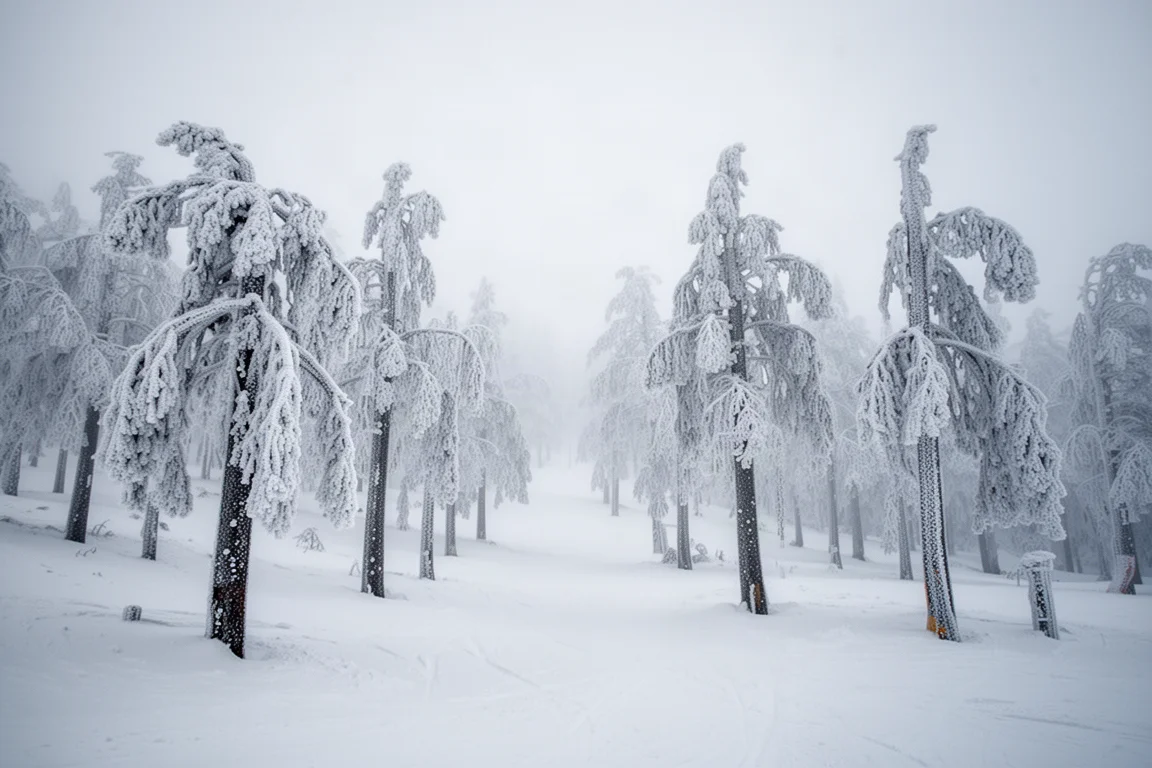
One unusual quirk: unlike most North American ski resorts, Big White primarily faces south. The incessant precipitation and overcast skies allow for better snow preservation than the aspect would suggest, but a clear day followed by a break in snowfall can leave the mountain variable. Conditions also differ across the resort’s large footprint: some zones hold light, dry powder while others face icy or windswept slopes at the same time. The east-facing Gem Lake pod generally sees the best conditions, though it is still subject to some of the same variability.
Lift Lines and Crowd Flow
One of the best parts of Big White is the lack of serious lift lines. Even peak weekends see manageable crowds, and the few crowded areas are managed very well. Guests arriving from the primary Happy Valley parking lot may wait in long lines for the gondola to the main village, but it is typically smooth sailing after that.
Most guests filter down to the Ridge zone after the gondola, where two parallel lifts, the high-speed Snow Ghost six-pack and Ridge Rocket high-speed quad, shuffle guests up very efficiently. Crowds disperse around the mountain from there, and very few other areas form real choke points.
Terrain Variety and Mountain Character
Big White is a large, spread-out mountain with considerable terrain variety, from mellow meadows to steep shoots, below-treeline trails to high-alpine environments. At 2,656 feet of vertical drop, it is impressive without being class-leading. For the best endurance runs, head to the Gem Lake lift on the far west side, which surfaces nearly the entire vertical drop.
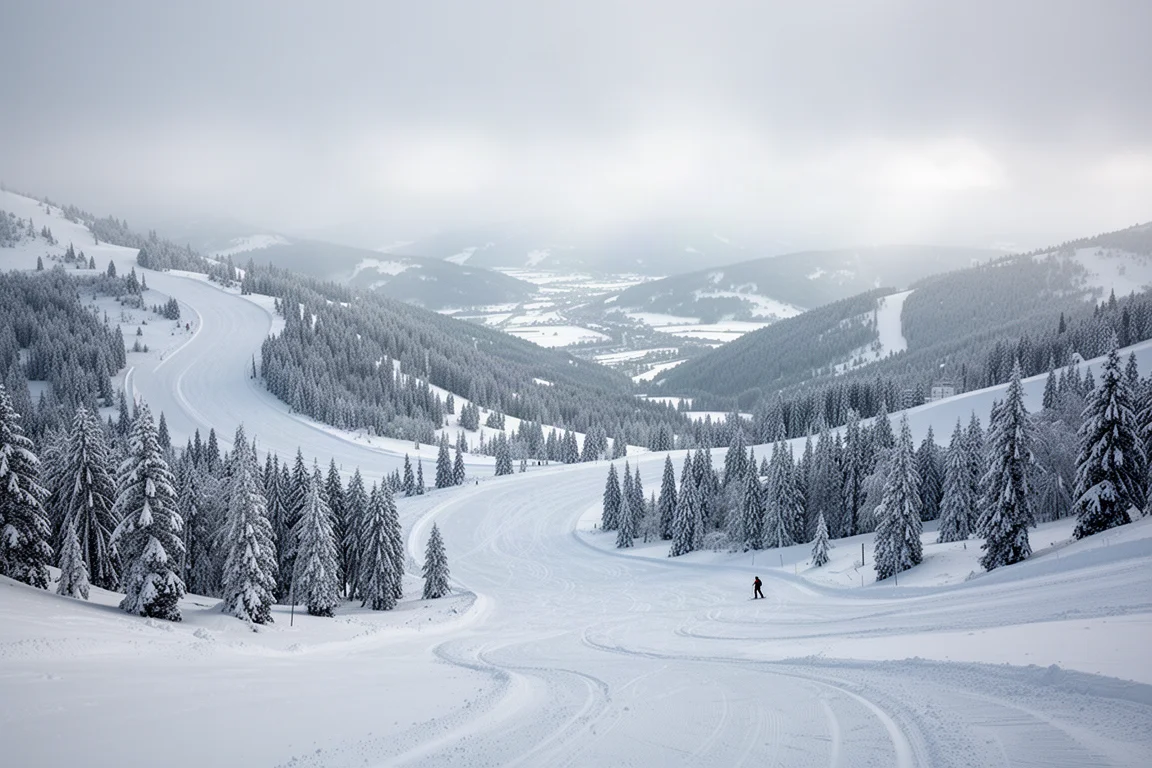
The resort especially stands out for its glades. Big White’s unique weather turns its trees into snow ghosts, meaning a thick layer of white rime builds up on them during the core winter months. This makes the mountain stand out substantially from resorts with typical below-treeline slopes, and the skiable trees cover almost the entire footprint, offering unparalleled options for all abilities. Some especially wide-spaced stands make it top-notch for skiers who want to experience glades but are not fully comfortable in them yet. Upper-mountain trees are short enough to offer panoramic views, and combined with the crystallized snow ghosts, the vibe is hard to replicate anywhere else.
The trade-off is visibility. Fog is a common occurrence, sometimes making it tough to see a few feet in front of you, and even with good visibility the skies are typically gray. Calm blue-sky days common at many Rockies resorts are much less frequent here. For the best chance of sunnier conditions, visit in late February or early March, though you trade some slope consistency for that sunshine.
Wind exposure is another factor. The mountain’s exposed footprint produces severe gusts at the top, and while chairlifts in the most affected areas are sheltered enough to prevent regular wind holds, a face mask is worth having on hand.
Beginner and Intermediate Terrain
Big White is a great family mountain with some of the most unique beginner and intermediate terrain around. Green-rated beginner trails can be found off every lift, and they are actually worth doing in most cases. Blue runs are even more abundant, with what seems like a never-ending array that can keep intermediate visitors busy for days. Blue difficulty does vary: some are a bit steep or ungroomed and might be considered blacks at other resorts, but all should be within reach of a typical intermediate.
What makes this terrain special is how it extends into high-alpine areas, giving less experienced guests access to terrain usually reserved for stronger skiers. Some runs start in Big White’s signature high-alpine glades, while others run fully above tree line, and a few trails have glades right next to a groomed run, making for great practice on tree terrain. This is a major competitive advantage against other western Canada mountains, where offerings for lower-ability visitors are often confined to traditional below-treeline slopes.
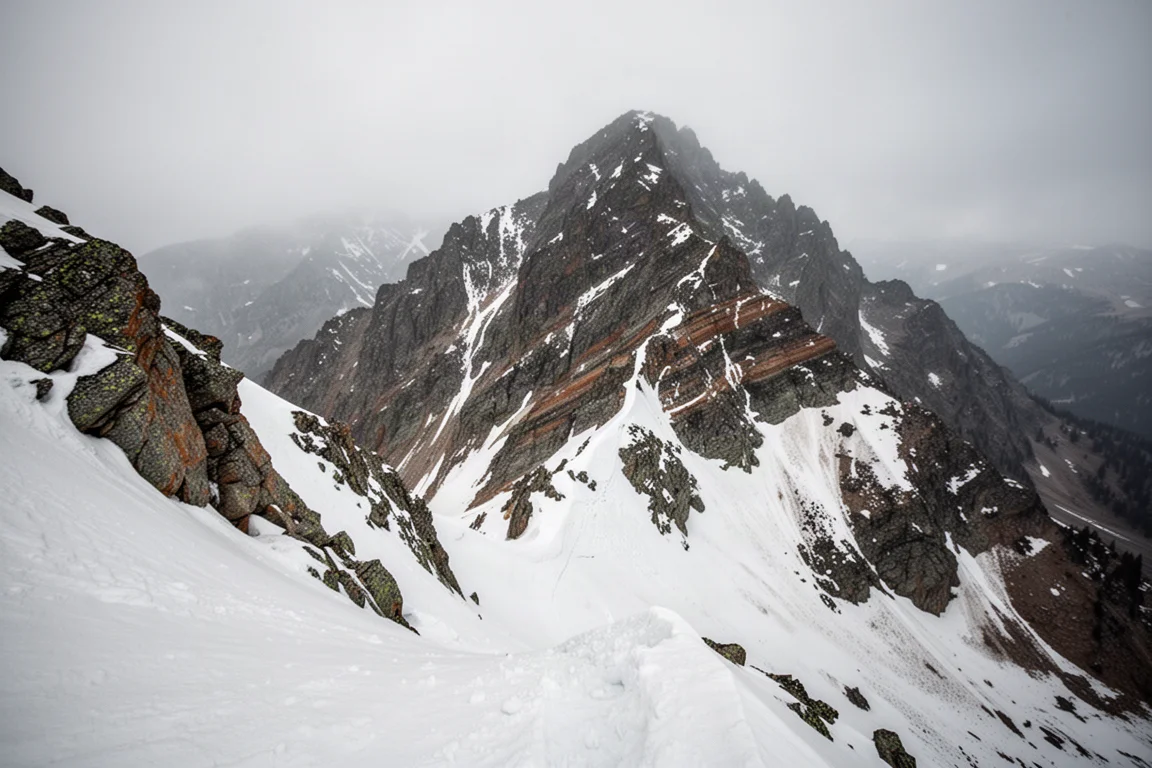
Altitude helps too. The resort tops out at just 7,600 feet, so visitors will find exertion less taxing than at comparable US mountains that top out closer to 11,000 or 12,000 feet.
Advanced and Expert Terrain
For those seeking a challenge, Big White features an array of steep trails, glades, and bowls. The westernmost and upper-mountain areas especially stand out, with some excellent glades and genuinely long moguled black runs at Gem Lake that fit the bill for an endurance test.
That said, Big White is not exactly a world-class mountain for experts. Until you get above mid-mountain, nearly everything skier’s left of Gem Lake is too mellow for advanced and expert visitors, and most zones lack anything of true expert caliber. Do not write it off just yet, though: the small but expert-oriented Cliff zone delivers tantalizingly steep pitches and a hikable ridge with truly insane, extremely high-consequence shoots and glades. Some gnarly terrain also exists off the Falcon chair, including high-consequence lines and cliff drops.
The degree of challenge varies based on snow cover, with different conditions sometimes resulting in exposed rocks, ice, or both. Freestyle offerings are more limited than some competitors, but the TELUS terrain park hosts a surprisingly impressive setup with boxes, rails, and jumps ranging from small to large, plus a popular boardercross course and a halfpipe in select winters contingent on snow quality.
The Village and Getting Around
Big White’s village is a key distinguisher. While the complex is very built up and located above the base of the mountain, it feels more charismatic than overly commercial thanks to tasteful architecture and minimal roads. The village is clearly designed with walking in mind, and the lampposts in lower-mountain areas are a nice touch.
The mountain layout, however, can be somewhat confusing. The biggest annoyance is the lack of cohesion between the popular Gem Lake side and the village side: it is impossible to return to the village from Gem Lake without taking the slow fixed-grip Powder quad or Falcon double chair, and the Powder chair was fully replaced a few years ago yet kept as a slow fixed-grip lift. Skiing out from the bottom of the Cliff chair is also somewhat flat and long-winded, and reaching the village directly from mid- or upper-mountain areas to the skier’s right requires keeping left on the Highway 33 trail to avoid a detour via the slow Plaza chair.
Getting around is made much easier by clear, detailed signage with multi-step lift and trail directions that go above and beyond what you find at many destination resorts. Day lodges are scattered around lower-mountain areas for a break from the cold, but they are on the smaller side with seating not always available at peak times, and upper-mountain areas lack lodges entirely, not even warming huts for shelter from the most wind-exposed areas.
Night Skiing and Lift Tickets
After a brief hiatus, Big White resumed night skiing in 2022. The footprint is extremely limited, covering only a few dinner trails and freestyle areas off the Bullet, Plaza, and TELUS Park chairs, but it is better than nothing and a useful option for later-day laps.
Lift ticket prices have gotten a lot steeper in recent years, with one-day adult rates now topping out at $239 Canadian dollars at the window. Buying in advance is a much better deal, with tickets going as low as $119 Canadian dollars on off-peak weekdays.
Big White is now on the Indy Pass, which offers two days of access at over 100 independently owned mountains, but access comes with a big catch: the Indy base pass carries severely restrictive blackout dates at Big White, excluding all weekends and holidays during the season. Indy Plus pass holders face no blackouts. The Indy Pass only accepts purchases during limited windows, in recent years in the spring before the season. If you can make the terms work, Big White may be best enjoyed as a stop on an Indy Pass-based British Columbia road trip.
Getting There and Where to Stay
Despite its seemingly middle-of-nowhere location, Big White is not as remote as you might think. It is within close driving distance of Kelowna, British Columbia’s third-largest metropolitan area, about one hour from the Kelowna Airport and 45 minutes from the closest suburbs. The access road quickly ascends into the mountains, and conditions can suddenly shift from clear to tricky as you approach. Shuttle services to and from the airport are available, though they must be booked at least five days in advance for a guaranteed pickup.
The Kelowna Airport is not easy to fly into from the United States: for most US metro areas the only options are expensive flights requiring one or more stopovers. Big White is drivable from larger Pacific Northwest cities such as Vancouver and Seattle, but the tricky 5.5- and 7-hour drives are still a long trek.
Once you arrive, Big White offers one of the best ski-in ski-out setups of any western North American resort, with plenty of slopeside condos and a couple of hotels right in the heart of the village. Most offerings are upscale, many featuring pools and hot tubs, and the walkable village means you do not need a car if you stay in the center. Budget travelers or those who do not care about ski-in ski-out can find an extensive array of hotels and inns in Kelowna, 45 minutes to an hour away.
As for nightlife, Big White is not a party town. The village has a passable bar scene, occasional live local music at the Happy Valley Lodge, and the occasional fairs and fireworks, but those hoping for club vibes should look elsewhere.
How Big White Stacks Up
Big White scores a 71 overall, placing it fifth in western Canada and 25th overall in North America as of mid-2024. Notably, it is the best overall mountain we have reviewed that is on the Indy Pass.
The category scores tell the story: an 8 for snow, an 8 for resiliency, an 8 for size (2,765 acres from base to boundary, with roughly 2,650 skiable by our measurements), an 8 for terrain diversity, a 7 for challenge, a 6 for lifts (a mix of high-speed lifts with some slow fixed-grip chairs and surface lifts, and 1% of terrain requiring hiking), an 8 for crowd flow, a 4 for facilities, a 6 for navigation, and an 8 for mountain aesthetic. The facilities score is the weak point: mid- and upper-mountain services are close to nonexistent, even if the base and village stops are pleasant.
Conclusion
Big White is not as stunning, powder-prone, or extreme as some of the most notorious western Canadian resorts, and it is no Whistler in terms of size and terrain. It is also a bit impractical to reach for many North Americans. But it is a much better family mountain than some of its seemingly half-baked competitors, with a fully fleshed-out lift network, a convenient walkable village, and a footprint that does not just avoid neglecting beginners and intermediates but welcomes them with open arms.
If you are looking to test your limits, there might be better options. But for a typical vacationer wanting great on-site lodging, a well-rounded terrain experience, dependable conditions, and a reasonable altitude, Big White is one of the best around, particularly for Canadian residents and adventurous American families.
Product link
View more details for Big White Ski Resort
This product is mentioned in the review. Check the specifications, options, and compatibility before buying.
View more details for Big White Ski ResortFurther reading
Related Reviews
Ski Resorts
Alyeska Resort Review: Alaska's Largest Ski Resort, Worth the Journey?
A deep look at Alyeska Resort: heavy snowfall, expert terrain, an Icon Pass connection, and the trade-offs of a near-sea-level mountain in the Last Frontier.
Ski Resorts
Bear Valley Ski Resort Review: Northern California's Quiet Sierra Alternative to Tahoe
A lesser-known Sierra resort with over 1,300 skiable acres, surprisingly strong expert terrain, and crowd levels Tahoe can only dream of. Here is what to know before you go.
Ski Resorts
Colorado Ski Resorts Ranked: The Best Destination Mountains for Overall Experience
A ranked guide to Colorado's destination ski resorts, covering terrain, snow, logistics, crowds, and cost so you can pick the right mountain for your trip.