Sleeping Pads
Big Agnes Zoom UL Review: Ultralight Comfort With a Clear Temperature Limit
A four-month look at the Big Agnes Zoom UL sleeping pad, covering its standout comfort, low weight, and the cold-weather limit buyers should know before ordering.
Introduction
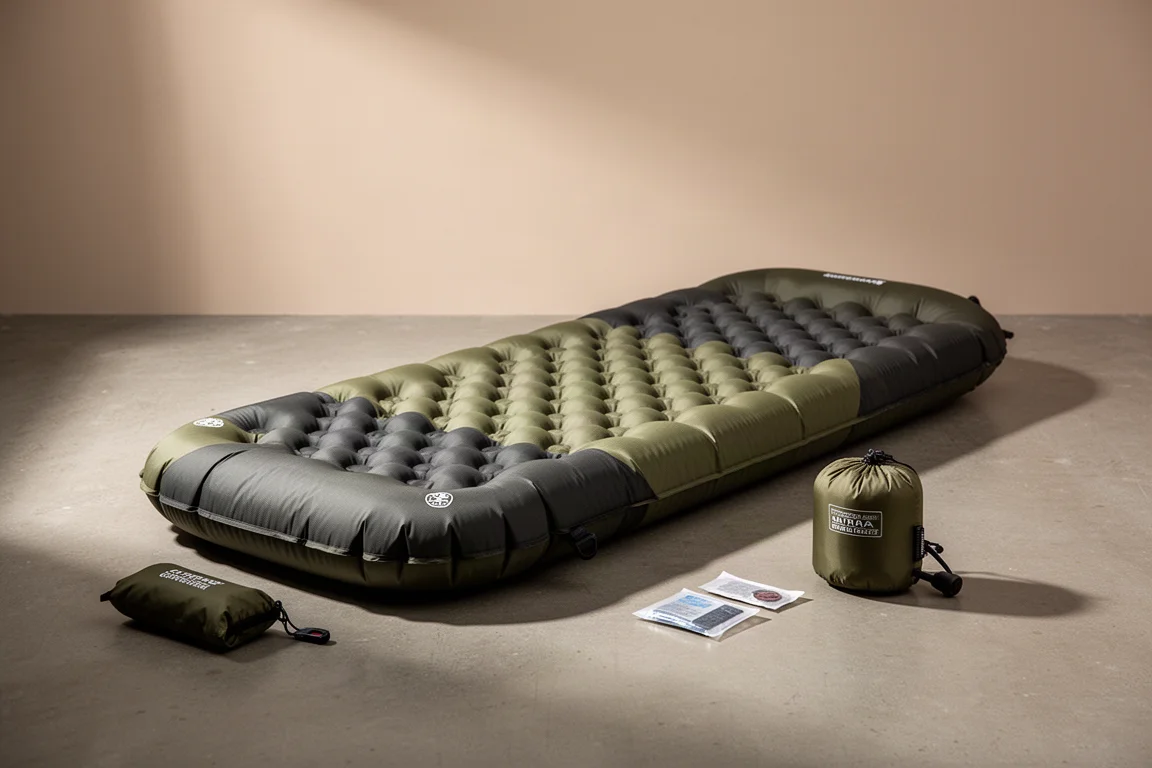
The Big Agnes Zoom UL has been in regular use for four months across camping and backpacking trips, with more than a dozen nights spent sleeping on it. Overnight lows across those trips ranged from around 45 degrees Fahrenheit at the warm end down to 14 degrees Fahrenheit at the cold end, which is a wide enough spread to understand both where this pad shines and where it struggles.
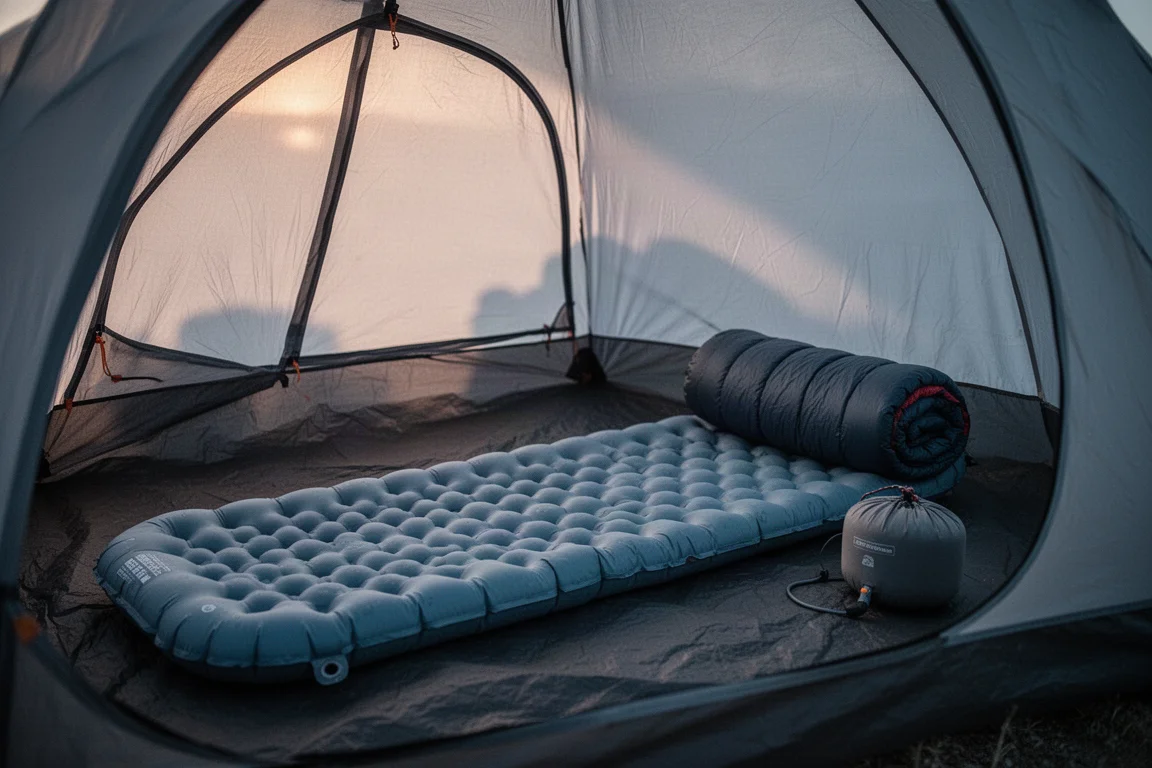
The short version: this is one of the most comfortable ultralight pads available, and it is genuinely light for its size. It also has a real-world warmth limit that sits well below what its insulation rating implies, and that single issue is enough to change which trips it belongs on.
Who this product is for
The Zoom UL makes the most sense for backpackers who care about pack weight and who mostly sleep out in three-season conditions, where overnight lows stay at or above freezing. In that range the pad is warm, stable, and comfortable enough to sleep through the night on.
It is a poor match for anyone who regularly camps below freezing and expects a pad to carry the whole insulation job. Cold-weather trips are better served by a warmer pad, or by a different sleep system entirely.
Comfort is where the pad is most convincing. Side sleepers, back sleepers, and stomach sleepers all get reasonable support, and the surface does not feel like a balloon under the hip or shoulder.
Design, Comfort, and Weight
The top surface uses a quilted baffle design with a dimpled pattern, and it feels closely related to the Big Agnes Ether Light XT. Those dimples spread body weight across the pad rather than concentrating it, and the bolstered side rails gently push the sleeper back toward the centre, which keeps the body away from the edges where support drops off.
The pad tested here is the 25 by 72 inch size, listed at 17 ounces. That figure shifts slightly depending on what is carried along: the stuff sack, repair kit, and included pump sack all add a little weight. Even so, it lands roughly five ounces lighter than the Nemo Tensor, which matters when every gram in the sleep system is being counted.
Thickness is three inches, rising to about three and a quarter inches at the edges, which is part of why the pad feels as supportive as it does. The valve system is a two-part inlet and outlet design with a one-way valve. Deflating means pushing the cap and the top of the valve together, and it takes longer than pads that dump their air in a single motion. That is a minor annoyance rather than a flaw, and the trade-off is a valve that is easy to inflate and control.
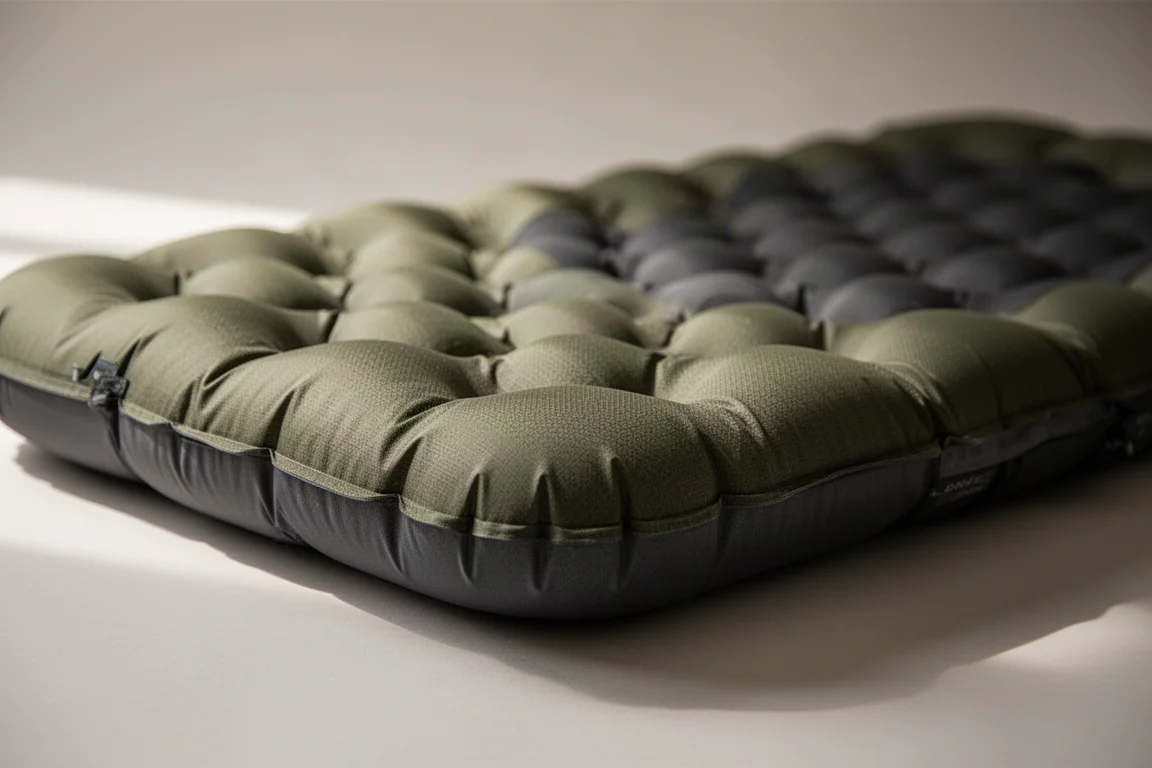
Inside, the pad uses an o-beam construction, which means the baffles do not pass all the way through the pad. That matters because it avoids the cold spots that appear on some pads where internal welds press against each other and let air move against uninsulated fabric. Two layers of insulation film sit inside the pad as well.
Warmth and Real-World Temperature Limits
The pad carries an ASTM-rated 4.3 R-value. In practice, that number deserves more caution than it invites. Across a wide range of overnight lows, the point where the pad stayed reliably warm came in at roughly 35 degrees Fahrenheit, with freezing, 32 degrees Fahrenheit or 0 degrees Celsius, as a sensible lower limit. At or above that line the pad is warm and comfortable.
Below freezing, the experience changed sharply. On nights in the teens, the pad slept cold even with a closed-cell foam pad underneath to add an insulation barrier. The extra layer helped, but it did not turn the setup into a warm one.
That gap between the rated figure and the felt reality is worth taking seriously. A controlled test environment does not reproduce the variables of a real campsite, and the practical takeaway is simple: treat the Zoom UL as a pad for nights at or above freezing, not as a cold-weather pad.
How It Compares With Other Pads
The most instructive comparison is with the Big Agnes Rapide SL, which sits in the same R-value class, above 4, but sleeps noticeably warmer in use. It stayed warm on nights below freezing where the Zoom UL did not. Two design differences appear to explain the gap: an I-beam construction that leaves fewer gaps in the internal insulation, and a sleeping position a little higher off the ground. The Big Agnes Ether Light XT, by contrast, matches the Zoom UL almost exactly on comfort, with both pads landing at an equal level. Against the Nemo Tensor, the Zoom UL is the more comfortable pad in direct experience and is lighter by roughly five ounces.
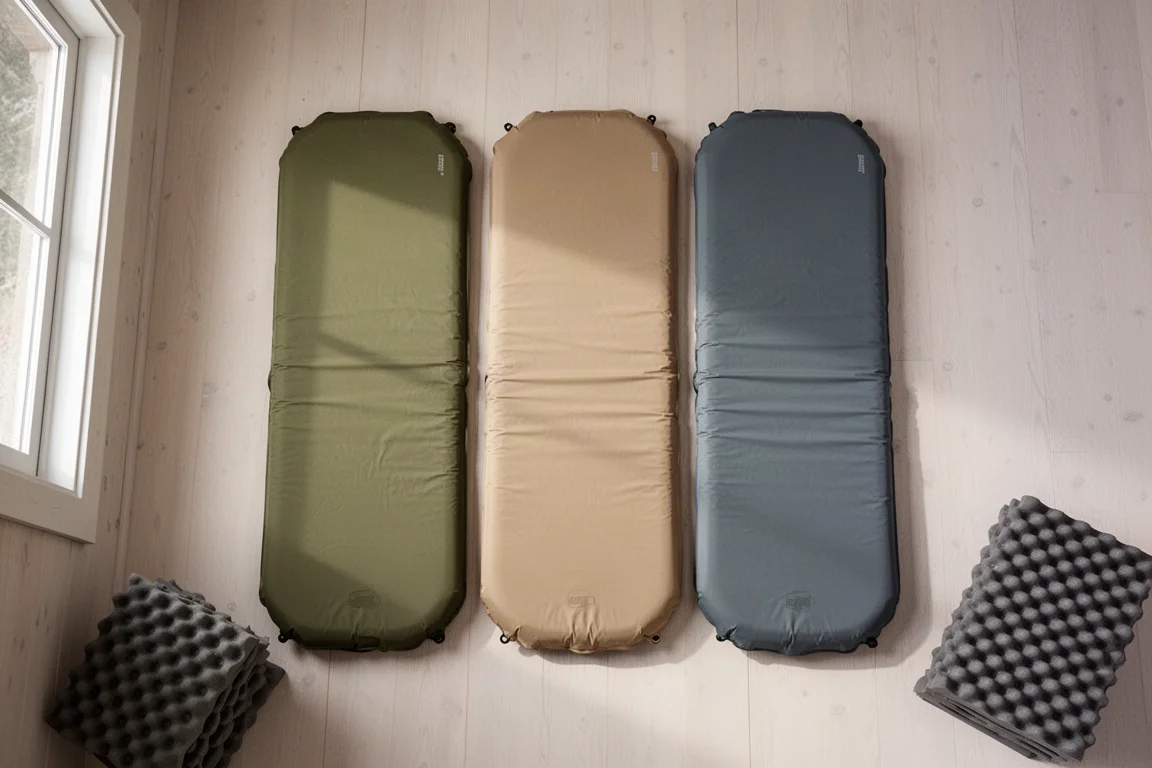
None of this makes the Zoom UL a lesser pad. It makes it a specialised one, and knowing which side of the freezing line a trip falls on is the whole decision.
Things to Consider Before Buying
Deflation is slower than on pads with a simpler dump valve, so packing up takes a little longer in the morning.
The warmth ceiling is the main consideration. Anyone who sleeps out below freezing regularly should plan on a warmer pad rather than hoping an added foam layer closes the gap.
Listed weight varies slightly with the included accessories, so the number on a kitchen scale will not always match the specification.
Comfort is personal, and while the quilted surface works well across sleeping positions, the Ether Light XT offers a very similar feel for anyone weighing alternatives.
Buying Advice
For three-season backpacking and camping where overnight lows stay around freezing or above, the Zoom UL is an easy recommendation. It is light for its size, comfortable across sleeping positions, and simple to live with. It remains a favourite among the pads used over the past year for exactly those reasons.

For trips that dip below freezing, the honest advice is to accept the weight penalty and carry a warmer pad, the Rapide SL among them, rather than relying on the Zoom UL plus an extra foam layer. Matching the pad to the temperature range is what makes it feel like a good purchase rather than a compromise.
Conclusion
The Big Agnes Zoom UL gets the two things most backpackers care about right: it is comfortable and it is light. Its limitation is clearly defined, and it only matters on cold trips. Choose it for three-season use at or above freezing and it is a strong, worthwhile investment. Choose it for winter nights and it will disappoint.
Product link
View more details for Big Agnes Zoom UL
This product is mentioned in the review. Check the specifications, options, and compatibility before buying.
View more details for Big Agnes Zoom ULFurther reading
Related Reviews
Sleeping Pads
Best Backpacking Sleeping Pads 2026: Nine Pads Rated on Price, Comfort, Warmth, and Weight
Nine backpacking sleeping pads compared on price, comfort, warmth, and weight, from a $65 summer pad to a year-round option rated at R-7.3.
Sleeping Pads
Best Backpacking Sleeping Pads: Comfort, Warmth, and Weight Compared
A practical comparison of the Nemo Quasar 3D, Therm-a-Rest NeoAir XTherm Max, and Big Agnes Rapide SL for backpackers choosing between comfort, warmth, and packed weight.
Sleeping Pads
Best Backpacking Sleeping Pads: Ultralight, Winter, Comfort and Budget Picks
A practical roundup of the sleeping pads that stand out for ultralight weight, winter warmth, pressure relief and value, plus three popular pads that fell short.