Sleeping Bags
Big Agnes Torchlight Camp 20 vs Torchlight UL 20: Synthetic or Down?
Two 20-degree sleeping bags share the same construction but differ in fill. Here is how synthetic and down insulation compare, and which bag suits which trip.
Introduction
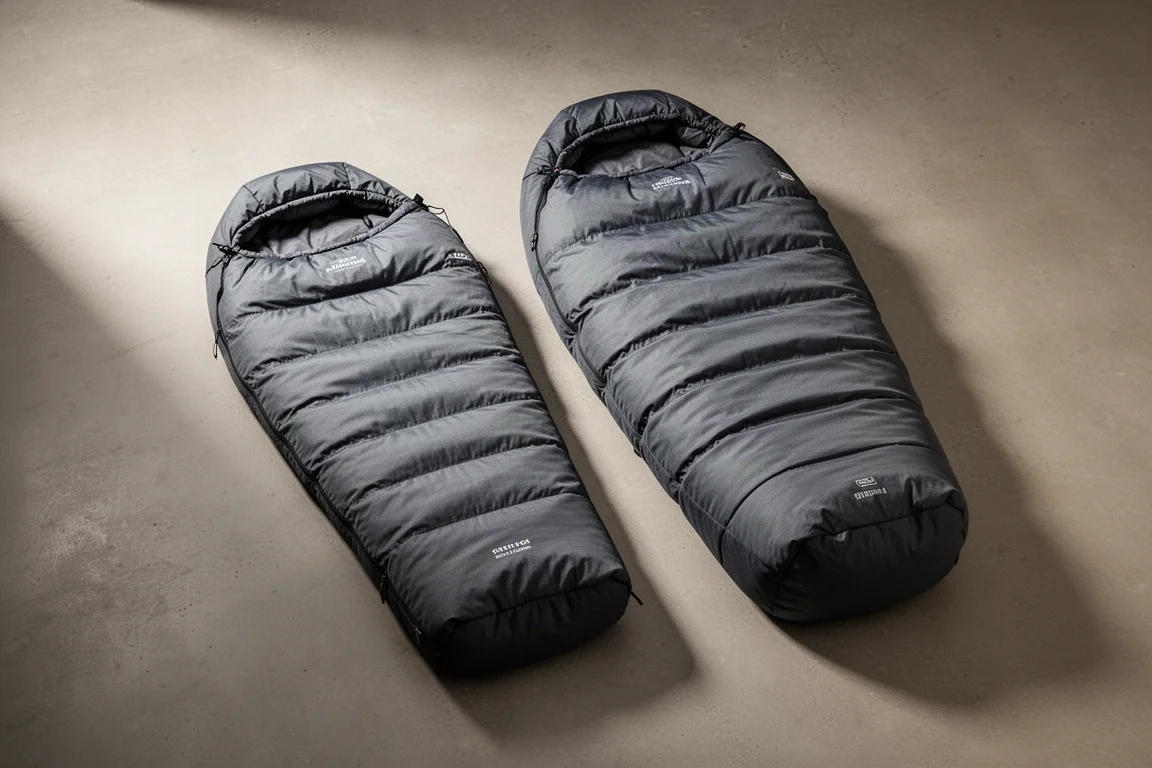
Two 20-degree sleeping bags, built on the same pattern, separated by more than two hundred dollars. The Big Agnes Torchlight Camp 20 is filled with synthetic insulation. The Big Agnes Torchlight UL 20 is filled with 850 fill power down. From the outside they look almost identical, and that is exactly what makes them worth comparing side by side.
The real question is not which bag is better in the abstract. It is which insulation type suits the trips you actually take.
How Synthetic and Down Insulation Differ
Synthetic insulation is man-made. Plastic fibres are spun and formed into air pockets that trap warm air, mimicking the loft that down provides as a natural material. It is generally heavier, bulkier and less expensive than down, and matching the compressibility of a natural fill has proven difficult. Synthetic fill also tends to sit in sheet form rather than loose clusters, so it stays broadly where it is placed inside the bag.
Down behaves differently. It lofts into clusters and is highly efficient at trapping warmth, which means far less of it is needed to reach the same temperature rating. That efficiency is the reason a down bag can be dramatically lighter and smaller than a synthetic bag with an identical rating.
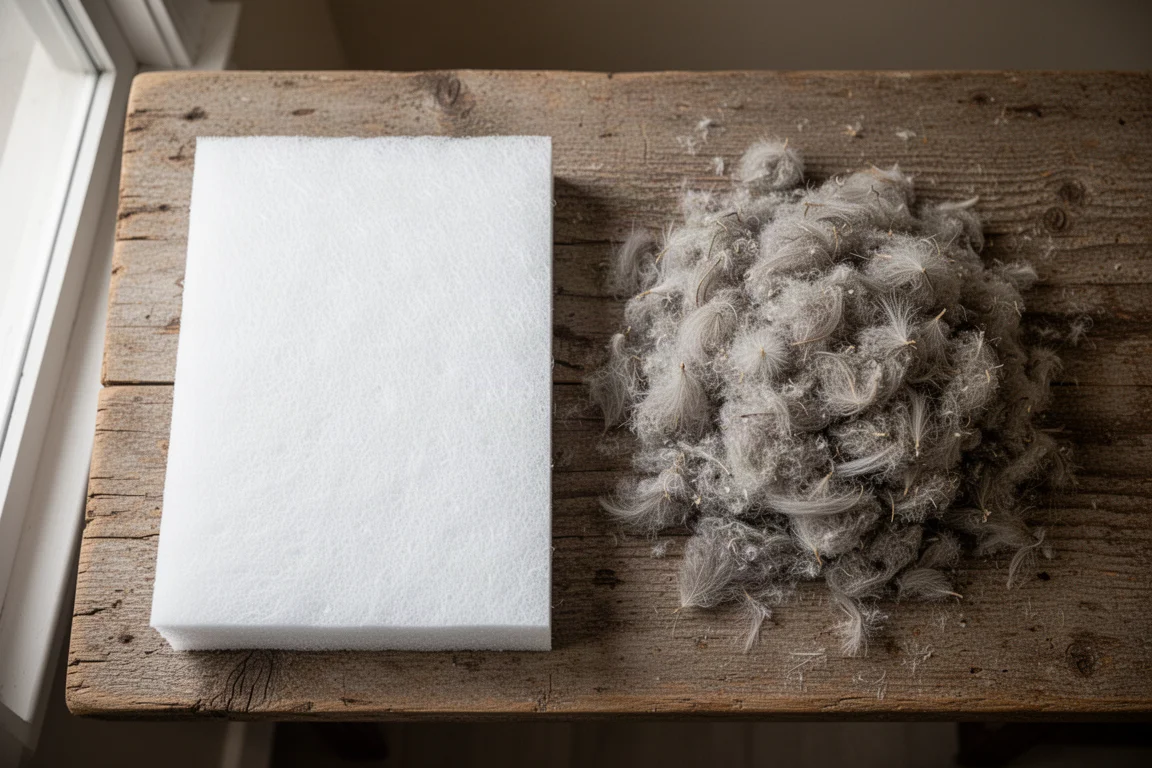
The trade-offs run in both directions. Synthetic resists the performance loss that comes with moisture, while down delivers the weight and packed size that backpackers tend to prioritise. Neither fill wins outright. They simply answer different priorities.
Big Agnes Torchlight Camp 20: The Synthetic Option
The Torchlight Camp 20 is the lower-cost bag of the pair, priced at roughly $179. It uses 32 ounces of synthetic fill to reach its 20-degree rating. Because synthetic insulation does not lose its loft when it gets wet, it holds up well in damp conditions and in single-wall shelters where condensation is common. The foot box and the hood are the areas most likely to brush against a tent wall, and those are exactly the places where synthetic fill keeps working. It also dries faster and does not clump the way down can.
The cost of that durability is bulk. The bag is heavier and packs larger than its down counterpart, and synthetic bags are sometimes built with heavier, rougher fabrics, though the fabric used here is a reasonable one.
Big Agnes Torchlight UL 20: The Down Option
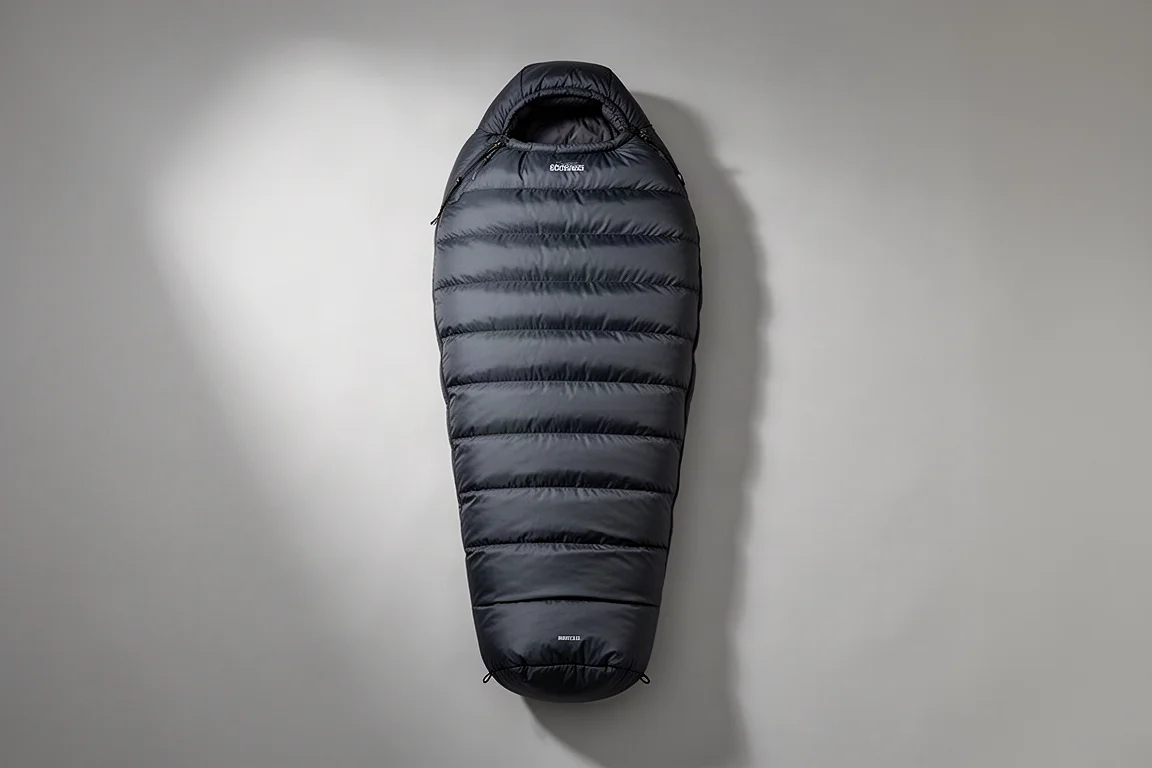
The Torchlight UL 20 uses 850 fill power down with a water-repellent treatment applied to the insulation. That treatment helps the fill resist moisture over time, which matters most at the foot box and the head end where condensation collects. It is not a complete solution, and protecting down from water remains important, but it does help the fill dry faster and resist clumping.
The efficiency gap between the two fills is the headline. The down bag needs only 17 ounces of fill to hit the same 20-degree rating that the synthetic bag reaches with 32 ounces. That translates into a full pound of weight difference and a noticeably smaller packed size. Down can also shift inside its baffles, so shaking the bag out and letting it loft when you reach camp is part of getting even coverage and avoiding cold spots.
Weight, Bulk, and Packability
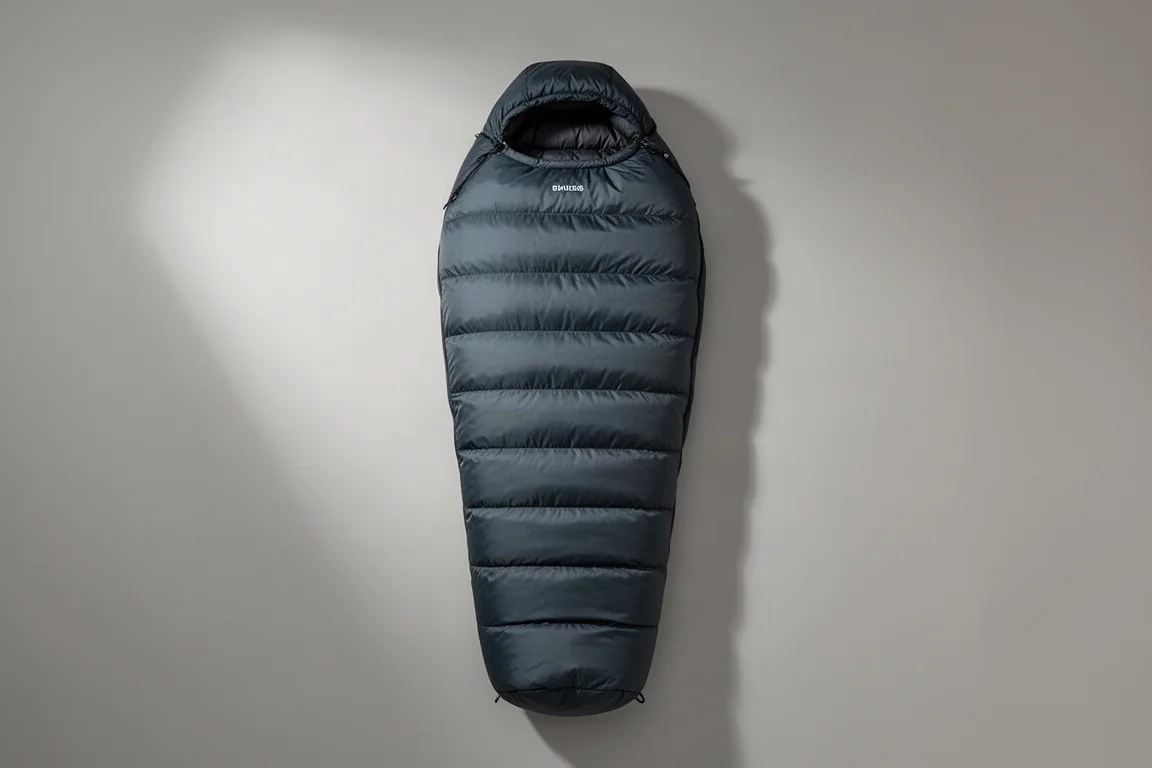
Both bags share the same construction, so the difference between them comes down to the fabrics used and the insulation inside. The down bag compresses into a considerably smaller package and saves roughly a pound.
For backpackers that saving counts twice: less weight on the shoulders and more room for everything else in the pack. The synthetic bag can still be used for backpacking, particularly if your pack is larger and you are comfortable carrying the extra bulk, but it will occupy more of the space you have available.
Warm-Up Time and Real-World Comfort
Warming up behaves differently between the two fills. In cold conditions, synthetic insulation feels warm almost immediately, with body heat filling the air pockets quickly. Down takes longer to come up to temperature, and the first minutes in the bag feel cooler while the trapped air inside the baffles is gradually replaced by warmth from the body.
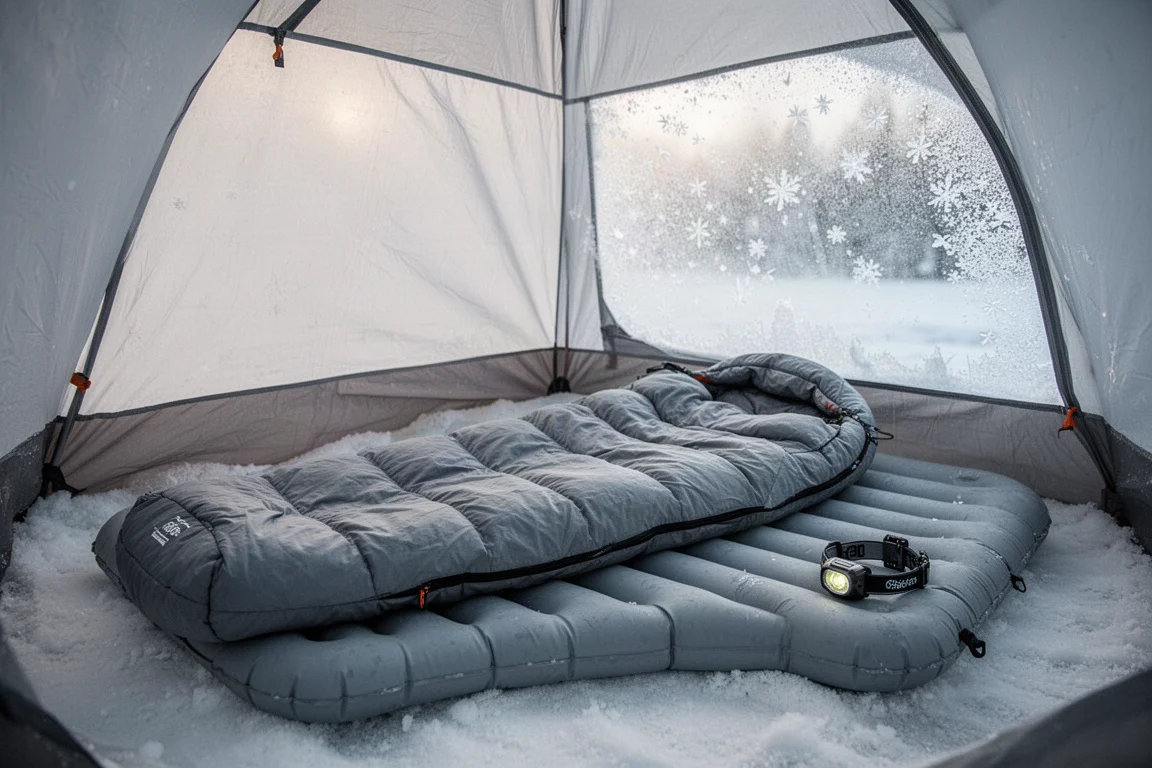
That is not a fault in the design, it is simply how down lofts and insulates. It is worth knowing before your first cold night so the slower warm-up does not come as a surprise.
Damp Conditions and Condensation
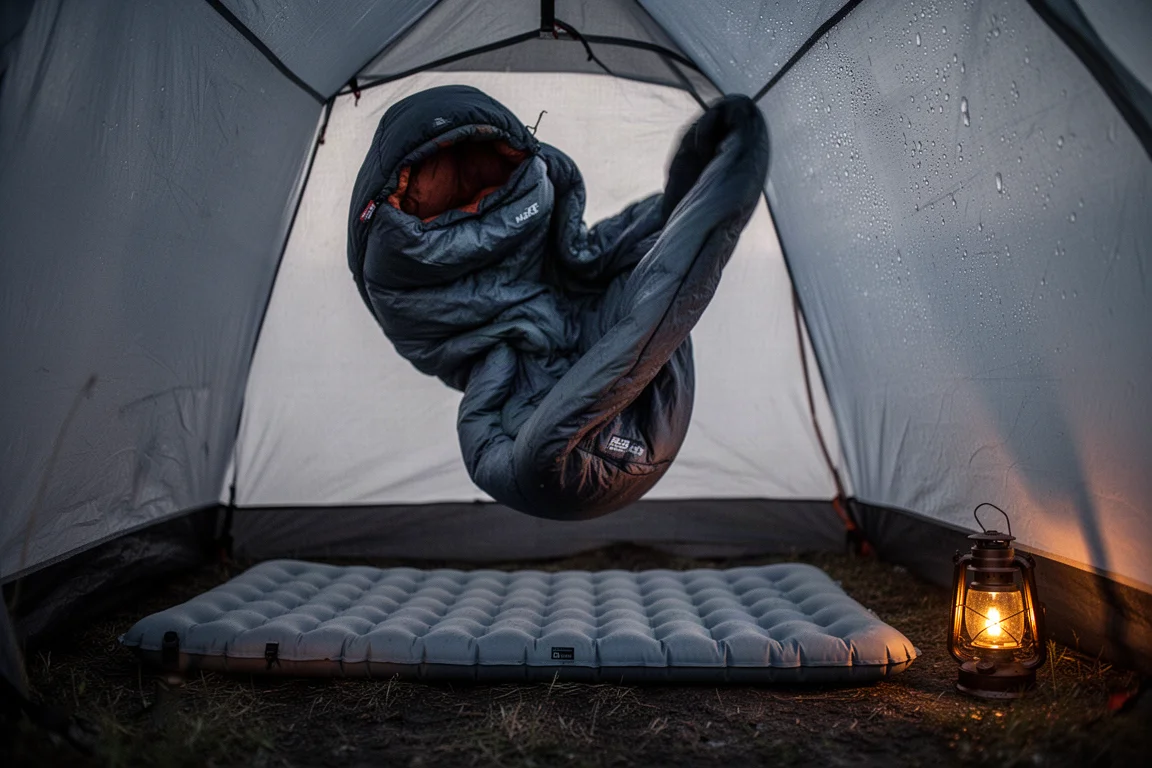
Moisture is where the two bags diverge most clearly. Condensation in a tent tends to collect on the foot box and the hood, and synthetic fill does not lose its loft when that happens. Down clumps when it gets wet, and once it clumps in the field it is very difficult to restore the loft that makes the bag warm.
The water-repellent treatment on the Torchlight UL 20 down helps it shed moisture and dry faster, but it is not a guarantee. Keeping a down bag protected from water remains the safest approach for anyone who camps in consistently wet conditions.
Which Sleeping Bag Makes Sense for You
The honest answer depends on what you need the bag to do. For car camping, where weight and packed size are not constraints, the Torchlight Camp 20 is the straightforward choice. At roughly $179 it keeps you warm, handles damp conditions without fuss, and leaves more budget for the rest of your kit.
For backpacking, where every ounce and every litre of pack space counts, the Torchlight UL 20 is the stronger option. At around $420 it carries a genuine premium, but it saves a full pound and compresses far smaller, which is exactly what long days on the trail reward.
If your budget does not stretch that far, down bags exist at lower prices than this particular model. The comparison here simply illustrates what the insulation and fabric differences actually buy you, so you can decide whether that premium is worth paying for your own trips.
Conclusion
These two bags are a clean illustration of the synthetic versus down decision. Synthetic insulation costs less and shrugs off moisture, at the price of weight and bulk. Down costs more and asks for a little more care, but it delivers a lighter, smaller package that is hard to beat on the trail. Match the insulation to the trips you actually take, and either bag will do its job well.
Further reading
Related Reviews
Sleeping Bags
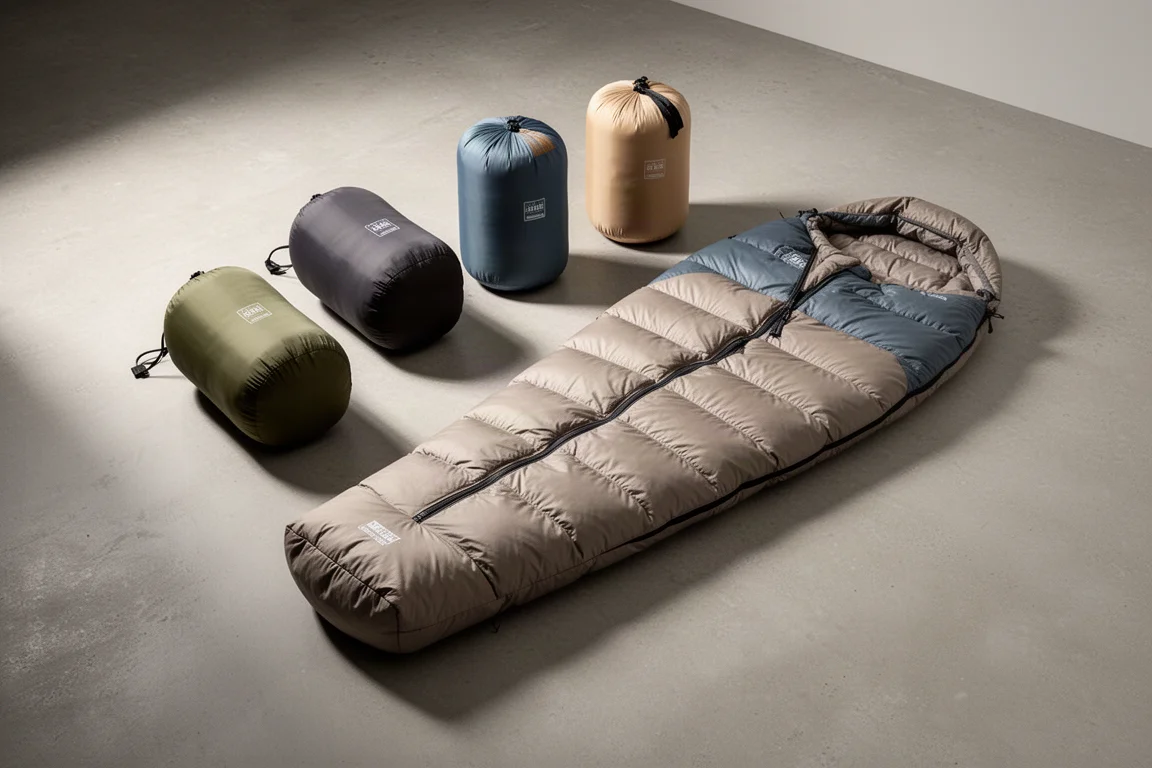
Best Down Sleeping Bags Under $300: Four Backpacking Options Worth a Look
Four down sleeping bags that stay under $300, compared on fill power, baffle design, hood comfort, and packed size.
Sleeping Bags
Best Sleeping Bags and Sleep Systems: Five Premium Down Picks Compared
Five premium down sleeping bags and sleep systems compared on warmth, weight, construction, and value.
Sleeping Bags
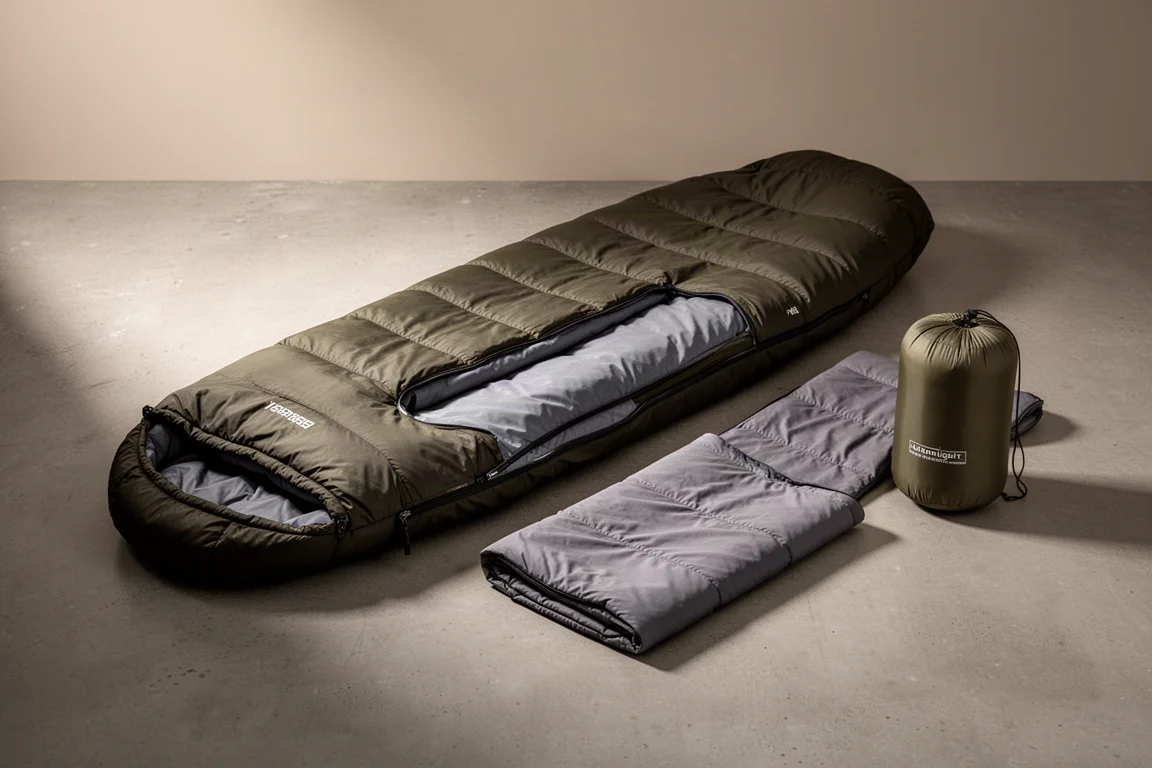
Big Agnes Lost Ranger UL 3-in-1 Sleeping Bag System Review: One Bag, Three Setups
A practical look at the Big Agnes Lost Ranger UL 3-in-1 Sleeping Bag System, covering how the three configurations work, where it shines, and the details worth weighing before buying.