FPV Drones
BetaFPV Meteor 75 Pro vs Air75: Which Tiny Whoop Suits Beginners Better
A practical comparison of two popular 75mm FPV drones, tested by a beginner pilot to help you choose between durability and handling.
Introduction
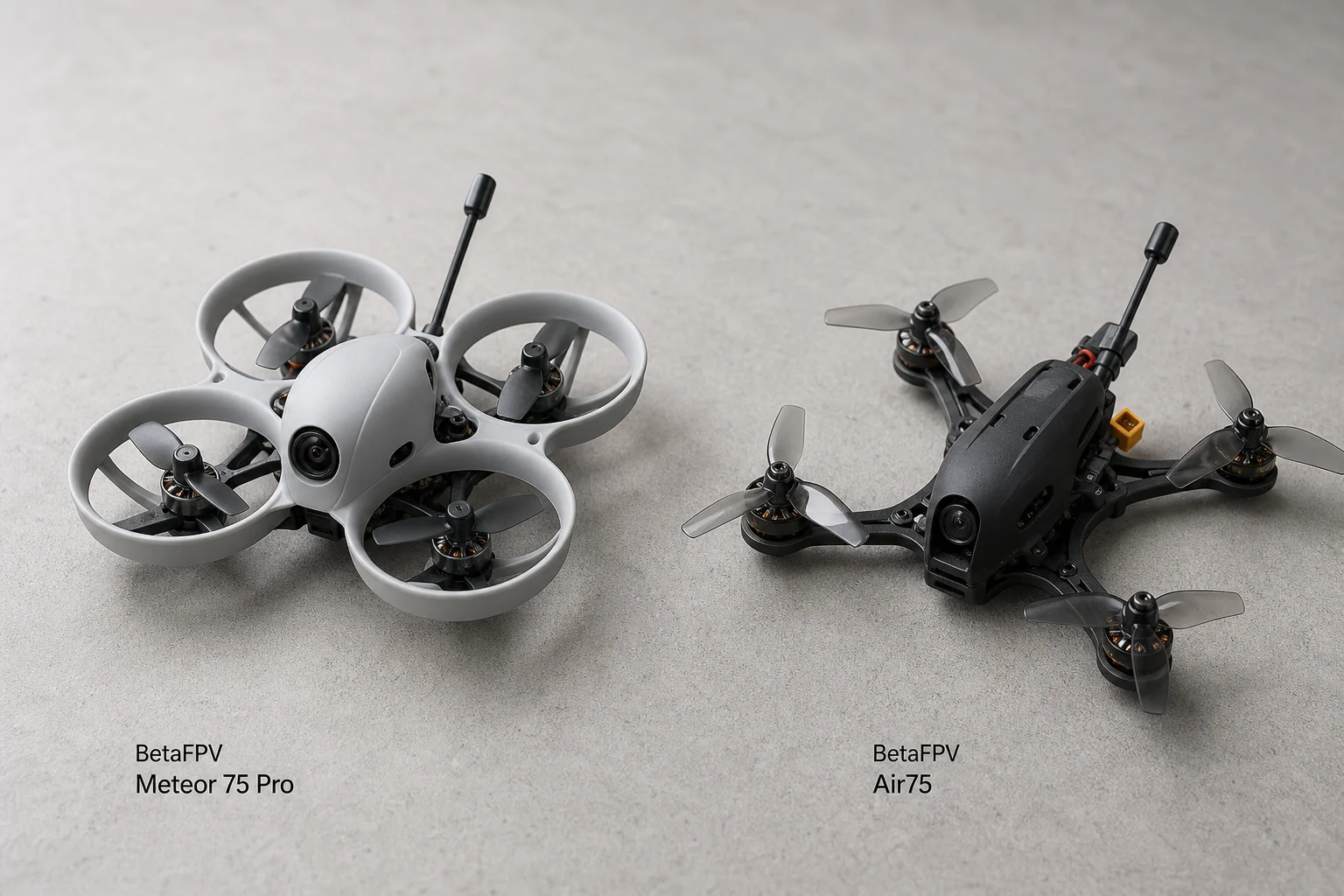
The BetaFPV Meteor 75 Pro and Air75 are both popular 75mm FPV drones aimed at pilots stepping up from smaller models. The Meteor 75 Pro has been on the market for over two years and has received several updates since its initial release. The Air75 is the newer, lighter competitor. To help you decide which makes more sense for a beginner, we tested both drones with a pilot who had minimal FPV experience and examined the practical differences between them.
Flight Time and Outdoor Performance
The Meteor 75 Pro delivers impressive real-world flight time. In actual flying conditions, not just hovering, the drone achieved 6 minutes and 30 seconds on its standard 650 mAh battery. This is not a theoretical maximum but a genuine operational figure that reflects typical flying patterns including climbing, maneuvering, and cruising.

With a lighter 450 mAh battery, flight time drops to around 4 minutes and 40 seconds, which is still respectable for a 75mm platform. The larger 75mm frame and propellers handle outdoor wind conditions noticeably better than smaller 65mm drones. In comparison, 65mm models typically struggle to exceed 3 minutes of flight time, making the jump to 75mm a meaningful upgrade for outdoor flying.
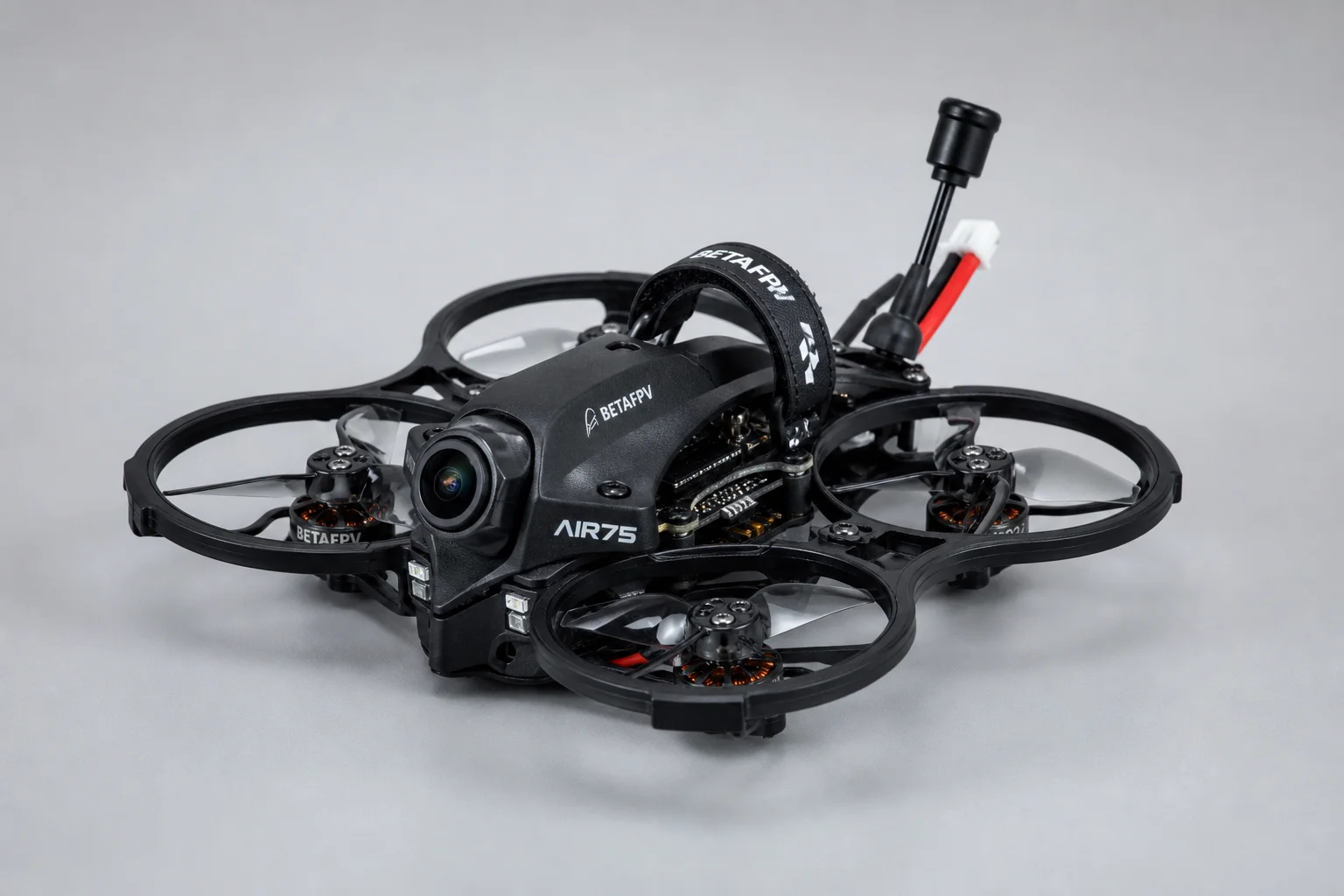
The Meteor 75 Pro’s weight of 30.5 grams is slightly heavier than the Air75 at 21 grams, a difference of 9.5 grams that becomes apparent during flight. The extra weight does not significantly impact handling but is noticeable in how the drone feels in the air.
What Changed in the Meteor 75 Pro
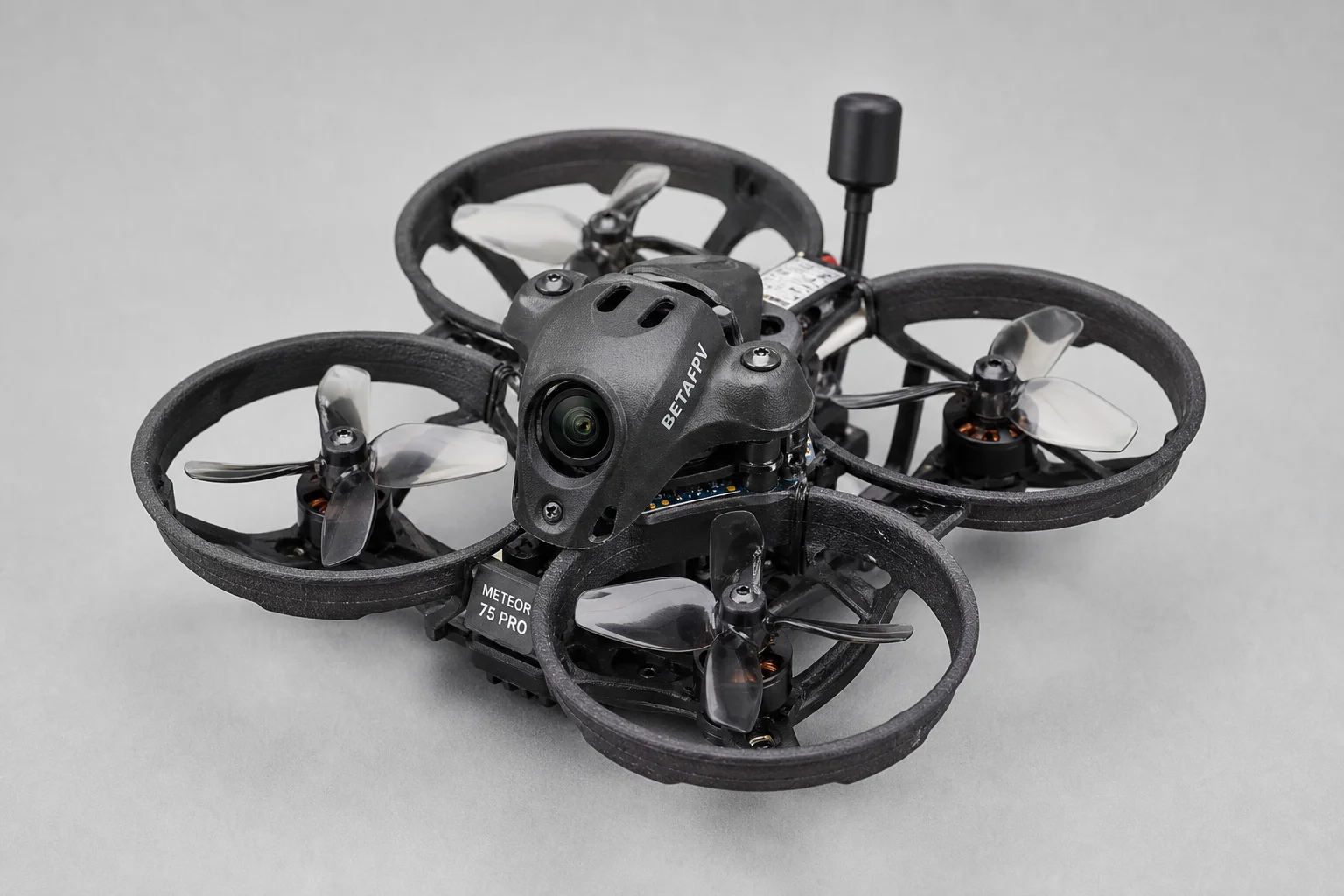
The updated Meteor 75 Pro incorporates several meaningful changes from the original version. The flight controller has been completely redesigned, bringing with it a cascade of improvements.
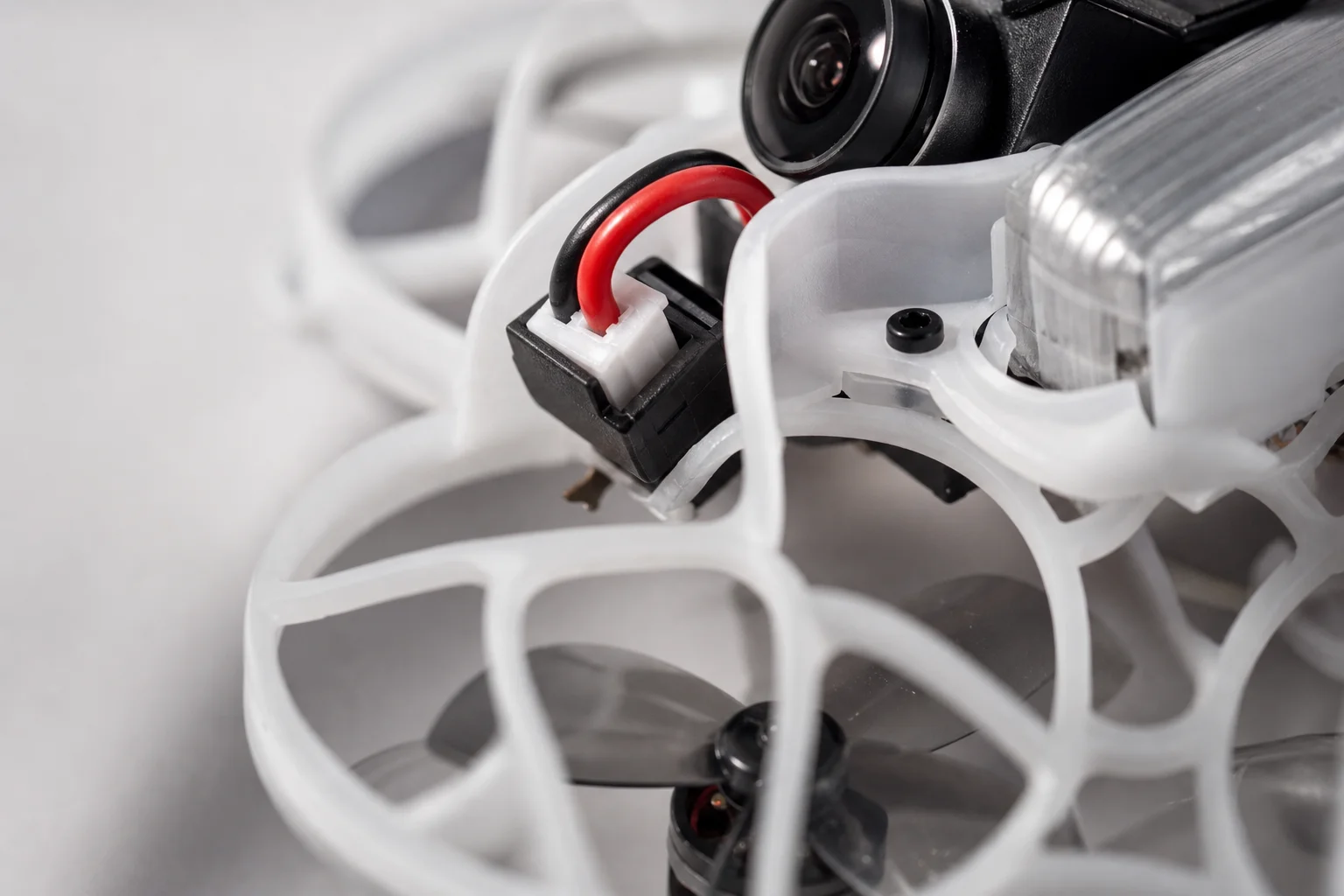
The USB-C port has been removed and replaced with a small white connector, matching the design of the Air75. The VTX (video transmitter) has been upgraded from an external 350mW unit to a 400mW transmitter built directly into the flight controller. The gyroscope has been updated, and the blackbox storage increased from 8MB to 60MB for better flight data logging. The VTX antenna is slightly shorter than before.
A practical improvement addresses a common complaint: the battery connector now plugs in 180 degrees opposite to the battery cables, eliminating the need for longer cables and awkward routing. Previously, the connector and cables all faced the same direction, requiring cable management workarounds.
Despite these upgrades, the weight savings are modest. The Meteor 75 Pro is now half a gram lighter at 30.5 grams compared to 31 grams in the original version, a 1.6 percent reduction. However, the changes demonstrate that BetaFPV listens to user feedback and prioritizes practical improvements over chasing maximum specifications.
Indoor Flying Capability
The Meteor 75 Pro can fly indoors, though it requires a different approach than outdoor flying. Adding protective guard rings around the propellers helps prevent damage during inevitable crashes in confined spaces. The drone’s handling indoors is responsive but requires careful throttle control due to its power output.
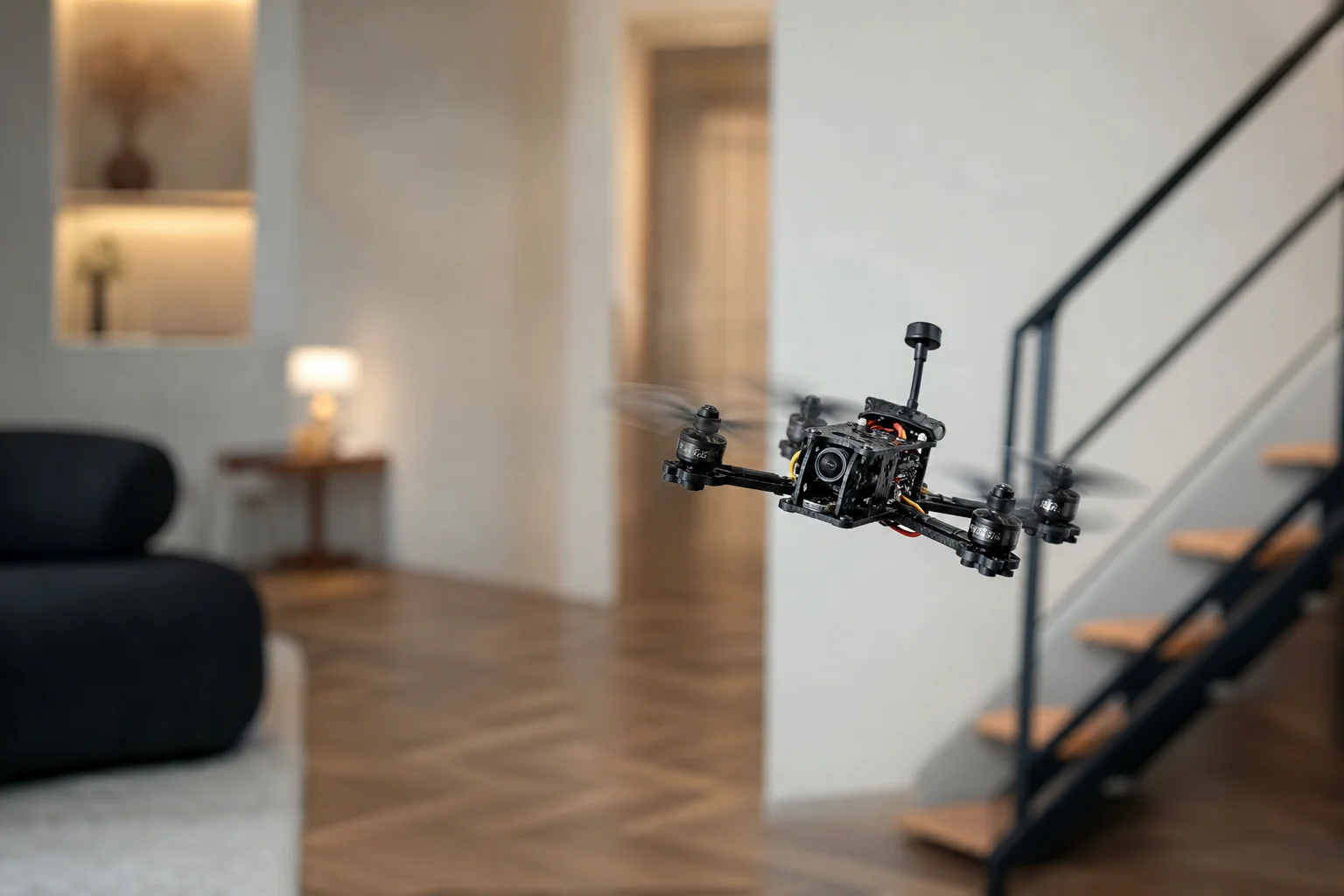
Power loops and aggressive maneuvers are possible indoors but demand precision. The drone’s acceleration can catch inexperienced pilots off guard, and angle mode (a safety feature that limits pitch and roll) is best avoided by pilots comfortable with manual control. For smooth indoor flying, gentle inputs and lower throttle settings work better than aggressive stick movements.
Beginner Pilot Comparison
To determine which drone suits beginners better, a pilot with minimal FPV experience flew both the Meteor 75 Pro and Air75 back-to-back. The tester had previous experience with the Air65 and some simulator practice, but limited real-world FPV flying.

The Meteor 75 Pro felt more stable and predictable during the test flights. The tester reported feeling more comfortable flying it, despite acknowledging that the Air75 was easier to control at high speeds. The Meteor 75 Pro’s slightly heavier weight and larger frame provided a sense of confidence, even though both drones are equally capable in the hands of a skilled pilot.
When asked to choose between the two, the beginner pilot selected the Meteor 75 Pro, citing durability and comfort as the deciding factors. The Air75’s lighter weight and snappier handling appeal to pilots seeking agility, but the Meteor 75 Pro’s more forgiving flight characteristics and sturdier construction make it the better choice for someone still building confidence.
Conclusion
The Meteor 75 Pro remains a solid choice for beginners despite being over two years old. The recent updates address real usability issues, and the flight time advantage over 65mm drones is substantial. The Air75 is lighter and more nimble, suiting pilots who prioritize responsiveness and have some flying experience. For a first 75mm drone, the Meteor 75 Pro’s combination of flight time, durability, and beginner-friendly handling makes it the more practical choice.
Further reading
Related Reviews
FPV Drones
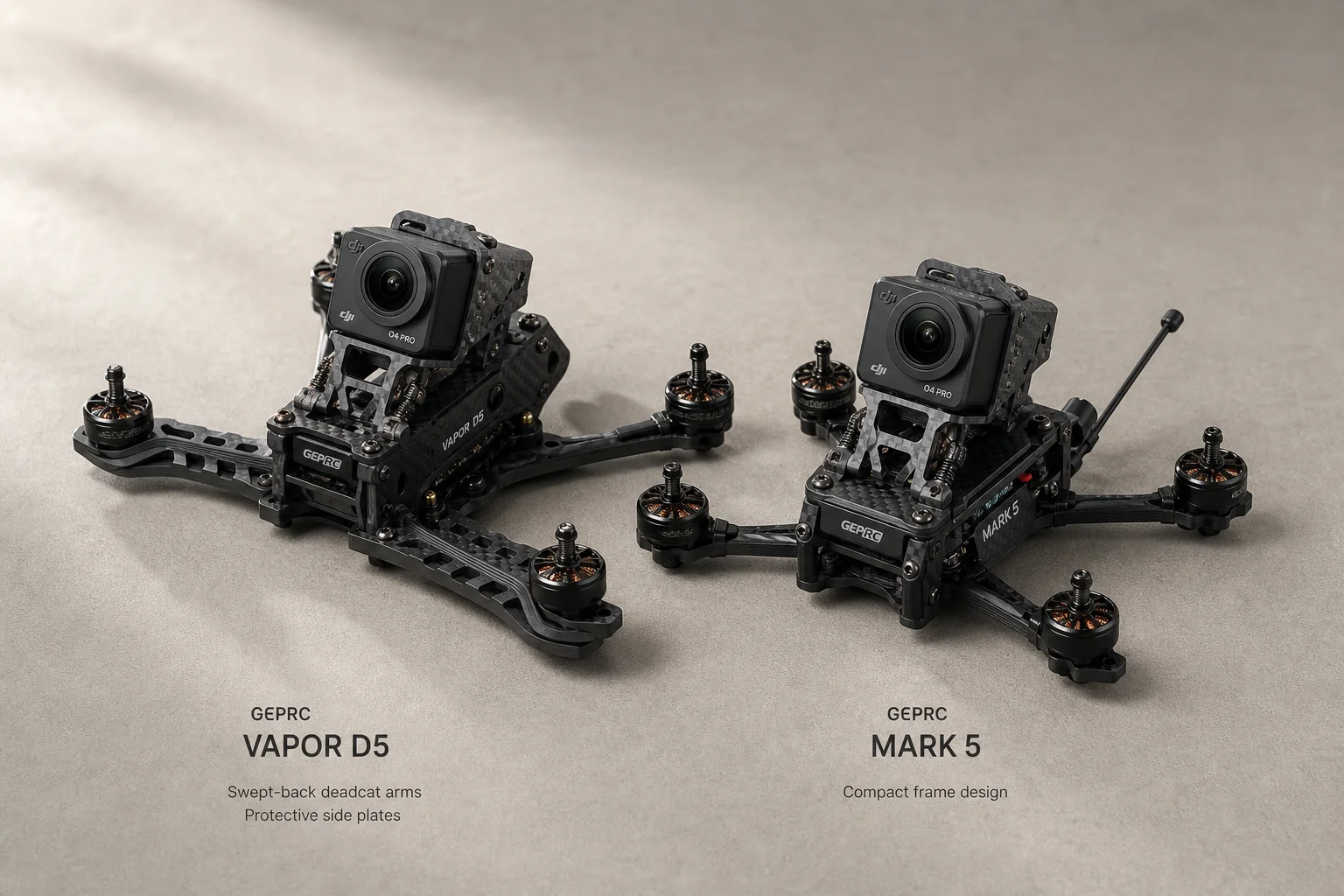
Best 5-Inch FPV Drones 2026: Vapor D5 vs Mark 5 Comparison and Review
A detailed comparison of the GEPRC Vapor D5 and Mark 5 5-inch FPV drones, covering performance, durability, price, and which suits different flying styles.
FPV Drones
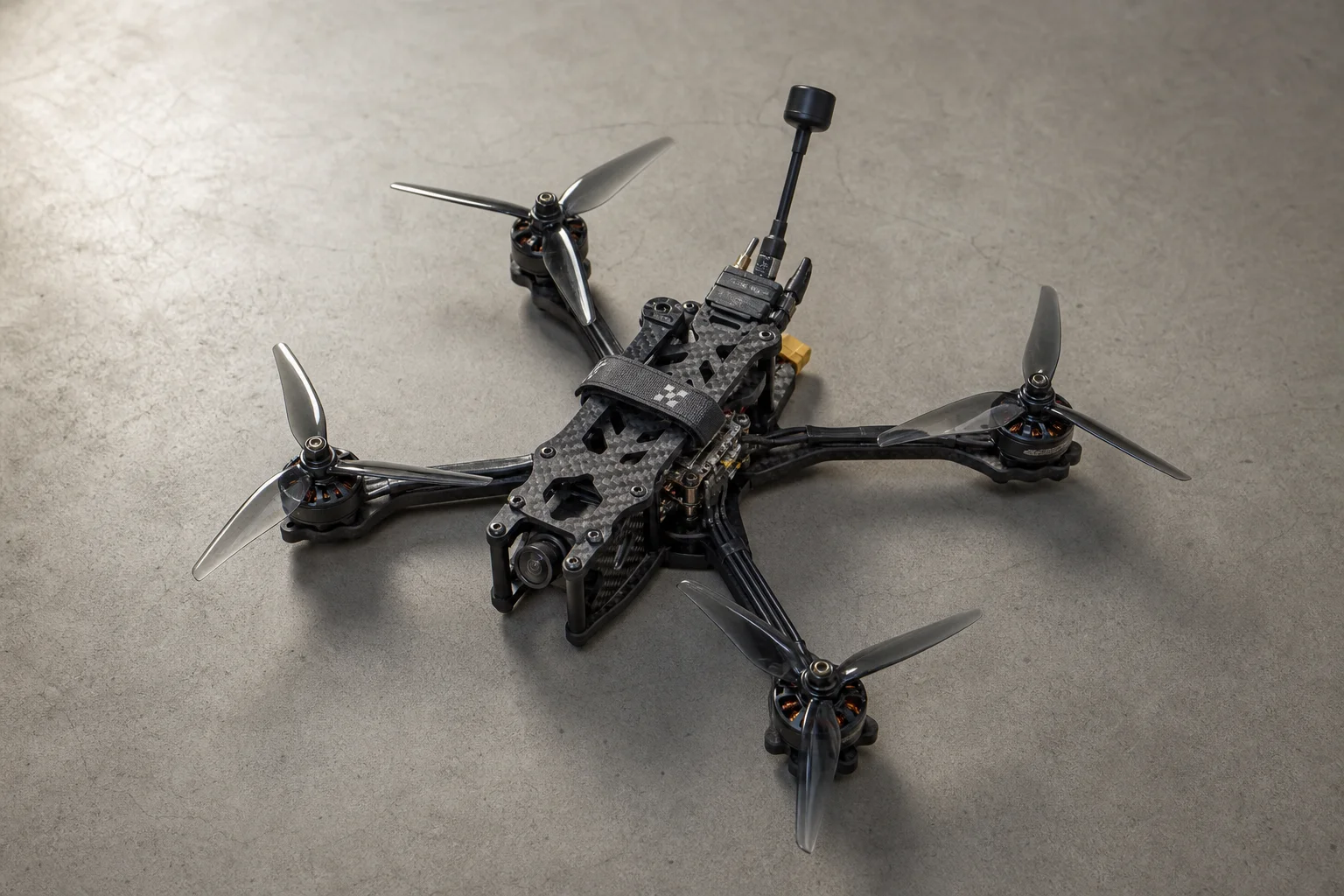
How to Build a 7-Inch FPV Drone: Complete Assembly Guide
A practical walkthrough for assembling an affordable 7-inch long-range FPV quad, from frame to flight controller, with all components and soldering techniques explained.
FPV Drones
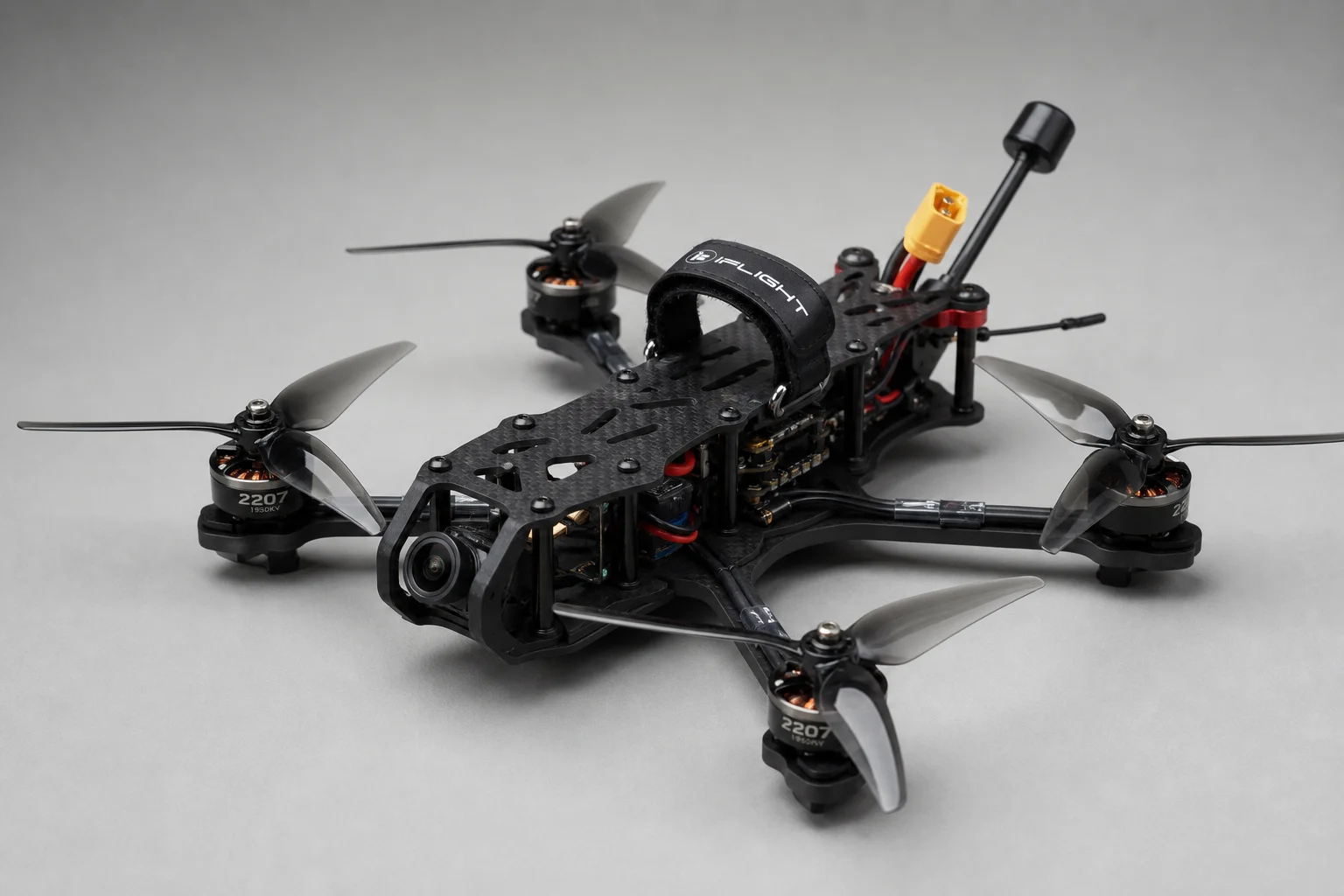
Building a High-Quality FPV Drone Backup: Component Selection and Assembly Guide
A complete walkthrough of selecting premium FPV drone components and assembling a reliable backup quad with the IT'S FPV ERA frame, KISS FC Ultra, and professional-grade electronics.