Sleeping Pads
Bestway Ridge Light vs Therm-a-Rest NeoAir vs Litor: Three Sleeping Pads Compared
A practical comparison of three sleeping pads at three very different price points, covering insulation claims, comfort, weight, pack size, and how easy each one is to inflate.
Introduction
A sleeping pad is one of the few pieces of camping gear that decides whether a night outdoors is restful or miserable. It has to insulate you from cold ground, stay comfortable for hours, and still be light enough to carry over distance.
Three pads sit at very different points on that trade-off. The Bestway Ridge Light promises a claimed R-value of 4.9 for $49.99 on Amazon in the large size. The Therm-a-Rest NeoAir is the long-established lightweight option at over £200 for the regular size. The Litor is a lower-cost pad at roughly £60 that has become a regular companion on cold-weather trips.
This comparison looks at what each pad does well, where each one falls short, and which type of camper each one actually suits.
What Matters in a Sleeping Pad
Four things decide whether a pad works for you: insulation, comfort, weight and packed size, and how easy it is to inflate and deflate at the end of a long day.
Insulation is usually expressed as an R-value. The Ridge Light carries a claimed R-value of 4.9 and is marketed as suitable for cold weather. That figure has not been ASTM certified, which is worth knowing before planning a winter trip around it. The construction gives some context: an aluminized film sits inside a firmer zone, reflecting heat back toward the sleeper and holding cold air away.
Comfort comes down to shape and surface. Mummy-shaped pads taper at the shoulders and feet, which saves weight but leaves less room to move. Wider, longer pads are more forgiving but heavier. Surface texture matters too, and dimpled honeycomb patterning tends to feel softer under a sleeping bag than a plain, tightly tensioned surface.
Weight and packed size are the classic budget compromise. A heavier pad costs less and carries more, while a light pad often costs significantly more.
Setup is the most underrated factor of all. A pad that inflates in three minutes is a convenience. A pad that fights you for ten minutes in the dark is a problem.
The comparison below uses manufacturer figures where they are published, and hands-on measurements where the numbers are easy to verify.
Bestway Ridge Light: The Budget Contender
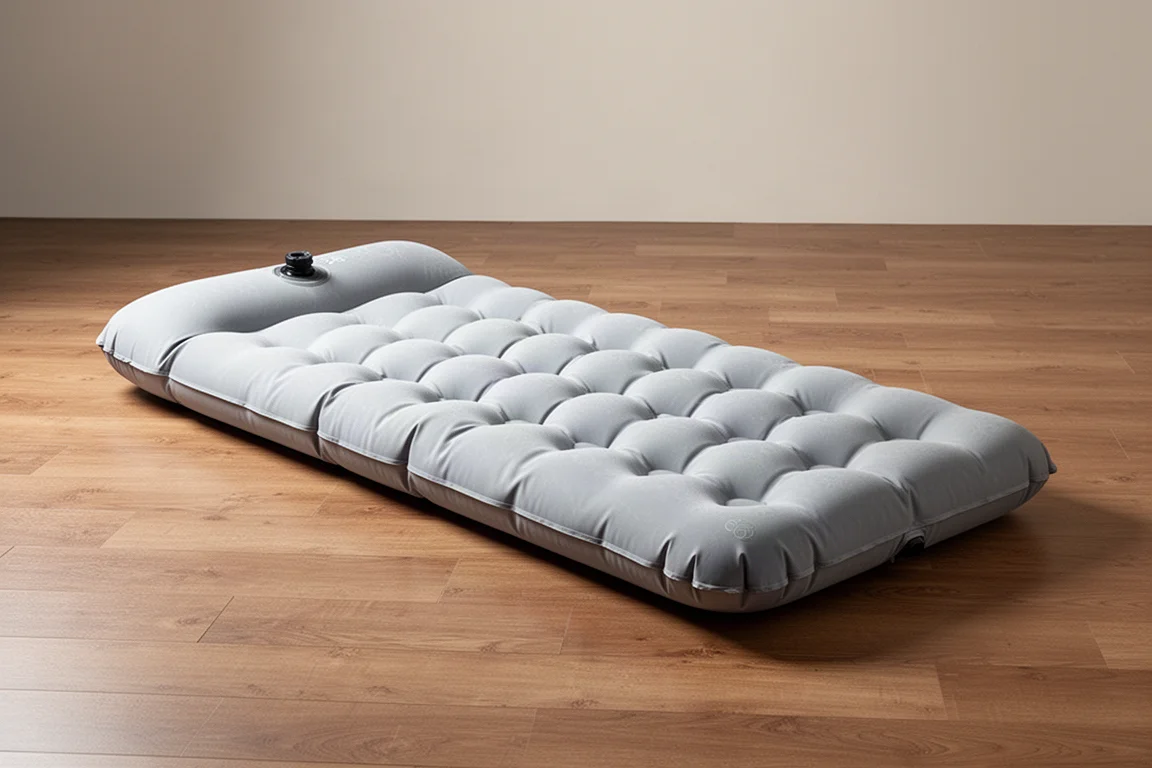
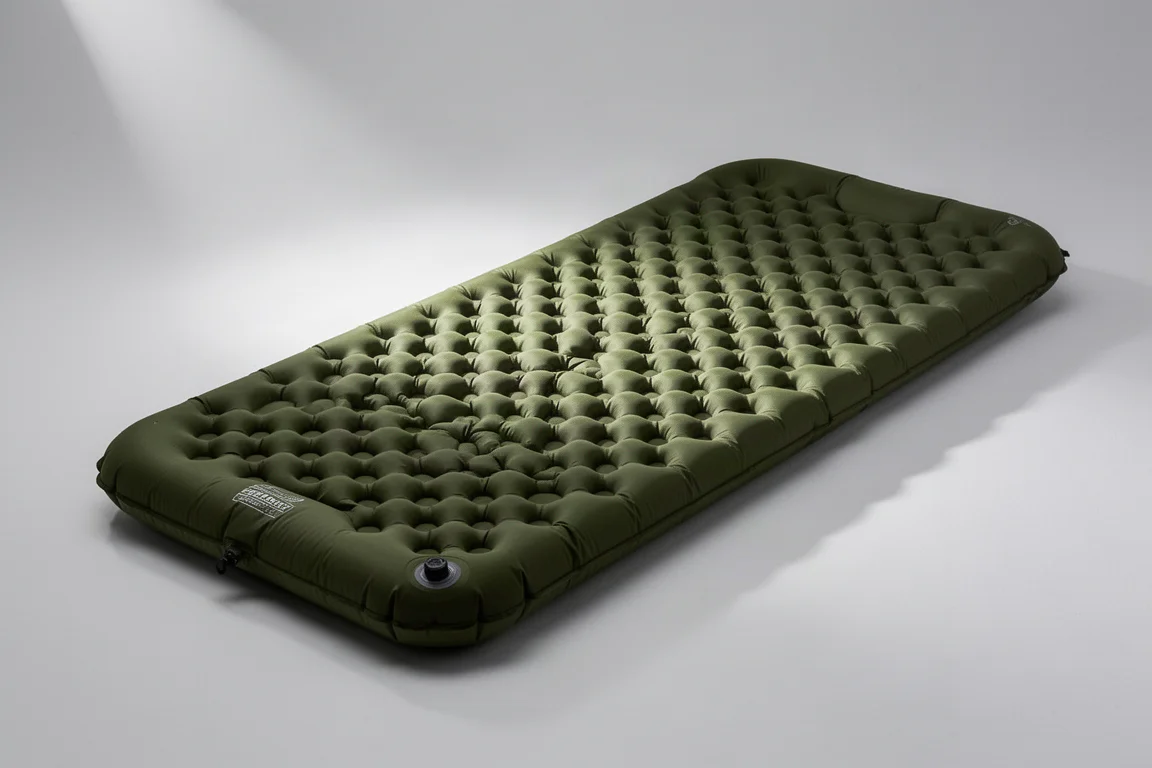
The Ridge Light measures 193 cm long, 63.5 cm wide, and 7.5 cm tall, making it a genuinely thick pad with a mummy shape. Bestway lists puncture-resistant 20D ripstop nylon, a low-profile valve for easy pressure adjustment, and a lightweight pump sack with a small internal pocket that holds repair patches.
On the scales it comes in at around 0.71 kg, close to the 638 g figure printed on the packaging and noticeably heavier than the other two pads here. Inflating it with the supplied pump sack took about three minutes indoors.
Lying on it, the surface feels soft and mattress-like rather than tightly tensioned, and it holds the body instead of letting it roll away. There is some crinkle from the aluminized film inside while inflating, though it is not especially intrusive once you are settled. The extra height over the Litor also puts you further from the ground.
The main open question is the R-value. The claimed 4.9 figure has no visible ASTM verification, so it is best treated as a manufacturer claim until it has been properly tested in cold conditions. Weight is the other trade-off: at roughly three quarters of a kilogram, it is a pad you notice in a pack.
Therm-a-Rest NeoAir: Light and Compact, With Caveats
The NeoAir is the lightest pad of the three at 420 g, and it packs down smaller than either alternative. It is the pad many campers move to after carrying two cheaper pads, and its insulation performance is well established.
Two things count against it in daily use. The first is sizing. The regular version is noticeably smaller than the other two pads here, and it is easy to spend the night feeling perched near the edge. Moving up to the large size adds a substantial amount to the price, roughly £40 to £50 more on top of an already premium figure.
The second is the valve. The twist-wing design is more complicated than the flat valves used on the Ridge Light and the Litor, and getting the pump sack to actually fill the pad can be frustrating. In practice, filling it by mouth is quicker, which is not ideal, because exhaled moisture inside a pad can lead to mould over time.
There is also a durability consideration. Baffle failures have been reported on NeoAir pads after extended use, and a premium price does not immunise a pad against that. It remains an excellent lightweight option, but it is not automatically the most comfortable or the most trouble-free.
For campers who prioritise packed size and weight above everything else, that compromise can still be worth making.
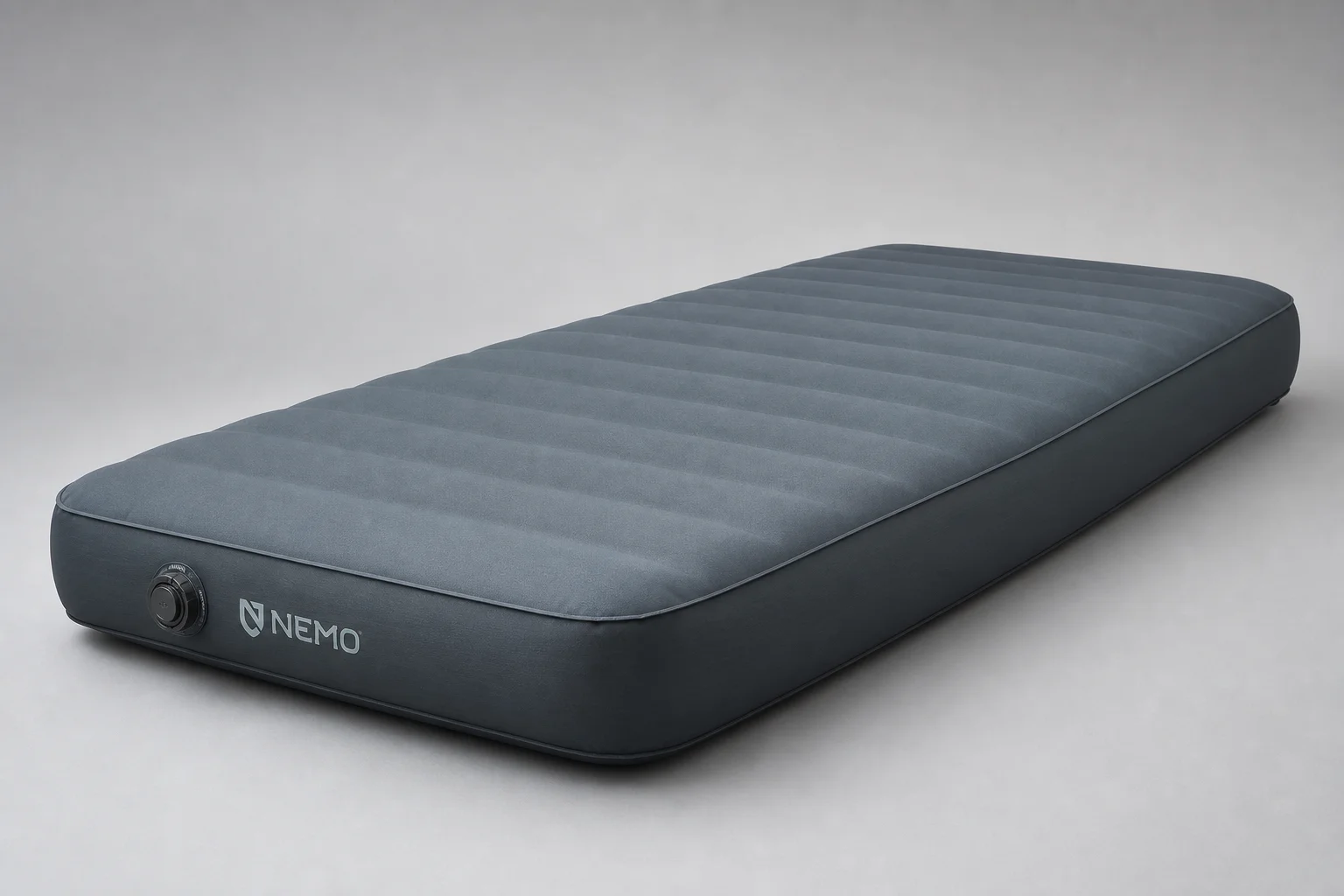
Litor: The Comfortable Mid-Price Pick
The Litor sits between the other two on price at roughly £60, and it is the largest pad here. It is wider and longer than the NeoAir, which makes a real difference across a full night: there is no sense of sliding off the edge, and the dimpled, hexagonal surface pattern feels softer than a plain tensioned surface.
Setup is the simplest of the three. The valve is flat and discreet, the pump sack connects cleanly and pops off once the pad is full, and the same sack doubles as the stuff sack, with clips that hold everything together. That removes one item from the pack and one thing to lose.
Two caveats are worth noting. It is slightly heavier than the NeoAir, and the example used here developed a slow puncture over time, needing a single lungful of air in the middle of the night to stay firm. It remains perfectly usable, but it is a reminder that lower-cost pads can demand a little more attention.
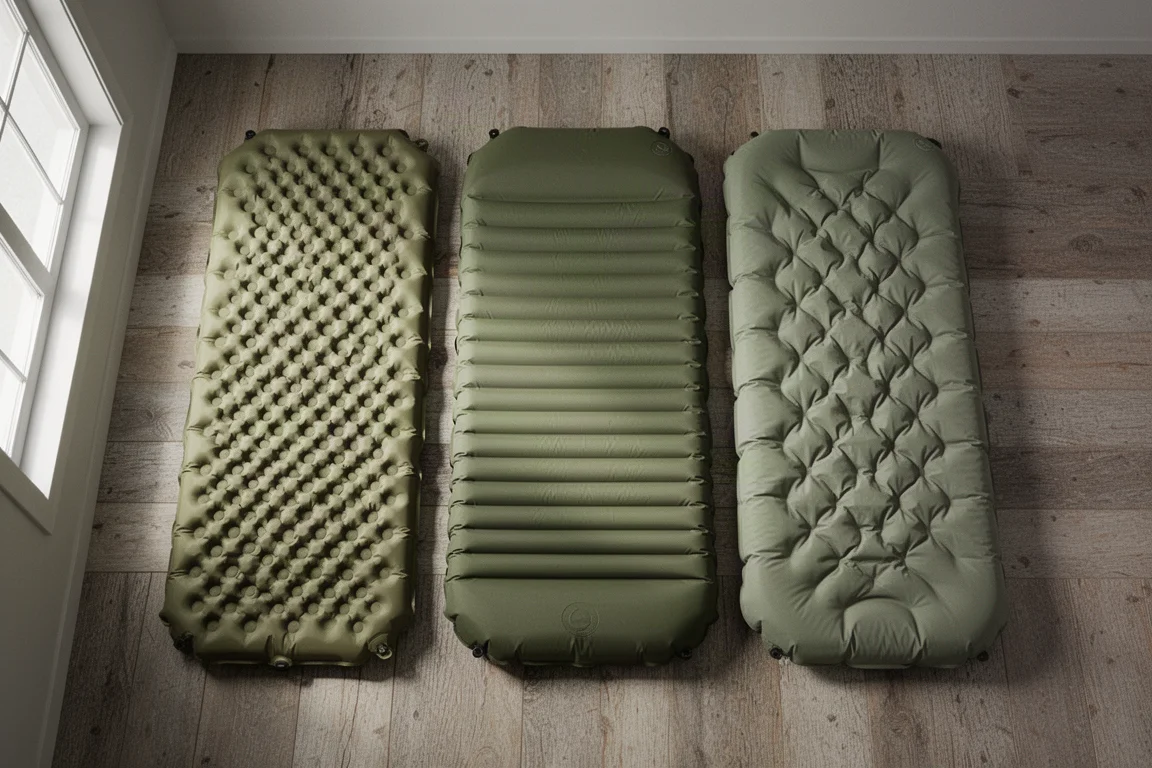
Comfort and Warmth Compared
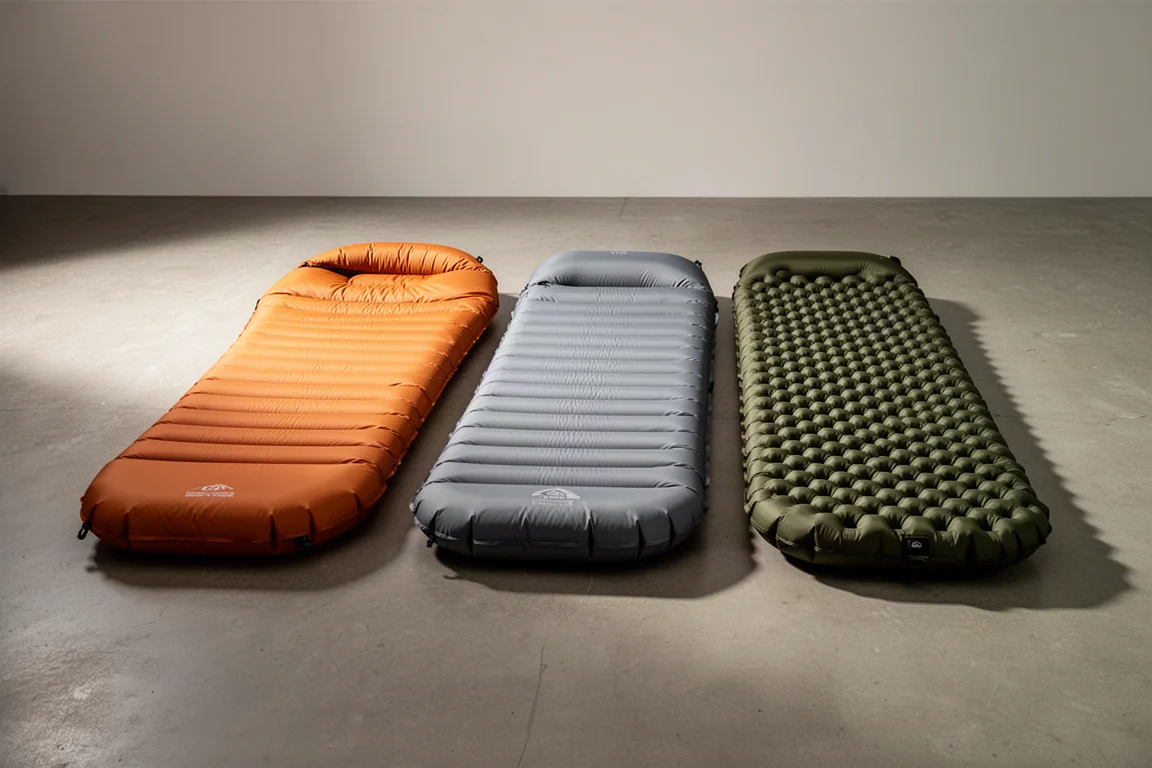
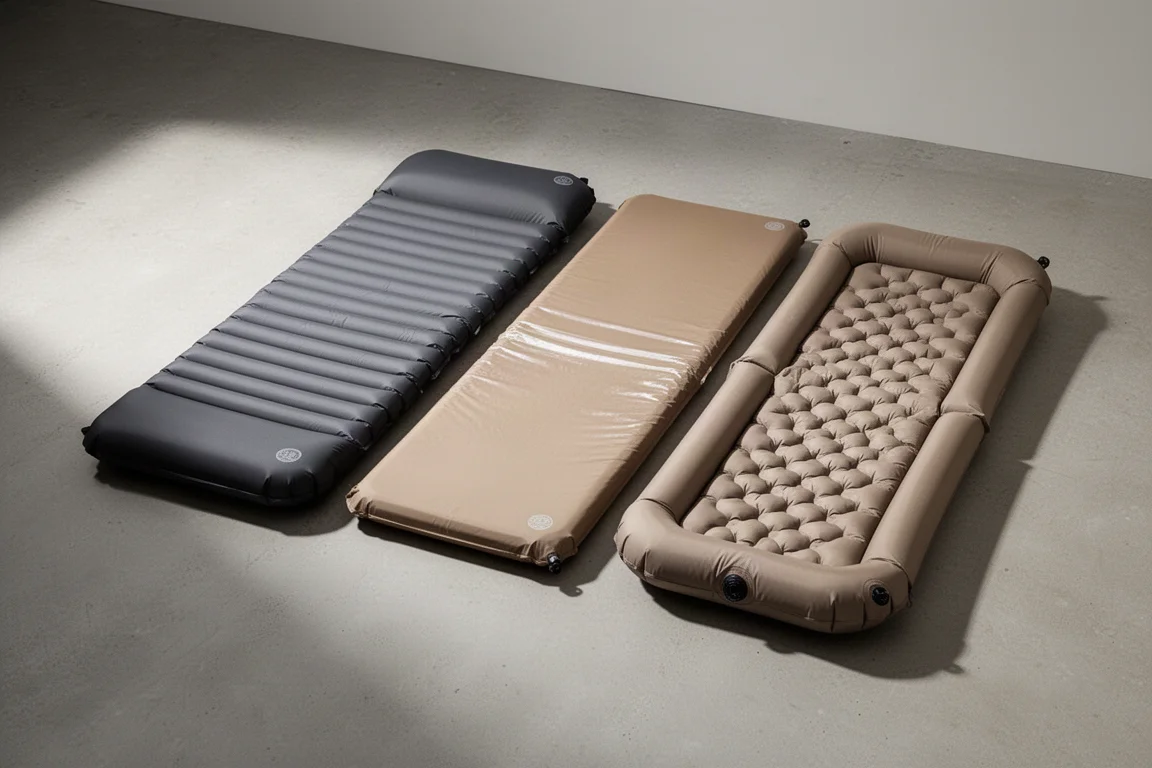
Laid out side by side, the differences are easy to see. The NeoAir is clearly the smallest, the Litor is the largest, and the Ridge Light sits in between with its mummy shape. Inflated height is similar across all three, with the Ridge Light and the Litor slightly thicker than the NeoAir.
Comfort is close between the Ridge Light and the Litor. Both feel supportive and soft, and both keep you off the ground in a way the smaller NeoAir does not quite manage at regular size. The NeoAir feels firmer under load and compresses more, which some sleepers prefer and others do not.
On warmth, the Ridge Light’s combination of extra thickness, an internal air chamber, and aluminized film suggests the claimed R-value is not far off, even without certification. The Litor has handled snow and cold ground without issue. The NeoAir’s insulation is the best documented of the three, but that advantage comes at a much higher price.
The practical takeaway is that the two lower-cost pads give up very little in comfort, while the NeoAir trades size and easy setup for its weight saving.
Weight, Pack Size, and Ease of Setup
Weight is the clearest dividing line. The NeoAir is the lightest at 420 g. The Litor is a little heavier than that. The Ridge Light is heaviest at around 0.71 kg, roughly three quarters of a kilogram in a pack.
Packed size follows a similar order. The NeoAir rolls down smallest, particularly in the regular size. The Ridge Light and the Litor pack to broadly similar volumes, with the Litor’s integrated stuff sack making it the neatest of the two to carry.
Setup favours the budget pads. Both the Ridge Light and the Litor inflate in around three minutes with their pump sacks and use simple flat valves. The NeoAir’s twist-wing valve is slower and more awkward to work with, and it is the one pad here that regularly ends up being filled by mouth.
Buying Advice: Which Sleeping Pad Fits Your Trip
Choose the Bestway Ridge Light if budget is the deciding factor and you want a thick, comfortable, cold-weather-rated pad for around $49.99 in the large size. Accept the extra weight, and treat the uncertified R-value as a claim to test on your first cold night rather than a guarantee.
Choose the Therm-a-Rest NeoAir if weight and packed size matter most and you are willing to pay over £200 for the regular size. Size up if the budget allows, because the regular version is the least generous of the three under a sleeping bag.
Choose the Litor if you want most of the Ridge Light’s comfort with simpler setup and a packable, integrated stuff sack, at roughly £60. It is the easiest of the three to live with day to day.

Whichever you pick, match the pad to the trip. A heavier, warmer pad makes sense for cold-weather camping from a base. A light, compact pad makes sense when every gram is carried over distance.
Conclusion
The Ridge Light makes a strong case as a budget alternative, provided you accept its weight and its uncertified R-value. The NeoAir remains the lightest and most packable option, with a fiddly valve and a premium price. The Litor lands in the middle on cost and delivers the most comfortable, easiest-to-use package of the three.
For most campers watching the budget, the two lower-cost pads are the ones that make the most sense. The NeoAir earns its place when packed size and weight genuinely outweigh everything else.
Further reading
Related Reviews
Sleeping Pads
Best Backpacking Sleeping Pads 2026: Nine Pads Rated on Price, Comfort, Warmth, and Weight
Nine backpacking sleeping pads compared on price, comfort, warmth, and weight, from a $65 summer pad to a year-round option rated at R-7.3.
Sleeping Pads
Best Backpacking Sleeping Pads: Comfort, Warmth, and Weight Compared
A practical comparison of the Nemo Quasar 3D, Therm-a-Rest NeoAir XTherm Max, and Big Agnes Rapide SL for backpackers choosing between comfort, warmth, and packed weight.
Sleeping Pads
Best Backpacking Sleeping Pads: Ultralight, Winter, Comfort and Budget Picks
A practical roundup of the sleeping pads that stand out for ultralight weight, winter warmth, pressure relief and value, plus three popular pads that fell short.