Subwoofers
Bestisan Subwoofer Review: Compact, Light, and Limited
A tiny eight-pound budget subwoofer with optical, RCA, and Bluetooth inputs. It works, but its loose, boomy bass suits only very small spaces at low volume.
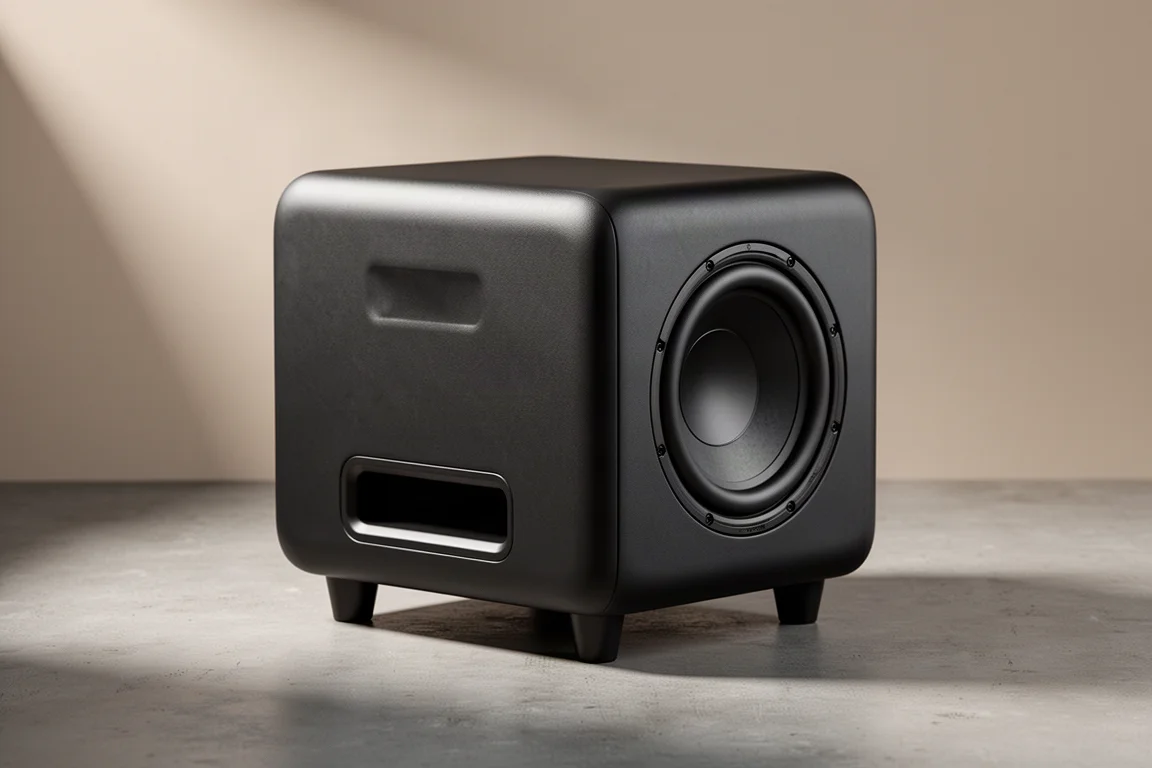
Introduction
Compact subwoofers appeal to anyone short on floor space, and the Bestisan subwoofer pushes that idea about as far as it can go. It weighs roughly eight pounds, light enough to lift with one hand, which is remarkable for any subwoofer and also the clearest signal of what this product is and is not.
It sells for around $70 to $75 and offers an unusual set of connections for the money: optical digital, RCA, and Bluetooth. Everything on the spec sheet functions as described. The real question is whether the bass it produces earns its place in a room, and for most listeners the answer is that it does not, unless the room is genuinely tiny.
Who This Subwoofer Is For
The Bestisan subwoofer makes sense in one narrow situation: a very small apartment or desk setup where there is almost no space for a conventional subwoofer and the goal is a gentle lift in the upper bass rather than deep, powerful low end.
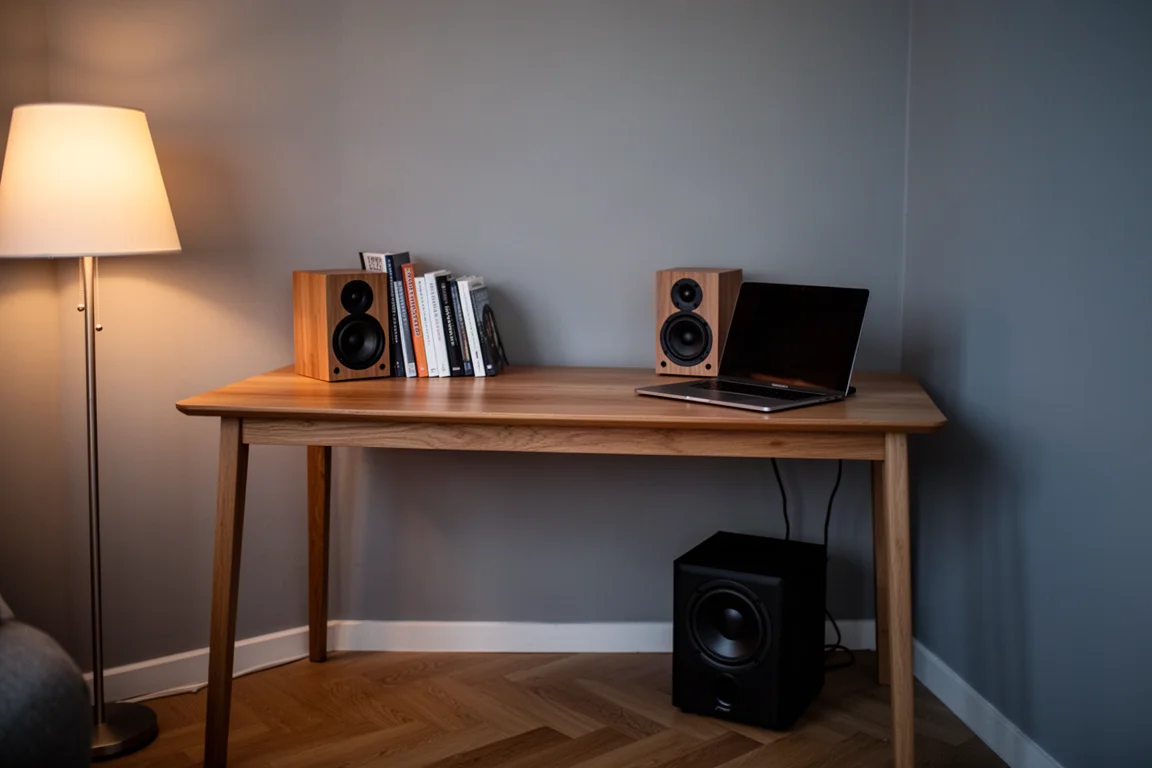
Tucked under a desk or into a corner and turned well down, it adds weight in the 60 to 80 Hz region. Paired with small bookshelf speakers, that fill-in effect is real, if modest, and it is most noticeable at low listening levels where small speakers otherwise sound thin.
If there is room for a normal-sized subwoofer, this is not the product to choose.
Main Strengths
Connectivity is the strongest argument here. The subwoofer accepts an optical digital input, so it can take a signal directly from a television or another digital source. It also accepts RCA and supports Bluetooth, which is rare at this price.
There is an RCA output as well, which opens up a second use case: connect a source over Bluetooth or optical, then run RCA out to powered speakers or a soundbar. That effectively turns the subwoofer into a simple wireless link for a small system.
The cabinet also looks better than its price suggests. Rounded edges and a tidy wrap give it a reasonably finished appearance, and the feet sit flat. In practice, the optical, RCA, and Bluetooth connections all work as described.
Connectivity and Setup
Setup is straightforward but imprecise. The volume control and input selector share a single knob on the rear panel. That knob rotates continuously with no end stop and no scale, so there is no reference point for any given level. Dialing in the gain becomes a matter of listening, turning, and guessing, and returning to the same setting later is difficult.
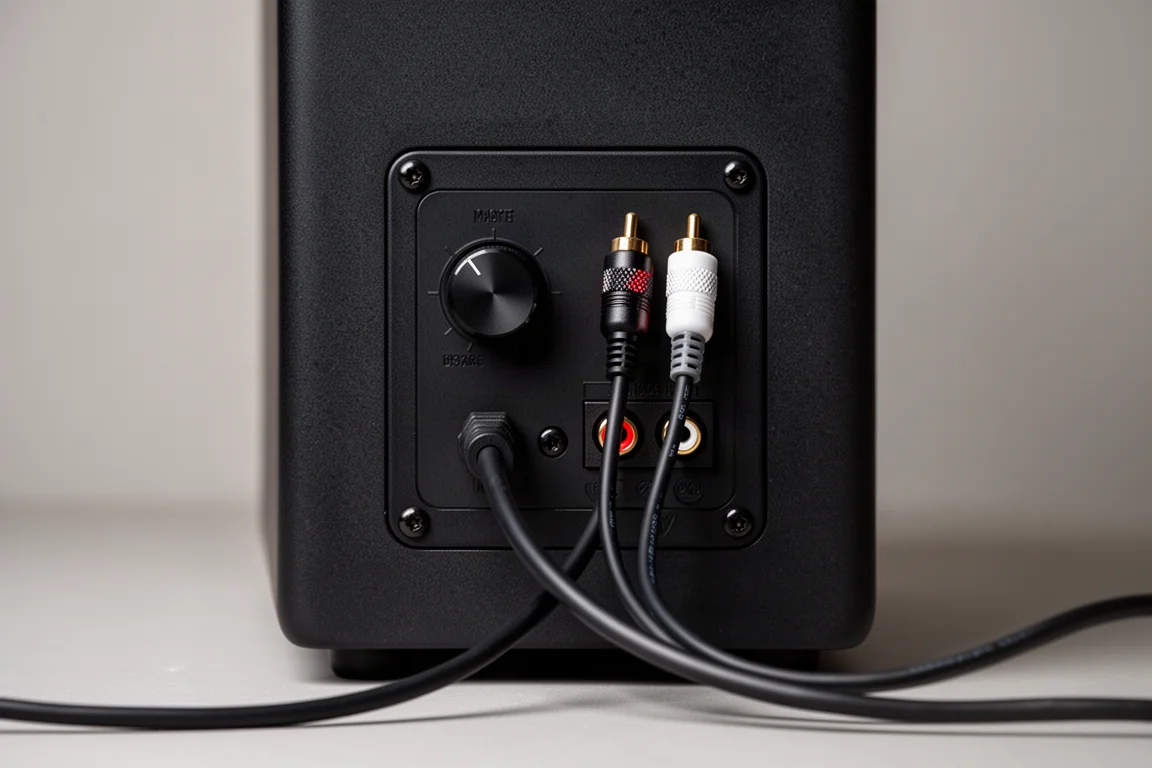
The low pass filter does work. Sweeping it changes how much low end the subwoofer reproduces, and the stated range runs from about 60 to 250 Hz. The most usable result came from setting the crossover low, near 70 Hz, with the gain kept very low.
Sound Quality in Practice
Bass output is where the compromises show. The subwoofer is rated down to 50 Hz, which is not unusual in this price bracket, and a tone sweep revealed usable output slightly lower, around 35 Hz. On material with genuinely deep bass, however, the output simply disappears.
The character of the bass is the larger issue. It is loose, boomy, and difficult to control, and it distorts fairly early. Turned up for movies or bass-heavy tracks, it muddies the rest of the mix instead of adding definition.
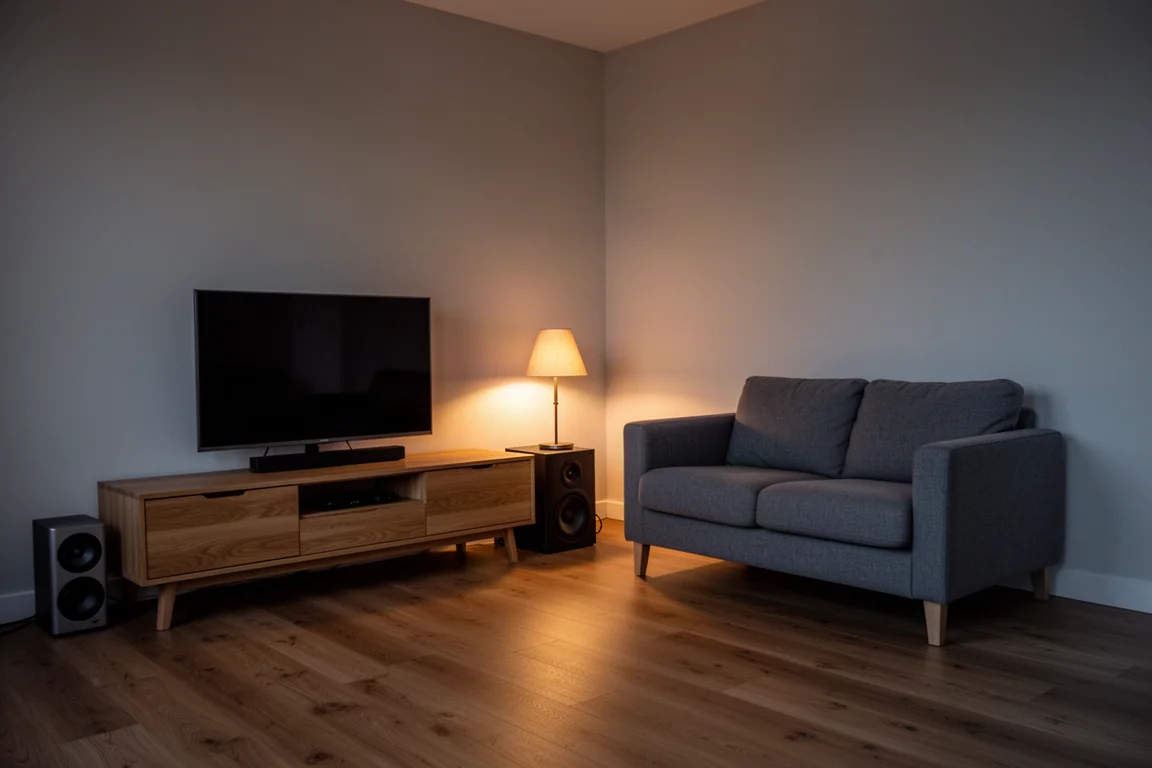
Turned down low and crossed over conservatively, it behaves acceptably in a larger room by adding a soft foundation beneath small speakers. This is not a subwoofer that rewards volume.
Things to Consider Before Buying
There is no speaker-level input. That matters more than it might seem. The subwoofer needs a source with a dedicated subwoofer output, or a source with variable volume such as a DAC with volume control. If an amplifier only offers speaker-level outputs, this subwoofer cannot be connected to it at all.
The cabinet is very light, and a simple knuckle test suggests it is not heavily braced. Low weight does not decide sound quality on its own, but eight pounds for a subwoofer cabinet points to a different set of trade-offs than the roughly 24-pound alternatives in the same price range.
The endless volume knob is a genuine usability problem as well. With no markings of any kind, matching levels between sources takes repeated trial and error.
How It Compares to Other Budget Subwoofers
Familiar budget alternatives come up naturally at this price. The Polk SW10 is a 10-inch subwoofer weighing about 24 pounds and selling for roughly $130, and it offers noticeably better control. The Monoprice 60W 8-inch subwoofer is heavier still and includes speaker-level inputs, which the Bestisan lacks. An entry-level Sony subwoofer, also around 24 pounds, regularly drops to about $115 on sale.
Heavier does not automatically mean better, but in this comparison the extra mass and the more conventional designs come with tighter, more controlled bass and a wider range of connection options.
Buying Advice
At around $70 to $75, the Bestisan subwoofer is not expensive, but it is also not the best use of that budget for most people. If there is any room for a larger cabinet, the alternatives above deliver more controlled bass for a modest increase in spend.
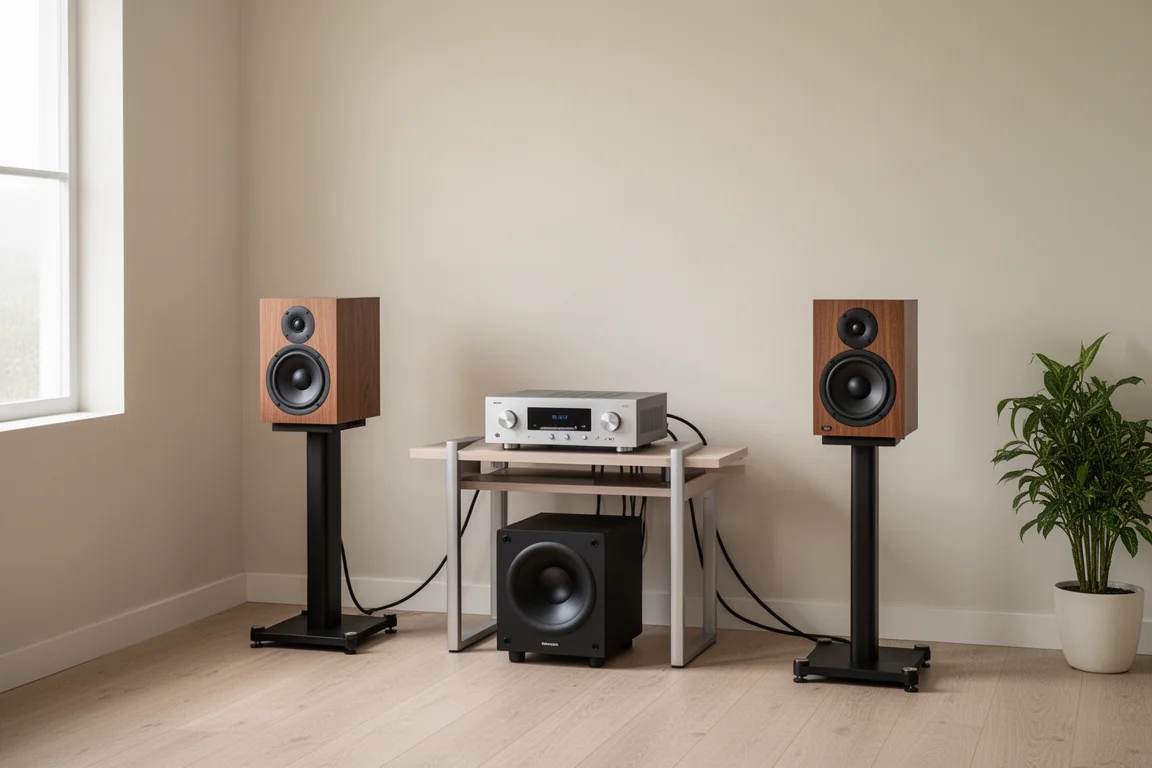
Buy it only if space is the binding constraint and the goal is a gentle low-frequency lift at low volume. In that case, set the crossover low, keep the gain near the bottom of its range, and expect the subwoofer to support small speakers rather than carry the low end on its own.
Conclusion
The Bestisan subwoofer does what it claims on paper. It is tiny, light, and flexible about inputs, and every connection type works. What it does not do is produce controlled, deep bass. For a very small apartment or a desk system where it stays quiet, it can add a little warmth. For everyone else, saving a bit more for a conventional subwoofer is the better path.
Product link
View more details for Bestisan Subwoofer
This product is mentioned in the review. Check the specifications, options, and compatibility before buying.
View more details for Bestisan SubwooferFurther reading
Related Reviews
Subwoofers
Arendal 1961 Subwoofer 1S Review: Beautiful Build, Modest Punch at $1,000
A sealed $1,000 subwoofer with a gorgeous cabinet, plus three lower-priced alternatives that deliver more impact for movie nights.
Subwoofers
Arendal Sound 1723 2V Subwoofer Review: Dual 13.8-Inch Drivers Under $3,000
A flagship ported subwoofer with dual opposing 13.8-inch drivers, a 1,200W RMS amplifier, app-based DSP, and a 10-year warranty.
Subwoofers
Ascendo 16 Sub Active Sealed Review: Sealed Bass Built on Real Engineering
A close look at the Ascendo 16 Sub Active Sealed, a 16-inch sealed home theater subwoofer with independently verified measurements, a purpose-built driver, and genuinely controlled output.