Mountain Bikes
Best XC Mountain Bikes 2022: Five Race-Ready Rigs Compared
Five cross-country mountain bikes with distinct engineering approaches, from a slack hardtail with an integrated hub sensor to a budget aluminium race build.
Introduction
Cross-country mountain biking has moved back toward the centre of the sport’s attention. Close racing at international events, increasingly technical courses and a wave of genuinely clever frame engineering have made XC bikes interesting again for riders who want speed on the climbs and composure on the descents.
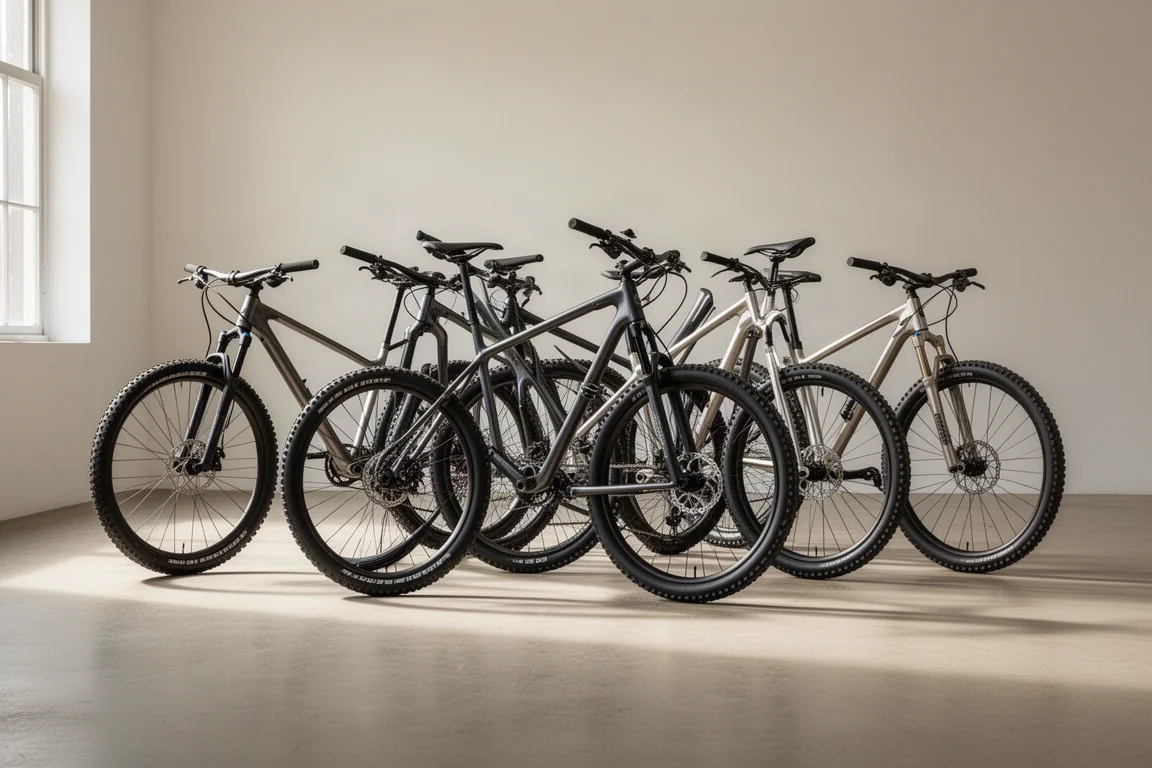
The five machines below stand out for their approach rather than their marketing: a slack hardtail with electronics built into the front hub, a full-suspension bike that abandoned a long-standing linkage design, a race bike with its shock hidden inside the frame, a short-travel design that sits almost in a category of its own, and one aluminium build that keeps the entry price low.
What to Look For in a Modern XC Race Bike
Across these five bikes, a few themes repeat. Front ends have slackened considerably, with head tube angles now sitting between 65.5 and 67.5 degrees even on dedicated race bikes. Travel figures cluster between 100 mm and 130 mm, and the choice between them usually comes down to whether you want the sharpest climbing response or a little more margin on descents.
Dropper posts have become an expectation rather than a bonus, and every model that offers one pairs it with a frame designed to accept it. Suspension design is the other moving target: some brands are chasing pedalling efficiency with revised linkages and stiffer bottom bracket areas, while others are hiding the shock entirely to free up the frame layout and extend service intervals.

Weight still matters, but the numbers quoted by manufacturers are now frame weights rather than complete-bike figures, so it pays to compare like with like. The same goes for stiffness claims, which are only meaningful relative to the previous generation of the same platform.
Cannondale Scalpel HT
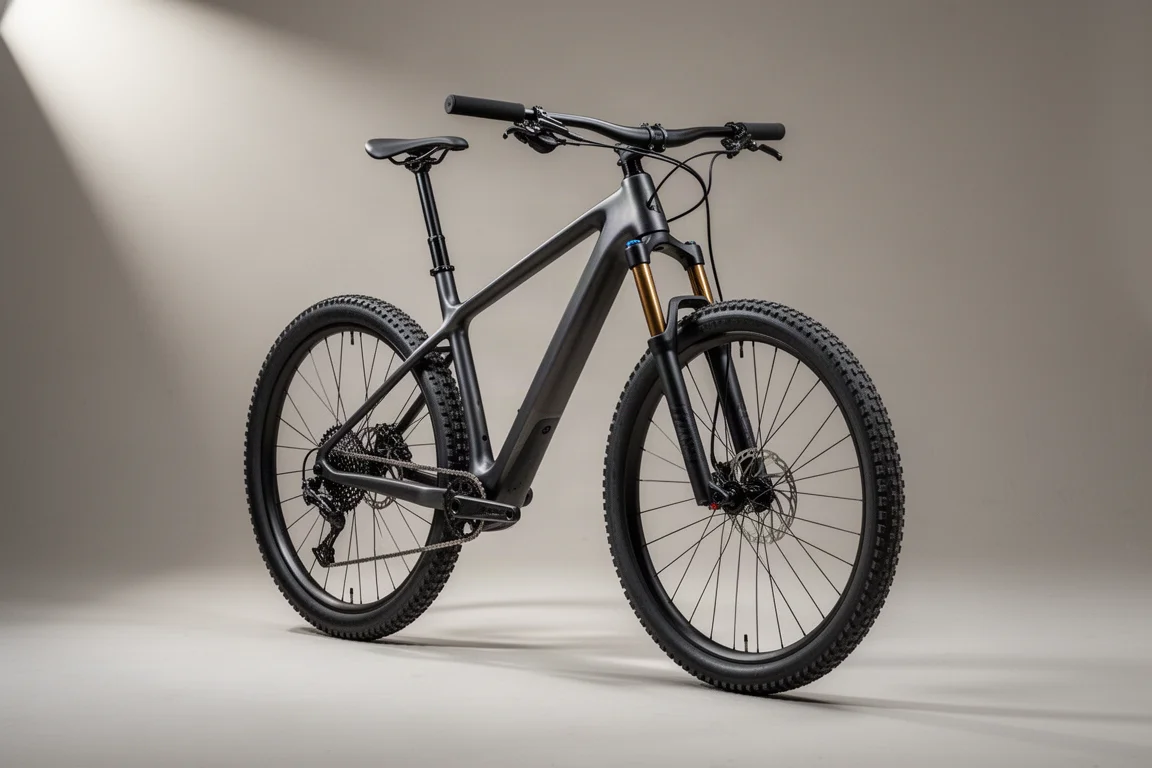
Cannondale broke into hardtail territory with the Scalpel HT, offered with either 100 mm or 110 mm of travel depending on the build. Geometry is unusually slack for an XC hardtail, with a 65.5 degree head tube angle across the 29-inch models, which puts the bike closer to trail-bike territory than most of its race-focused rivals.
There are four builds. The range tops out with the High Mod 1, which pairs a claimed 895 g carbon frame with a 110 mm Lefty Ocho fork. The Scalpel HT2 runs a 100 mm Lefty Ocho, while the two lower models use RockShox SID SL forks with 100 mm of travel. None of the builds ship with a dropper post, although the frames are compatible with internally routed posts, which is the first upgrade most riders would want on a bike designed for technical courses.
A standout detail is the front hub sensor developed with Garmin. It syncs to Cannondale’s smartphone app to show speed and ride distance, and it can flag when the bike is due for servicing, much like a car. Pricing runs from GBP 2,600 for the Shimano Deore build up to GBP 6,200 for the High Mod 1 with a 12-speed Shimano XT groupset and carbon finishing kit.
Giant Anthem Advanced Pro 29
Giant retired its long-running Maestro linkage on the Anthem and moved to a linkage-driven single pivot layout with flex built into the rear triangle, a system it calls FlexPoint Pro. For cross-country racing that is a meaningful change rather than a cosmetic one: the new arrangement saves roughly 250 g compared with previous models, and Giant claims the reworked bottom bracket area is 20 percent stiffer for better pedalling efficiency.
The head tube angle sits at 67.5 degrees, paired with a 110 mm Fox 34 fork, and every model gets a long travel dropper post. Two builds are sold in the UK: the Anthem Advanced Pro 29 2 at GBP 4,999 and the Anthem Advanced Pro 29 1 at GBP 6,999. The top Anthem Advanced Pro 29 0, fitted with SRAM’s XX1 Eagle AXS groupset, is available in Australia and Canada at 13,999 dollars in each market.
The Anthem Advanced Pro 1 also uses Fox Live Valve suspension, which relies on sensors on the frame, fork and shock working with motors that automatically open and close the damping.
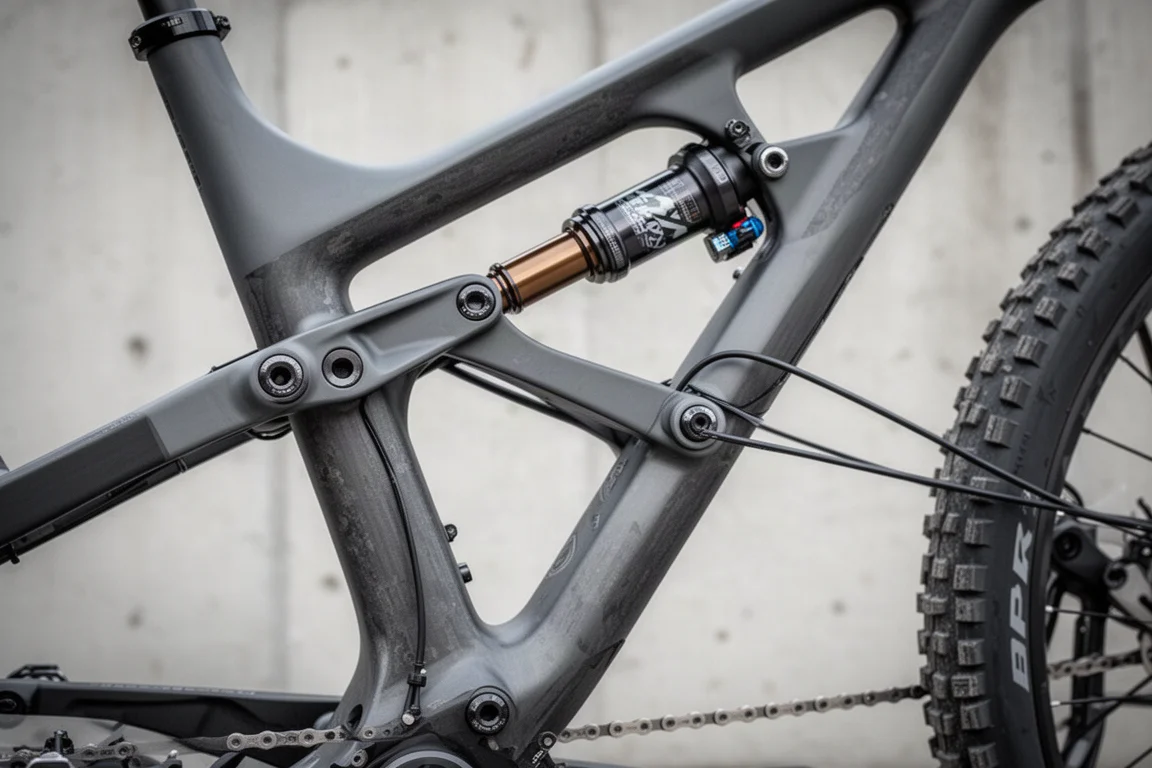
Riders who would rather let the suspension adapt than reach for a lever will find that combination appealing, and the dropper post paired with the slacker front end gives the Anthem more descending ability than its race focus might suggest.
Scott Spark RC
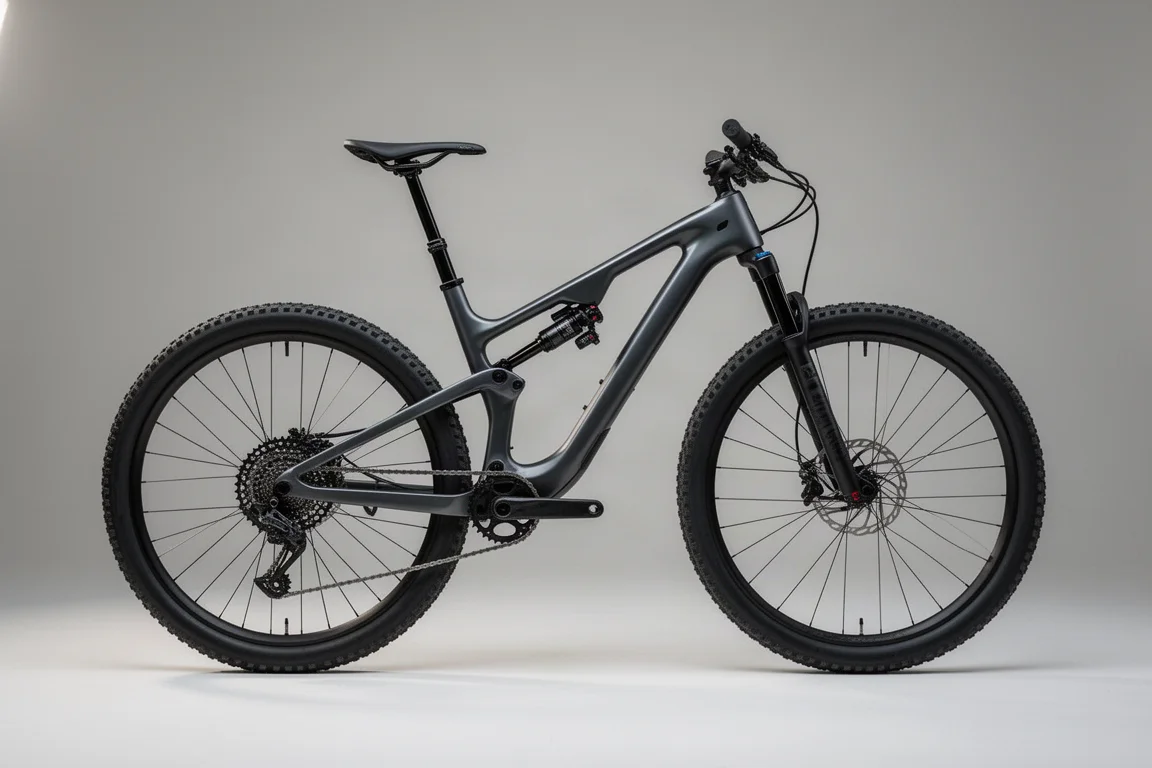
The Spark RC is Scott’s full suspension cross-country offering and the bike ridden by Nino Schurter. It borrows technology from Scott’s 2019 acquisition of Bold Cycles: the shock is hidden inside the frame, integrated into the seat tube and bottom bracket area rather than mounted on the outside of it.
Hiding the shock does more than tidy up the silhouette. It extends shock life and lengthens service intervals, which saves money over time, and it opens up a suspension layout with greater stiffness around the bottom bracket. The Spark range is wide, with 26 models including Contessa versions designed for female riders. Buyers can choose the race-focused RC with a 120 mm fork or the more downcountry-oriented Spark with 130 mm. Frame options span aluminium, an aluminium and carbon hybrid build, and three tiers of carbon fibre.
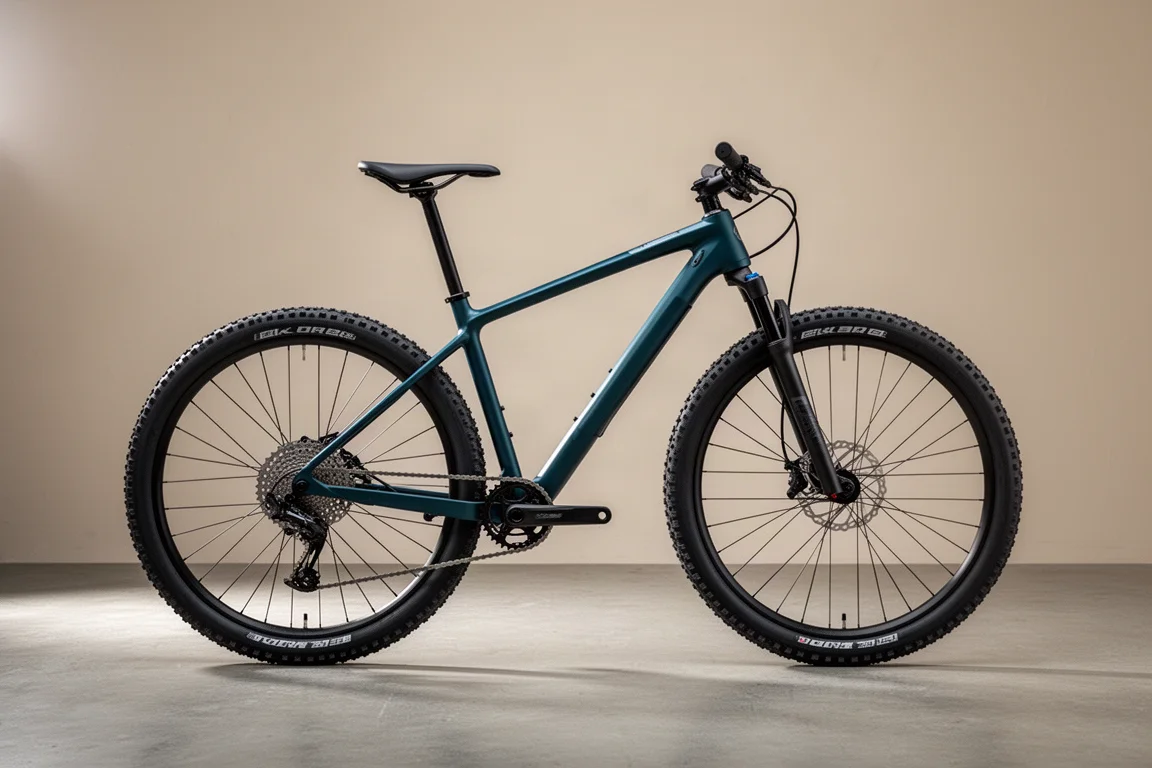
Trek Supercaliber
The Supercaliber is not a new platform for 2022, but its results make it impossible to leave out of a list like this: Olympic gold, a World Championships win and an under-23 world title all went to riders on this bike.
It occupies a space of its own. It is more capable than a hardtail yet more efficient than a conventional full suspension bike, a balance achieved through 60 mm of travel from the integrated IsoStrut shock mounted under the top tube. Six models are offered for the latest season, ranging up to the GBP 11,100 Supercaliber 9.9 XX1 AXS. The most accessible of the current builds is the 9.6 at GBP 3,850, which uses a Shimano SLX and Deore 1 by 12 drivetrain.
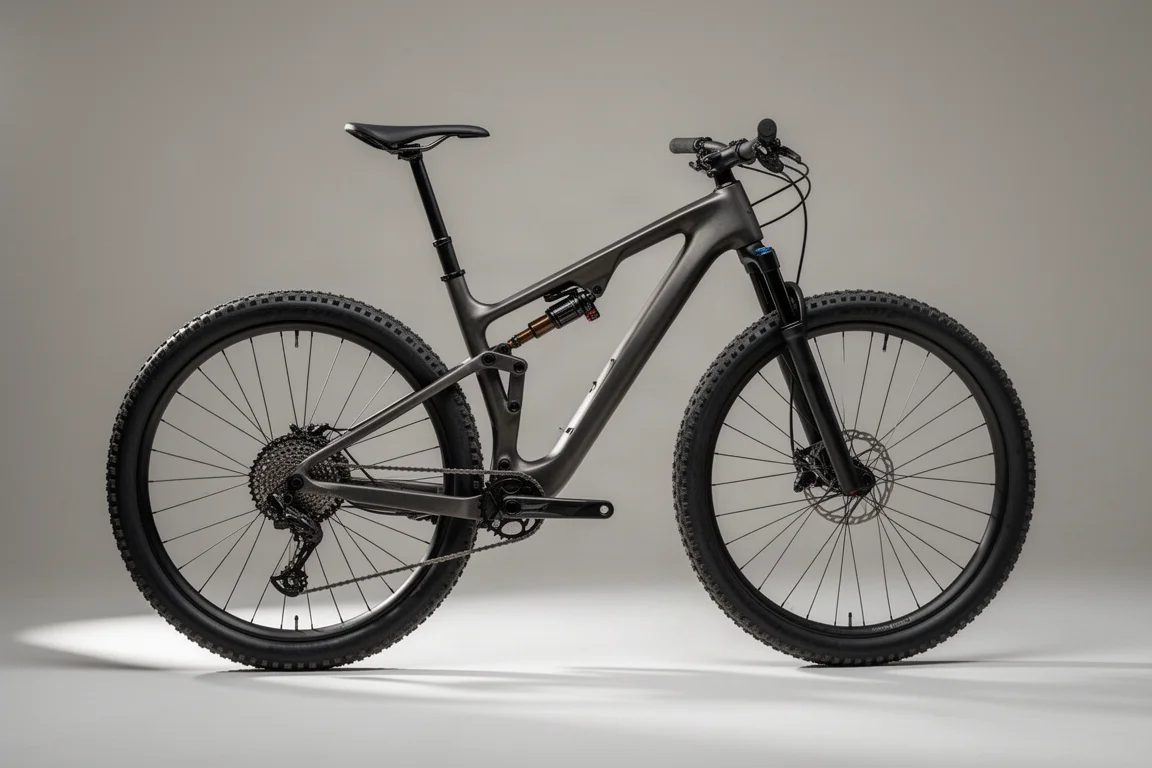
Vitus Rapide
Budget cross-country bikes are rare, because most mountain bikes at this price point are generalist trail models rather than race machines. The Vitus Rapide goes the other way, coming in under a grand at 1,222 US dollars, or just under GBP 900.
It is an aluminium hardtail with 100 mm of travel from a RockShox Recon Silver RL fork that includes a remote lockout. Gearing is a simple 1 by setup built around a Shimano Deore 10-speed drivetrain, and the bike rolls on fast 29-inch Schwalbe Racing Ray tires, so it arrives ready to race straight out of the box.
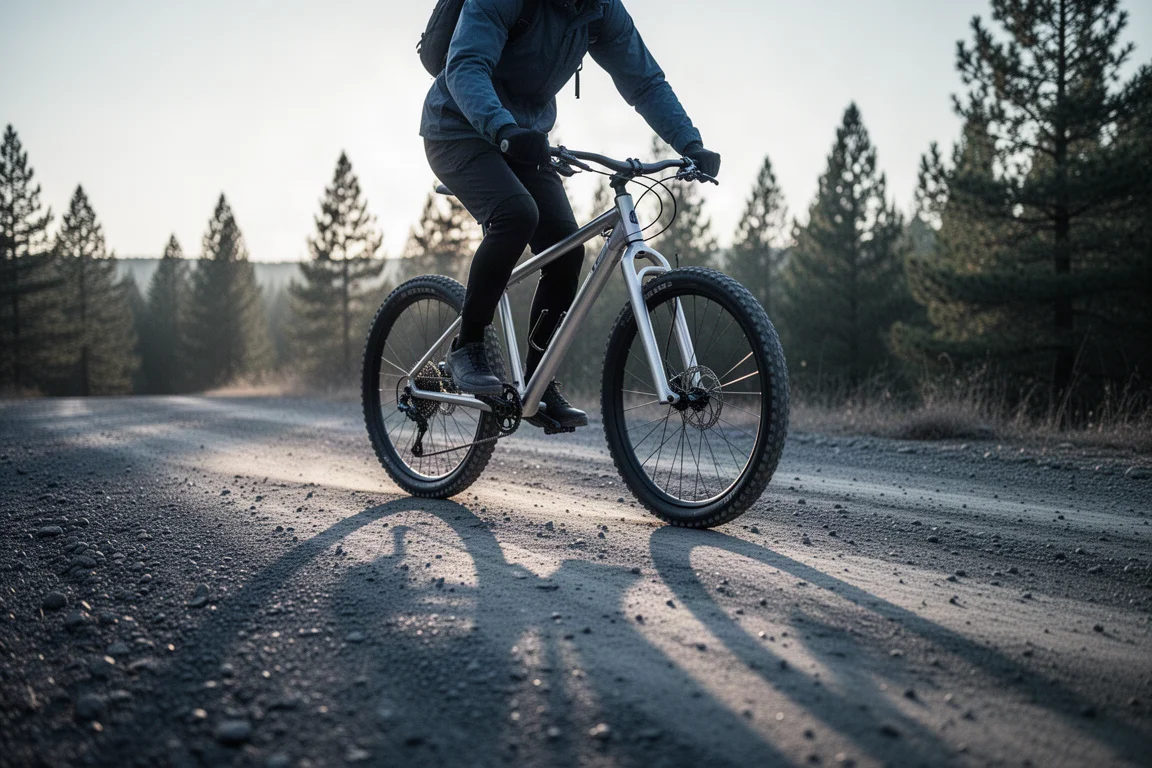
For riders getting into cross-country racing on a tight budget, that combination of a lockout fork, wide-ranging 1 by gearing and race-oriented tires is hard to argue with.
Buying Advice
Matching a bike to your racing and riding habits matters more than chasing the most expensive build. If your priority is outright climbing speed on smoother courses, the hardtail options here are the most direct route, and the Vitus Rapide proves that entry-level does not have to mean compromise on race gearing or tires. If you want a dropper post and a slacker front end without going full suspension, the Cannondale Scalpel HT has the geometry but asks you to add the post yourself.
Full suspension buyers get a genuine fork in the road. The Giant Anthem and Scott Spark both chase efficiency through new suspension architecture, one with a revised linkage and one with a hidden shock, while the Trek Supercaliber splits the difference with 60 mm of travel and a design that behaves closer to a hardtail than a conventional full-suspension race bike. Consider how much time you spend on technical descents versus smooth climbs, and how much you value longer service intervals and simpler maintenance.
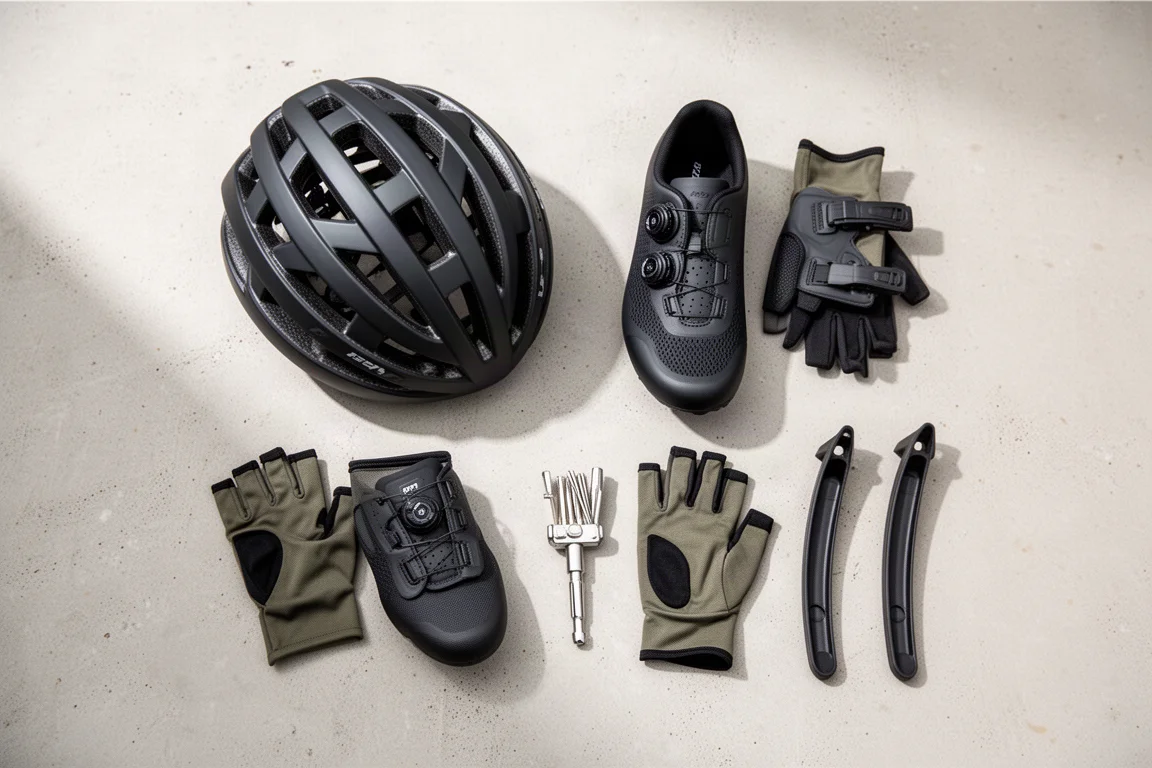
Whatever you choose, budget for the details that complete a race setup: pedals, a spare set of tires suited to your local terrain, and a service schedule that keeps suspension running the way it did on day one.
Conclusion
Each of these five bikes answers the cross-country question differently. The Cannondale Scalpel HT pairs modern geometry with app-connected ride tracking, the Giant Anthem Advanced Pro 29 rebuilds its suspension around weight and stiffness, the Scott Spark RC hides its shock for serviceability and frame stiffness, the Trek Supercaliber targets the middle ground between hardtail and full suspension, and the Vitus Rapide brings a race-ready aluminium package in at under a grand. Match the bike to the courses you actually ride, and any of them will serve you well.
Further reading
Related Reviews
Mountain Bikes
Atherton AM.130 Review: 3D-Printed Titanium Lugs and a 130mm Trail Bike That Descends Like a Bigger Machine
The Atherton AM.130 pairs 3D-printed titanium lugs with carbon tubes and a DW6 suspension platform. Here is how it rides, what the build delivers, and who it suits.
Mountain Bikes
Beginner Mountain Bike Buying Guide: What to Look For in a Trailworthy Hardtail
A practical framework for evaluating beginner mountain bikes, whether new or used, by examining key components that indicate real trail capability.
Mountain Bikes
Best Aluminum Mountain Bikes 2026: Five Alloy Bikes Worth Your Attention
Five aluminum mountain bikes that show how far alloy has come, from a 120mm trail bike and a versatile machined frame to a 180mm freeride machine.